The Cutting Table · a common question
Is your velvet cotton velvet or polyester?
Also asked as:Is the velvet made of cotton?Natural velvet or synthetic?
Velvet is a fabric made of light: tilt the pile and the color deepens. What that pile is made of decides how it survives a daily seat.

The quick answer
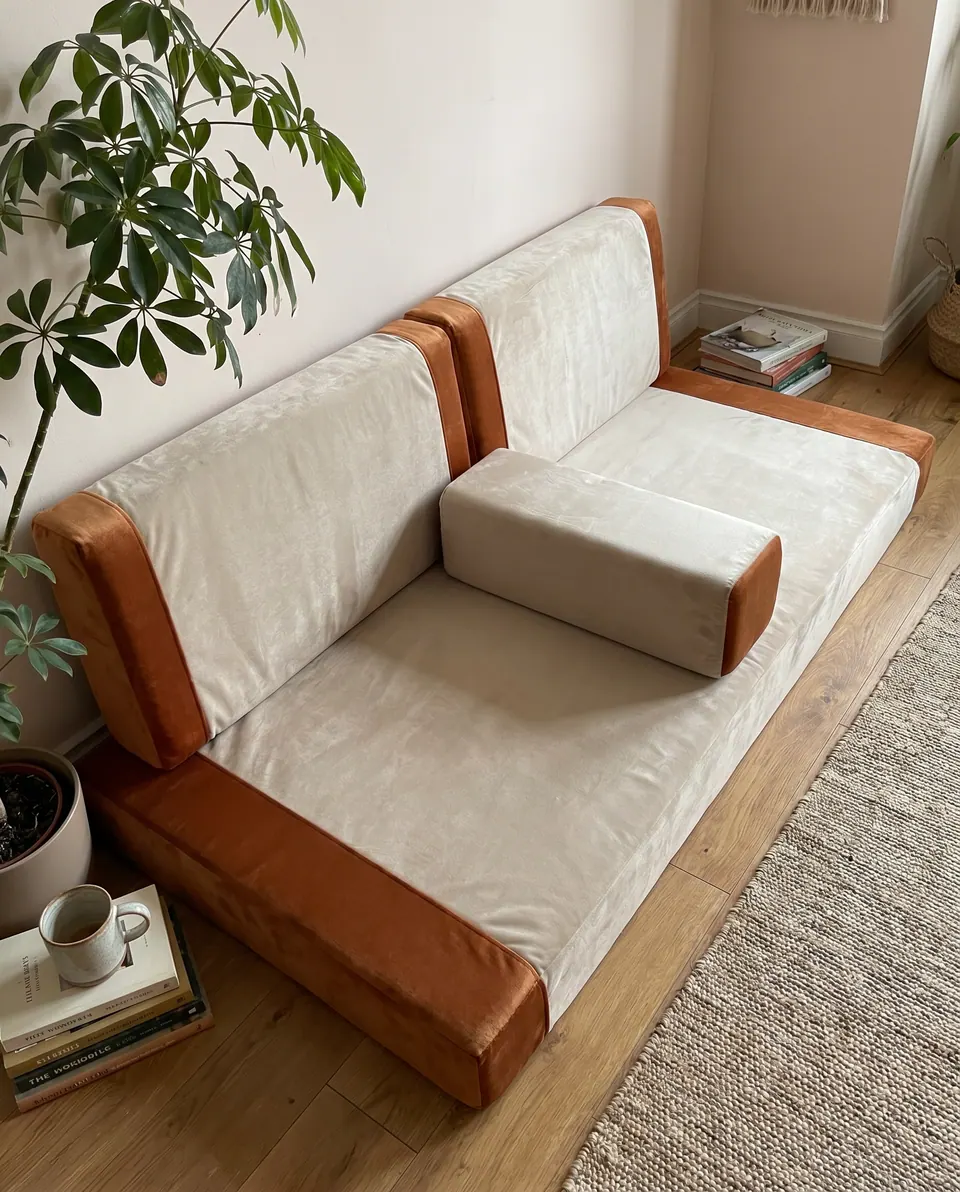
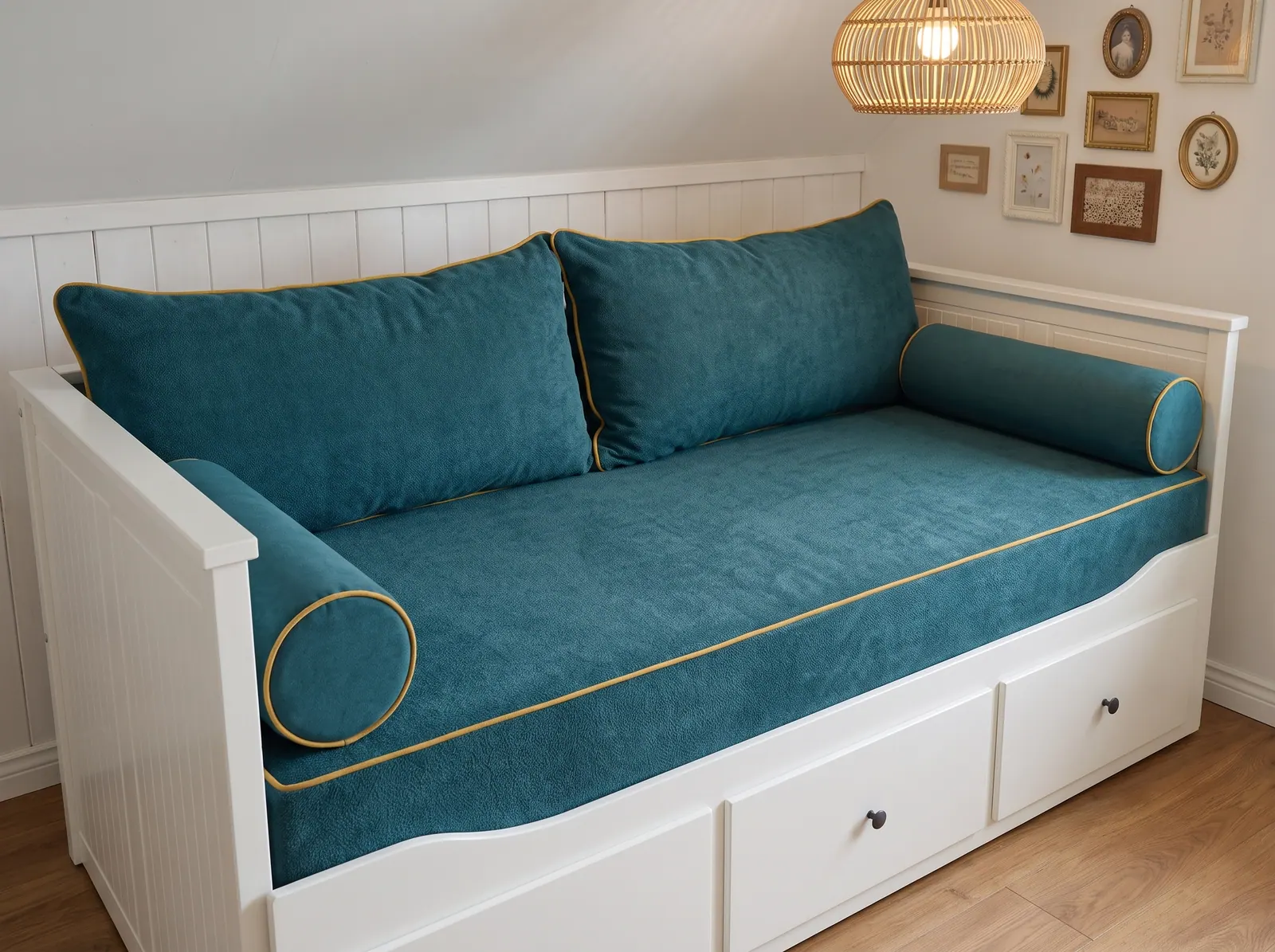
The cushion velvet is synthetic, polyester or a poly-cotton blend, not cotton, linen or silk velvet. That makes it long-lasting, easy to clean and resistant to daily use, and it mostly doesn't wrinkle, while cotton velvets crush and wear faster on seating. For natural fiber, choose the 100% linen range or a cotton-linen fabric such as H12.
 Save
Key facts
- The velvet is polyester or a poly-cotton blend.
- There is no cotton, linen or other natural velvet in the standard range.
- Cotton velvet crushes and wears faster on seating.
- The velvet mostly does not wrinkle.
- Cotton velvet has occasionally been sourced from a supplier range, but supply can run out.
- A cotton-linen fabric such as H12, or the separate 100% linen range, is the natural alternative.

Have it made
Have Élodie’s workshop cut this for you
Describe the room at four in the afternoon: the floor, the wall, the one color you love. That is where a good fabric choice begins. — Élodie
Leave your details and the workshop will call you to confirm measurements, fabric, foam and piping. No prices, dates or payment on this page: it is a request, not an order.
Why the seat velvet is synthetic
On a seat, velvet's enemy is pressure. A pile that lies down and stays down reads as a bruise in the light. Polyester and poly-cotton velvets resist crushing, clean easily and stand up to daily use, and they mostly don't wrinkle. Cotton velvet has its admirers, my friends, but on seating it crushes and wears faster.
The whole velvet swatch library is synthetic for that reason, and the velvet care pattern covers pile, shading and brushing.
If you want natural fiber instead
- Choose the 100% linen range, a separate chart for pure natural fiber.
- Or a cotton-linen such as H12. One buyer who wanted cotton velvet landed there when supply ran out.
- Ask about cotton velvet with a picture. It has occasionally come from a supplier range; those colors have no codes.
- Expect it to crush. Cotton velvet on a seat wears faster than the standard velvet.
Glossy or matte? Ask your window
The pile is short and tight, smooth under the hand. Its sheen has been described both as slightly glossy and as not shiny at all, which tells you how much the light in the room decides. Daylight never lies; your screen sometimes does. Ask for real-life photos, and for no sheen at all, look at linen and cotton-linen.
Where will your cushion sit: in cool north light, or in a window that takes the afternoon sun?
Cushion velvet is polyester or a poly-cotton blend, not cotton; for natural fiber on a seat, choose 100% linen or a cotton-linen such as H12.
Élodie
Buyer questions
- A common question
Is your velvet cotton, and does it wrinkle?
The workshop's answerNo, it's a polyester-blend velvet, which keeps covers long-lasting, durable under daily use and easy to clean; cotton velvets crush and wear faster on seating. It mostly doesn't wrinkle.
- A common question
Can I get cotton velvet instead of your polyester velvet?
The workshop's answerSometimes. Cotton velvet can be chosen from a supplier range; those colors have no codes, so send a picture. Once it couldn't be sourced, and the buyer switched to the cotton-linen H12.
- A common question
What is the velvet made of? Is it linen or cotton velvet?
The workshop's answerA poly-cotton blend. There's no cotton or linen velvet; for natural fiber, choose the separate 100% linen range.
- A common question
Do you have teddy or bouclé fabric?
The workshop's answerYes. Teddy has its own color chart and is the nearest option to bouclé. It's polyester and costs more than velvet.
Questions buyers ask next
Is polyester velvet soft?
Yes. The velvet is the fabric buyers love most for being both durable and soft, with a short, tight pile that feels smooth under the hand.
Is there silk velvet?
Not in the standard range, which has no natural velvet of any kind. Silk has come up only as a stock check on request, so ask before you plan a room around it.
How do the velvet covers wash?
Like every range: the covers come off and machine wash at 86°F (30°C). The synthetic pile is what lets it take that washing and daily sitting without crushing the way cotton velvet does.