A Reading by MaggieBench Cushions
Terracotta and ochre knotted stripe: notes on how the cotton feels, wears and washes
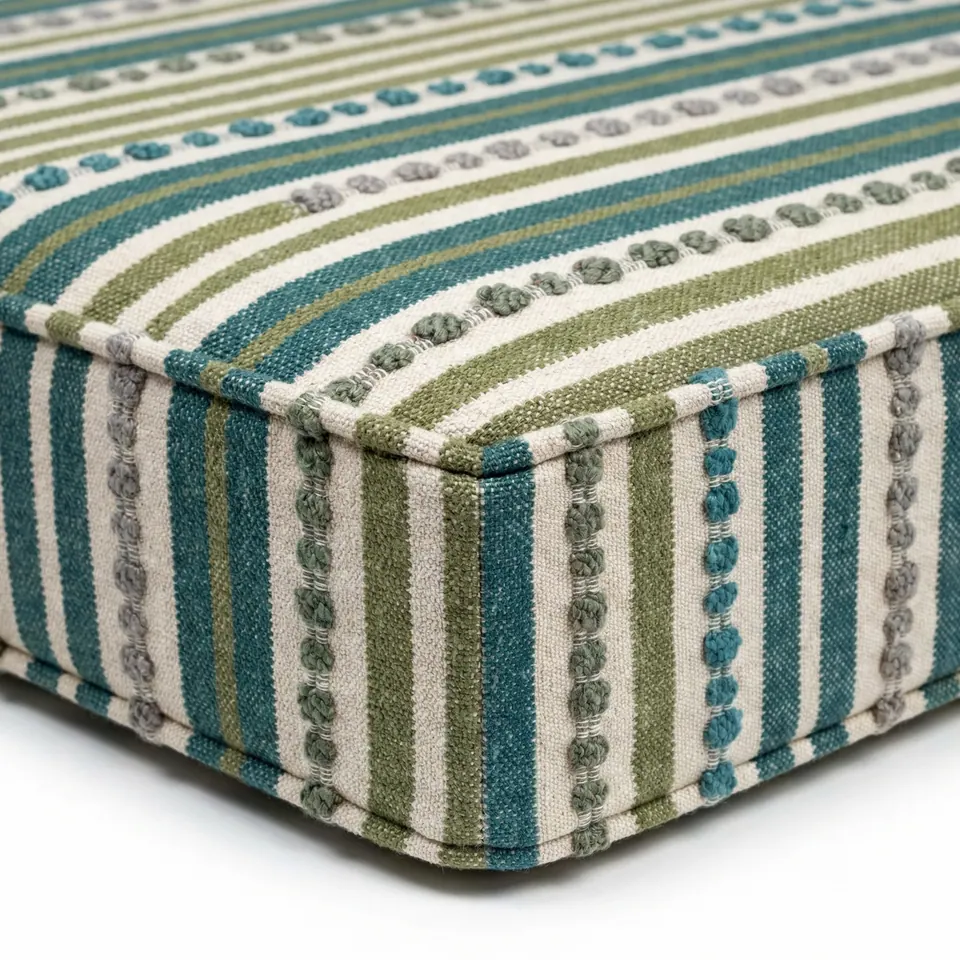
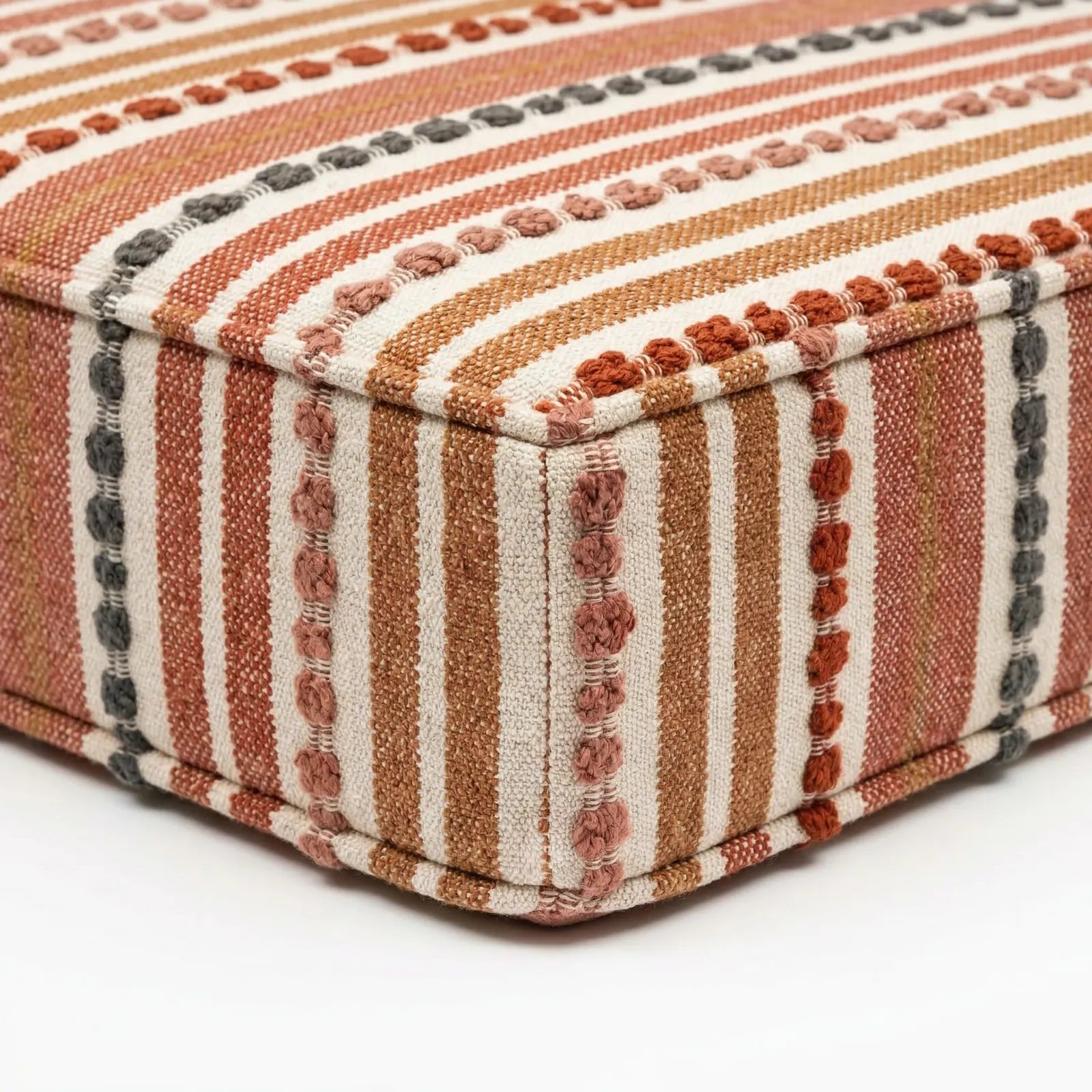
A close-up with nothing to hide behind: one corner, one stripe, one white table. So I opened the notebook and wrote down what a hand would find.

 Save
The quick answer
A knotted-stripe cotton like this terracotta and ochre one has a flat cotton ground with raised knot rows you can feel, looks calmest as a box cushion with self piping, and is easiest to live with in a zippered, washable cover. Keep the other textiles in the room plain linen and let the stripe carry the pattern.
Notebook, page one: hand, wear, wash
Hand. Cotton, woven cream with bands of terracotta and ochre, and columns of small knots in blush pink and slate gray. Run a palm along the side panel and the knots are what you meet first: little raised points on a flat ground. Not scratchy. Just there.
Wear. My rule of thumb: raised texture takes the rubbing first. On a bench people slide onto sideways, the side panel works hardest, and that is where the knot columns run vertically. It is also the face everyone sees.
Wash. A striped cotton cover earns its keep when it zips off. The zipper decides if you'll actually wash it, dear, or just flip the cushion and hope. See how to wash cushion covers.
Piping. Self piping, the same stripe. A contrast cord would add yet another line to a pattern with plenty. A straight welt is a kind of honesty, and on stripes the honest welt is the quiet one.
Color. Terracotta and ochre side by side read like sun-baked tile; slate gray knots keep the blush from going sugary. Put it on a sunroom or reading-nook bench, plain linen everywhere else, clay pots nearby. The family is filed under striped cotton and ticking, and direction rules are in stripe direction.
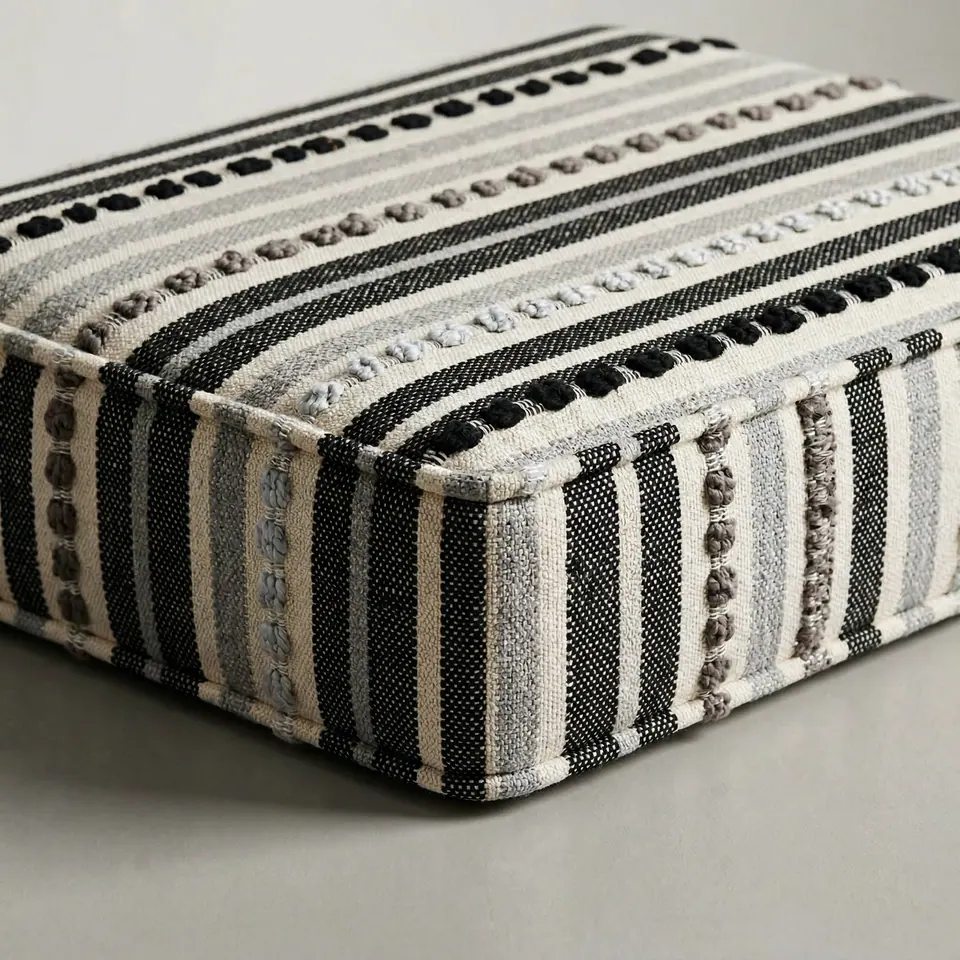
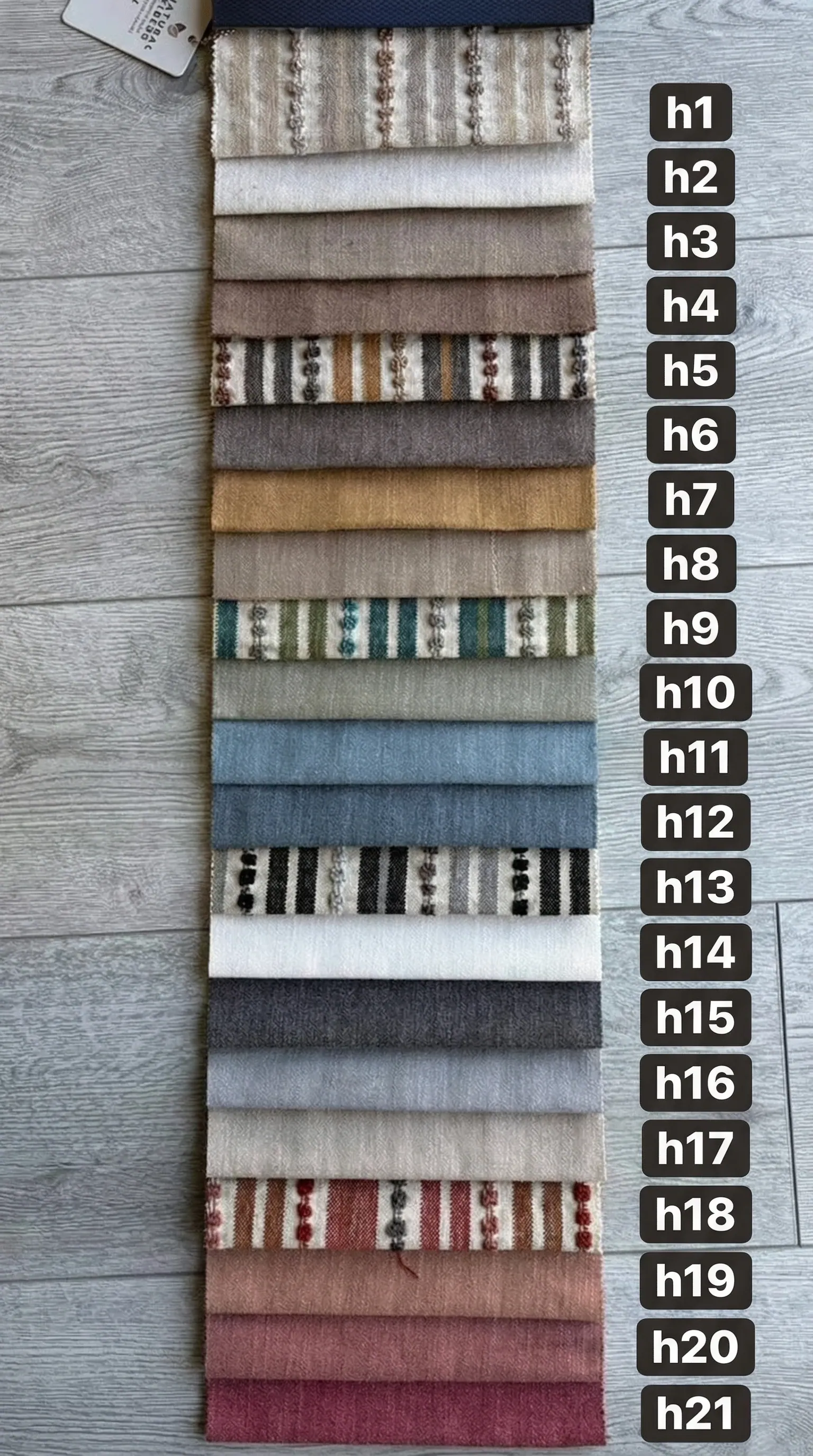
The card. The second photo is the cotton card: 21 plain and knotted-stripe shades, cream to charcoal, mustard to berry red. Which face of your bench does everyone see first, the top or the front edge?
Pinned by Maggie: four marks on one corner
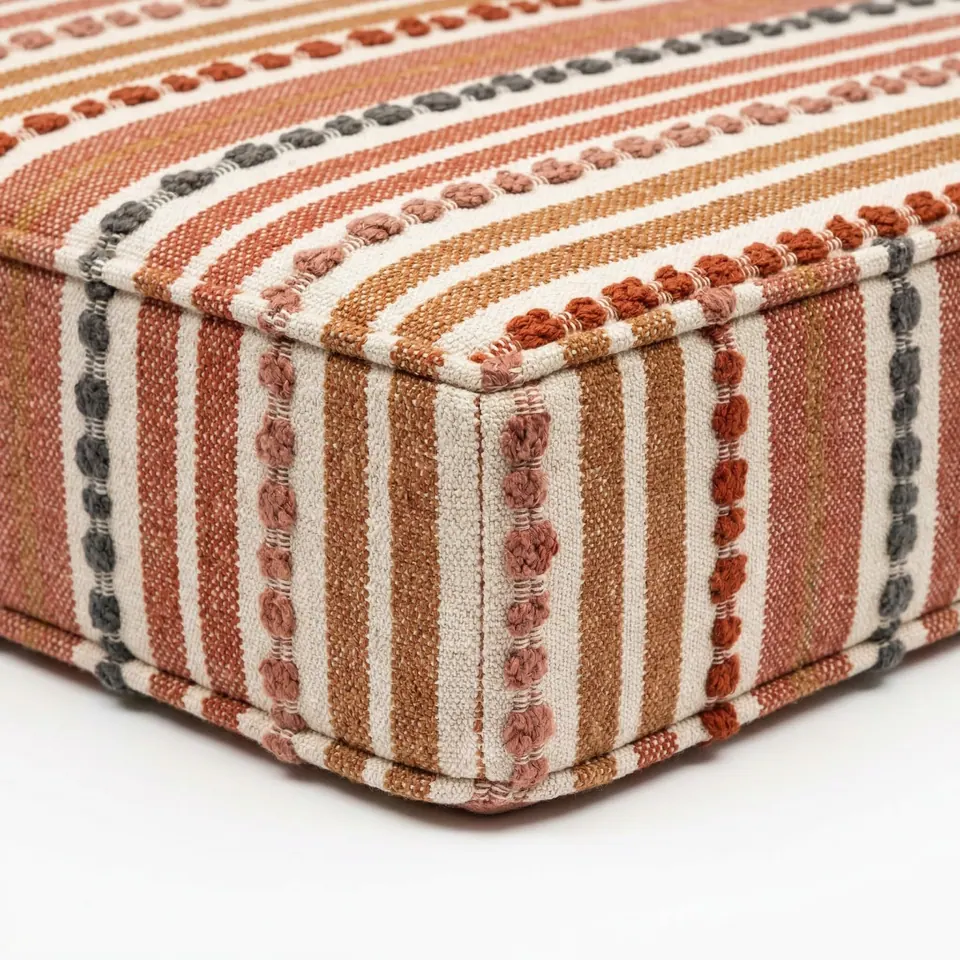
Four pins: the clay and ochre bands, the self-piped top corner, the blush knot column and the slate gray row that cools it all down.
- Terracotta and ochre bands
Clay red and ochre sit together like sun-baked tiles, which is the mood this stripe brings to a seat.
- Piped top corner
Self piping stops the outline from fighting a stripe that already has plenty of lines.
- Blush knot column
Soft pink knots on the side panel are what people see first when the cushion sits on a bench.
- Slate gray knots
A cool gray knot row keeps the warm palette from turning sugary.
- Terracotta and ochre bandsClay red and ochre sit together like sun-baked tiles, which is the mood this stripe brings to a seat.
- Piped top cornerSelf piping stops the outline from fighting a stripe that already has plenty of lines.
- Blush knot columnSoft pink knots on the side panel are what people see first when the cushion sits on a bench.
- Slate gray knotsA cool gray knot row keeps the warm palette from turning sugary.
Measurement table: an angled corner in three pieces
| Piece | Size | Job |
|---|---|---|
| Straight run, long | 18 x 51 1/2 in, 4 in thick (46 x 131 x 10 cm) | Seats the long wall |
| Angled middle | Trapezoid, about 27 1/8 x 28 in (69 x 71 cm) | Fills the angle; both joins land on seat edges |
| Straight run, short | 18 x 20 in, 4 in thick (46 x 51 x 10 cm) | Seats the short wall |
The corner that wasn't quite an L
A buyer got in touch with a corner seat that had an angled middle section, not a true L, and sent a photo and a sketch. The workshop split it into the three cushions in the table: two rectangles and one trapezoid, so every join fell on a seat edge instead of across somebody's lap.
The covers were a dark red with dark green piping, zippered and washable. When the set arrived, the buyer wrote back one word, WOW, and said the color matched perfectly. I will take that review over a paragraph any day.
Angled corners get their own study in angled corner bench cushions, and the middle piece follows the trapezoid measuring pattern.
Buyer questions: side-by-side photos, extra backs and the size box
- A common question
Could you photograph the main fabric and the piping fabric next to each other so I can judge them together?
The workshop's answerYes. The workshop photographs fabric pairs side by side on request, for example linen L41 beside velvets 101, 103, 104 and 105, or a print beside a trim color. Ask for as many combinations as you need before you order.
- A common question
Can I buy extra back pillows, or a pair of armrests, on their own?
The workshop's answerYes. Straight back pillows, L-shaped corner backrests and armrests are all sold separately, priced per piece. An L-shaped back pillow can also be swapped for a straight one at the same price.
- A common question
The size I picked in the dropdown and the exact size I typed don't match. Which one gets made?
The workshop's answerThe exact size you typed. The dropdown only selects the size range and sets the price; production always follows the Exact Size field. Pick 38–40 in from the dropdown but type 18 x 20, and the cushion is cut at 18 x 20 in. Double-check the typed numbers before checkout.
On the cutting table: the knotted stripe
| Cushion | Rectangular box cushion for a bench |
|---|---|
| Fabric | Cotton, cream ground with terracotta and ochre bands |
| Texture | Vertical knot columns in blush pink and slate gray |
| Piping | Self piping in the same stripe |
| Edge | Boxed, piped at the top seam |
| Cover | Zippered, removable, washable |
| Fabric card | 21 plain and knotted-stripe cotton shades |
| Best for | A sunroom or boho reading-nook bench with plain linen around it |

Have it made
Have this made — ask Maggie’s workshop
I once cut a lovely cushion two inches short, and I have not forgotten it. That is why the workshop goes over your measurements with you on the phone. — Maggie
Leave your details and the workshop will call you to confirm measurements, fabric, foam and piping. No prices, dates or payment on this page: it is a request, not an order.
On a knotted stripe, choose self piping. A contrast cord adds one more line to a cotton that already carries four colors and two knot rows.
Maggie
Questions buyers ask next
Does a knotted stripe feel rough to sit on?
Textured, not rough. The knots rise slightly from a flat cotton ground, so you feel small points under the hand rather than a scratchy surface. If texture worries you, rub a swatch against the inside of your wrist before deciding.
Which face of a striped box cushion matters most on a bench?
The side panel. On this cushion the knot columns run vertically on the side, the face on show when the cushion sits on a bench. Decide which face people see first, set the stripe for that face, and mention it in your order note.
Should piping match a multicolor stripe?
Self piping in the same stripe keeps the outline quiet, which suits a busy pattern like this one. A contrast cord makes more sense on a simple two-color stripe, where you want the edge itself to show.
What goes with a terracotta and ochre cushion?
Warm plaster walls, clay pots and rattan, with every other textile in plain linen. Keep one cool note nearby, like the slate gray knots in the stripe itself, so the warm palette doesn't turn sweet.
Stitch straight — Maggie
More photographs to read
 Save