The Cutting Table · a common question
Cushions for a dining bench with a back: what goes on the seat, what on the back?
Also asked as:Do you make matching back cushions for a bench cushion?Can I buy just the back cushion without the seat?
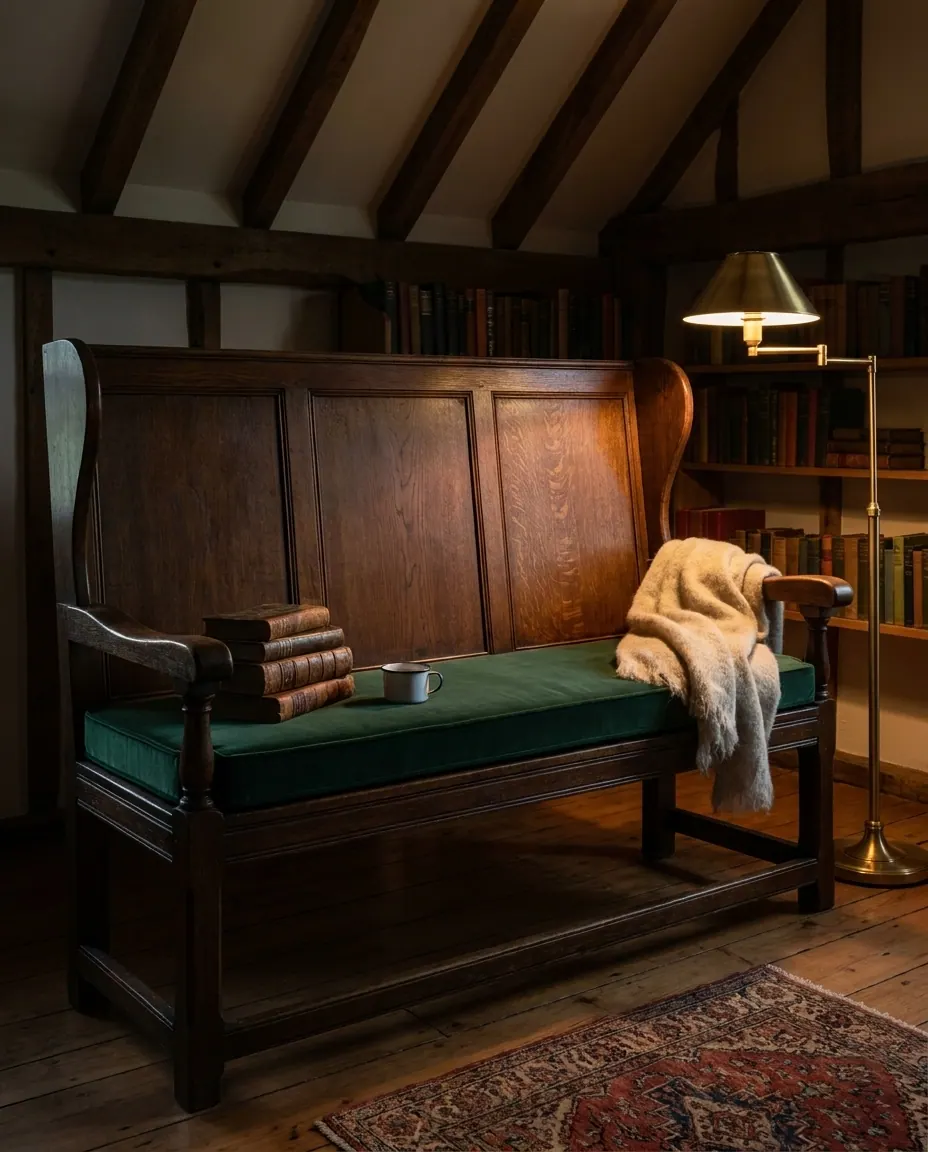
A settle with a tall back is lovely to look at and hard on the spine by dessert. Split the job: a seat pad for sitting, a slimmer back pad for leaning.

The quick answer
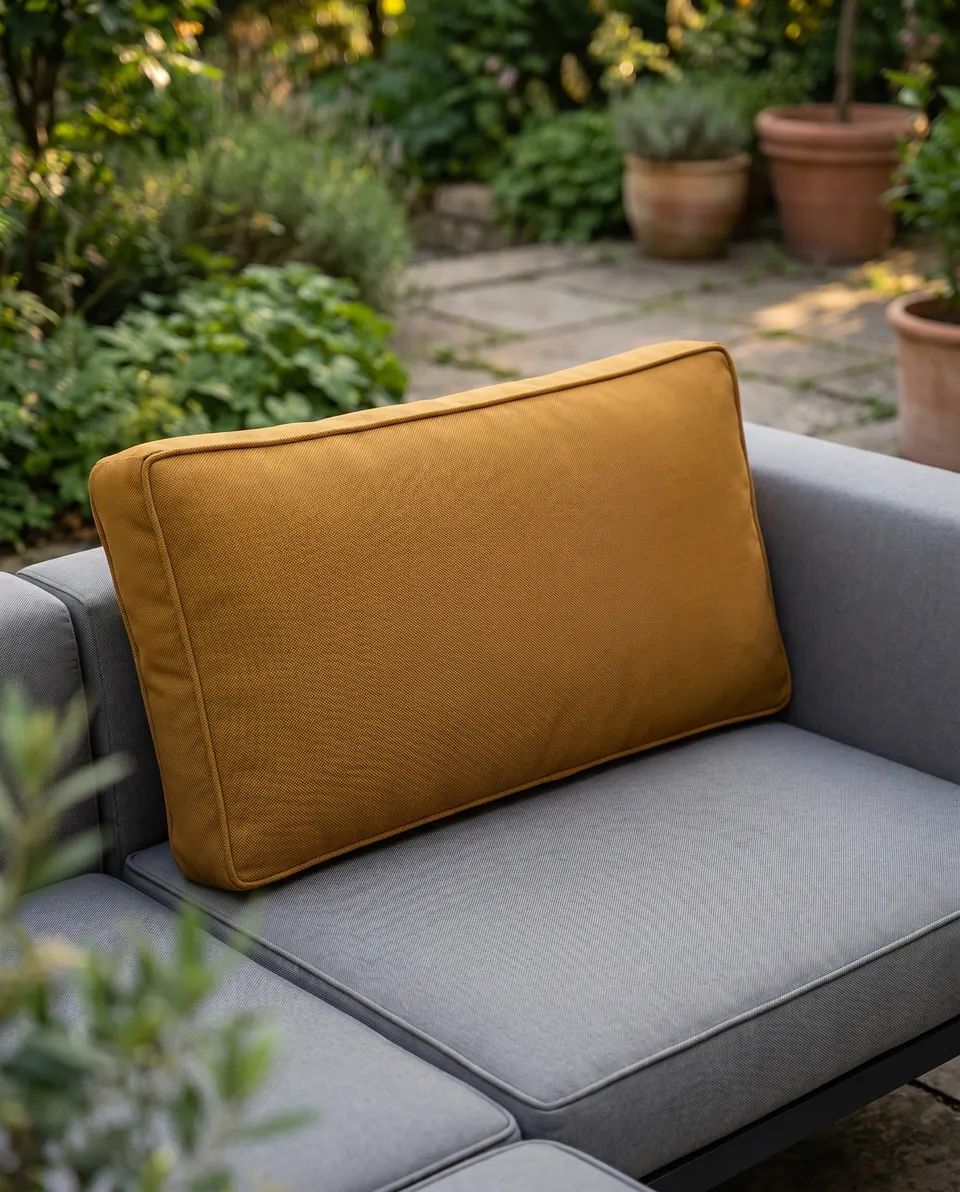
A dining bench with a back usually takes a 3 or 4 in (7.5 or 10 cm) seat pad and a thinner back pad, often 2 in (5 cm), about 16 in (40 cm) tall measured from the top of the seat cushion. Ties sewn at the back pad's top corners hang it from the bench back, hooks or a rail.
 Save
Key facts
- Seat and back pads are made to any size in the same fabric, so the pair matches.
- Dining seats are usually 3 or 4 in (7.5 or 10 cm) thick; 4 in is the standard.
- A back pad thinner than the seat is normal: a 2 in (5 cm) back on a 4 in seat works.
- Standard back pads are about 16 in (40 cm) tall, measured from the top of the seat cushion, and made the same length as the seat.
- Ties at the top corners hang a back pad from the bench back, hooks or a rail; ties are added only on request.
- A back can be firm foam like the seat or a softer filled pillow.
- On an angled back, the back pad's bottom edge can be shaped to sit better on the seat.

Have it made
Have Maggie’s workshop cut this for you
I once cut a lovely cushion two inches short, and I have not forgotten it. That is why the workshop goes over your measurements with you on the phone. — Maggie
Leave your details and the workshop will call you to confirm measurements, fabric, foam and piping. No prices, dates or payment on this page: it is a request, not an order.
Seat pad and back pad, side by side
| Detail | Seat pad | Back pad |
|---|---|---|
| Thickness | 3 or 4 in (7.5 or 10 cm); 4 in is the standard | Usually thinner: 2 in (5 cm) on a 4 in seat, or 3 in |
| Size | Inside the arms or end boards, back to front | Same length as the seat; about 16 in (40 cm) tall from the seat cushion's top |
| Fill | Firm 32-density foam wrapped in polyester fiber | Firm foam like the seat, or a softer filled pillow |
| Staying put | Ties at the corners, or a non-slip base | Ties at the top corners to the bench back, hooks or a rail |
Measure inside the arms, then up from the seat
Measure the bench, not the cushion you used to have. On a settle, measure the seat inside the arms or end boards at the back and again at the front, since old arms are rarely parallel, then the depth.
The back pad's height starts at the top of the seat cushion, not the wood. About 16 in (40 cm) is usual, and other makers' specs land where ours do: 3 to 4 in seats, 2 to 3 in backs. A long back can split where the seat splits; one bench got three backs, each over its own seat.
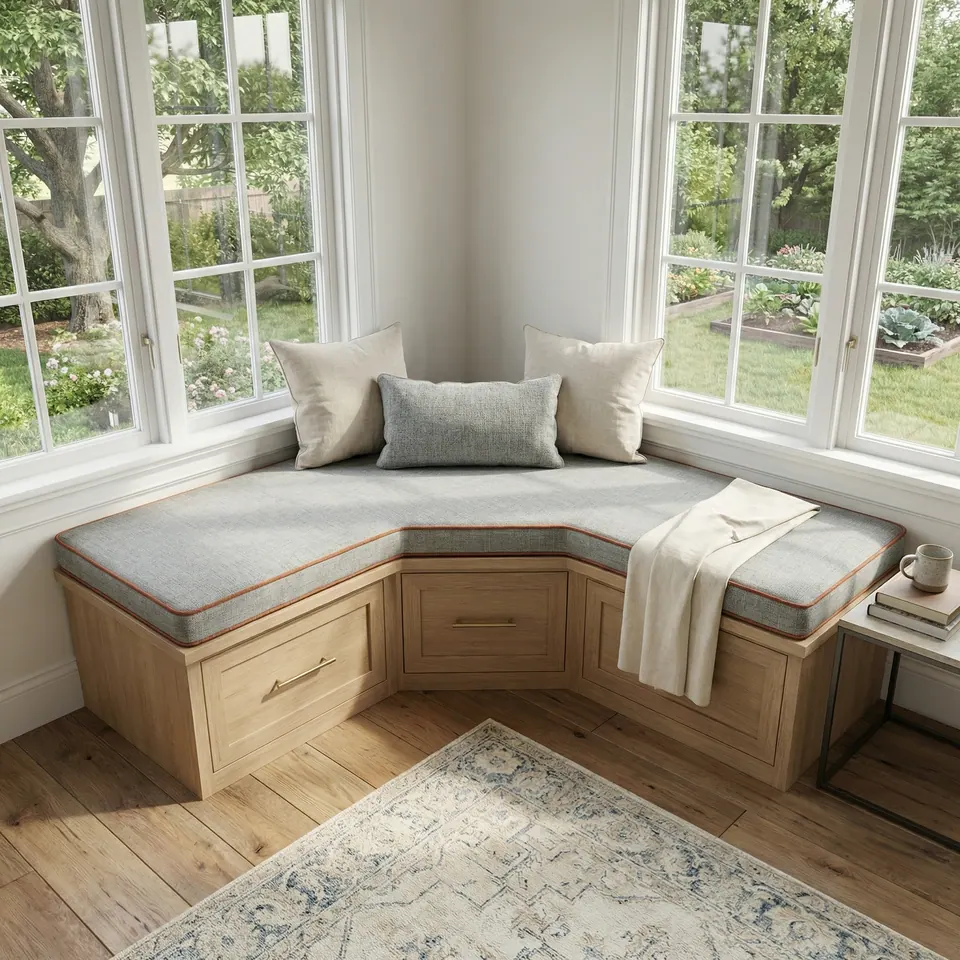
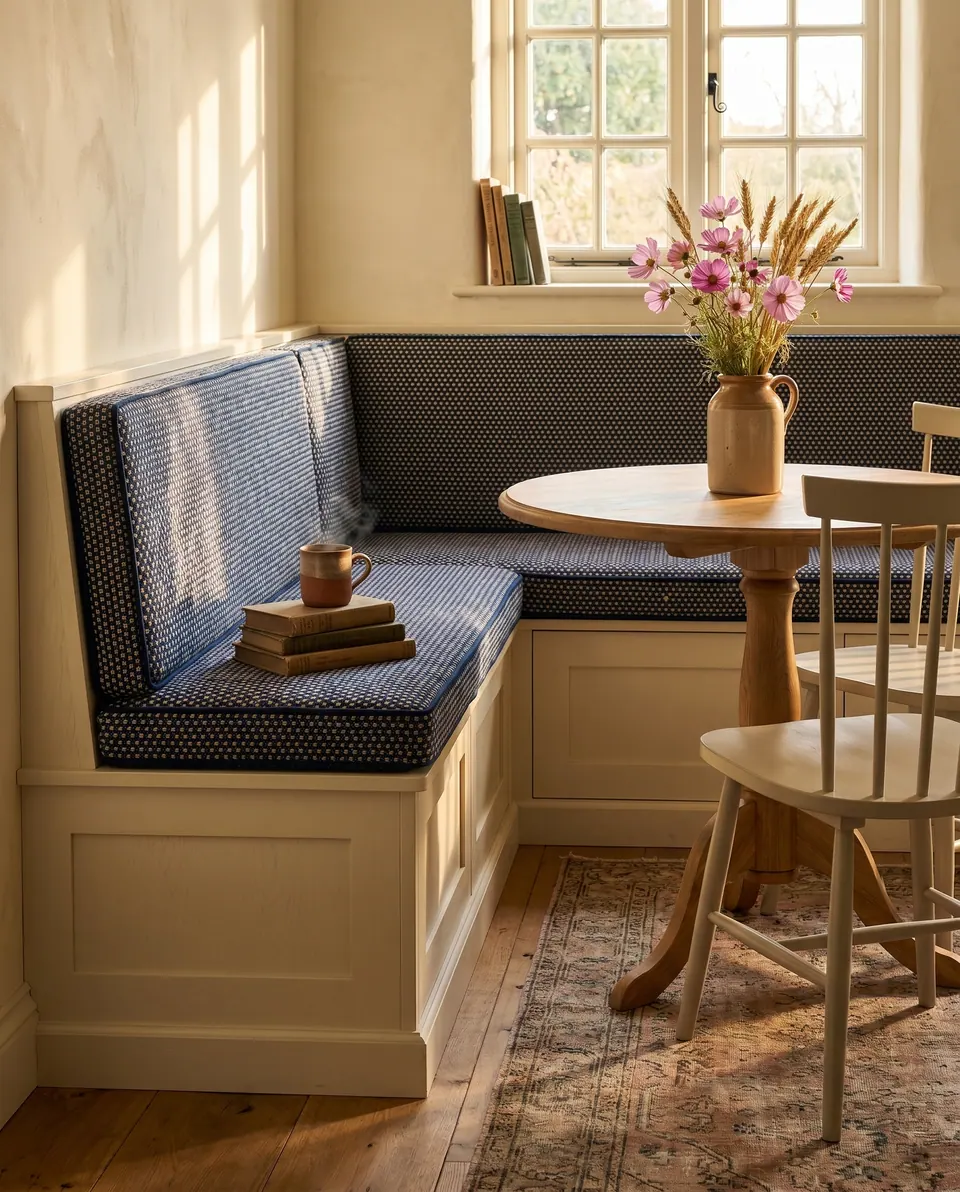
Most settle backs in these photos are bare or wear a throw pillow; for a bench that sees three meals a day, a back pad earns its keep. Which kind is yours, dear? Backrest cushions and kitchen nook cushions show both halves.
A back pad sized around a window lever
An interior designer in the US planned a 75 x 20 x 3 in (191 x 51 x 7.5 cm) bench cushion for a wellness studio, its back cushion leaning on the windowsill. The trim started 4 in (10 cm) above the seat cushion and a lever 11 in (28 cm) above it.
The workshop advised a back 14 to 16 in (36 to 41 cm) tall and 3 to 4 in thick to hide the lever, left loose so the window could open.
- Measured
- Bench 75 x 20 x 3 in; back pad 14-16 in tall, 3-4 in thick
- What it taught
- Size a back pad around what's on the wall, not just the wall's height.
Before you order the pair
- Seat size inside the arms, at the back and the front.
- Back height from the seat cushion's top, and anything on the wall it must clear.
- Ties with position and length, in writing; see keeping back cushions upright.
- The back as its own item, 'backrest' in the note; table height is in banquette cushion thickness.
A back pad is measured from the top of the seat cushion, not the wood. Most dining backs land near 16 in tall.
Maggie
Buyer questions
- A common question
I have a bench cushion already. Can you make a back cushion to match it?
The workshop's answerYes, in any size and the same fabric, as firm foam or a soft filled pillow. Quote your original fabric code to add one later; one buyer did that for a window-seat back 90 in long, 11 in high and 3 in deep.
- A common question
My bench back leans. Can the back cushion be a wedge?
The workshop's answerYes. Send the width, the height and the thickness at top and bottom, such as a 28 x 24 in wedge tapering from 9 in to 4-5 in. On an angled dining bench, the bottom edge can be shaped to sit better on the seat.
- A common question
Could the back be a padded board I screw to the wall?
The workshop's answerNot normally; there's no rigid board for screws or a French cleat. The back is made like a back pillow, about 4 in (10 cm) of shredded foam or a fiber-wrapped foam core, hung by top-corner ties from hooks or a rail.
Questions buyers ask next
Is a dining bench back pad included in the seat pad price?
No. Seat and back are separate items: add the back at its own size and write 'backrest' in the note so the pair is read together.
Will a back pad stand upright on a settle by itself?
It leans on the bench back or the wall. Ties at the top corners stop it slumping, and double piping can give a back pad enough structure to stay put without straps.
Is a bench back pad as firm as the seat pad?
By default backrests are a little softer than seats, but a back can be made just as firm if you want a flatter, more structured look.