 Save
A Reading by ÉlodieBench Cushions
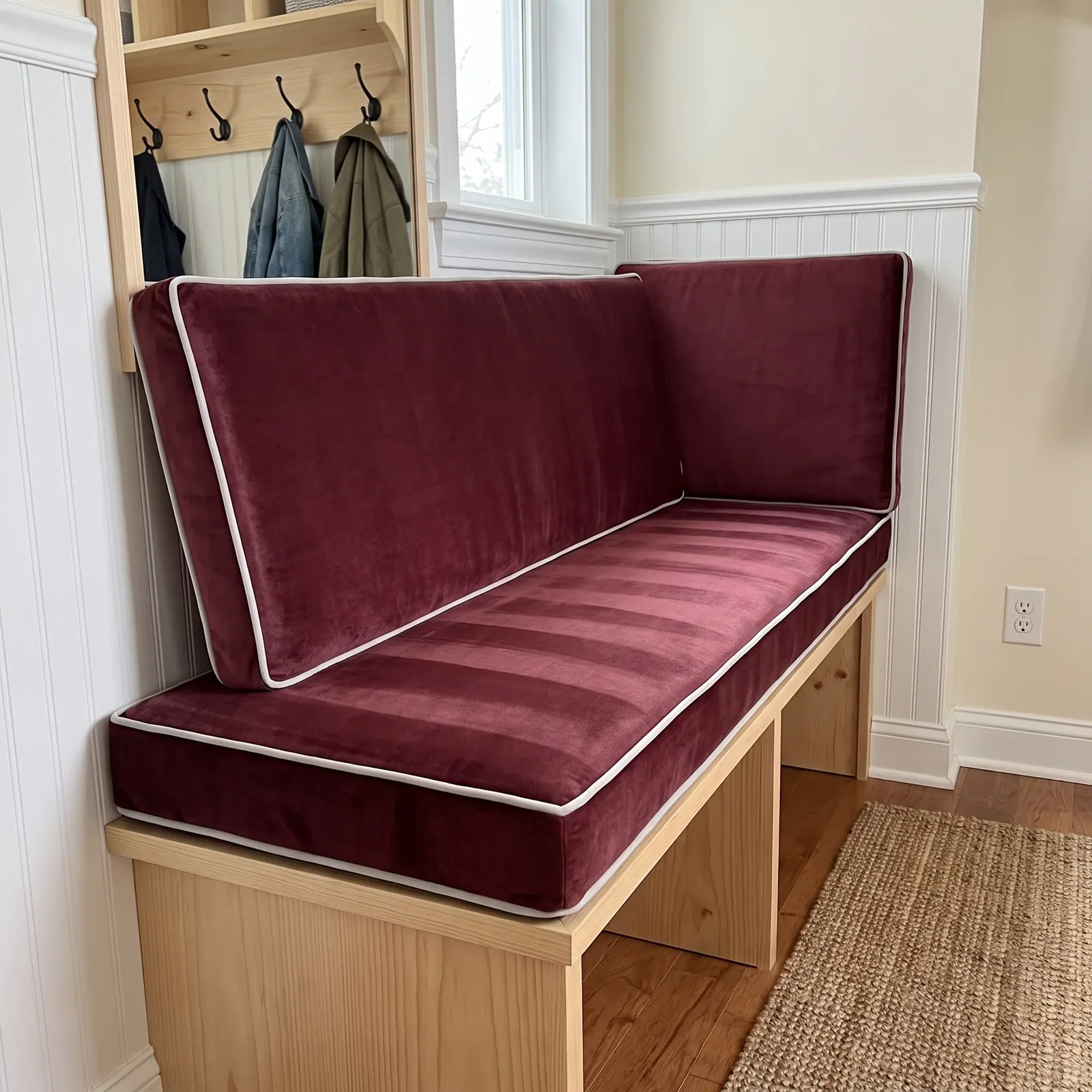
A wine velvet mudroom bench cushion with ivory piping and two back pads, made for lingering
Élodie reads a mudroom bench by its palette: deep wine, a pale welt, knotty pine and beadboard. And she asks what makes a seat by the door comfortable for more than a minute.

Swatch strip measured from the photograph
- deep brick red#46171e27%
- chestnut#80574724%
- taupe#ae967f19%
- oatmeal#cac1b418%
- mist#dcdcdc13%
The quick answer
A mudroom bench becomes a place to linger when it has back cushions to lean on, a seat deep enough to sit back while pulling on boots, and a fabric that feels warm. Here wine velvet with ivory piping covers one long seat and two back pads, one on each wall, meeting in the corner. Confirm every backrest size before production.
Swatch strip: the mudroom in seven colors
- Wine red velvet#6B1E2CSeat and both back pads; deep enough to feel like a small room inside the room.
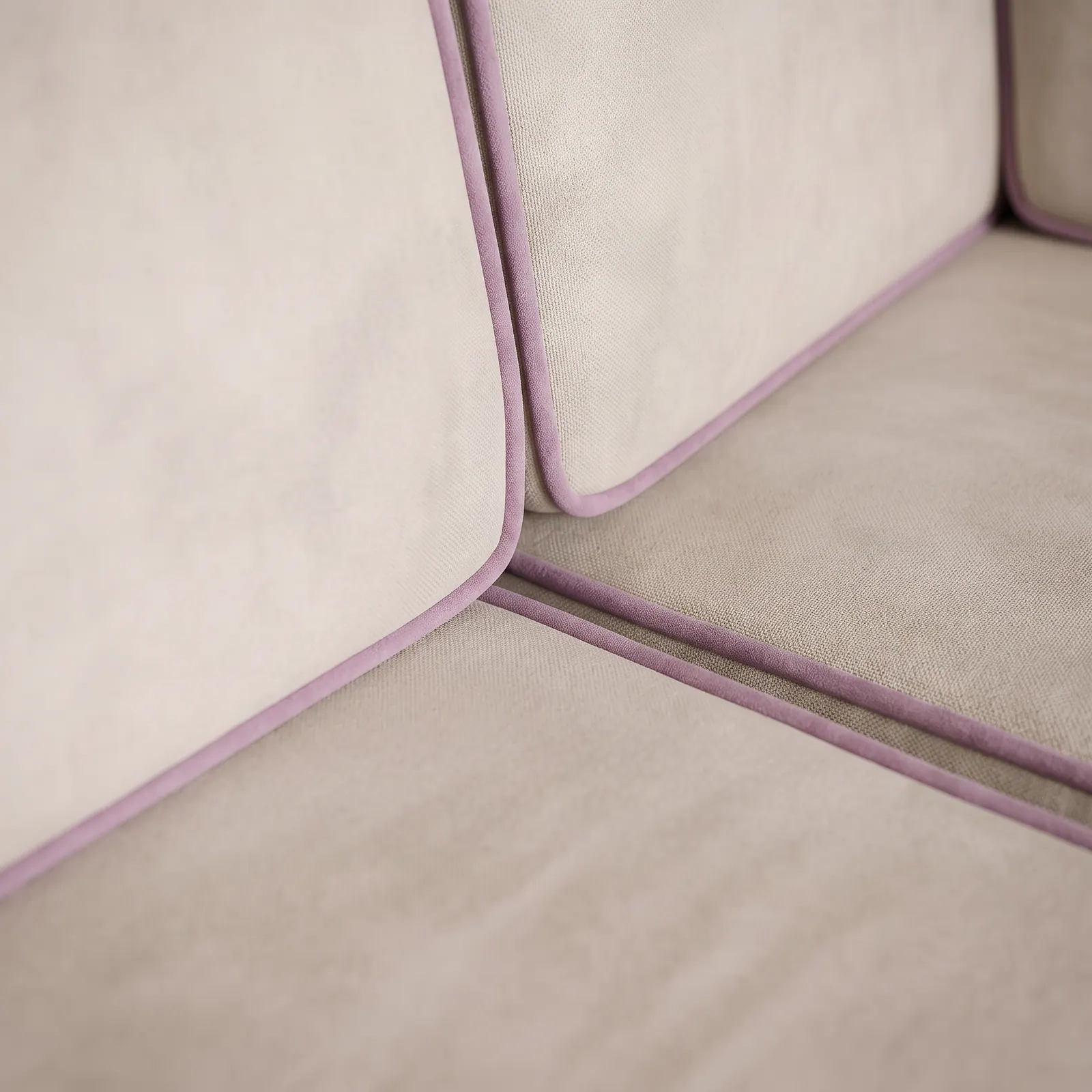
- Ivory welt#F1EADBThe piping on every edge; it keeps the wine from reading as one heavy block.
- Knotty pine#D2A36AThe bench base; a warm, honest yellow under a cool-leaning red.
- Beadboard white#F3F1EAThe wainscot; its vertical grooves give the backs a quiet stripe to lean against.
- Jute#B79A6CThe rug; rough and dry where boots land, so the velvet doesn't have to be.
- Parka olive#5B5A3BBorrowed from a coat on the hook; the one outdoor color in the room.
- Washed denim#4A5D7EThe jacket beside it; a cool blue that makes the wine look warmer.
Why wine, and why the welt is ivory
My friends, a mudroom is usually a place you pass through. This one asks you to stay.
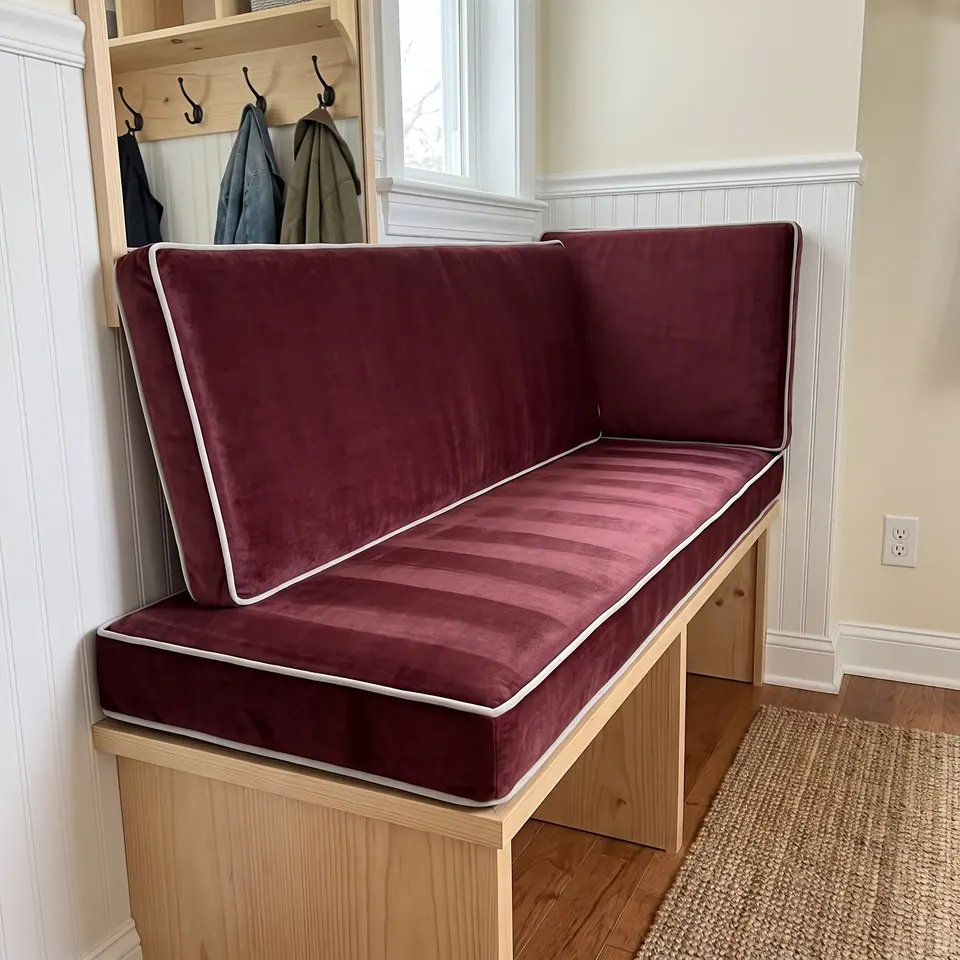
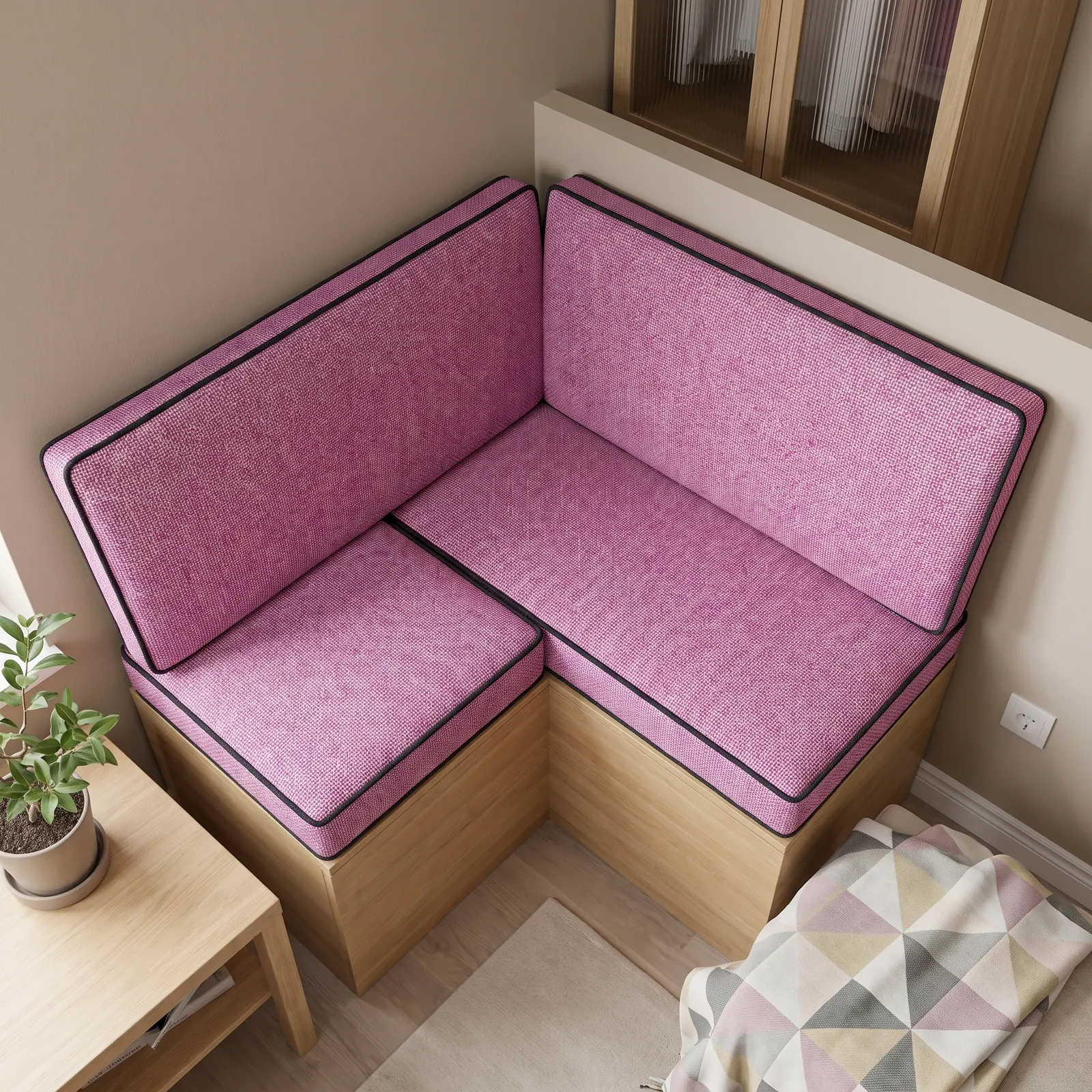
The seat is one long box cushion in deep wine velvet, and the back comes in two pieces: a long pad along the main wall and a shorter one on the side wall, meeting in the corner. Because the backs turn the corner, the seat can stay one unbroken box. Ivory piping outlines every edge. Without it, that much wine against pine and white beadboard would feel heavy; with it, each piece gets a crisp, light edge, like a stitched collar on a dark coat.
Look closely at the seat and you'll see soft pressure marks in the pile. That is velvet being velvet. Near a door it trades some practicality for warmth, and here I think the trade is right. The eye sits down first, and in a room of coats and boots it wants something rich to land on.
Now comfort. Black hooks above hold a denim jacket and an olive parka, and a wall outlet sits in plain view: a working entry, lived in, not staged. You sit here to pull on boots, to wait for someone, to read the mail. For that kind of lingering, three things matter: a back cushion you can truly lean into, a seat deep enough to sit back instead of perching, and backs tall enough to hold you, not just touch you. The back cushion height notes help with the last one. A jute rug below takes the grit so the velvet doesn't have to.
How long do you actually sit on your entry bench? More corners like this live under mudroom and entryway bench cushions.
Five pins by the back door
Five pins read the long back pad, the corner join, the velvet nap, the ivory welt and the coats that prove this bench gets used.
- Long wall back pad
The back runs the length of the bench so you can lean back while pulling on boots.
- Side wall back pad
A second back piece on the short wall meets the first in the corner, letting the seat stay one long box.
- Velvet seat nap
Pressure marks in the pile show that velvet here is a character choice rather than the most practical one.
- Ivory piping
The pale welt stops the deep wine from looking heavy against pine and beadboard.
- Coat hooks
Coats directly above show this is a working entry bench, not a display piece.
- Long wall back padThe back runs the length of the bench so you can lean back while pulling on boots.
- Side wall back padA second back piece on the short wall meets the first in the corner, letting the seat stay one long box.
- Velvet seat napPressure marks in the pile show that velvet here is a character choice rather than the most practical one.
- Ivory pipingThe pale welt stops the deep wine from looking heavy against pine and beadboard.
- Coat hooksCoats directly above show this is a working entry bench, not a display piece.
Three pieces, and the backrests asked about too late
A customer wrote to the workshop about three pieces of indoor wooden furniture, each with a backrest and armrests: one seat about 69¾ x 30 in (177 x 76 cm) and two about 23¼ x 24¾ in (59 x 63 cm). The old cushions had indentations shaped to the frames, so the customer re-measured every piece exactly.
The fabric was a dusty-pink velvet. The workshop sent photos of colors 34, 19 and 26, and the customer chose 26.
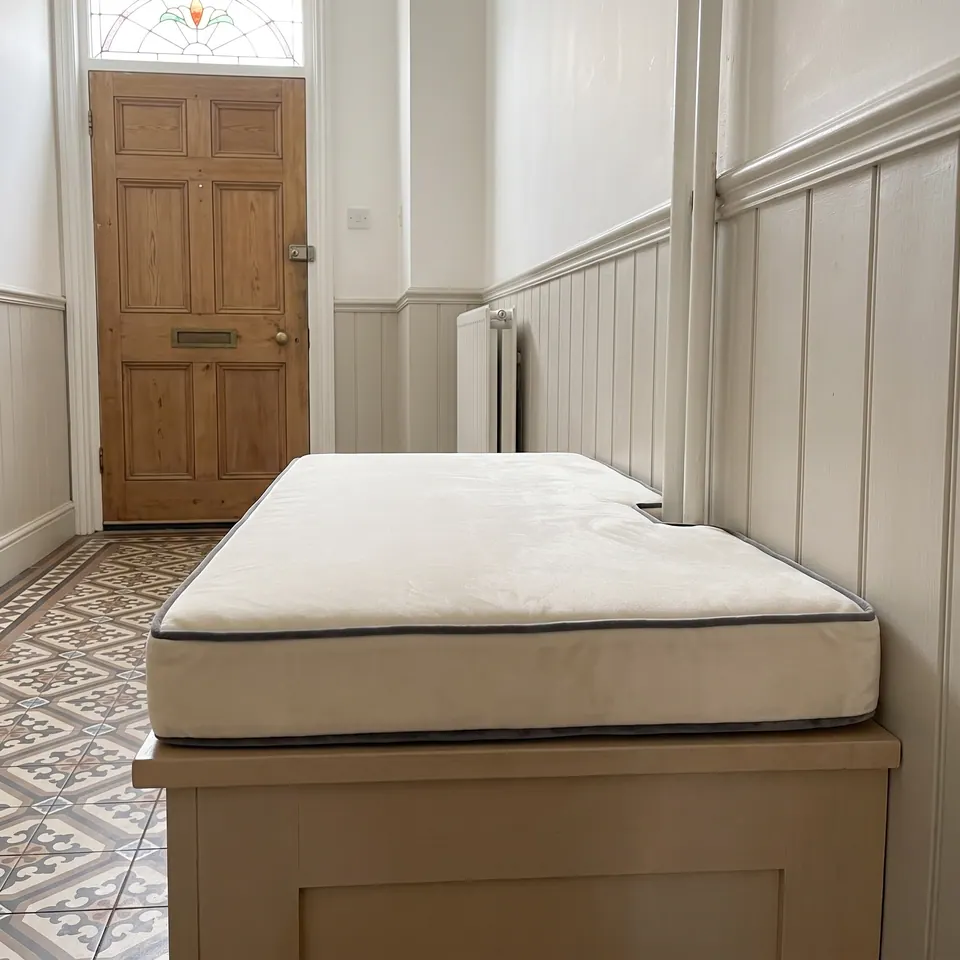
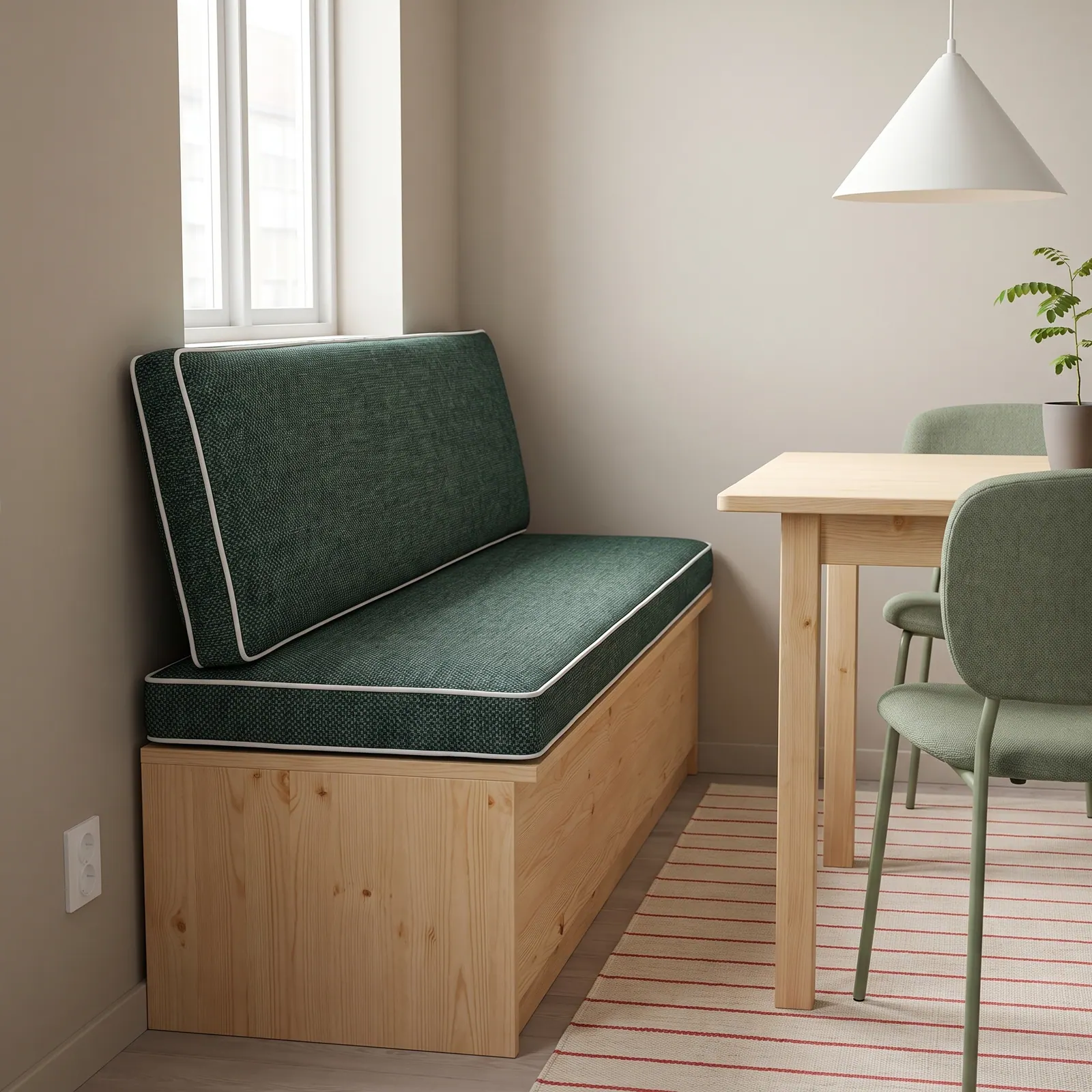
The seats arrived first. Only then did the workshop ask for the backrest sizes, a question that belonged before production, not after. It is the note I would pin above any bench with a back: confirm the backrest dimensions for every piece before anything is cut. Comfort for long sitting lives in the back as much as in the seat. For a bench like the one in the photograph, the bench cushion builder keeps seat and backs on one page.
Buyer questions: a corner spot, an off-white linen and piping at no charge
- A common question
Can you make a cushion for a corner where my bench meets a wall section?
The workshop's answerThe workshop asked for a photo of the space before quoting. In the end the buyer chose one 16 x 65 in (41 x 165 cm) cushion with single-button tufting in a lighter fabric, which could be ordered straight from the listing by picking that size.
- A common question
Is linen L-01 bright white or off-white? I'd rather not have stark white.
The workshop's answerFor a natural off-white, the workshop recommends L-02 instead.
- A common question
Will piping add to the cost?
The workshop's answerNot when it's the same color as the cushion. Matching piping was added to a three-cushion order at no extra charge.
On the cutting table: the wine mudroom set
| Bench | Pine mudroom bench against white beadboard |
|---|---|
| Seat | One long box cushion |
| Backs | Two pads, one per wall, meeting in the corner |
| Fabric | Wine red velvet |
| Piping | Ivory contrast piping on every edge |
| Wear note | The pile shows light pressure marks with use |
| Comfort | Backs to lean on; a seat deep enough to sit back |
| Order tip | Confirm every backrest size before production |
| Best for | Entryways, mudrooms and reading benches by a door |

Have it made
Have this made — ask Élodie’s workshop
Color is easier to settle in a conversation than on a screen. Tell the workshop about the room and the light it gets, and the fabric choice follows. — Élodie
Leave your details and the workshop will call you to confirm measurements, fabric, foam and piping. No prices, dates or payment on this page: it is a request, not an order.
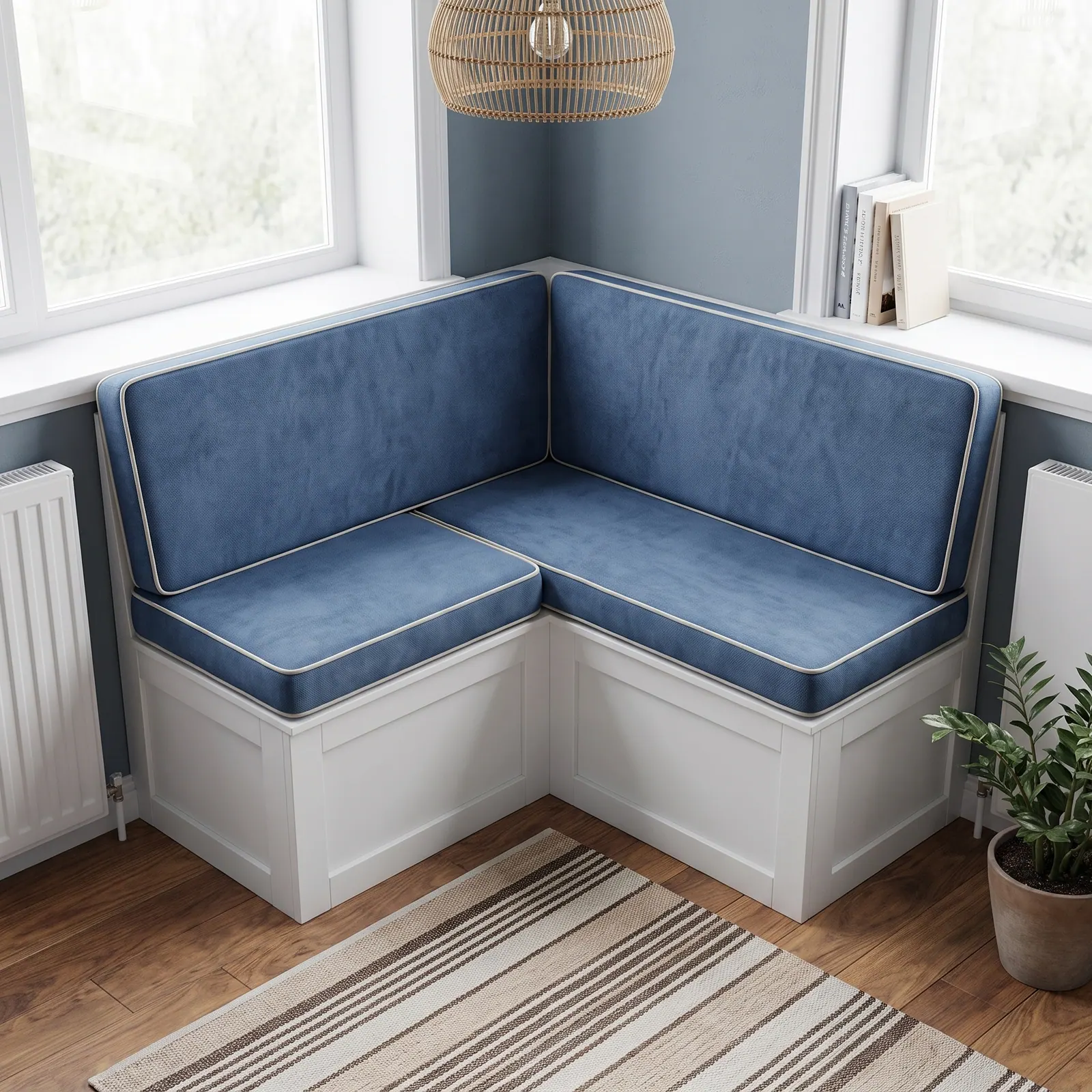
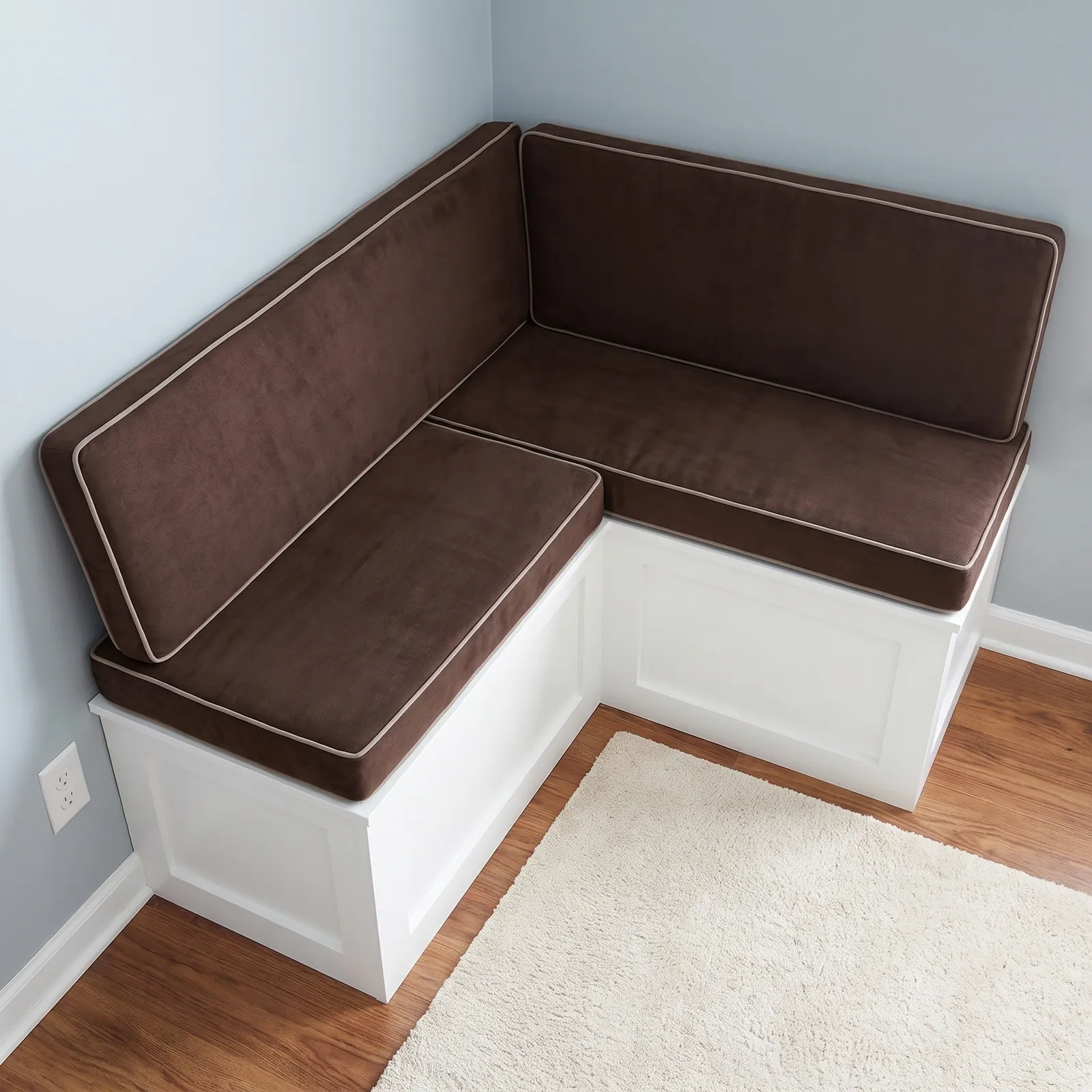
Mudroom bench back cushions can be made in two pieces, one per wall, meeting in the corner, so the seat stays one long unbroken box.
Élodie
Questions buyers ask next
How do back cushions work on a corner mudroom bench?
Make one back pad for each wall and let them meet in the corner. The seat can then stay one long box cushion instead of two pieces with a seam right where you sit.
Is velvet a sensible choice for an entryway bench?
It is a warm choice rather than the most practical one. The pile shows pressure marks with use, and a door brings grit. A jute rug helps, and pale contrast piping keeps a deep color from looking heavy.
What makes a bench comfortable for more than a minute?
Something to lean on and room to sit back. Back cushions along the wall, a seat deep enough that you aren't perching on the front edge, and a fabric that feels warm turn a boot bench into a place to read the mail.
Why pair ivory piping with a wine red cushion?
It lightens the edge. Deep wine against pine and white beadboard can read as one solid block; a pale welt outlines each piece and repeats the white of the wainscot.
With color and care — Élodie
More entry benches and deep-colored velvet
 Save
 Save
 Save
 Save
 Save
 Save