 Save
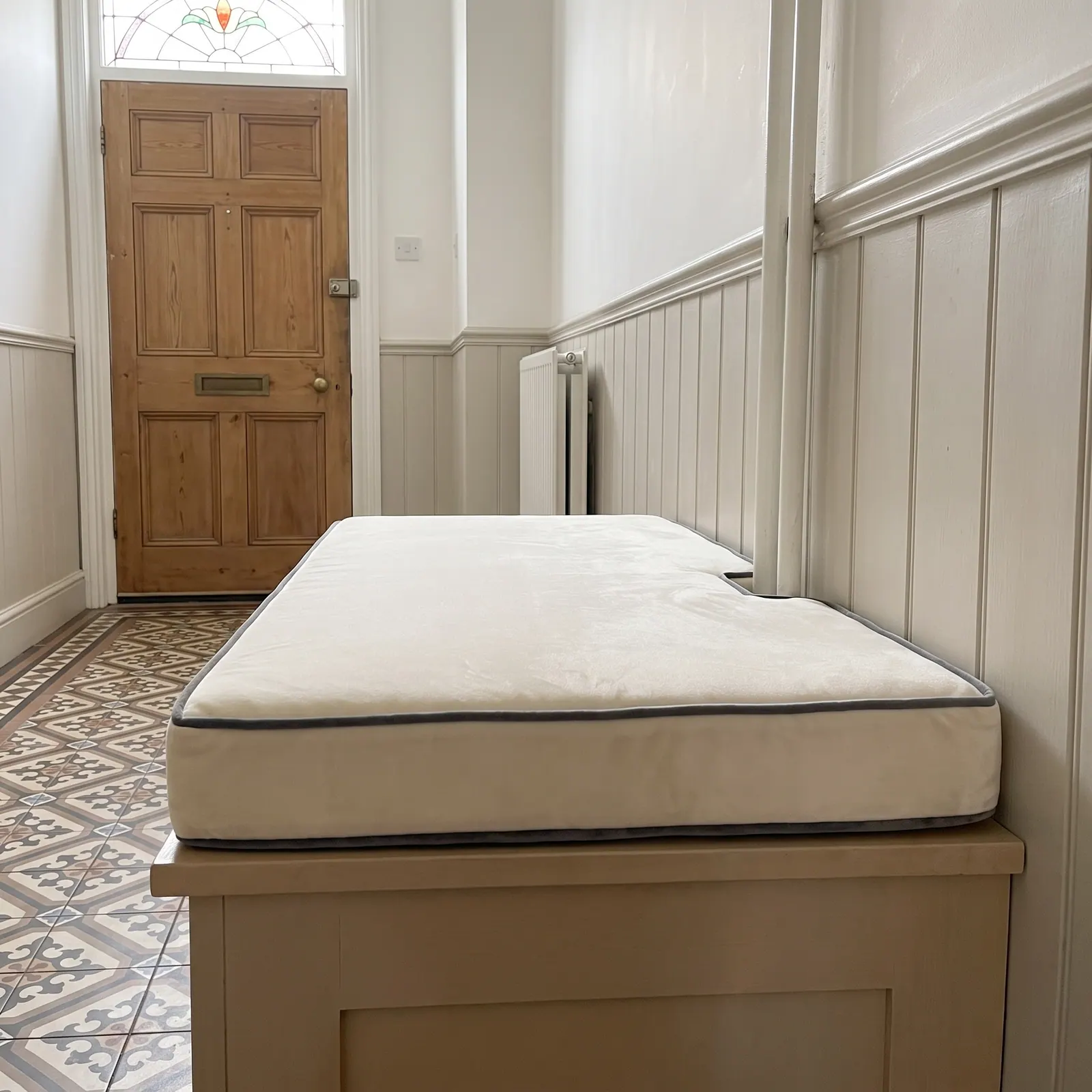
- Pipe box notch
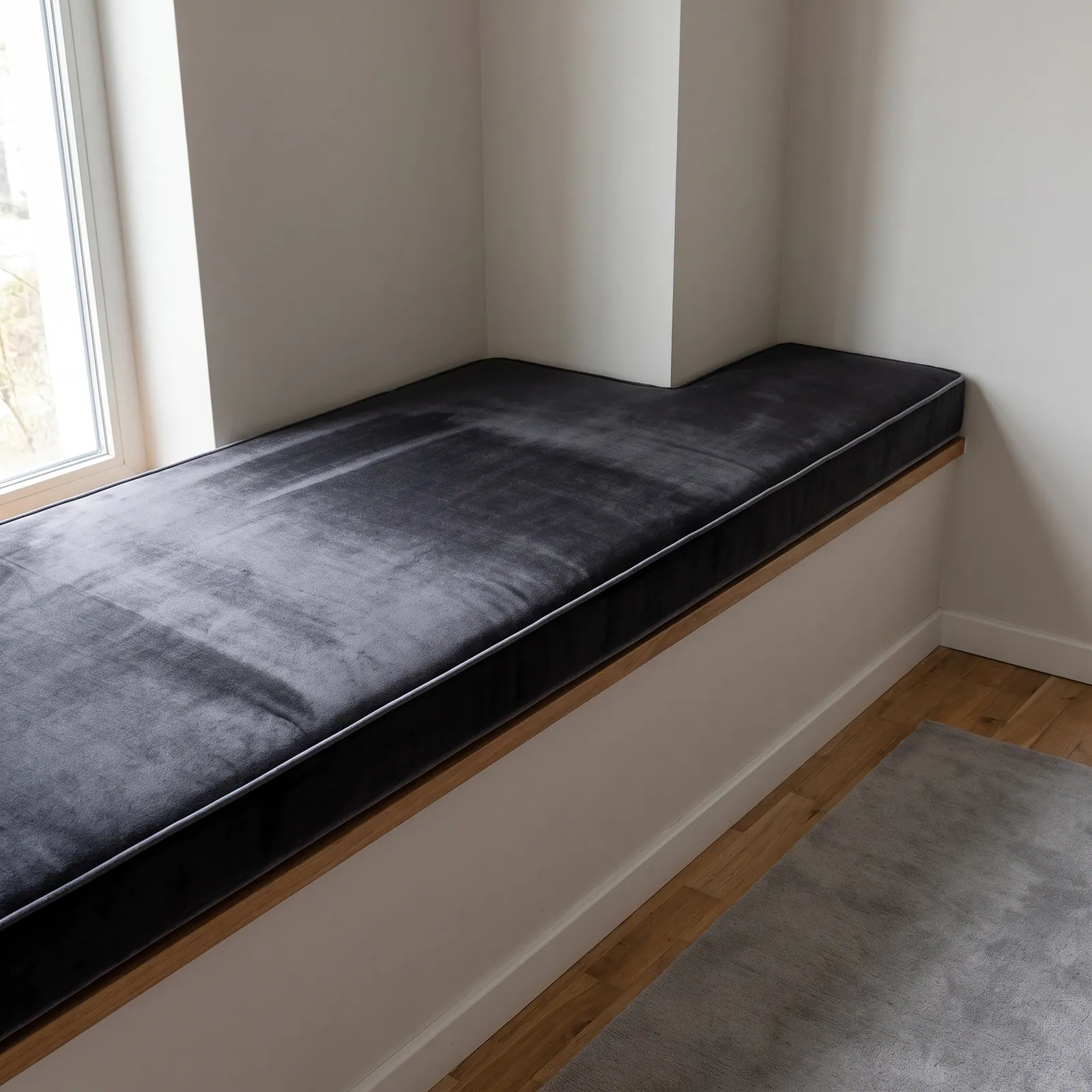
A small square cut-out lets the cushion slide right back to the wall past the boxed-in pipe.
- Graphite piping
Dark welt keeps a cream cushion looking sharp in a hallway where hands and bags brush the edge.
- Deep box gusset
A tall side wall turns a plain storage bench into a proper perch for pulling on boots.
- Encaustic tiles
The gray in the tile pattern is why graphite piping was picked over brown.
- Stained-glass fanlight
Warm pine and colored glass let the cushion stay quiet and pale.
Plate Cream Velvet Hallway Bench Cushion Notched for a Victorian Pipe Box
In a tiled Victorian hall, a cream velvet cushion is cut around a boxed-in pipe so it sits tight to the wall. Graphite piping picks up the gray in the floor tiles.
A Reading by ÉlodieBench Cushions
A cream velvet bench cushion notched for a Victorian pipe box, and the five mistakes it avoids
A tiled hall, a boxed-in pipe and one pale cushion that could have gone wrong five ways. Élodie reads what it got right.

The quick answer
To fit a bench cushion around a boxed-in pipe, measure the pipe box from both the back wall and the side wall so the notch lands exactly, then order the cutout from a sketch. In a busy hall, pair a pale cushion with dark piping taken from the floor, and keep a deep box edge so the seat works for pulling on boots.
Pinned by Élodie: five places this hall could have gone wrong
Each pin marks a decision: the notch, the piping, the gusset, then the floor tiles and the fanlight that set the colors.
The numbers match the pins on the plate.
- Pipe box notchA small square cut-out lets the cushion slide right back to the wall past the boxed-in pipe.
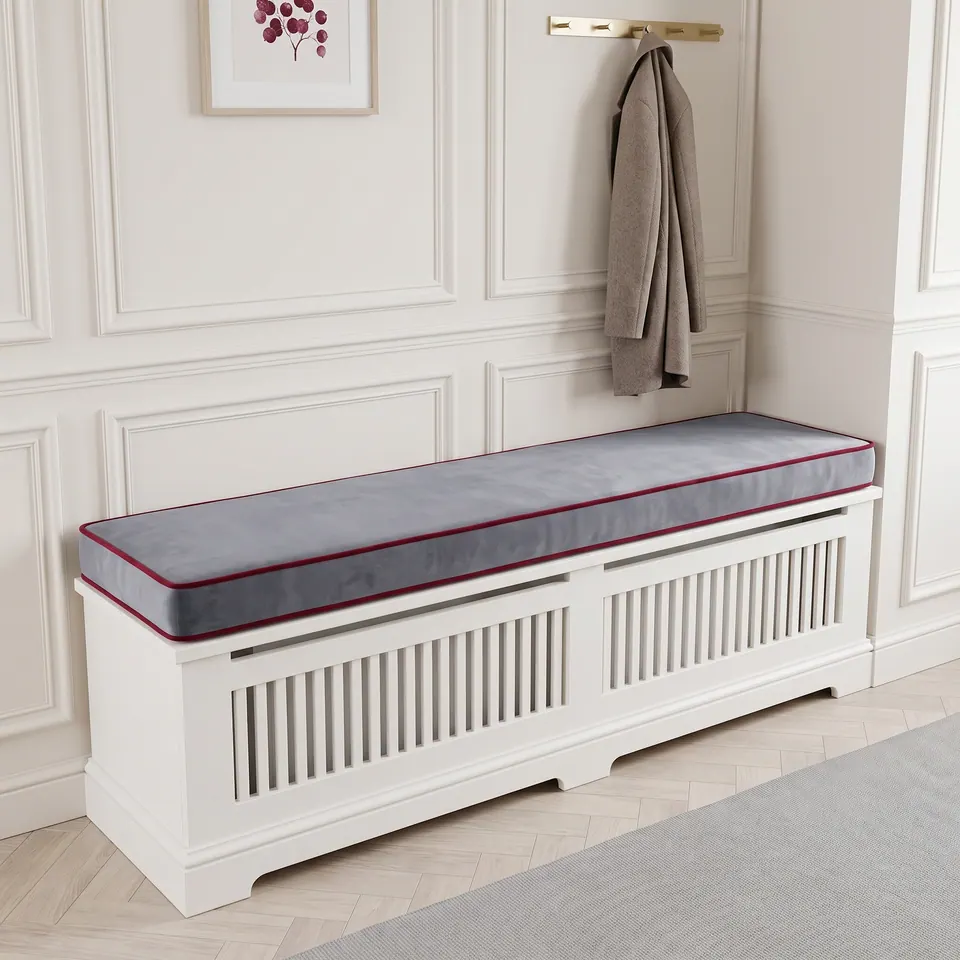
- Graphite pipingDark welt keeps a cream cushion looking sharp in a hallway where hands and bags brush the edge.
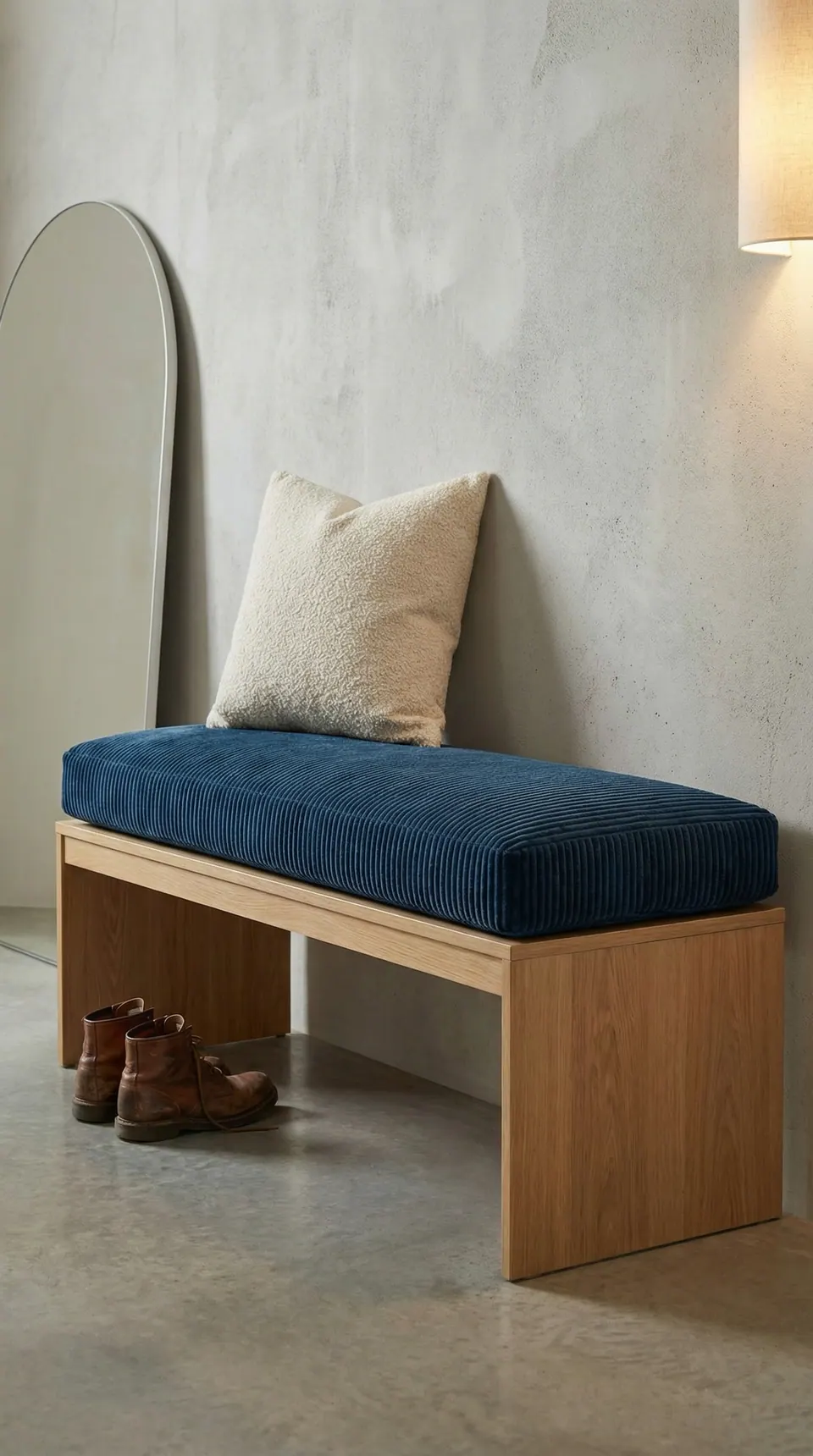
- Deep box gussetA tall side wall turns a plain storage bench into a proper perch for pulling on boots.
- Encaustic tilesThe gray in the tile pattern is why graphite piping was picked over brown.
- Stained-glass fanlightWarm pine and colored glass let the cushion stay quiet and pale.
Cream under colored glass, and one small square cut away
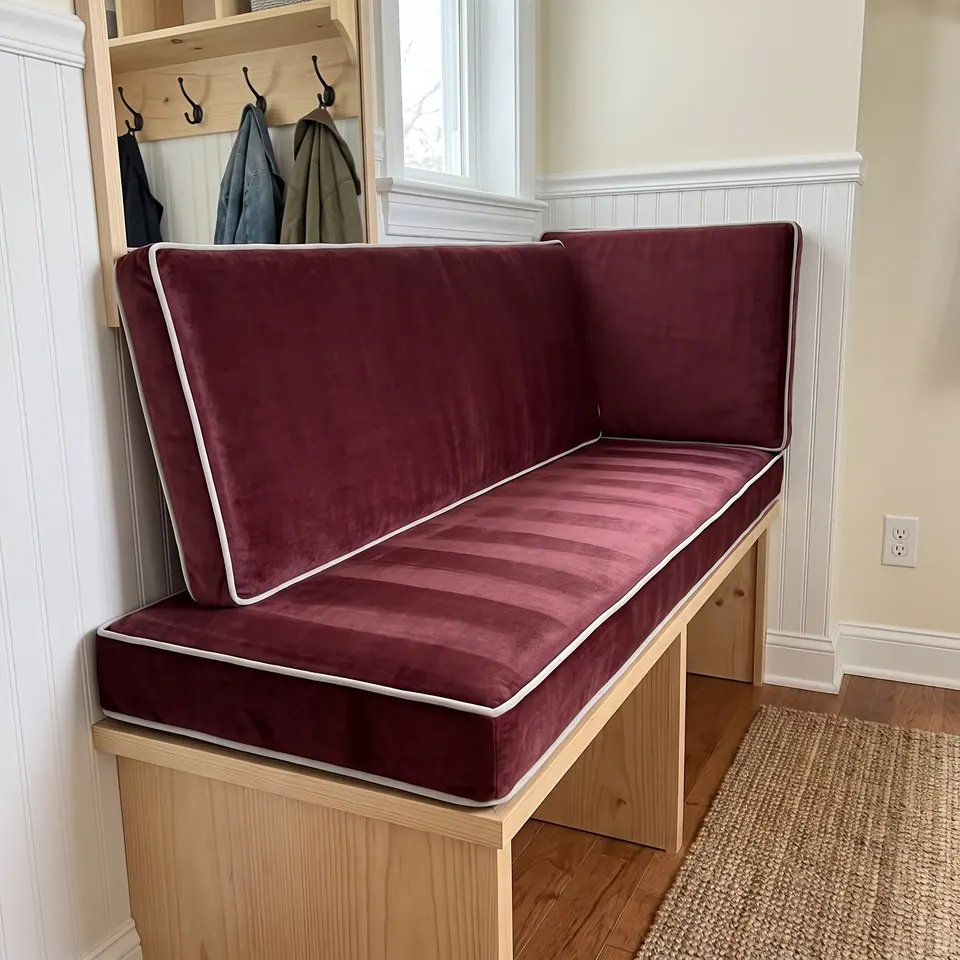
Look at the back right corner, my friends. A small square is cut out of the cushion where a heating pipe was boxed in against the wainscot. Because of it, the seat slides all the way back to the wall instead of perching on the pipe box and tipping forward.
A notch is only as good as two numbers: how far the box sits from the back wall, and how far from the side wall. Measure one and guess the other, and the cutout lands a finger's width off. Velvet is honest about that; the pile crushes and shines wherever it strains against a corner. The notched cushion Pattern shows how to draw it.
Now the color. This hall is already busy: geometric encaustic tiles, a four-panel pine door, a stained-glass fanlight, pale gray tongue-and-groove wainscoting, a white column radiator. Let one color speak and the others listen. The cushion is a plain block of cream velvet so the period details can lead.
The light is cool morning light down a long hall. Cream velvet takes it softly on the pile and warms faintly where the fanlight glass tints it. A stark white would have looked blue and cold; a beige would have gone muddy against the pine.
Then the one dark line. The graphite piping is borrowed from the gray in the tiles, not from a brown in the door. Browse the velvet shelf or mudroom and entryway bench cushions. What color is the floor by your front door?
Five mistakes this hallway avoids
- Measuring the pipe box from one wall only. Measure from the back wall and from the side wall.
- Cream piping by the front door. Hands and bags brush that edge; graphite hides the scuffs.
- Taking the piping color from the fabric card. Here it comes from the gray in the floor tiles.
- A thin pad on a storage bench. A deep box gusset makes it a real perch for pulling on boots.
- A loud cushion in a busy hall. With patterned tiles, pine and stained glass, the seat stays plain cream.
A soft flap for a hard corner
A parent in the US wrote to the workshop about a wooden bench and a baby who had just started crawling. The bench had a hard corner at exactly the wrong height. Could the cushion cover it?
The workshop said yes, and agreed to attach extra fabric to the cushion as a soft flap over the corner. Before cutting, it asked for two things: a wide-angle photo, to place the flap in relation to the zipper side, and the corner's thickness, 1.75 in (4.4 cm), to set how far the fabric should drop.
It is the same lesson as the notch in this hall. Any add-on, a flap or a cutout, is placed against the zipper side before the scissors come out.
On the cutting table: the notched hall bench
| Piece | Entryway bench cushion with one back-corner notch |
|---|---|
| Fabric | Cream velvet |
| Piping | Contrast welt in graphite gray |
| Edge | Deep box gusset |
| Notch | Square cutout around a boxed-in heating pipe |
| Measure | Pipe box from the back wall and from the side wall |
| Thickness | 4 in (10 cm) standard; 2, 3 or 8 in on request |
| Best for | Period hallways, storage benches, pulling on boots |

Have it made
Have this made — ask Élodie’s workshop
Describe the room at four in the afternoon: the floor, the wall, the one color you love. That is where a good fabric choice begins. — Élodie
Leave your details and the workshop will call you to confirm measurements, fabric, foam and piping. No prices, dates or payment on this page: it is a request, not an order.
Buyer questions: thickness, piping and toddlers
- A common question
Could the cushion be 2 in thick instead of 4 in?
The workshop's answerYes. Place the order and write in the personalization box that you want 2 in (5 cm). The standard thickness on the corduroy and linen bench cushions and on the tufted floor cushion is 4 in (10 cm), and it can be changed to suit you.
- A common question
Can the piping match the cushion fabric, or can I leave piping off altogether?
The workshop's answerAny of the three works: self piping in the same fabric, which is the simplest to make, a contrast color, or no piping at all. For outdoor cushions the workshop recommends self piping, because it looks tailored and reinforces the edges.
- A common question
We have a small dog and a toddler. Which fabric should we pick?
The workshop's answerThe striped fabrics are 100% cotton, beautiful but quicker to stain. For easy cleaning, choose from the linen, soft or velvet ranges, all with removable, machine-washable covers. If the dog will be on the cushion constantly, the pet-friendly chart has extra-durable fabrics.
A notched bench cushion fits a pipe box only when the box is measured from both the back wall and the side wall, never from one alone.
Élodie
Questions buyers ask next
How do I measure for a bench cushion notch around a boxed-in pipe?
Measure the pipe box's width and depth, then its distance from the back wall and from the nearest side wall. Draw the seat from above with the cutout in place, write every number on its edge, and send the sketch with a photo.
Why put dark piping on a pale hallway cushion?
The front edge takes the most contact from hands, bags and coats. A dark welt such as graphite hides those scuffs and keeps the outline crisp, while the pale top still lightens the hall. Take the piping color from the floor.
Is cream velvet sensible so close to a front door?
It can be, if the cover is removable and washable and the edge is piped in a darker color. Velvet is among the easier ranges to clean; for a dog that will use the seat all day, look at the pet-friendly chart instead.
With color and care — Élodie
More photographs to read
 Save
 Save
 Save
 Save
 Save
 Save