A Reading by NateBay Window Cushions
An oatmeal trapezoid bay window cushion, and why the room around it stays bare
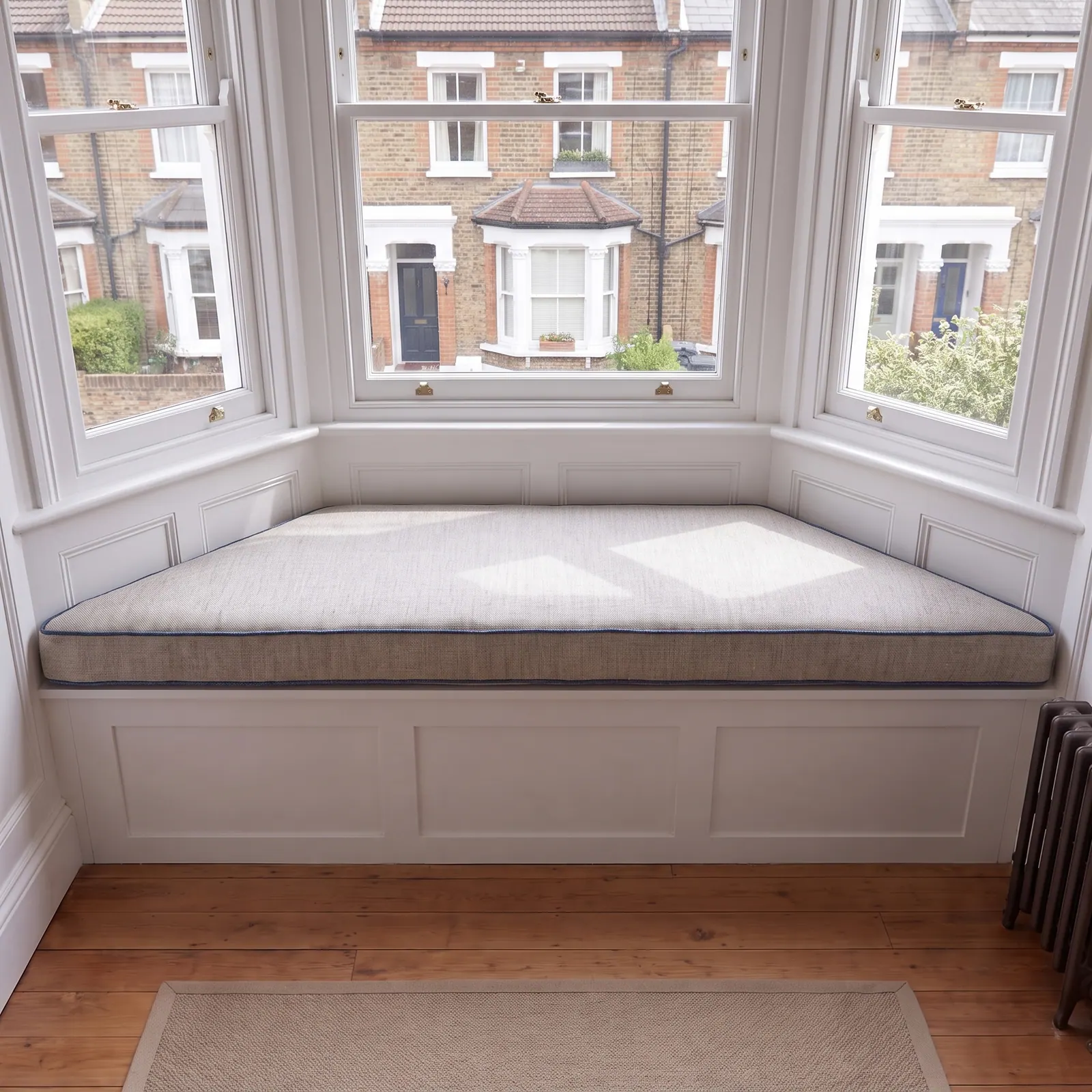
Nate reads a Victorian bay seat where the props are the house itself: sash catches, a radiator, pine boards and a jute rug. Here is why nothing was added, and how to copy the restraint.

 Save
The quick answer
A bay window cushion looks built in when it is cut as a true trapezoid that meets both angled sides, kept slim at roughly a quarter of the seat base's height, and edged with one thin contrast piping line. In a period bay, let the window hardware, radiator and floorboards do the styling, and skip the pillows.
Field notes: zero triangles of bare board
Zero triangles of bare board. That was the first line in my notes, partner, and it is the whole reason this seat looks built rather than bought.
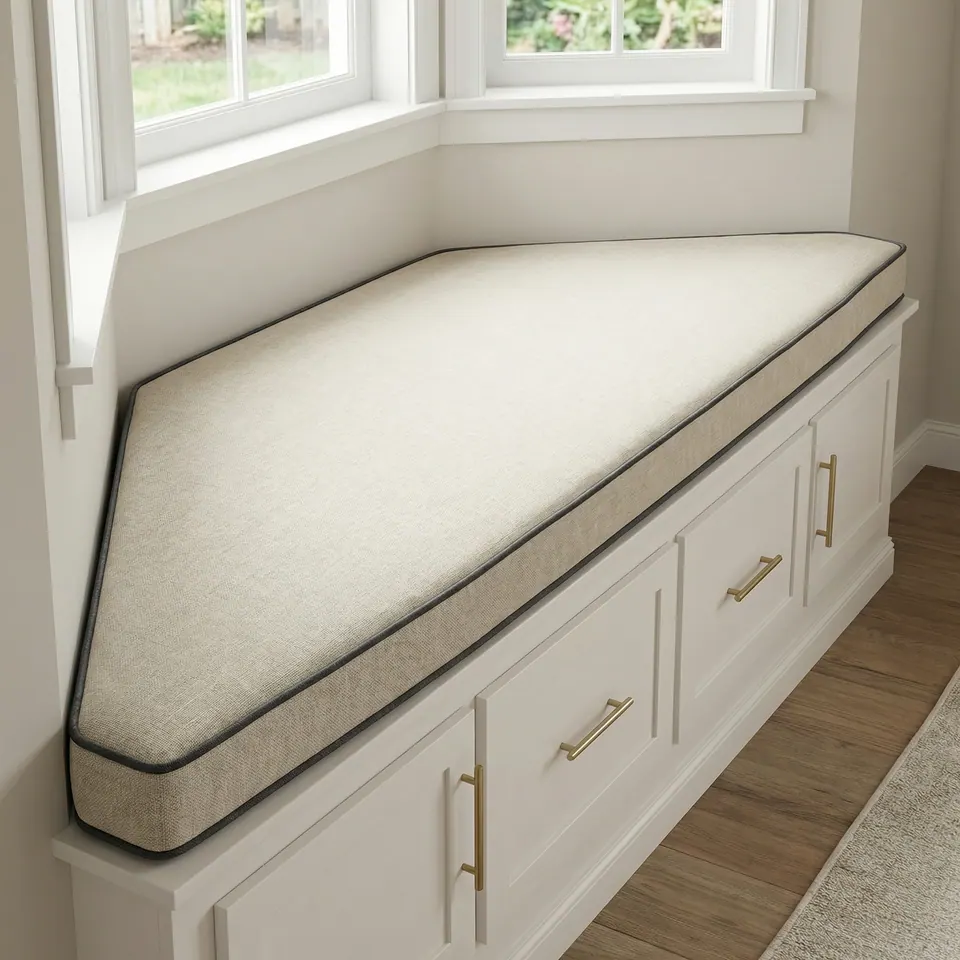
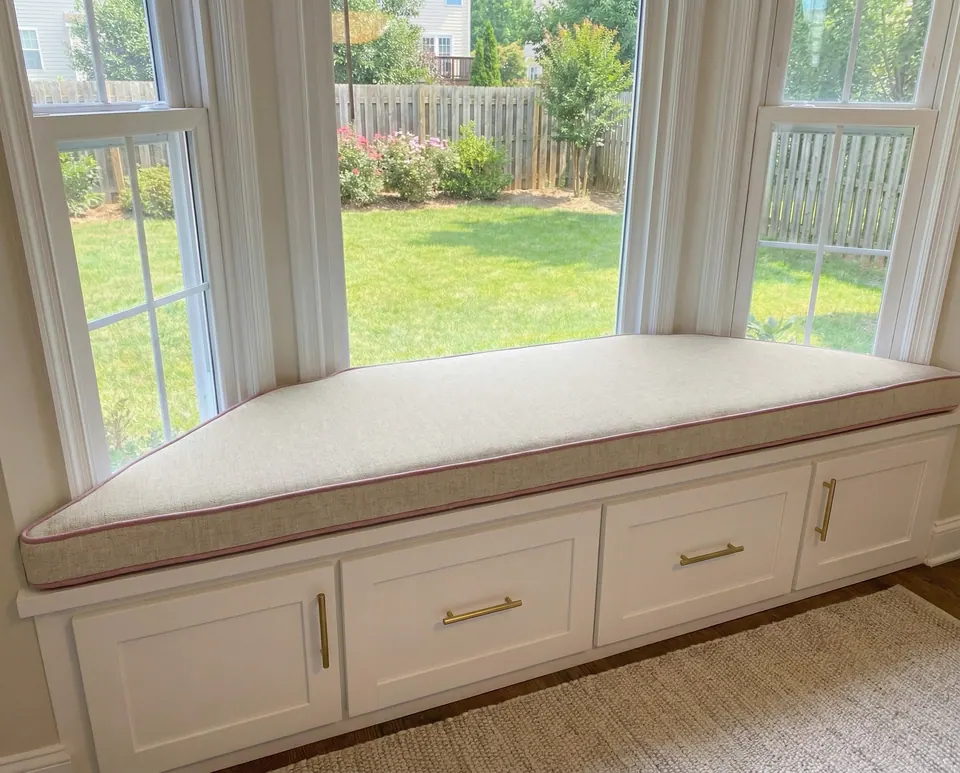
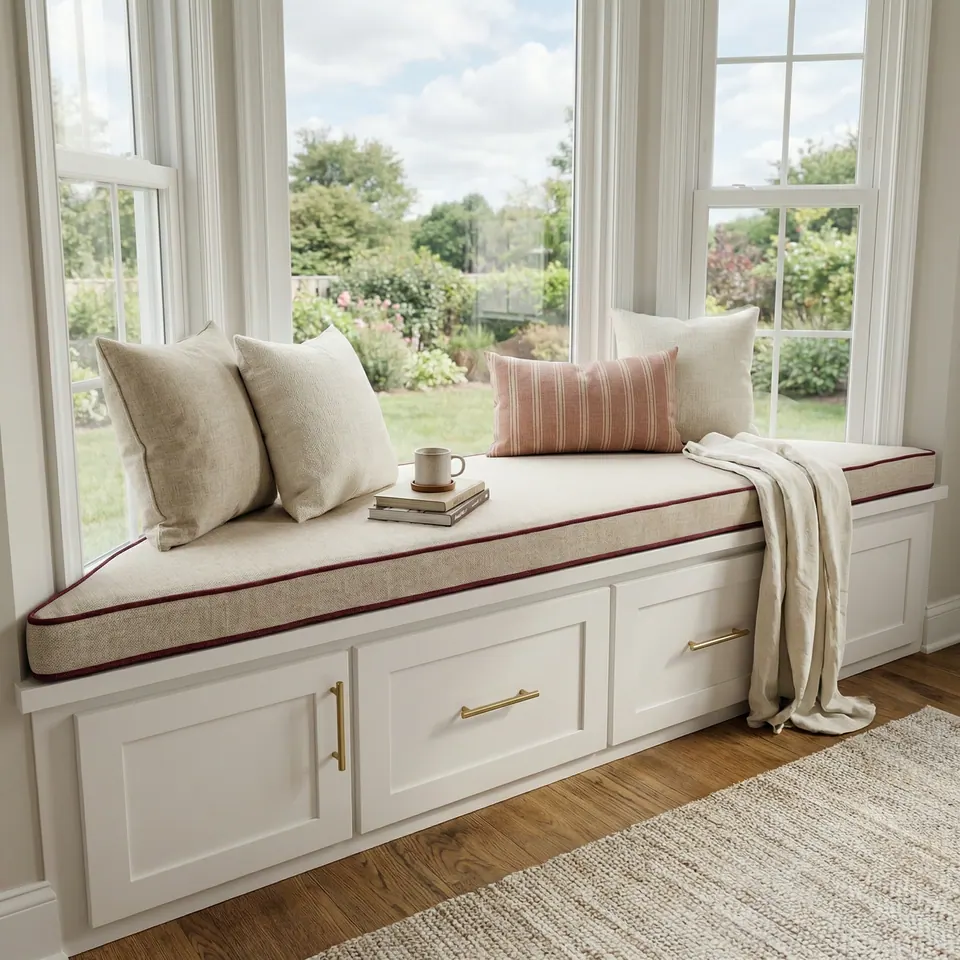
The cushion is a trapezoid: two parallel edges and two angled sides that run tight against the side windows of the bay. A rectangle with trimmed corners would leave gaps you notice every time you sit. Angles are just lengths in disguise; measure them as lengths and the shape closes.
Proportion next. The cushion is a slim box, roughly a quarter of the paneled base's height. That ratio keeps the brass sash catches in reach and in view, which matters in a house where someone still opens the windows by hand.
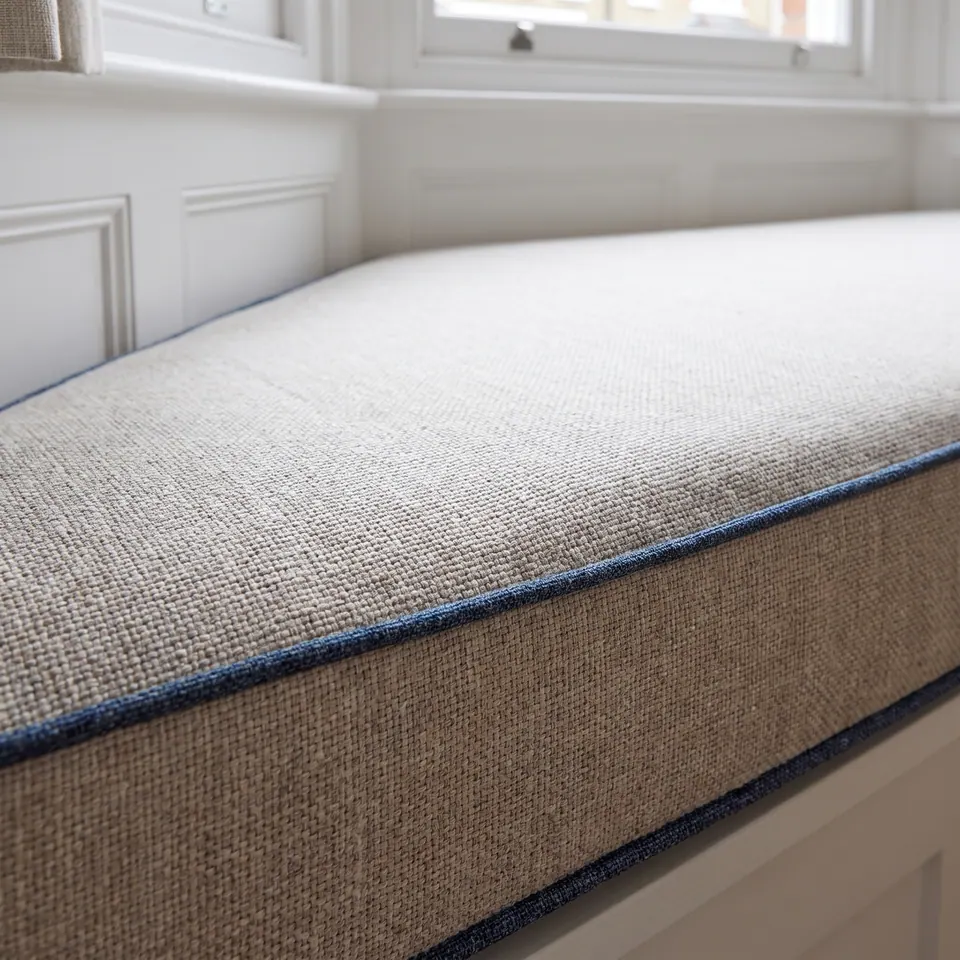
The body is an oatmeal linen-look weave, codes L06 and L44, close in tone to the white paint and the jute rug. The only accent is a thin indigo contrast piping line. It outlines the shape without adding bulk, and the color is not random: it echoes the dark front doors across the street.
Now the styling question. There are no pillows. No throw. No plant. The props are the house: three-sided sash windows with brass catches, a white paneled plinth, pine floorboards, a jute rug, a cast iron column radiator, brick row houses outside. Each one already does a job, and a stack of pillows would hide half of them.
To copy it, pick a natural fabric within one shade of your trim paint, take the piping color from something dark you can see from the seat, and run the angles through the bay window calculator. What is the one period detail in your bay you would hate to cover?
Pinned by Nate
Follow the pins from the trapezoid top and its indigo line to the brass catch, the radiator and the jute rug, each a prop the house already owned.
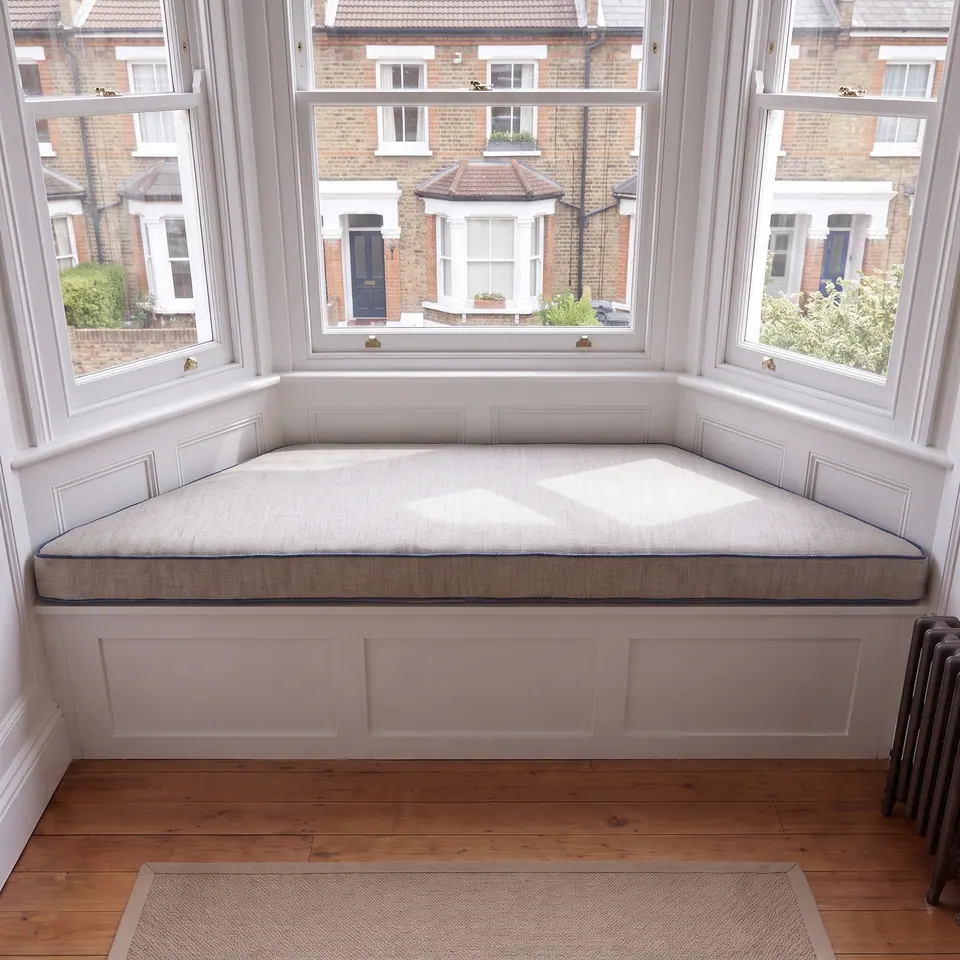
- Trapezoid cushion top
The cut meets both angled sides, so no bare board shows at the corners.
- Indigo piping
A thin dark line outlines the shape without adding bulk.
- Brass sash catch
A slim cushion keeps the window hardware in reach and in view.
- Cast iron radiator
Period details are left plain so the cushion reads as part of the joinery.
- Jute rug
Natural fiber underfoot matches the oatmeal body fabric.
- Trapezoid cushion topThe cut meets both angled sides, so no bare board shows at the corners.
- Indigo pipingA thin dark line outlines the shape without adding bulk.
- Brass sash catchA slim cushion keeps the window hardware in reach and in view.
- Cast iron radiatorPeriod details are left plain so the cushion reads as part of the joinery.
- Jute rugNatural fiber underfoot matches the oatmeal body fabric.
Prop inventory: what is in the frame, and what it is doing
| Prop | Why it is there | How to copy it |
|---|---|---|
| Brass sash catches | A slim cushion keeps them in reach and in view | Keep the cushion top below the lowest window hardware |
| Cast iron column radiator | Left plain, it lets the cushion read as joinery | Let one period piece stay the ornament |
| Jute rug | Natural fiber underfoot matches the oatmeal body | Choose a rug within one shade of the cushion |
| Pine floorboards | Warm wood grounds the white paint | Leave the floor near the seat bare |
| Brick row houses, dark doors | The view supplies the indigo | Take the piping color from the view |
A 107.5-inch bay sketch and the check I would run on it
A buyer wrote to the workshop with a sketch of a trapezoid bay seat about 9 ft wide: back edge 107.5 in (273 cm), front edge 55 in (140 cm), two angled sides of 32.5 in (82.5 cm) and 23 in (58 cm) of depth.
The shop laid out the options: 2, 3, 4 or 5 in (5 to 13 cm) of thickness, piping included in any color, and a removable cover washable at 86°F (30°C), no dryer. The quote came in above the buyer's budget. Large trapezoid seats are priced as custom shapes, so get the quote before designing a room around one piece.
Here is the check I would run first. Half the difference between the edges is 26.25 in (66.7 cm). With 23 in of depth, a straight angled side works out to about 34.9 in (88.6 cm), not 32.5. When the numbers don't close, the shape has a bend, a return or a slanted back that isn't on the drawing, and one diagonal settles it. The trapezoid calculator does the arithmetic, and the bay window cushion atlas shows common layouts.
On the cutting table: the oatmeal bay seat
| Piece | Trapezoid bay window cushion |
|---|---|
| Fabric | Oatmeal linen-look weave, codes L06 / L44 |
| Piping | Contrast piping in indigo |
| Edge | Slim box edge |
| Thickness | Roughly a quarter of the paneled base's height |
| Shape | Two parallel edges, two angled sides meeting the bay walls |
| Measure | Back, front, both sides, depth, plus one diagonal |
| Setting | White paneled Victorian bay, sash windows, pine floor |
| Best for | Period bays where the architecture does the styling |

Have it made
Have this made — ask Nate’s workshop
Send the numbers in inches: length × depth × thickness, plus any angle. The workshop checks them with you, because foam has no undo button. — Nate
Leave your details and the workshop will call you to confirm measurements, fabric, foam and piping. No prices, dates or payment on this page: it is a request, not an order.
Three shape-and-finish questions
- A common question
Can you cut a window seat cushion around a pillar notch and an indent in the sill?
The workshop's answerYes. Send a hand-drawn sketch with every measurement and a few wide-angle photos of the sill. The shop quotes from those, and once you have chosen your fabric and piping codes it sends a private payment link for the custom piece.
- A common question
Could you make a button-tufted bench or daybed cushion, and would the cover still come off to wash?
The workshop's answerThe tufted model can be made, custom sizes included, with flat piped sides and a diagonal button pattern instead of rows. Because the buttons go through the whole cushion, the cover can't come off or go in the machine; it is spot clean only.
- A common question
Is a non-slip bottom extra, and can a cover with one still go in the washing machine?
The workshop's answerIt is a per-cushion add-on. The older backing made covers unwashable, so the shop sourced a new non-slip material that keeps covers washable at 86°F (30°C). It has to be brought in to the workshop, so it adds a little lead time.
A bay window cushion cut as a true trapezoid meets both angled walls, so no triangles of bare board show at the corners.
Nate
Questions buyers ask next
Why cut a bay seat cushion as a trapezoid rather than a rectangle?
Because the side walls of a bay are angled. A trapezoid meets both of them, so no triangles of bare board show at the corners and there is less room for the cushion to shift. A rectangle leaves those gaps every time.
How slim should a cushion be on a Victorian bay seat?
Slim enough to keep the window hardware usable. Here the box is roughly a quarter of the paneled base's height, which keeps the sash catches in view and in reach. Measure from the seat top to the lowest catch before choosing a thickness.
What piping color works on an oatmeal linen-look cushion?
A dark one, used thin. Indigo here outlines the trapezoid without adding weight and repeats the dark doors visible through the window. Take your piping color from something you can see from the seat, not from the swatch book alone.
± 1/4 in — Nate