A Reading by NateBay Window Cushions
An oatmeal trapezoid bay window cushion, and how to mix patterns around an angle
One plain, one texture, zero stripes on the seat. The garden supplies the pattern. Here is the geometry behind that choice.
The quick answer
On a trapezoid bay window cushion, keep the angled seat plain or softly textured and put stripes on rectangular pillows, because a stripe meets the angled ends on a slant. Take the piping from one outside color, like blush pink from flowering shrubs. Order with front length, back length and front-to-back depth; with equal sides, the angle follows from those three.

 Save
 Save
 Save
 Save
 Save
 Save
 Save
Pinned by Nate, across three sashes
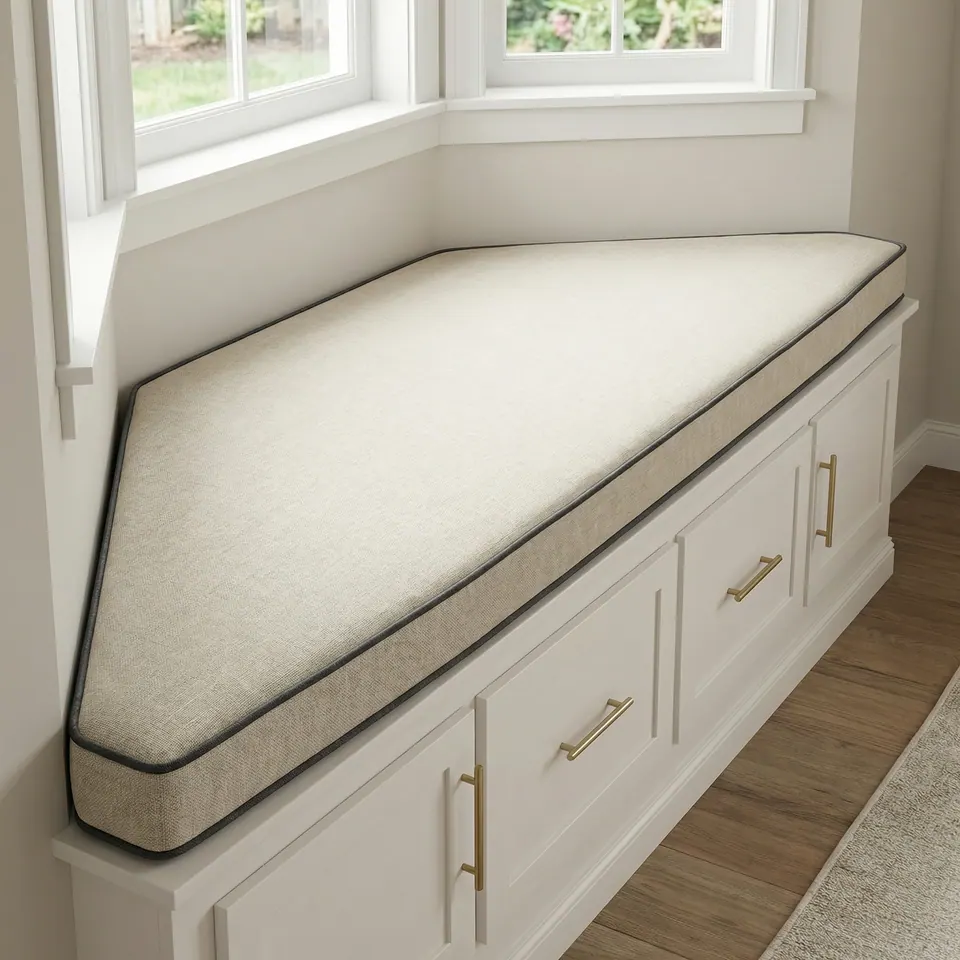
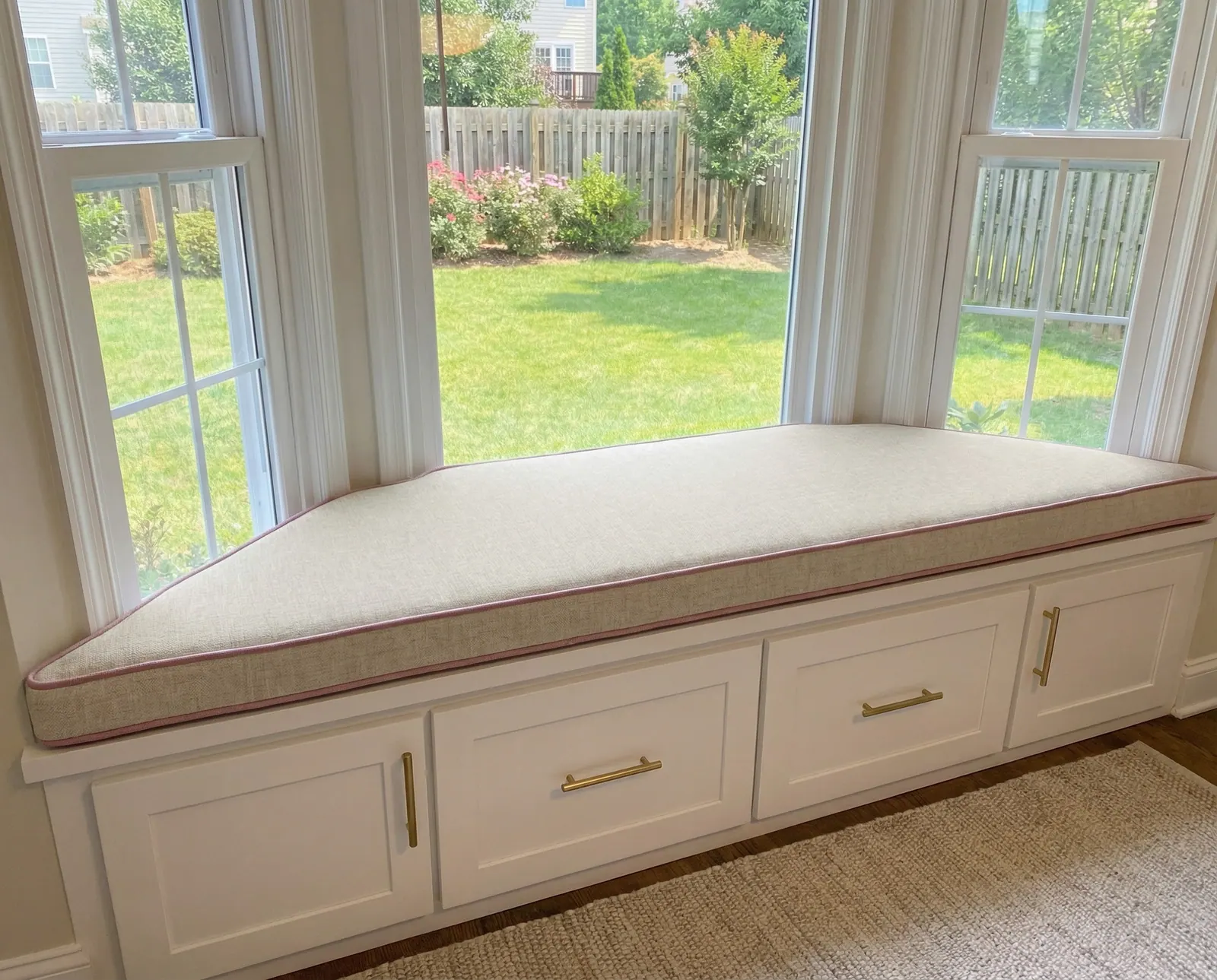
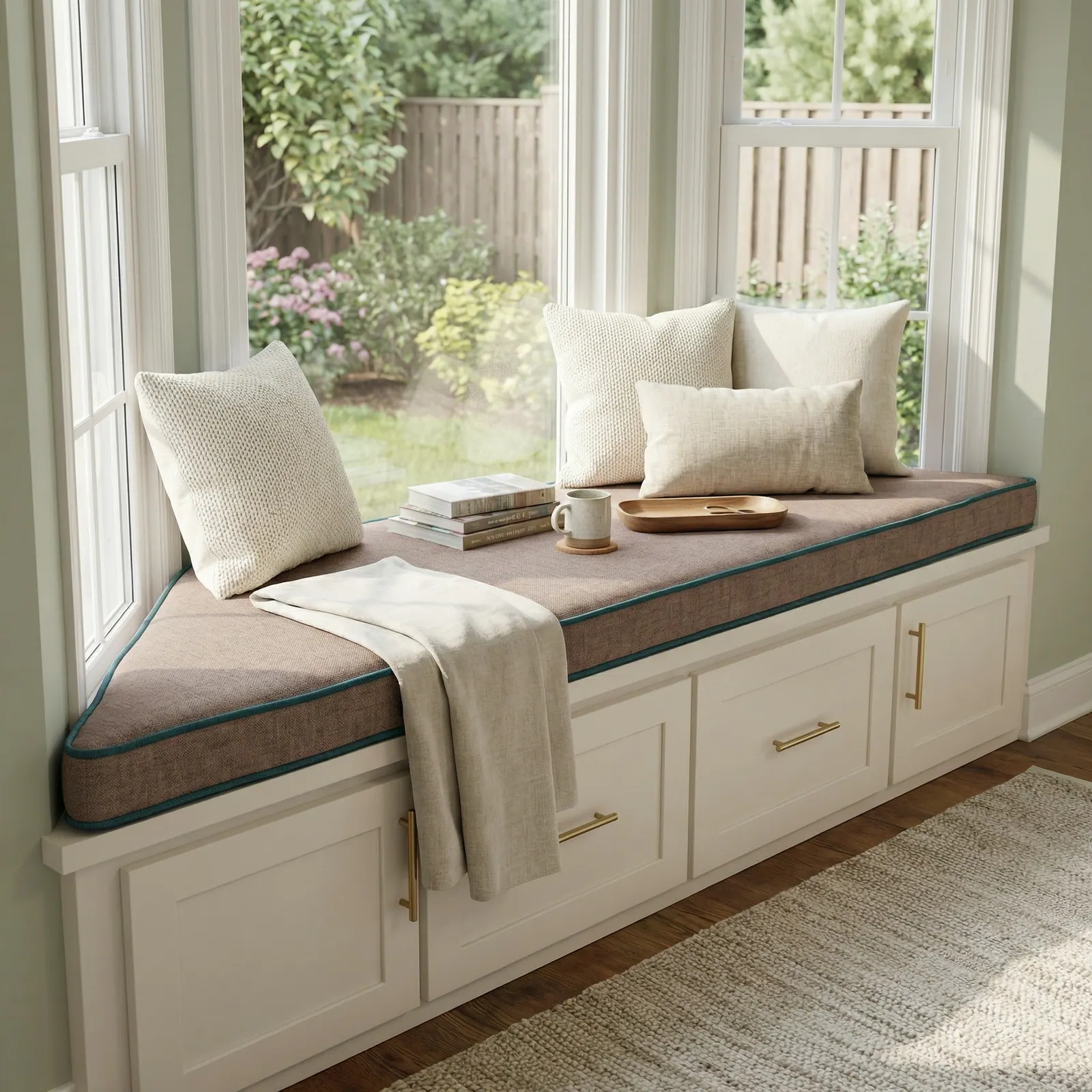
Five pins, from the angled end at the side sash to the jute rug under the cabinets.
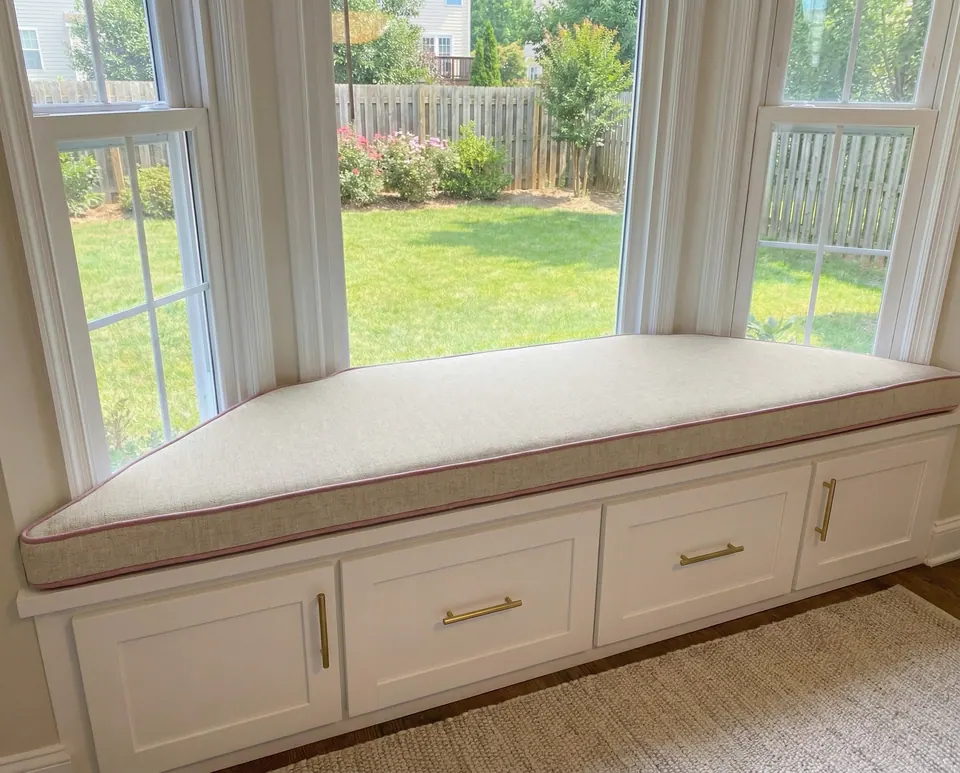
- Angled trapezoid end
The end is cut to the bay's angle, so there's no gap against the side window.
- Blush pink piping
A pale pink cord is subtle indoors and picks up the flowering shrubs outside.
- Back edge along the glass
The back runs along the center sash, shorter than the straight front.
- Brass bar pulls
Warm brass hardware sits better with pink piping than chrome would.
- Jute rug
A textured natural rug grounds the white cabinetry.
- Angled trapezoid endThe end is cut to the bay's angle, so there's no gap against the side window.
- Blush pink pipingA pale pink cord is subtle indoors and picks up the flowering shrubs outside.
- Back edge along the glassThe back runs along the center sash, shorter than the straight front.
- Brass bar pullsWarm brass hardware sits better with pink piping than chrome would.
- Jute rugA textured natural rug grounds the white cabinetry.
Card one: what the bay is doing
A stripe laid on a trapezoid always loses its argument with the angle.
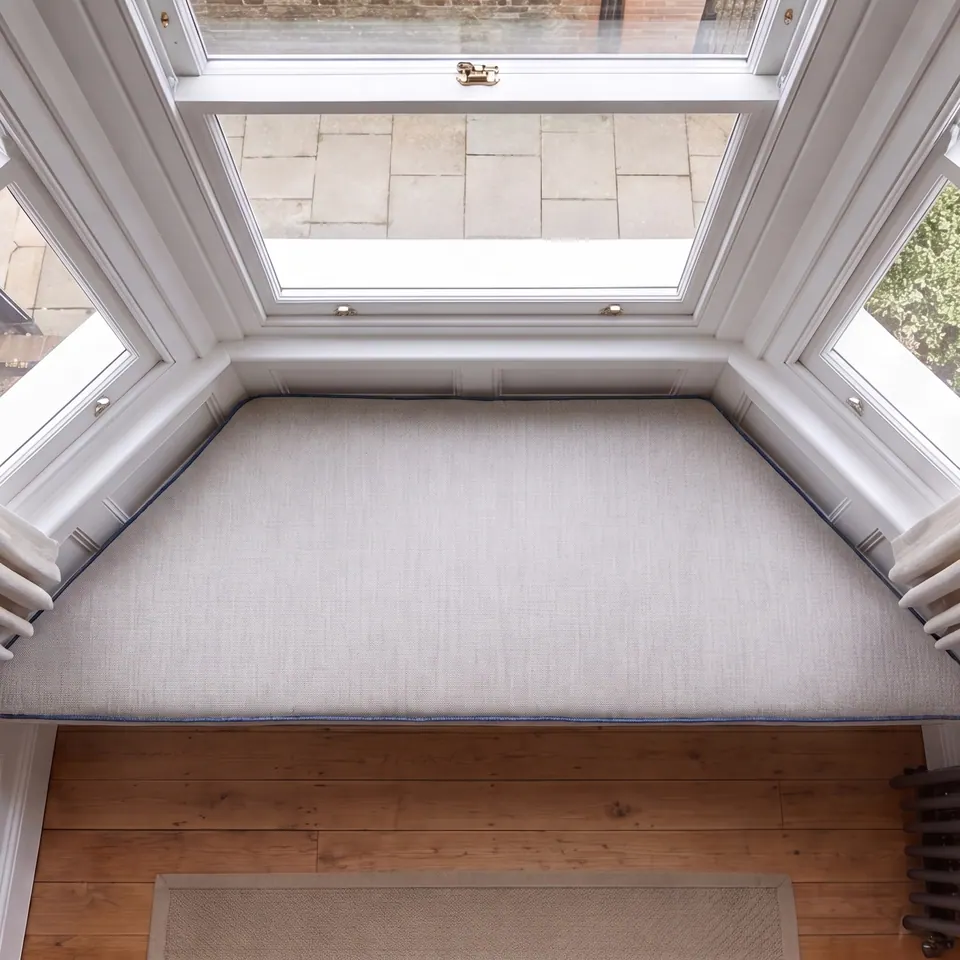
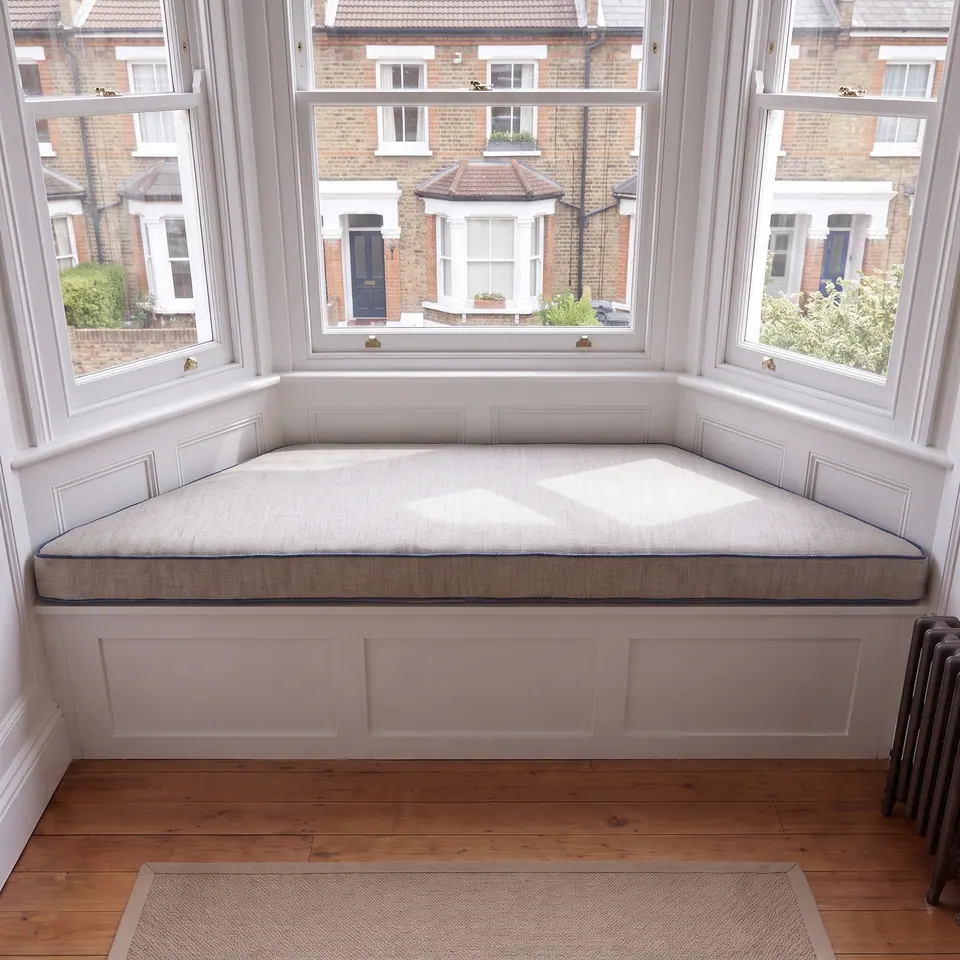
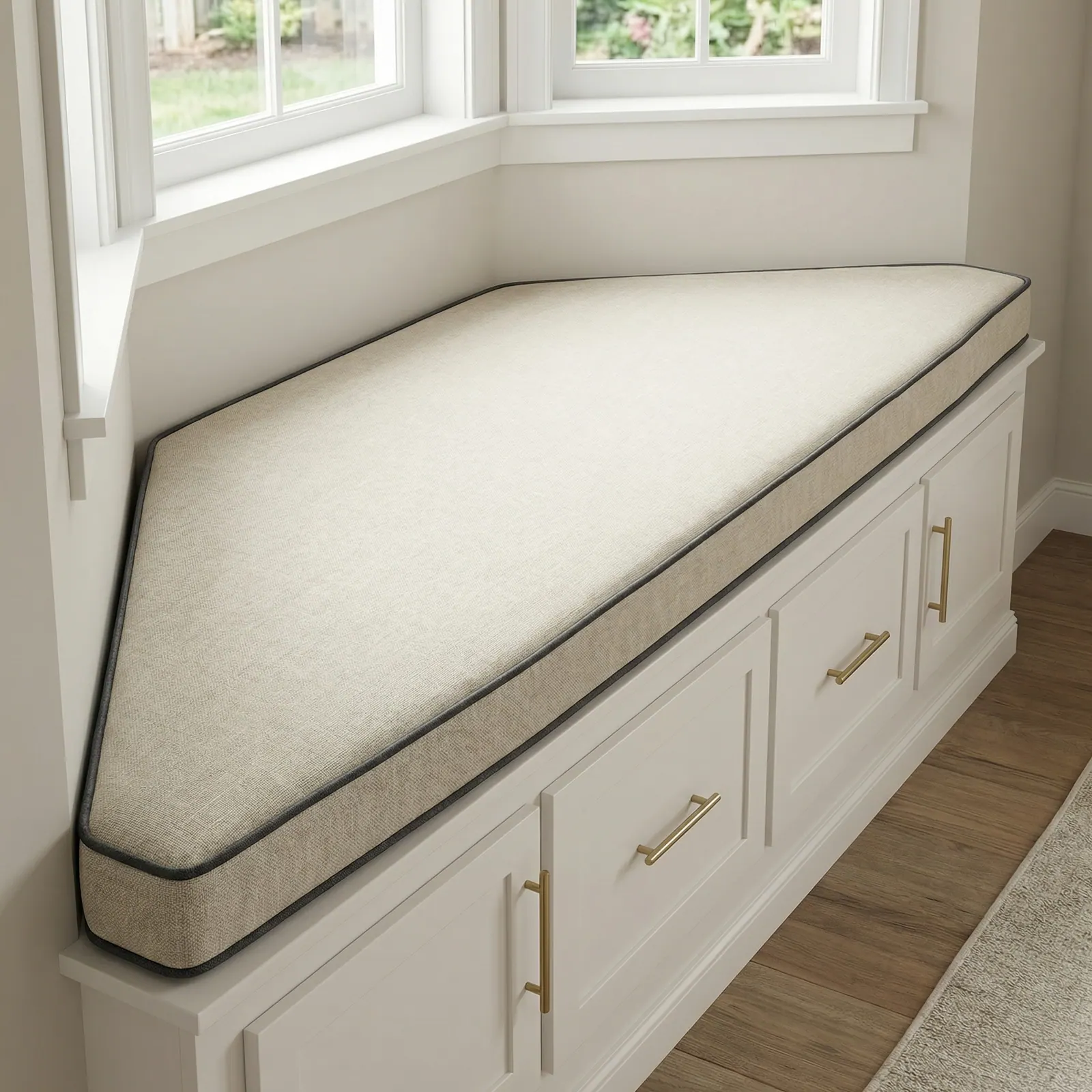
This bay window cushion sits on a three-sash bay built over white shaker cabinets with brass bar pulls, a fenced garden beyond. It is cut as a trapezoid, so each end runs parallel to its side sash with no gap against the glass. The back edge follows the center sash and is shorter than the straight front, which is simply what a bay does to a rectangle.
The fabric is oatmeal linen-look, close enough to the white cabinetry to blend, with a slub that reads as texture rather than pattern. A thin blush pink piping is the only color in the room, and it answers the pink flowering shrubs outside. The brass pulls help; warm brass sits better with pink than chrome would. A jute rug grounds all that white paint. No backrests, no pillows: the view stays open.
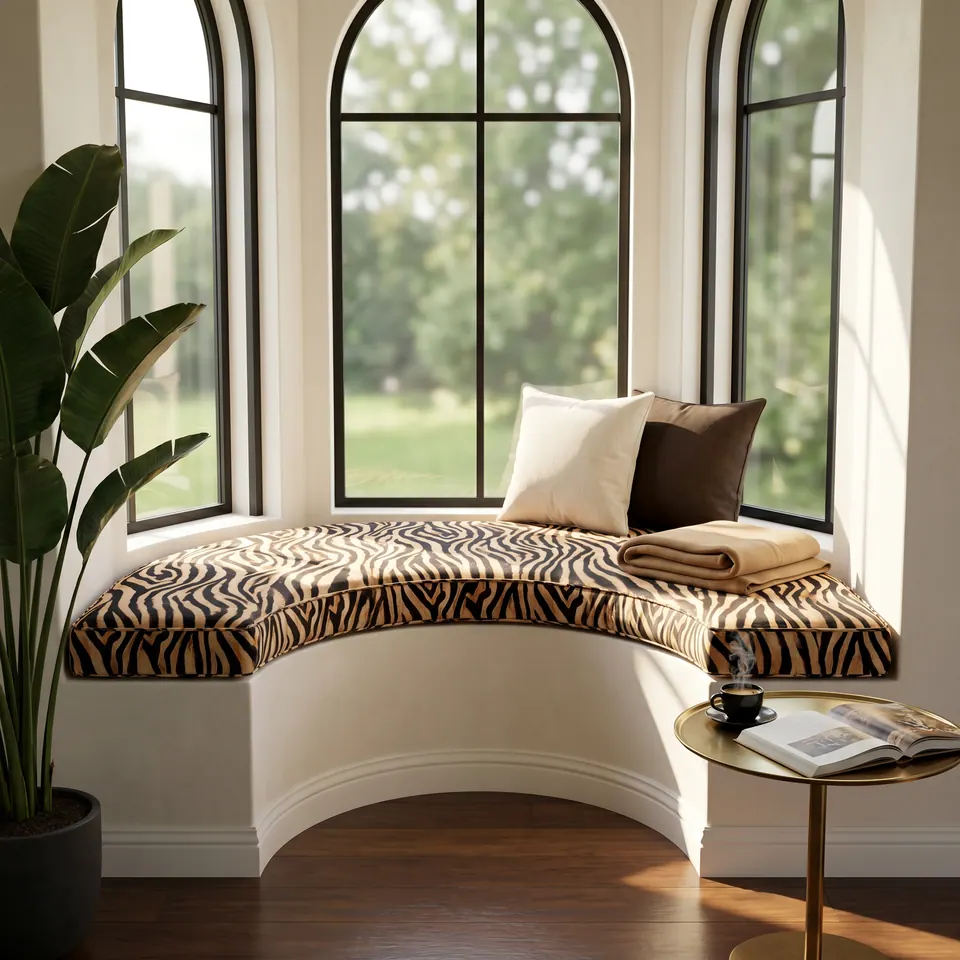
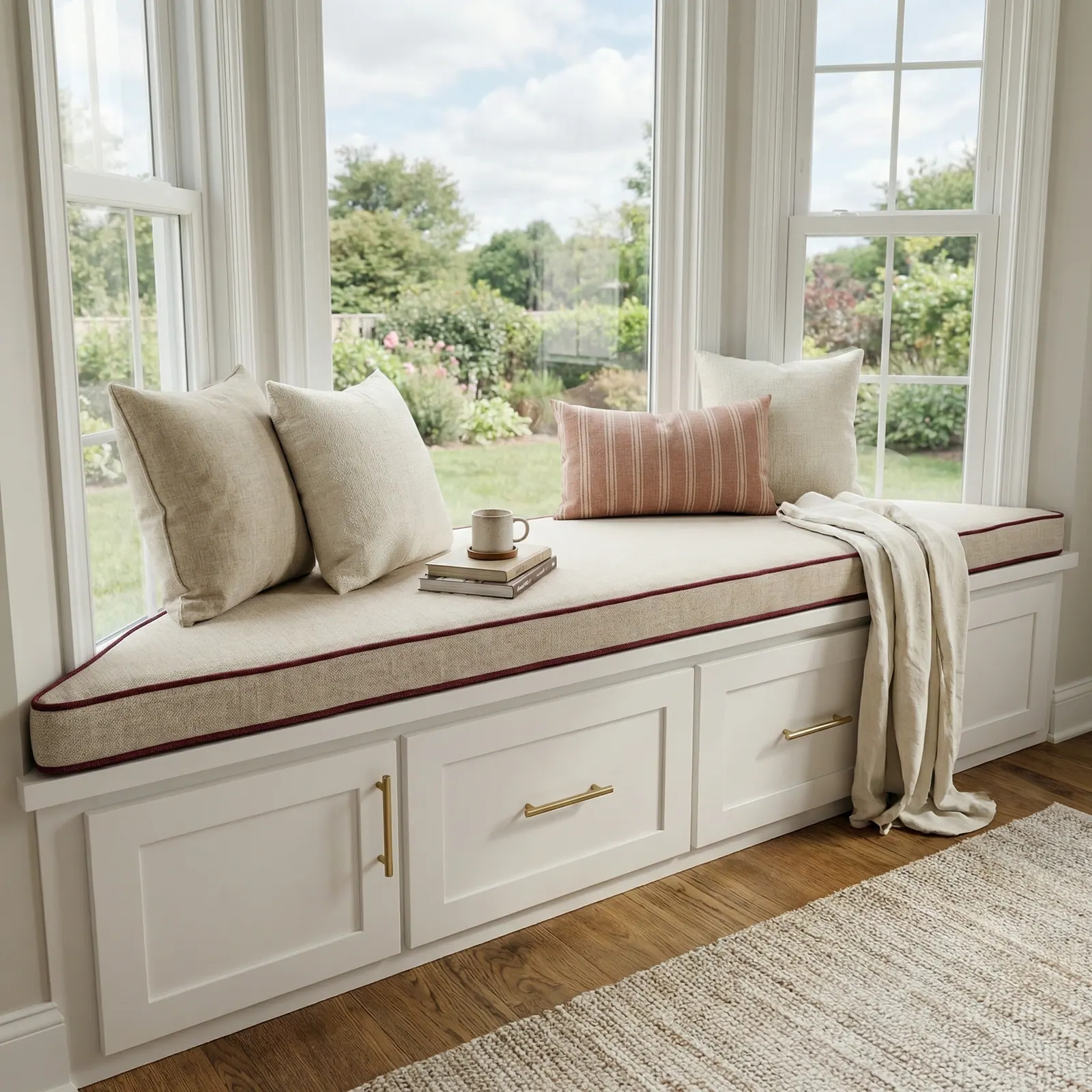
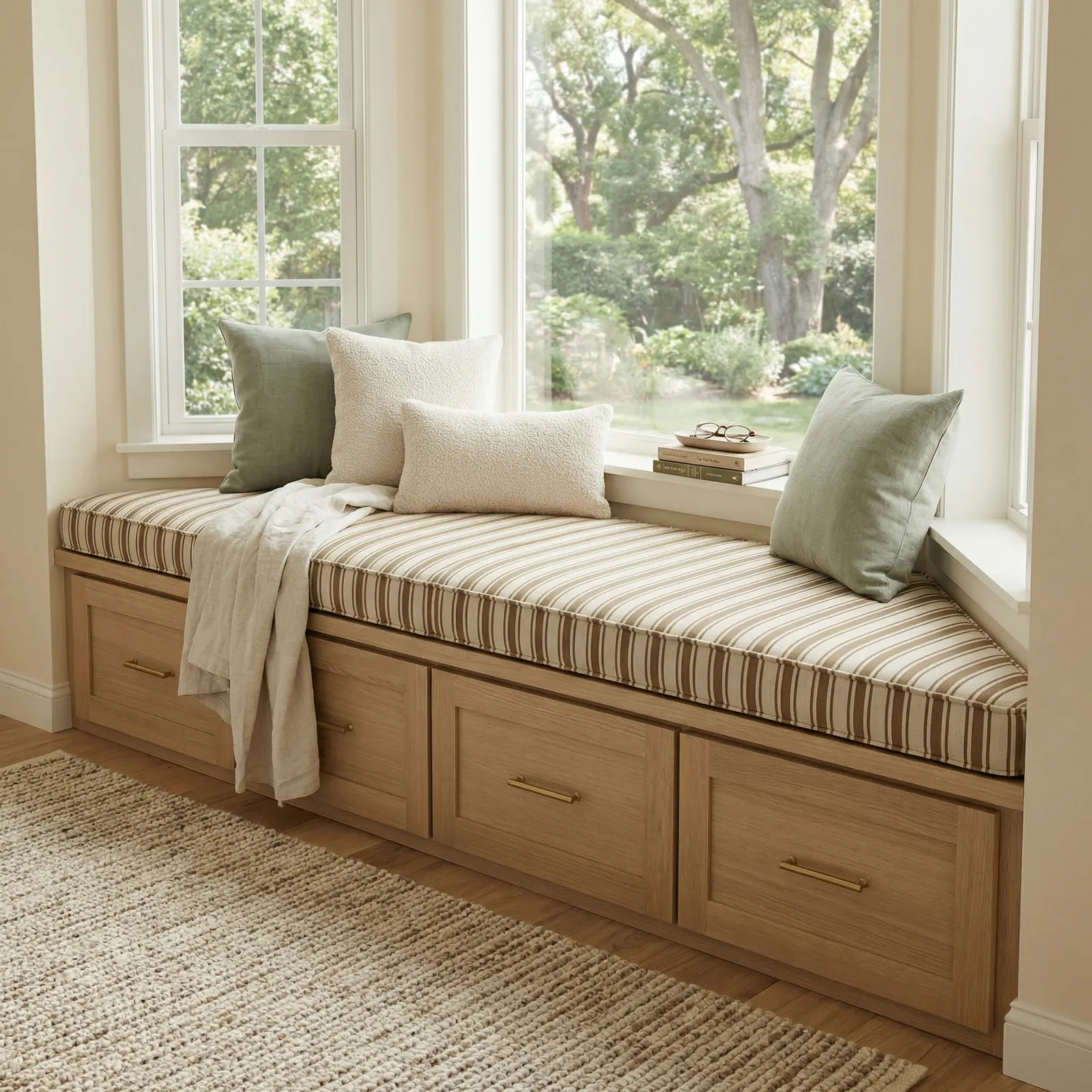
So where does a pattern go? Angles are just lengths in disguise, partner, and a stripe is a set of parallel lengths. Run a stripe front to back on a trapezoid and every band is sliced diagonally at the angled ends. Run it side to side and the bands shorten row by row toward the back. Either way the angle wins. In the gallery, a flax bay cushion takes its stripe on a lumbar pillow instead, which is the rule in one picture. Where would your stripe go?

Have it made
Have this made — ask Nate’s workshop
Send the numbers in inches: length × depth × thickness, plus any angle. The workshop checks them with you, because foam has no undo button. — Nate
Leave your details and the workshop will call you to confirm measurements, fabric, foam and piping. No prices, dates or payment on this page: it is a request, not an order.
± 1/4 in — Nate