CushionGuide

A Reading by MaggieBench Cushions

Lilac, gray and slate bench cushions: two piping rules and one thickness sum

Maggie reads four pads laid out like cards on a floor, then does the sum most people skip when a back cushion sits on a seat.

The quick answer

Pipe pale bench cushions in warm gold and dark ones in deep wine: gold lifts lilac and pale gray, while wine red on slate adds richness without glare. For proportion, a back cushion that rests on the seat pad must be shorter by the pad's thickness; one 19 in (48 cm) back became 17 in (43 cm) for exactly that reason.

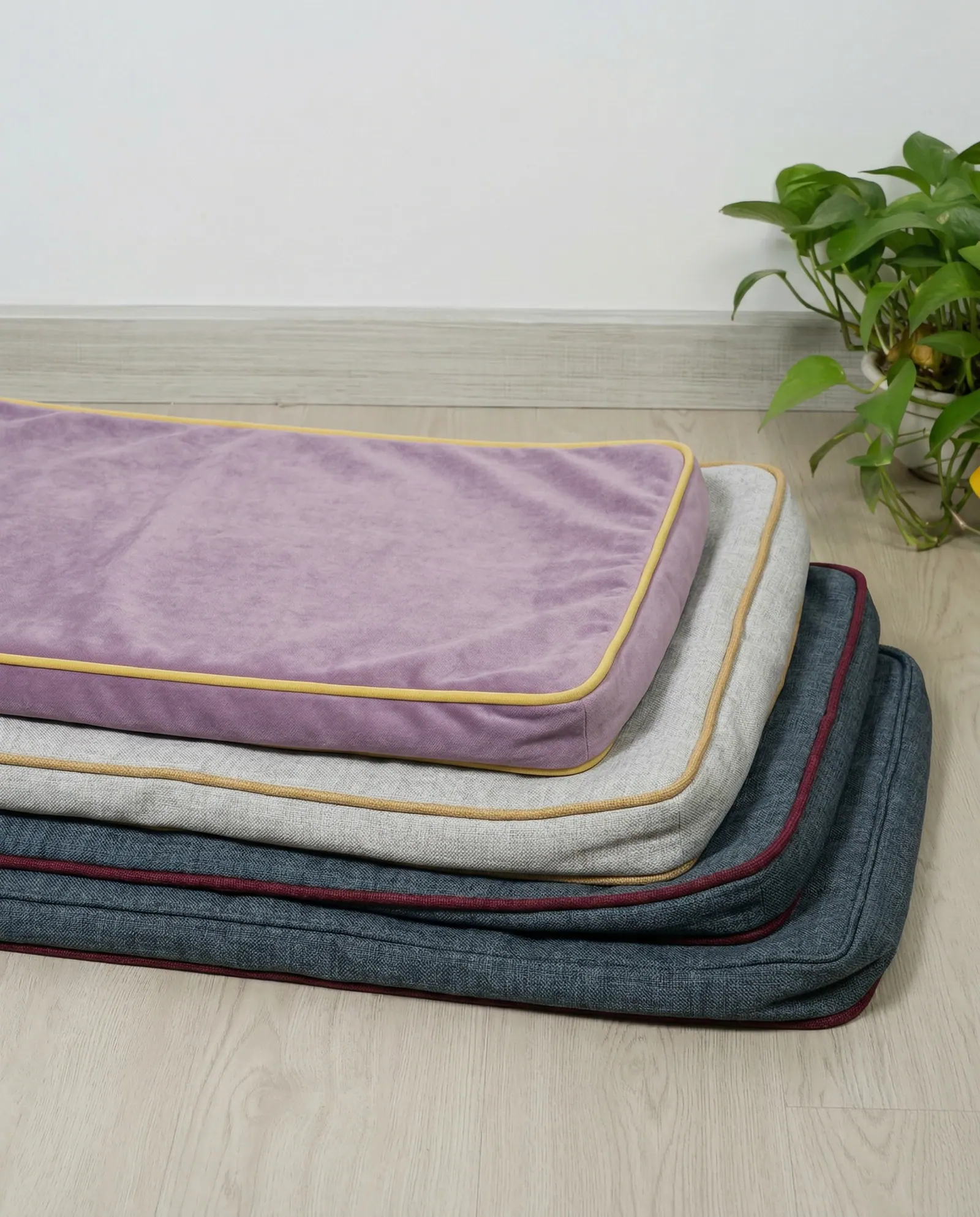
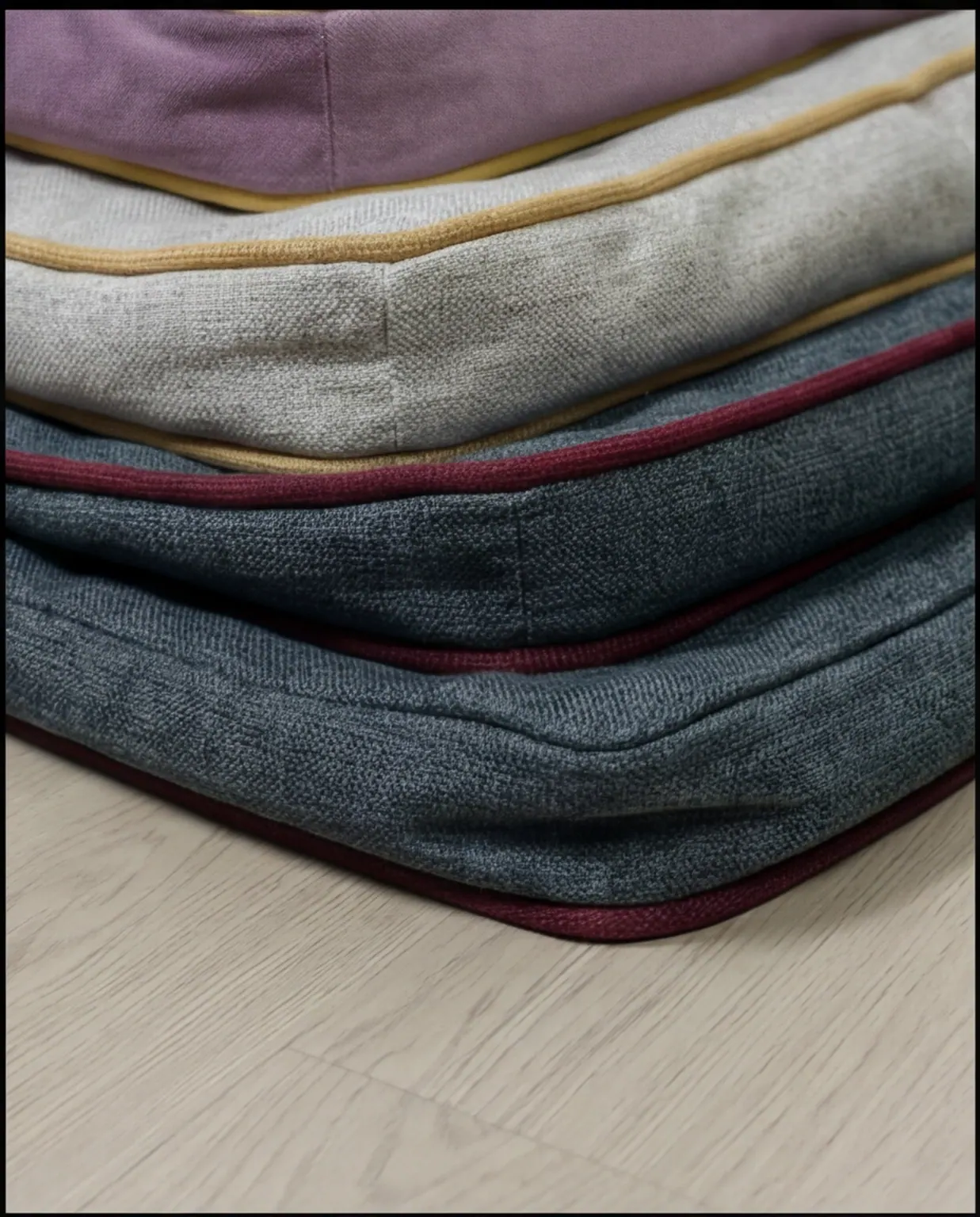
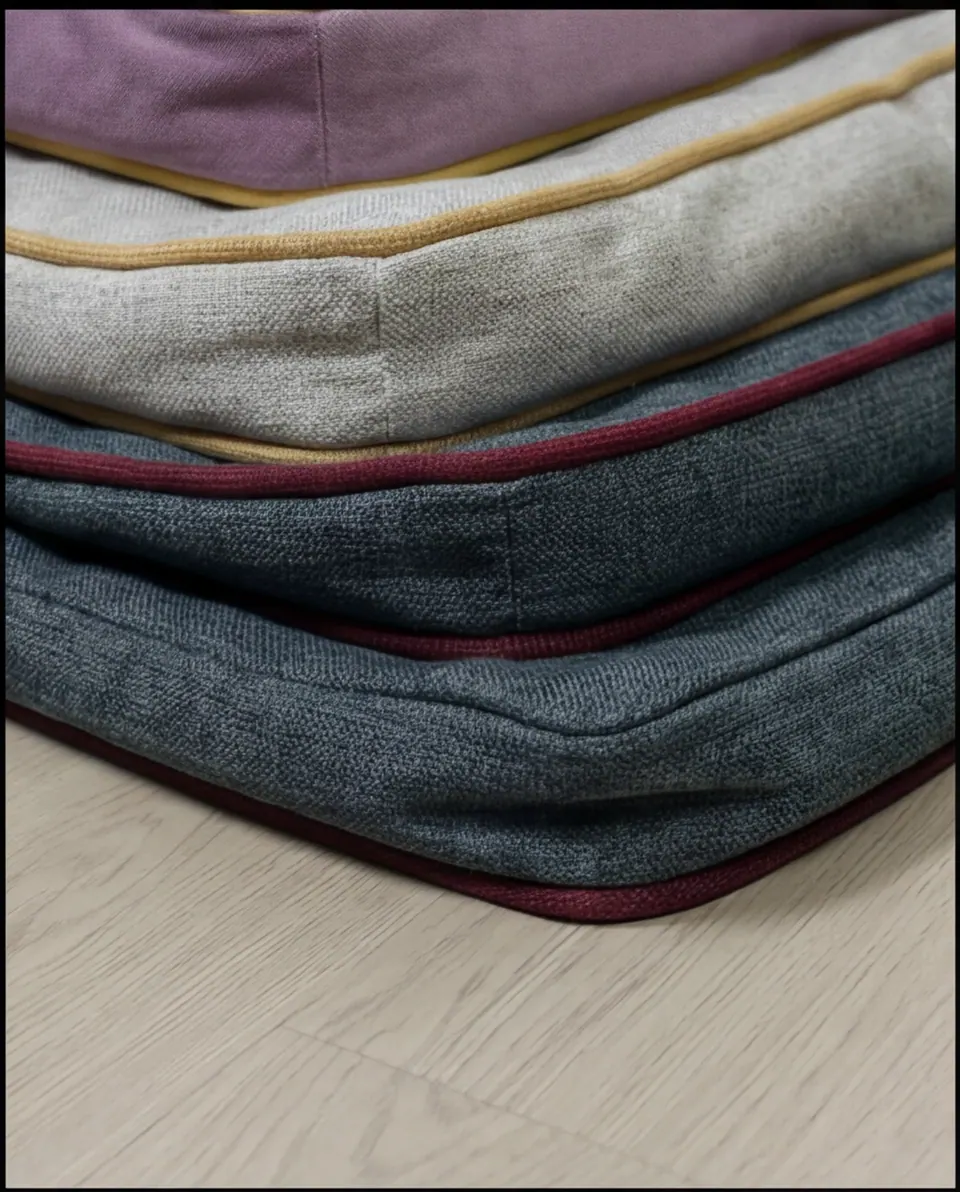
Overlapping bench cushions on a pale floor: lilac velvet and light gray with gold piping, two slate blue with wine red pipingSave
Four bench pads in a loose cascade show two piping ideas: gold on lilac and pale gray, wine red on slate blue.
Close-up of stacked bench cushion corners in pale gray and slate blue linen-look weave with gold and wine red pipingSave
A tight crop on the corners shows the heathered linen-look weave and piping eased neatly around the curve.
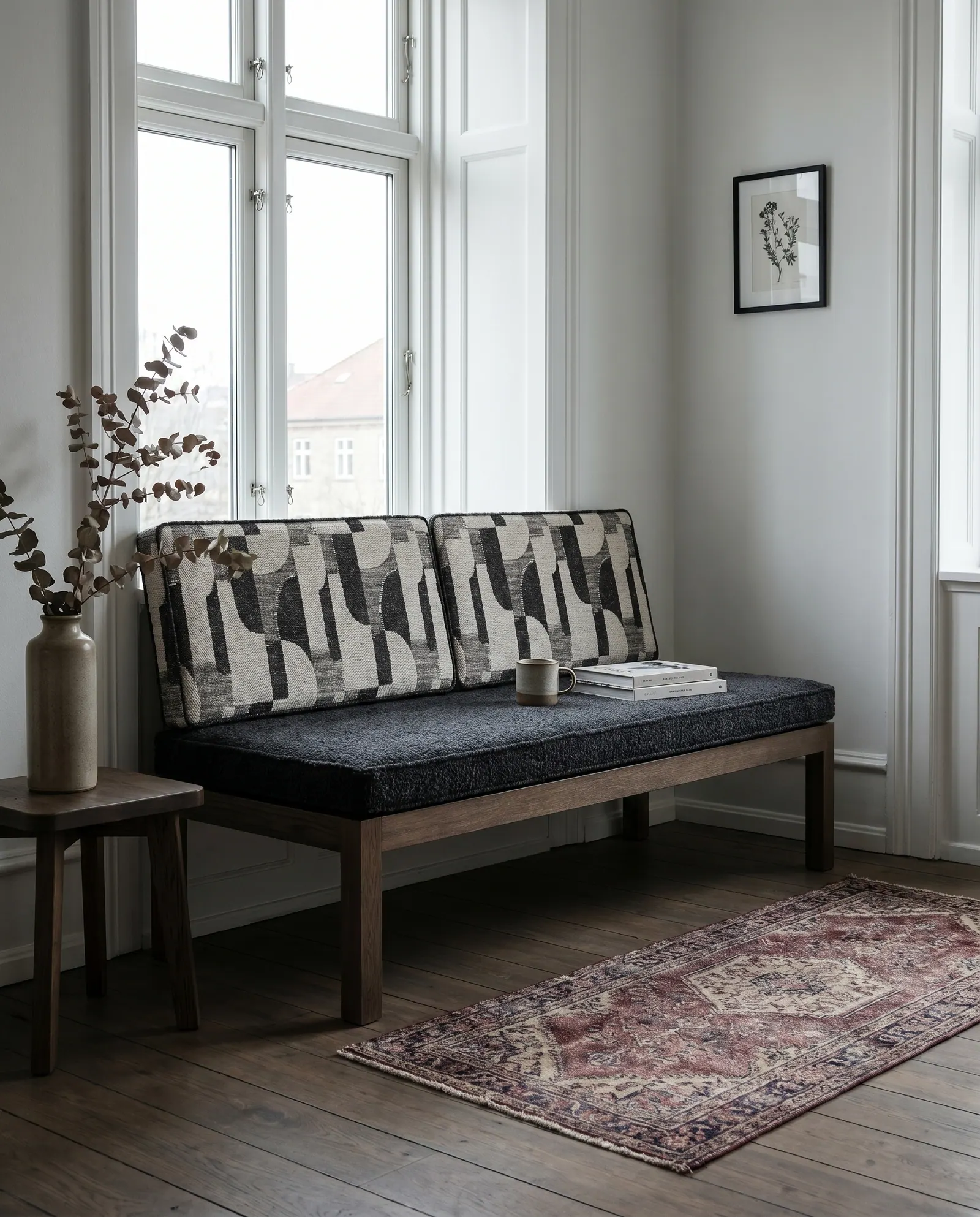
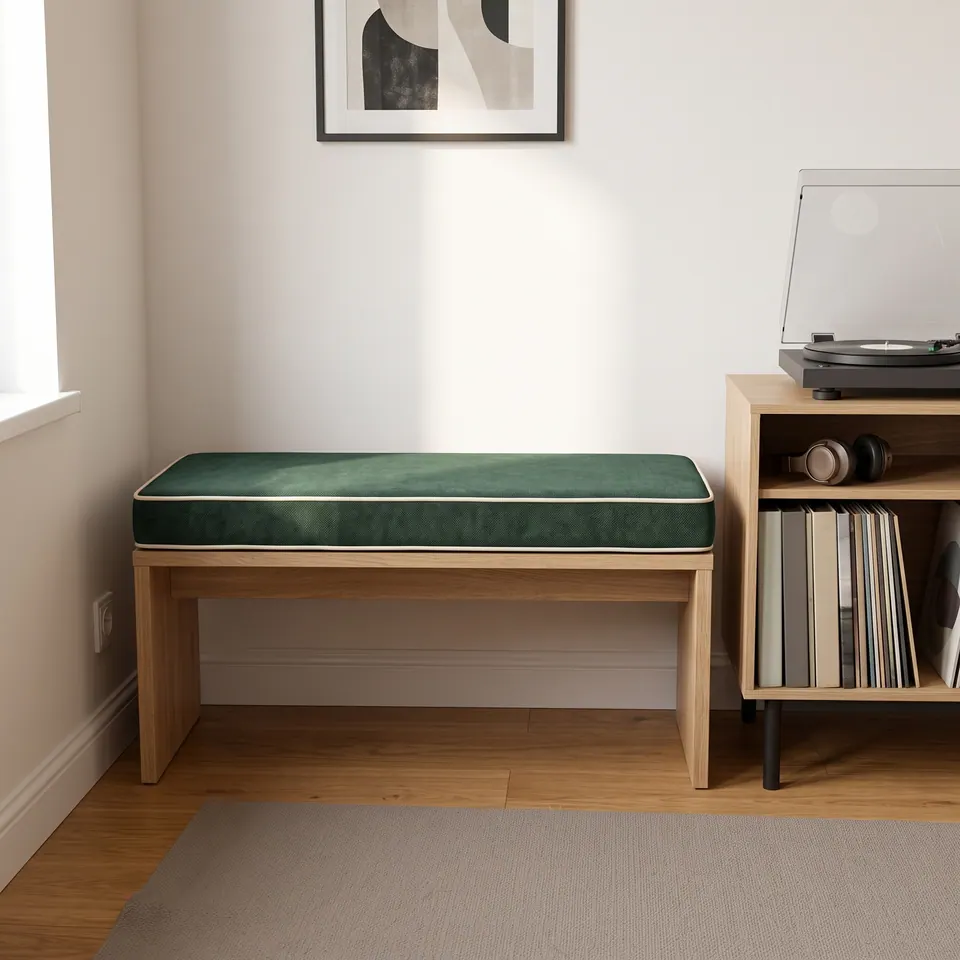
Walnut bench with a charcoal bouclé seat cushion and two black and cream geometric back cushions beside a tall white windowSave
Two short back cushions instead of one long one let this walnut bench read as a small two-seater sofa.
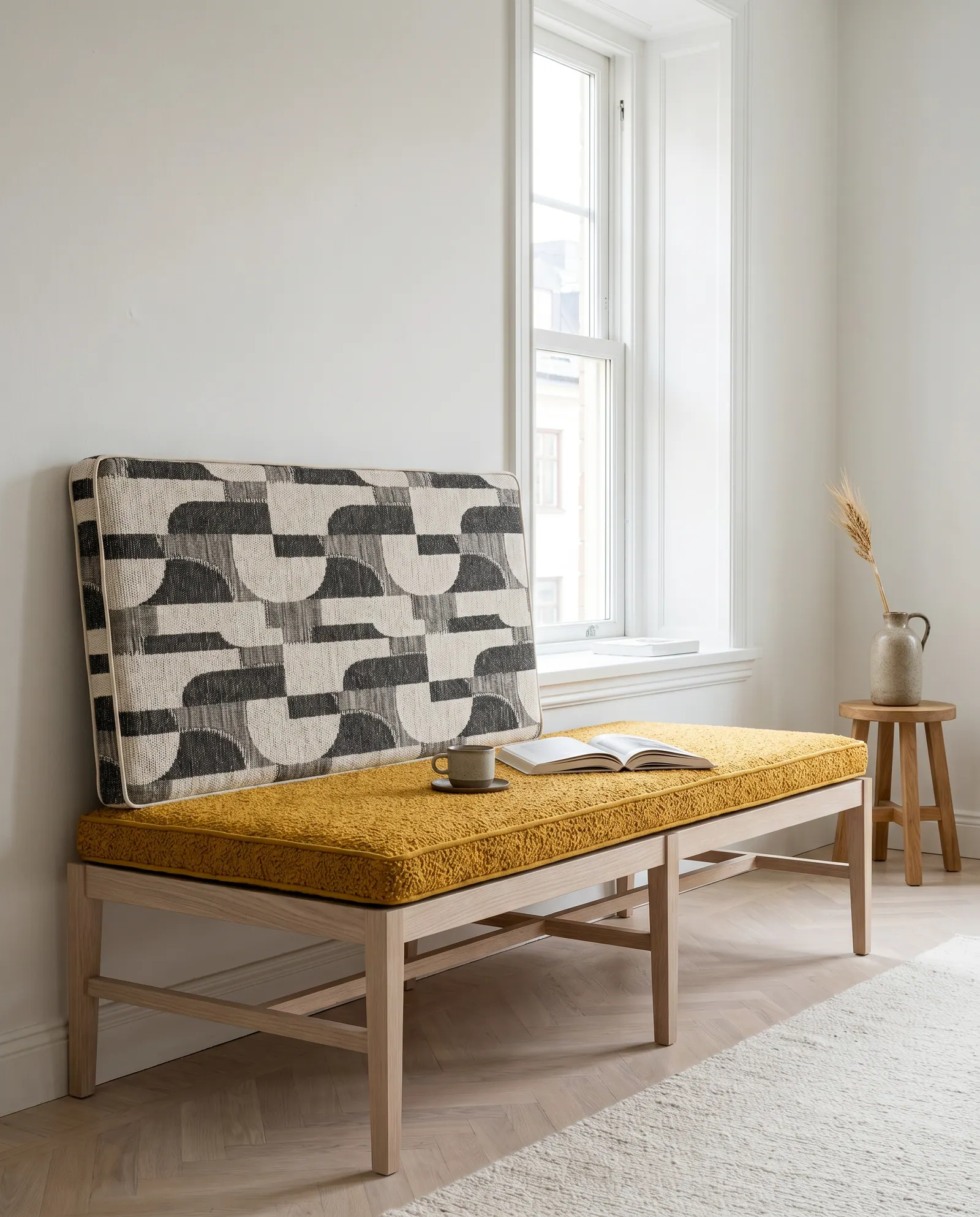
Light oak bench with a mustard bouclé seat cushion and a large black and cream geometric back cushion against a white wallSave
One oversized geometric back cushion leans on the wall, turning a slim oak bench into a sunny sitting spot.
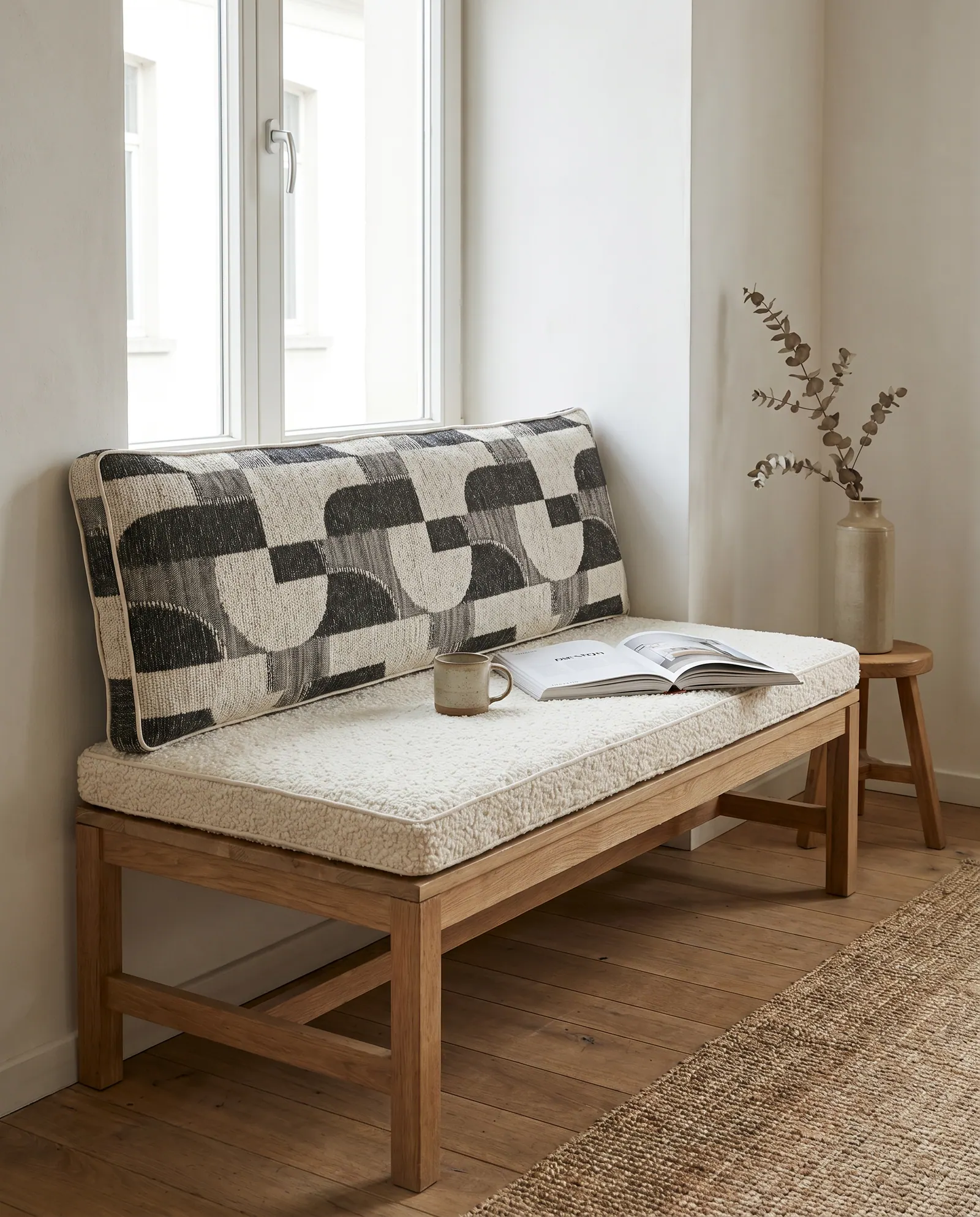
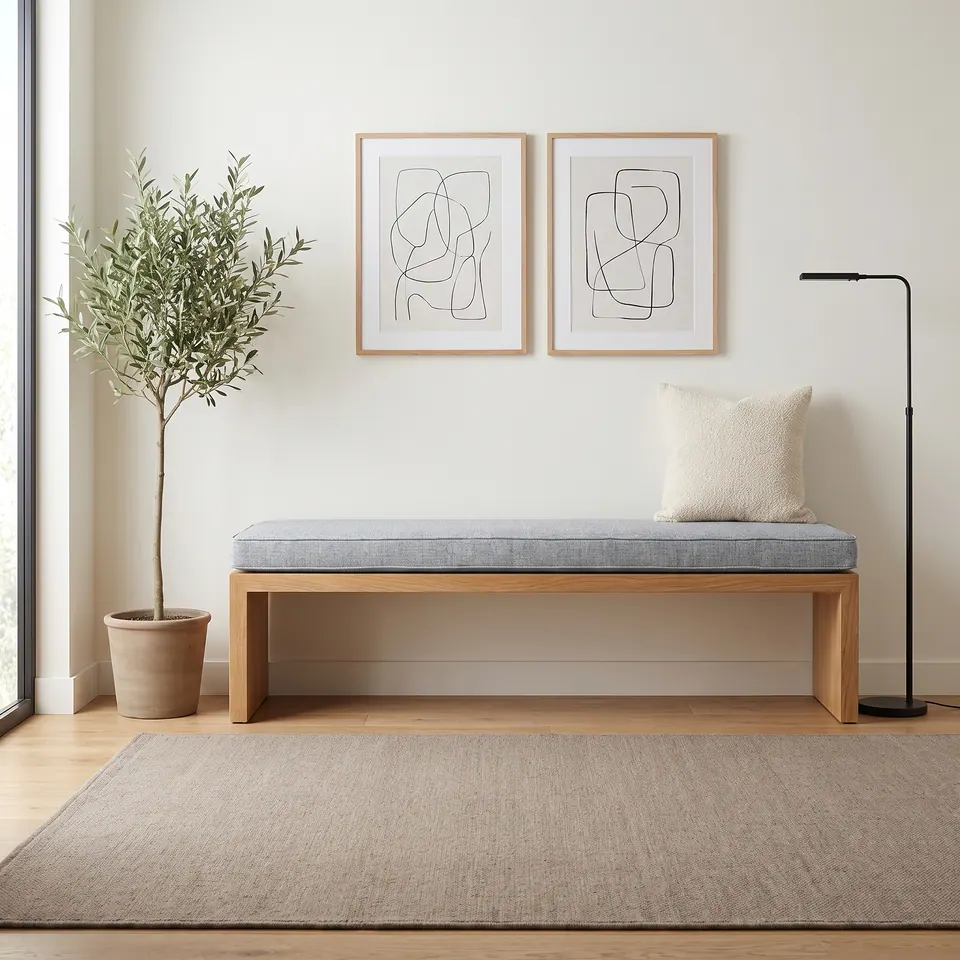
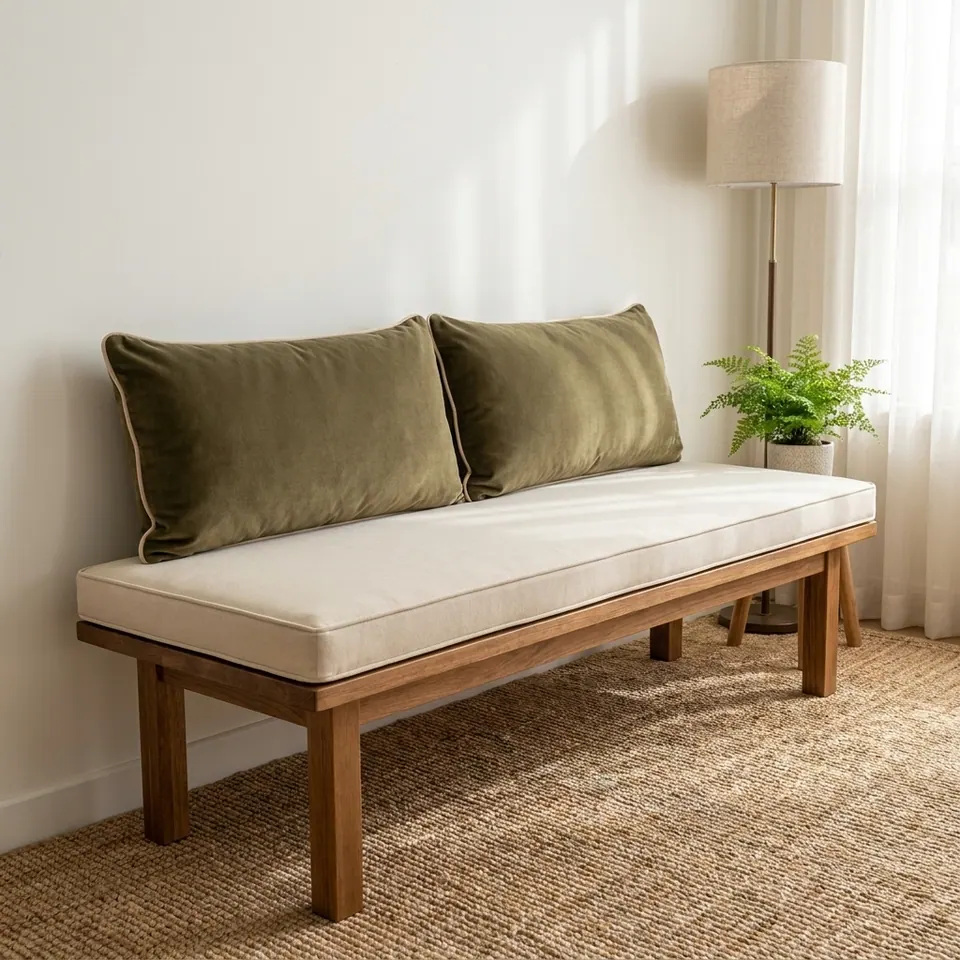
Oak bench with a cream bouclé seat cushion and a long black and cream geometric back cushion by a window, jute rug belowSave
A soft cream seat and a long patterned back cushion give a simple oak bench the look of a small daybed.
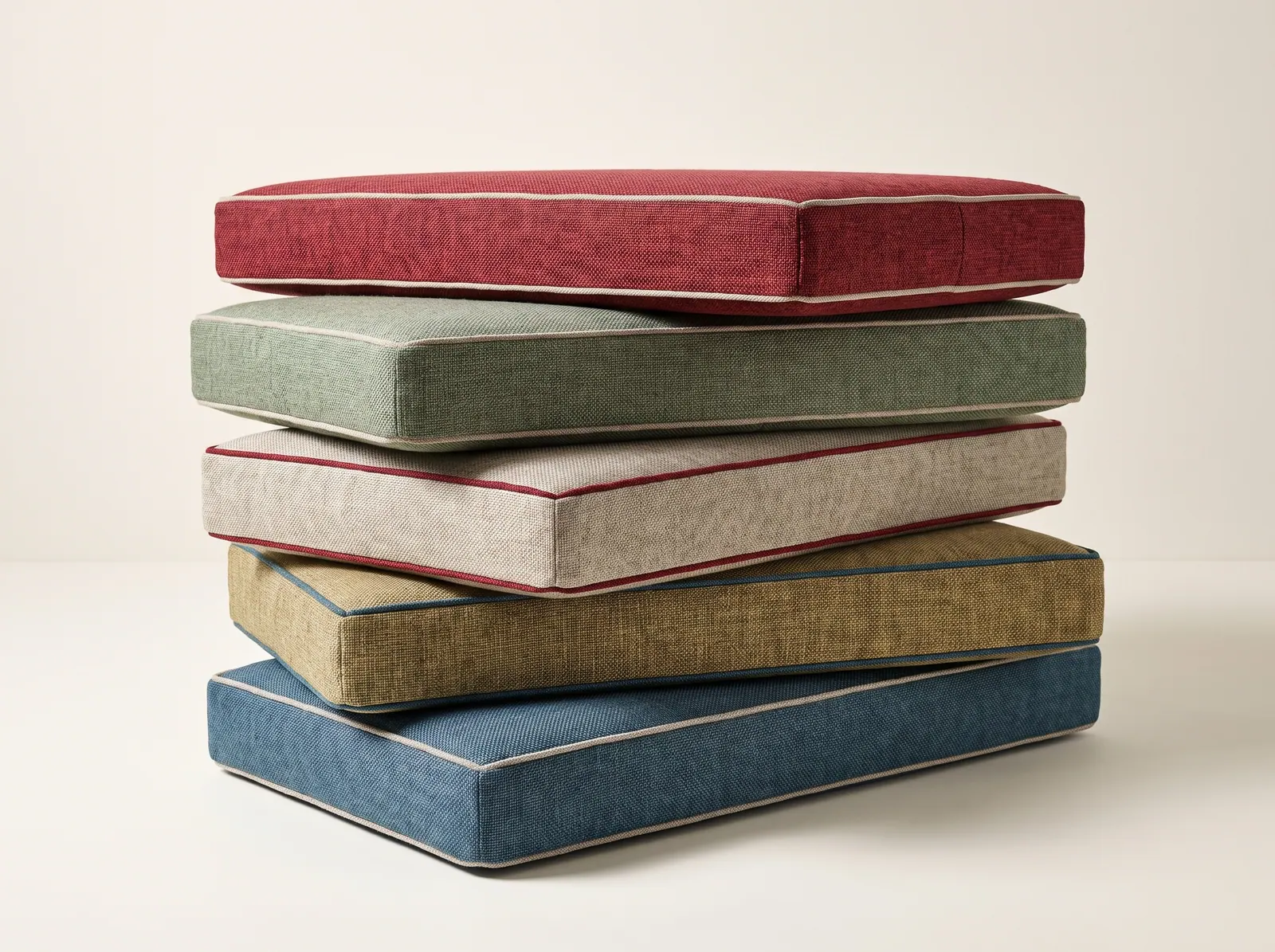
Stack of five piped box cushions in cherry red, sage, oatmeal, antique gold and denim blue on a cream backdropSave
Five box cushions stacked to compare body and piping pairs, from cherry red with oatmeal to gold with blue.
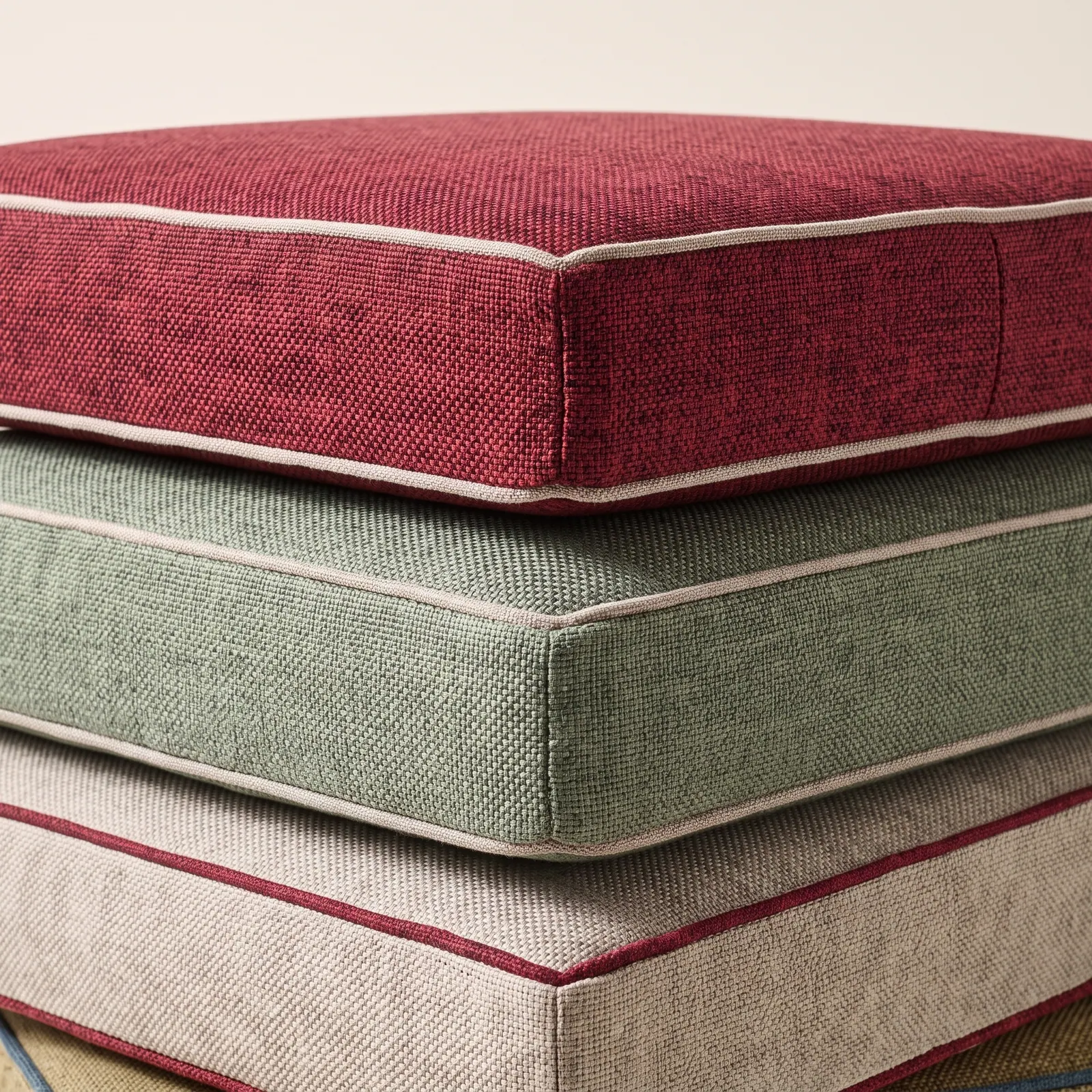
Close-up of stacked box cushions: cherry red with oatmeal piping, sage with oatmeal piping, oatmeal with red pipingSave
Up close, the red and oatmeal pair appears twice, once each way, with sage in between.

Pinned by Maggie: four pads on the floor

Five pins across a loose stack of pads, from the lilac velvet to the pothos in the corner.
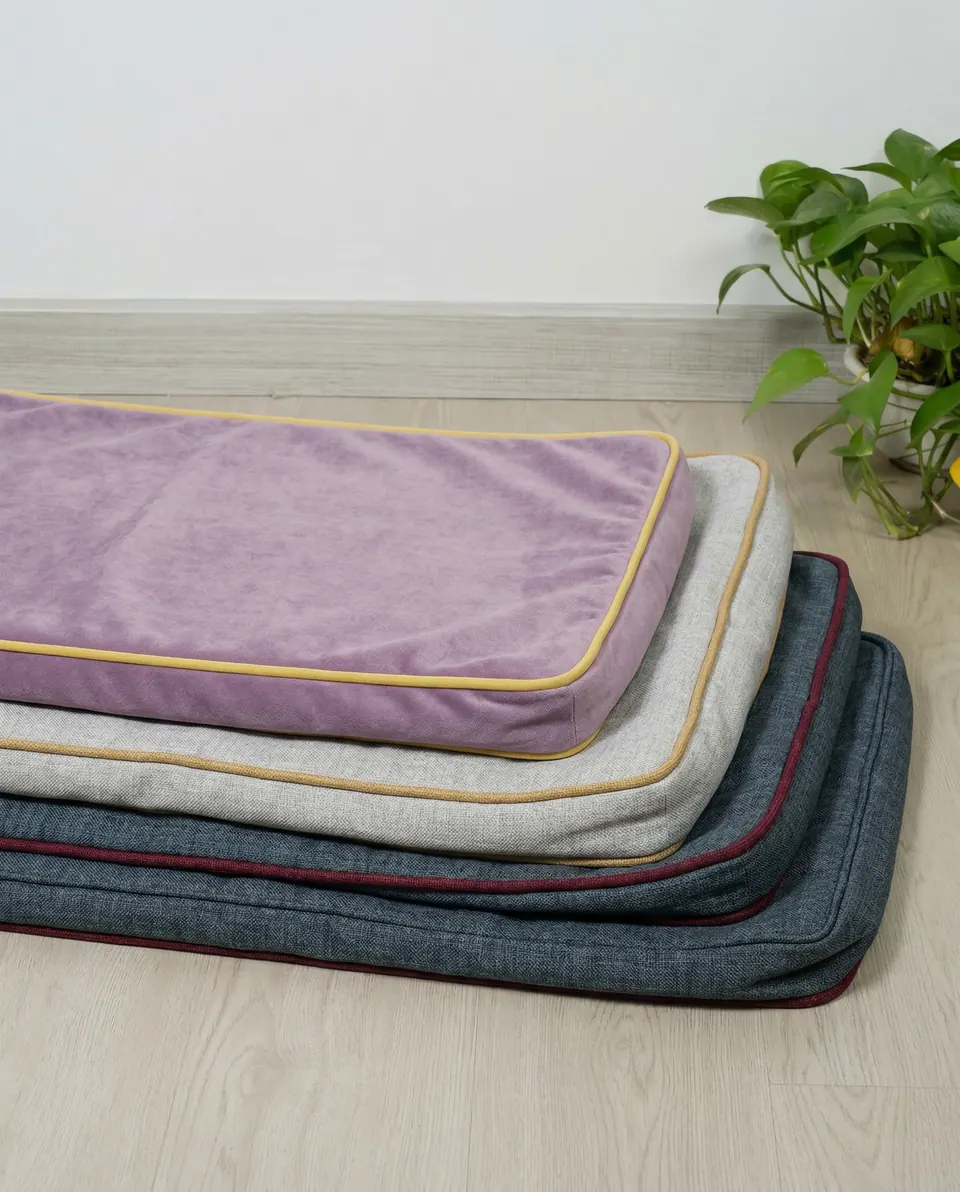
Pinned: Overlapping bench cushions on a pale floor: lilac velvet and light gray with gold piping, two slate blue with wine red piping
  1. Lilac velvet pad

    Soft lilac pile with gold piping reads warm despite a cool color.

  2. Gold piping

    A warm metallic tone lifts both the lilac and the pale gray.

  3. Pale gray weave

    A light linen-look that suits a sunny window seat.

  4. Wine red piping on slate

    Dark red on slate adds richness without glare.

  5. Pothos plant

    The only green keeps the flat lay from feeling clinical.

  1. Lilac velvet padSoft lilac pile with gold piping reads warm despite a cool color.
  2. Gold pipingA warm metallic tone lifts both the lilac and the pale gray.
  3. Pale gray weaveA light linen-look that suits a sunny window seat.
  4. Wine red piping on slateDark red on slate adds richness without glare.
  5. Pothos plantThe only green keeps the flat lay from feeling clinical.

Two piping rules, laid out like a hand of cards

Four bench pads dropped in a loose cascade on a pale wood floor, like a hand of cards laid down to show off. What they show off is piping, and rightly so.

Two rules are at work. On the pale bodies, lilac velvet and a light gray linen-look weave, the cord is warm gold. Gold lifts a cool color without shouting, so the lilac pile reads warm even though lilac is a cool shade. On the two slate blue pads the cord is wine red. A dark cord on a dark body adds richness without the glare a white or gold line would bring.

The slate weave is flecked, and that matters for anyone with a kitchen or hallway bench: flecks hide crumbs and wear that a flat solid would announce. The pale gray linen-look is the one for a sunny window seat. All four are box-edge pads, codes 120, L-03 and L-35 across the set, so each outline is drawn clean in its cord. Right, then: that is the standard to hold any piped bench pad to.

The only prop is a golden pothos trailing in from the corner, the one green in a calm, cool room. It keeps a flat lay from looking like a parts catalog.

Which body color are you piping, dear? Pale gets gold, dark gets wine. The whole argument lives in the piping Pattern; the cloth lives with the linen-look fabrics and velvet.

The thickness sum, before you order

  • Measure the bench itself: length, seat depth and seat height, edge to edge.
  • If the back cushion rests on the seat pad, take the pad's thickness off the back height.
  • On an L-shaped bench, the short wall's back line is its seat length plus the long side's seat depth, minus the corner pillow.
  • Standard back pillow height is 15 3/4 in (40 cm); two or three pillows per wall sit better than one long one.
  • Flecked weave for a kitchen or hall bench; pale linen-look for a sunny window seat.
  • Run the numbers in the bench cushion builder and the back cushion height Pattern.

A real project

Split in two, then two inches shorter

A buyer in the US had already ordered a bench set, a seat pad plus one long back cushion at 19 x 63 in (48 x 160 cm). Then they wrote to ask for the back in two pieces.

The workshop split it into two 19 x 31 1/2 in (48 x 80 cm) pieces at no charge. Then someone at the cutting table did the sum. Those backs would sit on top of the seat cushion, not on the bench, so both came down to 17 in (43 cm) tall. The buyer wrote back that they arrived perfect and on time.

I made that very mistake myself, years ago, on a window seat in a drafty Victorian: the back peeked over the sill like a nosy neighbor. The rule is short. When the back rests on the seat, deduct the seat's thickness from the back height. More sets built that way sit among the living room cushions.

Buyer questions

  1. A common question

    Can I have a solid-color piping cord on a patterned P-code fabric?

    The workshop's answer

    The printed P fabrics come in no solid colors, so piping cut from the same fabric is usually recommended. If you want a different piping color, choose it from the velvet or soft plain collections.

  2. A common question

    How do I size the back pillows for an L-shaped dining bench?

    The workshop's answer

    On the shorter wall, the usable back line is that wall's seat length plus the long side's seat depth, 48 3/8 + 22 1/2 = 70 7/8 in (123 + 57 = 180 cm), minus the corner pillow's thickness. The workshop suggested three pillows of 31 1/8 in (79 cm) on the 93 1/4 in (237 cm) wall and two of about 32 1/4 to 32 5/8 in (82 to 83 cm) on the short wall, at the standard 15 3/4 in (40 cm) height. One long back cushion isn't cheaper and isn't recommended.

  3. A common question

    Can I order the cushion without handles, or without your logo?

    The workshop's answer

    Yes. Handles can be left off on request, and cushions can also be made with handles but no logo.

On the cutting table: four pads

PadsFour box-edge bench pads, shown in a cascade
FabricsLilac velvet, pale gray linen-look, flecked slate blue weave
Codes120, L-03 and L-35 across the set
PipingGold on lilac and pale gray; wine red on slate
Piping ruleWarm gold on pale bodies, deep wine on dark ones
Back heightSubtract the seat pad's thickness when the back rests on it
Back pillows15 3/4 in (40 cm) standard height, two or three per wall
Best forKitchen, hallway and window benches

Order this cushion

Have it made

Have this made — ask Maggie’s workshop

I once cut a lovely cushion two inches short, and I have not forgotten it. That is why the workshop goes over your measurements with you on the phone. — Maggie

Leave your details and the workshop will call you to confirm measurements, fabric, foam and piping. No prices, dates or payment on this page: it is a request, not an order.

Fabric · Foam · Pipingwhat the workshop will confirm with you

Fabric
Lilac velvet, pale gray linen-look, flecked slate blue weave
Foam
The core: its density and thickness set the feel.
Piping
Gold on lilac and pale gray; wine red on slate
Only for this request: no marketing calls or texts. Outside the US, add the country code.
In inches: length × depth × thickness, plus any angles or cut corners.

* Required. A member of the workshop team will call you to talk it through; nothing is charged and nothing is made until you have agreed on every detail with them.

We use these details only to answer this request and make your cushion: your name and contact details, the cushion details and photos you send, the page you came from and the ad or link that brought you, if any. The workshop that makes the cushions receives them. We don't sell them or share them for advertising, and we delete requests after 24 months. Privacy notice for requests.

Nothing is made or charged until you approve the details.

Want to pick the shape and add photos? Use the full quote form

Pipe pale bench cushions in warm gold and dark ones in deep wine; a dark cord on slate blue adds richness without glare.

Maggie

Questions buyers ask next

What piping color goes with lilac velvet?

Warm gold. A metallic-warm cord lifts a cool lilac pile, so the pad reads warm without a loud contrast line. The same gold works on a pale gray linen-look beside it.

Does contrast piping work on dark fabric?

Yes, when the contrast is deep rather than bright. Wine red on slate blue adds richness without glare; a white or bright cord would draw a hard line around a dark pad.

Which fabric hides crumbs on a kitchen bench?

A flecked or textured weave. The slate pads here have a flecked surface that hides crumbs and wear, while a flat pale solid is better kept for a sunny window seat.

Why split a long bench back cushion into two?

Two or three back pillows per wall sit better and stay in place than one long piece. One buyer's 63 in (160 cm) back became two 31 1/2 in (80 cm) pieces, later cut to 17 in (43 cm) tall.

Stitch straight — Maggie