A Reading by MaggieBench Cushions
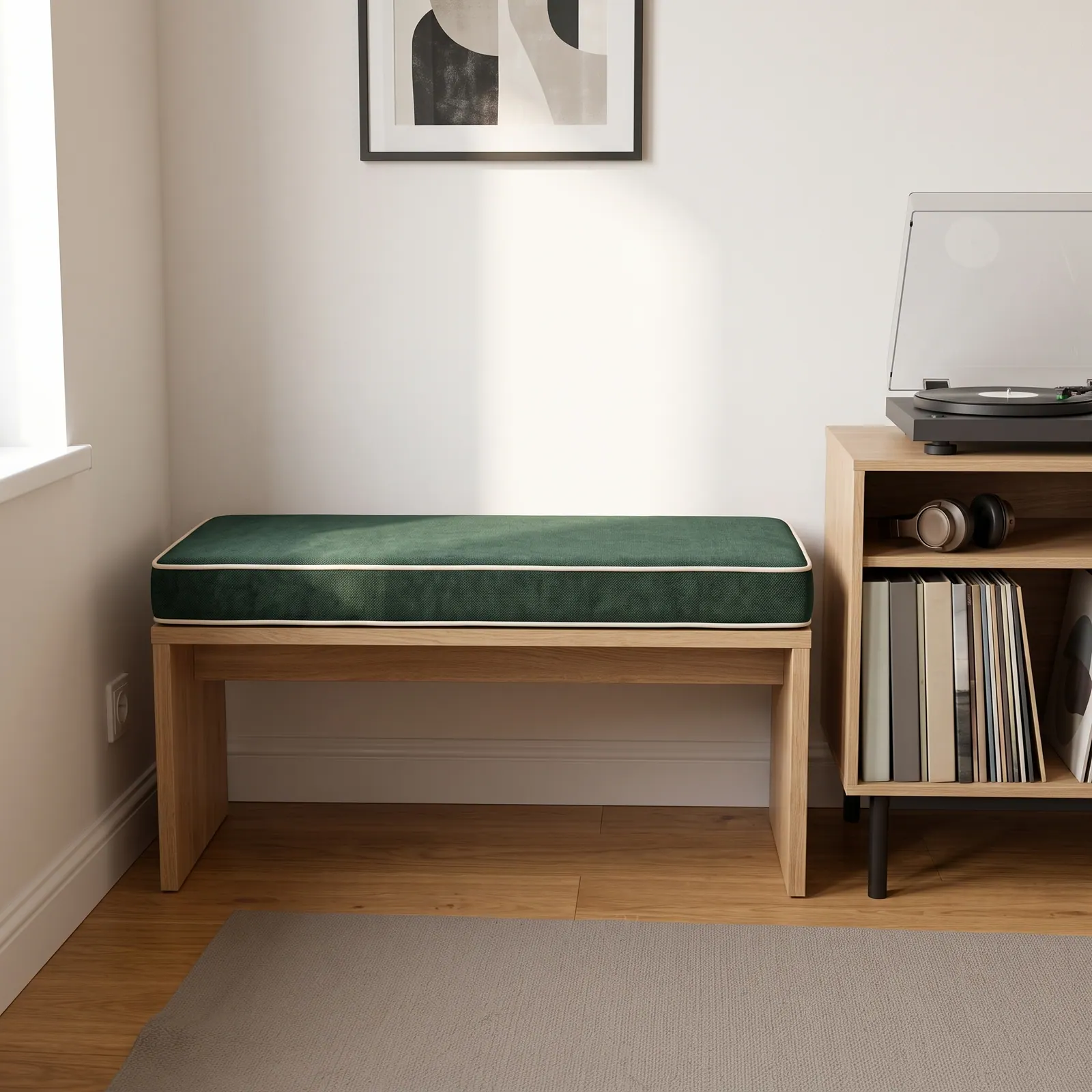
A forest green bench cushion, an ivory welt, and a listening corner that shows off the hand-finishing
Maggie answers three buyer questions first, then reads the photo: a slim green pad whose piping line tells you who made it.

 Save
The quick answer
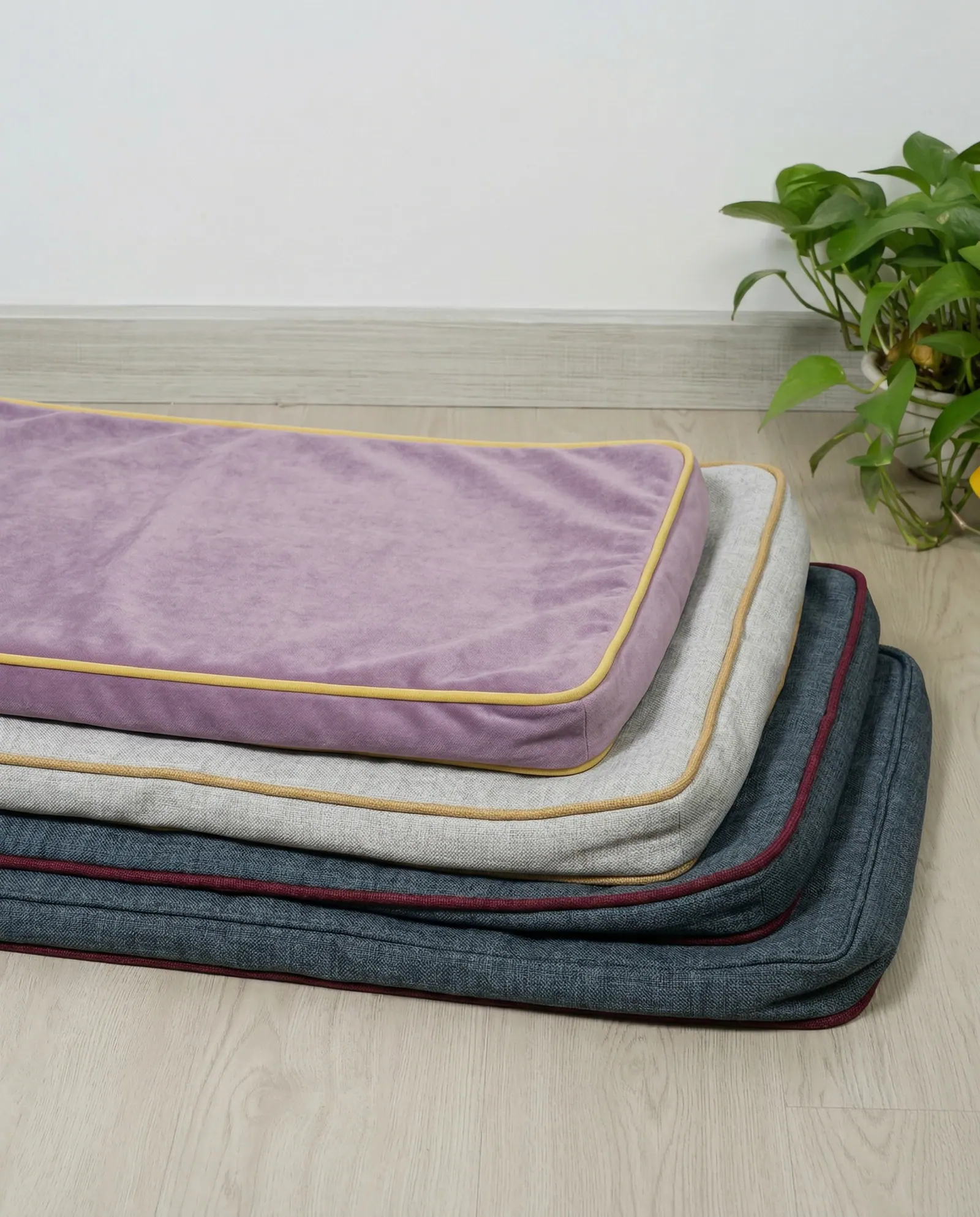
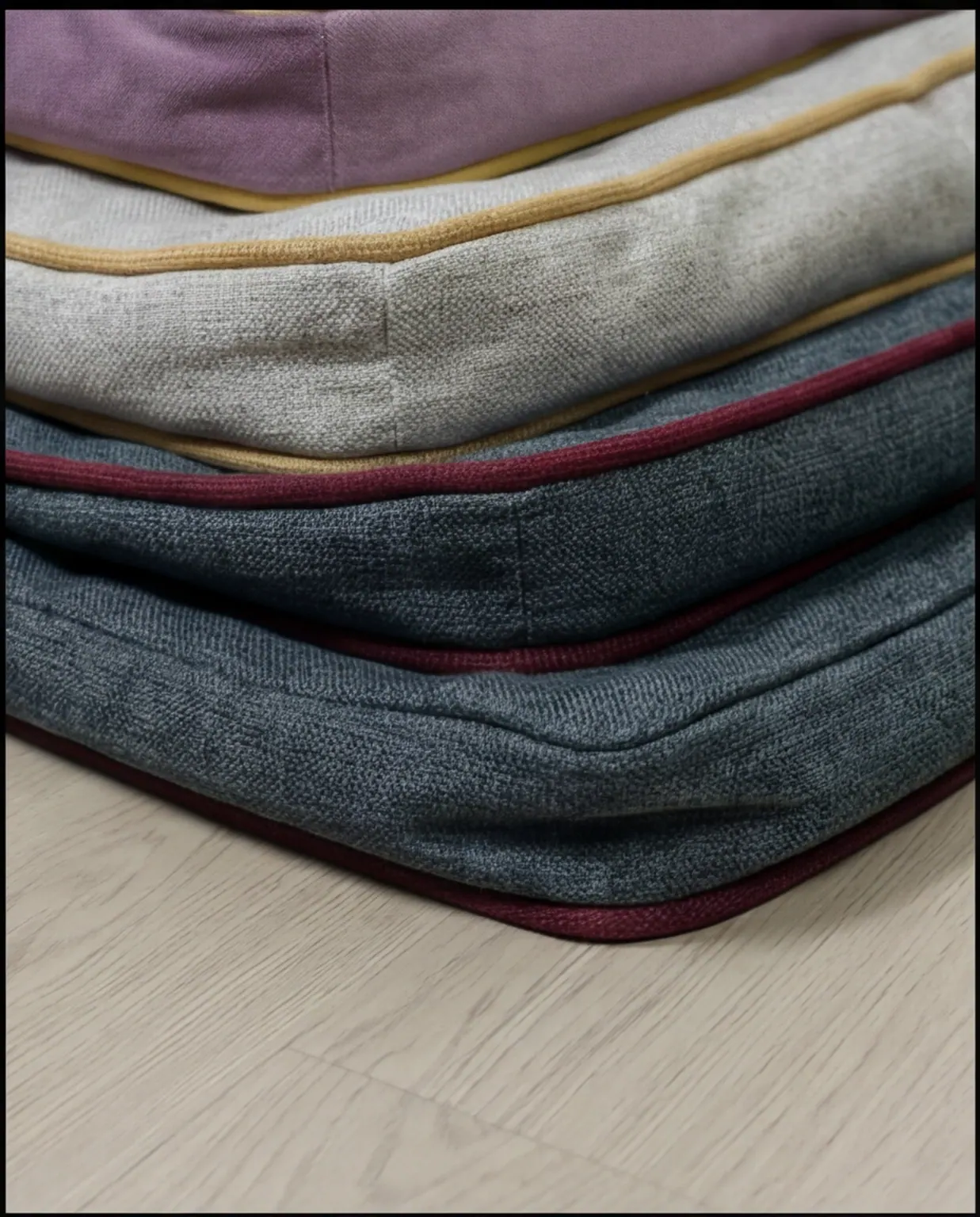
The hand-finishing on a custom bench cushion shows in three places: a piping line that runs straight and even, corners that stay square and full, and a welt join tucked at the back where nobody looks. On a slim green linen-look pad like this one, an ivory contrast welt makes every one of those details visible, so the workmanship has to be right.
Three cushion questions before we look at the photo
- A common question
What does a custom bench or window seat cushion usually cost?
The workshop's answerIt depends on size, fabric and thickness. A short linen pad sits at the low end; long corduroy runs and tufted cushions sit at the top. Pick your size range on the listing to see the price, and ask whether your quote includes delivery.
- A common question
My bench is 30 x 84 in and that size isn't in the dropdown. Can you still make it?
The workshop's answerYes. Choose the range it falls into, for example 30 to 32 in wide and 82 to 84 in long, then type your exact numbers in the Add Personalization box. You pay the listed price for that range, and the cushion is made to exactly your numbers.
- A common question
Can you make cushions with curves, like a curved banquette or a rounded chair seat?
The workshop's answerMild curves are possible, but nothing curved is promised until the craftsmen see a drawing with measurements and photos of the seating. They will say honestly when a fit is risky; a round bay window was once declined because the curve was too pronounced to make accurately from a distance.
Now, the reading
Reading the listening corner
The pad is thin, dear, and that is the whole point. Set against those chunky oak slab legs, a slim bench cushion lets the bench keep its mid-century outline instead of turning into a sofa.
Forest green on pale oak against a white wall is about as quiet as a pairing gets. The ivory piping is the one bright line, and it has a job: it ties the cushion to the wall and to the pale record sleeves on the right, so the seat looks as if it belongs to the room rather than arriving in a box last Tuesday.
Everything else earns its place. The turntable on the oak cabinet tells you what the bench is for. The upright records add fine vertical lines against one long horizontal. The headphones and the black-and-white abstract print keep the palette to green, oak, black and white, and the gray rug stays out of the argument. Nothing is piled on the cushion, which is the only way a piping line ever gets seen.
A straight welt is a kind of honesty. Put a pale one on a dark cushion and you are promising it runs true all the way round. Copy the idea on any bench near a hi-fi or a bookshelf: one solid color, one light welt, nothing on top. The cloth here is a linen-look fabric, and there are more rooms like it in living room cushions.
Pinned by Maggie: from the welt to the vinyl
Five pins, from the slim green pad beside the oak legs to the row of records that balances the long bench.
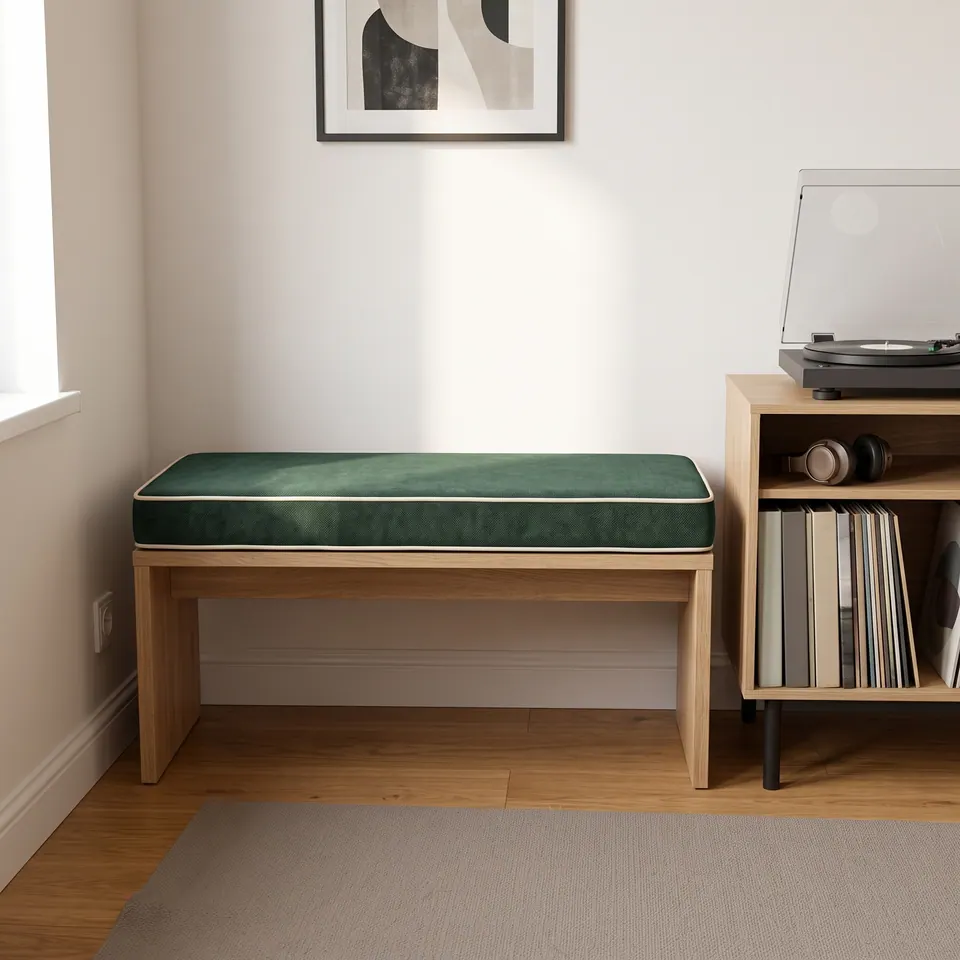
- Slim green pad
The pad is thin next to the chunky oak legs, so the bench keeps its clean outline.
- Ivory piping corner
The pale cord links the cushion to the white wall and the light record sleeves.
- Turntable on cabinet
The record player tells you what the seat is for: sitting down to listen.
- Vinyl record row
Upright records add fine vertical lines that balance the long horizontal bench.
- Oak slab leg
Pale oak and deep green are a quiet pairing that suits mid-century rooms.
- Slim green padThe pad is thin next to the chunky oak legs, so the bench keeps its clean outline.
- Ivory piping cornerThe pale cord links the cushion to the white wall and the light record sleeves.
- Turntable on cabinetThe record player tells you what the seat is for: sitting down to listen.
- Vinyl record rowUpright records add fine vertical lines that balance the long horizontal bench.
- Oak slab legPale oak and deep green are a quiet pairing that suits mid-century rooms.
Five hand-finishing checks before a cushion leaves the table
- The welt runs parallel to the edge the whole way round, with no wander at the corners.
- Corners are square and full, not pinched into a point.
- The piping join sits on the back edge, facing the wall.
- Top panel and boxing strip line up, so the side doesn't twist.
- The finished size matches the order note, measured flat once vacuum-packed foam has recovered.
A trapezoid the price calculator couldn't read
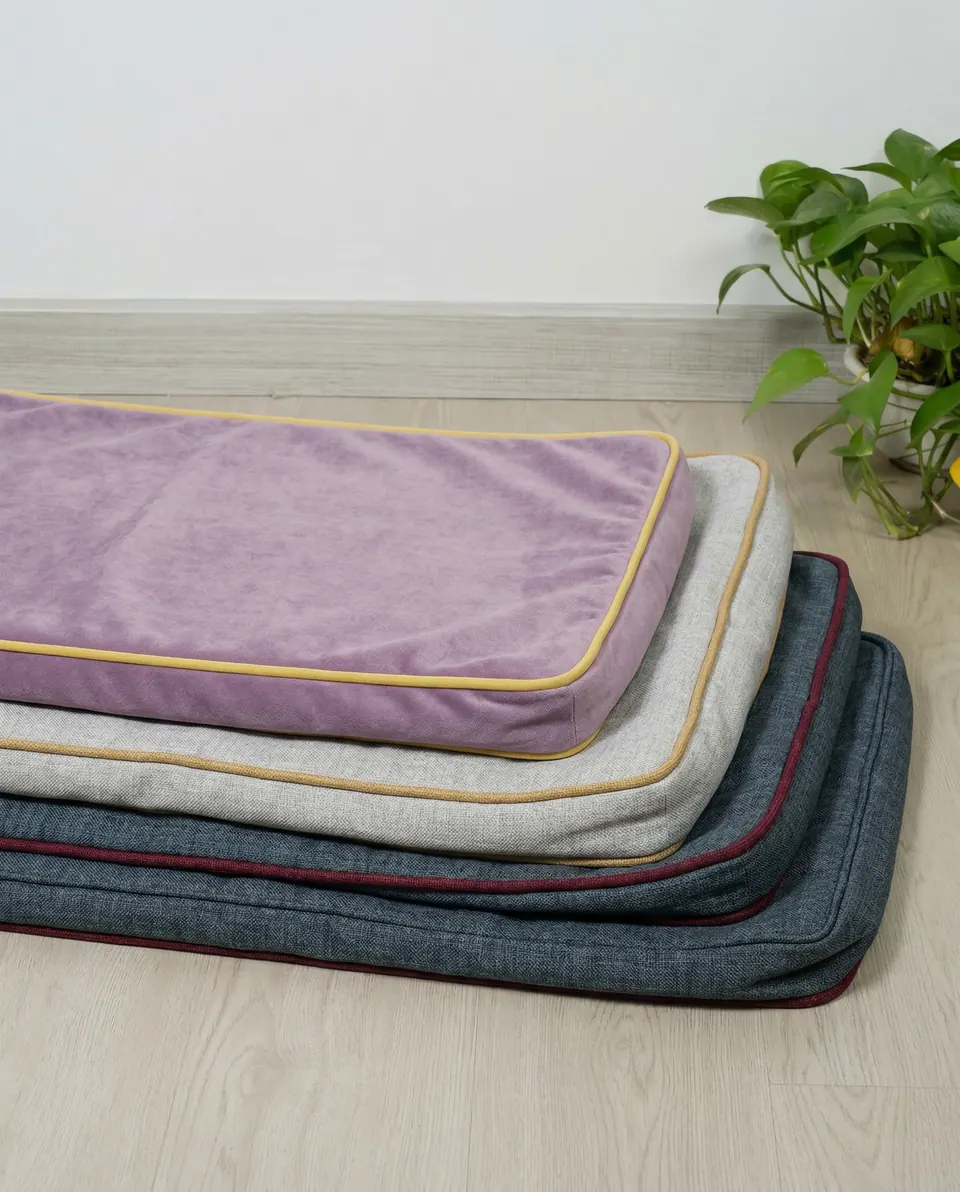
A buyer needed a trapezium cushion for a window seat: 86 5/8 in (220 cm) along the long edge, 43 in (109 cm) on the short edge, 24 in (61 cm) deep, and 31 1/2 in (80 cm) on each angled side, in linen n31. The listing calculator only took a width and a length, and the buyer, sensibly, stopped to ask.
The shop explained that the maximum dimensions, long edge by depth, are enough to price an angled cushion, and every exact side goes in the order notes. Then the workshop worked the price out itself and sent photos of earlier trapezoid cushions so the buyer could picture the finished shape.
That is the heritage part nobody photographs: a workshop willing to show its old work before cutting new. How many sides does your window seat have? The trapezoid cushion calculator and the trapezoid measuring pattern will keep the arithmetic honest.
On the cutting table: the green bench pad
| Product | Slim box-edge bench cushion, rectangle |
|---|---|
| Fabric | Forest green linen-look weave |
| Piping | Ivory contrast welt |
| Edge | Box, low profile beside thick oak legs |
| Bench | Light oak slab bench with chunky legs |
| Room | Listening corner, white wall, gray rug |
| Order note | Exact size, thickness, fabric and piping codes |
| Best for | Mid-century and Scandinavian living rooms, hi-fi corners |

Have it made
Have this made — ask Maggie’s workshop
I once cut a lovely cushion two inches short, and I have not forgotten it. That is why the workshop goes over your measurements with you on the phone. — Maggie
Leave your details and the workshop will call you to confirm measurements, fabric, foam and piping. No prices, dates or payment on this page: it is a request, not an order.
An ivory welt on a forest green bench cushion shows every wobble, so it only works when the piping runs straight around all four corners.
Maggie
Questions buyers ask next
Why put contrast piping on a solid green bench cushion?
A light welt draws the outline of a plain cushion and links it to other pale things in the room, here the white wall and the record sleeves. It also shows any wander in the seam, so it suits a carefully made cushion best.
How thick should a cushion be on a chunky slab bench?
Keep it slim when the bench itself is the design. A thin pad beside heavy slab legs preserves the outline, while a tall cushion makes it read as a sofa. The workshop standard is 4 in (10 cm), and 2 and 3 in are made too.
Where should the piping join sit on a bench cushion?
On the back edge, facing the wall. Every piped cushion has one point where the two ends of the cord meet, and placing it at the back keeps the front edge clean where people look and sit.
Stitch straight — Maggie
More photographs to read
 Save
 Save
 Save
 Save
 Save
 Save