 Save
- Olive velvet pillow
One olive pillow brings in the green of the botanical print.
- Botanical print
The palm print sets the color story: sand, olive and cream.
- Sculptural lamp
A curvy white lamp contrasts with the straight lines of the bench.
- Natural white piping
Pale welt keeps the edge crisp against the oak without adding a dark line.
- Chevron parquet
Pale oak parquet and an oak bench leave the cushion as the one soft element.
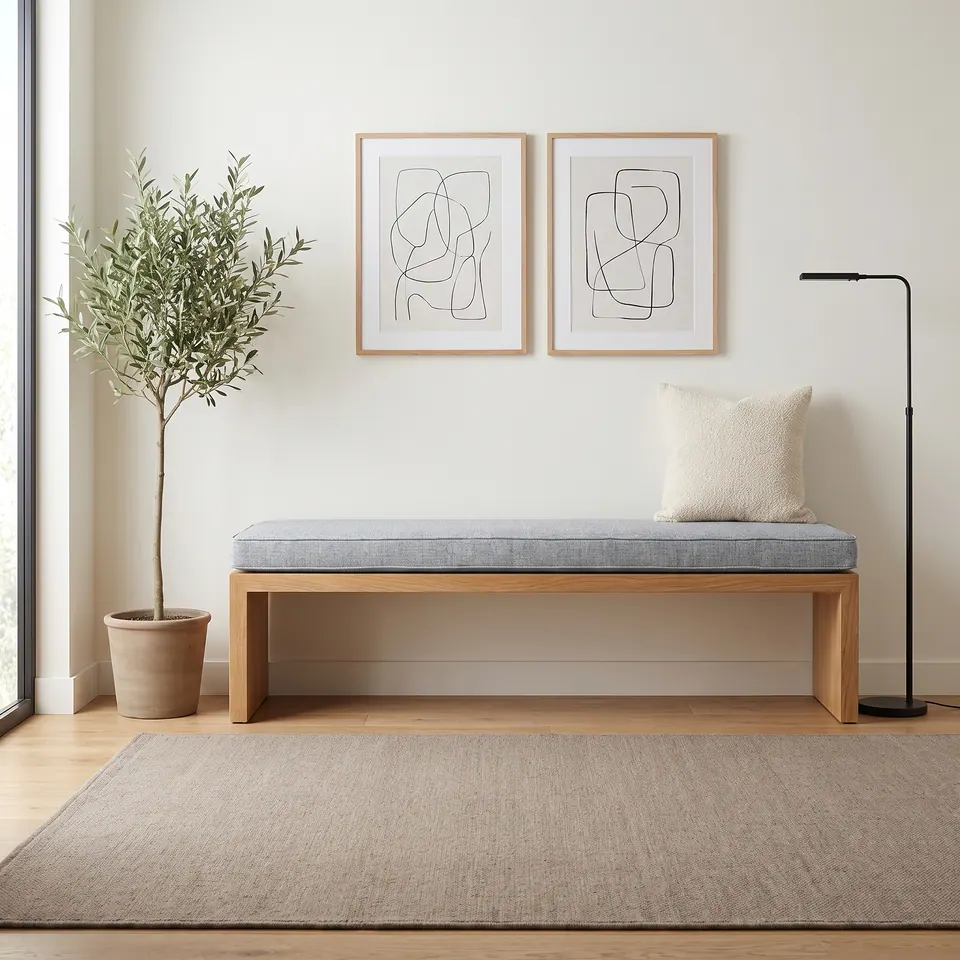
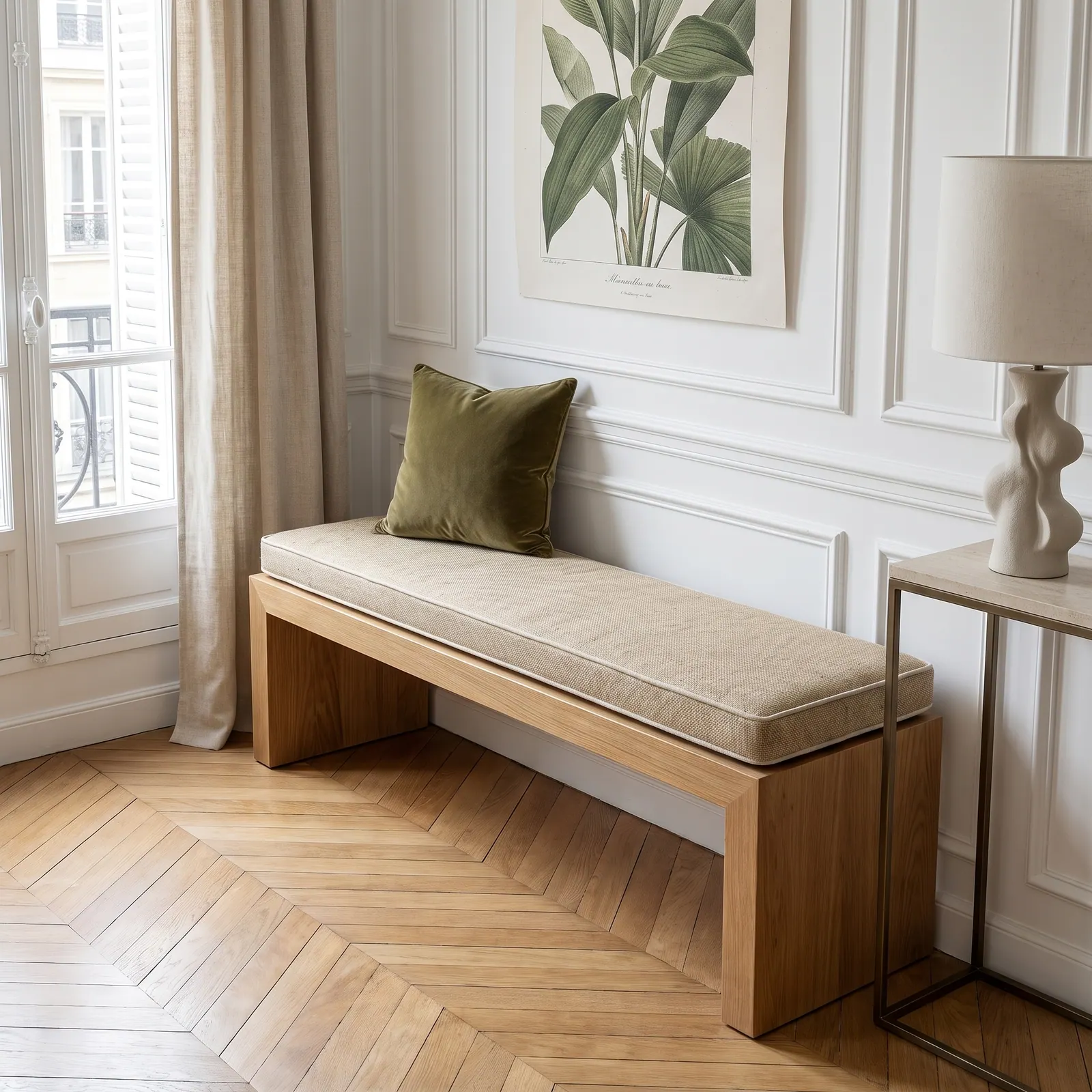
Plate Sand Bench Pad on a Chunky Oak Bench in a Parisian Salon
A warm sand cushion softens a solid oak bench in a paneled Parisian room, with one olive velvet pillow for color.
A Reading by MaggieBench Cushions
A warm sand bench pad on a chunky oak bench, read by hand
Maggie reads a slim linen-look cushion in a paneled Paris-style salon: how the cloth feels under the palm, where it will show wear, and what the pale piping asks of you.

The quick answer
A custom bench cushion for a solid oak bench looks best slim, 2 or 3 in (5 or 7.5 cm) thick, cut flush to the top in a matte linen-look weave close to the wood's tone. Warm sand hides dust and daily wear better than white. Natural white piping keeps the edge crisp but shows marks first, so spot-clean it early.
Pinned by Maggie: the salon plate
Begin at the olive pillow, rise to the palm print and the lamp, then drop to the white piping and the chevron floor.
The numbers match the pins on the plate.
- Olive velvet pillowOne olive pillow brings in the green of the botanical print.
- Botanical printThe palm print sets the color story: sand, olive and cream.
- Sculptural lampA curvy white lamp contrasts with the straight lines of the bench.
- Natural white pipingPale welt keeps the edge crisp against the oak without adding a dark line.
- Chevron parquetPale oak parquet and an oak bench leave the cushion as the one soft element.
What the cloth says under your palm
Put a hand on this cushion before you look at the room. A linen-look weave has a dry, matte surface with a faint slub, the small irregular thickenings that make linen look handmade. You slide onto a bench sideways, and a flat weave shrugs off the twist; velvet would keep the mark of where you turned.
A word of honesty, since buyers ask it often. Linen-look names the look. The workshop's standard linen charts are mostly blends, such as linen with polyester or cotton with linen, and true 100% linen sits on a separate chart. Ask for the fiber content of your exact code in writing. The linen versus linen-look pattern sets them side by side.
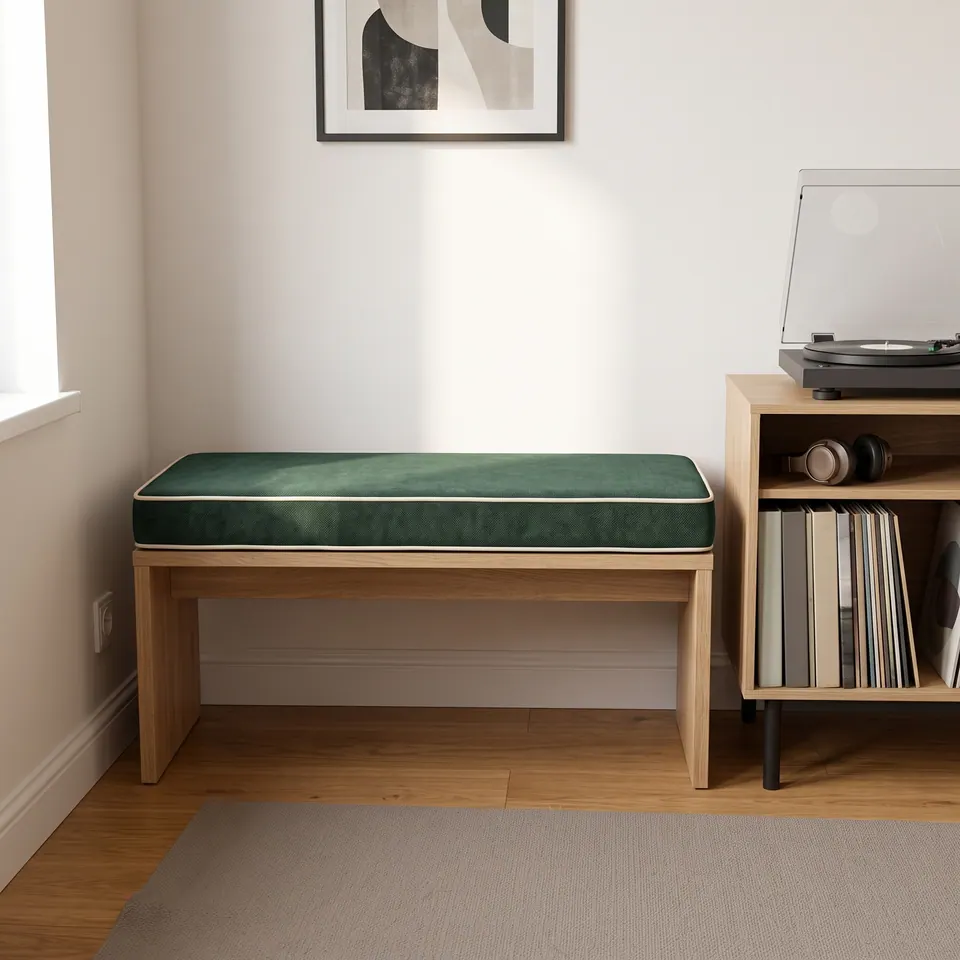
The weave also explains the shape. Soft cloth rounds off a tall box edge but stays taut over a slim pad, so this cushion is thinner than a window seat pad: a crisp slab that shows off the oak and sits exactly on the top.
Where sand wears, and where the white piping tells on it
Sand is a forgiving color. It sits within a shade of the chevron parquet and the paneled walls, so dust, crumbs and the faint gray of daily sitting disappear into it. White would show all three by Thursday.
The piping is where this cushion admits to wear. Natural white welt keeps the edge crisp against the oak without drawing a dark line, and a straight welt is a kind of honesty. But the front edge is what hands and heels touch first, so spot-clean it early. When it needs more, the zippered cover comes off and washes at 86°F (30°C) at most, inside out on a gentle cycle, then air-dries; the cover washing pattern has the details.
The props carry the color. One olive velvet pillow, smooth deep pile against the dry weave, picks up the palm in the botanical print above. A curvy white ceramic lamp on the travertine and bronze console answers the straight lines of the bench. Linen at the French window filters the daylight so the sand reads warm, not gray.
The bench cushion atlas and the linen-look weaves carry more. Would your bench look better with less cushion?
A buyer who wanted to choose her own cloth
A buyer in the US who sews had two twin mattresses and could not find a daybed frame she liked. So she skipped the frame. She bought only the two L-shaped corner backrest inserts and four metal support brackets, planning to sew every cover herself. The shop set it up through a custom listing that included shipping, and when the listing would not open in the app, it opened correctly in a browser.
I admire that order: she wanted to choose her cloth by touch, which is how personal the hand of a fabric is. Backrest inserts and bars can be bought on their own to build a floor sofa around mattresses you already own; see the support bar pattern.
On the cutting table: the oak bench pad
| Piece | Slim box bench pad, cut flush to the bench top |
|---|---|
| Fabric | Warm sand linen-look weave, matte with a faint slub |
| Piping | Contrast, natural white |
| Thickness | 2, 3 or 4 in (5, 7.5 or 10 cm); slimmer suits a feature bench |
| Overhang | None |
| Hand | Dry and matte; no pile, no sheen |
| Care | Zippered cover; wash at 86°F (30°C) max, air-dry |
| Pairs with | Olive velvet, oak, travertine, cream paneling |
| Best for | A solid wood bench that is the feature of the room |

Have it made
Have this made — ask Maggie’s workshop
Numbers first, fabric second, piping last. Jot down what you have, and the workshop will go down the list with you, item by item. — Maggie
Leave your details and the workshop will call you to confirm measurements, fabric, foam and piping. No prices, dates or payment on this page: it is a request, not an order.
Buyer questions: codes, sizes and thickness
- A common question
Which fabric and color code is the cushion in your listing photo? I want the same look.
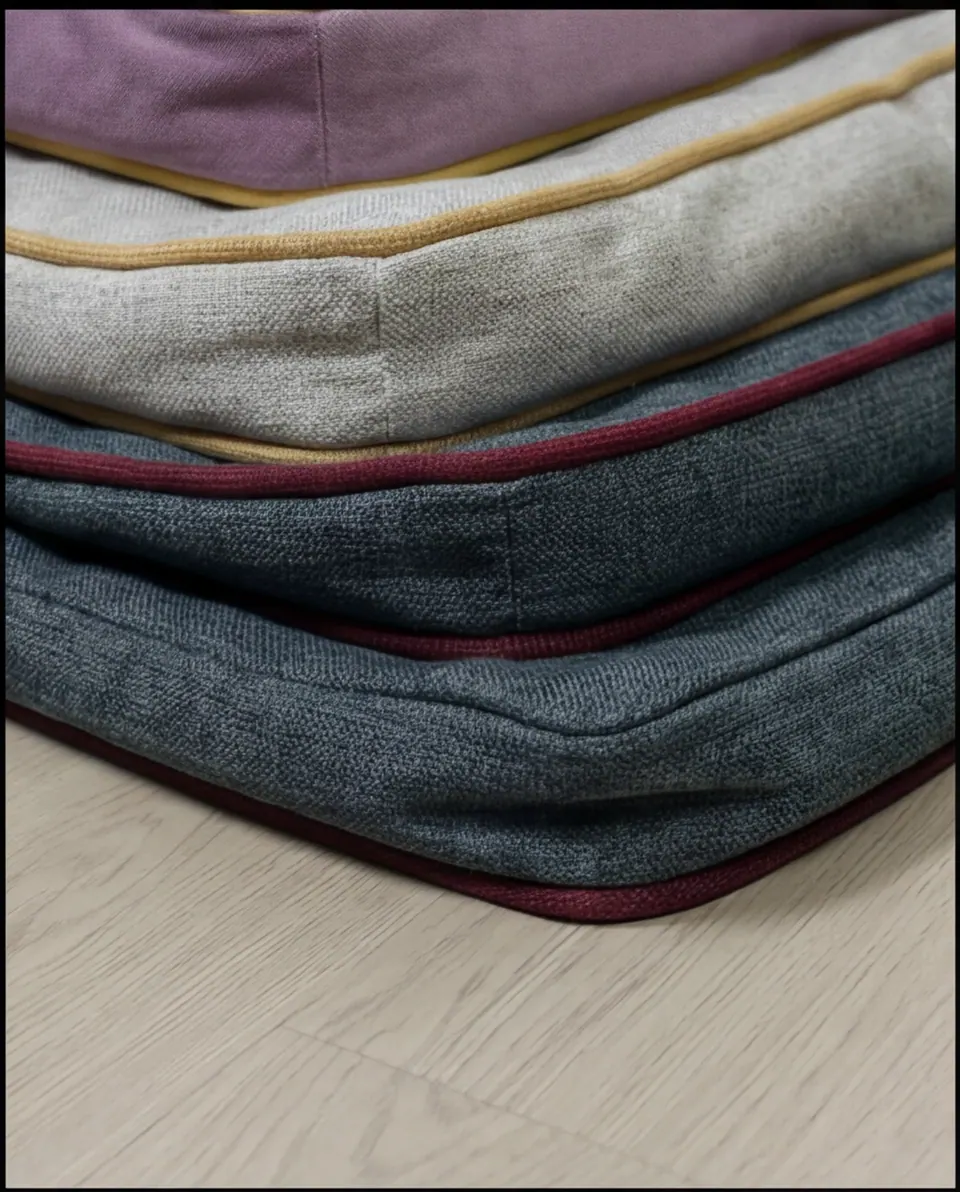
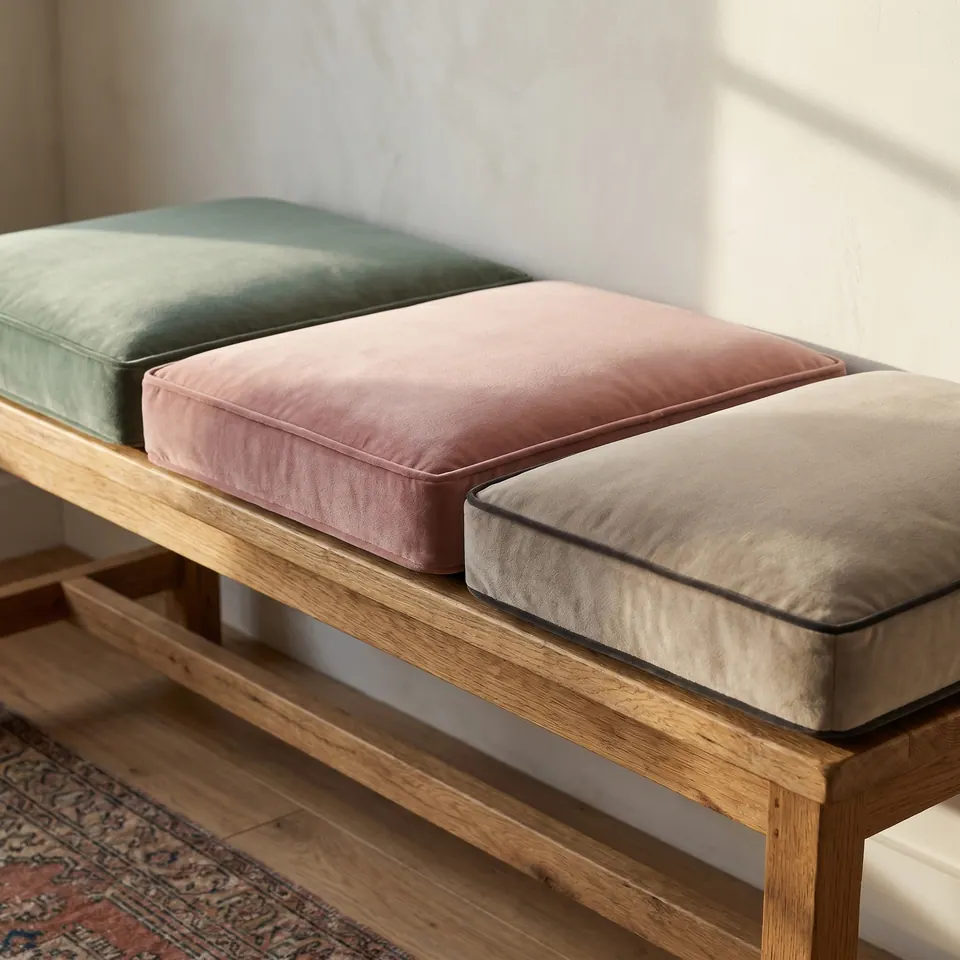
The workshop's answerSend a screenshot or describe the photo and the shop names the codes. A mauve bench cushion turned out to be a velvet, a tan cushion with brown piping was linen with velvet piping, and a striped armchair was an outdoor fabric. If the exact cloth is not stocked, the closest match is suggested, and an order can copy a photo's colorway.
- A common question
My exact bench size isn't in the drop-down. How do I order it?
The workshop's answerChoose the closest size, usually the next one up, and write your exact dimensions, thickness and fabric and piping codes in the personalization box. The cushion is made to the size written there: a 17 x 52 in (43 x 132 cm) bench went through the 18 x 52 in option. If nothing is close, the shop adds the size or creates a custom option.
- A common question
Do you make bench cushions thinner than 4 inches, or much thicker?
The workshop's answerAny thickness is possible. The rectangle listing offers 2, 3 or 4 in (5, 7.5 or 10 cm), and custom orders have run from ¾ in (2 cm) window seats to 8 in (20 cm) seats and 10½ in (27 cm) pillows. Write the thickness in the note.
A sand linen-look bench pad hides dust and crumbs; its natural white piping is the first thing to show wear, so spot-clean the front edge.
Maggie
Questions buyers ask next
How thick should a cushion be on a chunky wooden bench?
Slimmer than you might think. When the bench itself is the feature, 2 or 3 in (5 or 7.5 cm) keeps the wood in view, while 4 in (10 cm) suits plain built-ins and window seats. Cut it flush to the top with no overhang.
Will a sand-colored bench cushion show stains?
Less than white or cream. A mid-tone sand close to the floor and wall color hides dust and crumbs well. Pale contrast piping is the exception: it runs along the front edge, where hands and shoes touch, so spot-clean it early.
Can I get the fiber content of a linen-look fabric before ordering?
Yes: linen-look describes the appearance of the weave, not a fiber promise, so name your exact fabric code and ask for its content and care before you order. Order a sample too if touch matters to you.
Stitch straight — Maggie