A Reading by NateBench Cushions
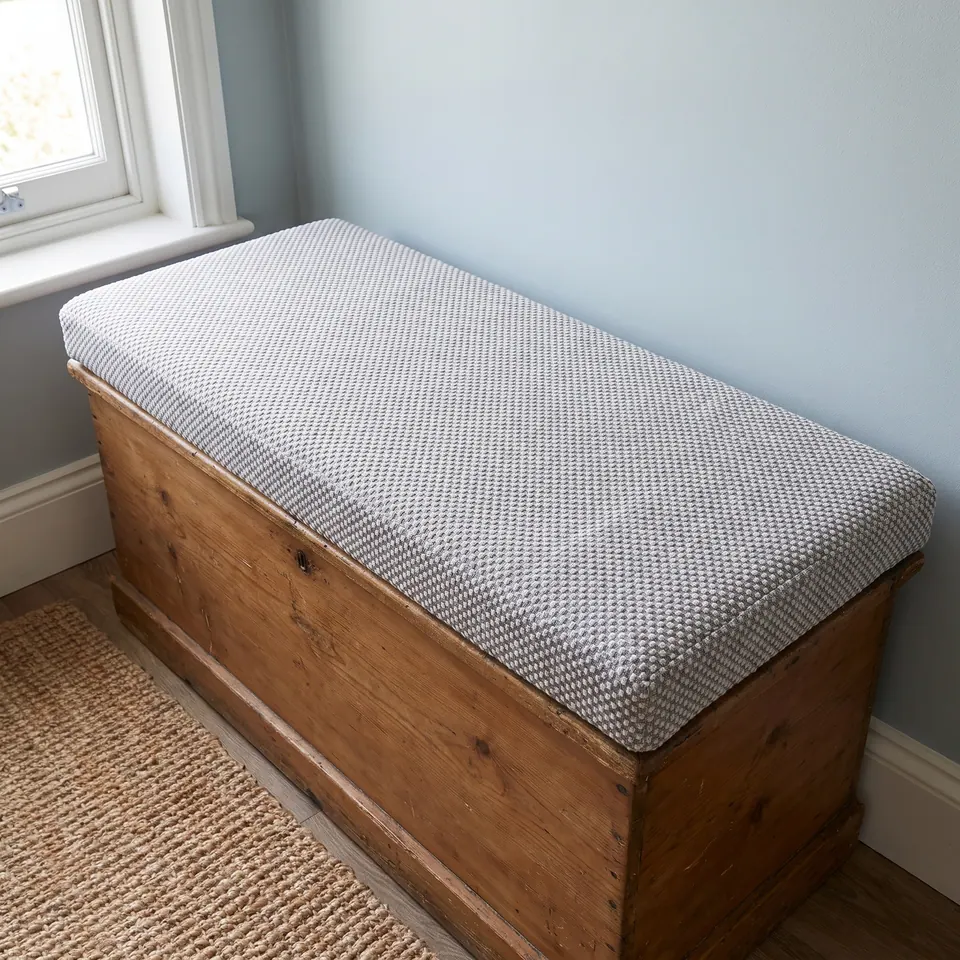
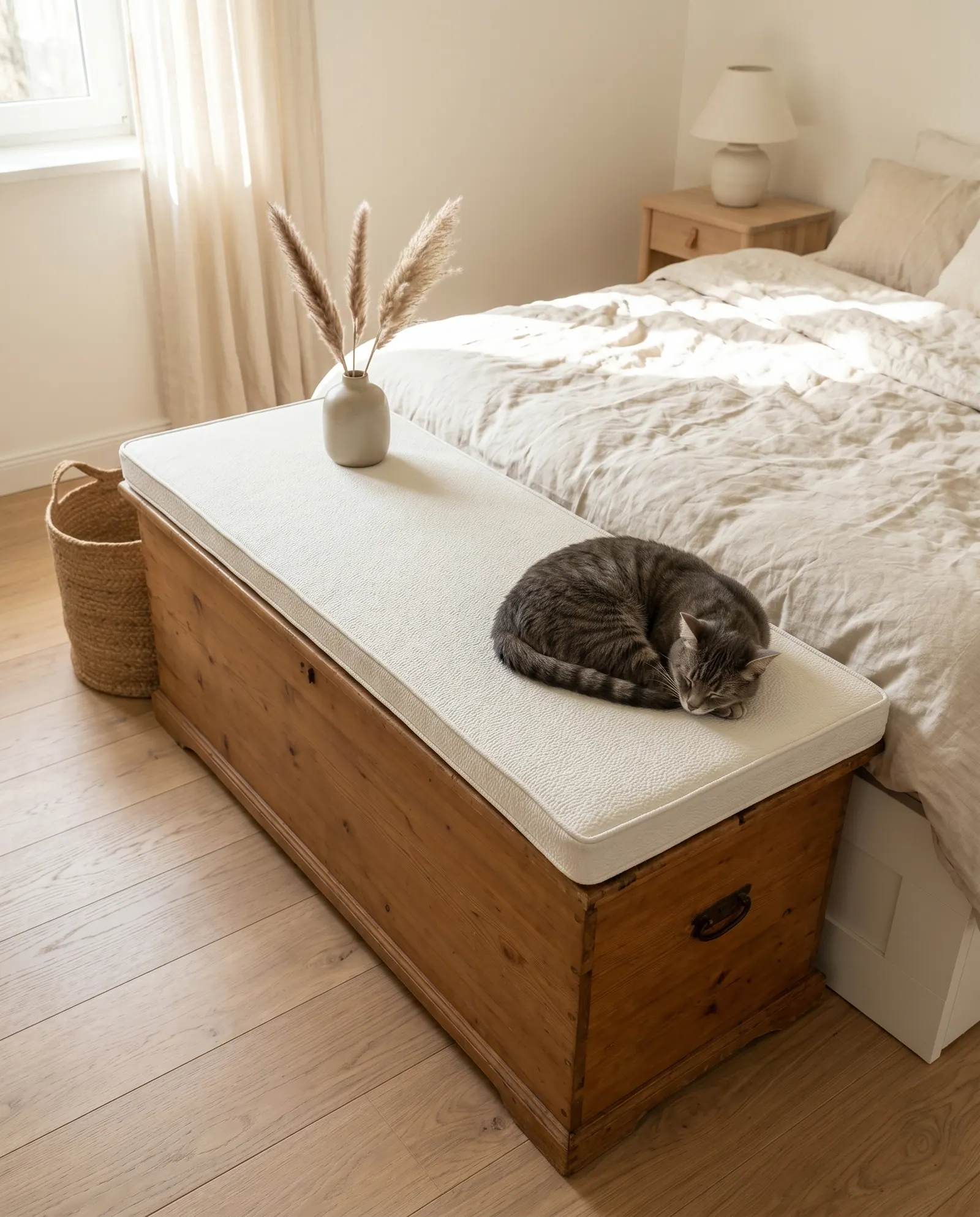
An ivory bench cushion on a pine blanket chest, read from the door and from the bed
Two distances, one cushion, partner. From the door you should see three clean lines; from the edge of the bed, a weave, a welt and a cat who has already approved the work.

 Save
The quick answer
A custom bench cushion for a blanket chest should be cut to the lid, not the chest body, and kept slim so the lid still lifts. Stop it flush with the lid edges so the old pine and iron handles still show. On a bench walled in on three sides, round down: a 24.29 in (61.7 cm) opening got a 24.21 in (61.5 cm) cushion.
Pinned by Nate
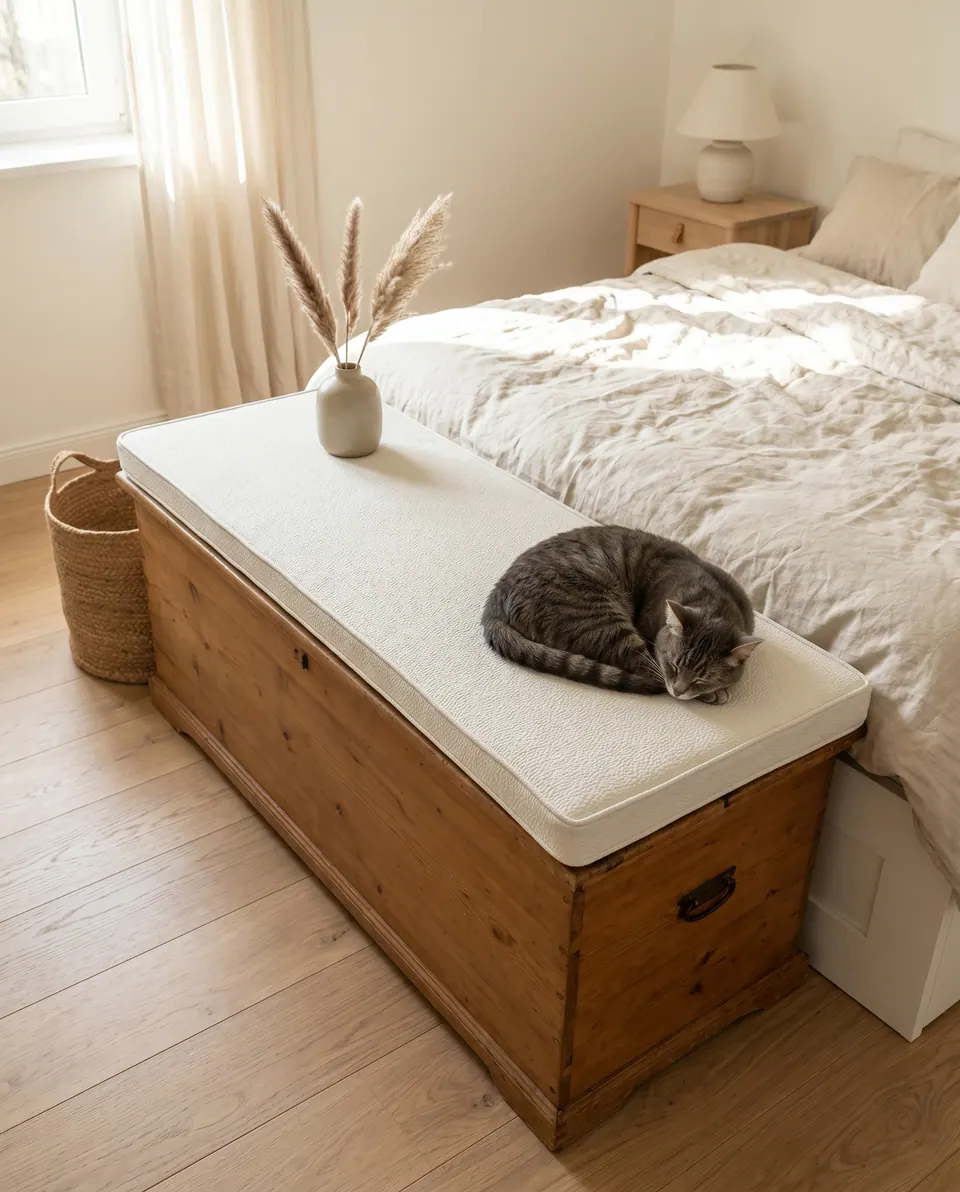
Five pins, from the flush front edge to the single pampas vase that marks where sitting stops.
- Ivory textured top
A quilted-look ivory weave keeps a pine chest bright at the foot of a pale bed.
- Curled tabby
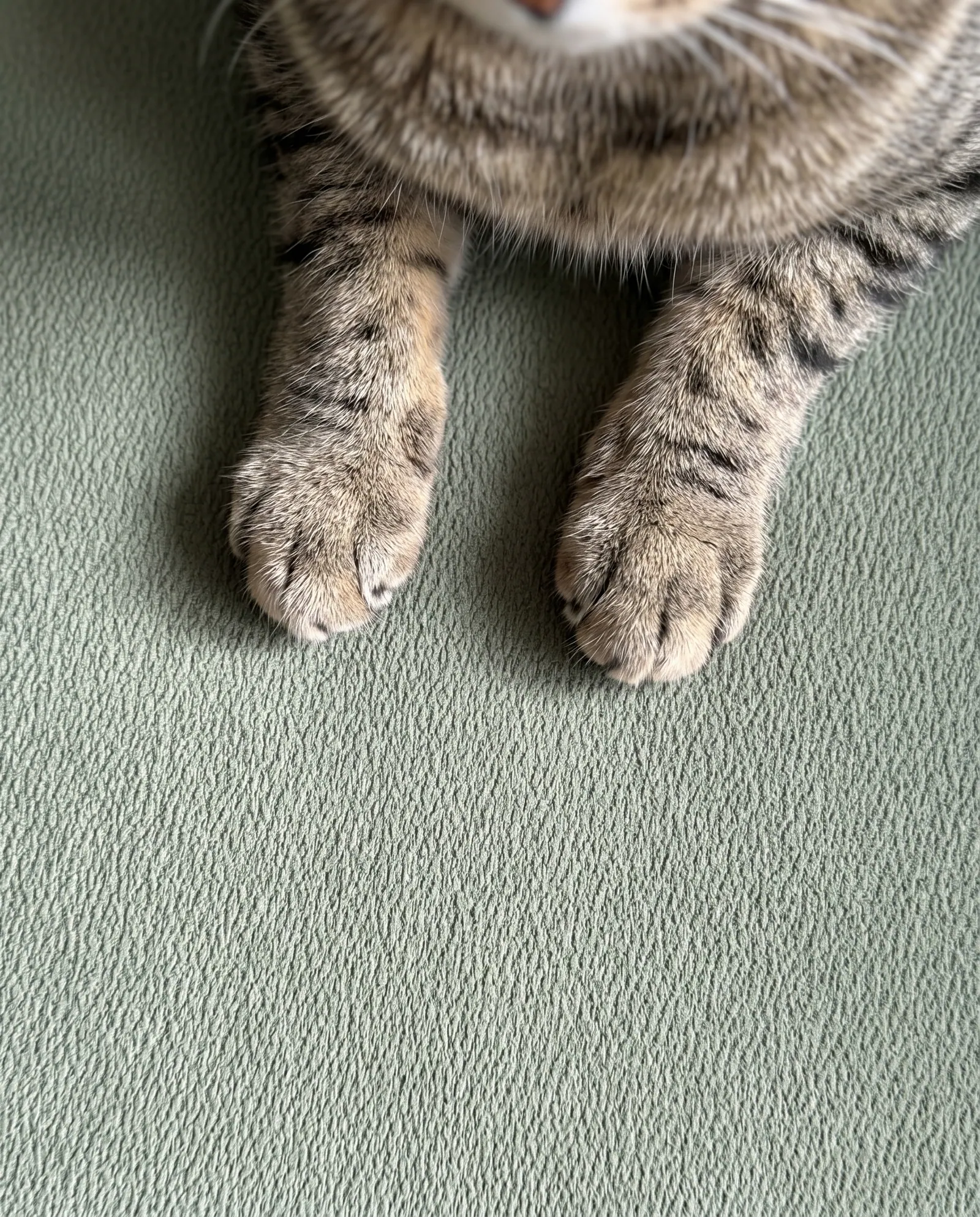
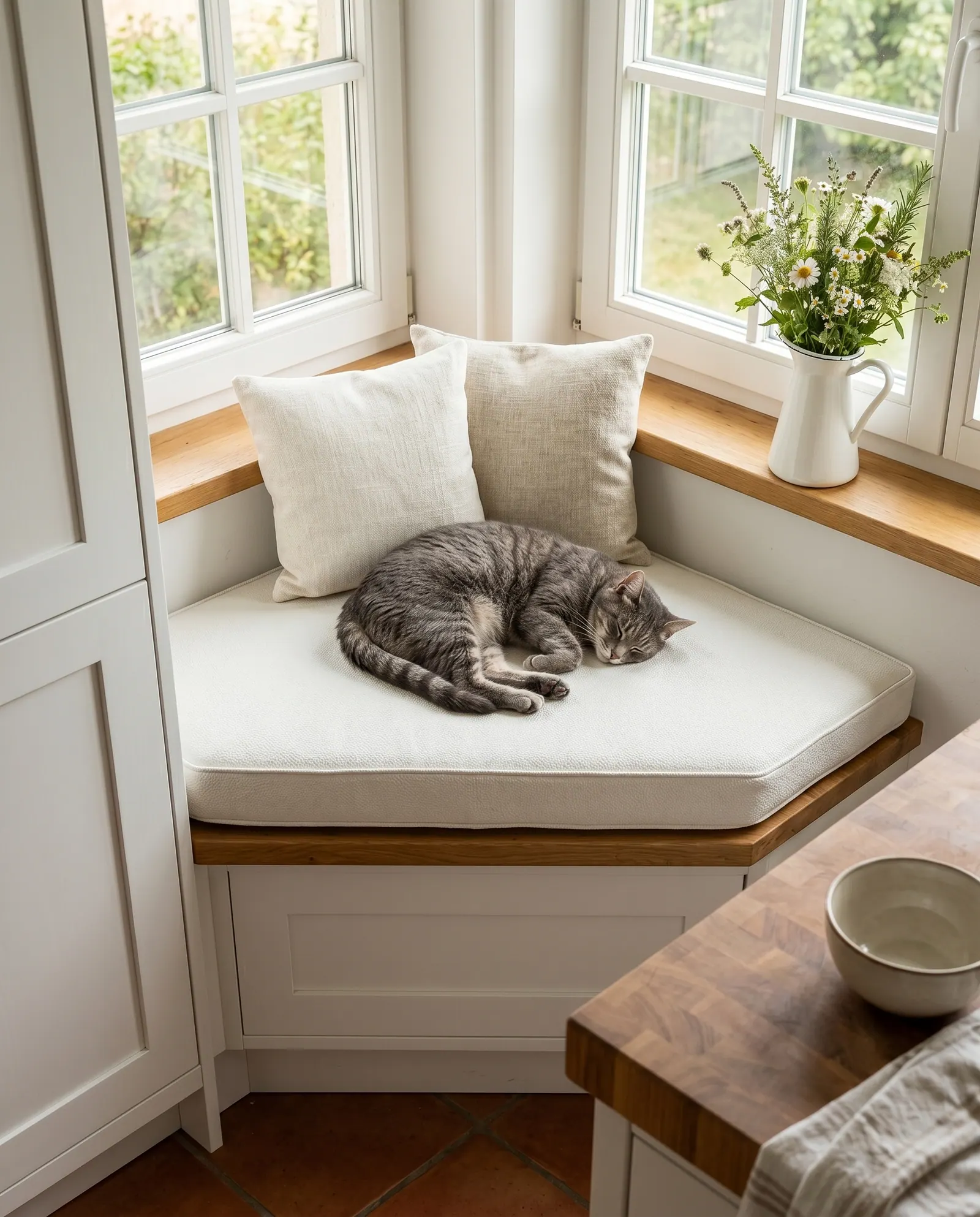
Cats love a chest top; a tight weave stands up to kneading.
- Piped front edge
The cushion stops flush with the lid, so the old pine stays visible.
- Iron handle
The original hardware stays exposed because the cushion does not overhang the sides.
- Pampas vase
One tall vase at the end marks where seating stops and display starts.
- Ivory textured topA quilted-look ivory weave keeps a pine chest bright at the foot of a pale bed.
- Curled tabbyCats love a chest top; a tight weave stands up to kneading.
- Piped front edgeThe cushion stops flush with the lid, so the old pine stays visible.
- Iron handleThe original hardware stays exposed because the cushion does not overhang the sides.
- Pampas vaseOne tall vase at the end marks where seating stops and display starts.
Notebook, page one: the door, then the bed
Note 1: the ten-foot test. Stand in the bedroom door and squint. Three things survive: a pale rectangle, a honey-colored box under it, and one dark iron handle. That is the whole design, and it holds because the cushion stops flush with the lid at the front and both ends. No overhang. No soft edge drooping over old pine.
Note 2: proportion. The cushion is slim against the height of the chest. Thick enough to sit on while you pull on socks, thin enough that the lid still lifts to the blankets inside. The chest is storage first; the cushion only rents the top. Measure the lid, not the body, because old lids often overhang.
Note 3: color against light. Soft, bright morning light. Ivory matches the rumpled linen bedding, so from the door the chest reads as the last step of the bed, and the pine supplies all the contrast. A strong color here would make the chest a separate piece of furniture.
Note 4: the ten-inch test. Walk up. The ivory is a quilted-look weave with a texture you can see. The piping is self piping, ivory on ivory, so the edge is drawn once and quietly. Rule: a detail that only shows up close should never argue with the shape you see from the door.
Note 5: the props and their jobs. The gray tabby, because cats find a warm flat top within a day, and a tight weave takes kneading. The pampas grass in a gray bud vase: one tall thing marking where sitting stops and display starts. The seagrass basket adds texture at ankle height. The pine bedside table and ceramic lamp repeat the chest's wood so it doesn't look orphaned.
Where do you sit to put your shoes on right now? If it's the edge of the bed, a chest like this is the fix. See the bench cushion atlas, more bedroom cushions, and the performance and pet-friendly fabrics this weave belongs to. Lids that hinge get their own notes in storage bench cushions with hinged lids.
Ten feet versus ten inches, line by line
| Detail | From the door (10 ft) | From the bed (10 in) |
|---|---|---|
| Edge | One straight line where ivory meets honey pine | Self piping in the same ivory, no second outline |
| Color | Ivory joins the bed linen, so the chest reads as part of the bed | A quilted-look texture keeps the ivory from looking flat |
| Hardware | A dark iron handle marks the end of the chest | The handle stays clear because nothing overhangs |
| Props | Pampas stands tall at one end: seating stops here | A tabby curled on a tight weave that takes kneading |
Three walls, one laser, and less than 1/8 inch
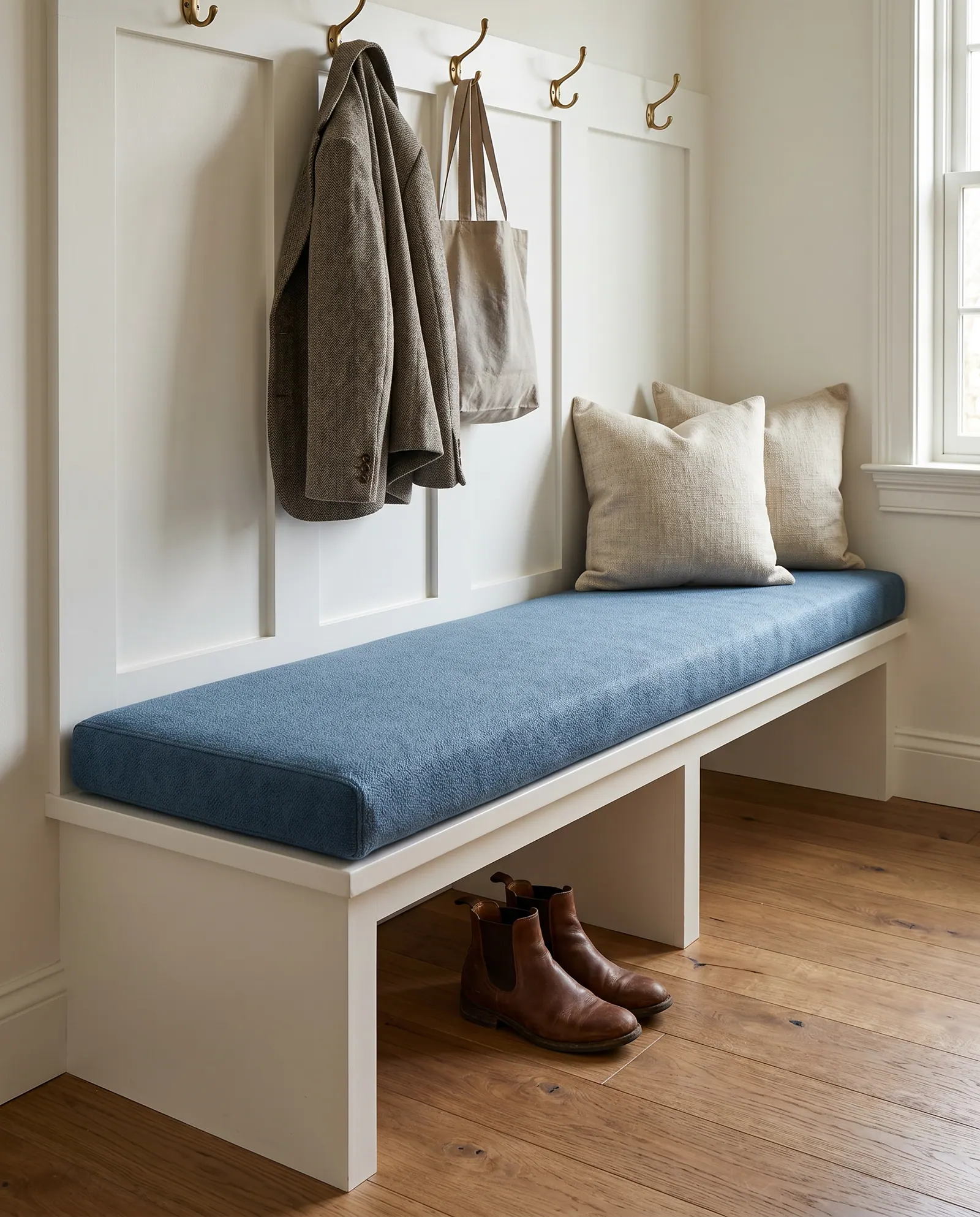
One buyer wrote in about an entryway bench boxed in on three sides. The space was measured with a laser, which I respect: 76.81 x 24.29 in (195.1 x 61.7 cm).
The worry was the right worry. A cushion even slightly too large will not drop between three walls. It rides up at the ends and fights you every time you sit.
The shop's answer: order 76.77 x 24.21 in (195 x 61.5 cm). That trims 1/32 in (1 mm) from the length and 3/32 in (2 mm) from the depth, less than 1/8 in (3 mm) either way. The reason: handmade cushions vary slightly, and every piece is checked before it ships. Leave room for that variation on the small side of the number, never the large side.
My notebook, in pen: for enclosed benches, round down a few millimeters so the cushion drops in. The long version is in custom cushion size tolerance.
Buyer questions: corners, colors and one orange that wasn't
- A common question
Can you make a triangle cushion for a corner bench where the two walls meet at 90 degrees?
The workshop's answerYes. Corner and triangle cushions are regular custom work. Send a drawing with every edge measured, plus a photo of the corner if you can, then order on the custom-shape listing and upload both images at checkout.
- A common question
I need several cushions in the same size, but each one in a different color. How do I order that?
The workshop's answerSet the quantity to the number of cushions, not one, and list each cushion's fabric and piping in the order note. One buyer ordered four 12 x 33 in (30.5 x 84 cm) velvet cushions this way, in olive with lilac, mauve with mustard, and mustard with pale pink.
- A common question
The piping on the cushion in the first listing photo looks orange to me. What color is it really?
The workshop's answerIt isn't orange. That piping reads mustard in real life; the photo pushes it warmer. The shop sends close-ups and a photo of a finished cushion in the same combination so you can see the true colors before you order.
On the cutting table: the chest-top cushion
| Piece | Chest-top bench cushion, rectangular, box edge |
|---|---|
| Fabric | Ivory textured performance weave with a quilted look |
| Piping | Self piping, ivory on ivory |
| Fit | Cut to the lid, flush at the front and both ends |
| Profile | Slim, so the lid still lifts |
| Left visible | Honey pine sides and the iron end handles |
| Measure | The lid only; old lids often overhang the body |
| Enclosed benches | Round down: 24.29 in (61.7 cm) opening, 24.21 in (61.5 cm) cushion |
| Best for | End-of-bed seating in a bedroom |

Have it made
Have this made — ask Nate’s workshop
Send the numbers in inches: length × depth × thickness, plus any angle. The workshop checks them with you, because foam has no undo button. — Nate
Leave your details and the workshop will call you to confirm measurements, fabric, foam and piping. No prices, dates or payment on this page: it is a request, not an order.
On a blanket chest, cut the bench cushion to the lid, not the chest body. Old lids often overhang, and the lid edge is the line the eye follows from ten feet.
Nate
Questions buyers ask next
How thin should a cushion on a lift-lid chest be?
Thin enough that the lid still lifts fully without hitting the bed frame or the wall behind it. Check the clearance with the lid raised before you choose a thickness. A slim pad also keeps the chest looking like a chest.
Should a blanket chest cushion hang over the edges?
Usually not. Cut it flush to the lid so the wood and hardware stay visible and the lid closes cleanly. Measure the lid itself, not the chest body, because old lids often overhang the box beneath.
Is an ivory chest cushion practical with a cat in the house?
It can be, if the weave is tight. A tight textured performance weave stands up to kneading better than a loose or looped one, and texture hides small marks better than flat ivory. No fabric is immune to claws.
± 1/4 in — Nate
More photographs to read
 Save
 Save
 Save
 Save
 Save
 Save