A Reading by NateBench Cushions
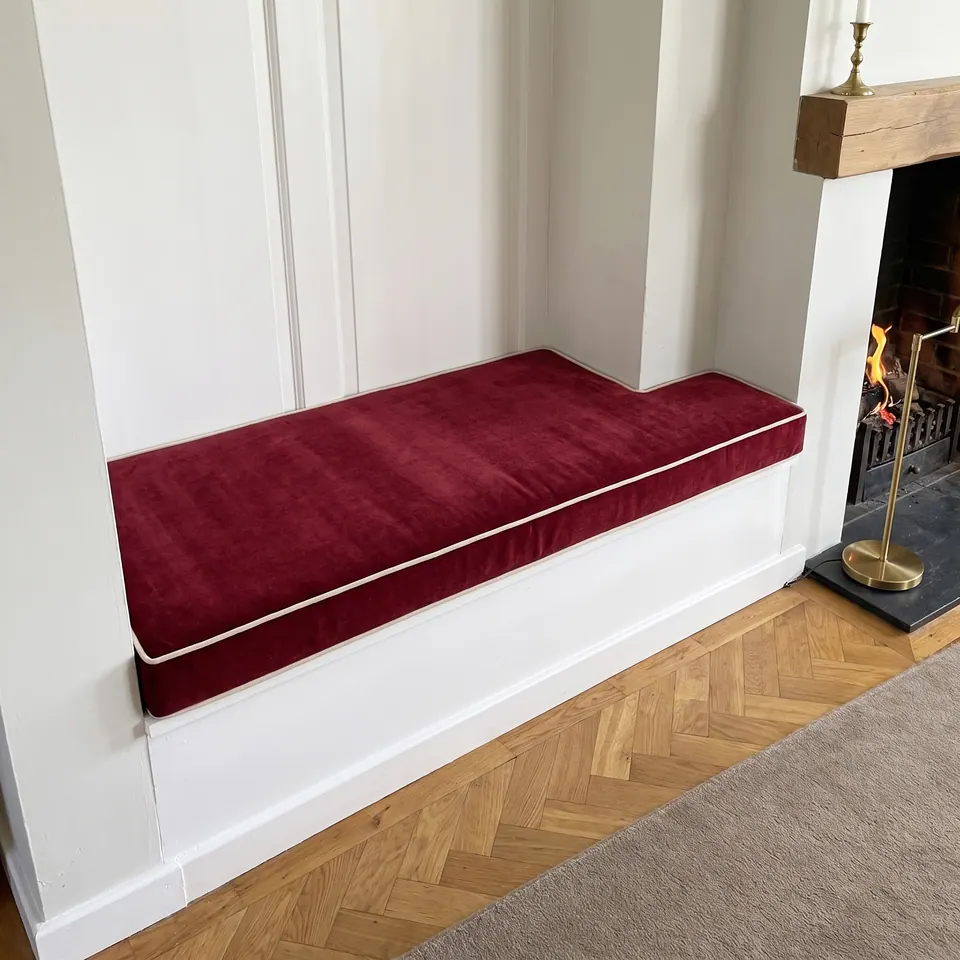
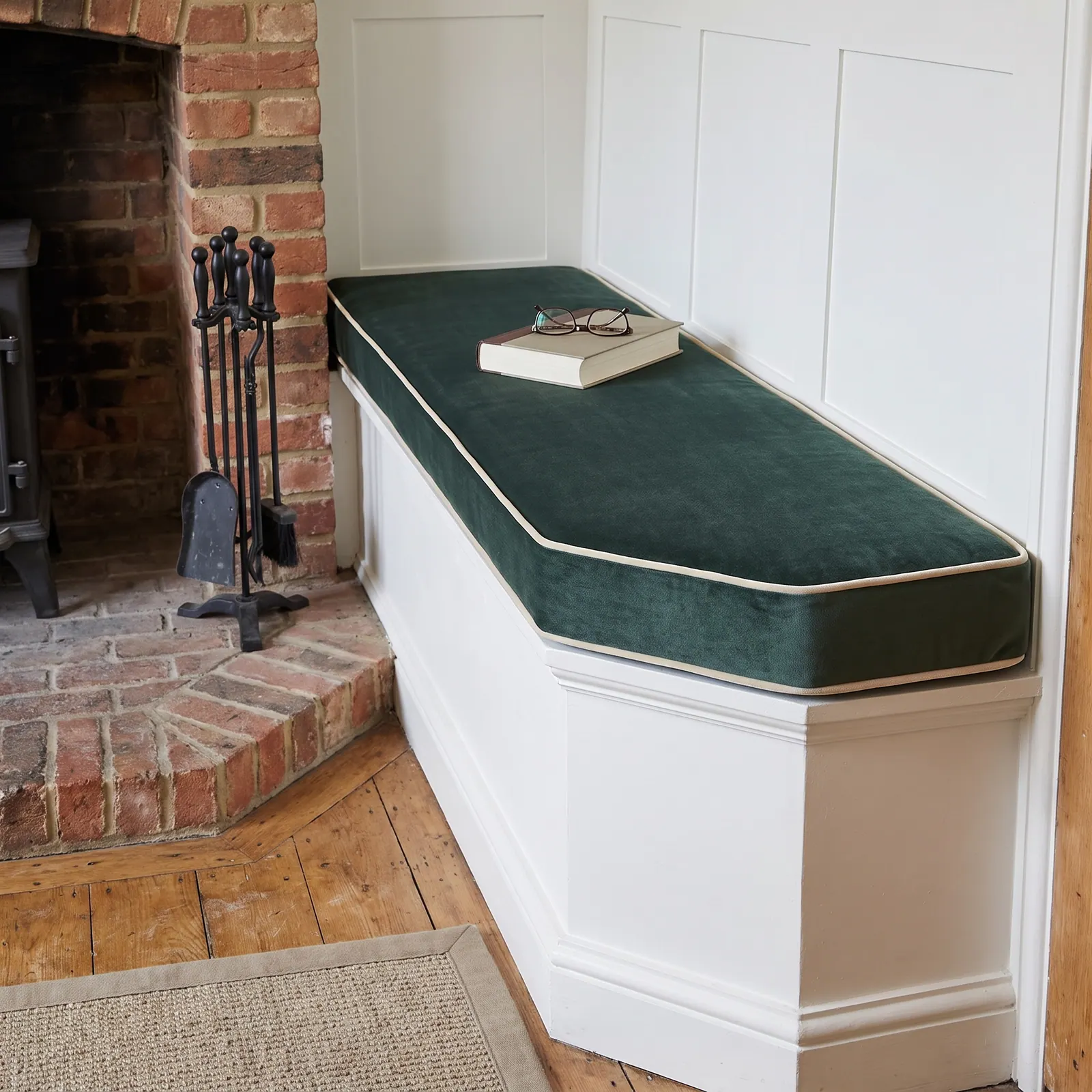
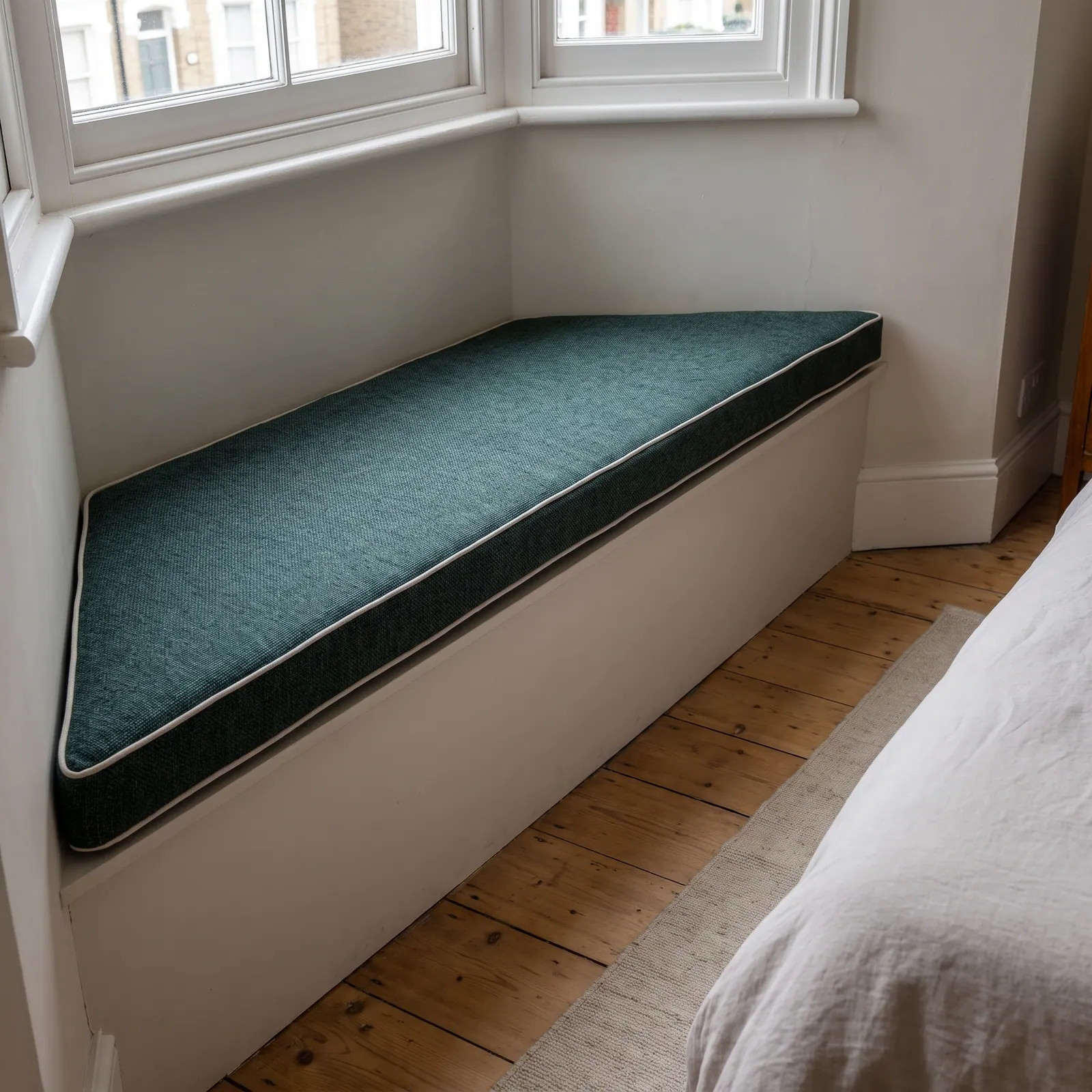
A custom bench cushion with one slanted end, beside a brick inglenook
Partner, count the lines in this photograph before you count the inches. Brick courses, panel grooves, floorboards. The cushion is the one surface with no pattern at all, and that was a decision.

 Save
The quick answer
A custom bench cushion for an angled fireside seat is a trapezoid: measure the back edge, the front edge, the depth and the slanted side, then send a sketch. When the room already carries lines, such as brick courses, panel grooves and floorboards, choose a plain velvet and let one cream piping line trace the shape.
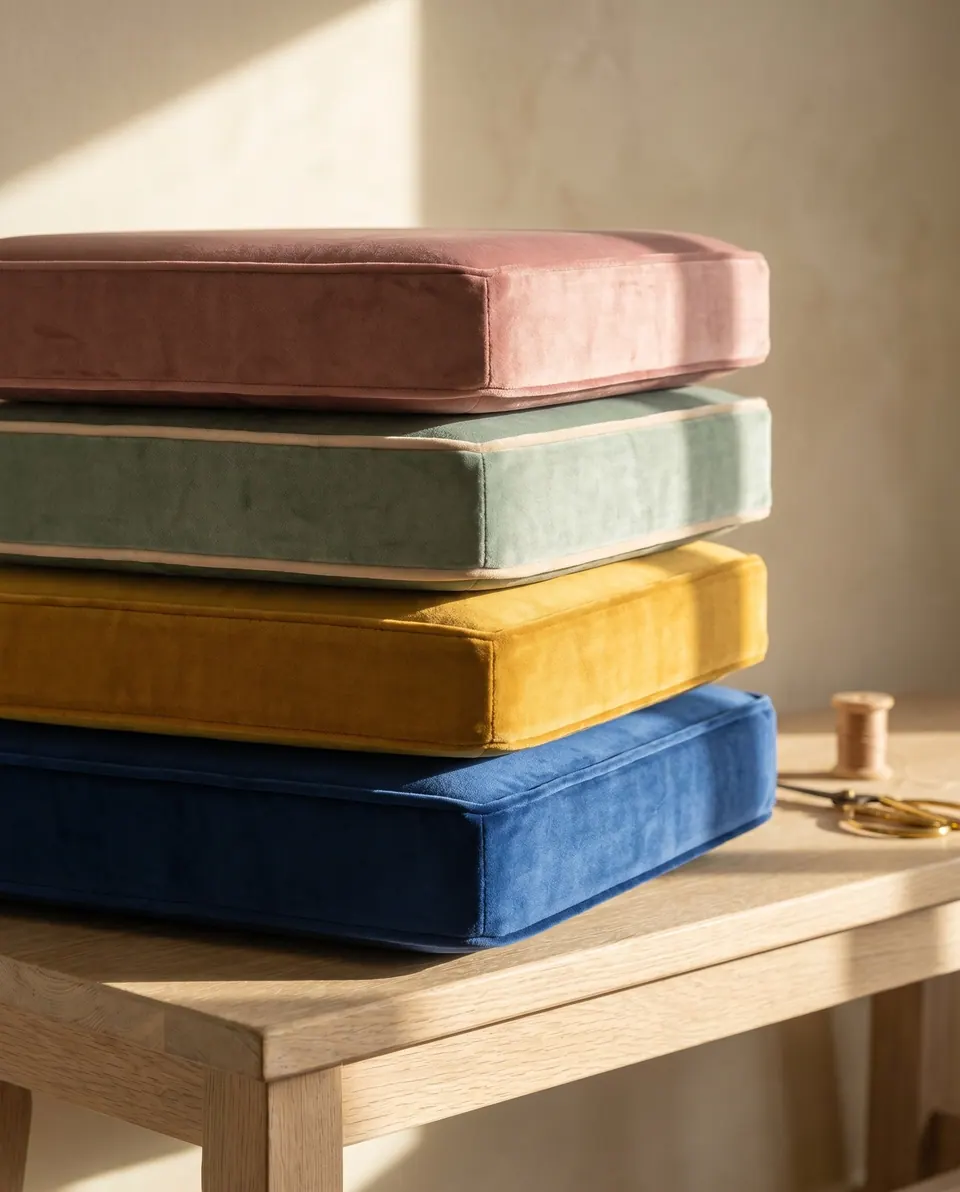
A 2 in plain velvet bench pad, cut open
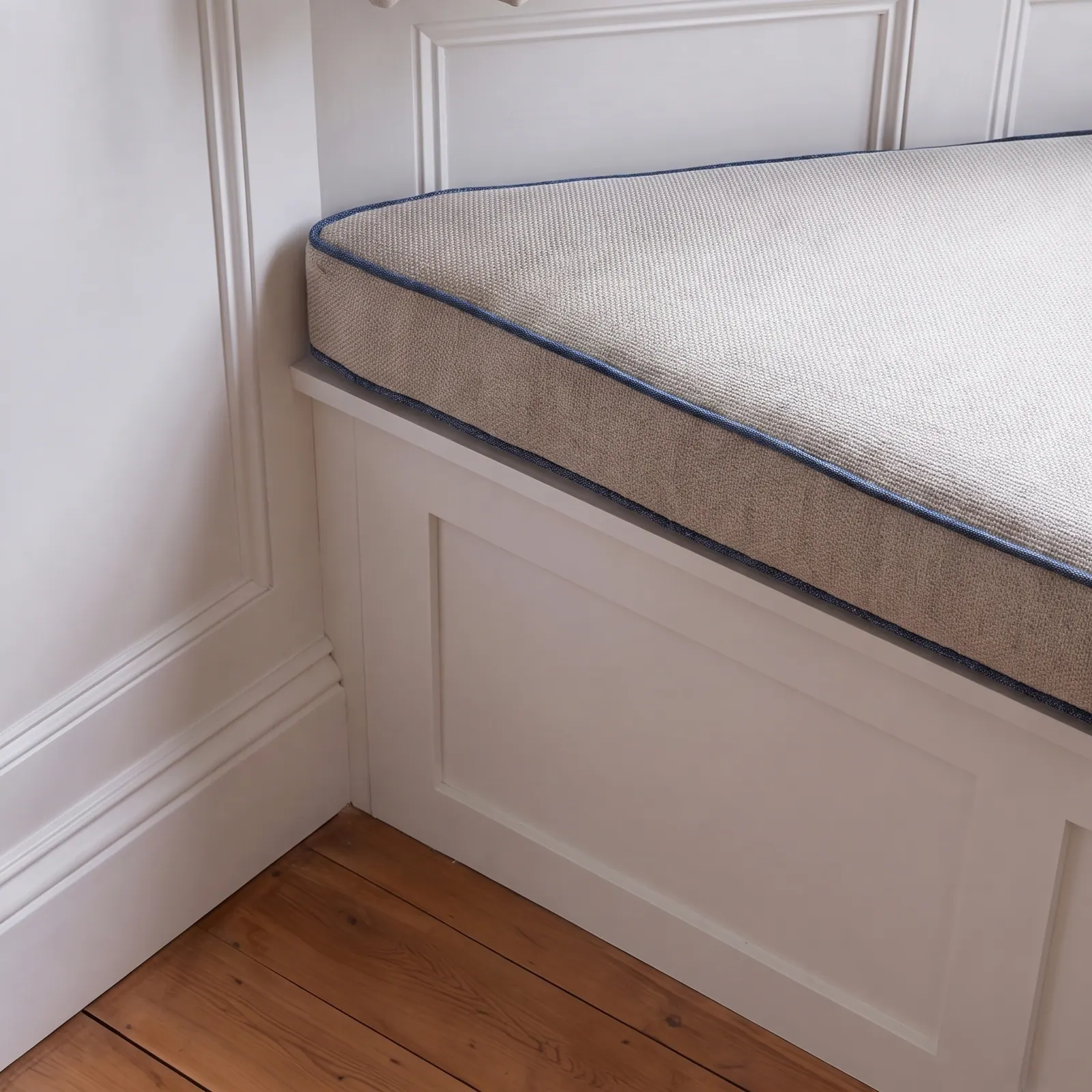
Velvet cover. Plain velvet with no tufts, so the top stays smooth. The cover unzips and washes at 86°F (30°C).
Piping. A fabric-covered cord sewn into the seams. It sits on the seam line, so it does not change the size.
Fiber wrap. Polyester fiber (Dacron) batting around the foam: it fills the cover out and softens the edges.
Foam slab. A crease-free top needs foam. This pad was quoted at about 1.75 lb/ft³ (28 kg/m³), with about 1.4 lb/ft³ (22 kg/m³) as the budget swap.
Zipper. Along the back band, as hidden as possible. The zipper side faces down or toward the wall.
Non-slip base. A grip fabric across the whole underside: not adhesive, not rubber, safe on wood.
Count the room's lines before you pick the fabric
Three patterns are already at work in this inglenook. The brick runs in horizontal courses. The white paneling adds vertical grooves. The pine boards under the jute rug run a third way. Stripes, all of them, in clay, paint and wood. How many does your room have?
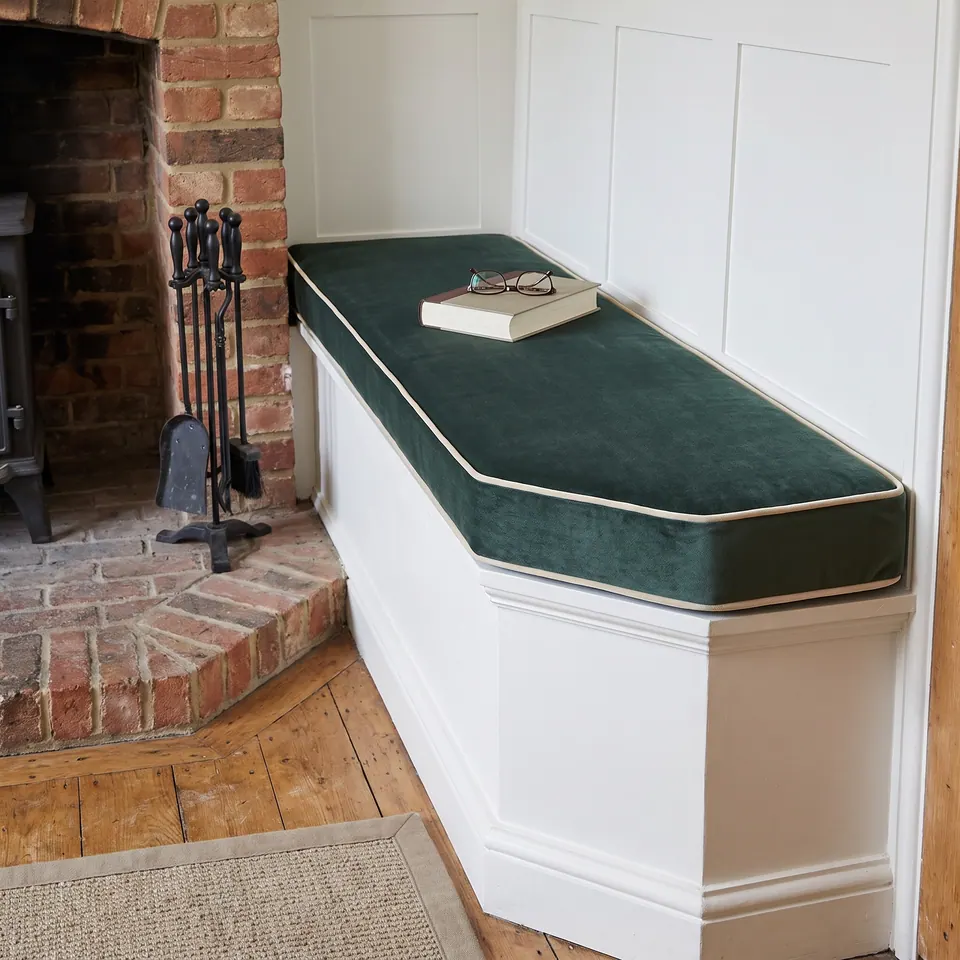
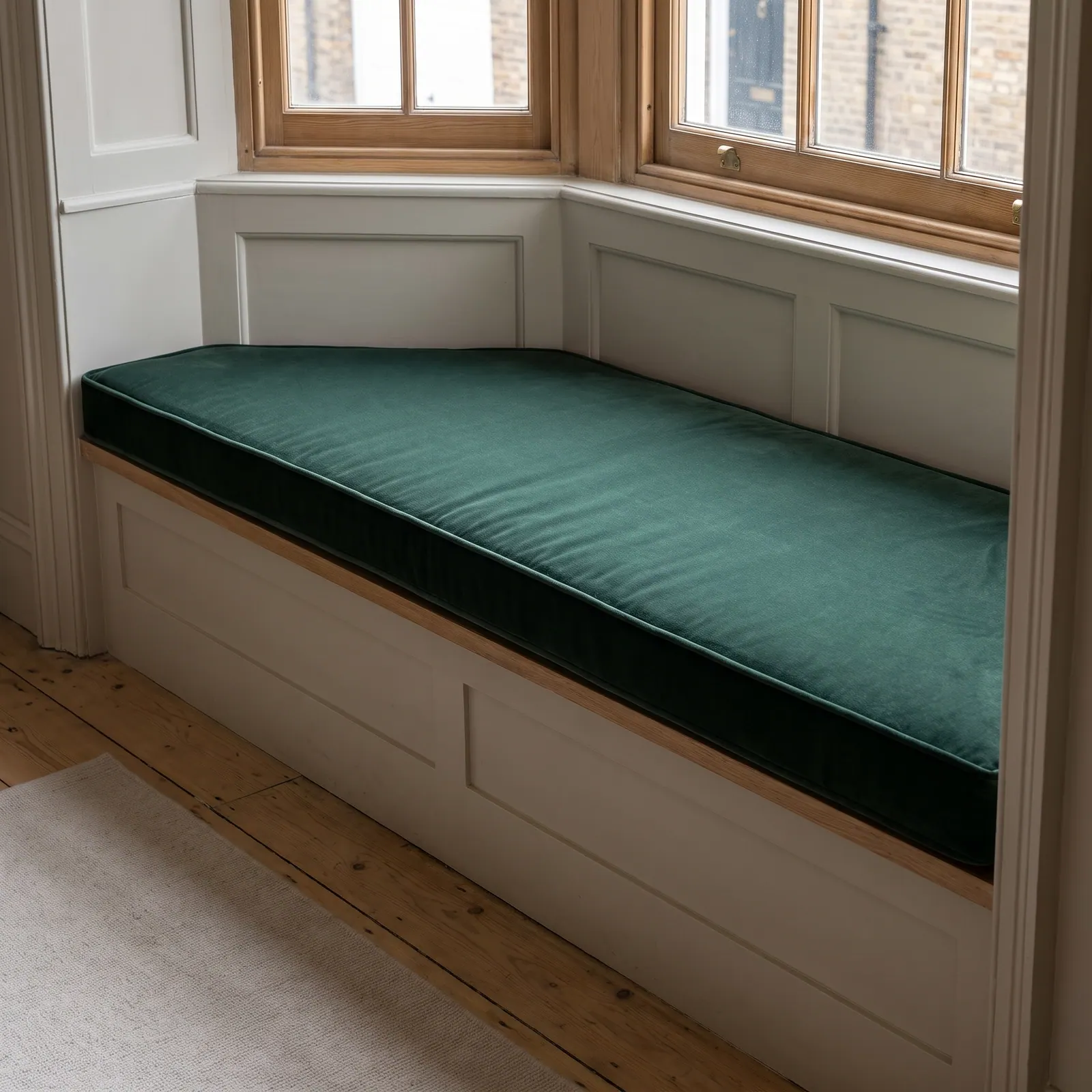
So the cushion is a plain: forest green velvet whose short pile reads as texture, not pattern. The one line it carries is the cream piping, and that line has a job. It traces the slanted end, where the seat follows the angled joinery instead of stopping square and leaving a triangle of bare wood. That end makes this a trapezoid, whatever the rest of the bench cushion looks like.
Green beside red brick is an old fireside pairing. The two sit across the color wheel from each other, so the brick looks warmer and the green looks deeper. The wrought iron fire tools repeat the black of the stove and sharpen the green. The jute rug softens the old boards. The hardback and reading glasses tell you what the seat is for.
One practical note. Keep the cushion set back from the hearth; velvet is a seat, not a hearth rug. A deep color like this forgives ash and wear far better than cream would.
Five points on the drawing
Where pattern, plain and texture meet in this nook.
- Book and glasses
Small props that invite you to sit by the fire.
- Cream piping
Traces the unusual shape and echoes the painted paneling.
- Fire tools
Black iron repeats the stove and sharpens the green.
- Brick hearth
Forest green looks warm beside red brick.
- Jute rug
Natural fiber softens the old boards.
- Book and glassesSmall props that invite you to sit by the fire.
- Cream pipingTraces the unusual shape and echoes the painted paneling.
- Fire toolsBlack iron repeats the stove and sharpens the green.
- Brick hearthForest green looks warm beside red brick.
- Jute rugNatural fiber softens the old boards.
Pattern, plain, texture: the count
When a room already has three patterns, the fourth surface should be a plain.
| Surface | Family | Job in this nook |
|---|---|---|
| Brick hearth | pattern: horizontal courses | warms the green by contrast |
| Paneled walls | pattern: vertical grooves | sets the cream the piping repeats |
| Pine boards | pattern: long lines | carry the eye along the seat |
| Jute rug | texture | softens the floor without a new line |
| Velvet cushion | plain with pile | rests the eye between the patterns |
| Cream piping | one line | outlines the slanted end |
Two benches, one smooth top
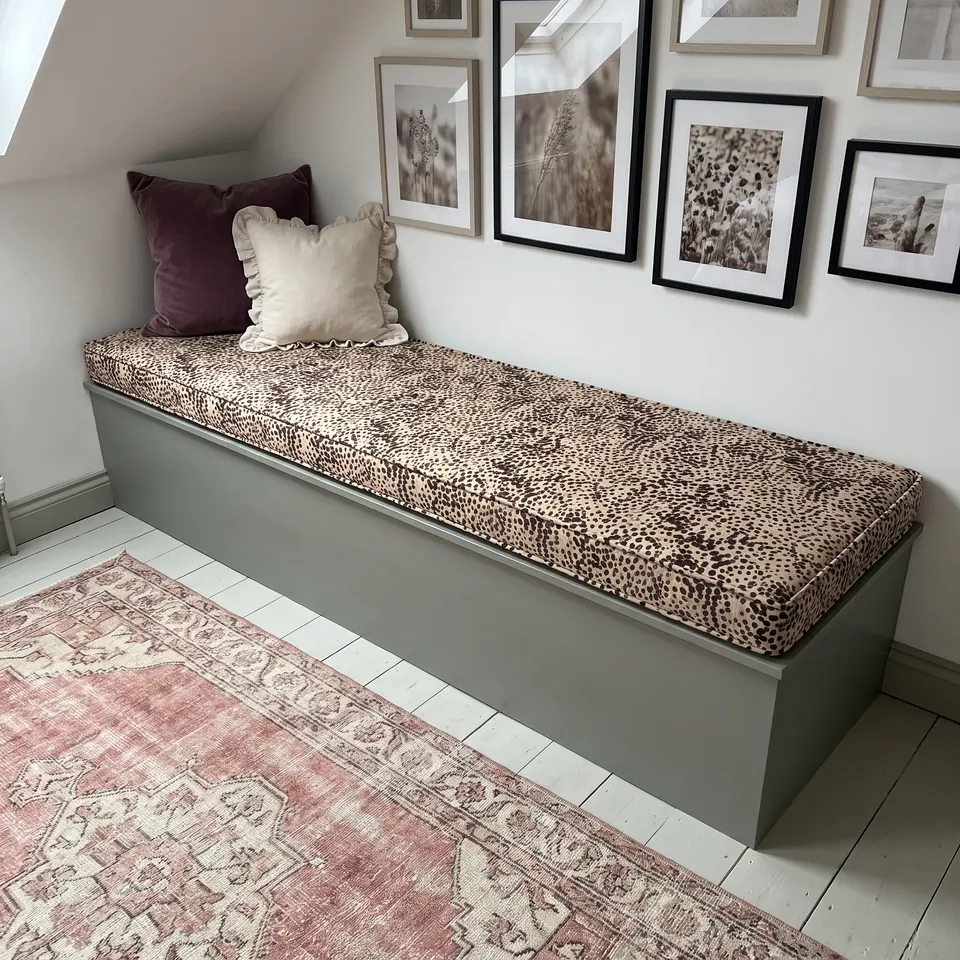
A buyer wrote to the workshop about two matching benches. The cushions were 52½ × 17½ in and 53 × 17½ in (133 × 44.5 cm and 135 × 44.5 cm), 2 in (5 cm) high, in mint velvet with piping and a non-slip base.
The first quote was for tufted cushions filled with silicone fiber. The buyer wanted a plain top with no creases, and a plain top needs foam, so the quote went up. To meet cheaper offers, the workshop pulled two levers: 22 kg/m³ foam in place of 28 kg/m³, and a more affordable velvet.
Tufting is a pattern too. Take it away and the foam has to do the work.
- Sizes
- 52½ × 17½ × 2 in and 53 × 17½ × 2 in (133 × 44.5 × 5 cm and 135 × 44.5 × 5 cm)
The lesson: Tufted fiber-filled pads cost less than smooth foam ones; foam density and fabric grade are the levers.
Buyer questions: corners, playrooms, velvet care
- A common question
Can you make the cushions in an L shape to go around a corner bench?
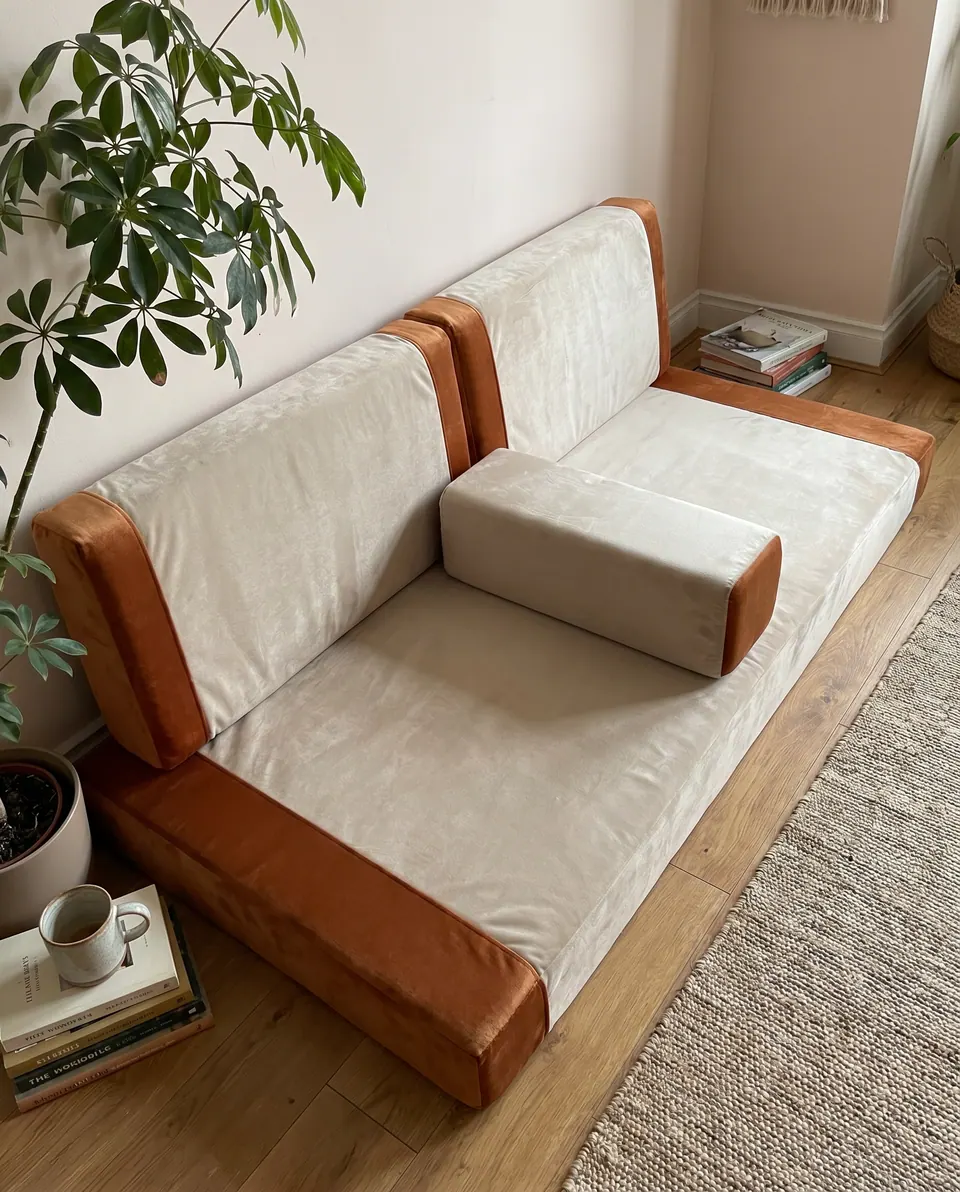
The workshop's answerYes. Send the end-to-end length of each side of the bench (a paper sketch helps) and say whether you want backrests too. Two full L-shaped sets have been quoted from exactly that kind of sketch.
- A common question
Which fabric holds up best on a window seat in a playroom?
The workshop's answerVelvet and the soft fabrics are the performance choices. To measure, use the trapezoid measuring diagrams and pick the one that matches your seat, including a sill lip that overhangs the bench.
- A common question
How do I clean a velvet cushion in a kids' room? Do I need a zipper, or is spot cleaning enough?
The workshop's answerVelvet is the most popular choice for children's rooms: soft, durable, easy to wipe and spot clean. Every cushion already has a hidden zipper, so the cover also comes off and machine washes at 86°F (30°C).
A smooth, crease-free bench cushion needs a foam core; tufted pads use fiber and cost less. To trim a foam quote, lower the foam density or the velvet grade.
Nate
On the cutting table
| Cushion | bench cushion, trapezoid with one slanted end |
|---|---|
| Fabric | forest green velvet |
| Piping | cream contrast, top and bottom seams |
| Edge | box edge |
| Measure | back edge, front edge, depth, slanted side |
| Filling | foam for a plain top; fiber for tufted pads |
| Fastening | hidden zipper, standard on every cushion |
| Care | spot clean; cover washes at 86°F (30°C) |
| Best for | a fireside reading seat, set back from the hearth |

Have it made
Have this made — ask Nate’s workshop
Every edge and both diagonals, to the nearest 1/4 in. If the numbers do not close, the workshop will say so on the call. — Nate
Leave your details and the workshop will call you to confirm measurements, fabric, foam and piping. No prices, dates or payment on this page: it is a request, not an order.
Questions buyers ask next
Why not a striped fabric on a seat beside brick?
Brick, paneling and floorboards already read as stripes. A fourth set of lines would compete with them. A plain velvet with one piping line gives the eye a resting place and still outlines the shape.
How thick should a fireside bench cushion be?
The standard is 4 in (10 cm), which reads as a proper seat on a built-in bench. A 2 in (5 cm) pad keeps a slim profile when the bench already sits at a comfortable height.
Is velvet a sensible choice next to a working fireplace?
A deep velvet color forgives ash and wear better than a pale one. Keep the cushion set back from the hearth and spot clean it as needed; the cover also unzips for a gentle wash.
± 1/4 in — Nate
More photographs to read
 Save
 Save
 Save
 Save
 Save
 Save