A Reading by NateBench Cushions
Four velvet colors for a custom bench cushion, and how to choose the one for your room
Nate stacks dusty rose, sage, mustard and cobalt velvet like test samples, then runs a before-and-after check to find the single cushion that changes a room most.

 Save
The quick answer
To choose a velvet color for a custom bench cushion in a room makeover, photograph the room as it is, hold each candidate against the biggest fixed color in it, and pick the one that makes that color look better, not the one you like best in the stack. Darker velvets hide wear on a working seat; paler ones show off a contrast welt.
Reading the stack from top to bottom
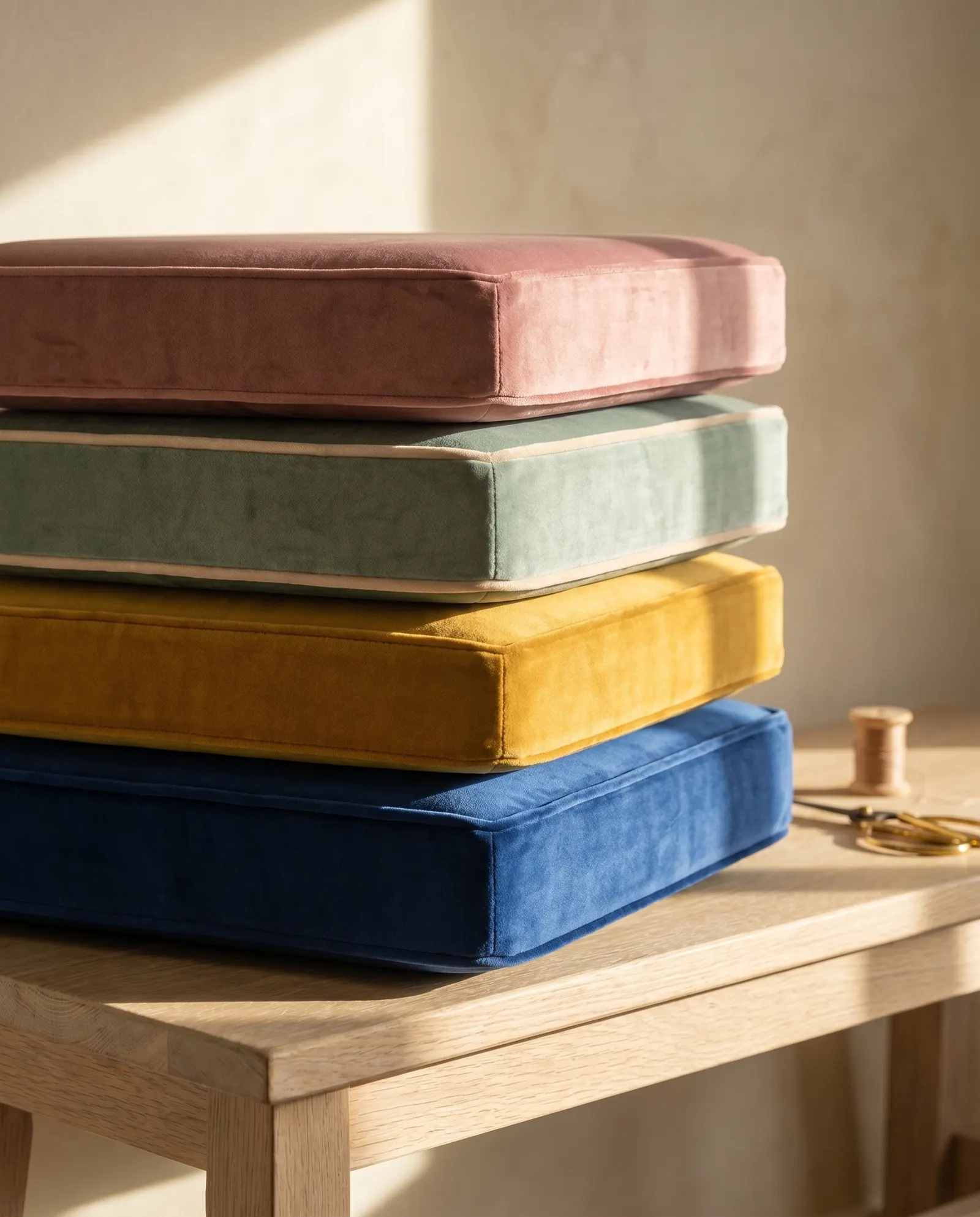
Four velvet box cushions sit on an oak worktable in a band of sun. Top to bottom: dusty rose, sage, mustard, cobalt. Light at the top, dark at the base. That order is load engineering for the eye: dark at the bottom makes the pile look stable, and each color sits beside a neighbor that flatters it.
Data points worth logging: - Rose: rounded corners and a slightly domed top, a softer-looking fill than the others. - Sage: the only cushion with contrast piping, in blush pink. One variable changed, so you can see exactly what a pale welt does. - Mustard: the gusset shows the velvet pile most clearly. Brush it one way before you photograph it, or the sheen reads patchy. - Cobalt: darkest, heaviest-looking, and the one that hides wear best on a real seat.
The thread spool and brass scissors are small and parked off to the right. They say these were cut and stitched by hand, then get out of the way.
If two colors look good stacked like this, they will usually work together as seat and pillow. That's a free test, partner, and most people skip it. Which of the four would you put on your bench? The full range sits on the velvet shelf, and velvet bench cushion care covers the pile once it's home.
Pinned by Nate
Read the pins top to bottom, the way the stack was built: rose fill, sage welt, mustard pile, cobalt base, then the tools.
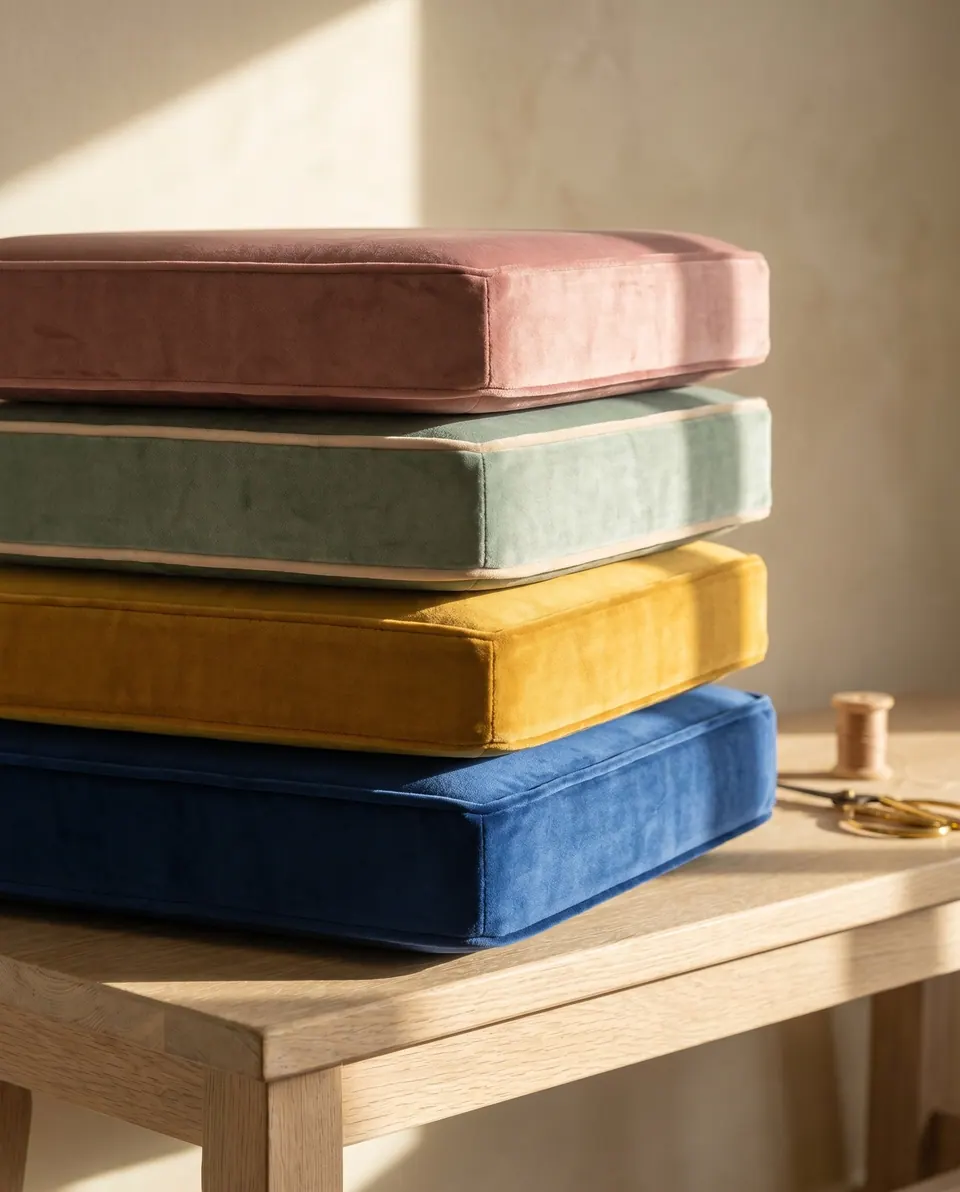
- Dusty rose top cushion
Rounded corners on the top cushion show a softer, more domed fill than the others.
- Blush piping on sage
A pink welt on sage velvet is a gentle contrast that works in a bedroom or nursery.
- Mustard gusset
Mustard shows the velvet pile most clearly; brush it one way before you photograph it.
- Cobalt base cushion
The darkest color at the bottom anchors the stack and hides wear best on a real seat.
- Spool and scissors
Sewing tools say these were cut and stitched by hand.
- Dusty rose top cushionRounded corners on the top cushion show a softer, more domed fill than the others.
- Blush piping on sageA pink welt on sage velvet is a gentle contrast that works in a bedroom or nursery.
- Mustard gussetMustard shows the velvet pile most clearly; brush it one way before you photograph it.
- Cobalt base cushionThe darkest color at the bottom anchors the stack and hides wear best on a real seat.
- Spool and scissorsSewing tools say these were cut and stitched by hand.
Before and after: a five-step makeover test
Photograph the before
Shoot the room in daylight from one fixed spot at one time of day. That photo is your control sample.
Log the fixed colors
List what won't change: floor, walls, sofa, rug. The cushion has to work with every one of them.
Put each swatch where the cushion will sit
Lay the sample on the bench itself, not in your hand at the window. Color shifts with position; judge it where it will live.
Test the welt separately
Try the winning color with self piping and with one contrast. Change one variable at a time, the way the sage cushion does.
Photograph the after
Same spot, same hour. Put the two photos side by side; the right color makes the room look finished, not louder.
One long seat, a full-length bolster and thirty samples
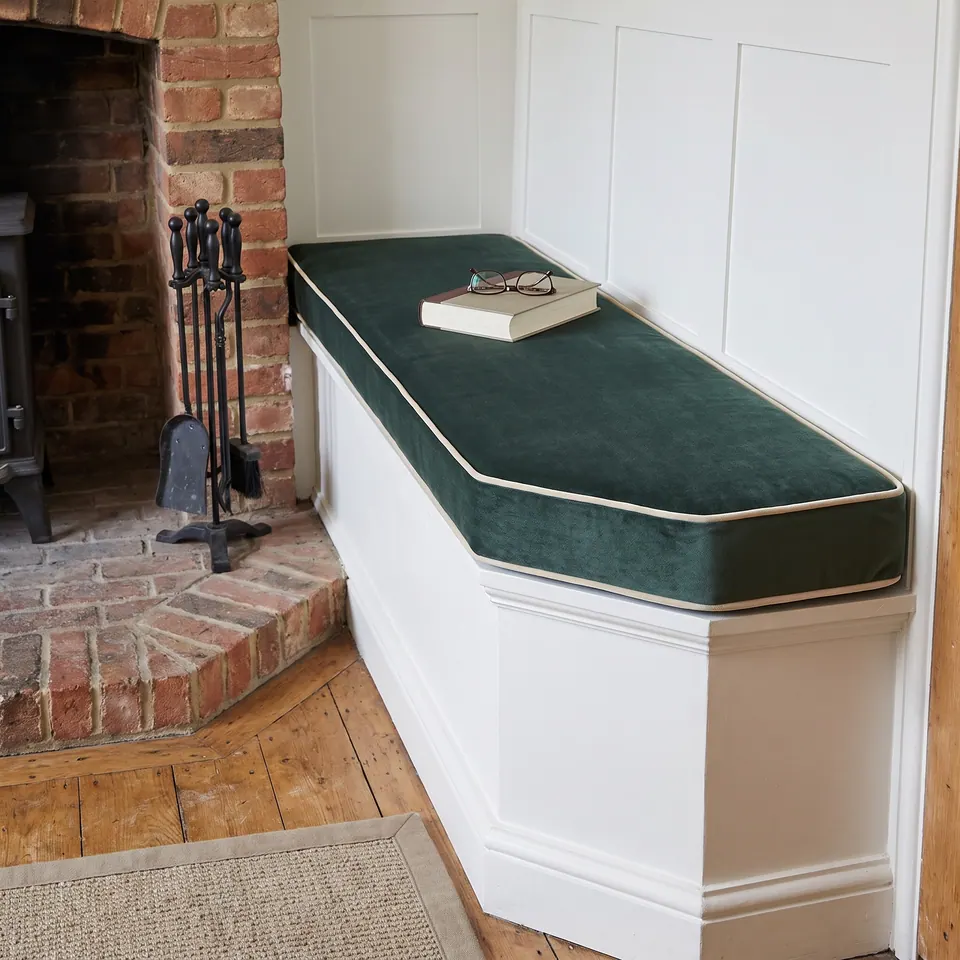
One buyer wrote in with a long banquette and a tidy plan: a thin seat cushion of 106.5 x 20.5 x 1.5 in (271 x 52 x 4 cm) and a 6 in (15 cm) round bolster running the full 108.5 in (276 cm) length. They were choosing between velvet, linen and a third fabric chart, with contrast piping, and wanted about 30 sample codes.
The shop's arithmetic was straightforward. Each sample order holds 5 codes, so 30 codes meant 6 sample orders. The seat was longer than any single size range, so it was priced as two 20 x 52 in (51 x 132 cm) units but sewn as one piece.
That's before-and-after thinking done properly: settle the colors first, then commit to the long cut. Tolerance is kindness to your future self, and so is a sample order. The long-seat method is worked through in one piece or two, and more lengths live in the bench cushion atlas.
On the cutting table: the four-velvet log
| Pieces | Four rectangular box cushions, stacked for comparison |
|---|---|
| Fabric | Velvet in dusty rose, sage, mustard and cobalt |
| Piping | Blush pink contrast on the sage; none contrasting on the rest |
| Edge | Box |
| Standard thickness | 4 in (10 cm) |
| Thicker options | 5, 6 or 8 in (13, 15 or 20 cm); up to about 15.5 in (40 cm) |
| Grip | Optional non-slip base across the whole underside |
| Wear | The darkest color hides daily wear best |
| Best for | Testing a color scheme before a bench makeover |

Have it made
Have this made — ask Nate’s workshop
Precision starts on the phone. Give the workshop your measurements and they will read them back to you, edge by edge. — Nate
Leave your details and the workshop will call you to confirm measurements, fabric, foam and piping. No prices, dates or payment on this page: it is a request, not an order.
Three cushion questions: fiber, grip and thickness
- A common question
Is your linen real linen or a linen look? And what are the striped fabrics made of?
The workshop's answerBoth exist. One linen range is 50% cotton and 50% linen, another is a linen-look polyester, and a third range is linen too. Every striped fabric is 100% cotton.
- A common question
How does the non-slip base actually work on a window seat cushion?
The workshop's answerThe entire bottom face is made from a grip material, not strips or dots. Friction keeps the cushion planted when someone sits down or leans back, even on smooth painted or wooden benches. It's invisible in use, grips without sticking and leaves no residue. You select it as an option when ordering.
- A common question
Is 4 inches the thickest you make, or can I get 5, 6 or even 8 inches?
The workshop's answerThickness is fully customizable. The shop has made 5 in, 6 in (15 cm) and 8 in (about 20 cm) cushions, and says it can go up to 15¾ in (40 cm), about 15.5 in.
Stack velvet cushion samples light at the top and dark at the bottom; if two colors flatter each other in the stack, they will work as seat and pillow.
Nate
Questions buyers ask next
Which velvet color hides wear best on a bench cushion?
The darkest one. In this stack the cobalt cushion would show crushed pile and daily marks least on a working seat. Pale velvets such as dusty rose show every brush stroke, which is lovely on a bedroom bench and harder work at a dining table.
Does contrast piping work on a pastel velvet cushion?
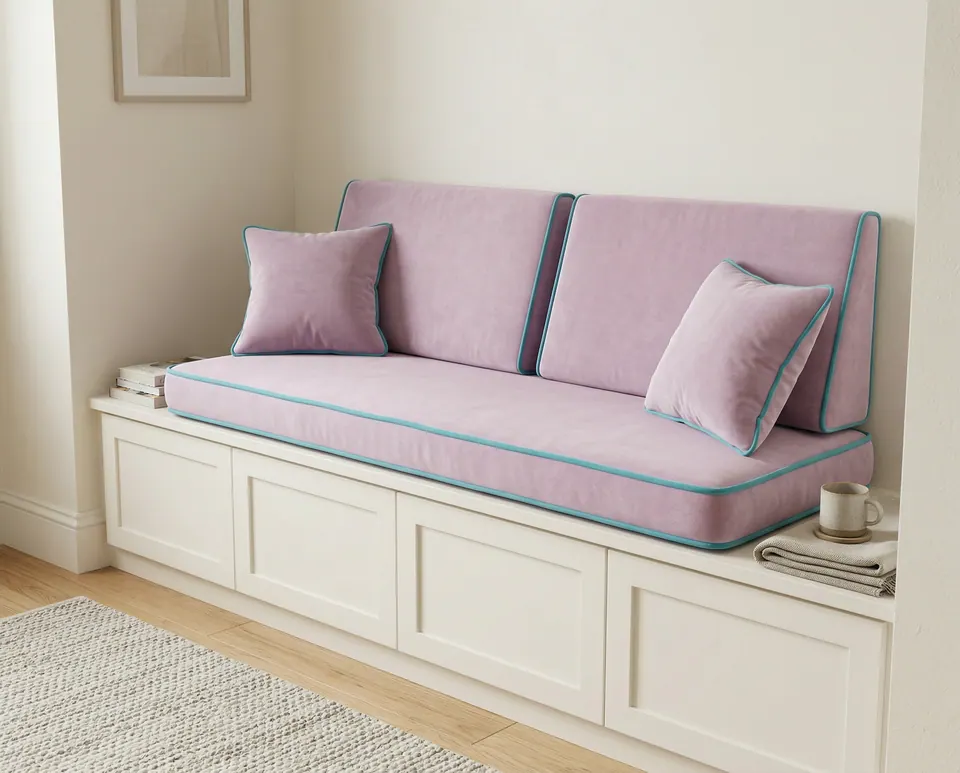
Yes, when the contrast is gentle. Blush pink piping on sage velvet makes a soft outline that suits a bedroom or nursery. A dark or bright welt on a pastel reads much harder, so test it beside a plain sample first.
Why brush velvet before photographing a cushion?
Velvet pile lies in one direction. Brushed one way, the gusset shows an even sheen; brushed both ways, it looks patchy, and a camera exaggerates the difference. Brush along the pile, then take the photo.
How many velvet samples should I order before a makeover?
Enough to narrow the field, not to cover every option. Each sample order at the workshop holds 5 codes, so one buyer who wanted 30 codes needed 6 sample orders. Most rooms need far fewer.
± 1/4 in — Nate