A Reading by NateBench Cushions
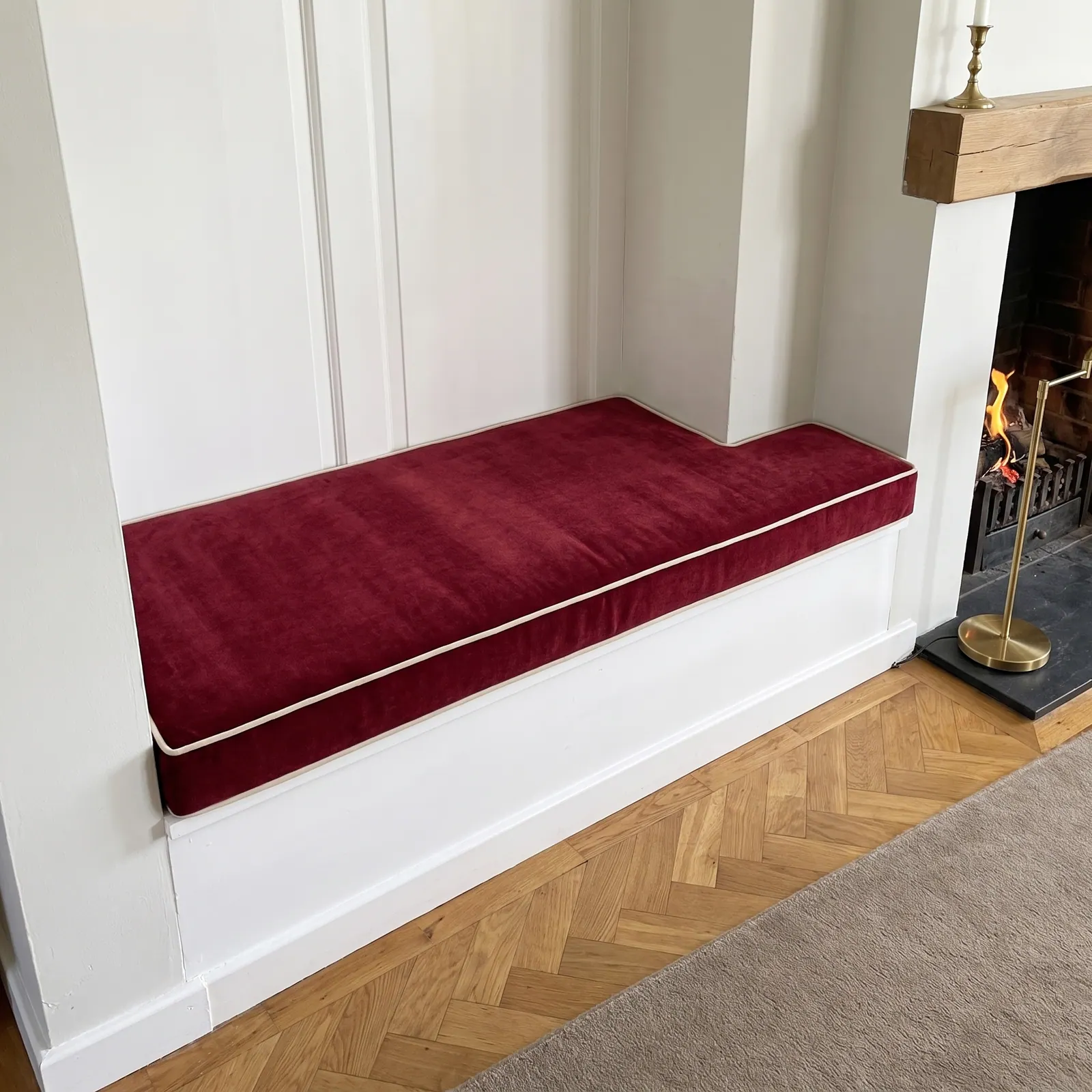
A cranberry velvet bench cushion that steps into a chimney alcove
One saturated plain, one pattern underfoot, one rough texture overhead. The fireside alcove balances like a good equation, and the cushion is the constant.
The quick answer
A custom bench cushion for a chimney alcove should be cut to a template, because alcoves are rarely square: measure the depth at the front, middle and back before ordering. When mixing patterns, let one plain, saturated fabric such as cranberry velvet carry the seat, keep stripes or herringbone elsewhere, and repeat the wall color in the piping.

 Save
 Save
 Save
 Save
 Save
 Save
 Save
Pinned by Nate: five readings by the fire
Five pins, from the stepped back corner of the alcove to the herringbone parquet under the seat.
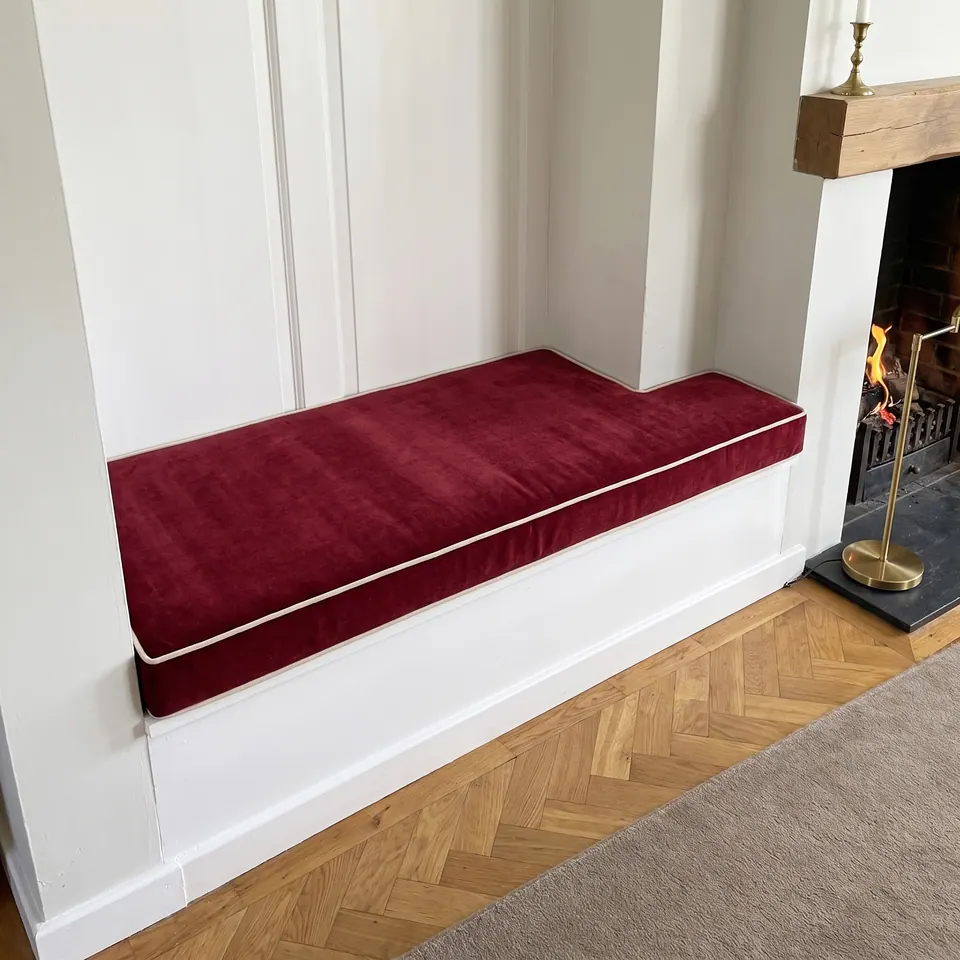
- Stepped back corner
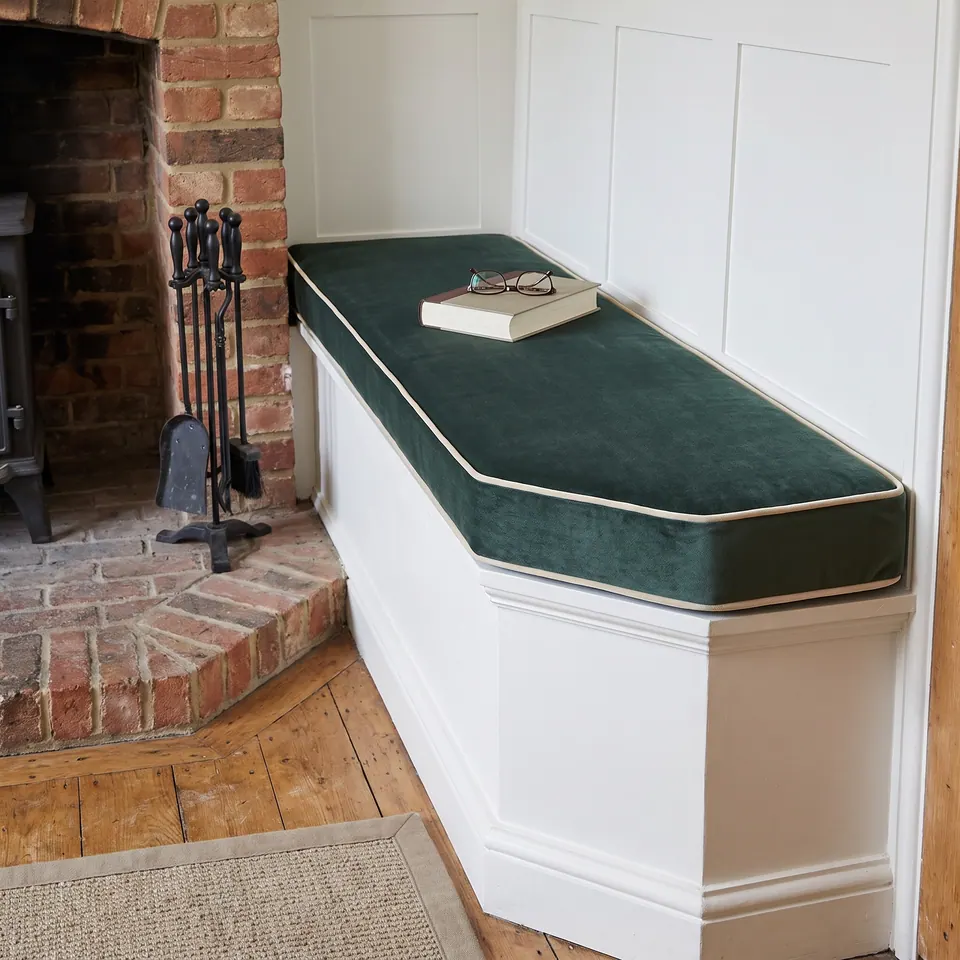
The cushion runs deeper into the recess beside the chimney breast, following the plaster instead of a straight line.
- Cream piping
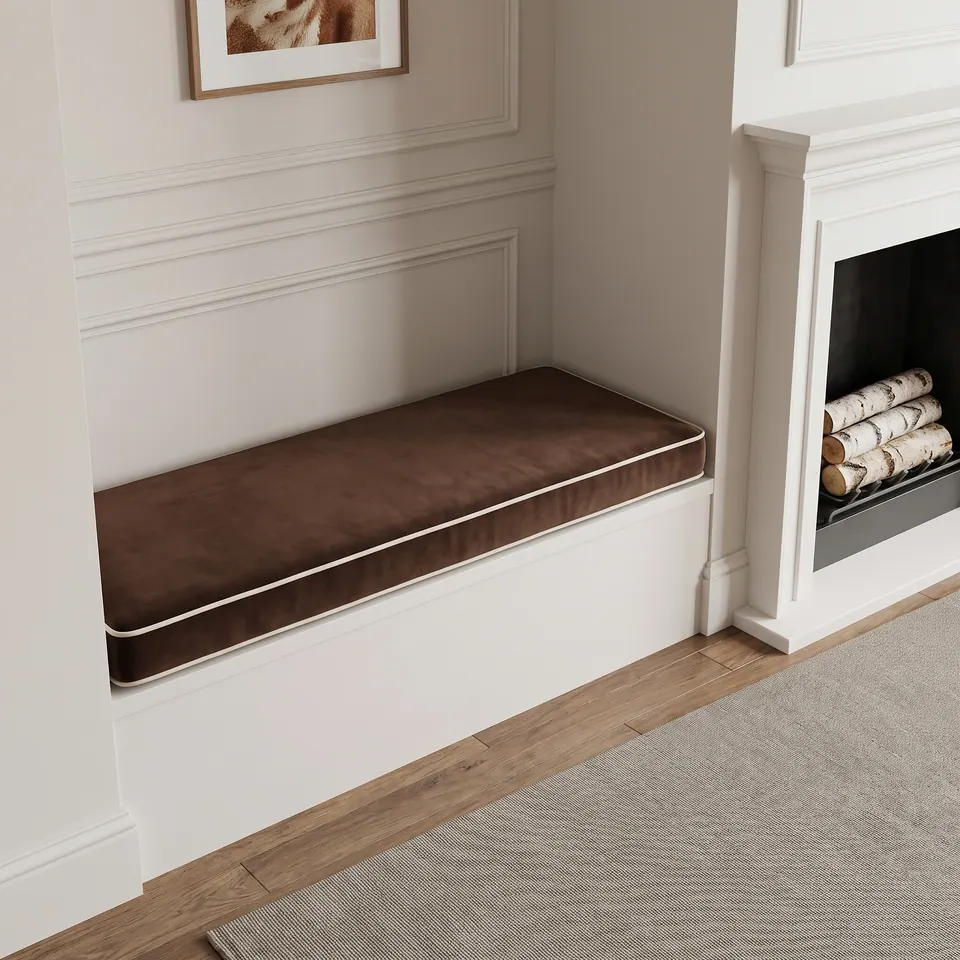
A pale welt against cranberry picks up the painted walls and keeps the edge from vanishing in firelight.
- Lit fire
Firelight warms the red pile; a velvet this rich was chosen to glow, not to match.
- Oak beam mantel
Rough oak above repeats the parquet, so red stays the only strong color.
- Herringbone parquet
Honey wood under a deep red seat is a classic pairing that avoids a heavy look.
- Stepped back cornerThe cushion runs deeper into the recess beside the chimney breast, following the plaster instead of a straight line.
- Cream pipingA pale welt against cranberry picks up the painted walls and keeps the edge from vanishing in firelight.
- Lit fireFirelight warms the red pile; a velvet this rich was chosen to glow, not to match.
- Oak beam mantelRough oak above repeats the parquet, so red stays the only strong color.
- Herringbone parquetHoney wood under a deep red seat is a classic pairing that avoids a heavy look.
One plain, one pattern, one texture
Count the patterns in this room before you count the cushions. There is exactly one: the herringbone parquet. Everything else is either plain or textured. That ratio is why a cranberry velvet bench cushion can sit this close to a lit fire without the corner feeling busy.
I treat a pattern mix like a load calculation. Each surface carries one job. The floor carries pattern. The reclaimed oak beam and the taupe wool carpet carry texture. The velvet carries color, and nothing else is allowed to compete with it. Walls, paneling and bench base are all white, so the red has no rival.
The cream piping is the only line on the cushion, and it earns its place. In firelight, a red box edge melts into the shadow under the seat. A pale welt in the wall color draws that edge back in, so you can read the depth of the seat from across the room. The brass candlestick and the brass fireside stand add two small notes of metal, nothing more.
Now the geometry. This alcove gets deeper toward the chimney breast, so the cushion steps back to follow the plaster instead of pretending the recess is a rectangle. Measure the seat depth at the front, the middle and the back. If the three numbers disagree, trace a paper template rather than trusting one depth.
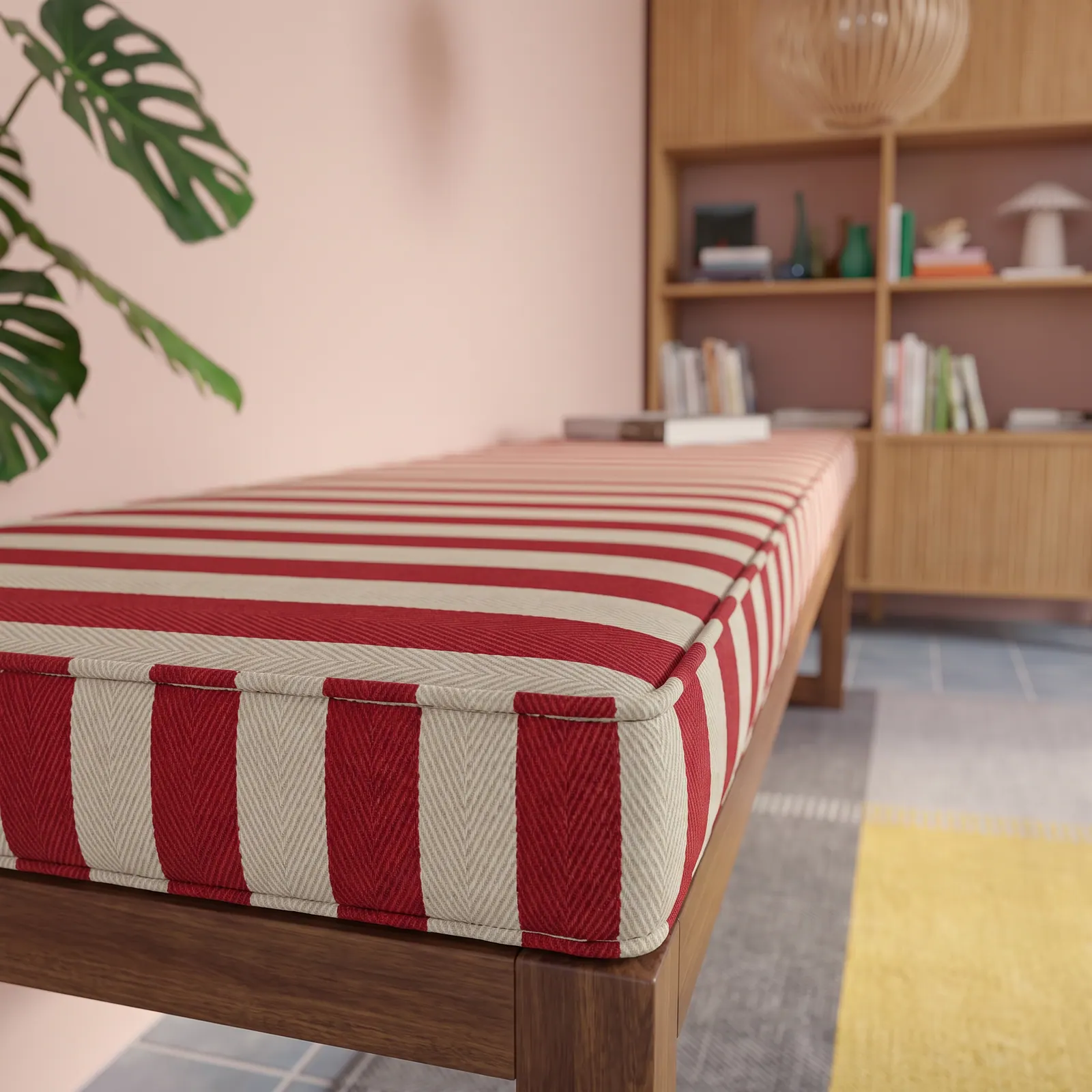
If your room already has stripes on a rug, a curtain or a runner, the same rule holds for any custom bench cushion: stripe on one surface, plain on the seat. The velvet shelf of the Swatch Library is where I would start. What pattern is already living in your room?
Pattern-mixing rules the gallery proves
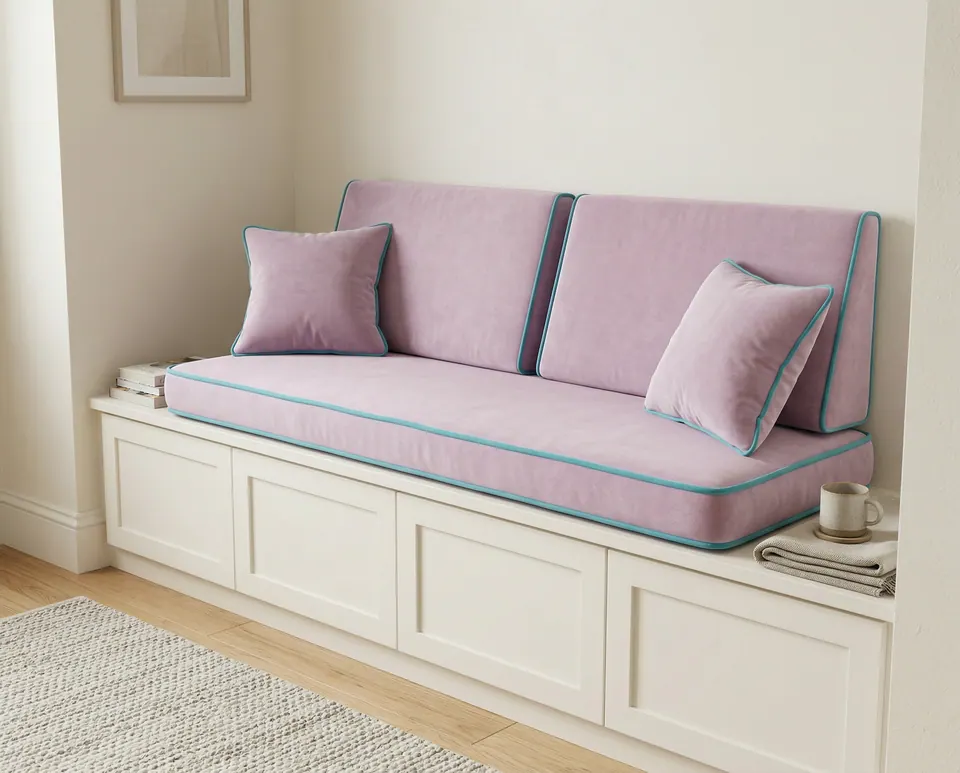
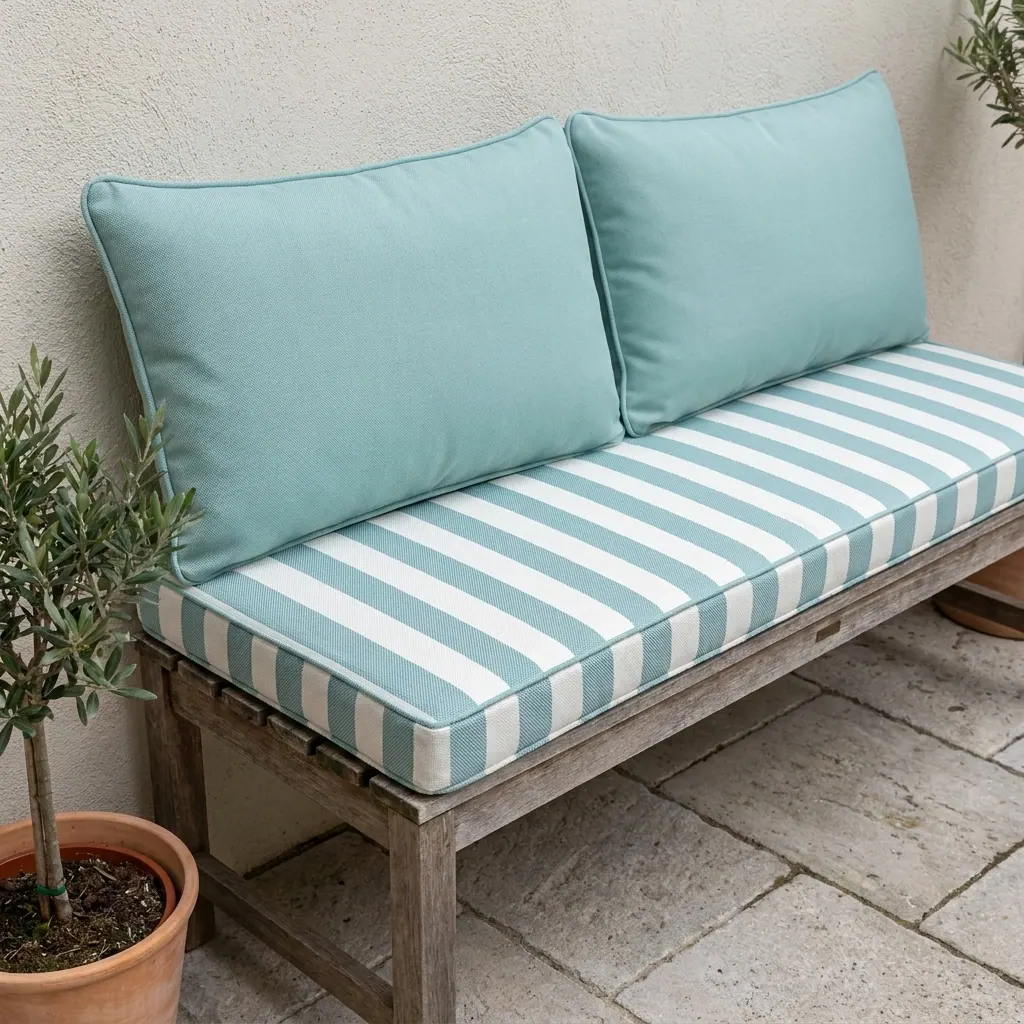
- A striped seat takes plain pillows: aqua stripe below, solid seafoam lumbar pillows above.
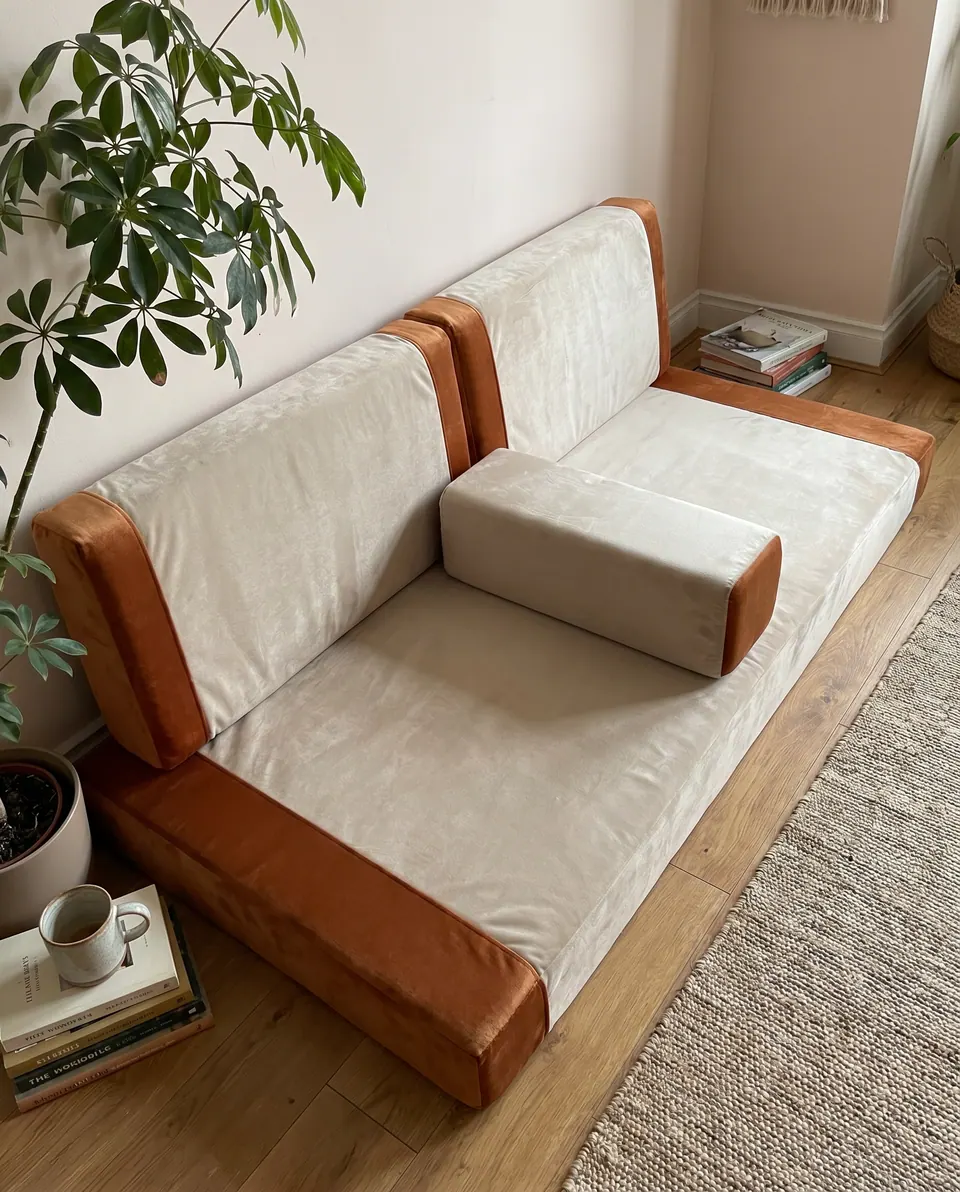
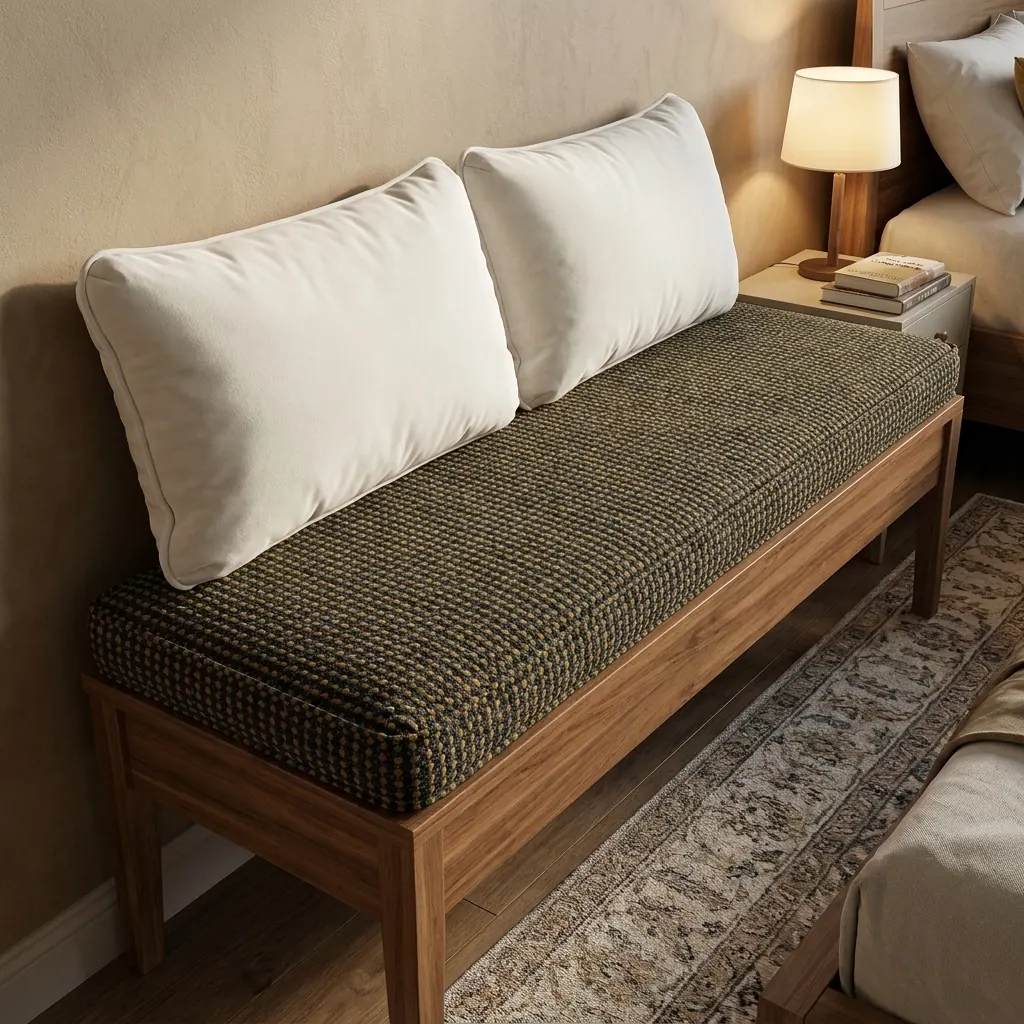
- A textured seat takes smooth pillows: charcoal and mustard tweed under velvet.
- A plain velvet seat can live beside a patterned floor, like the herringbone here.
- Only one surface in a sightline gets the loud pattern.
- Piping in the wall color outlines a saturated plain seat.

Have it made
Have this made — ask Nate’s workshop
Send the numbers in inches: length × depth × thickness, plus any angle. The workshop checks them with you, because foam has no undo button. — Nate
Leave your details and the workshop will call you to confirm measurements, fabric, foam and piping. No prices, dates or payment on this page: it is a request, not an order.
± 1/4 in — Nate