A Reading by ÉlodieBench Cushions
A cream custom bench cushion in a farmhouse kitchen, read from the doorway and from the seat
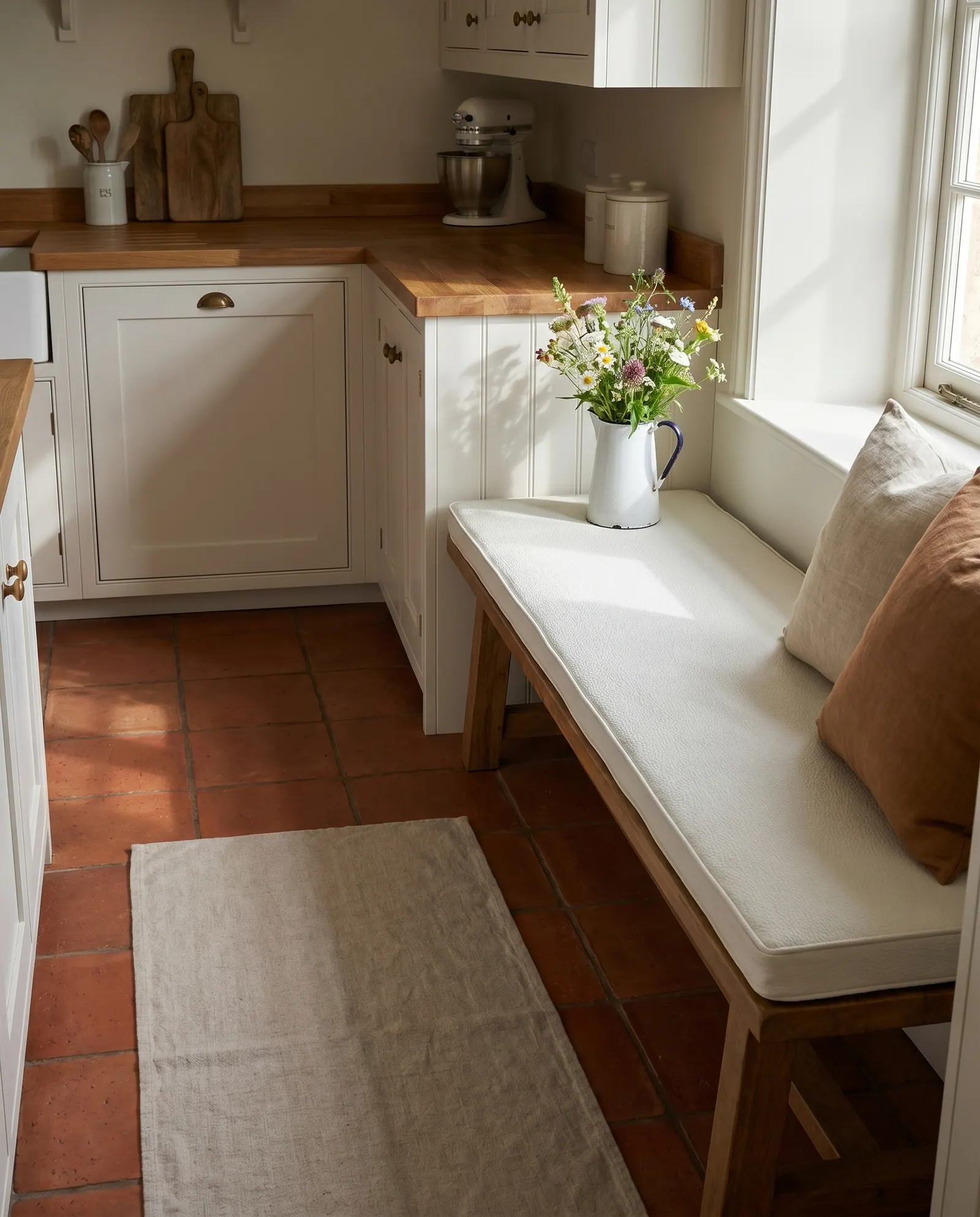
Cream on cream, oak on terracotta, and a single rust pillow. This kitchen is a lesson in what the eye reads first and what it saves for later.

 Save
The quick answer
A cream kitchen bench cushion reads from across the room by its outline and color, and up close by its piping and weave. Cut it edge to edge with the bench top so it looks built in, choose an easy-care fabric, and judge the shade from the chart and real close-ups, not styled photos shot in warm light.
From the doorway, a seat that disappears on purpose
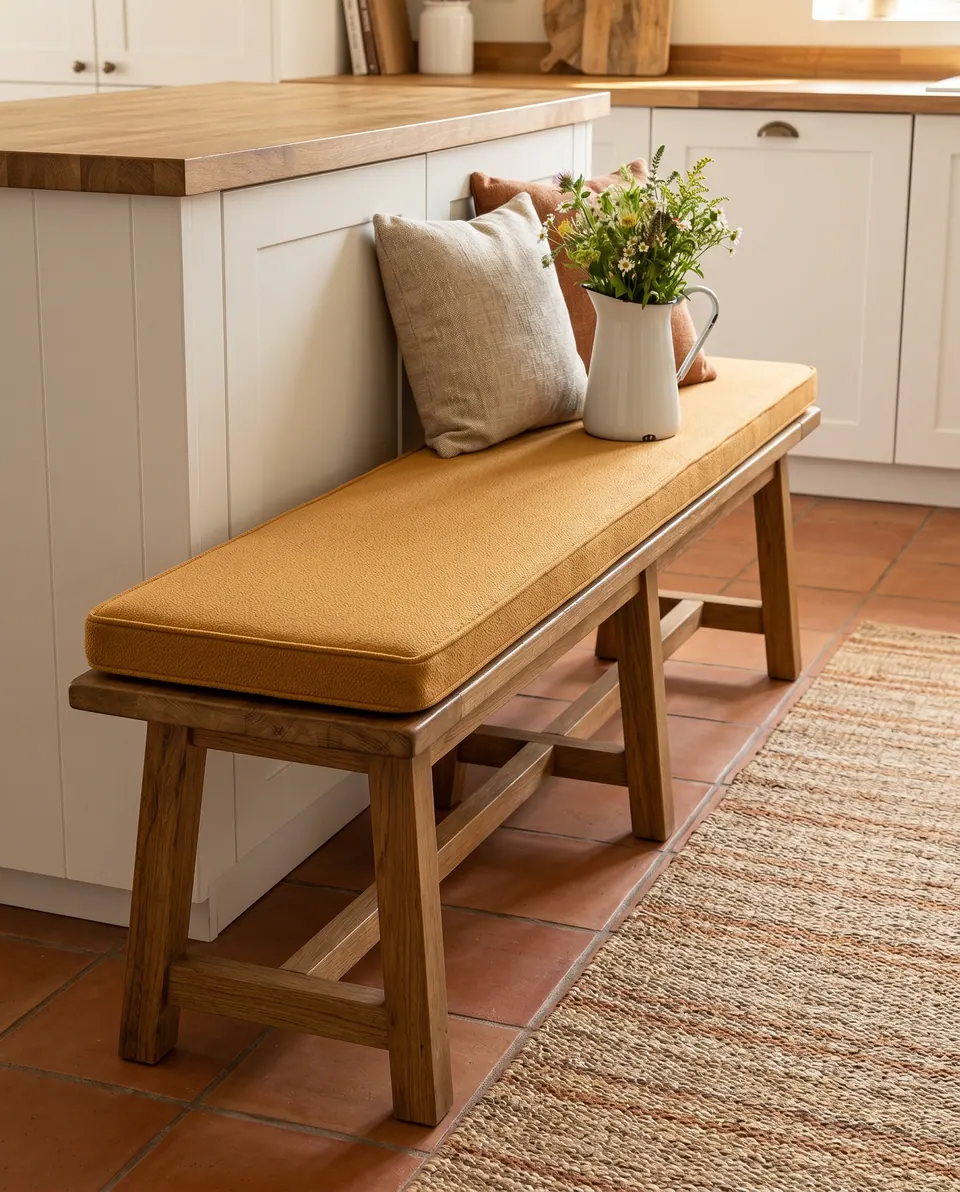
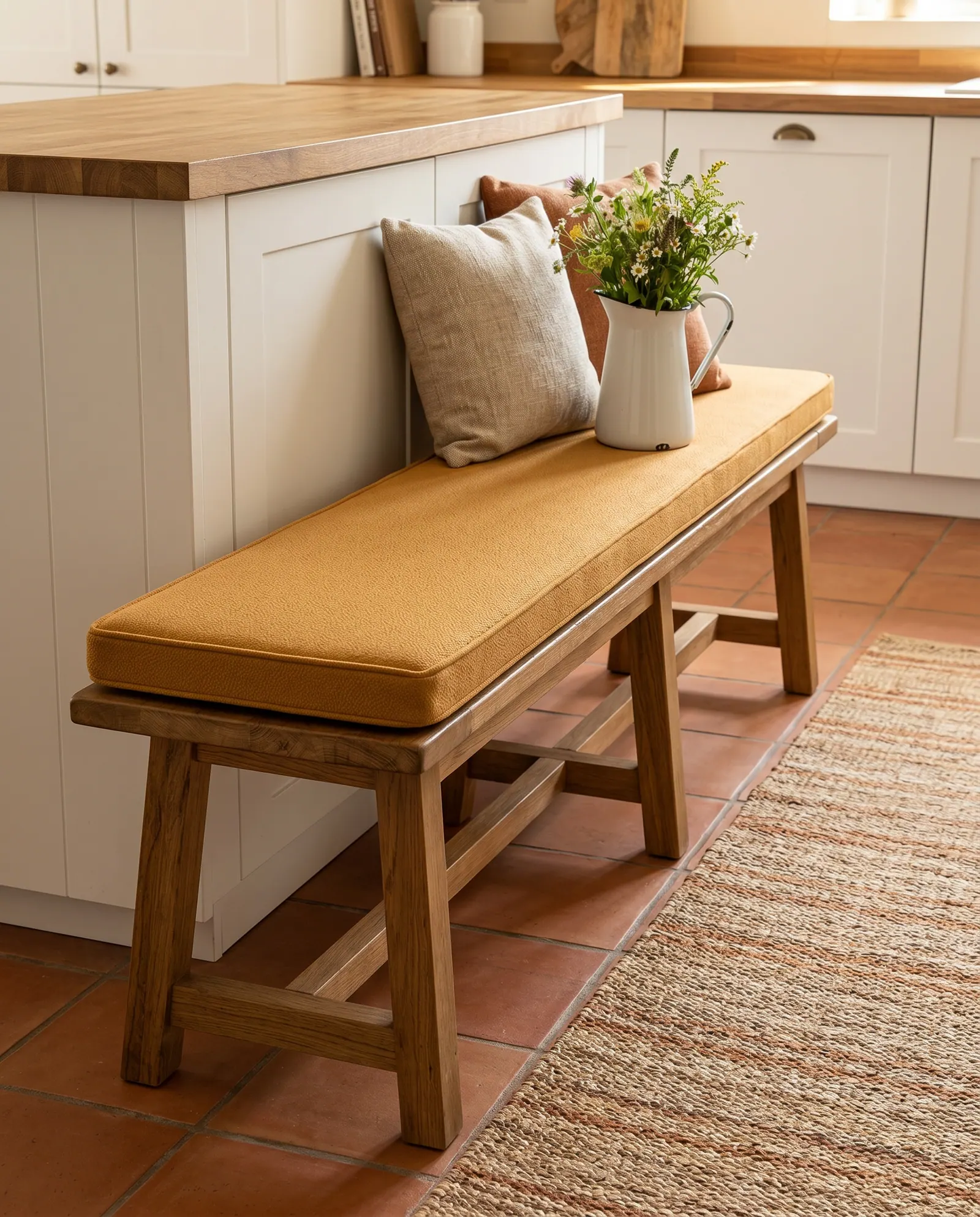
Stand in the doorway and the cushion almost vanishes. That is the point. This custom bench cushion is cut edge to edge with the top of the oak trestle, so the frame shows below and the seat looks built rather than added. Its cream is the cream of the painted shaker cabinets, and the whole window wall reads as one calm plane.
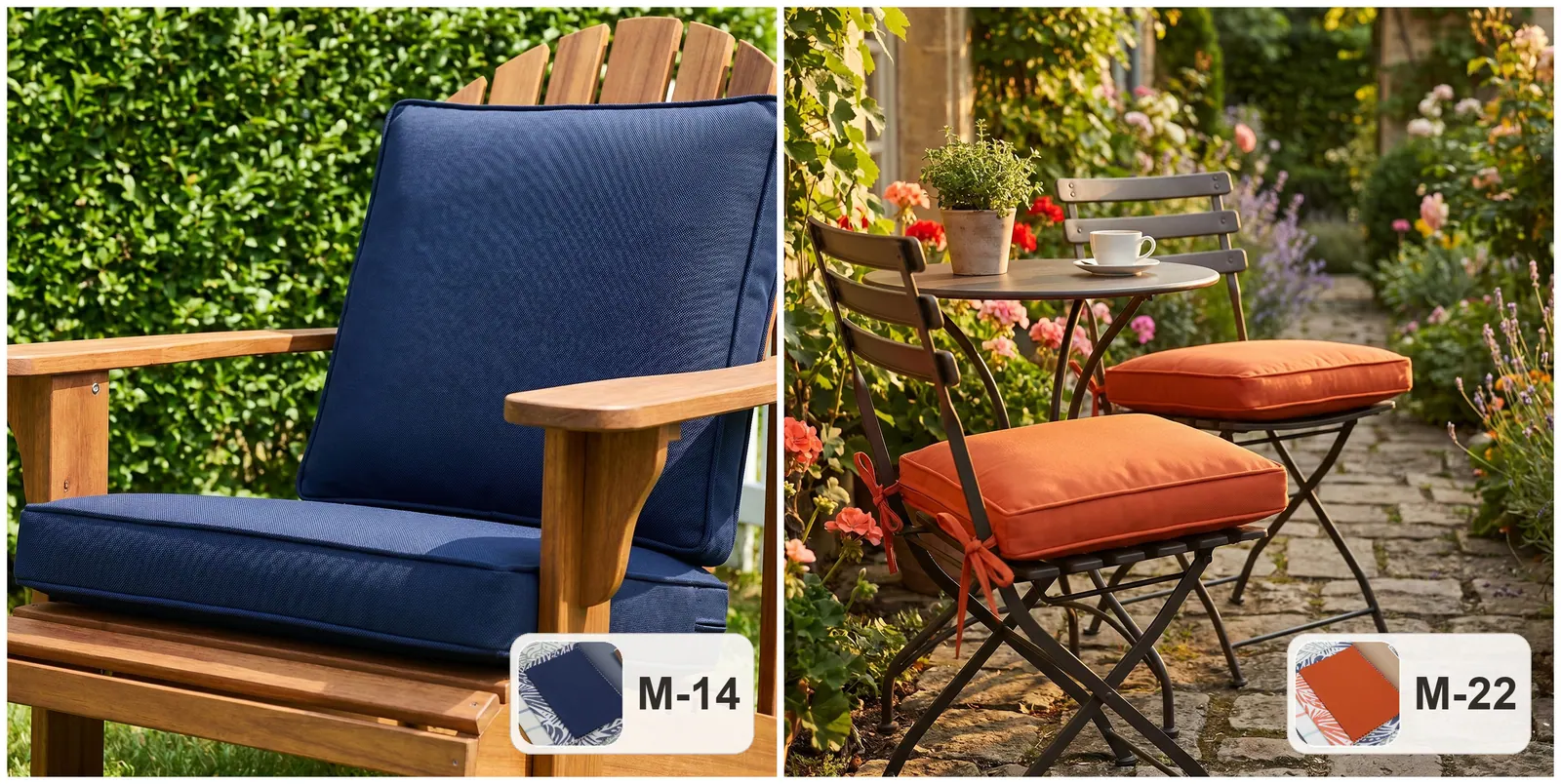
The warmth arrives from elsewhere. Low morning sun rakes across the terracotta quarry tiles, and one rust linen pillow at the end of the bench repeats them at seat height. An oatmeal linen pillow sits beside it, a half-step between cream and clay. The white enamel jug of wildflowers is the only loose color in the room, and a busy kitchen, with its cream stand mixer, wooden cutting boards, canisters on the oak worktop and ceramic pot of spoons, needs exactly one. The natural linen runner does quiet work too: it carries the cream of the seat down to the tiles, so the bench doesn't float.
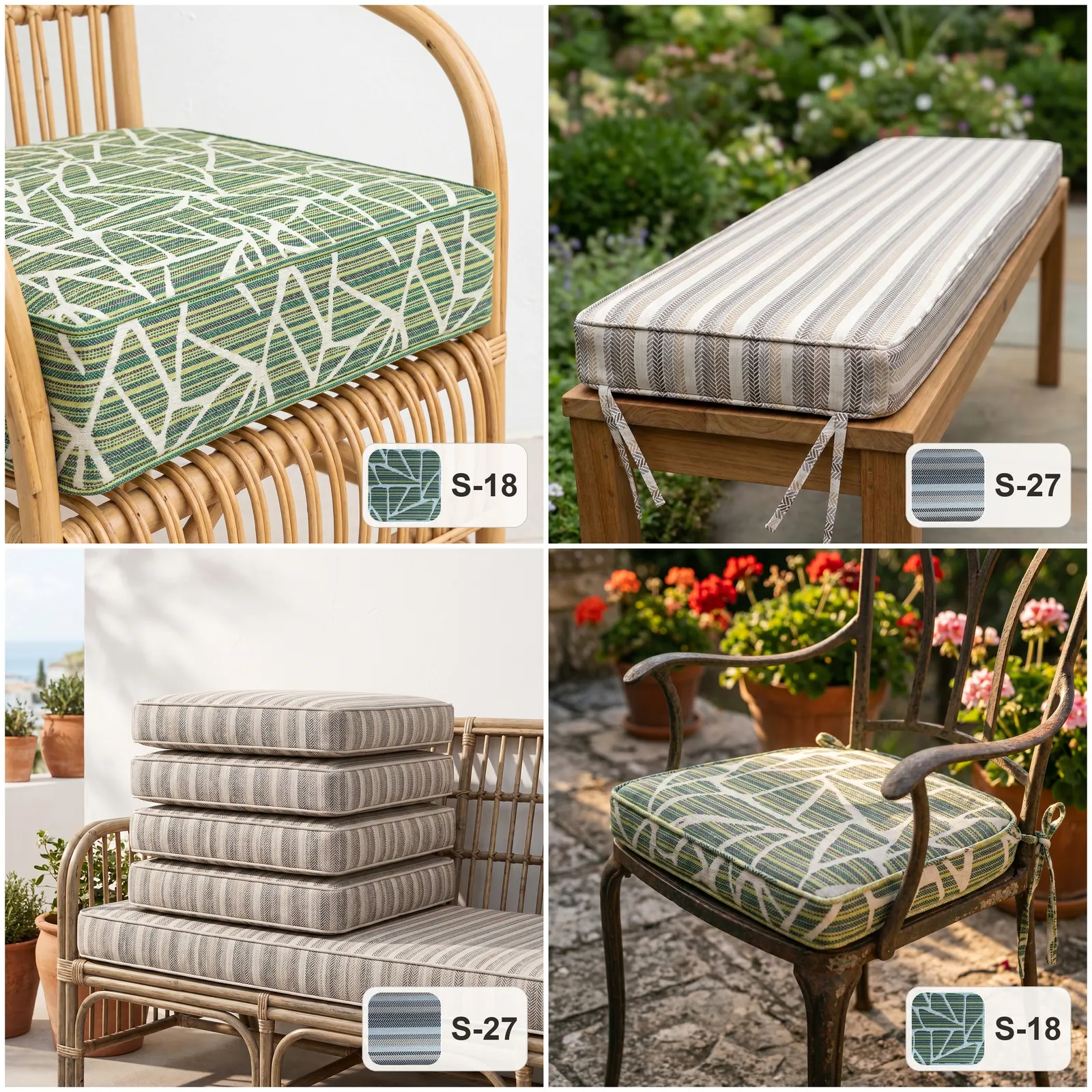
Then sit down. Up close the cream turns out to be a woven performance fabric, and self piping runs along the front edge where people slide in. From the doorway that piping is a pencil line; from the seat it is what keeps the edge crisp. In a kitchen nook, a light cushion only makes sense in an easy-care fabric, ideally with a cover that comes off, and a piped box refits neatly after washing.
Which do you notice first in your own kitchen, the outline or the texture?
The stepped drawing, checked
| Edge | Inches | Centimeters |
|---|---|---|
| Top edge | 31 | 79 |
| Two steps, as drawn | 2 + 2 | 5 + 5 |
| Bottom edge, as drawn | 37 | 94 |
| Steps, if the bottom is right | 3 each | 7.6 each |
| Depth from the longest edge | 24 3/4 | 63 |
| The re-colored bench cushion | 23 5/8 × 55 1/8 × 4 7/8 | 60 × 140 × 12.5 |
A stepped drawing must close: 31 + 2 + 2 = 35, so a 37 in bottom edge means 3 in steps, or a 35 in bottom.
Ten feet versus ten inches
| Detail | From the doorway | From the seat |
|---|---|---|
| Cushion color | Blends with the cabinets | Ivory, with a soft woven texture |
| Outline | One clean block on the oak | Box edge with a straight side band |
| Piping | A fine line along the front | Self piping keeping the sit-down edge crisp |
| Rust pillow | An echo of the quarry tiles | The one warm fabric within reach |
| Wildflowers | The only free color | Loose stems, nothing arranged |
| Runner rug | Links seat to floor | Flat natural linen underfoot |
Pinned by Élodie
Five details that hold up at both distances.
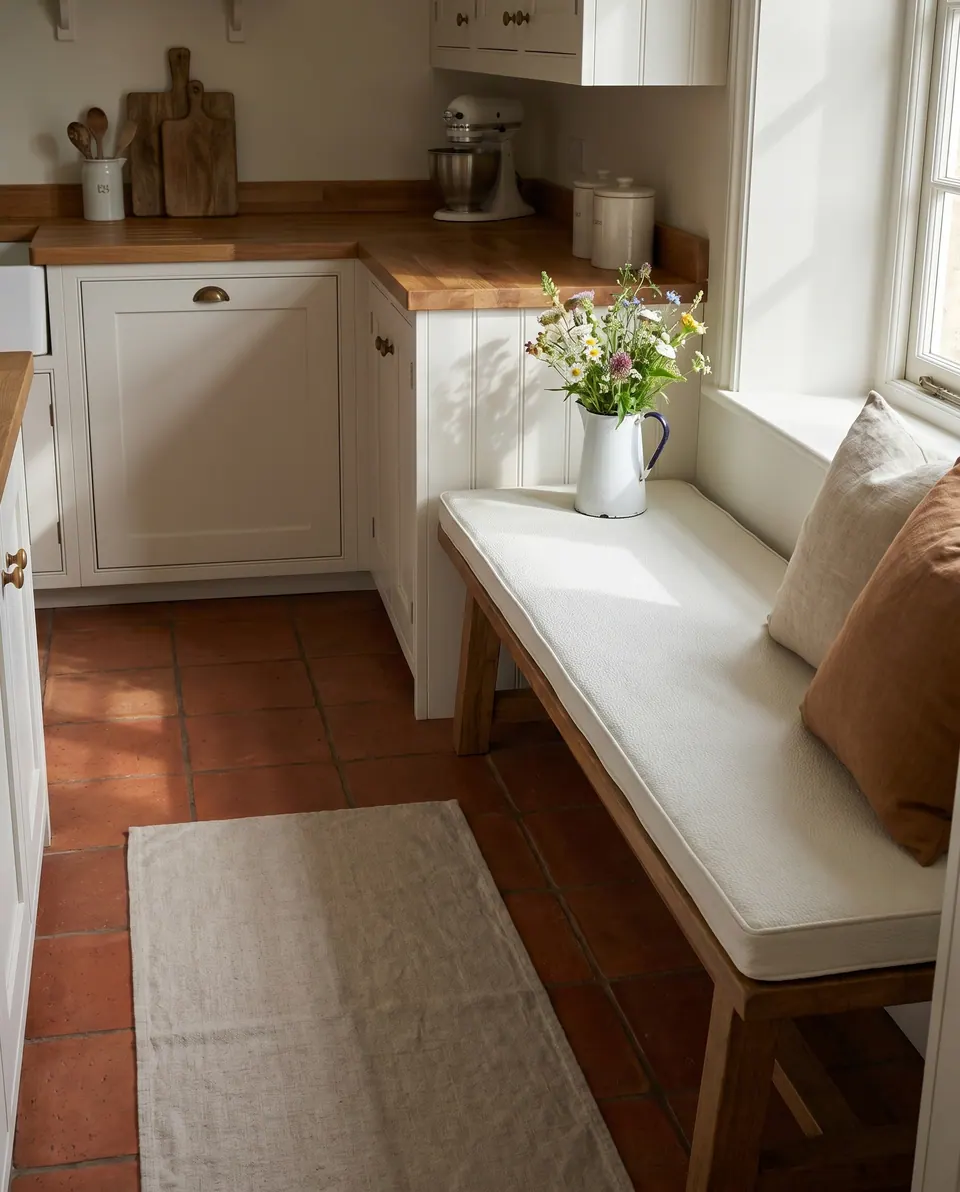
- Cream bench cushion
Cut edge to edge with the bench top so the seat looks built in.
- Piped front edge
Self piping keeps a clean line along the front where people sit down.
- Rust pillow
The one warm pillow repeats the terracotta quarry tiles.
- Wildflower jug
Loose wildflowers are the only free color in a calm kitchen.
- Linen runner rug
A flat linen runner links the cream seat to the tiled floor.
- Cream bench cushionCut edge to edge with the bench top so the seat looks built in.
- Piped front edgeSelf piping keeps a clean line along the front where people sit down.
- Rust pillowThe one warm pillow repeats the terracotta quarry tiles.
- Wildflower jugLoose wildflowers are the only free color in a calm kitchen.
- Linen runner rugA flat linen runner links the cream seat to the tiled floor.
Cream in the photo, gray-blue on the chart
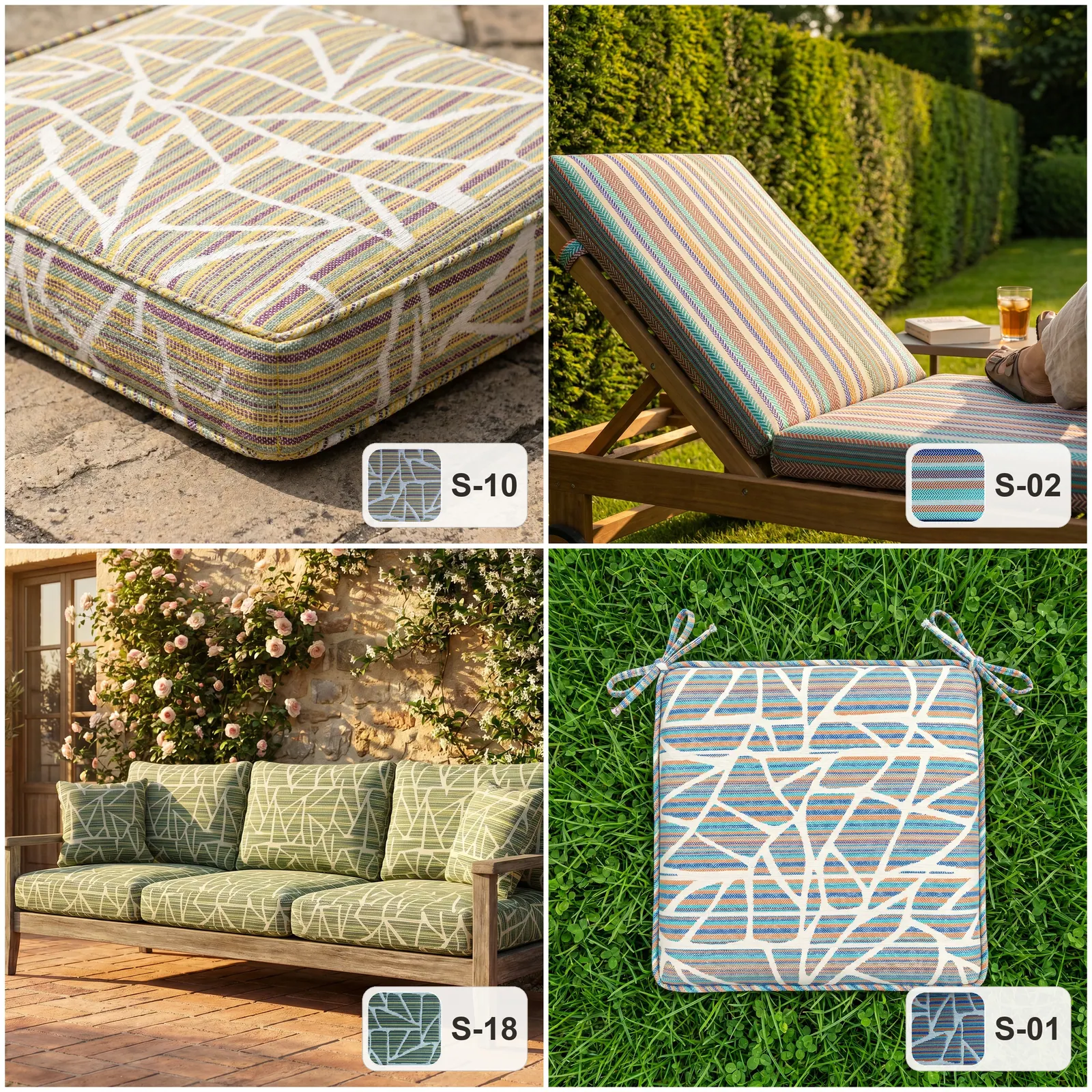
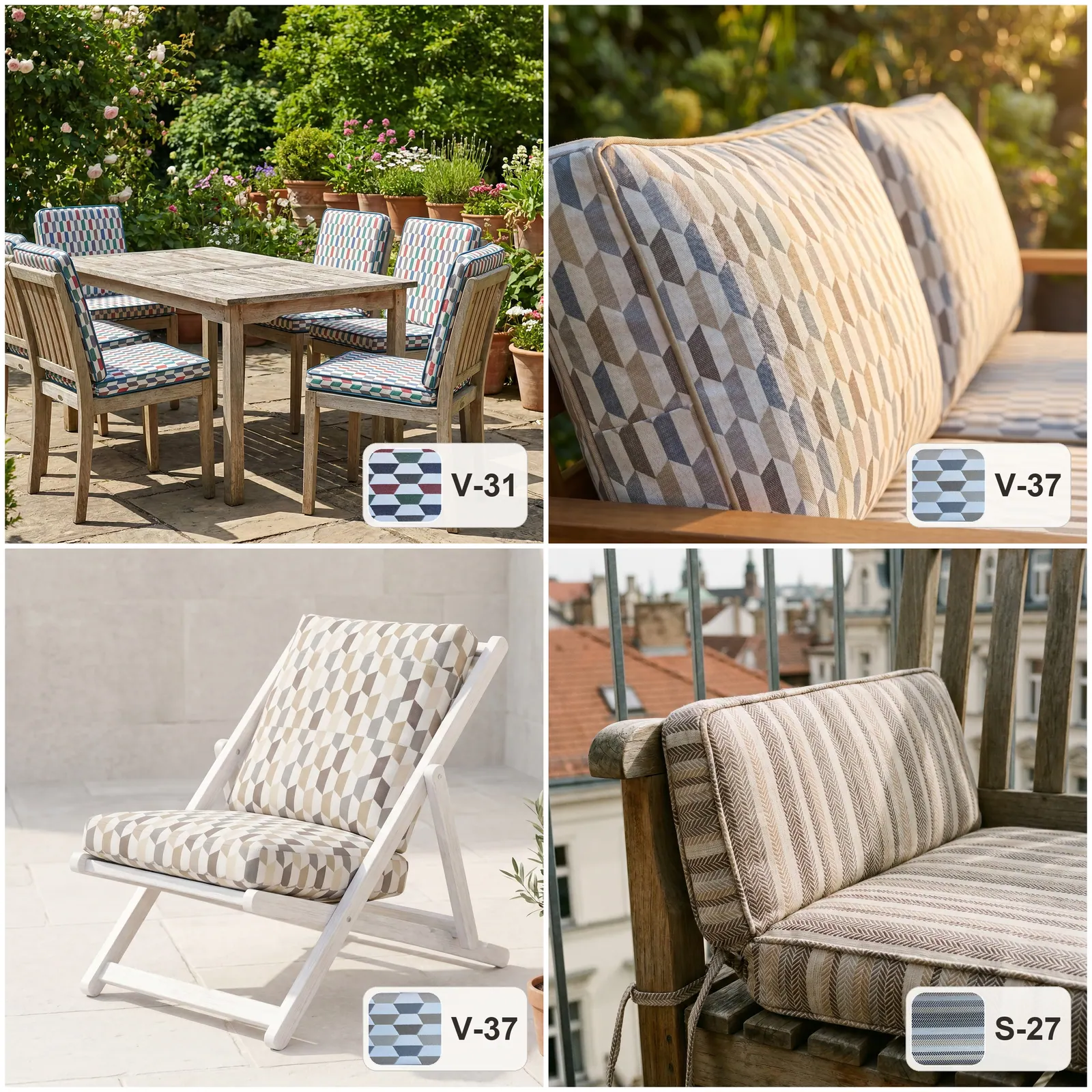
One buyer wrote in about a bench cushion made on a custom order: 23 5/8 x 55 1/8 in (60 x 140 cm), 4 7/8 in (12.5 cm) thick. After ordering, they noticed that fabric P-68 looked cream in a styled photograph but gray-blue on the color chart. Which one was telling the truth?
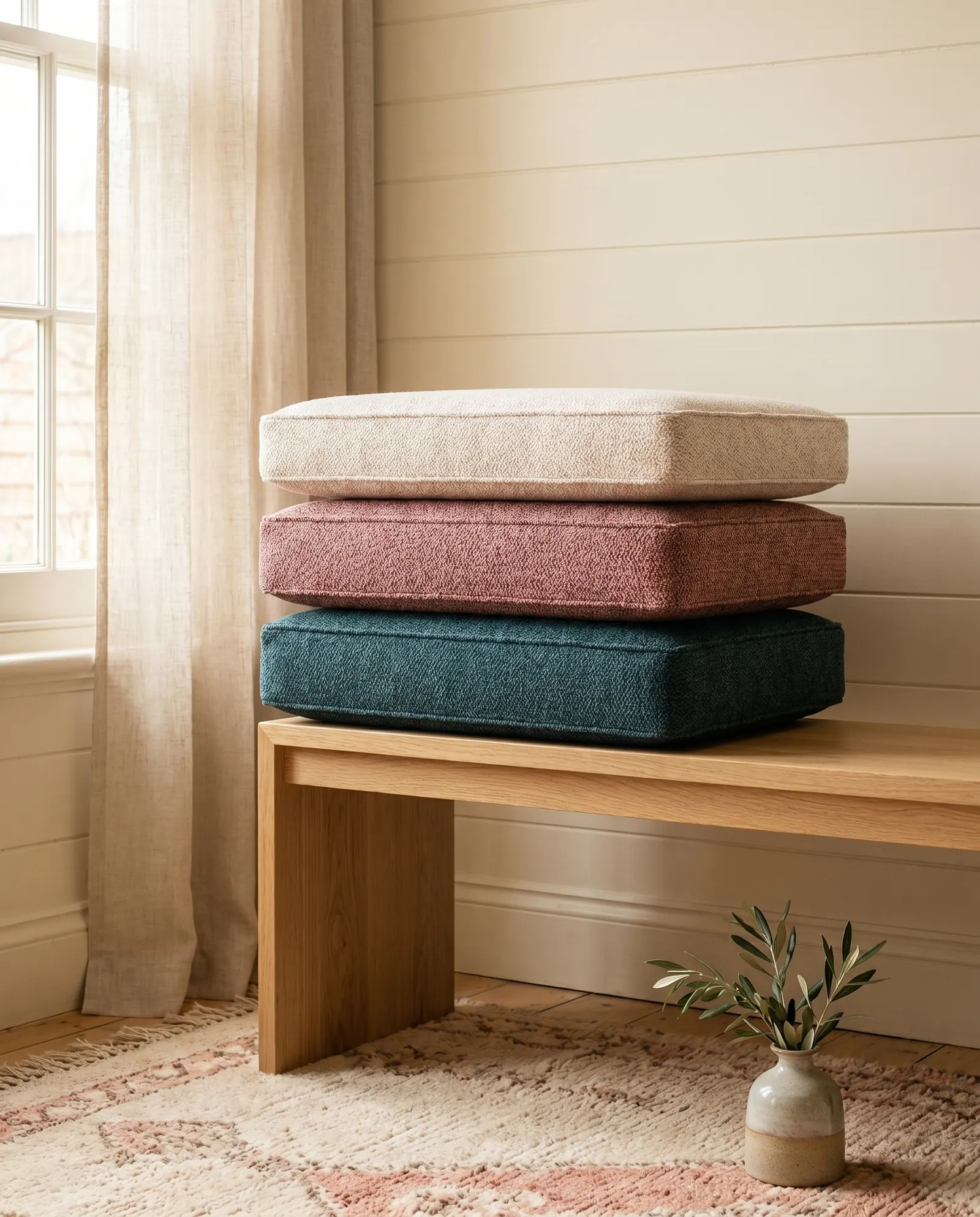
The workshop sent professional photos of the fabric and explained that listing photos are shot under warm light, which pulls a cool shade toward cream. Before anything was cut, the order was switched to P-50, with P-61 for the piping. Daylight never lies; your screen sometimes does. A styled room shot is the ten-foot view; the chart and a close-up are the ten-inch view, and a shade should be chosen at ten inches, in daylight.
- Sizes
- 23 5/8 x 55 1/8 in, 4 7/8 in thick (60 x 140 x 12.5 cm)
- Fabric
- P-68 changed to P-50, with P-61 piping
The lesson: Judge color from the chart and real close-ups, not styled photos taken under warm light.
Buyer questions: backrests, thin seats and stepped shapes
- A common question
My cushions are quite thin. Should a thinner one cost less than a 4-inch cushion?
The workshop's answerPrice depends mainly on length and width, not only thickness, so send your dimensions first for a quote. A thin cushion still takes the same fabric, the same labor and the same quality materials.
- A common question
Can you make a stepped bench cushion that fits my space, instead of a plain rectangle?
The workshop's answerYes, stepped shapes are fine, but the drawing has to add up. In one sketch the 31 in top plus two 2 in steps made 35 in, while the bottom said 37 in, so either the steps were 3 in each or the bottom was 35 in. Once corrected, enter the longest edge as Length (37 in) and the depth from that edge as Depth (24 3/4 in), upload the drawing and state the thickness.
- A common question
Can I buy a straight or a corner backrest on its own?
The workshop's answerYes. Straight and corner backrests are sold separately through their own listings, in colors such as dark brown.
A kitchen bench cushion cut edge to edge with the bench top, with the oak frame showing below, looks built in rather than added.
Élodie
The seat, noted
| Cushion | Box bench cushion, edge to edge with the bench top |
|---|---|
| Fabric | Cream performance weave |
| Piping | Self piping along the front edge |
| Pillows | One rust linen, one oatmeal linen |
| Color check | Chart plus daylight close-up, not styled photos |
| Pricing | Mainly by length and width |
| Backrests | Straight and corner, sold separately |
| Best for | Kitchen nooks and breakfast benches |

Have it made
Have this made — ask Élodie’s workshop
A fabric reads one way at noon and another at dusk. Mention your light, and the workshop will weigh it with you. — Élodie
Leave your details and the workshop will call you to confirm measurements, fabric, foam and piping. No prices, dates or payment on this page: it is a request, not an order.
Questions buyers ask next
Is a cream cushion practical on a kitchen bench?
Yes, if the fabric is an easy-care performance weave and you ask for a cover that comes off for washing. A piped box shape refits neatly after a wash. Keep the warmer, darker notes for pillows, which are easier to swap than a seat.
Why does a fabric look different in listing photos than on the chart?
Styled photos are often shot under warm light, which shifts cool shades toward cream or beige. The chart and professional close-ups show the fabric more truly. Check both in daylight before you order, and ask for more photos if the two disagree.
What does self piping do on a kitchen bench?
Self piping is cord wrapped in the cushion's own fabric and sewn into the seam. On a kitchen bench it keeps the front edge crisp where people slide in and out, and in the same cream it reads as a fine line rather than a border.
With color and care — Élodie
More photographs to read
 Save
 Save
 Save
 Save
 Save
 Save