 Save
A Reading by NateTrapezoid & Angled Cushions
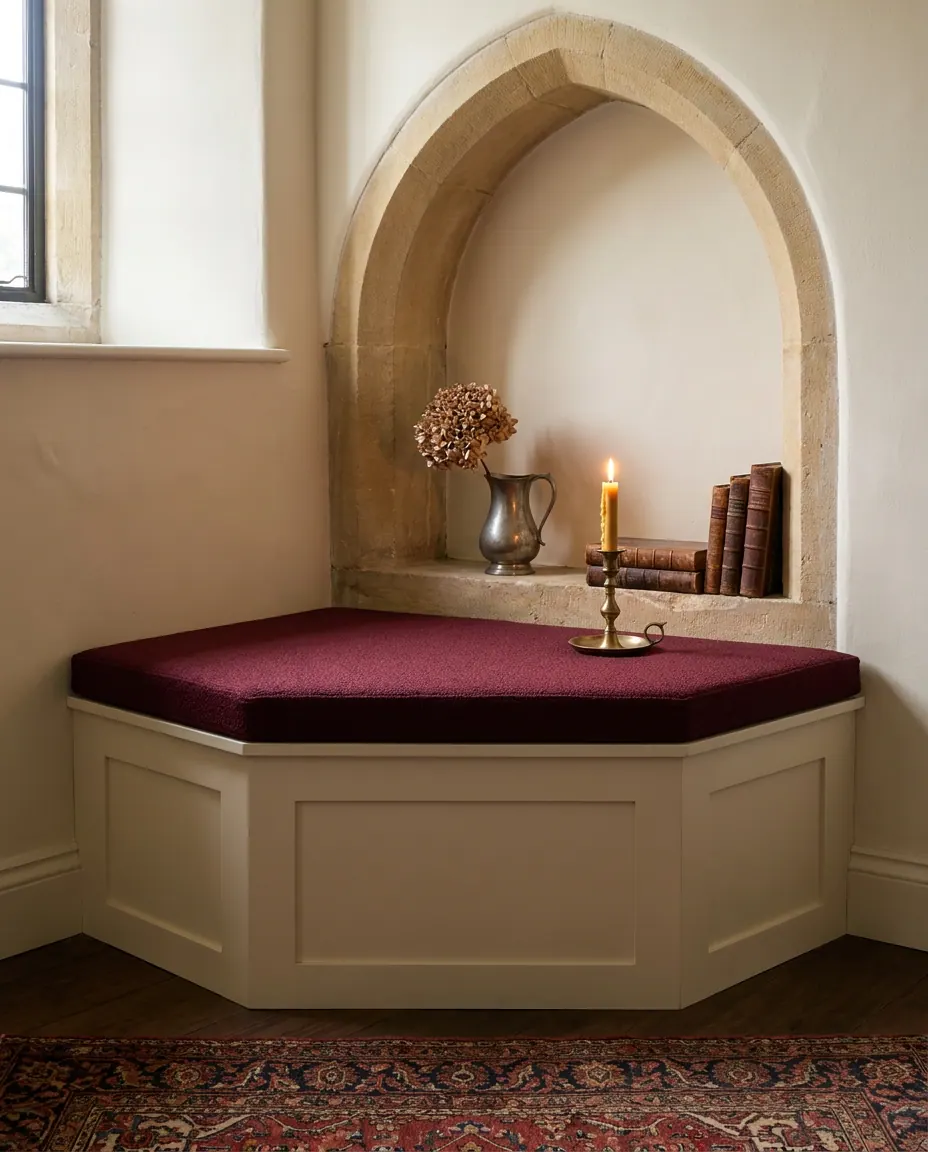
A burgundy bouclé trapezoid bench cushion under a Gothic stone arch, and the foam inside it
A half-hexagon seat under a stone arch looks carved, not covered. Most of that effect is foam: a firm block cut to the same angles as the paneling below.
A burgundy bouclé cushion cut to a half-hexagon sits beneath a stone arch lit by a single candle.

The quick answer
A trapezoid bench cushion for an angled window seat is best built on 4 in (10 cm) of 32-density polyurethane foam, about 2.0 lb/ft³ (32 kg/m³), wrapped in polyester wadding. That foam feels medium-firm, around 6 to 7 on a 1 to 10 scale, and gives a flat, structured top whose corners follow the base. A softer 28-density foam is available on request.
Reading the arch: a trapezoid with good manners
A half-hexagon sounds like geometry homework. It is really a trapezoid with good manners: a long back against the stone, two angled sides and a straight front. That makes this burgundy cushion a trapezoid bench cushion in workshop terms, and each front corner is cut to the same angle as the cream paneled base, so seat and cushion read as one piece of joinery.
Proportion first, partner. The box edge casts a clean shadow line but stays slim next to the paneling, so the base carries the height and the cushion carries the comfort. Self piping runs the top and bottom seams in the same bouclé. It draws every angle without adding a second color to a corner already full of stone.
Now the light. Burgundy is dark enough to hold its ground under a massive arch, where a pale cushion would shrink. The beeswax candle in its brass stick warms it toward wine red, and the leather-bound books repeat that red-brown on their spines. The pewter jug of dried hydrangea adds soft texture above a smooth seat. The Persian rug carries the wine down to the floor, and the mullioned window is the only cool note. Cream stone, brass and old leather: three materials, no strays.
Pinned by Nate: five marks under the arch
Five pins, from the angled corner cut to the candle that turns burgundy toward wine.
- Burgundy half-hexagon cushion
The cushion follows the angled front of the seat, a hexagonal cut rather than a plain rectangle.
- Angled corner
Each front corner is cut at the same angle as the paneled base below.
- Lit beeswax candle
Candlelight warms the burgundy toward wine red.
- Leather books
Old leather spines share the cushion's deep red-brown.
- Dried hydrangea
Faded hydrangea in pewter adds soft texture above a smooth seat.
- Burgundy half-hexagon cushionThe cushion follows the angled front of the seat, a hexagonal cut rather than a plain rectangle.
- Angled cornerEach front corner is cut at the same angle as the paneled base below.
- Lit beeswax candleCandlelight warms the burgundy toward wine red.
- Leather booksOld leather spines share the cushion's deep red-brown.
- Dried hydrangeaFaded hydrangea in pewter adds soft texture above a smooth seat.
What is inside an angled seat: a block you can measure
A shaped cushion is only as sharp as what fills it. A seat like this one is built the standard way: - Core: 32-density polyurethane foam, about 2.0 lb/ft³ (32 kg/m³). High density, medium-firm to firm, not memory foam. - Wrap: polyester (Dacron) wadding around the block to fill the corners of the cover. An extra 3/4 in (2 cm) layer can be added. - Thickness: 4 in (10 cm) is standard; 2, 3 and 5 in (5, 7.5 and 12.5 cm) are also offered. - Feel: about 6 to 7 on a 1 to 10 scale. A softer 28-density foam can be written into the order note.
Density is weight, not feel. It predicts how long the block holds up, which is what matters in a reading nook. High-density foam also gives a structured, flat top, and on a half-hexagon that keeps the angled corners true to the paneling.
Tufted cushions take the other road. They have no foam core: polyester fiber is packed in tight and the cover is hand-stitched shut, so it never comes off. On a seat cut to match joinery, I want a block with numbers. The foam firmness finder helps you pick, and foam density versus firmness shows the arithmetic.
For an angled window seat, 4 in (10 cm) of 32-density foam gives a flat, structured top whose corners stay square to the base below.
Nate
A 117 in bay, clean lines and a mushroom velvet
A buyer in the US wrote to the workshop about a three-sided bay window seat. She wanted clean lines, no tufting, and bolsters to match. Her numbers: the long straight side 117 in (297 cm), the window side 68.5 in (174 cm), each angled side 34 in (86 cm), and 25.5 in (65 cm) deep.
The build was a trapezoid seat cushion 4 in (10 cm) thick, plus two bolsters 10 in (25 cm) across for the angled sides. She ordered swatches first, checked that her favorite was stain resistant, and chose velvet code 108, a mushroom shade.
The engineer's footnote. On paper, each angled side steps in about 24 1/4 in (62 cm) over 25.5 in of depth, which puts the slant near 35 1/4 in (89 cm). Measured: 34 in. A gap like that is exactly what the workshop's drawing check is for: it confirms the slant fits the other sides and sends a diagram for approval before anyone cuts. The trapezoid cushion calculator runs the same check at home. Angles are just lengths in disguise.
What does your seat measure at its deepest point, front edge to wall?
- Sizes
- 117 in (297 cm) long side, 68.5 in (174 cm) window side, 34 in (86 cm) angled sides, 25.5 in (65 cm) deep, 4 in (10 cm) thick; bolsters 10 in (25 cm) across
- Fabric
- Velvet code 108, mushroom
The lesson: For a trapezoid, measure every side plus the depth, and decide which sides get bolsters.
Buyer questions: tufted firmness, a retired code, two backs or one
- A common question
How firm are your tufted cushions, and can one be 6 in (15 cm) thick for a 53 x 20 in (134 x 51 cm) headboard?
The workshop's answerThey are densely filled, so they feel firm but comfortable. The standard thickness is about 4 in (10 cm), and 6 in (15 cm) can be made on request.
- A common question
A fabric code I saw in your photos, L54, isn't on the chart anymore. Can I still order it?
The workshop's answerYes. It came off the current chart only because fewer buyers choose it, not because of quality or discontinuation. The fabric is still in stock.
- A common question
For the back of a bench, should I get one long back cushion plus two small pillows, or two back cushions?
The workshop's answerTwo back cushions on the one seat cushion. It is the cleaner arrangement, and two equal backs stay in place more easily than one 50 in (127 cm) back cushion with two small pillows.
On the cutting table: the half-hexagon seat
| Piece | Trapezoid (half-hexagon) seat cushion, box edge |
|---|---|
| Fabric | Burgundy bouclé from the indoor charts |
| Piping | Self piping on the top and bottom seams |
| Thickness | 4 in (10 cm) standard; 2, 3 and 5 in (5, 7.5 and 12.5 cm) offered |
| Foam | 32-density, about 2.0 lb/ft³ (32 kg/m³), Dacron-wrapped |
| Firmness | About 6 to 7 of 10; 28-density on request for a softer seat |
| Zipper | Hidden on the back edge, against the stone |
| Bolsters | Round, 8 in (20 cm) across as standard, 10 in (25 cm) possible |

Have it made
Have this made — ask Nate’s workshop
Precision starts on the phone. Give the workshop your measurements and they will read them back to you, edge by edge. — Nate
Leave your details and the workshop will call you to confirm measurements, fabric, foam and piping. No prices, dates or payment on this page: it is a request, not an order.
Questions buyers ask next
Does foam density tell you how firm a seat cushion feels?
Not directly. Density is the weight of the foam, about 2.0 lb/ft³ (32 kg/m³) for the standard seat foam, and it predicts how long the foam holds its shape. Feel is a separate measure; the standard foam sits around 6 to 7 on a 1 to 10 scale.
Should a long bay window trapezoid be split into two cushions?
Often, yes. Very long cushions are usually suggested in two or more pieces for handling, shipping and durability, and seats around 79 in (200 cm) or longer are commonly split. A single long trapezoid can still be made on request.
Can the foam in a shaped seat cushion be made softer?
Yes. A softer 28-density foam can be written into the order note, or an extra 3/4 in (2 cm) layer of polyester wadding can go over the standard 32-density core. The first softens the whole block; the second softens only the surface you sit on.
± 1/4 in — Nate
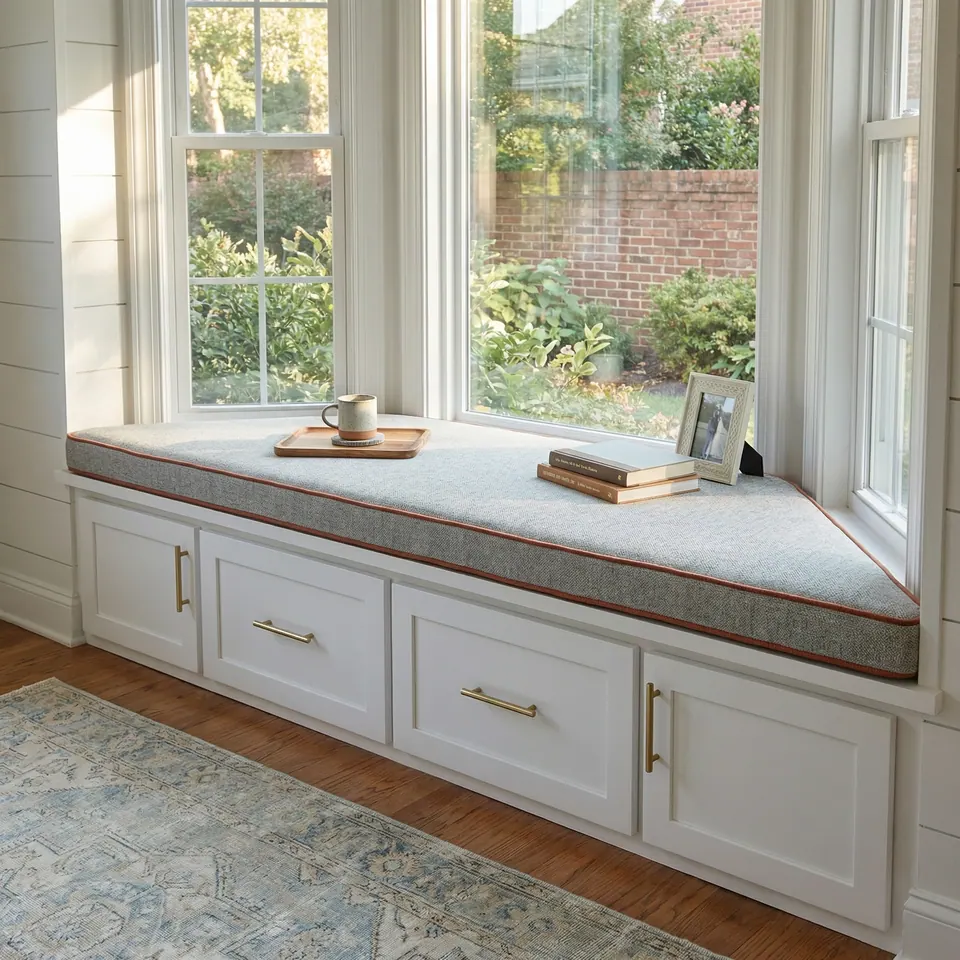
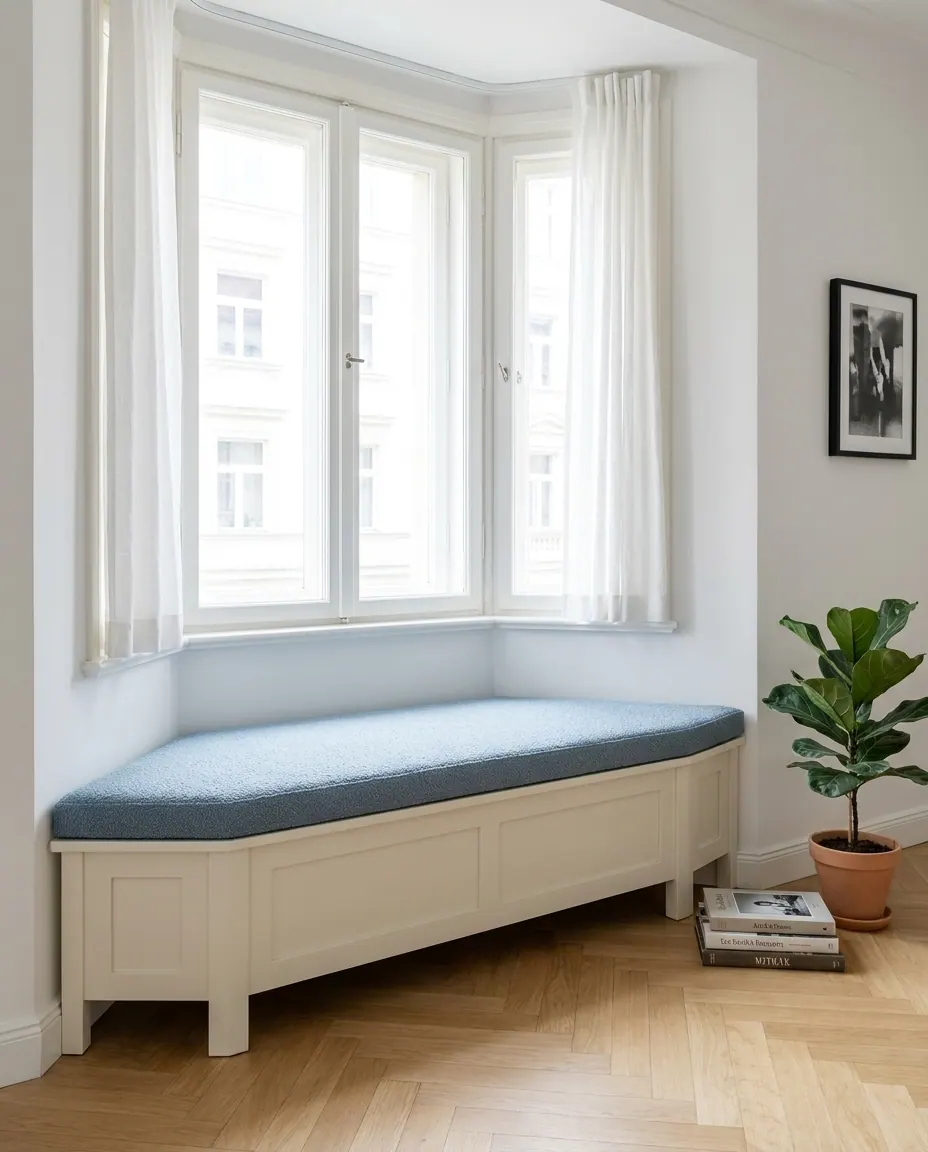
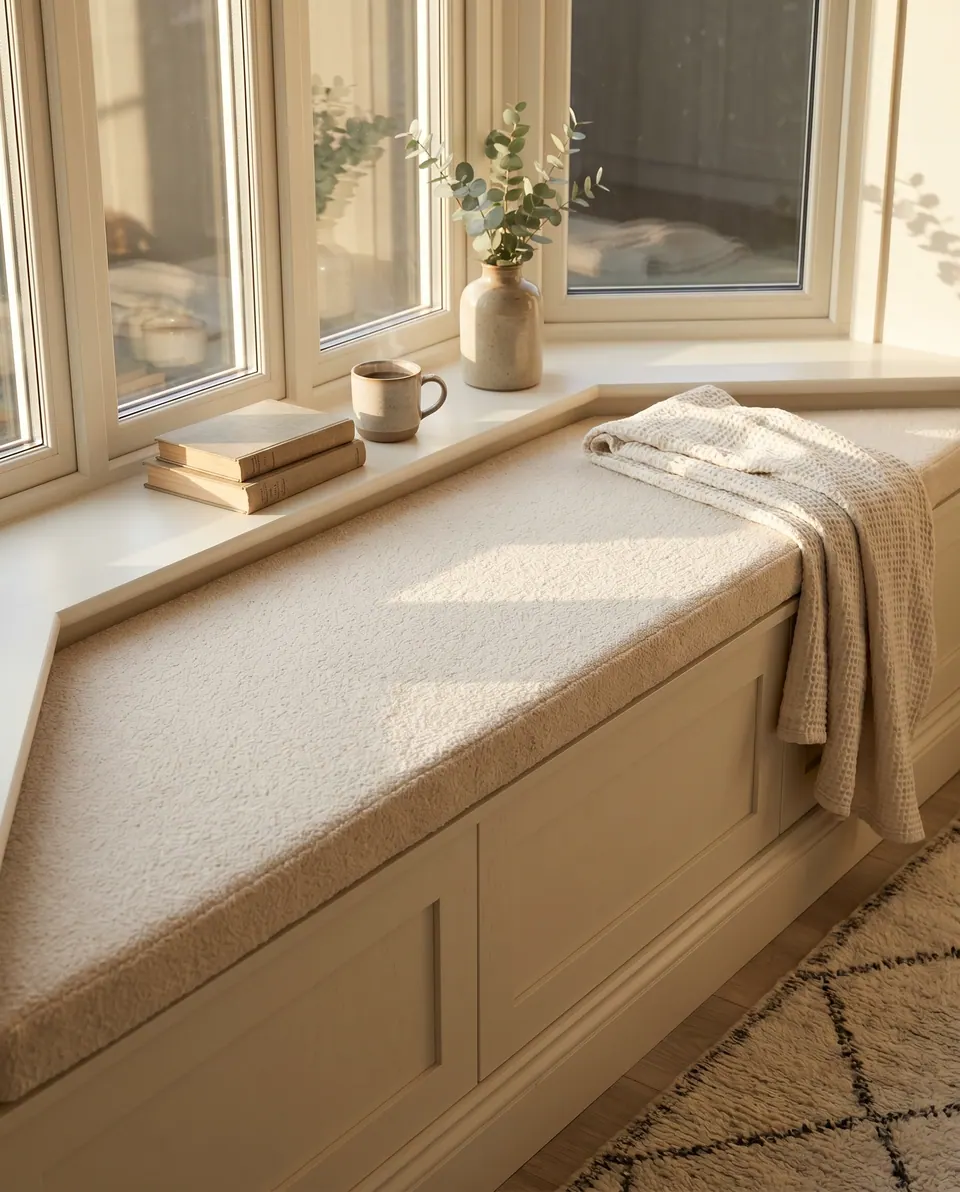
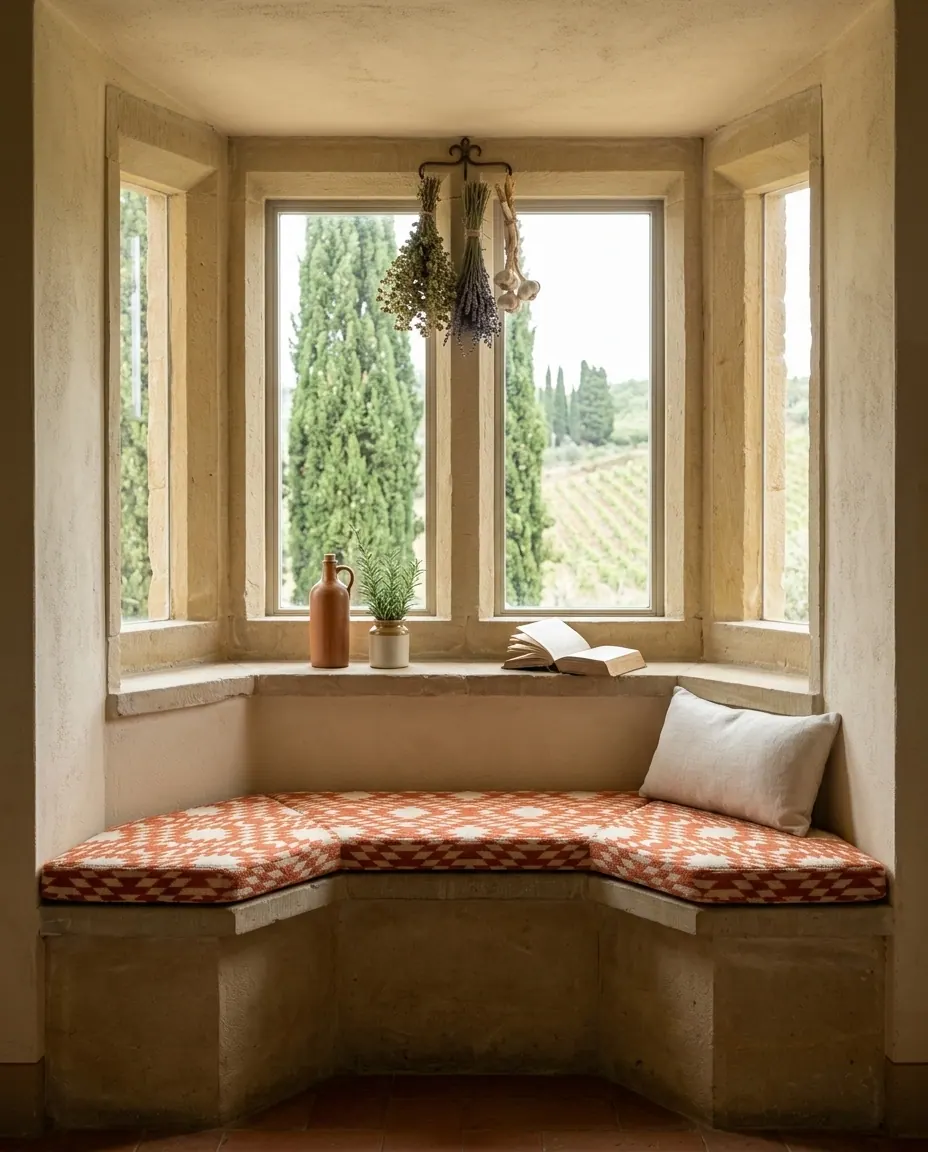
Bouclé seats in sage, caramel and dusty blue, from bay windows to chair pads
 Save
 Save
 Save
 Save
 Save
 Save