 Save
A Reading by MaggieBanquette & Kitchen Nook Cushions
A rust banquette cushion on a cream kitchen bench, and the budget behind it
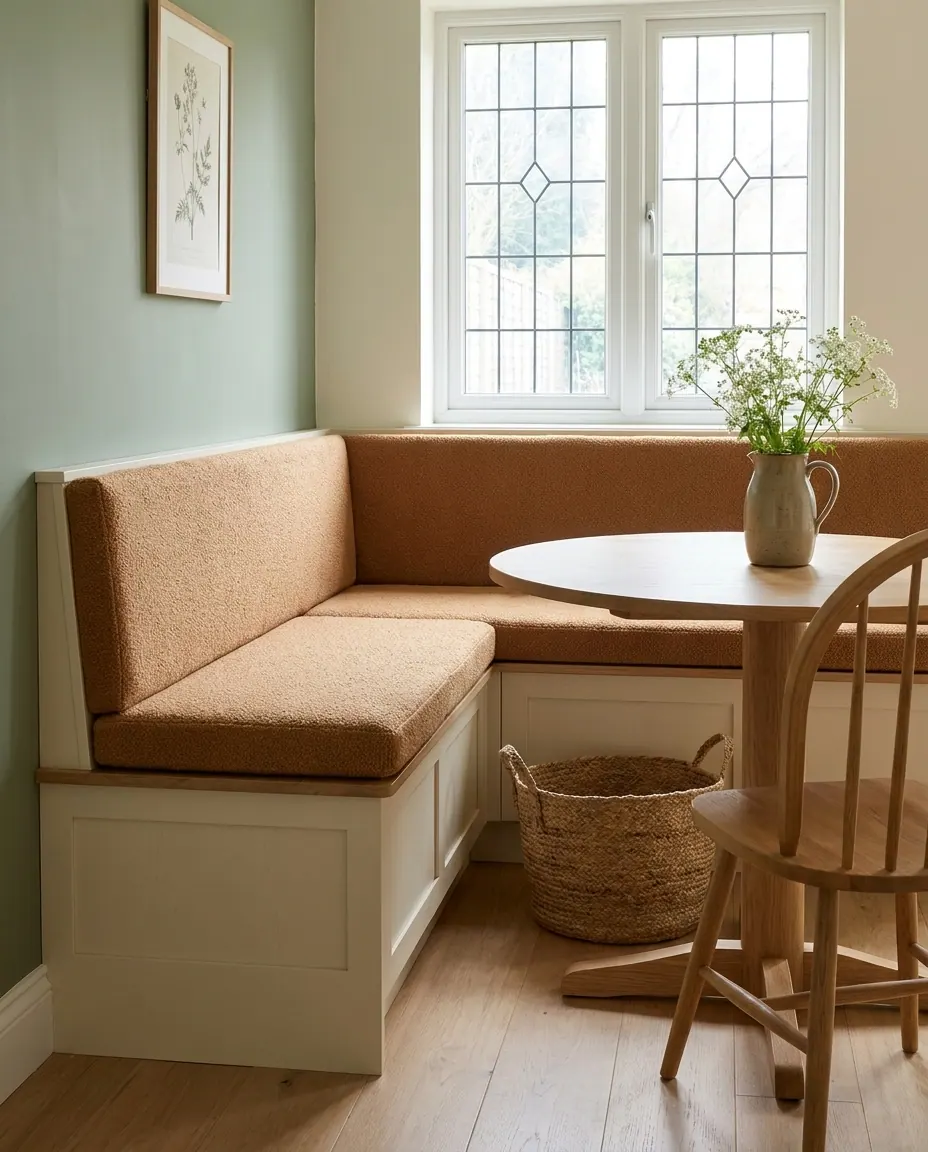
Right, then. A cream kitchen, a cream bench, and one rust cushion doing all the work. Here's where the money went, and where it didn't need to.
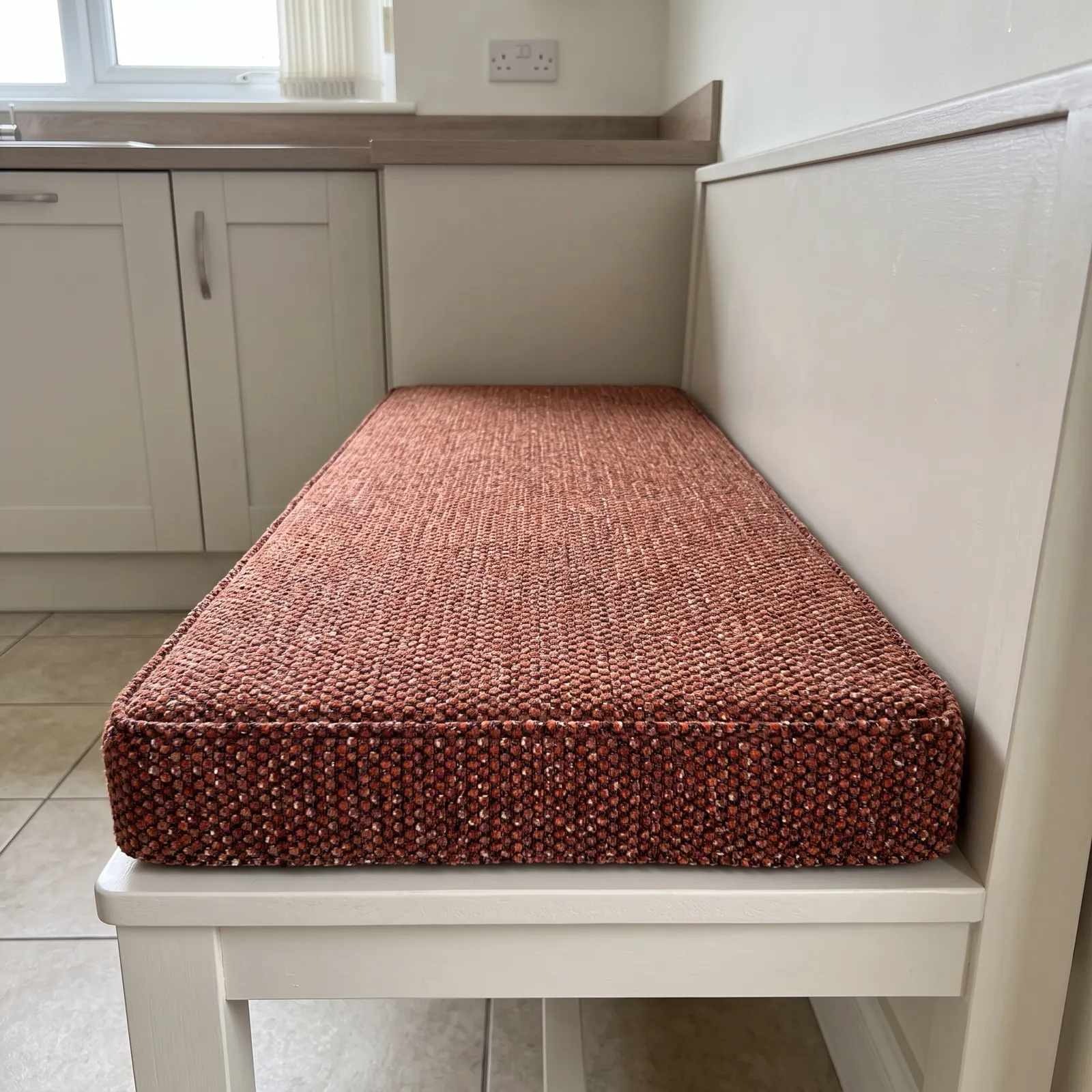
A rust flecked cushion brings warmth to an all-cream kitchen bench. It is cut to sit tight against the tall painted back.

The quick answer
On a kitchen banquette cushion, spend on exact measurements, a dark flecked fabric that hides crumbs, and ties where two cushions meet. Save where the room allows: price follows surface area, so a painted, wipeable back needs no back cushions, and a chunky weave needs no piping. This rust seat does all of it.
One warm note in an all-cream kitchen
Everything in this kitchen is cream or beige: the shaker units, the built-in bench with its tall paneled back, the blind at the window, the floor tiles. Even the double socket is white. One saturated banquette cushion gives the eye somewhere to land, and this one is rust, flecked with cream.
It fits exactly between the painted back and the front of the seat, so nothing overhangs into the walkway. Kitchens are narrow, and somebody is always carrying a pot past the bench.
The edge is a plain box, no piping. On a chunky yarn like this, a cord can look lumpy, and the weave has texture enough to draw its own line. The back is bare and painted, so it wipes clean in one pass. And the color is a working color: a dark, flecked weave hides crumbs between cleans far better than a pale plain.
That's a budget in one photograph, dear. Every choice either does a job or gets left off. More seats like it live under banquette cushions and kitchen nook cushions; the woven cloths are on the jacquard and damask shelf. What does your family spill most at that table?
Four pins on a working bench
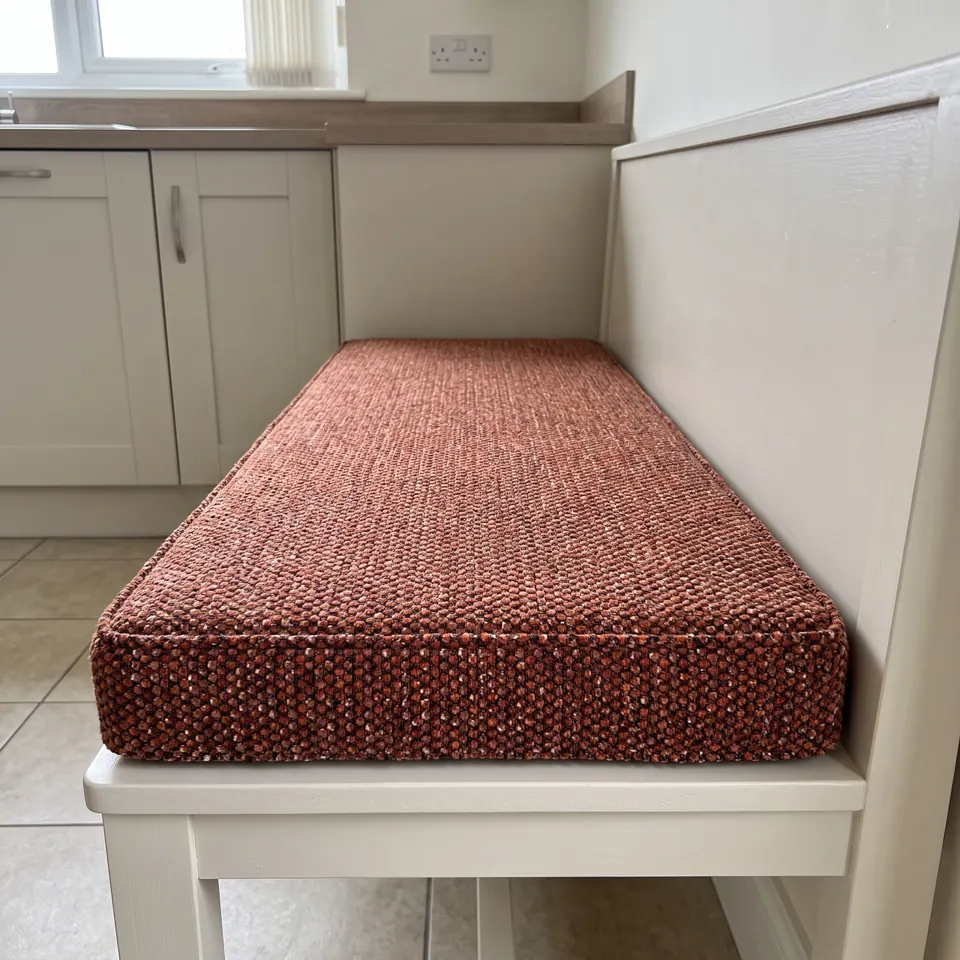
Four pins, from the unpiped edge to the painted back.
- Plain boxed edge
No piping here: the chunky weave has enough texture that a plain seam looks neater.
- Painted bench back
Cushioning only the seat keeps the painted back easy to wipe in a kitchen.
- Shaker cabinets
Cream units and bench match, so the rust cushion is the one warm accent in the room.
- Rust nubby weave
A dark, flecked color hides crumbs and marks better than a pale plain on a family bench.
- Plain boxed edgeNo piping here: the chunky weave has enough texture that a plain seam looks neater.
- Painted bench backCushioning only the seat keeps the painted back easy to wipe in a kitchen.
- Shaker cabinetsCream units and bench match, so the rust cushion is the one warm accent in the room.
- Rust nubby weaveA dark, flecked color hides crumbs and marks better than a pale plain on a family bench.
Where to spend and save on a banquette seat cushion
| Decision | Spend or save | Why |
|---|---|---|
| Measurements and a drawing | Spend the time | A cushion that arrives 6 in short means a remake |
| Ties where two cushions meet | Spend | The join is where two seats drift apart |
| Dark, flecked fabric | Spend on the right color | Hides crumbs and marks between cleans |
| Back cushions | Save, if the back is painted | Price follows surface area; paint wipes clean |
| Piping on a chunky weave | Skip it | A cord can look lumpy; the texture draws the edge |
| Thickness under a window | Check, don't guess | 2 or 3 in suits a narrow window seat |
Two blue cushions, one bench, six inches short
One buyer wrote in while restoring an 1880 farmhouse kitchen for a magazine shoot. The first ask was covers only, for a bench 16.5 in (42 cm) from front to back, but for that job the workshop steered toward filled cushions.
They ordered two blue velvet seat cushions, 4 in (10 cm) thick: one 63.4 in (161 cm) long, one 45.5 in (115.5 cm). Ties went on at the end where the two meet, and at the side. One arrived 6 in (15 cm) short. The workshop remade the 45.5 x 16.5 in (115.5 x 42 cm) piece, and the buyer kept the first one too.
My checklist ever since: ties at the join, and a tape measure on both cushions the day they arrive.
Buyer questions: low window seats, stepped benches and hanging backs
- A common question
How thick should a window seat cushion be if I don't want it covering the window?
The workshop's answerFor a narrow window seat the workshop suggested 2 or 3 in (5 or 7.5 cm). Measure the height available under the window frame first; the final thickness is confirmed with you before production.
- A common question
Part of my bench juts out at the front. Can the cushion follow that shape?
The workshop's answerYes. Send a simple drawing with exact measurements, especially of the part that sticks out. One stepped cushion was made exactly to a buyer's marked-up drawing: 66 x 11 in (168 x 28 cm), widening to 67.5 in (171 cm) with 6.5 in (16.5 cm) more depth.
- A common question
Can you sew fabric loops onto back cushions so they hang from a rod?
The workshop's answerYes: back cushions with two sewn-on fabric loops each, in the seat fabric or a matching neutral. It's a non-standard make, so it's quoted as a custom set; send the cushion sizes, roughly how big you want the loops, and how many cushions.
On the cutting table: the rust banquette cushion
| Cushion | Box banquette seat cushion, seat only |
|---|---|
| Fabric | Rust nubby weave with a cream fleck |
| Piping | None: a plain boxed seam |
| Fit | Tight between the painted back and the seat front |
| Back | Painted paneling, left bare to wipe clean |
| Two-piece benches | Ties at the join and at the side |
| Odd shapes | Made from a marked-up drawing |
| Best for | Family kitchens where crumbs are a daily event |

Have it made
Have this made — ask Maggie’s workshop
Have the tape measure handy when they call. Old cushions shrink and sag; the seat underneath does not. — Maggie
Leave your details and the workshop will call you to confirm measurements, fabric, foam and piping. No prices, dates or payment on this page: it is a request, not an order.
Questions buyers ask next
Does a kitchen banquette cushion need piping?
Not always. On a chunky, nubby weave a piping cord can look lumpy, and a plain boxed seam looks neater because the texture already draws the edge. Save piping for smoother cloths, where the line reads crisply.
Should I cushion the back of a built-in kitchen bench too?
Only if you want the softness. A painted paneled back wipes clean in one pass, and since price follows surface area, a seat-only cushion costs less than seat plus backs. Hanging back cushions on loops can be added later.
How should a banquette cushion fit against a tall paneled back?
Tight. Cut it to sit exactly between the back panel and the front of the seat, so nothing overhangs into the walkway. Measure the seat itself, front to back, at both ends.
Stitch straight — Maggie
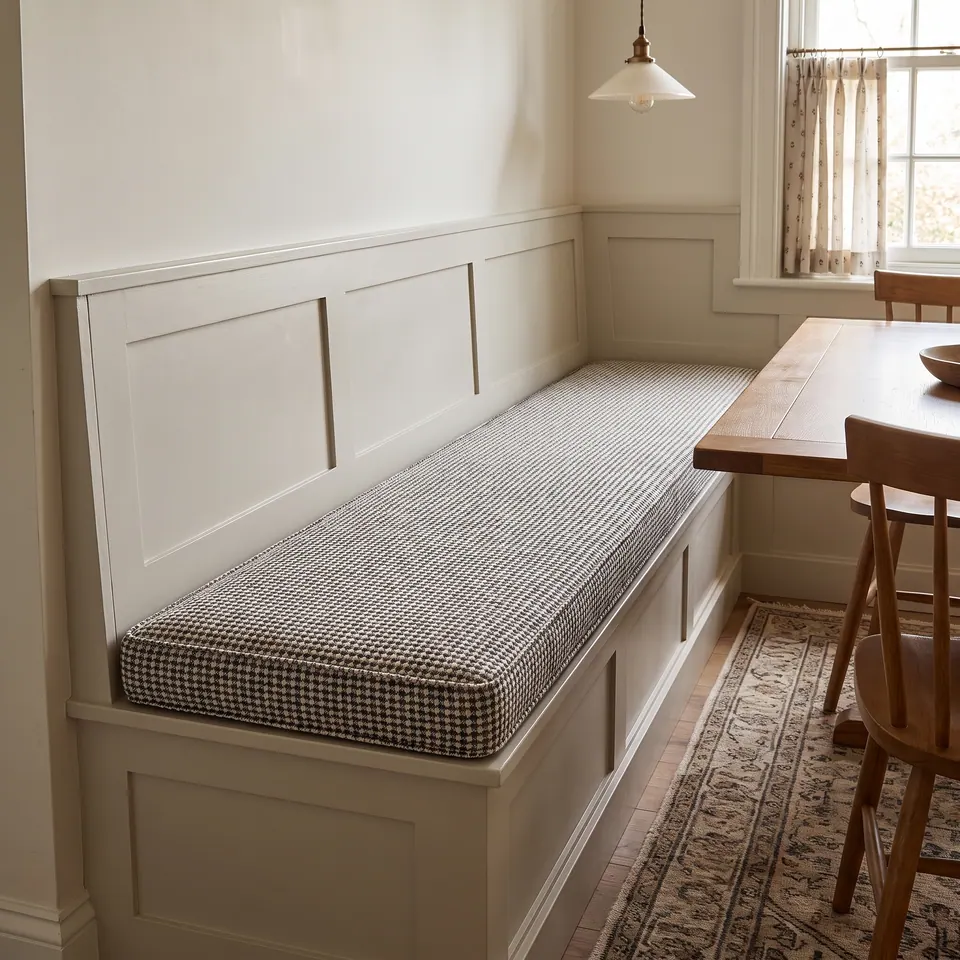
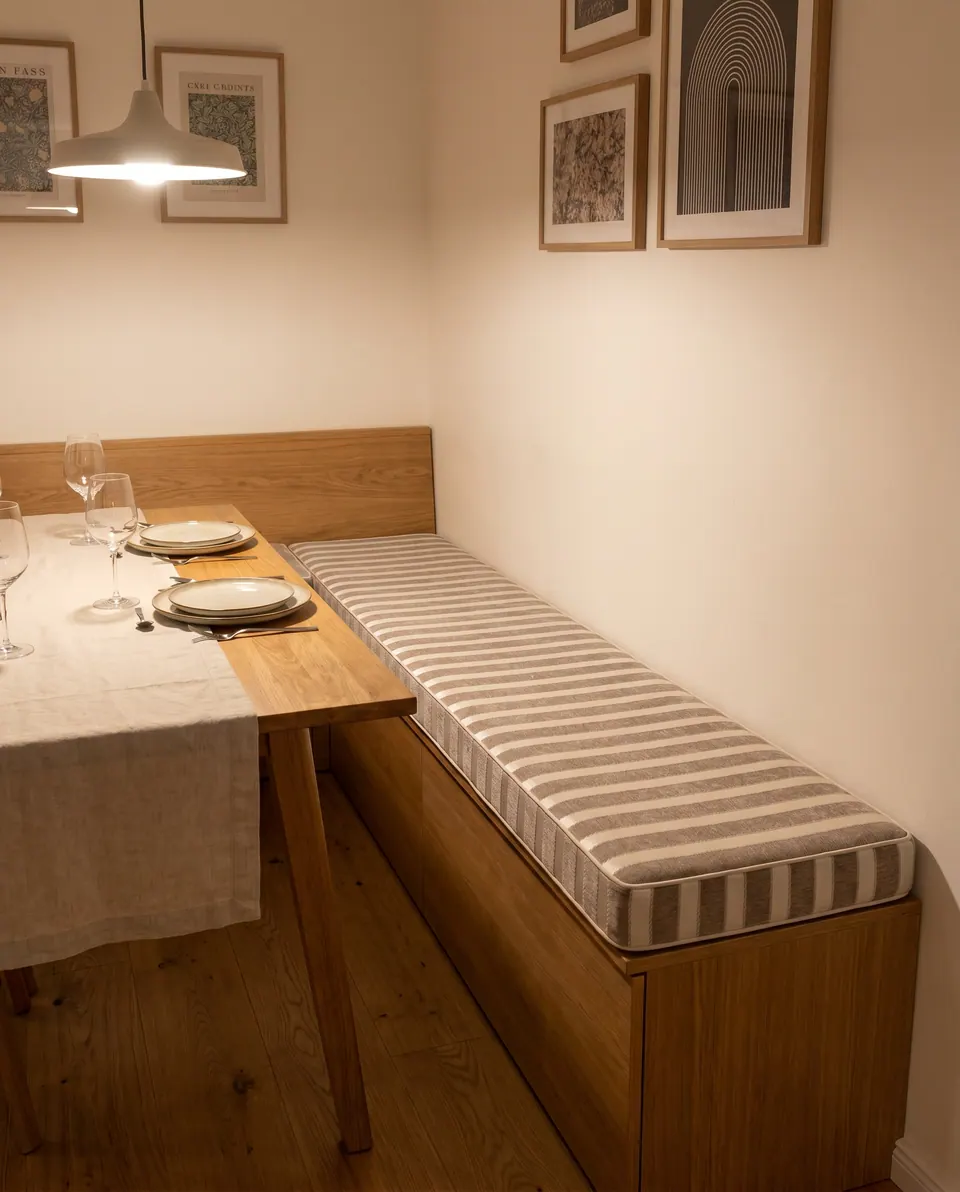
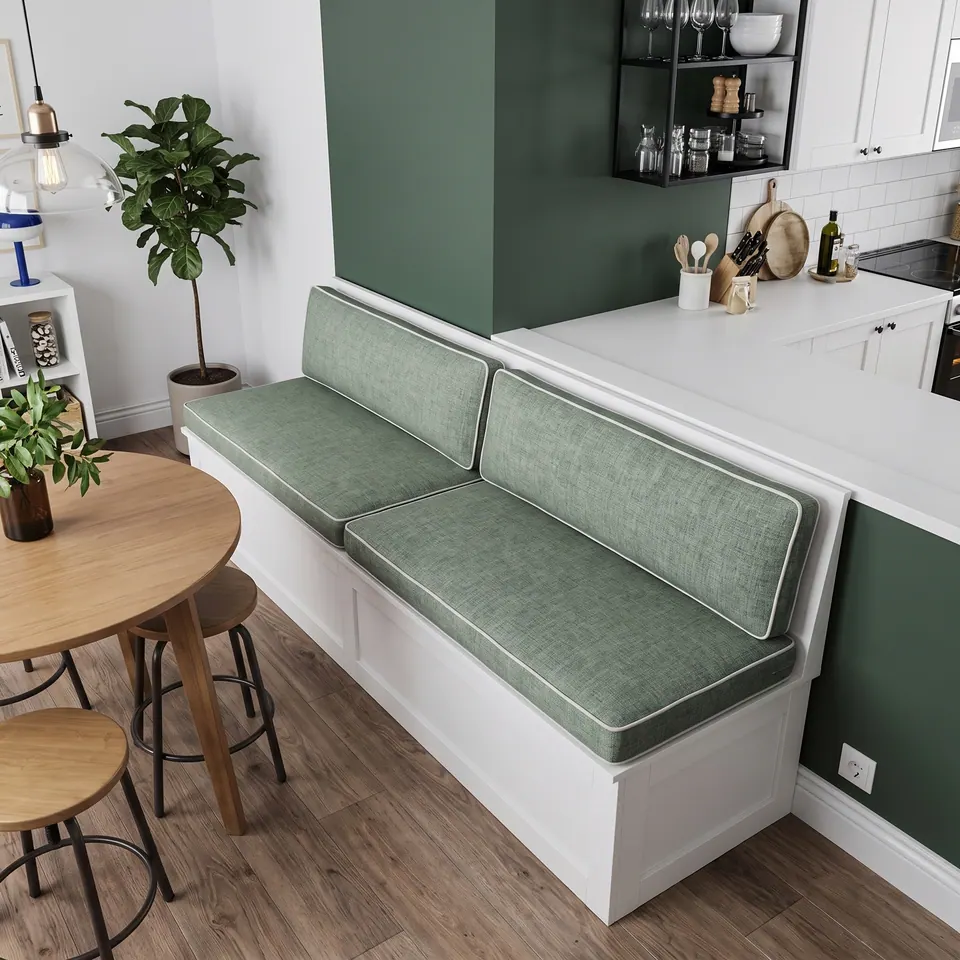
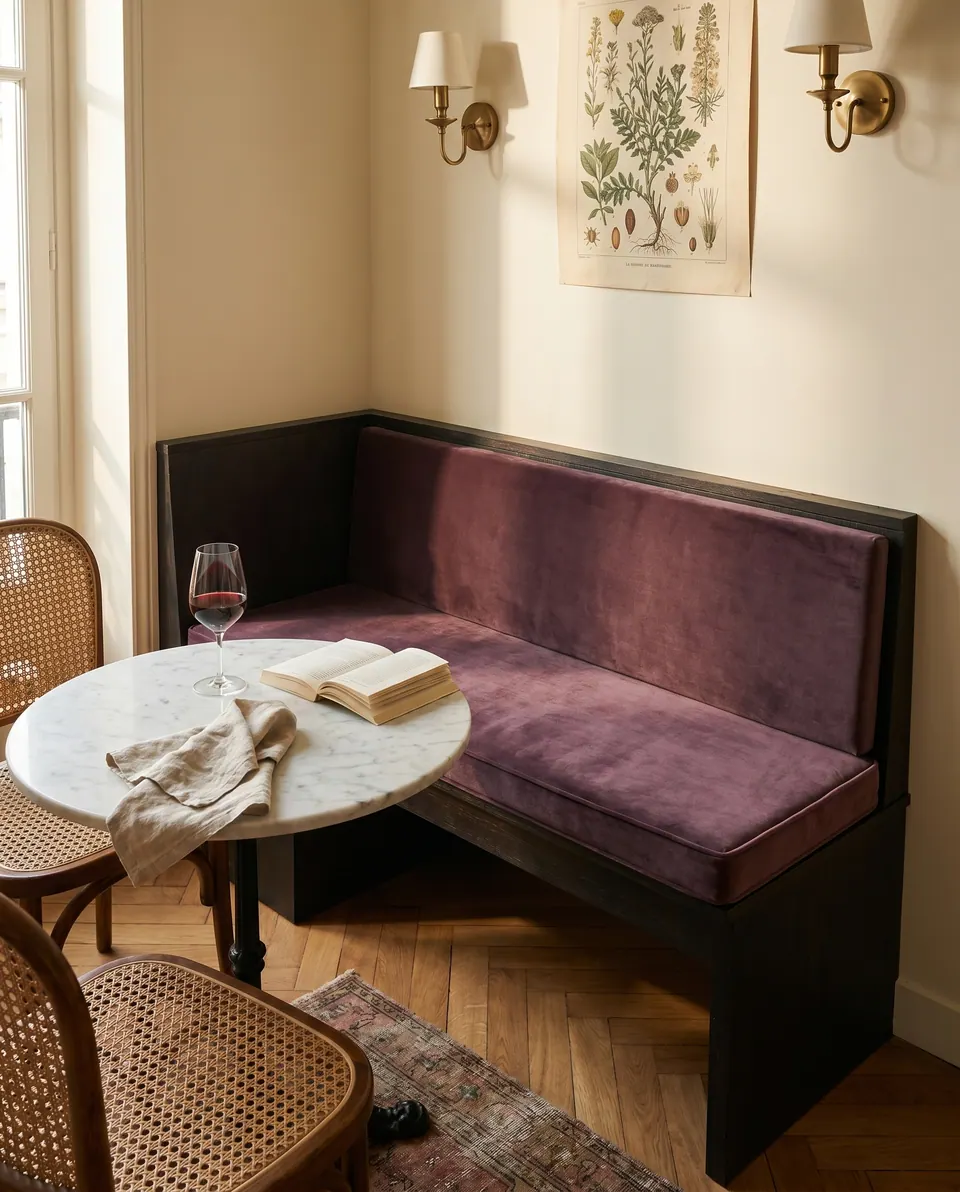
Bench and banquette cushions, mocha tweed to sage bouclé
 Save
 Save
 Save
 Save
 Save
 Save