A Reading by ÉlodieBench Cushions
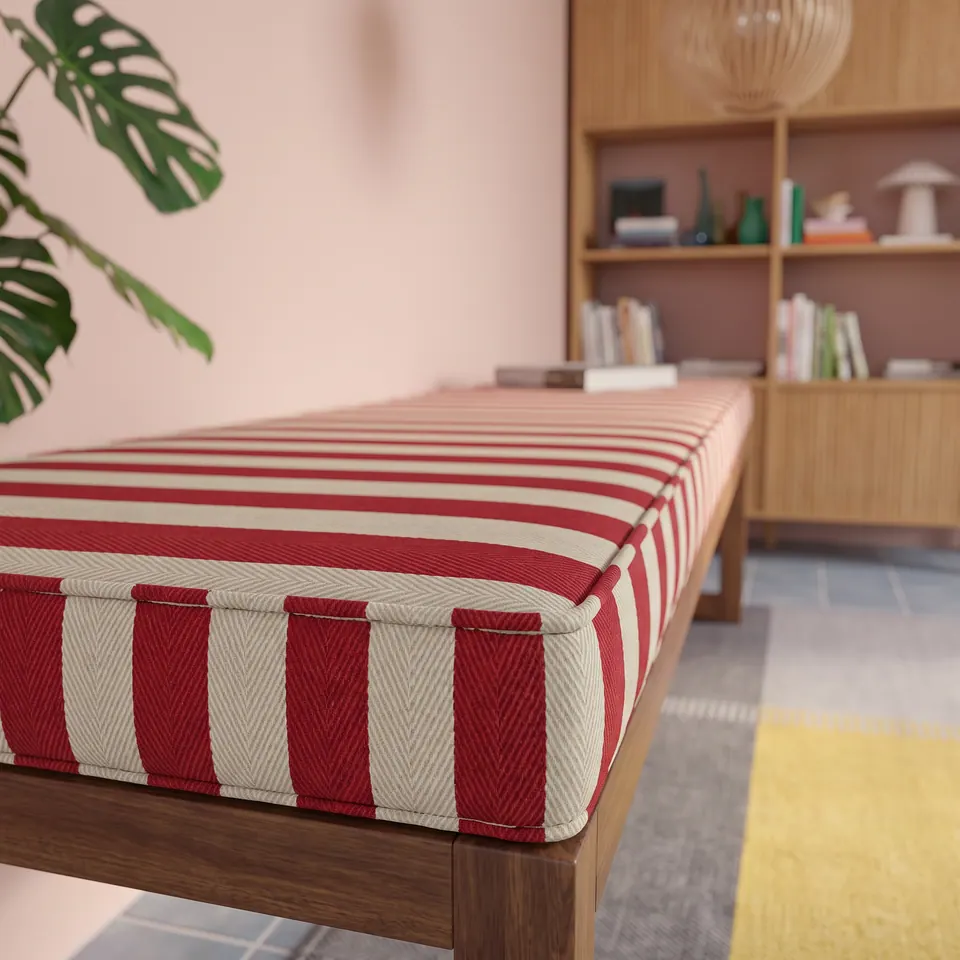
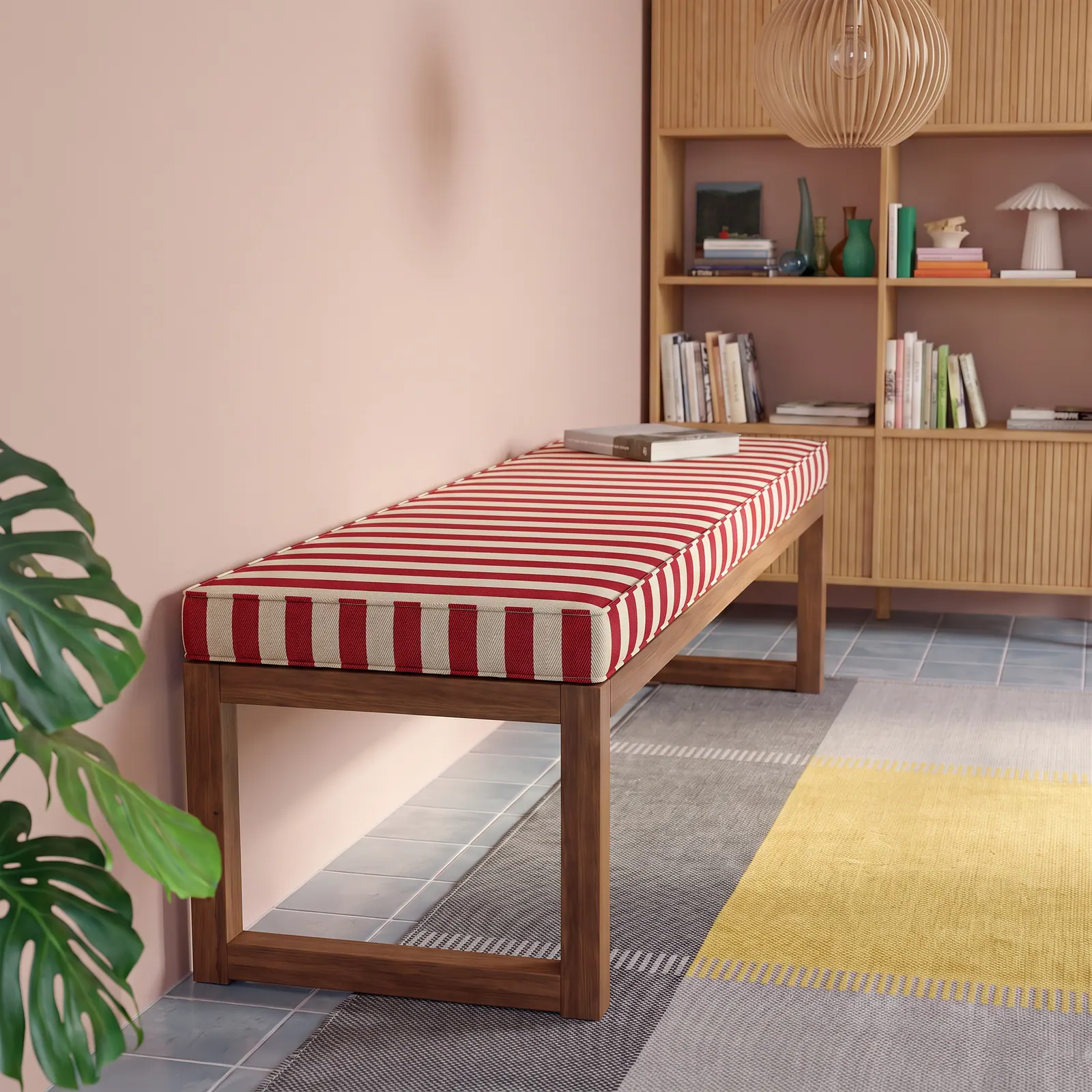
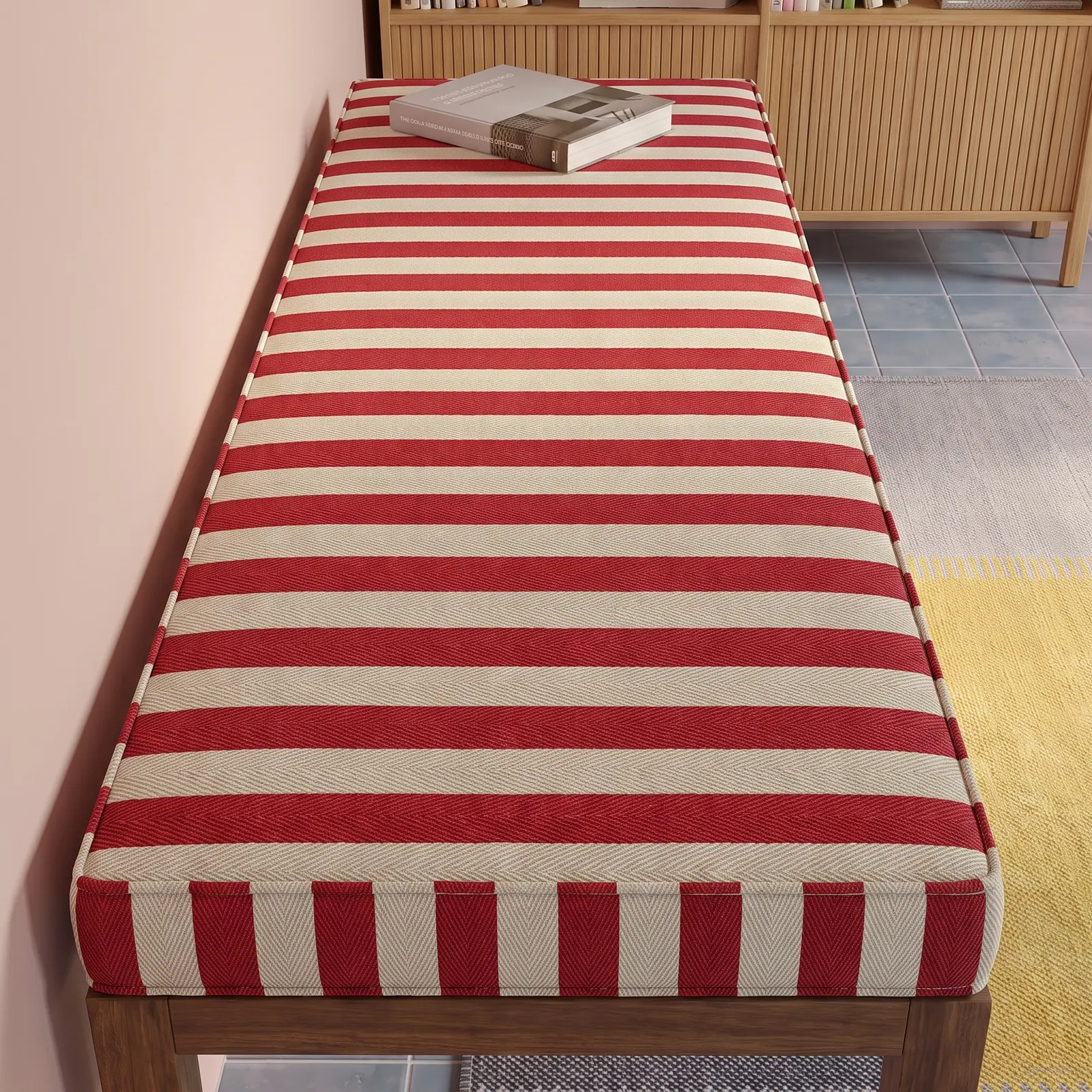
A red striped bench cushion on a walnut bench, and why every prop around it is there
A letter about a freestanding bench against a blush wall, and the book, leaves, lamp and rug that keep its red stripe in tune.

 Save
The quick answer
A striped bench cushion on a freestanding bench should carry its stripe around all four side bands, because the bench is seen from every angle. Then style it with few props: one book for scale, greenery in front for depth, dark wood below to ground the color, and a cooler rug so warm red on a blush wall does not overheat.
New Orleans ·
My friends,
A letter about a red stripe and the company it keeps
The first thing I read in this photograph is heat. Red and cream stripes against a blush pink wall are two warm notes played together, and a room like that tips into too much quickly. It does not, and every reason sits inside the frame.
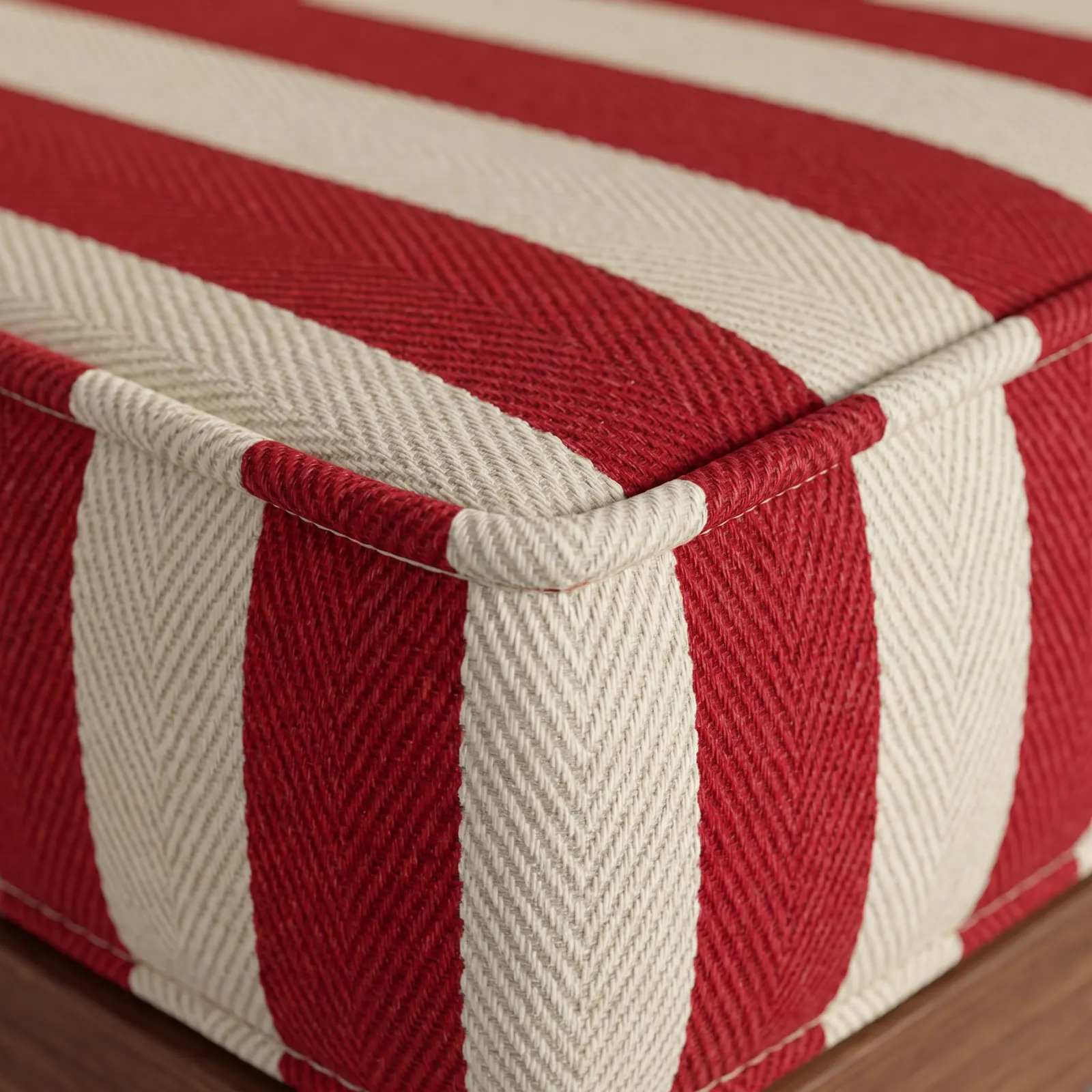
The bench is freestanding, open on every side, so the cushion is not a pad pushed against a wall. It is the top of a piece of furniture. That is why the stripe runs around all four side bands and meets at square box corners, and why the piping is cut from the same stripe: a contrast cord would draw a second outline around a pattern that already has plenty of lines. A striped bench cushion like this reads best cut to the frame's outer edges, not a finger's width inside them.
The light is warm and sunny, and the cream in the stripe takes it the way a page takes lamplight. Judge any red against your own wall in morning light, never on a screen; the striped cotton and ticking family is all woven stripes, so daylight tells the truth.
Pinned by Élodie
Five pins, from the stripe on top to the rug underfoot.
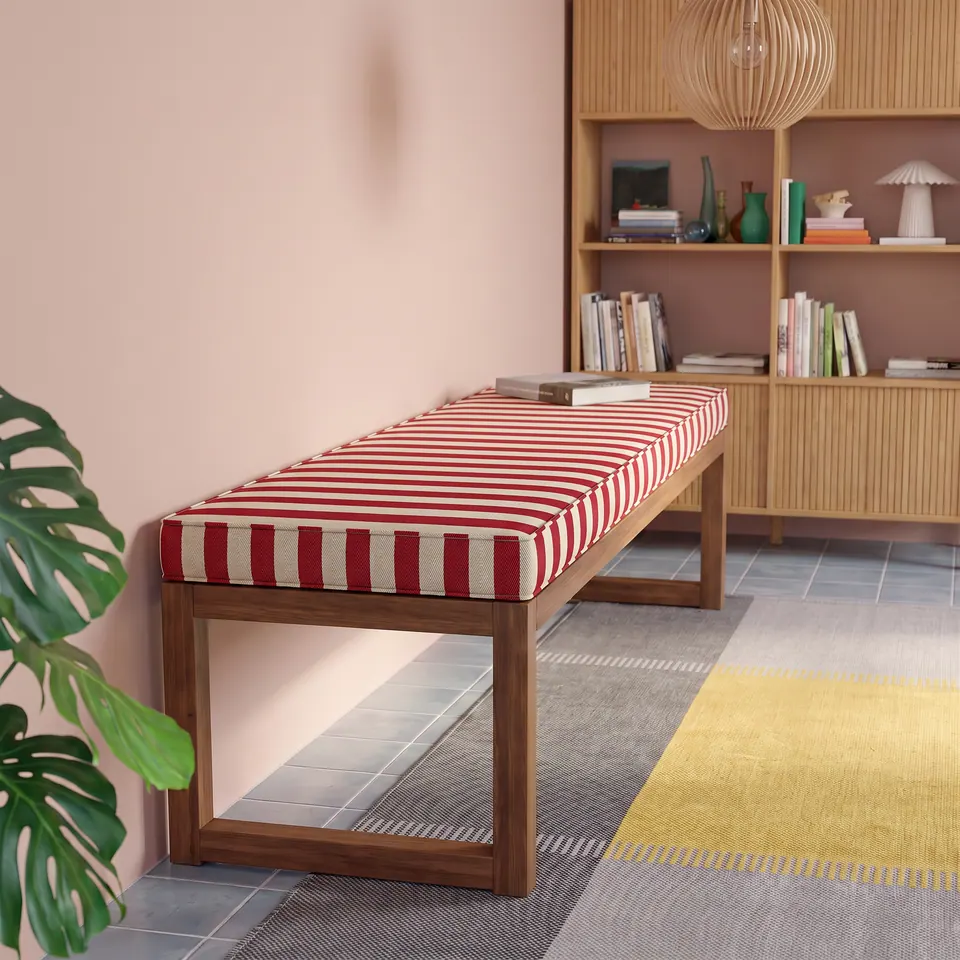
- Red stripe cushion
Stripes wrap all four sides because a freestanding bench is seen from every angle.
- Book on top
A single book gives scale to a long, generous box cushion.
- Walnut frame
Dark wood grounds the bright stripe against the pale pink wall.
- Monstera leaves
Foreground greenery adds depth and a cool contrast to red and pink.
- Color-block rug
Gray and yellow blocks calm the warm red with a cooler base.
- Red stripe cushionStripes wrap all four sides because a freestanding bench is seen from every angle.
- Book on topA single book gives scale to a long, generous box cushion.
- Walnut frameDark wood grounds the bright stripe against the pale pink wall.
- Monstera leavesForeground greenery adds depth and a cool contrast to red and pink.
- Color-block rugGray and yellow blocks calm the warm red with a cooler base.
Every prop in the room, and the job it does
- The walnut frame. Dark wood under a bright stripe is the anchor. Without it, red on pink would float.
- One hardback book. A single book gives a long box cushion its scale and says the seat is for sitting.
- Monstera leaves in the foreground. Green is the cool answer to red and pink, and leaves in front push the bench back, so the picture gains depth.
- The gray and yellow rug. Gray blocks cool the red at floor level; yellow keeps the sunny mood without adding heat.
- Fluted oak shelves, glass vases, a white mushroom lamp, a woven globe pendant. Pale wood, glass, white and rattan are quiet textures. They fill the wall behind the bench without competing.
- Blue matte floor tiles. The one cool color underfoot, and the reason the room still feels fresh.
To copy it, choose one warm pattern for the cushion, then give it a cool partner at floor level, one green thing in front and one object on the seat. Let one color speak and the others listen. What is the one object you would set on yours? More ideas live under bench cushions and living room cushions.
The blue piping that could not come from the stripe
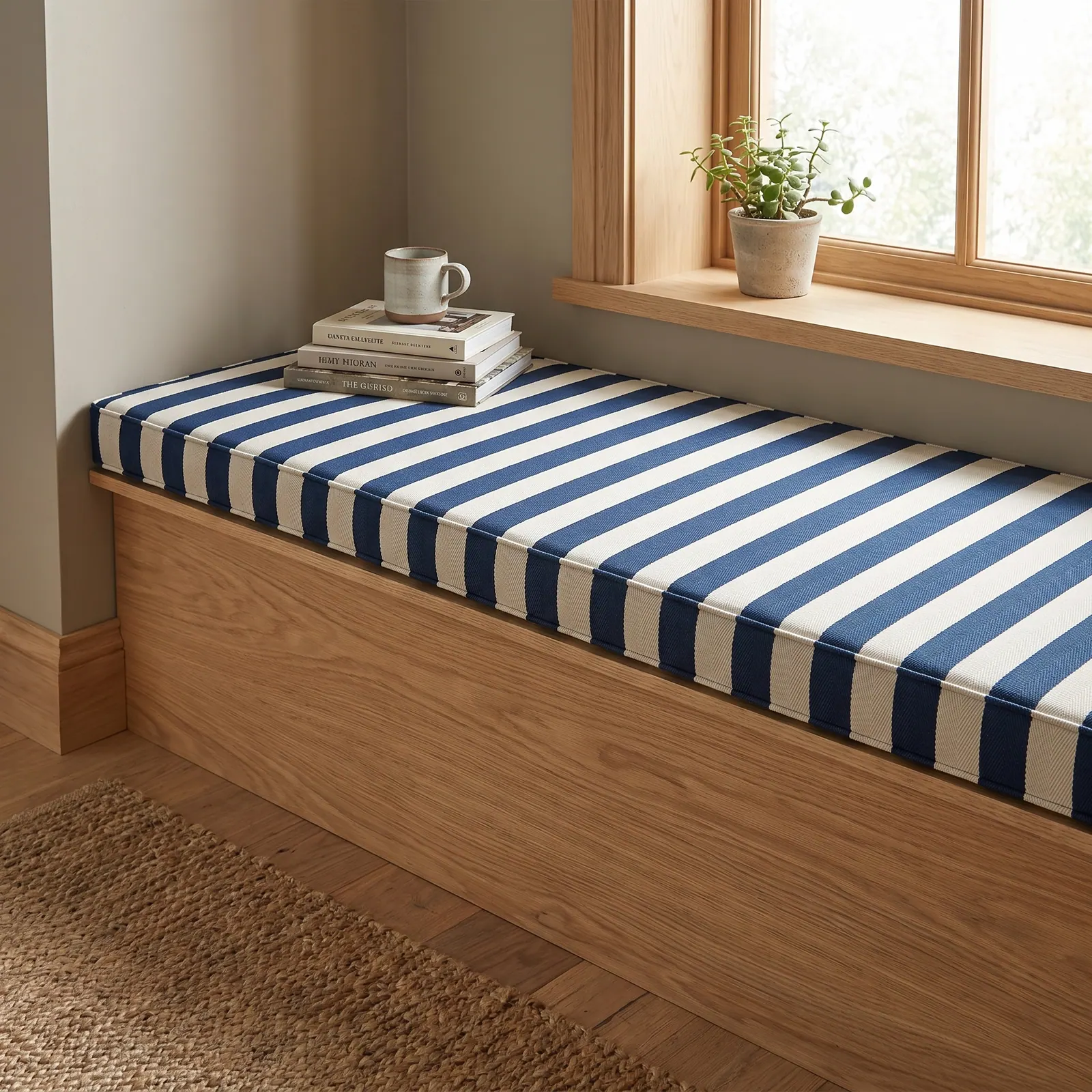
A buyer got in touch having chosen a striped cotton for a bench cushion, in love with the blue in it. The wish: piping in that same solid blue, cut from the stripe itself.
The stripes were too thin. A welt cut from them would have come out striped, never a solid line. So the workshop laid solid fabrics beside the stripe in natural light, compared them by eye, and suggested a linen-look solid whose blue sat right with it. The buyer trusted that daylight match and approved it.
The lesson I keep: when a stripe is too thin to cut, take the piping from a solid fabric, and choose it by the window.
When a stripe is too thin to cut a solid welt from, take the bench cushion's piping from a solid fabric matched to the stripe in daylight.
Élodie
Spans, clipped corners and oversize benches: three common questions
- A common question
My daybed spans about 79 in (200 cm). How long should the backrest pillows be so they sit flush?
The workshop's answerBackrests are sized by splitting the full span, so they meet edge to edge. A 79 in (200 cm) span becomes two backrests of about 39 3/8 x 15 3/4 in (100 x 40 cm). Matching bolsters in one such set were 8 in (20 cm) in diameter and 37 3/8 in (95 cm) long.
- A common question
The two front corners of my seat are cut off at an angle. Can you make a pad in that shape?
The workshop's answerYes, through the custom-shape (trapezoid) listing. Upload a drawing with every edge measured, including how far each angled corner cuts in along both sides, and the cushion is sewn exactly to that drawing.
- A common question
My bench needs a cushion bigger than the largest size on the menu. Can I still order it?
The workshop's answerYes. Choose the largest size range, then write your real measurements or upload a drawing, because the cushion is made to your size, not the range. A very long piece may be priced like two units, as a 106 1/2 in banquette cushion once was, and still be sewn as one piece if you write 'make as one piece' in the order note.
On the cutting table
| Cushion in the photo | Box-edge bench cushion on a freestanding walnut bench |
|---|---|
| Fabric | Red and cream striped cotton, stripes woven in; indoor use |
| Piping | Self piping, cut from the same stripe |
| Stripe direction | On long cushions the stripe runs front to back by default; the roll is about 55 in (140 cm) wide |
| Pattern matching | Stripes are matched on one face only |
| Thickness options | 2, 3, 4 or 5 in (5 to 12.5 cm); 4 in (10 cm) is standard |
| Cover | Zippered and removable; wash at 86°F (30°C) on gentle, air dry |
| Best for | Freestanding benches seen from every side, in living rooms |

Have it made
Have this made — ask Élodie’s workshop
A fabric reads one way at noon and another at dusk. Mention your light, and the workshop will weigh it with you. — Élodie
Leave your details and the workshop will call you to confirm measurements, fabric, foam and piping. No prices, dates or payment on this page: it is a request, not an order.
Questions buyers ask next
Which way do the stripes run on a long bench cushion?
By default they run front to back, across the cushion, because the fabric roll is about 55 in (140 cm) wide. A long striped cushion may need a seam, and stripes are matched on one face only, so say in the order note if direction matters to you.
Is striped cotton a good choice for a living room bench?
Yes, indoors. The striped and ticking fabrics are cotton, 100% on most charts, with the stripes woven in rather than printed. They stain more easily than performance fabrics, so the zippered cover that washes at 86°F (30°C) earns its keep.
Can the piping be a different color from the stripe?
Yes. Piping is included at no extra charge and can match the body fabric or contrast with any code from any chart. With a thin stripe, a solid fabric matched in daylight usually gives the cleanest line around the edge.
With color and care — Élodie
Stripes in six rooms, from red pencil lines to sand pinstripe
 Save
 Save
 Save
 Save
 Save
 Save