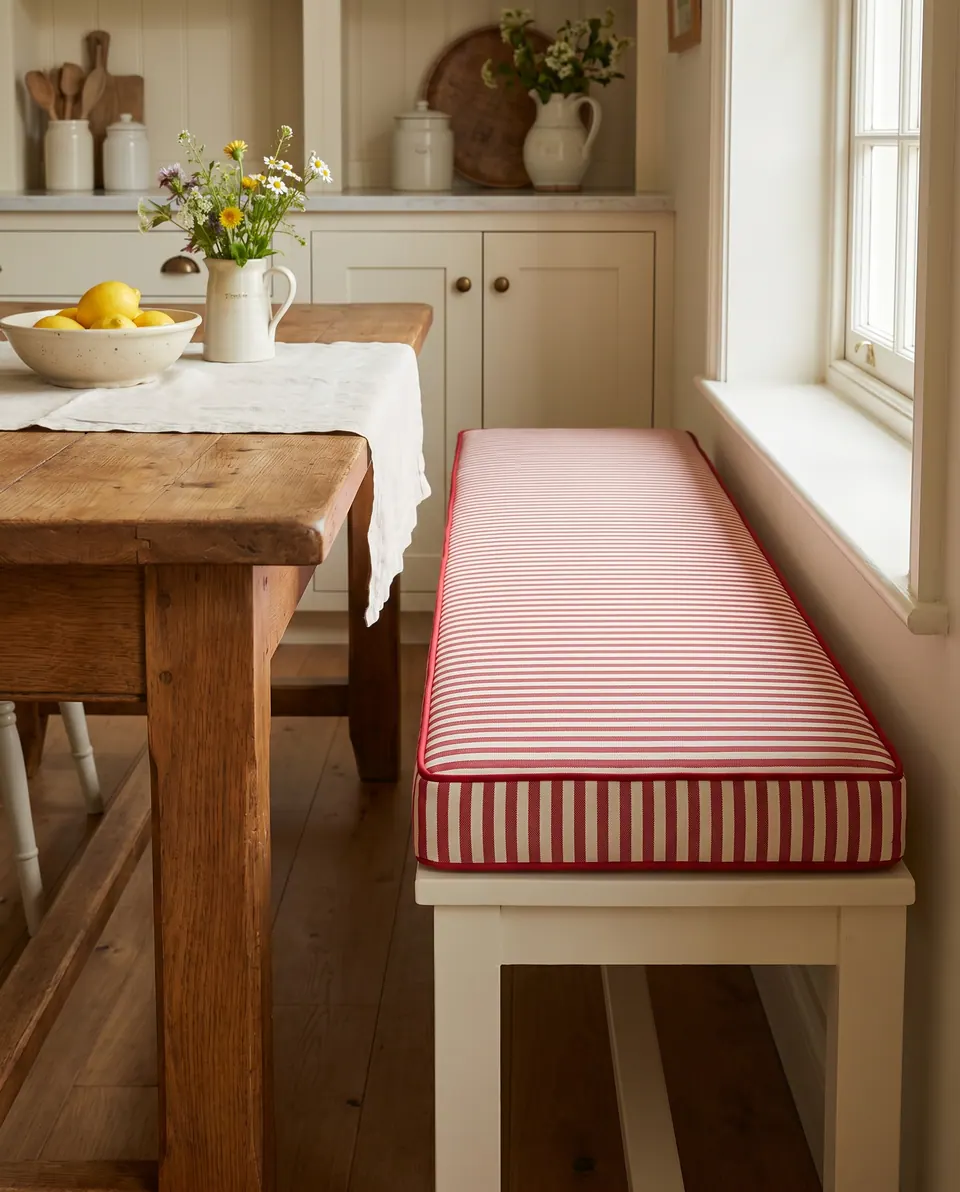
A Reading by HarlanBench Cushions
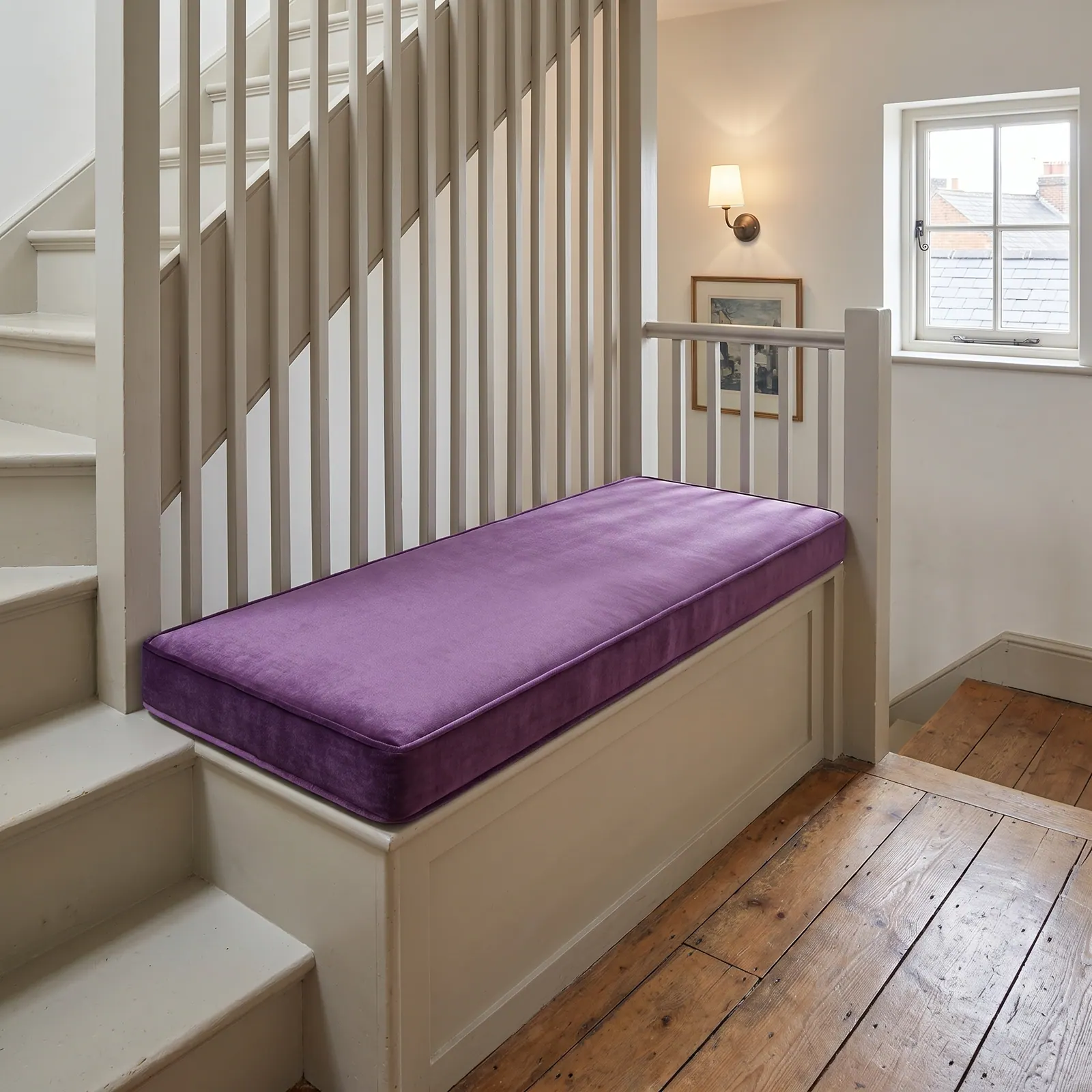
A purple velvet cushion on a stair-landing bench, and the measurements that make it fit
A painted box bench tucked between the stair treads and the balustrade. Purple velvet, self piping, a sconce overhead. Nothing fancy, and every inch of it spoken for.
The quick answer
Measure a stair-landing bench cushion from the bench itself, wood to wood, at the back and again at the front. Check the depth at both ends and note anything that rises above the seat, such as balustrade slats or a riser. Give exact sizes, write a non-standard thickness in the personalization note, and allow a handmade tolerance of about 1/2 to 1 in.

 Save
 Save
 Save
 Save
 Save
 Save
 Save
A seat boxed in on three sides
Some seats you can measure with one pull of the tape. A landing bench is not one of them. This one sits between the white stair treads and a slatted balustrade, so the cushion has walls and wood pressing on it from three sides. It had to be cut to a true rectangle that slips in tight against the slats and the riser, with no gap for a sock or a pencil to fall through.
Purple against cream paint and old pine should not work, but it does, because the landing is otherwise plain. The velvet is the only rich surface on it. Velvet remembers, and a pile like this one holds the light of the sconce along its front edge in the evening and the daylight from that little casement window in the morning.
The piping is self piping, the same purple, and that was the right call. The balustrade already draws a dozen vertical lines. A contrast welt would have added one more line to a place that has plenty. The wall sconce with its cream shade turns the seat into an evening reading spot, the framed landscape gives the eye somewhere to rest, and those wide pine floorboards warm up a cool purple from below. What presses against the edges of yours? Write it down before you pick up the tape. You can find more stair landing and understairs benches in the Concept Sketches.
Pinned by Harlan
Five pins, from the pine boards up to the sconce.
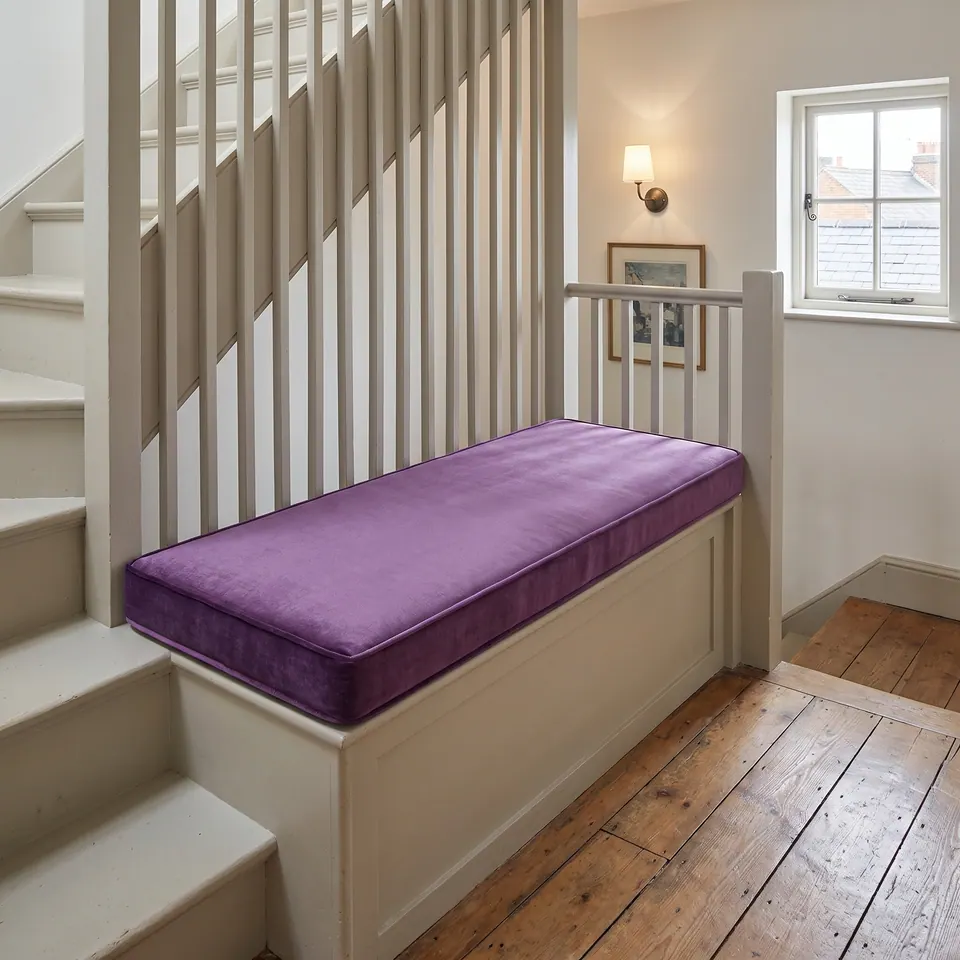
- Self-piped front edge
Same-color piping keeps the outline quiet among all the vertical slats.
- Purple velvet top
The velvet sheen is the only rich surface on a plain landing.
- Slatted balustrade
The cushion is cut to fit tight against the slats and the stair riser.
- Cream-shade sconce
A wall light turns the landing seat into an evening reading spot.
- Old pine floorboards
Warm pine balances the cool purple.
- Self-piped front edgeSame-color piping keeps the outline quiet among all the vertical slats.
- Purple velvet topThe velvet sheen is the only rich surface on a plain landing.
- Slatted balustradeThe cushion is cut to fit tight against the slats and the stair riser.
- Cream-shade sconceA wall light turns the landing seat into an evening reading spot.
- Old pine floorboardsWarm pine balances the cool purple.
Measuring a landing bench, and where folks go wrong
Measure the wood, not the old cushion
A tired cushion has spread and sunk. Measure the bench itself, wall to balustrade, to the nearest 1/8 in, and type the numbers out.
Take the length twice
Once against the back wall, once along the front edge. A seat squeezed between a wall and a balustrade can come out a hair different at each.
Take the depth at both ends
From the wall to the front edge, left end and right end. Write both down, even if they match.
Note what rises above the seat
Slats, a stair riser, a baseboard, a trim board. Anything the cushion has to tuck against belongs in your note.
Decide the front edge
Flush with the bench, or hanging over. An overhang of up to 2 in (5 cm) is common, but on a landing people pass close, so flush is often kinder.
Write the thickness in the note
If you want something off the menu, like 6 in (15 cm), put it in the personalization note. Then allow about 1/2 to 1 in of handmade tolerance.

Have it made
Have this made — ask Harlan’s workshop
Fabric has a temper and foam has a memory. Better to settle both in a conversation than to guess at them alone. — Harlan
Leave your details and the workshop will call you to confirm measurements, fabric, foam and piping. No prices, dates or payment on this page: it is a request, not an order.
Sit well. — Harlan