A Reading by HarlanCorner Floor Cushions & Poufs
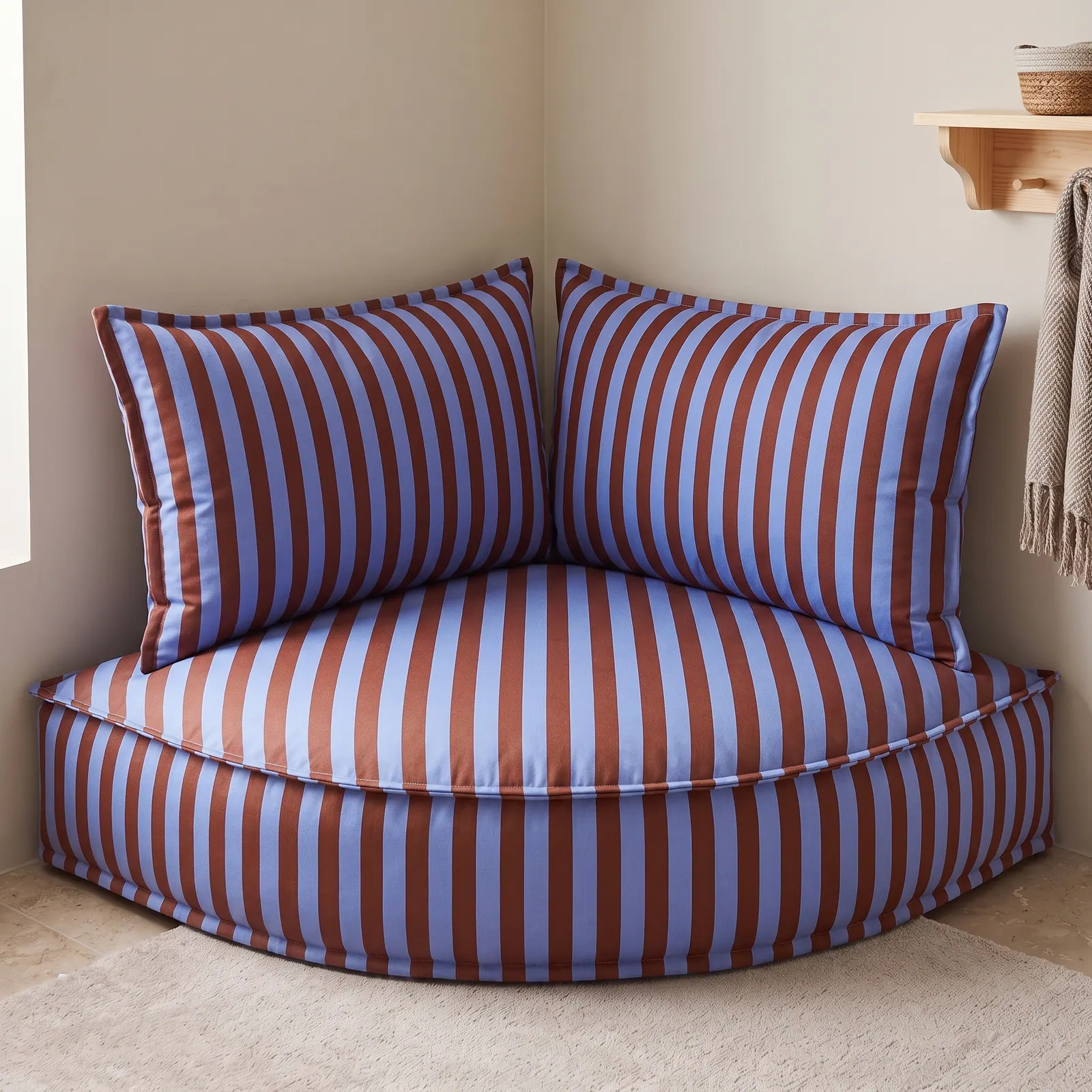
A striped corner floor cushion in a stone hallway, read seam by seam
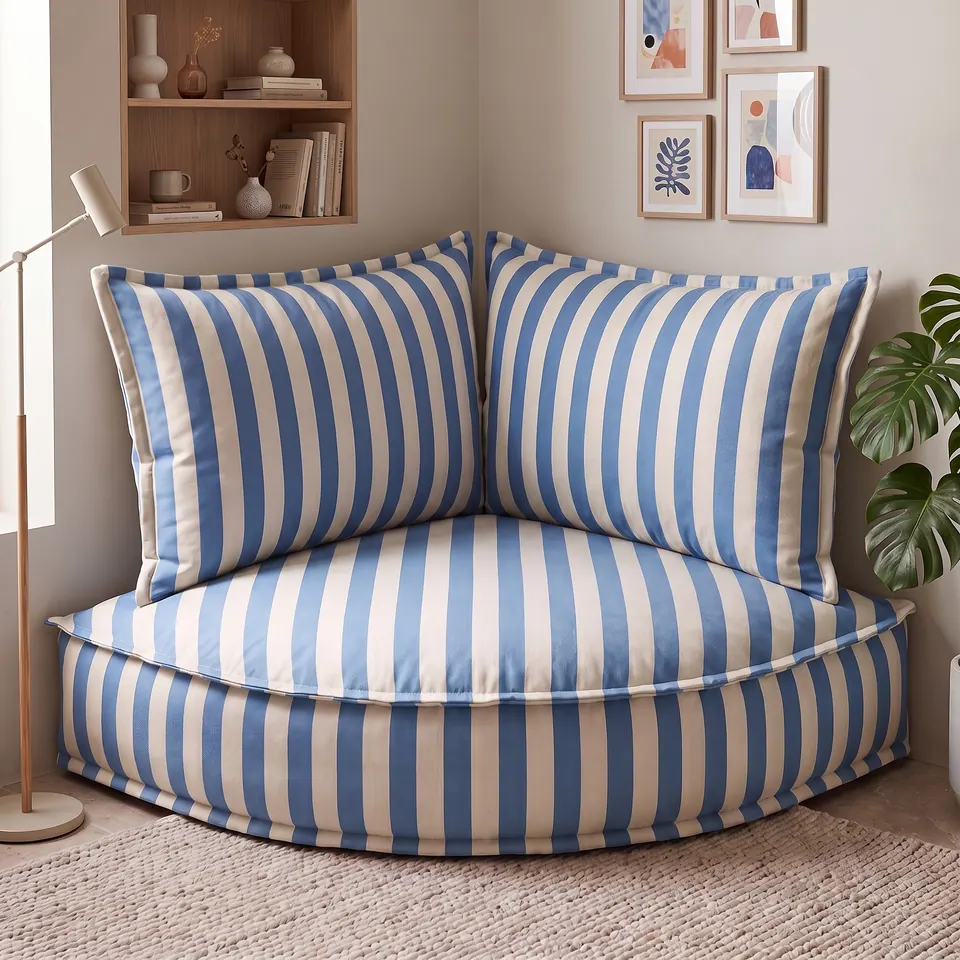
Hallways rarely get a seat. This one got a low corner cushion in periwinkle and rust, and the hand-work shows right where the stripes turn.

 Save
The quick answer
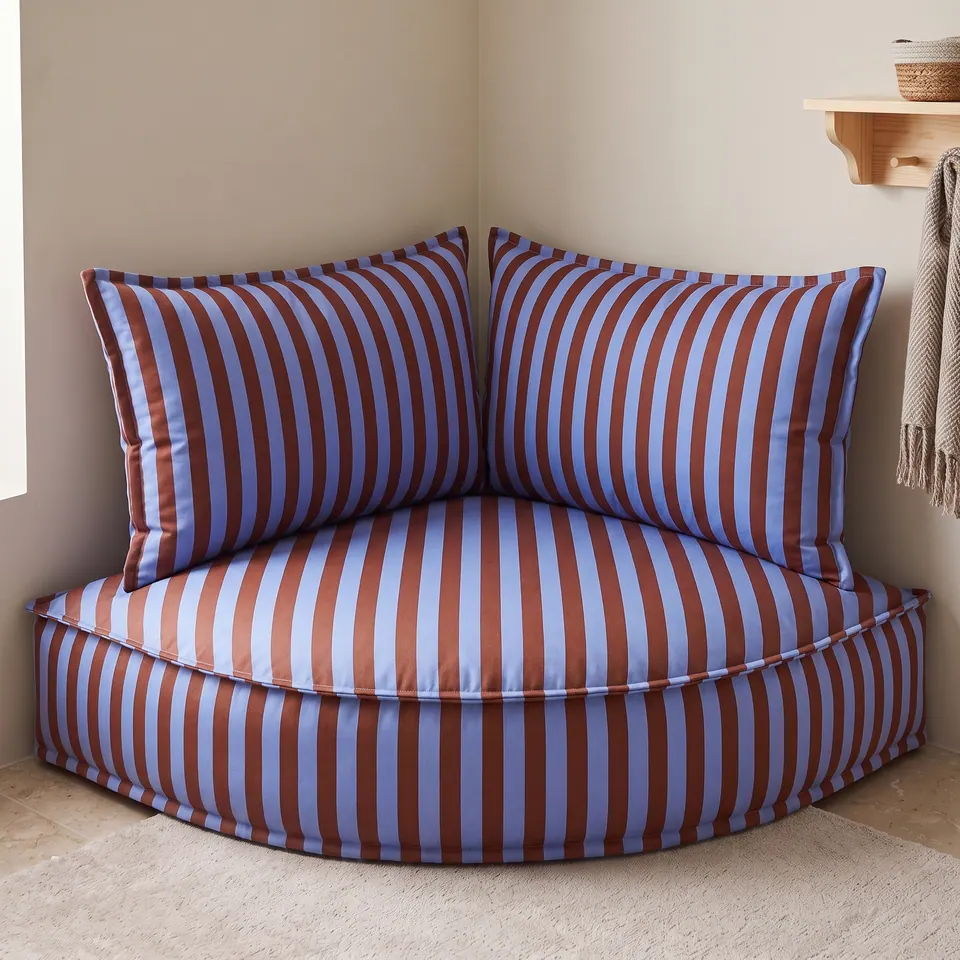
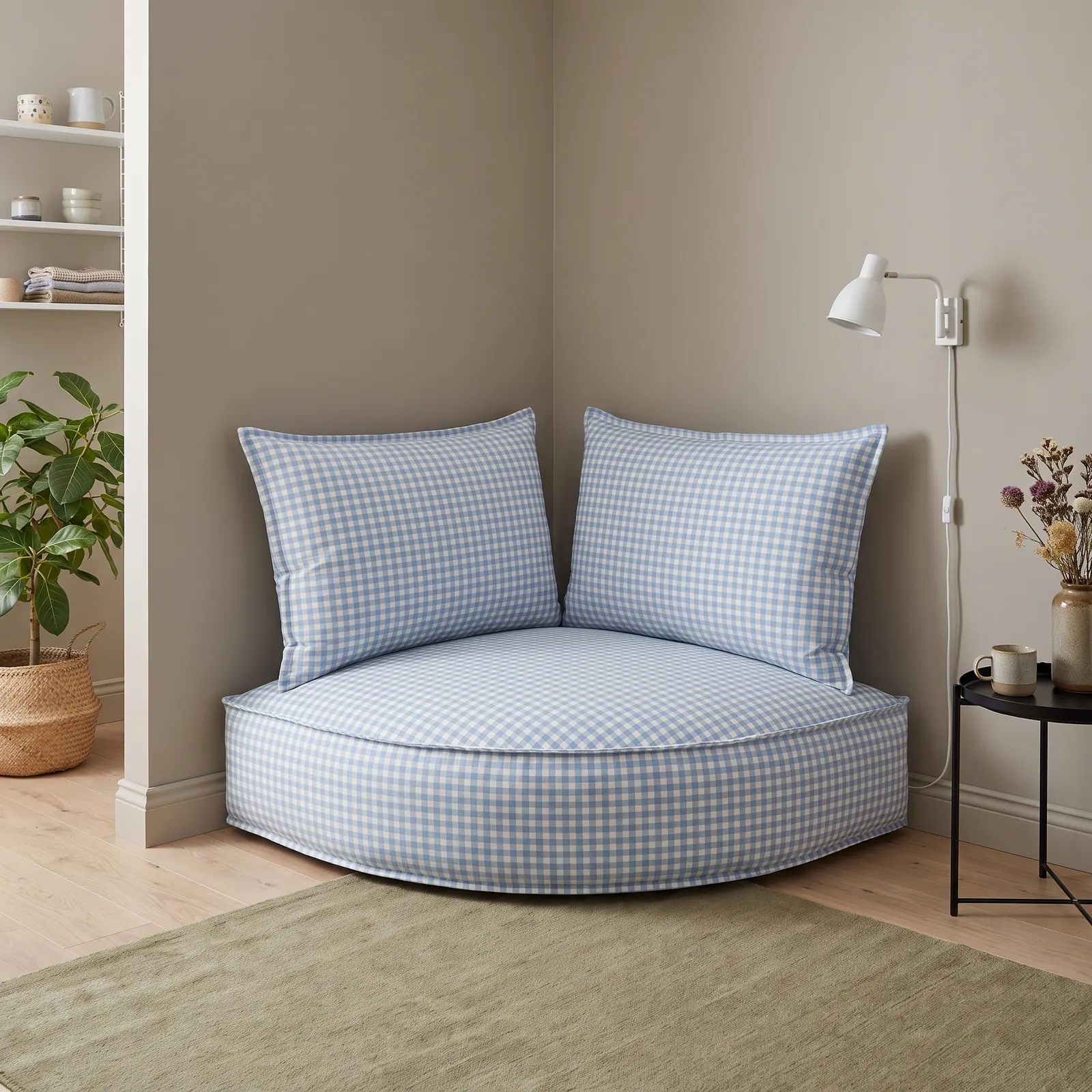
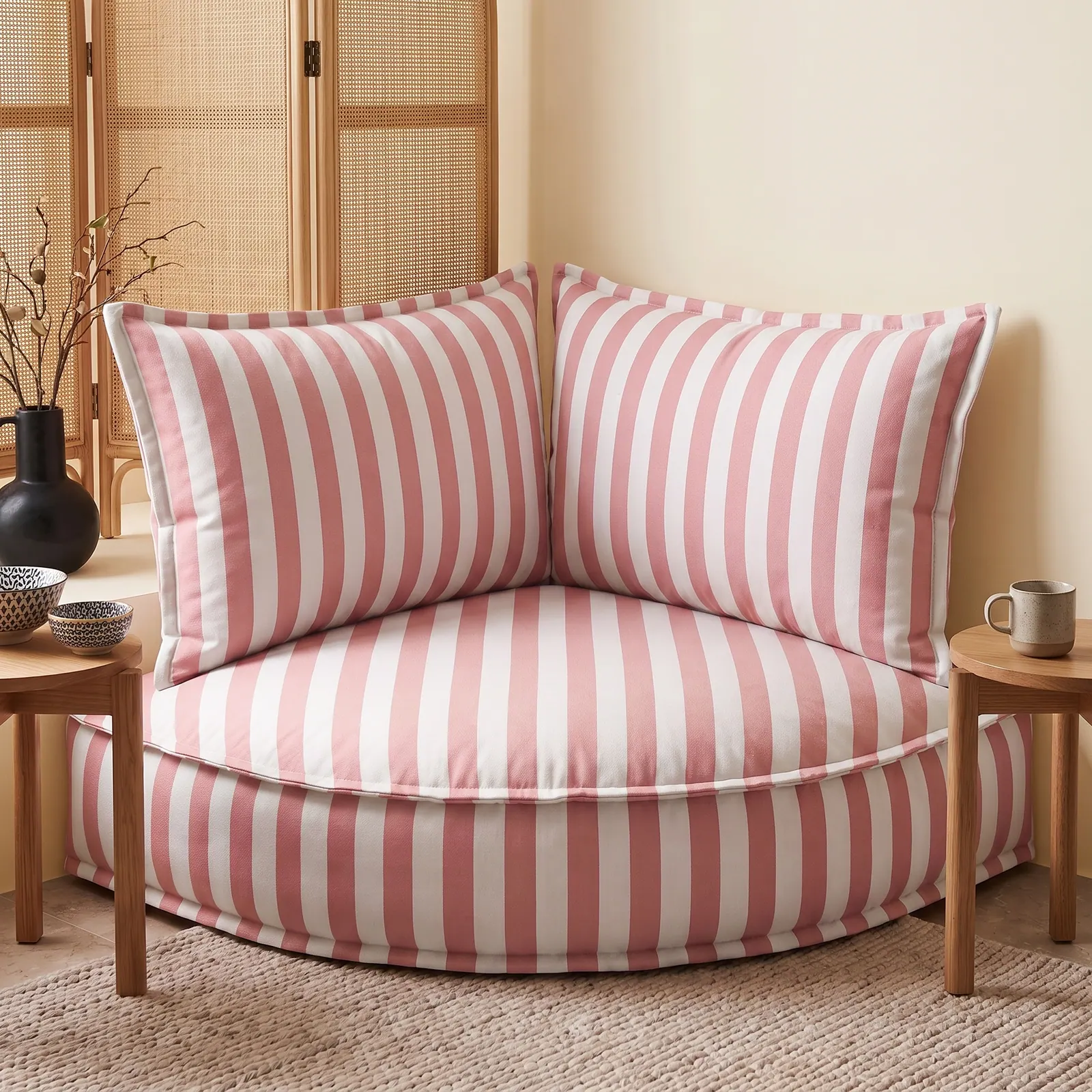
A corner floor cushion fits a hallway corner where a bench would block the path, and a thick one keeps you off cold stone or tile. In a stripe, the hand-finishing to look for is at the piping: the top stripes may fan out, while the side band stripes stand upright all the way around.
The cushion, cut open
Cover fabric. A removable, zippered cover. Machine wash at 86°F (30°C) on a gentle cycle and air dry.
Piping. A fabric-covered cord sewn into the seams. It sits on the seam line, so it does not change the size.
Fiber wrap. Polyester fiber (Dacron) batting around the foam: it fills the cover out and softens the edges.
Foam core. About 2.0 lb/ft³ (32 kg/m³) high-resilience foam, firm to medium-firm, cut to the ordered size.
Zipper. Along the back band, as hidden as possible. The zipper side faces down or toward the wall.
Base panel. The underside of the cover. A non-slip fabric backing can cover the whole of it instead.
Pinned by Harlan
Five spots where a hand made a choice.
- Pine peg rail
A peg shelf keeps a throw and basket off the floor next to a low seat.
- Fringed throw
An oatmeal throw hangs ready to pull down and adds a soft vertical.
- Periwinkle and rust stripe
Cool lilac-blue and warm rust balance each other so the stripe feels grown-up.
- Limestone tiles
Stone floors call for a thick seat that insulates from the cold.
- Piped seam
Piping lets the top stripes fan out while the side stripes stay upright.
- Pine peg railA peg shelf keeps a throw and basket off the floor next to a low seat.
- Fringed throwAn oatmeal throw hangs ready to pull down and adds a soft vertical.
- Periwinkle and rust stripeCool lilac-blue and warm rust balance each other so the stripe feels grown-up.
- Limestone tilesStone floors call for a thick seat that insulates from the cold.
- Piped seamPiping lets the top stripes fan out while the side stripes stay upright.
Reading the cushion from the floor up
Start at the floor, my friend, because that is where this cushion earns its keep. Limestone stays cold most of the year. A low seat over stone wants some thickness, or you feel the floor through it before the second boot is on.
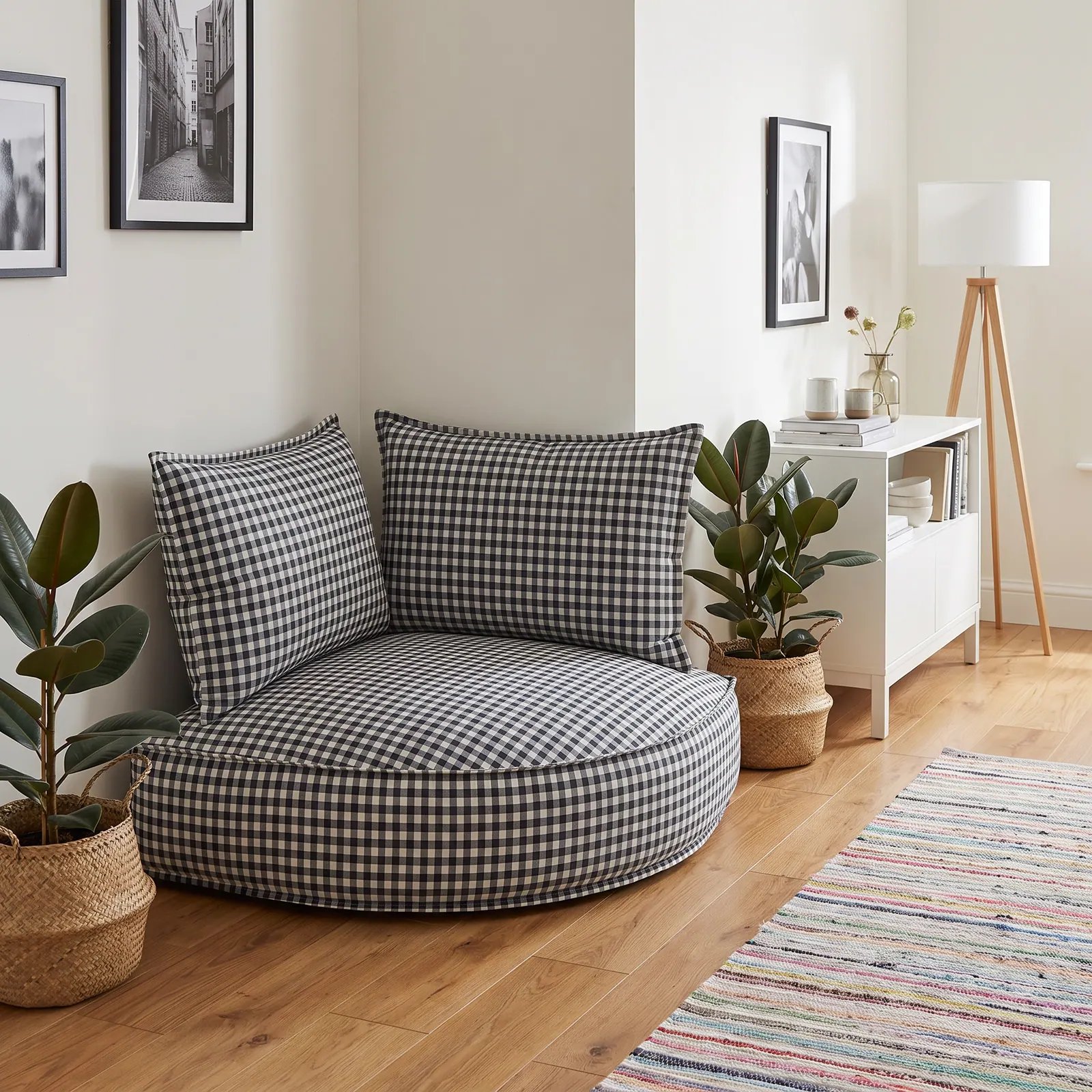
The cushion sits square in the corner, with two flanged backrest pillows leaning on the plaster. That is the whole trick of a corner floor cushion: it takes a spot a bench would block, and it gives you somewhere to sit and pull on shoes, the same job an entryway bench does.
The stripe is the clever part. A cool periwinkle beside a warm rust, so the cushion agrees with the pale plaster and the honey pine peg rail at once. The peg holds an oatmeal fringed throw, ready to pull down, and a small woven basket keeps gloves and keys off the shelf edge. A cream rug softens the way in. In a hallway, everything has a job.
Where the hand shows: the piping line
Look at the edge where the top meets the side band. The top stripes fan out, the side stripes stand straight up, and the piping sits between them like a hem between two directions. Without that piped seam, the turn in stripe direction would look like a mistake. With it, the turn looks meant. A seam is a promise.
Three details worth checking on any striped cotton cushion:
- The side band stripes line up where the band closes.
- The flange on each backrest pillow lies flat, with no ripple at the corners.
- The cover unzips and goes in the washing machine.
What corner of your entry sits empty right now?
The corner that was wider than the cloth
One buyer wrote in wanting a corner cushion in cream velvet, 52 3/4 in (134 cm) along each side. Handsome idea. The trouble was the roll: velvet comes off the bolt at a fixed width, and a corner that size could not be cut from one continuous piece.
A soft cream fabric just fit inside the limits, so that is what the workshop used. Roll width, about 55 in (140 cm), sets the ceiling on large one-piece corner cushions. Ask about it before you fall in love with a size; the corner cushion sizing Pattern has the rest.
A one-piece corner floor cushion is limited by the fabric roll, about 55 in wide, which is why a 52 3/4 in corner could not be cut from velvet.
Harlan
What folks ask about floor seating
- A common question
How many metal bars come with the floor sofa, and can I buy the frame on its own?
The workshop's answerFour identical metal support bars: two on the sides and two on the back. The bars aren't sold on their own, only as replacements or with a backrest purchase.
- A common question
How easy is the fabric to clean?
The workshop's answerThe covers come off and go in the washing machine. That is the workshop's answer to stain worries across its sofas, poufs and floor cushions.
- A common question
Can I see a finished cushion in the color I'm considering, not just a small swatch?
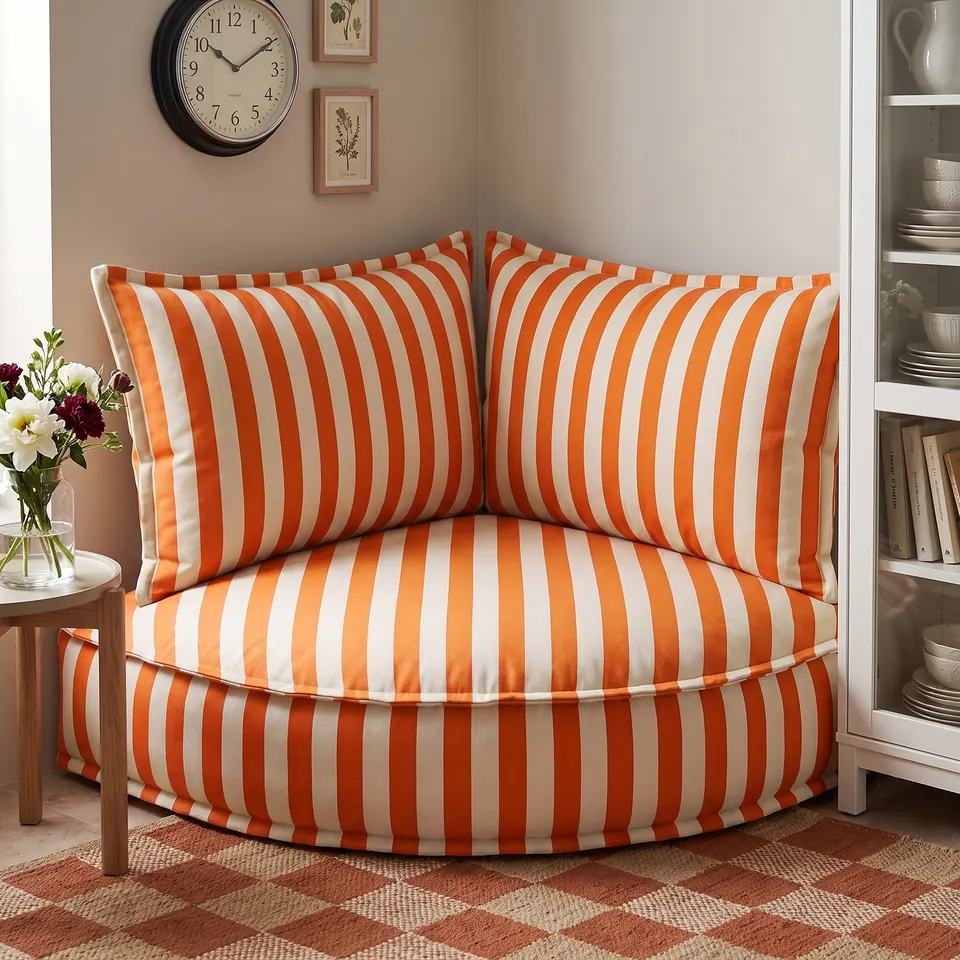
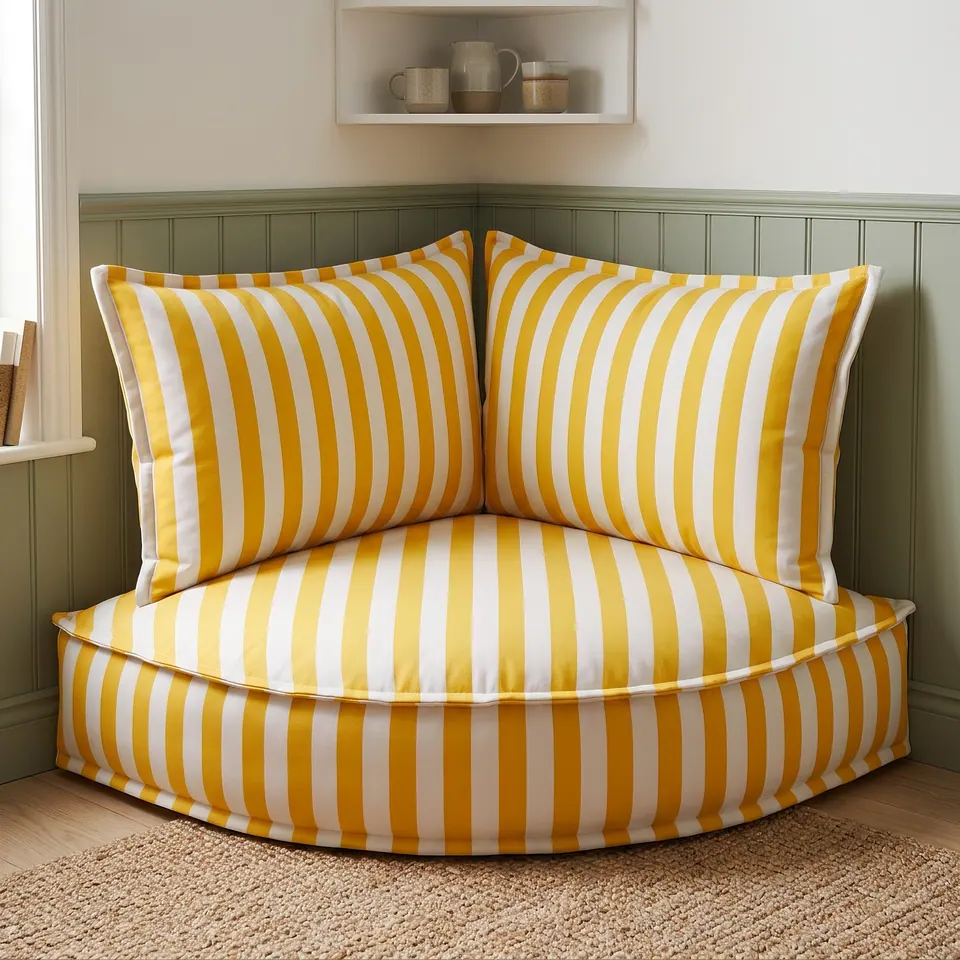
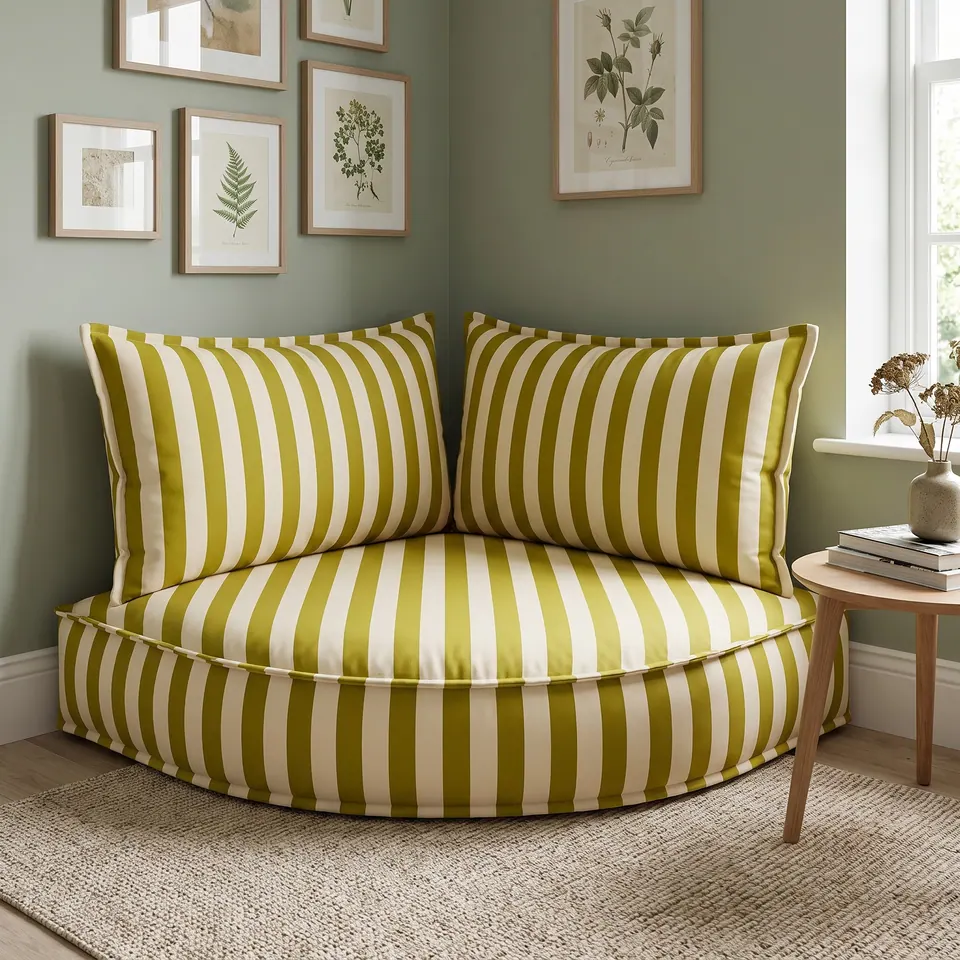
The workshop's answerYes. The workshop sends photos of finished cushions in the colors you're weighing, from golden yellow and olive to smoke, mint, beige or red, and can mail a physical sample too.
On the cutting table
| Cushion | Corner floor cushion with two backrest pillows |
|---|---|
| Fabric | Striped cotton, periwinkle blue and rust |
| Piping | Self piping where top and side stripes meet |
| Edge | Box edge, side band stripes upright |
| Foam | About 2.0 lb/ft³ (32 kg/m³) high-density |
| Cover | Removable, machine washable |
| Size limit | One piece up to the roll, about 55 in (140 cm) |
| Best for | Entry corners over stone or tile |

Have it made
Have this made — ask Harlan’s workshop
Old upholsterers will tell you the real cutting happens in the conversation, long before the shears come out. Tell the workshop what you sit on, and they will talk it through with you. — Harlan
Leave your details and the workshop will call you to confirm measurements, fabric, foam and piping. No prices, dates or payment on this page: it is a request, not an order.
Questions buyers ask next
Why do stripes change direction between a cushion's top and its sides?
The top panel and the side band are cut as separate pieces. On a corner shape the top stripes can fan out while the band keeps its stripes upright, and the piping marks the turn so it reads as intended.
How thick should a floor cushion be over stone or tile?
Thicker than you would pick for a wood floor. Stone and tile stay cold, and a deeper layer of foam keeps the chill from reaching you. Thickness is made to order, so ask for more in a drafty entry.
Can a corner floor cushion be made in velvet?
Yes, within the roll width. Velvet comes in a fixed width, about 55 in (140 cm), so a very large corner may not fit in one continuous piece, and a different fabric may just fit.
Sit well. — Harlan
More photographs to read
 Save
 Save
 Save
 Save
 Save
 Save