 Save
- Plump back cushion
A full pillow fills the tall scrolled back.
- Box seat cushion
A firmer box sits inside the arms for support.
- Iron scroll arm
Black iron outlines the pale fabric so it never looks washed out.
- Trailing ivy
Ivy adds a natural line that mirrors the scrolls.
- Scrolled chair back
The curved top shows why the back cushion is soft, not boxed.
Plate Seat and back chair cushions · pastel striped outdoor acrylic · self piping
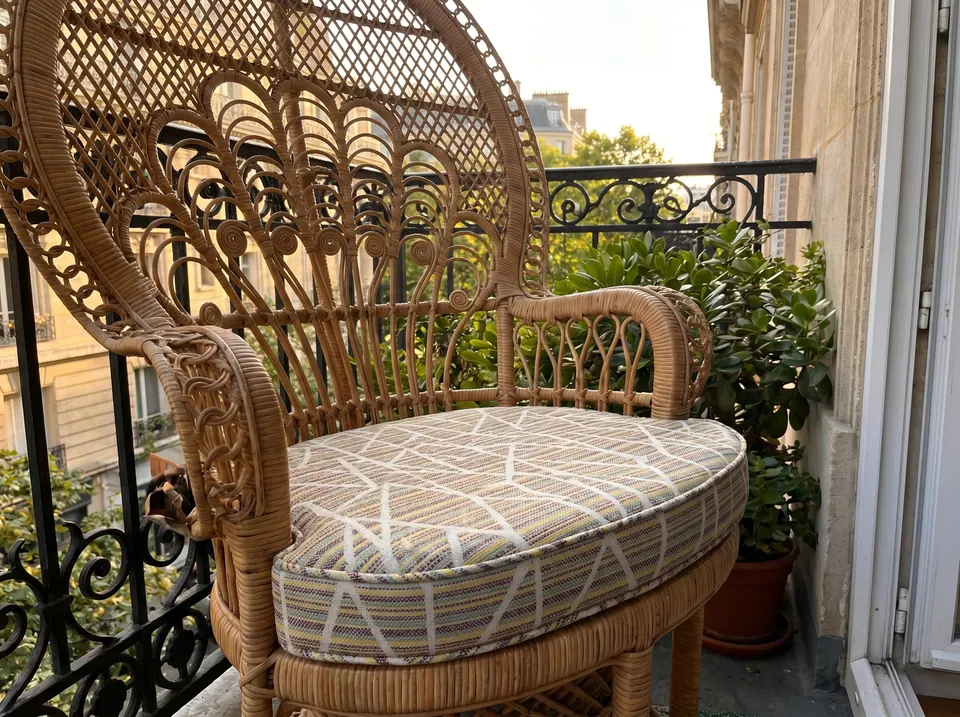
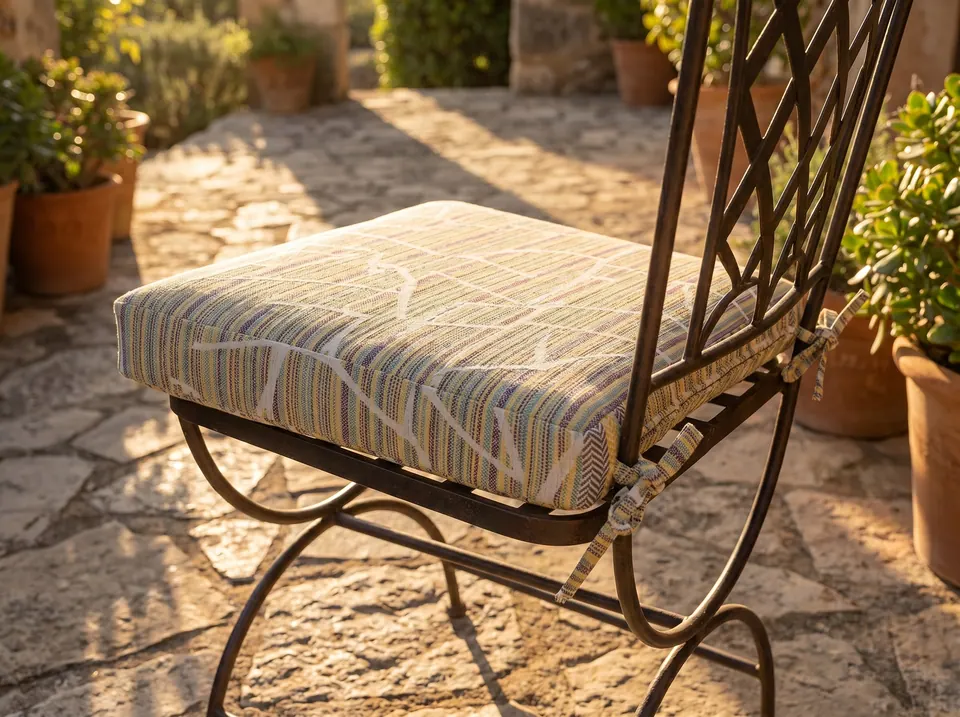
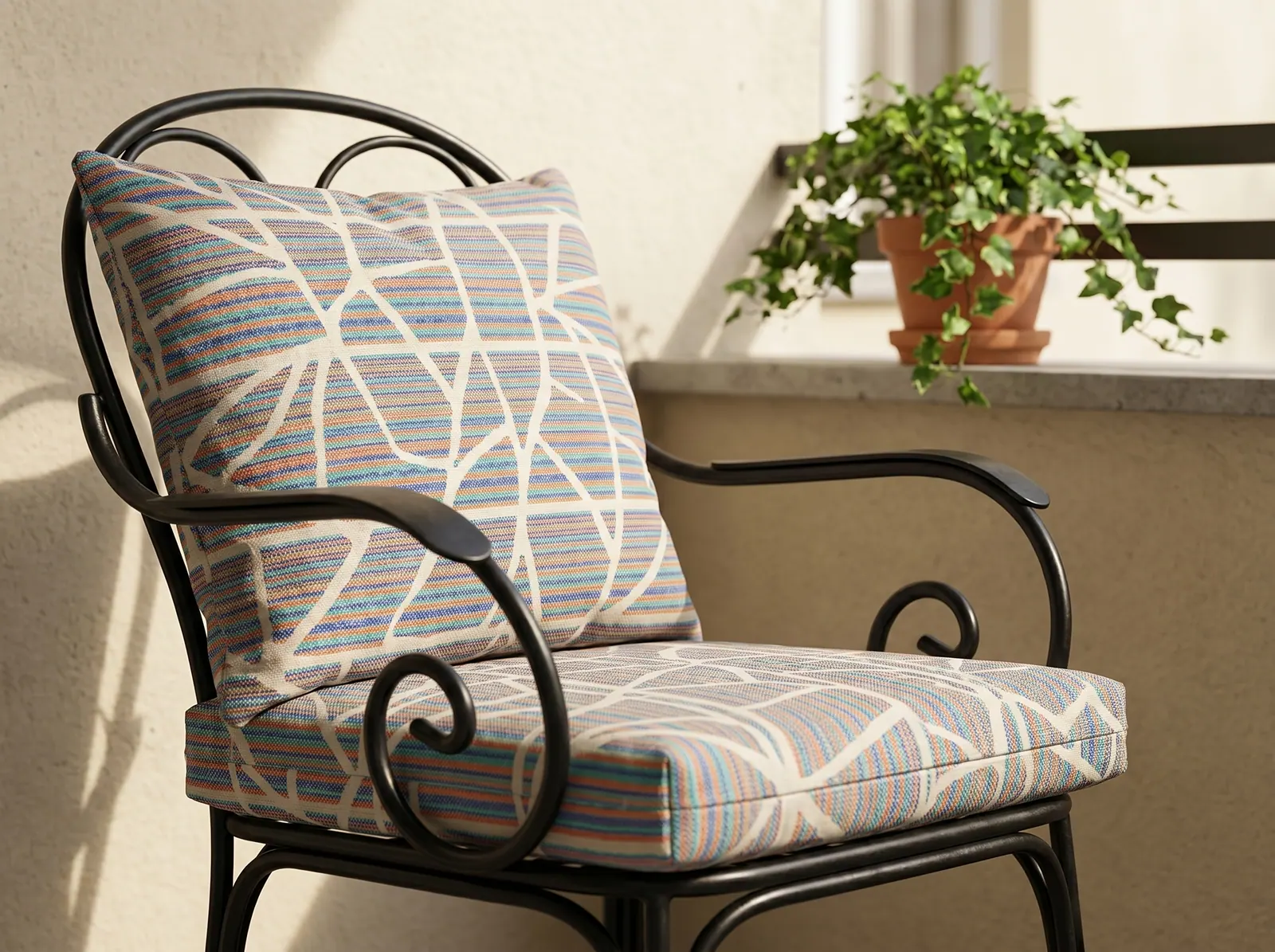
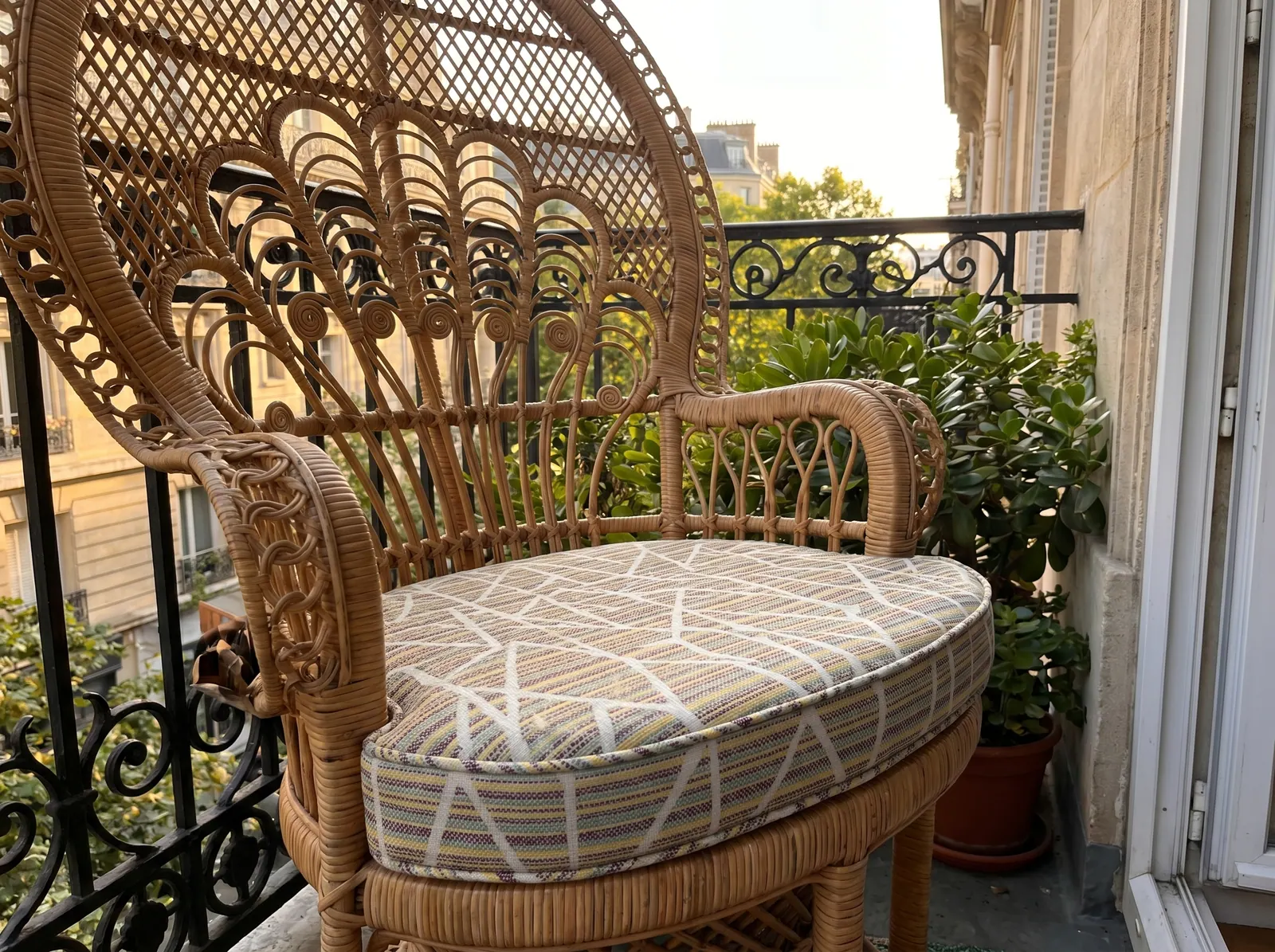
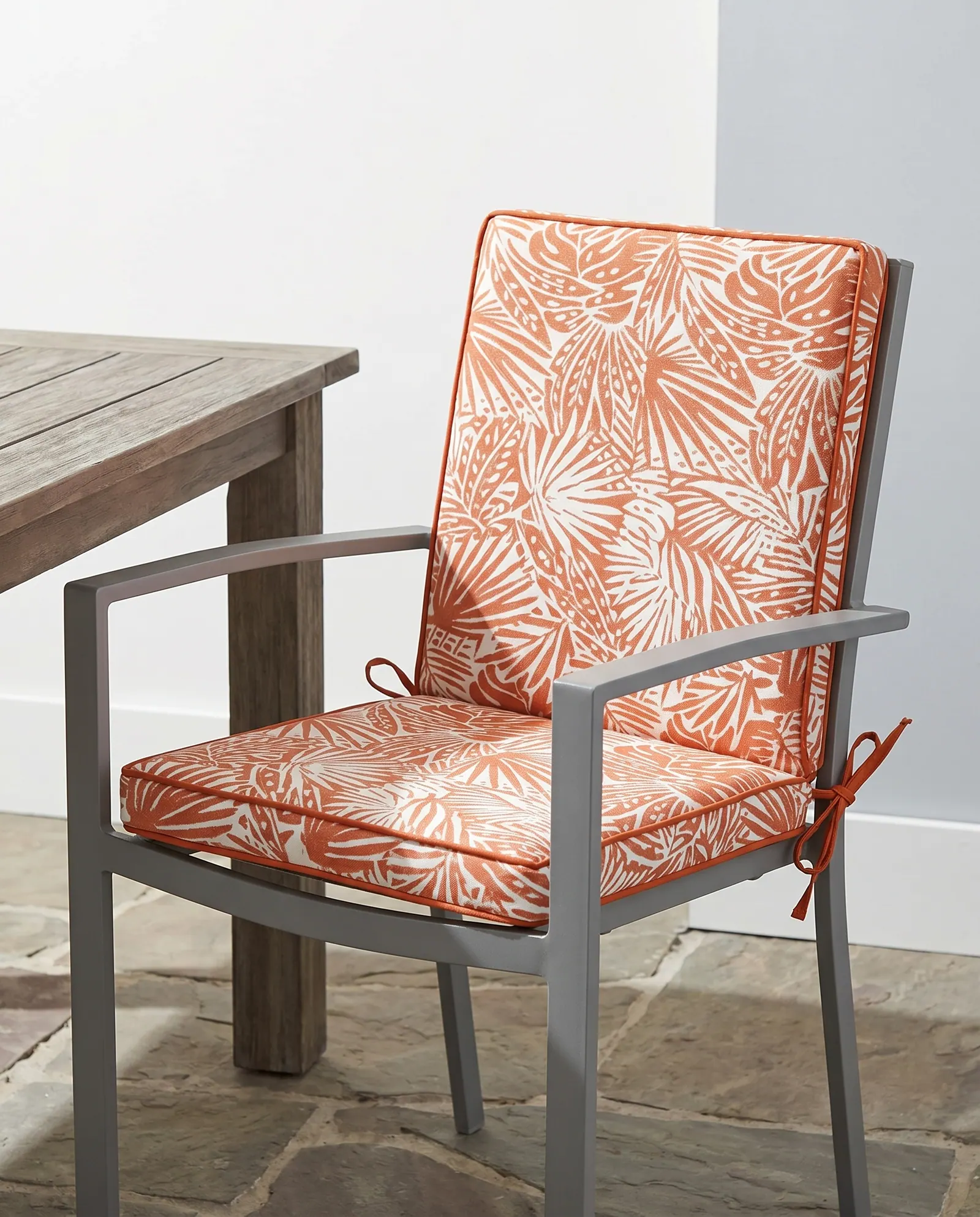
Pastel stripes crossed with white branch lines cushion a scrolled black iron armchair on a sunny balcony.
A Reading by MaggieDining Chair Cushions & Pads
Pastel stripe seat and back cushions on a black wrought-iron armchair
Two cushions, two different jobs, and a handful of finishing details you only notice when somebody skips them.

The quick answer
A wrought-iron armchair needs two different cushions: a firm box seat that sits inside the arms and a soft, plump back pillow that fills the curved scroll. Hand-finishing shows in three places: self piping sewn straight along the seat edge, stripes centered on both pieces, and box corners packed full. Order a shaped seat from a template, never as a rectangle.
Pinned by Maggie: five spots on the iron chair
Five pins, from the scrolled top of the chair to the box seat inside the arms.
The numbers match the pins on the plate.
- Plump back cushionA full pillow fills the tall scrolled back.
- Box seat cushionA firmer box sits inside the arms for support.
- Iron scroll armBlack iron outlines the pale fabric so it never looks washed out.
- Trailing ivyIvy adds a natural line that mirrors the scrolls.
- Scrolled chair backThe curved top shows why the back cushion is soft, not boxed.
A box below, a pillow above, and why
I once made a back cushion for a scrolled iron chair as a neat, square box. It sat in the curve like a brick in a birdcage. I have not made that mistake twice.
Look at this chair instead. The back is a full, plump pillow, soft at the edges, because the top of the frame curves and a boxed cushion would leave a gap at each shoulder. The seat is the opposite: a firmer box that sits inside the arms, square at the front, so you are held up rather than swallowed.
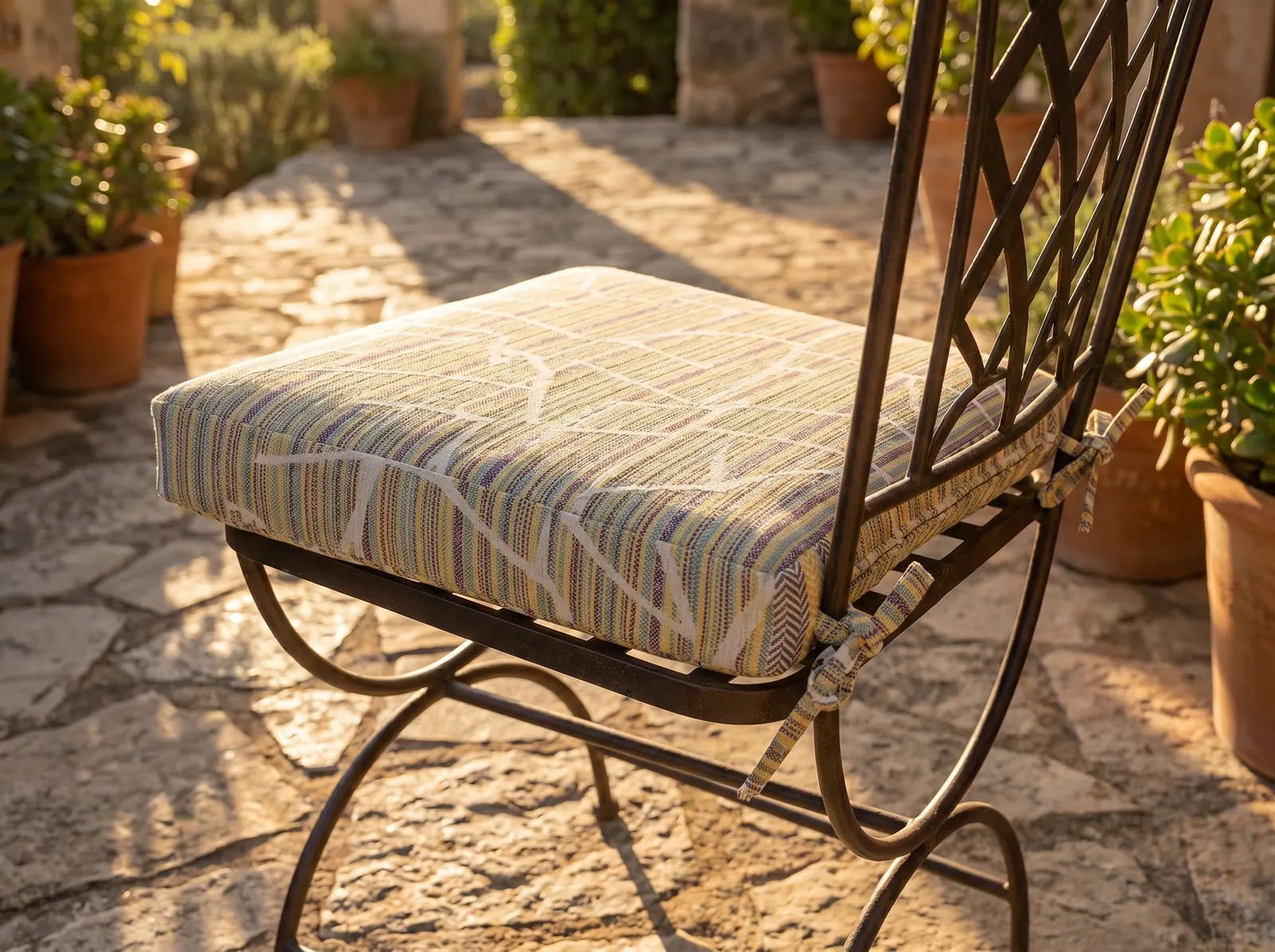
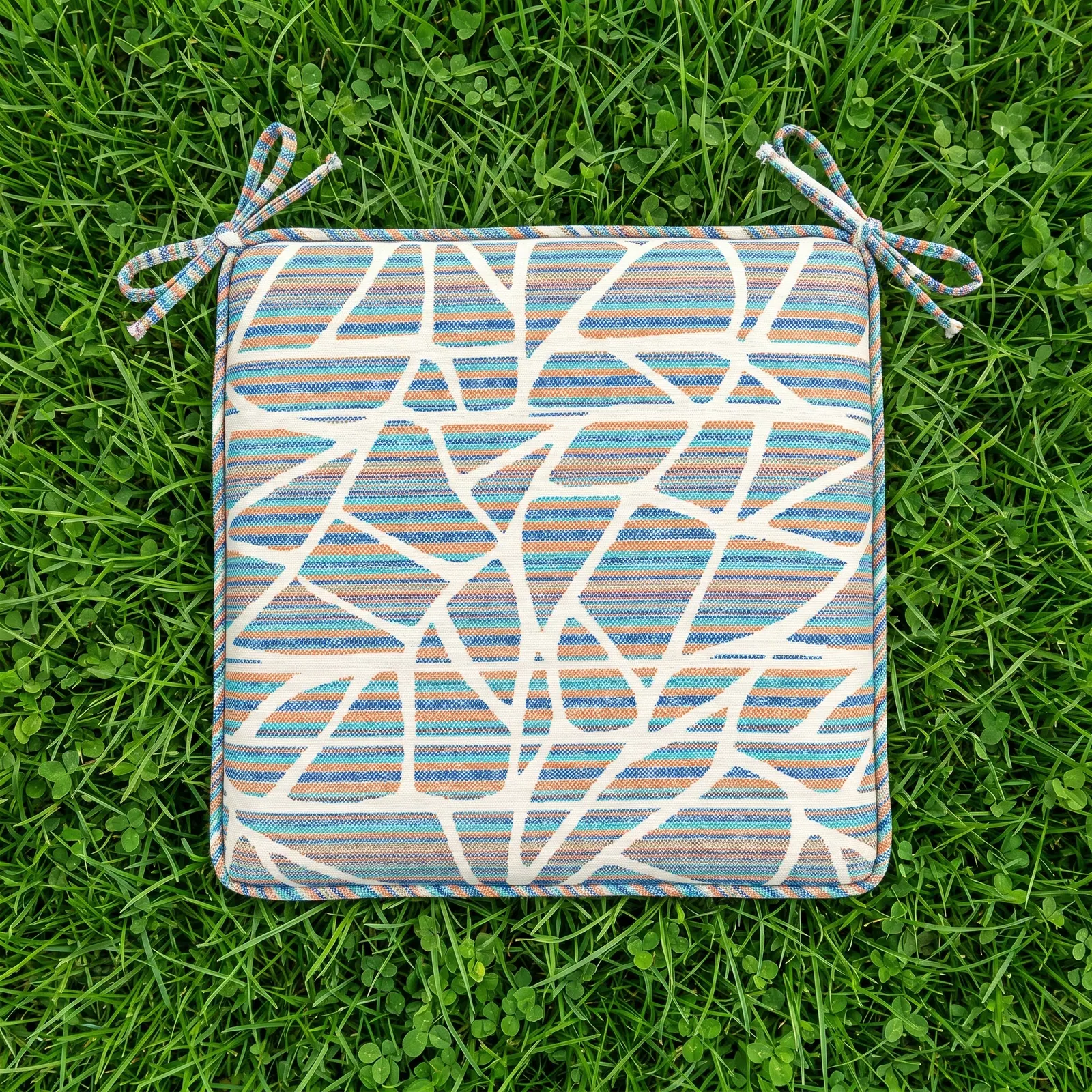
The fabric is a pale multi-stripe of powder blue, coral, yellow and white, crossed with thin white branch lines, in outdoor acrylic. On a white chair it could look washed out. Against black iron it looks crisp, because the frame draws the outline for it. Late sun on warm plaster does the rest.
The trailing ivy in its terracotta pot on the ledge is no accident either. It is the one natural curve that answers the scrolls.
The cushion finishing nobody notices until it's missing
Hand-finishing is not a flourish. It is the short list of small things that decide whether a cushion looks tailored or bought. Here is mine, in order.
- Self piping, sewn straight. The welt is cut from the same stripe. A straight welt is a kind of honesty: if it wanders, everyone sees it, and on a stripe they see it twice.
- Stripes centered. The widest band runs down the middle of both seat and back, so the two pieces read as a pair.
- Full corners. On a box seat the corners are packed out, not slack. A hollow corner is the first thing to look tired.
- A zipper where nobody looks. The side can be named on the order, and the back edge is the usual answer.
- Something to hold it down. Painted iron is slick. Ties at the back corners or a non-slip base; see ties, non-slip base or Velcro.
The same list applies to dining chair cushions indoors and to every patio cushion outside.
A curved front, and a cushion made twice
A buyer wrote to the workshop about two armchairs with shaped seats. The measurements: 18 7/8 in (48 cm) across the back, 17 in (43 cm) down each side, a curved front of 22 in (56 cm), and 20 in (51 cm) deep at the center. Thickness, 4 3/4 in (12 cm).
The order came through the rectangle option, which cannot hold a shape like that. So the workshop canceled it with a full refund and asked for a reorder through the custom-shape option, with photos of the seats uploaded.
The buyer also asked about the non-slip base. It covers the whole underside, not a strip with a 4 in (10 cm) fabric border around it.
Then a production error. The workshop remade both cushions from scratch before they shipped. I would have done the same, dear. A seat that is nearly right is still wrong.
The lesson: Shaped seats belong on a custom-shape order; the old cushion is the best template.
Buyer questions: a seat pad by the numbers, a zipper on one side, velvet depth
- A common question
What would a medium-firm seat pad of about 24 x 22 3/4 in (61 x 58 cm), 2 3/4 in (7 cm) thick, come to?
The workshop's answerA pad like that is quoted straight from those three numbers and the firmness. Send the length, depth and thickness, say medium-firm, and the price comes back for that exact size.
- A common question
If my cushion has a zipper, can it go on one particular side only?
The workshop's answerYes. Two custom cushions, 21 x 23 in (53 x 58 cm) and 21 x 27 in (53 x 69 cm), were made with the zipper on the 21 in side only. Name the side in your order note.
- A common question
How thick are your velvet seat cushions, and can I get four small ones?
The workshop's answerThe standard velvet seat cushion is 4 in (10 cm) thick, and the size can be changed. Four cushions of about 14 1/2 x 16 1/2 in (37 x 42 cm) were quoted in any fabric from the charts.
A scrolled iron armchair takes two cushions: a firm box seat inside the arms and a soft back pillow that follows the curve. A boxed back leaves a gap at each shoulder.
Maggie
On the cutting table: the balcony armchair
| Pieces | Seat cushion and back cushion, made as a pair |
|---|---|
| Seat | Firm box cushion that sits inside the arms |
| Back | Soft, plump pillow shaped to the scrolled top |
| Fabric | Pastel multi-stripe outdoor acrylic with white branch lines |
| Piping | Self piping cut from the same stripe |
| Frame | Black scrolled wrought-iron armchair |
| Hold-down options | Ties at the back corners, or a non-slip base across the whole underside |
| Best for | A balcony, porch or patio chair in full sun |

Have it made
Have this made — ask Maggie’s workshop
Numbers first, fabric second, piping last. Jot down what you have, and the workshop will go down the list with you, item by item. — Maggie
Leave your details and the workshop will call you to confirm measurements, fabric, foam and piping. No prices, dates or payment on this page: it is a request, not an order.
Questions buyers ask next
Should the back cushion on an iron chair be boxed or soft?
Soft, if the chair back is curved or scrolled. A plump pillow fills the curve and the shoulders. A boxed back cushion suits a straight, square frame, where its flat face can sit flush against the back.
How do I measure a chair seat that curves at the front?
Measure the back edge, each side, the front along the curve and the depth at the center, then add the thickness. Order it as a custom shape rather than a rectangle and send photos. The old cushion is the best template.
What is self piping on a cushion?
Piping covered in the same fabric as the cushion. It firms the seam and sharpens the edge without adding a new color, which suits busy stripes where a contrast welt would fight the pattern.
How do I keep a cushion from sliding on a metal chair?
Use ties at the back corners or a non-slip base. The non-slip base covers the whole underside, not just a strip, and it is a grip fabric rather than an adhesive.
Stitch straight — Maggie
More chairs and loungers in outdoor stripes
 Save
 Save
 Save
 Save
 Save
 Save