 Save
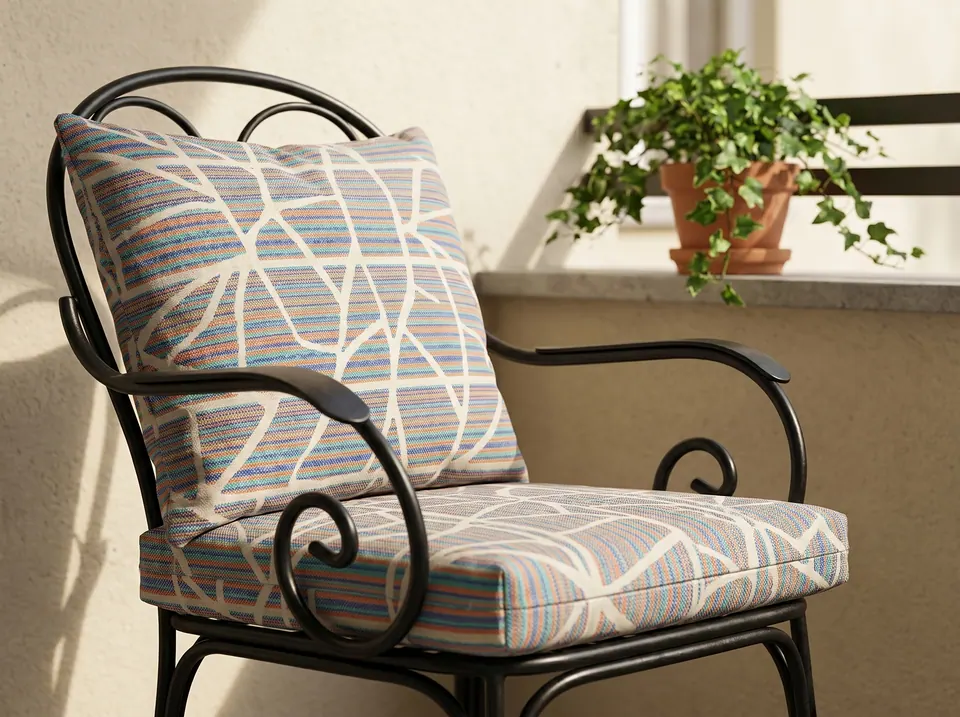
- Pastel seat pad
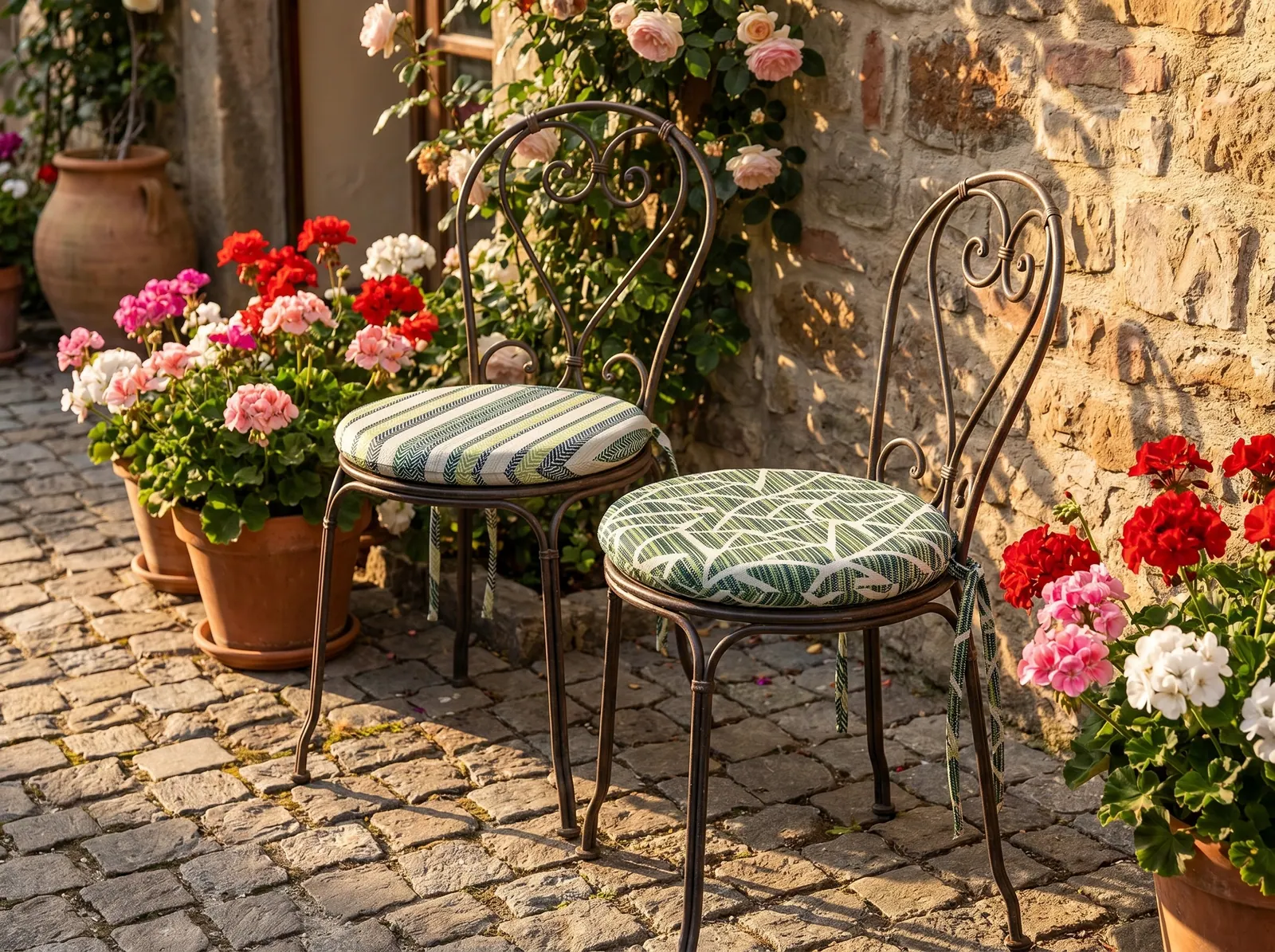
Soft pastels keep a dark iron chair from looking severe.
- Boxed front edge
A deep box front makes a thin iron seat feel generous.
- Ties in self fabric
Ties cut from the same cloth wrap the back uprights and disappear into the pattern.
- Lattice iron back
Diagonal ironwork echoes the white linework in the weave.
- Terracotta succulent pots
Terracotta warms the cool lilac and sage threads.
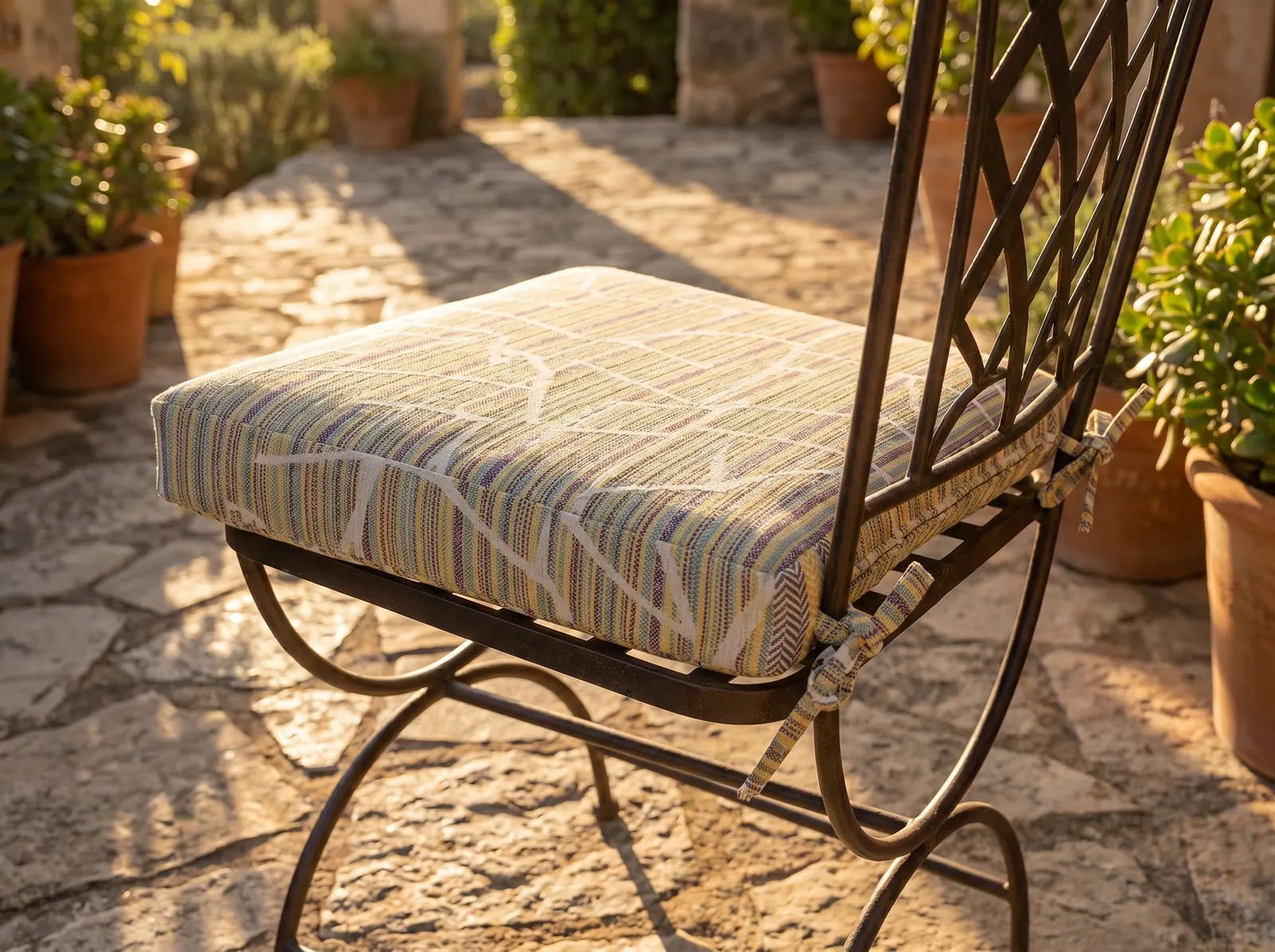
Plate Butter and lilac seat pad on a lattice-back iron chair
A boxed pastel pad with self-fabric ties softens a lattice-back wrought-iron chair on a sunlit terrace.
A Reading by MaggieDining Chair Cushions & Pads
A pastel chair cushion with ties on a lattice iron chair: the feel, the wear, the wash
Iron is hard, dark and hot by midafternoon. Everything soft about this chair is the pad's job, so I read the cloth the way you would read a label: by hand, by wear and by wash.

The quick answer
A chair cushion with ties on a wrought-iron chair carries all the comfort, so choose a boxed pad with a deep front edge, ties cut from the same fabric and an outdoor weave with self piping to protect the edges. Measure inside any raised rim on the seat, and send a clear drawing if the seat curves.
Pinned by Maggie
Five pins on the plate; the legend below runs in the same order.
The numbers match the pins on the plate.
- Pastel seat padSoft pastels keep a dark iron chair from looking severe.
- Boxed front edgeA deep box front makes a thin iron seat feel generous.
- Ties in self fabricTies cut from the same cloth wrap the back uprights and disappear into the pattern.
- Lattice iron backDiagonal ironwork echoes the white linework in the weave.
- Terracotta succulent potsTerracotta warms the cool lilac and sage threads.
The hand: matte, dry and made for sun
A wrought-iron chair gives you nothing. The pad has to give everything.
In that strong late sun the weave has a matte, dry look, with fine white linework running through butter yellow, lilac and sage. It is an outdoor fabric, the right hand for an open terrace, and the white diagonals in the weave answer the lattice of the chair back.
Where it wears first. At the front edge, where the backs of your knees slide on and off, and at the ties, knotted and unknotted all summer. So the front is boxed deep and the edge carries self piping. A straight welt is a kind of honesty: it shows exactly where the edge is, and keeps it there.
How it cleans. Busy linework hides a drip of iced tea that plain butter yellow would advertise. Treat spots quickly; the stain first-aid guide has the order of operations.
Drawing a curved iron seat so it doesn't come back square
Measure inside the rim
If the seat has a raised rim, measure inside it and say so, so the pad drops in rather than perching on top.
Take three numbers
Front width, back width and depth from front to back; the chair pad measuring guide shows where each one starts.
Draw the curve boldly
Mark where the curve begins and ends, and add a photo taken straight down. A subtle U-shape can read as square.
Mark the uprights
Show where the back uprights stand, so the ties land where they can wrap them.
The U-shape that came back nearly square
A buyer in the US received a seat cushion that was well made, but the U-shaped cut looked almost square on the chair and the color was not quite what she had pictured. She wanted to return it. The workshop explained that return shipping is the buyer's cost and that it cannot issue return labels; the return quotes were steep. She kept the cushion and accepted a small partial refund.
I have stood on both sides of that conversation. The fix happens before the order, in the drawing.
The lesson: Send a detailed drawing of pronounced curves; subtle U-shapes may read as square.
What buyers ask about pads and piping
- A common question
I only need the ottoman from the corner sofa. Can you make it on its own?
The workshop's answerYes. The ottoman measures 39 x 39 in (99 x 99 cm) and can be ordered alone, or together with a straight backrest and a metal bar.
- A common question
Is piping an extra charge?
The workshop's answerNo. Piping in the same color costs nothing extra, and quoted prices already include it.
- A common question
Could you make four thicker dining chair cushions with piping in a printed fabric? I don't like the thin, flat ones.
The workshop's answerYes. After the craftsmen checked the chair pattern, the workshop quoted a set of four 2 in (5 cm) piped cushions in a printed chenille and sent a custom payment link for the set.
On the cutting table: the terrace chair pad
| Cushion | Boxed seat pad for a wrought-iron chair |
|---|---|
| Fabric | Outdoor weave in butter yellow, lilac and sage with white linework (code 440) |
| Piping | Self piping, same color, no extra charge |
| Edge | Box edge, deepest at the front |
| Ties | Cut from the same fabric, wrapped around the back uprights |
| Fit | Sized to sit inside the seat frame |
| Best for | Terraces in full sun, patio dining and café-style chairs |

Have it made
Have this made — ask Maggie’s workshop
Have the tape measure handy when they call. Old cushions shrink and sag; the seat underneath does not. — Maggie
Leave your details and the workshop will call you to confirm measurements, fabric, foam and piping. No prices, dates or payment on this page: it is a request, not an order.
Same-color piping on a chair cushion costs nothing extra, and it keeps the front edge firm where the backs of your knees rub all summer.
Maggie
Questions buyers ask next
What does a box edge add to a thin iron chair seat?
A box edge gives the pad a real front face, so a thin iron seat feels generous and your legs rest on foam rather than on the rail. On this chair the box is deep enough to feel full yet still fits inside the frame.
Will pastel outdoor fabric look washed out on dark iron?
Here it works the other way. Butter, lilac and sage lighten a heavy bronze chair so it doesn't look severe, and the terracotta pots nearby warm the cool lilac and sage threads.
Why cut the ties from the same fabric as the pad?
Self-fabric ties wrap the back uprights and all but vanish into the pattern, so the chair keeps its lattice outline. Contrast ties would draw a new line around the chair back.
Stitch straight — Maggie
More photographs to read
 Save
 Save
 Save
 Save
 Save
 Save