A Reading by CallumBench Cushions
A herringbone-stripe garden bench cushion, read by hand
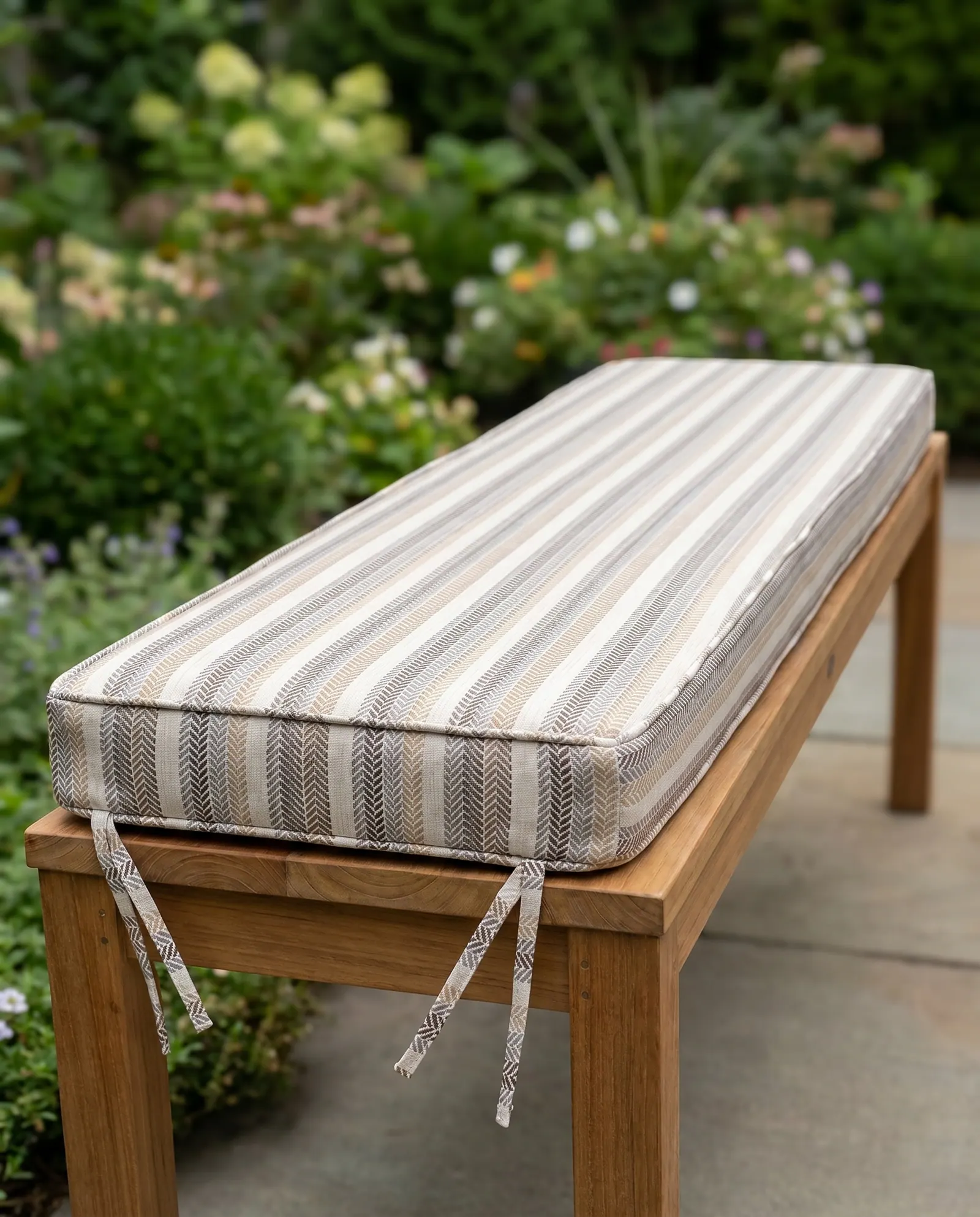
Callum reads a slim striped box cushion on a teak bench by the flower border, starting with the cloth under his palm.
 Save
The quick answer
A herringbone-stripe outdoor bench cushion suits a backless garden bench because the tight woven stripe hides pollen and dust while the slim box keeps the bench light. Here it sits about as thick as the teak top, with self piping and fabric ties near each end. Brush it dry, sponge spots, stand it on edge to drain and bring it in before storms.
The cushion, cut open
Cover fabric. A removable, zippered cover. Machine wash at 86°F (30°C) on a gentle cycle and air dry.
Piping. A fabric-covered cord sewn into the seams. It sits on the seam line, so it does not change the size.
Fiber wrap. Polyester fiber (Dacron) batting around the foam: it fills the cover out and softens the edges.
Foam core. About 2.0 lb/ft³ (32 kg/m³) high-resilience foam, firm to medium-firm, cut to the ordered size.
Zipper. Along the back band, as hidden as possible. The zipper side faces down or toward the wall.
Base panel. The underside of the cover. A non-slip fabric backing can cover the whole of it instead.
Put a hand on the cloth before you read the stripe
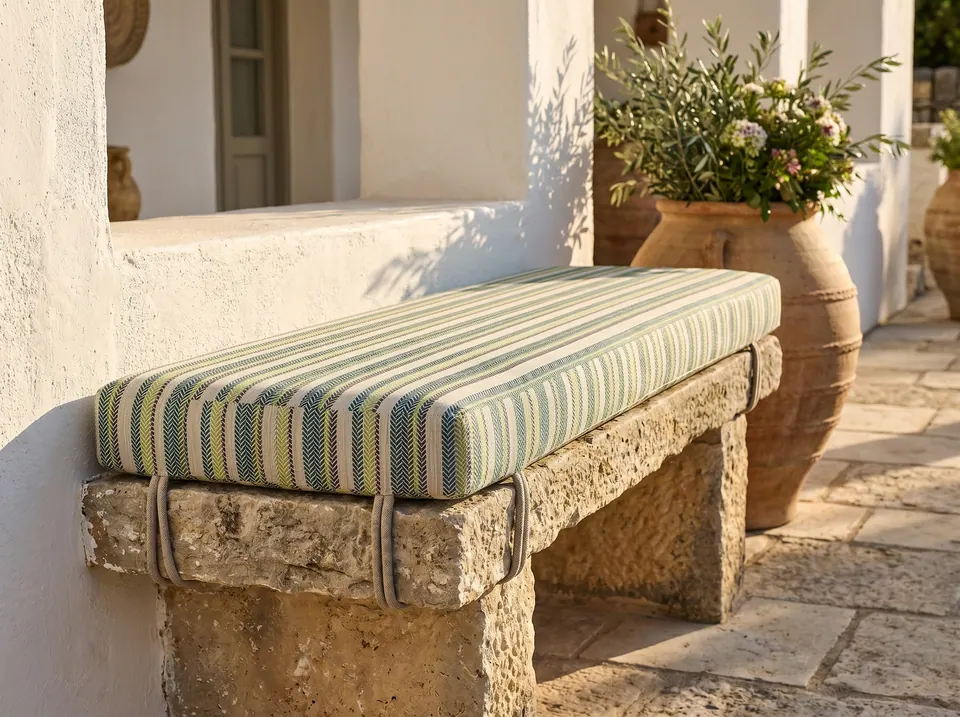
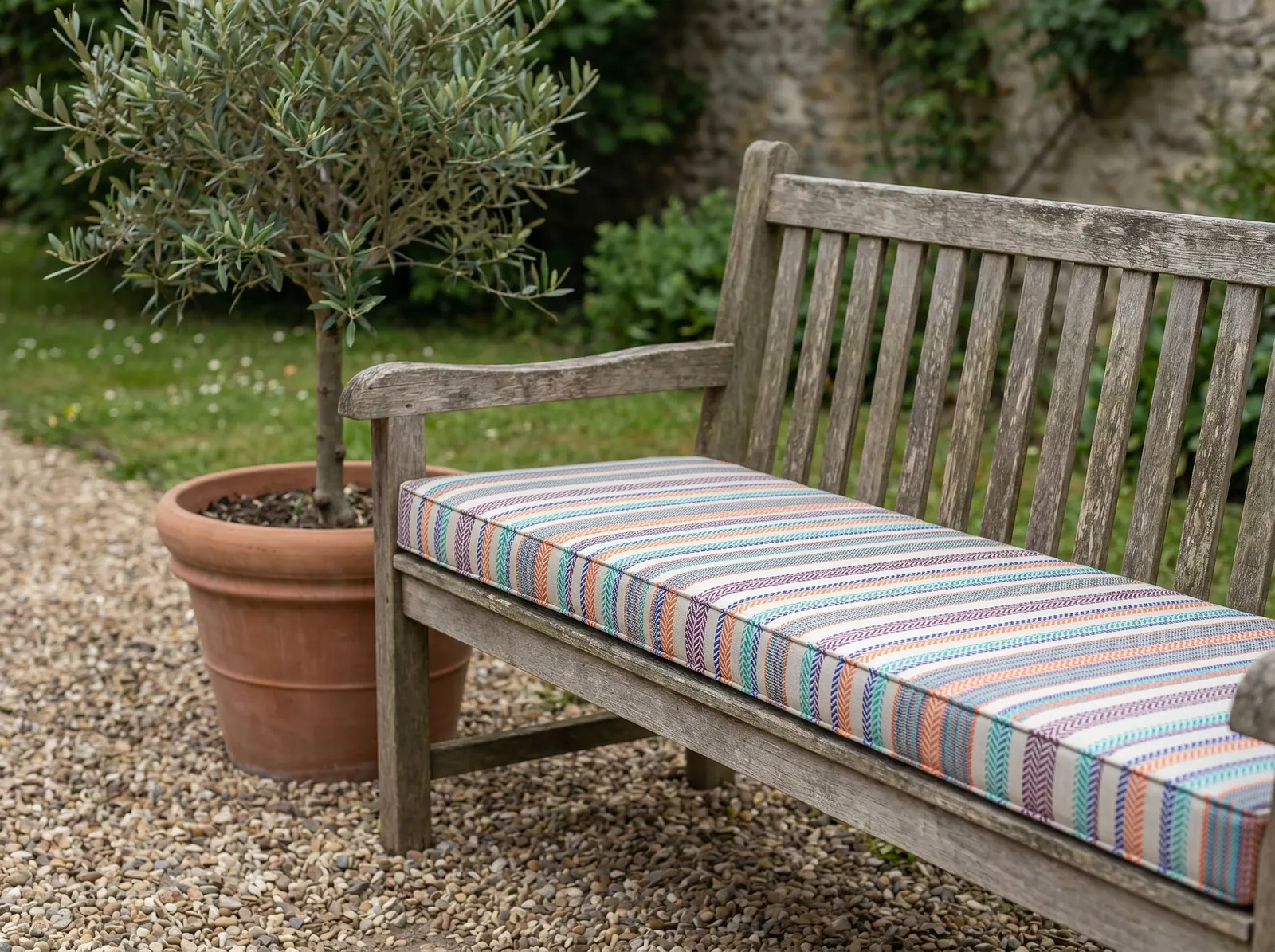
The best thing about this garden bench cushion is how little of it there is. It sits about as thick as the teak top under it. On a backless bench that keeps the whole piece light, like a sail furled neat on the boom.
Now put your hand on it. The cloth is a woven outdoor acrylic in a herringbone stripe of taupe, cream, charcoal and sand. A tight weave like that has a dry, canvas-like hand. It does not feel plush. It feels ready for weather.
The weave is also how it wears. A small herringbone breaks up pollen, grass seed and the gray film a garden leaves on everything by August. A plain cream would show every speck. The stripes run the full length, so the eye reads one long bench instead of a map of marks.
Cleaning is simple. Brush it dry first. Sponge what is left. Then stand the cushion on its long edge so water runs out of the seams and not into the foam. Rain doesn't negotiate, friend, so bring it under cover when a storm is building. How far a cloth will go is laid out in water-repellent vs waterproof and in the outdoor fabric Pattern.
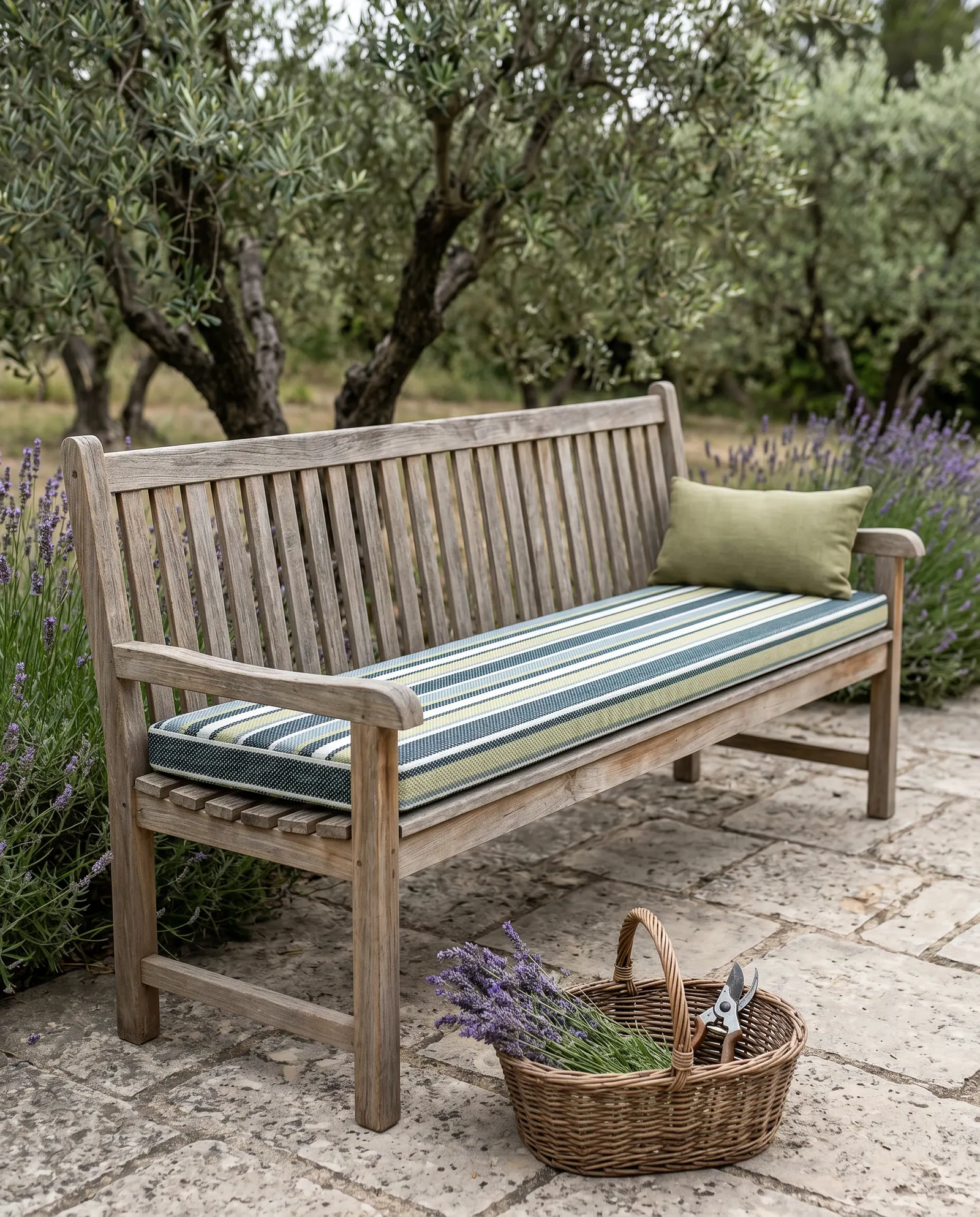
The garden does the styling. Hydrangea, cosmos and lavender crowd the border in soft overcast light, and the neutral stripe lets them be the color. Stone paving under the legs keeps the ground cool and gray. Not one pillow, and none needed. More seats like it live among the bench cushions and the patio and porch cushions.
Would you rather your stripes stretch the bench or make the seat look deeper?
Pinned by Callum
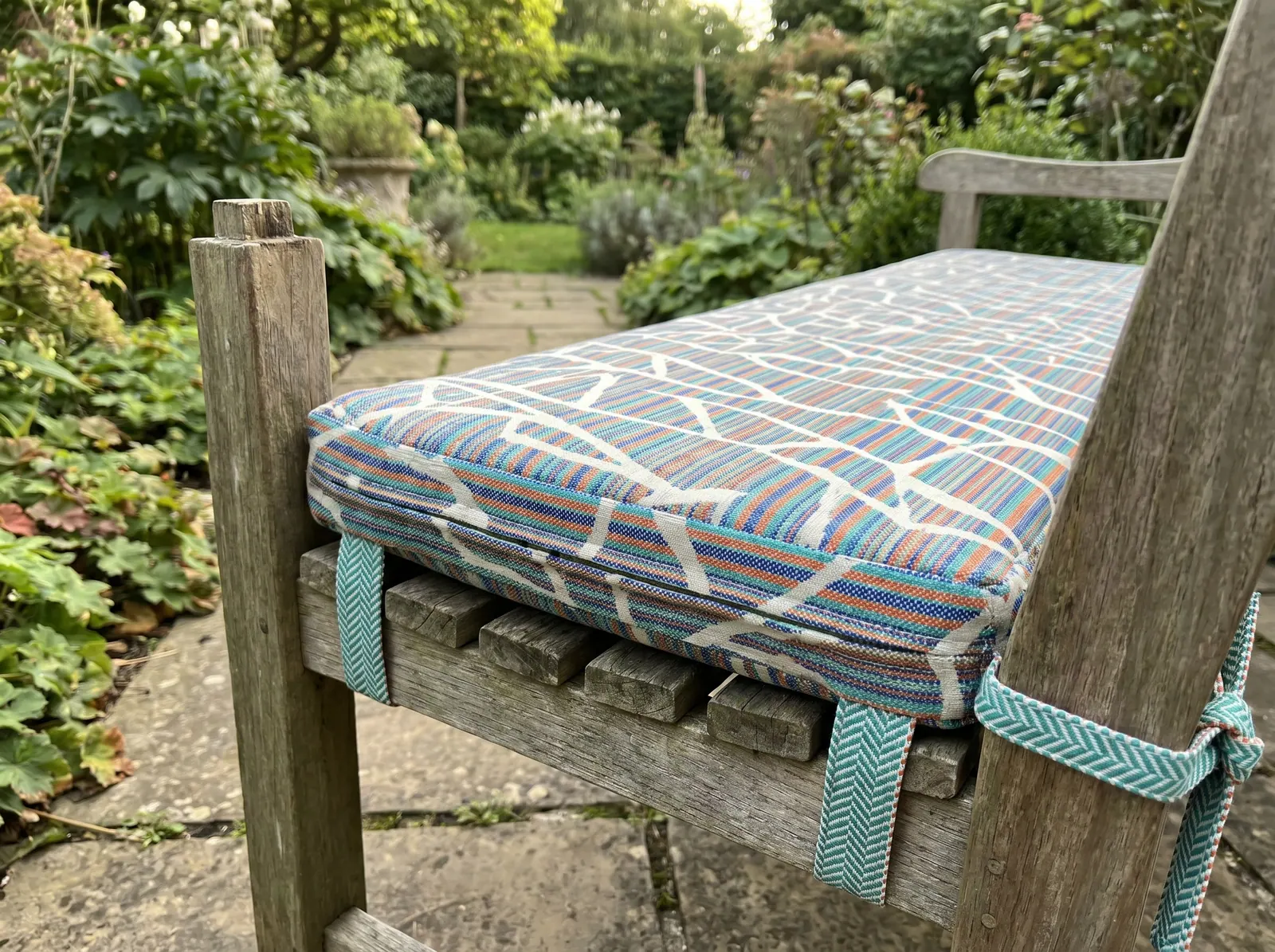
Five pins, from the lengthwise stripe down the end panel to the ties and the teak leg.
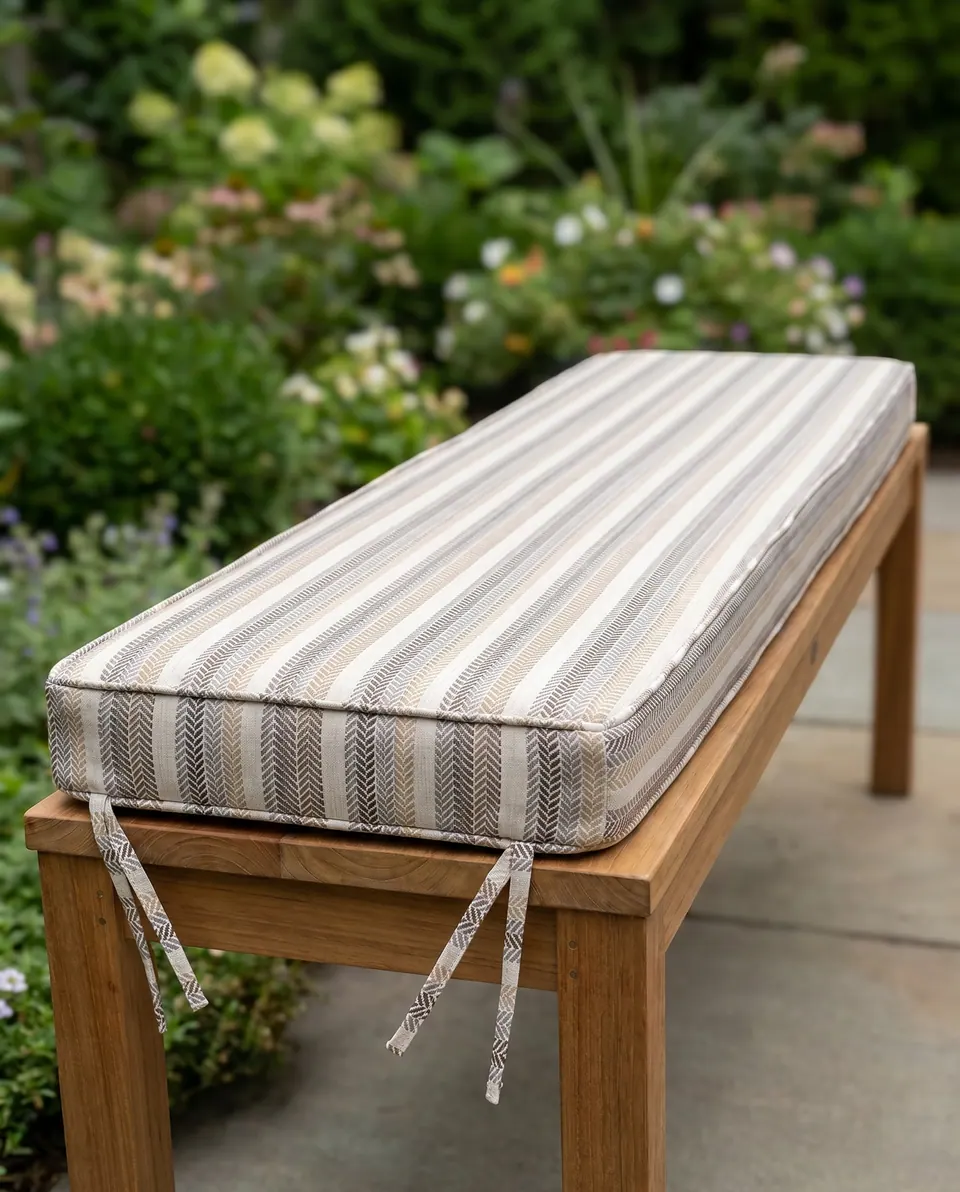
- Lengthwise stripes
Stripes run the full length, stretching the bench visually.
- End panel stripes
The stripe continues down the end panel so the box reads as one piece.
- Hanging tie
Ties cut from the same fabric vanish into the design.
- Second tie pair
Ties sit near each end to hold the cushion on a backless bench.
- Teak bench leg
The cushion is about as thick as the bench top, keeping it light.
- Lengthwise stripesStripes run the full length, stretching the bench visually.
- End panel stripesThe stripe continues down the end panel so the box reads as one piece.
- Hanging tieTies cut from the same fabric vanish into the design.
- Second tie pairTies sit near each end to hold the cushion on a backless bench.
- Teak bench legThe cushion is about as thick as the bench top, keeping it light.
The anatomy, from the ties up
- Ties: two pairs cut from the cover fabric, one near each end, dropped through the frame so a backless bench can't shrug the cushion off.
- End panel: the stripe carries down and around the end, so the box reads as one piece and the ties hang from a matching field.
- Boxing depth: about the same as the teak top, which keeps the bench looking light instead of upholstered.
- Self piping: cut from the same stripe, so the edge reads as a fine broken line rather than a hard outline.
- Face fabric: woven outdoor acrylic, herringbone stripe run lengthwise to stretch a narrow bench.
When a stripe is too thin to give up a piping
A buyer wrote in wanting solid blue piping cut out of a striped fabric. Good thinking on paper. But the stripes in that cloth were too thin; any strip the workshop cut would have come out as a blur of two colors, not a clean blue line.
So the shop laid solid fabrics beside the stripe in natural light and compared them by eye. A solid linen came closest. The buyer trusted a match made in daylight and approved it.
The lesson holds outdoors too. When a stripe is too fine to give up a clean piping, cut the piping from a solid. The herringbone on this bench is wide enough to pipe itself. Plenty are not. See piping: matching, contrast or none before you choose, and browse the outdoor acrylic swatches with a solid in mind.
On the cutting table
| Piece | Box cushion for a backless teak garden bench |
|---|---|
| Fabric | Woven outdoor acrylic, herringbone stripe in taupe, cream, charcoal and sand |
| Stripe direction | Lengthwise, carried down the end panels |
| Piping | Self piping cut from the stripe |
| Thickness | About the same as the bench top |
| Fastening | Two pairs of matching fabric ties, one near each end |
| Care | Brush dry, sponge spots, stand on edge to drain |
| Best for | Garden, patio and porch benches without a back |

Have it made
Have this made — ask Callum’s workshop
Short list: size, sun hours, how fast it has to dry. The workshop goes through it with you. — Callum
Leave your details and the workshop will call you to confirm measurements, fabric, foam and piping. No prices, dates or payment on this page: it is a request, not an order.
Buyer questions: thinner seats, clipped corners, tough cloth
- A common question
Four inches is too thick for our dining bench. Can you make the cushion 3 inches instead?
The workshop's answerYes. 3 in (7.5 cm) is available; write it in the personalization section when you order. One dining bench cushion quoted at that thickness measured about 71 x 15.5 x 3 in (181 x 39.5 x 7.5 cm).
- A common question
My seat has both front corners cut off at an angle. Can you make a pad in that shape?
The workshop's answerYes, through the trapezoid listing. Upload a drawing with every edge measured, including how far each angled corner cuts in along both sides, and the cushion is sewn exactly to that drawing.
- A common question
What's the most durable fabric for a window seat in a playroom?
The workshop's answerThe velvet and the soft fabrics are the performance choices. To measure, use the shape diagrams in the second photo of the trapezoid listing and pick the one that matches your seat.
When a striped fabric's bands are too thin to cut a clean piping, cut the piping from a solid instead and match it in daylight.
Callum
Questions buyers ask next
Should stripes run lengthwise or across an outdoor bench cushion?
Lengthwise stripes stretch a narrow bench and make it look longer, as on this teak bench. Crosswise stripes make the seat look deeper. Decide which the bench needs more before you pick the cut.
How thick should a cushion be on a backless garden bench?
Keep it slim, close to the thickness of the bench top, so the bench stays light. A thicker box starts to look like upholstery perched on legs. If 4 in (10 cm) feels too much, 3 in (7.5 cm) can be ordered.
Why cut cushion ties from the same fabric?
Matching ties disappear into the design instead of flapping as a contrast. On a backless bench, two pairs set near each end hold the cushion to the frame without drawing the eye.
How do I clean a striped outdoor bench cushion?
Brush off dry dirt and pollen first, then sponge any spots. Stand the cushion on its long edge to drain and dry, and bring it under cover when heavy rain or a storm is coming.
Fair winds — Callum
More photographs to read
 Save
 Save
 Save
 Save
 Save
 Save