A Reading by MaggieDining Chair Cushions & Pads
Four dotted chenille chair cushions, four velvet cords, and the props that make the stack
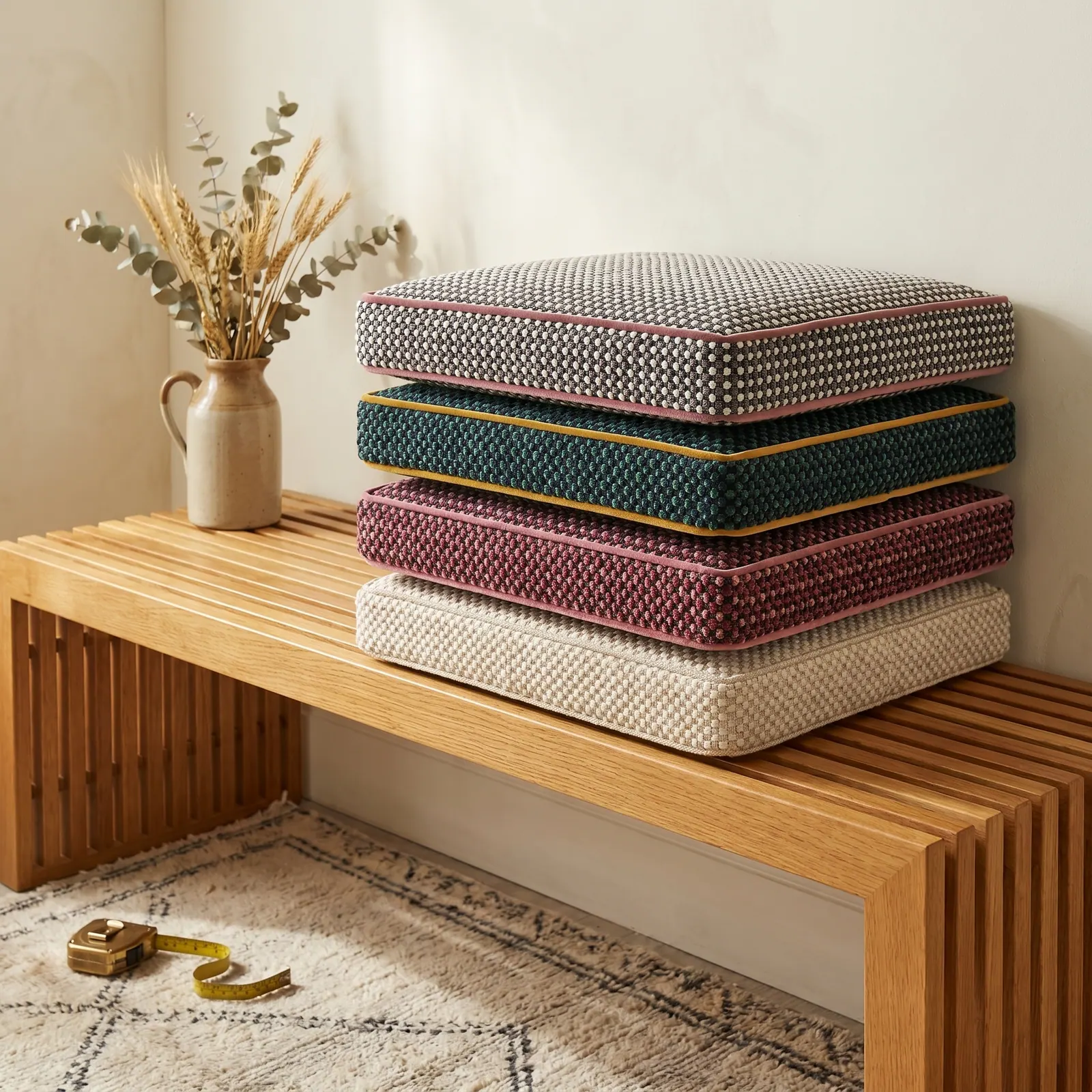
Right, then. Four square box cushions on an oak bench, and not one piping color came off a card. Each was pulled out of the weave itself, and the props are there to prove it.
The quick answer
Pick contrast piping for a patterned chair cushion from a secondary color already inside the weave, not from the room. Here blush velvet piping lifts the warm dots in charcoal chenille and mustard draws out the fleck in petrol teal. A plain cream cushion at the base keeps four colors from turning into noise.

 Save
Pinned by Maggie: four cords, top to bottom, and one tape measure
Four pins run down the stack one cord at a time, and the fifth lands on the brass tape measure lying on the rug.
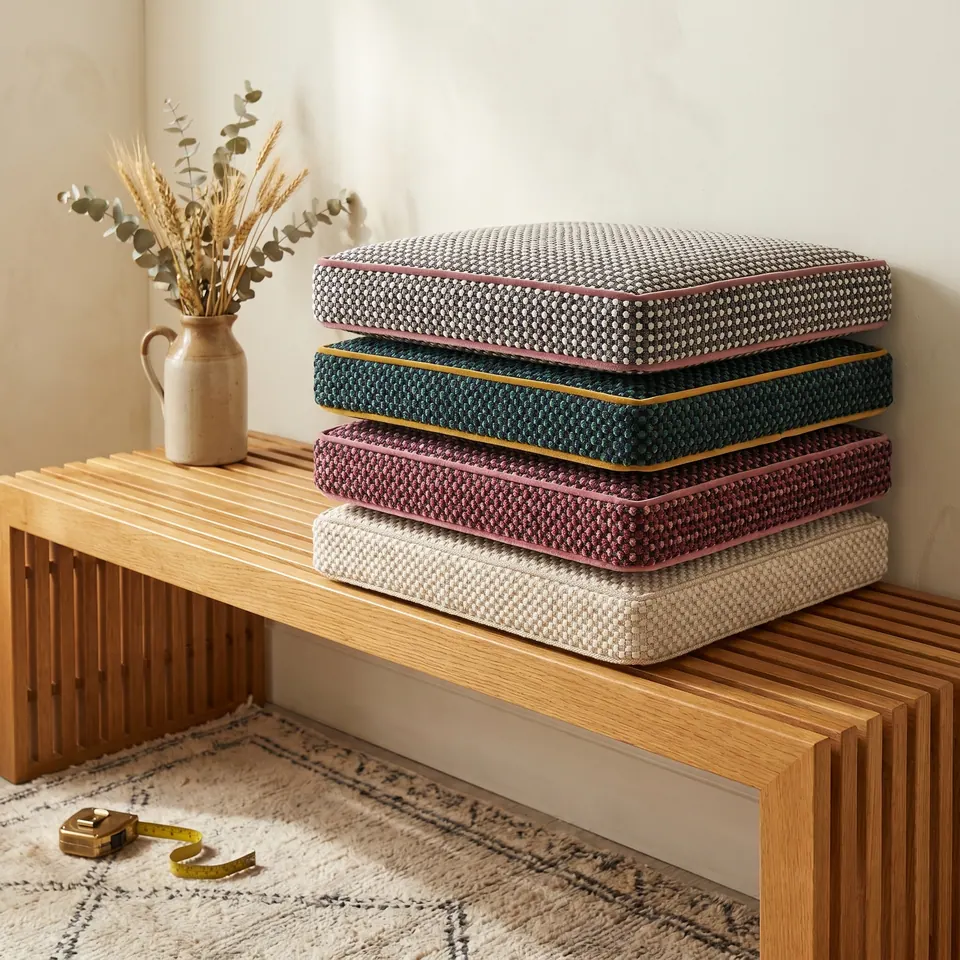
- Charcoal with blush cord
Blush velvet piping picks up the warm dots in the gray weave.
- Teal with mustard cord
Mustard piping draws out the warm fleck inside the petrol teal.
- Plum with pink cord
A pink cord one shade lighter than the plum outlines the box neatly.
- Cream base cushion
The quiet cream cushion grounds the colorful stack.
- Brass tape measure
A tape on the rug is a quiet reminder that every size is made to order.
- Charcoal with blush cordBlush velvet piping picks up the warm dots in the gray weave.
- Teal with mustard cordMustard piping draws out the warm fleck inside the petrol teal.
- Plum with pink cordA pink cord one shade lighter than the plum outlines the box neatly.
- Cream base cushionThe quiet cream cushion grounds the colorful stack.
- Brass tape measureA tape on the rug is a quiet reminder that every size is made to order.
Why each cord came out of the weave
Contrast piping goes wrong when it is chosen from the swatch card instead of the fabric. I once piped an entire set of chair cushions in crisp white because the card said it went with everything. It went with nothing, and I still have the photos.
This stack gets it right. Four square box cushions in dotted chenille jacquard sit on a slatted oak bench: charcoal, petrol teal, plum and cream. Look closely at the dots. The charcoal carries tiny warm flecks, so its cord is blush velvet. The teal hides a warm fleck too, so its cord is mustard. The plum gets a pink one shade lighter than itself, which outlines the box without shouting. The cream at the base is left quiet, and it grounds the whole stack.
The cords are velvet on purpose. Chenille is soft and matte; velvet catches the warm daylight along each edge, so every piping line reads as a deliberate stroke. And they run straight, top seam and bottom seam. A straight welt is a kind of honesty.
The props were picked with the same care. Dried wheat and eucalyptus in a stoneware jug repeat the mustard and a muted green without adding anything bright. The brass tape measure with its yellow tape, lying on the rug, is a small reminder that every size here is made to order, and it echoes the mustard cord. The diamond-pattern wool rug is a geometric at a much bigger scale than the dots, so the two patterns never argue.
For seats with ties, see the dining chair cushions hub; for the weave, the jacquard and damask shelf; for a hall bench like this one, the mudroom and entryway room. Which second color is hiding in your fabric?
Copy the stack: a six-point checklist
- Hold the fabric at arm's length and name the second color you see. That is your piping.
- Order the cord in velvet if you want the edge to catch light on a matte weave.
- Keep one cushion in the set quiet: cream, or self piped.
- Add one prop that repeats a cord color, such as a jug of dried wheat beside a mustard cord.
- Choose a rug pattern at a clearly different scale from the fabric's dots.
- For dining chairs, measure every seat on its own and ask for ties at the back posts.

Have it made
Have this made — ask Maggie’s workshop
Numbers first, fabric second, piping last. Jot down what you have, and the workshop will go down the list with you, item by item. — Maggie
Leave your details and the workshop will call you to confirm measurements, fabric, foam and piping. No prices, dates or payment on this page: it is a request, not an order.
Stitch straight — Maggie