A Reading by ÉlodieBench Cushions
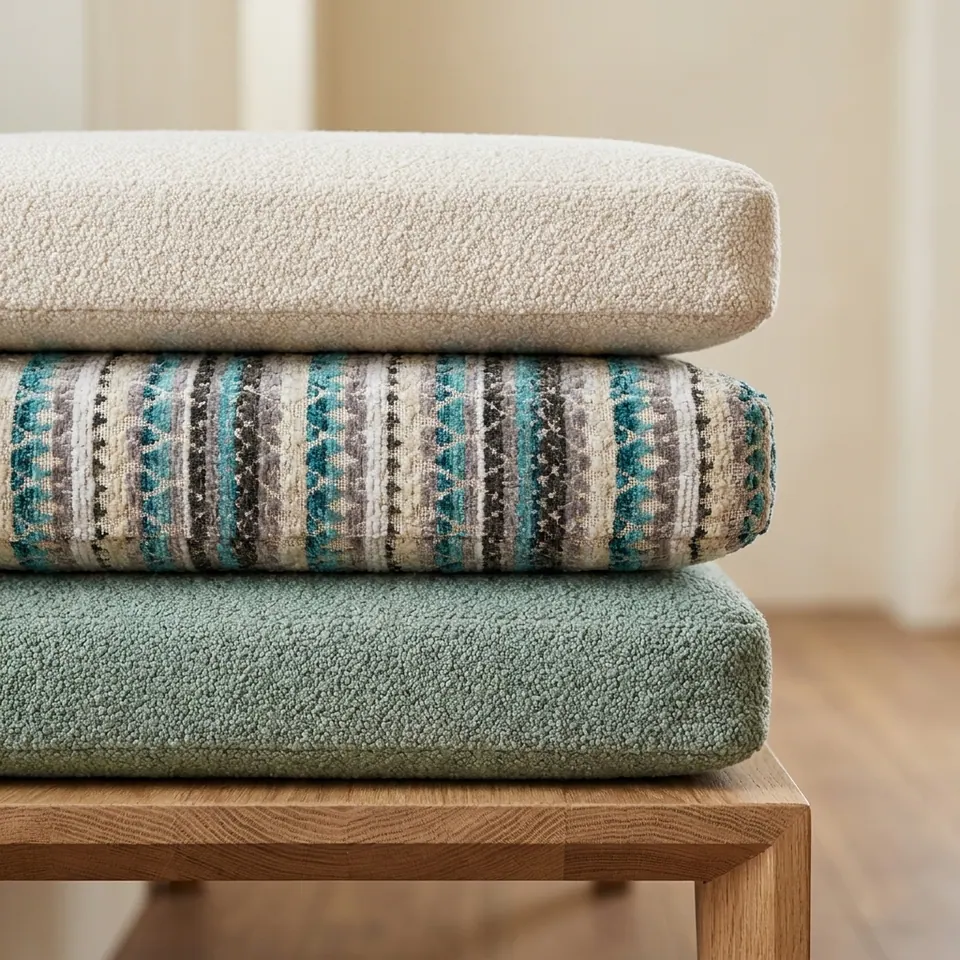
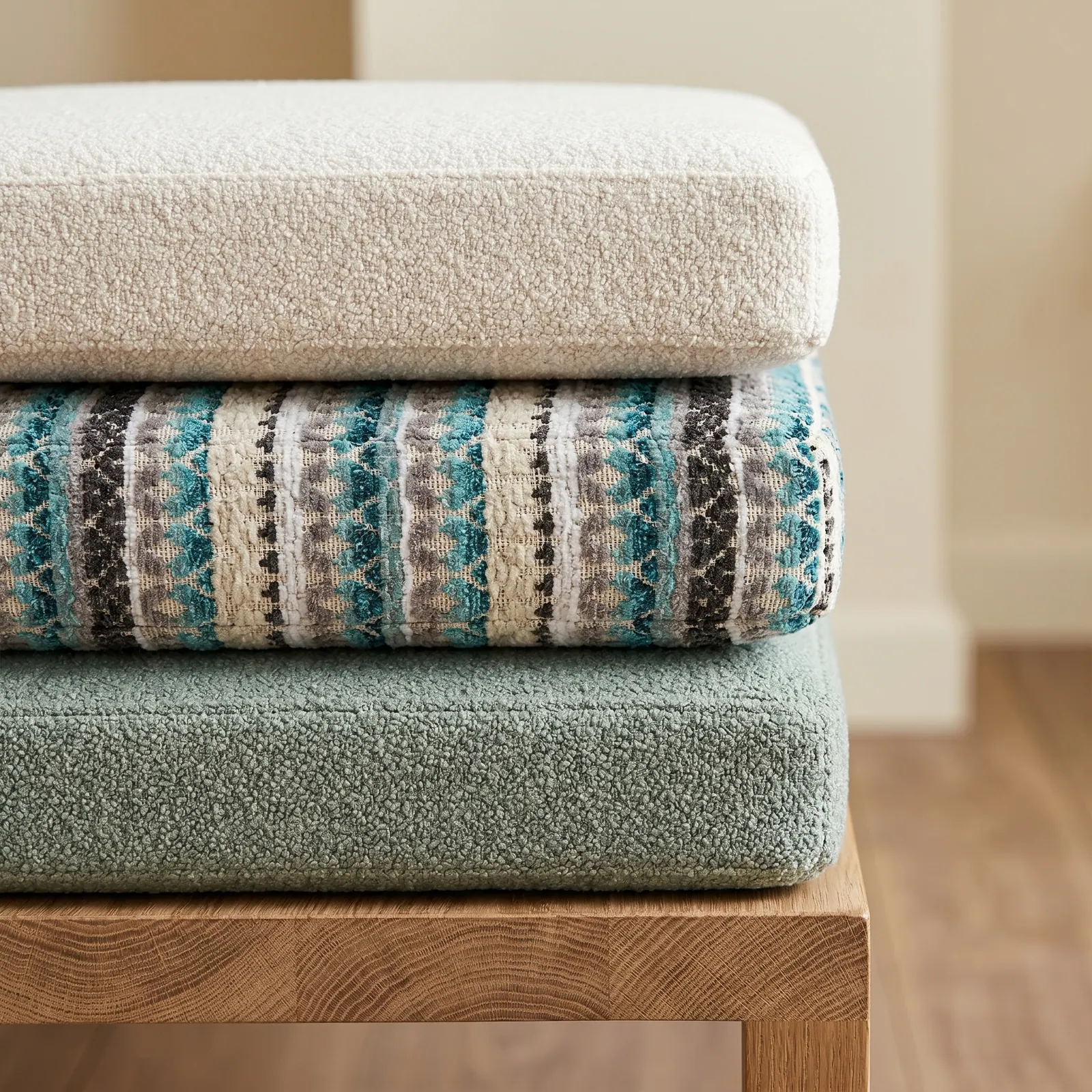
Three box cushions, no piping: cream bouclé, a teal stripe and sage on a chunky oak bench
Élodie answers questions from small rooms first, then reads a stack where the edges are allowed to stay soft.

 Save
The quick answer
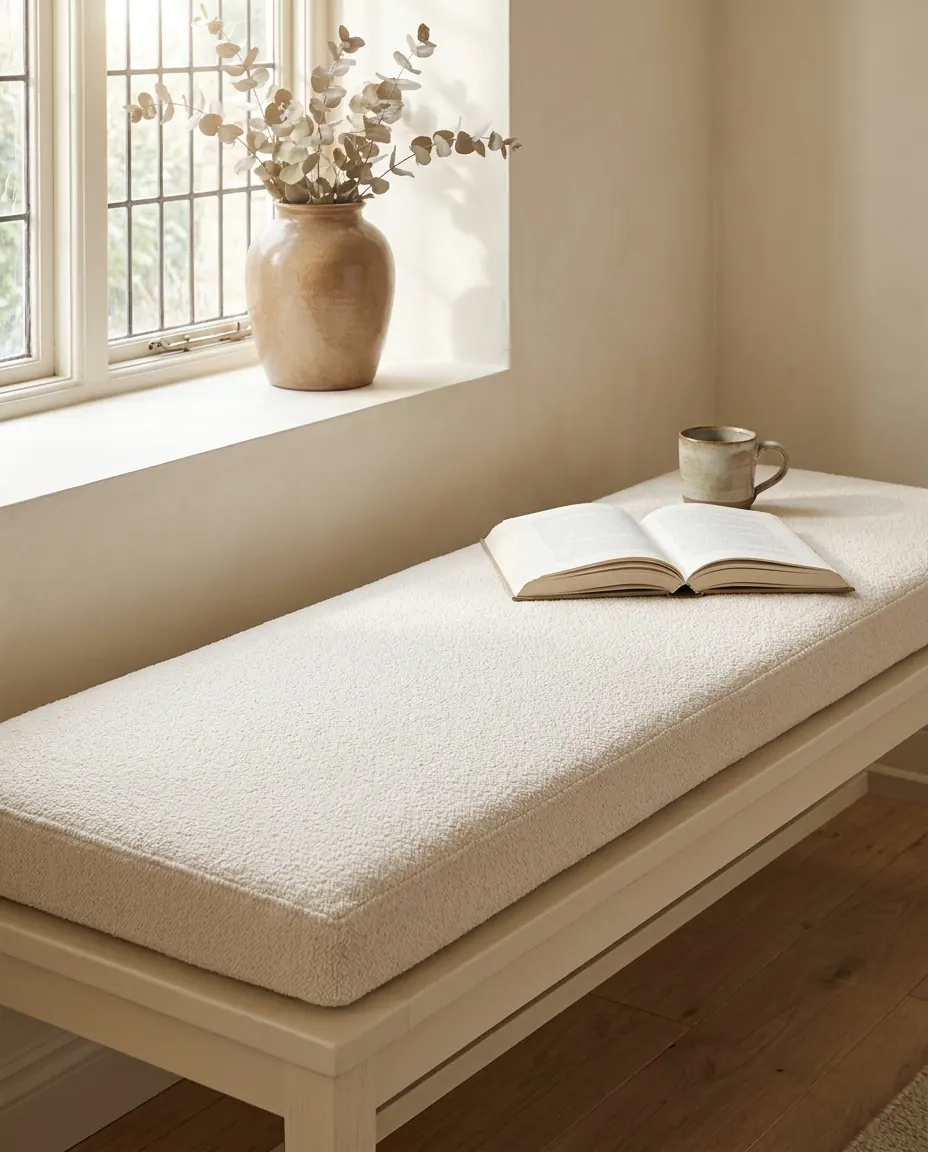
A custom bench cushion without piping, in a looped fabric like bouclé, has a softer rounded edge that keeps a narrow bench from looking boxed in. Keep the plain colors pale and let one woven stripe carry the accents. If the bench is less than 3/4 in (2 cm) wider at one end, average it to a rectangle.
Cushion questions from narrow rooms, before the reading
- A common question
My bench cushions are trapezoids with different angles. How do I send you the sizes?
The workshop's answerDraw the shape on paper, label every side in inches or centimeters, and send a photo. The shop quotes from the drawing, tufted trapezoid cushions with center buttons included.
- A common question
How much more is a full set with a backrest than the seat cushion alone?
The workshop's answerThe backrest is priced as its own piece, so ask for both quotes. In past quotes, a matching backrest added about 30 percent to a 78 x 27 in (198 x 69 cm) banquette cushion, and two kitchen-bench cushions of 55 1/2 x 27 in and 56 1/4 x 27 in came to nearly double as full sets with backrests and armrests.
- A common question
How do I measure an L-shaped bench for cushions?
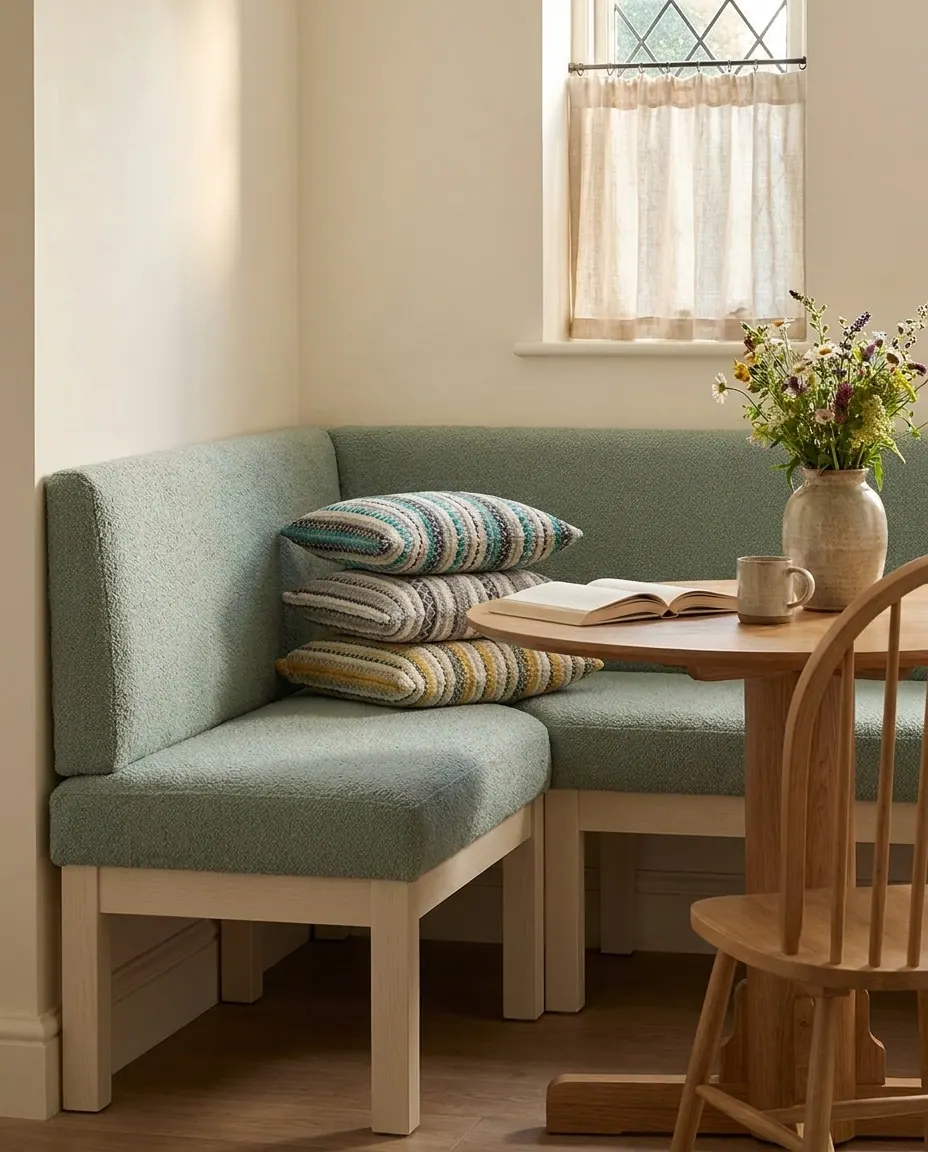
The workshop's answerMeasure each arm from the back corner to its end, then the seat depth. The shop makes two pieces: one runs the full length of one arm, the other is shortened by the seat depth so they butt together. Runs of 63 3/4 in (162 cm) and 63 in (160 cm) with a 15 3/4 in (40 cm) depth became 15 3/4 x 63 3/4 in and 15 3/4 x 47 1/4 in (40 x 162 and 40 x 120 cm).
Now, the reading
A bench 5/8 in deeper at one end
A buyer wrote to correct two cushion sizes after ordering. The smaller one became 19 x 17 in (48 x 43 cm). The larger bench was the puzzle: 16 3/8 in (41.5 cm) deep at one end and 16 7/8 in (43 cm) at the other.
With ends like those, the shop explained, both 41 in (104 cm) long sides could not stay true at once. So instead of cutting a trapezoid for a difference of 5/8 in (1.5 cm), it made a simple 41 x 16 1/2 in (104 x 42 cm) rectangle. The buyer agreed.
This is how small spaces are won. A taper under 3/4 in (2 cm) disappears under a soft edge, while a trapezoid would have pointed the eye straight at the wall's imperfection. Is your bench truly square, or only nearly?
Pinned by Élodie: three cushions, one bench
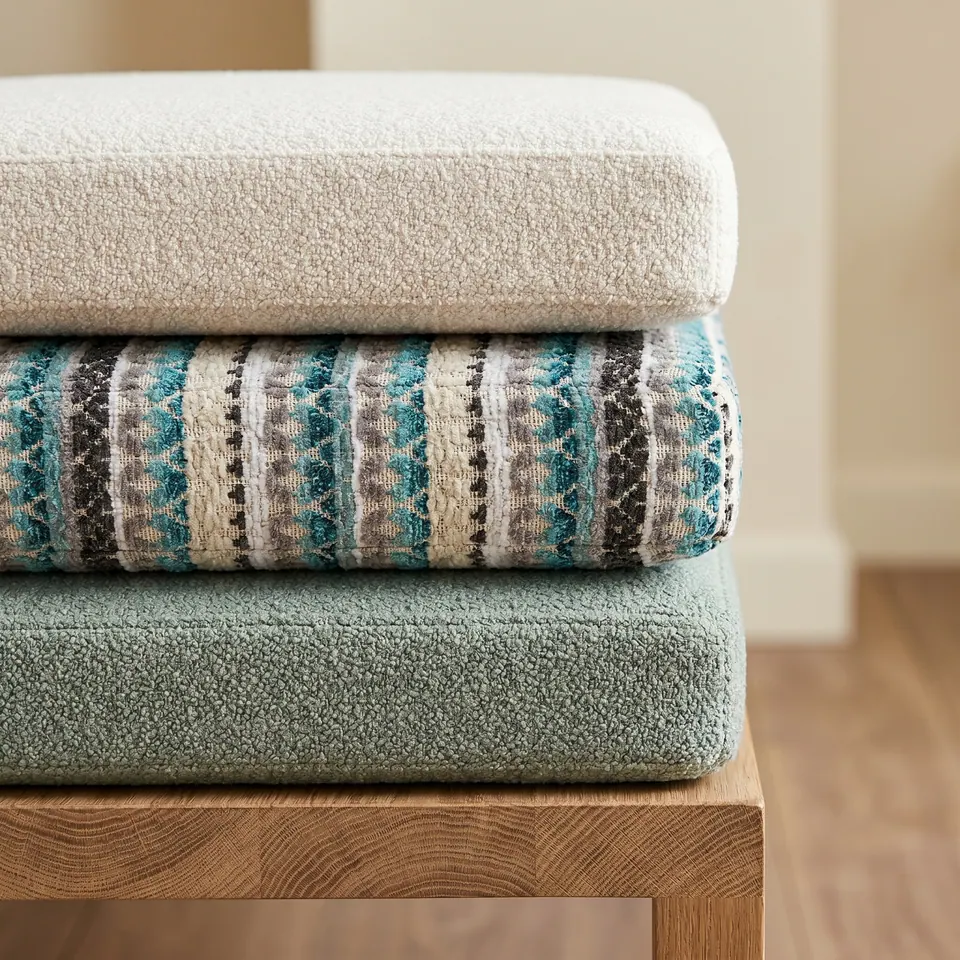
Four pins down the stack, from the unpiped cream top to the thick oak that carries it.
- Unpiped cream top
Without a welt, cream bouclé shows a softer rounded edge that suits relaxed rooms.
- Teal woven stripe
The teal, charcoal and cream stripe links the plain colors above and below it.
- Sage base cushion
Sage picks up the green cast in the teal threads, so the pattern does not float on its own.
- Thick oak bench top
A chunky oak top balances deep cushions; on a thin-framed bench a slimmer foam looks better.
- Unpiped cream topWithout a welt, cream bouclé shows a softer rounded edge that suits relaxed rooms.
- Teal woven stripeThe teal, charcoal and cream stripe links the plain colors above and below it.
- Sage base cushionSage picks up the green cast in the teal threads, so the pattern does not float on its own.
- Thick oak bench topA chunky oak top balances deep cushions; on a thin-framed bench a slimmer foam looks better.
Soft edges in a tight spot
My friends, look at the edges before the colors, just this once. None of the three cushions is piped. On bouclé that is the right call: the loops already give the edge a soft outline, so a welt would only draw a hard line around something that wants to be round. In a narrow spot, hard lines box you in. Soft edges let the eye slide past.
Now the colors. Cream bouclé sits on top, sage bouclé at the base, and between them a flat-woven stripe in teal, charcoal and cream. That middle cushion carries every accent in the stack, so it bridges the pale top and the green base. The sage is not a random green either. It picks up the green cast in the teal threads, so the pattern does not float on its own. Let one color speak and the others listen.
Proportion is the part people miss. These cushions are deep compared with the oak top, and that only works because the bench itself is chunky. On a thin-framed bench a slimmer foam looks better, and in a small room slimmer usually looks roomier. Warm side light across a cream wall and baseboard makes each bouclé loop cast a tiny shadow, so the texture shows even where the color is quiet.
A family note: a busy woven stripe hides crumbs and everyday marks far better than a plain pale fabric. For loops and snags in real life, read bouclé and teddy cushions; browse the bouclé and teddy family, and see more bench cushions and living room cushions.
Which of the three suits a narrow bench
| Cushion | What it does | Where it works |
|---|---|---|
| Cream bouclé, unpiped | Soft rounded edge and the palest tone; lets the bench recede | Narrow halls and small living rooms with pale walls |
| Teal, charcoal and cream stripe | Carries all three accents; hides crumbs and marks | Family benches and breakfast corners |
| Sage bouclé | Repeats the green in the teal threads and grounds the stack | Rooms with plants, oak and warm light |
On the cutting table: the soft-edged stack
| Product | Box bench cushions, stacked to compare |
|---|---|
| Fabrics | Cream bouclé, teal-charcoal-cream woven stripe, sage bouclé |
| Piping | None; the bouclé loops soften the edge |
| Edge | Box |
| Bench | Solid oak with a thick top |
| Proportion | Deep cushions for a chunky top; slimmer foam for thin frames |
| Setting | Cream wall and baseboard, oak floor, warm side light |
| Best for | Narrow living room benches and family seating |

Have it made
Have this made — ask Élodie’s workshop
A fabric reads one way at noon and another at dusk. Mention your light, and the workshop will weigh it with you. — Élodie
Leave your details and the workshop will call you to confirm measurements, fabric, foam and piping. No prices, dates or payment on this page: it is a request, not an order.
On a bouclé bench cushion, skip the piping: the loops already soften the edge, and a welt only draws a hard line around a small space.
Élodie
Questions buyers ask next
Does bouclé need piping on a bench cushion?
No. The looped surface already rounds and softens the edge, so an unpiped box edge looks finished. Piping on bouclé adds a firmer outline that suits tailored rooms, but in a small space the soft edge keeps the bench from looking boxed in.
Which bench cushion color makes a small room look bigger?
A pale color close to the wall, like cream against a cream wall and baseboard, lets the bench recede. Add one patterned piece for the accents rather than several strong solids, which break a small room into blocks.
How thick should a cushion be on a slim bench?
Match the foam to the frame. Deep cushions balance a chunky oak top, as in this stack; on a thin-framed bench a slimmer foam looks better proportioned and lighter, which also helps a narrow room feel open.
Is a striped bench cushion practical for a family?
Yes. A busy woven stripe in several tones hides crumbs and everyday marks far better than a plain pale fabric. Choose one that includes your wall or floor tone so it links to the rest of the room.
With color and care — Élodie
More photographs to read
 Save
 Save
 Save
 Save
 Save
 Save