 Save
A Reading by MaggieBench Cushions
Four cool crinkle bench cushions on an oak bench, and what keeps their edges square
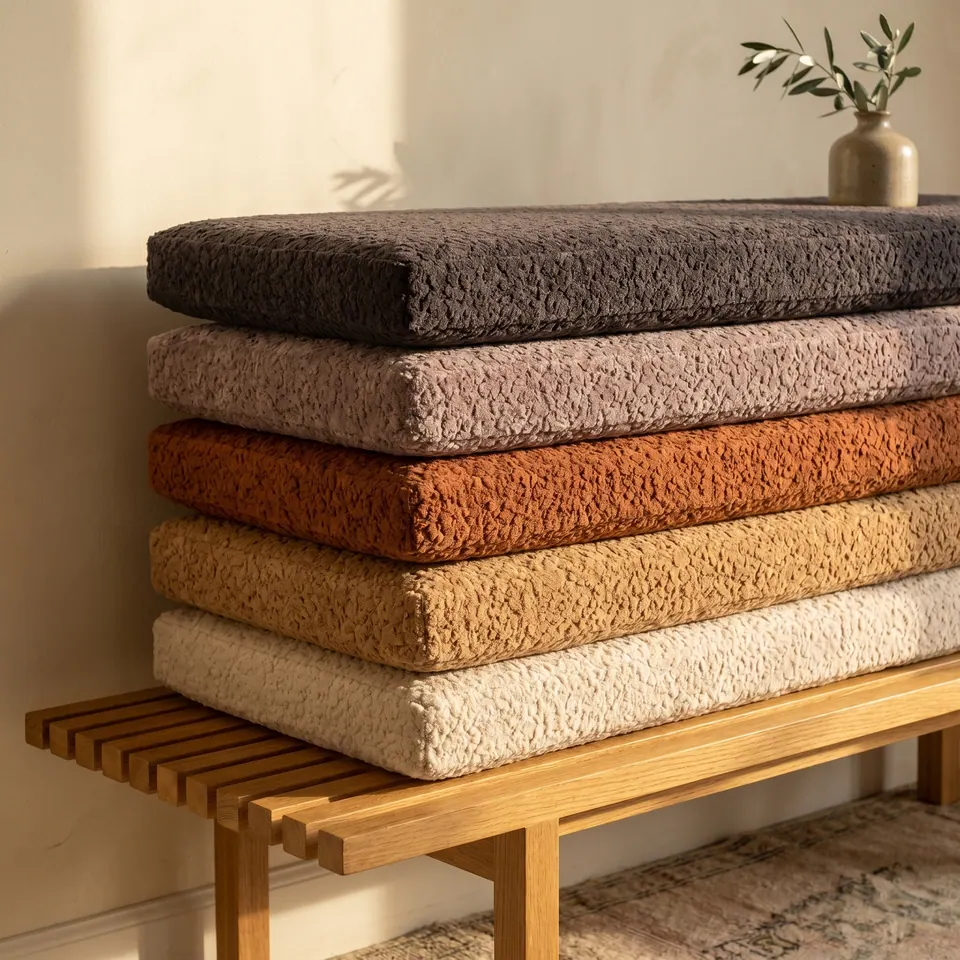
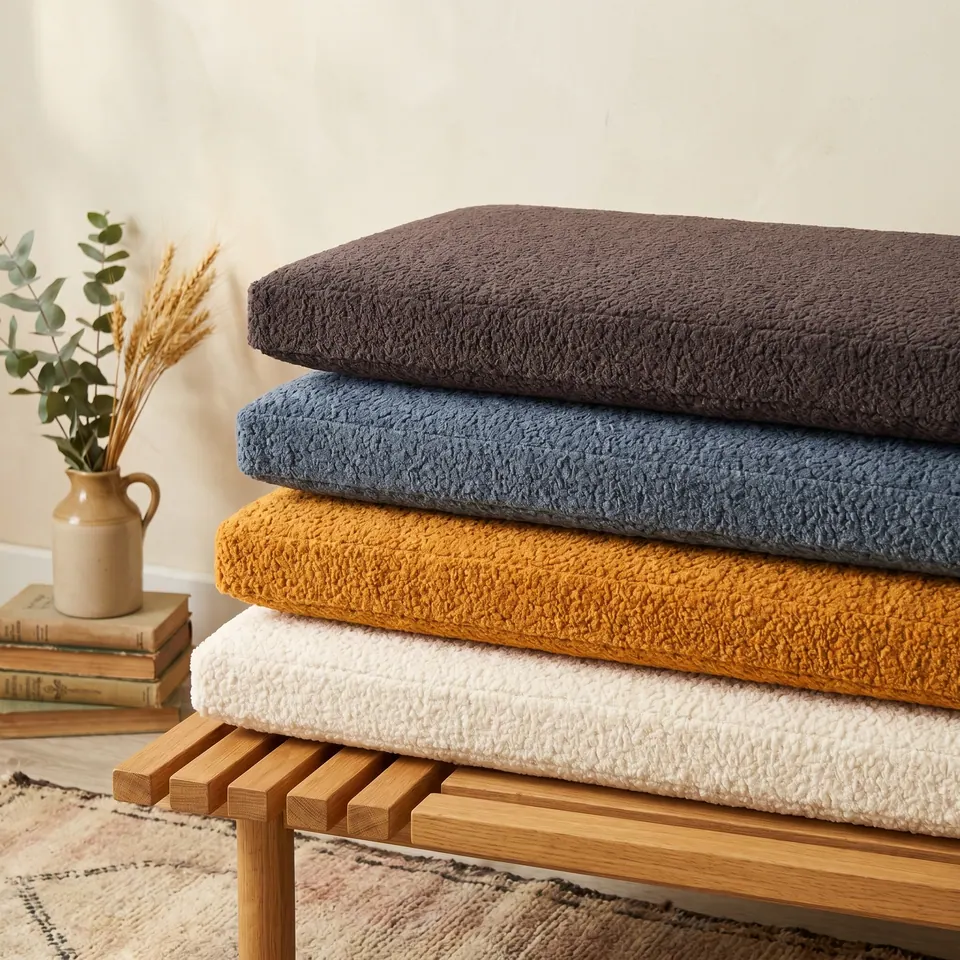
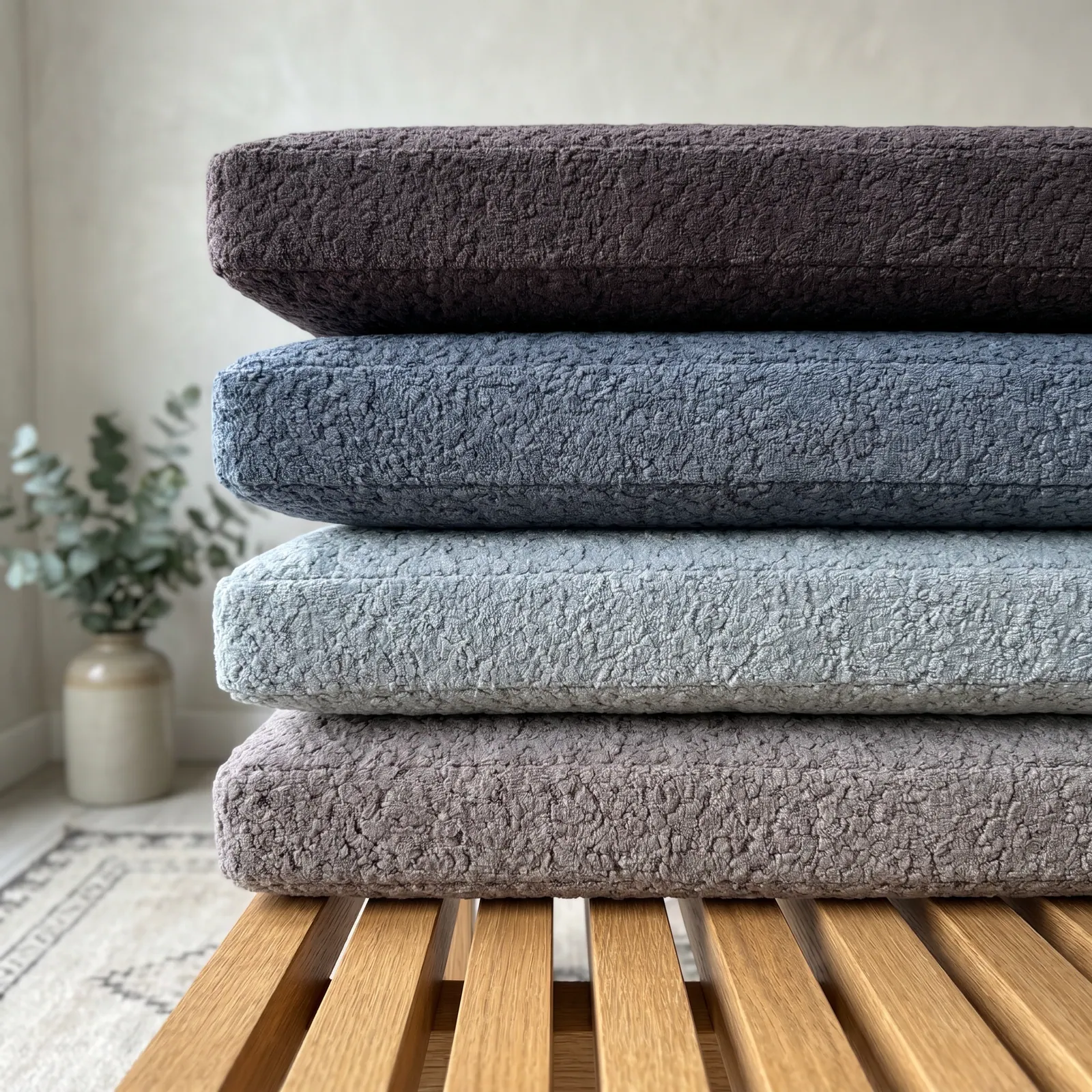
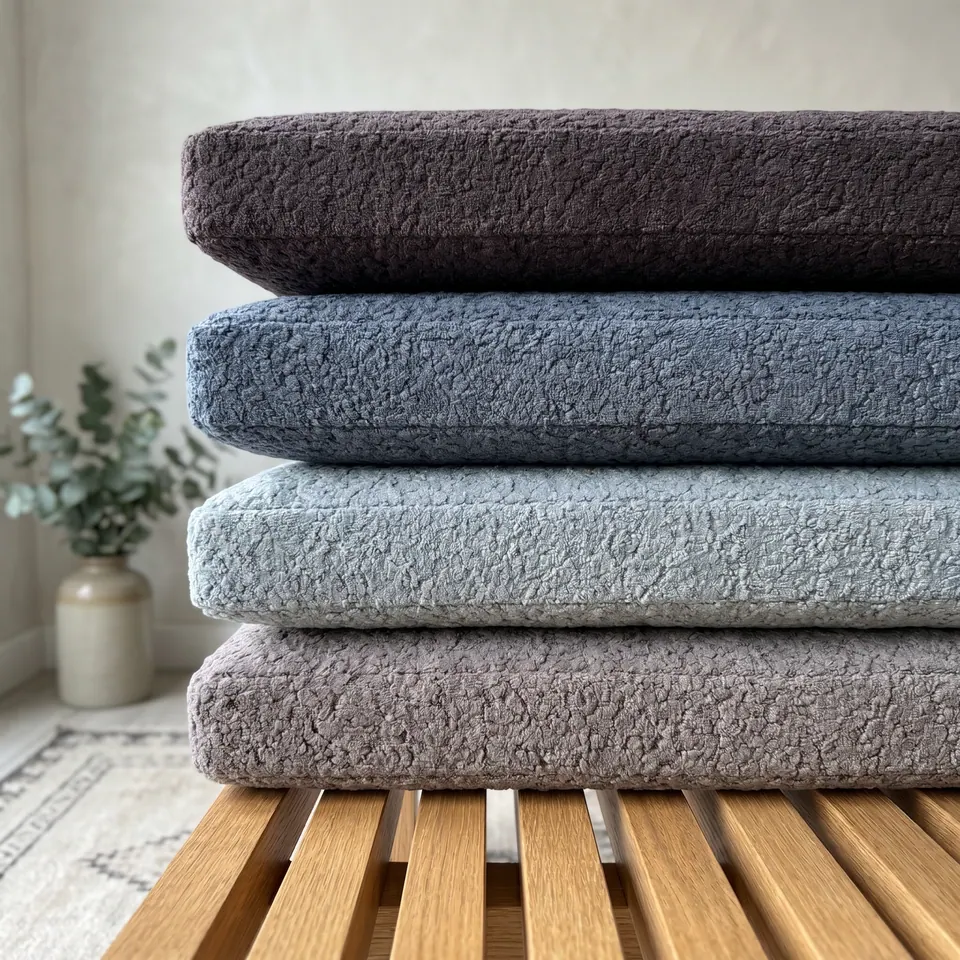
Maggie reads a stack of aubergine, slate, blue-gray and mauve taupe, then opens one up in her head to show you the foam.

Swatch strip measured from the photograph
- oatmeal#9f968a24%
- oatmeal#cdc8bb23%
- charcoal#37302f23%
- slate#5e656e15%
- taupe#7d716915%
The quick answer
A hallway bench cushion without piping keeps its square box edge because of what is inside: firm high-density foam, wrapped in polyester batting and cut a touch larger than the cover so the corners fill out. For an entry bench, aim for a seat top near 18 in (46 cm) from the floor, then choose the color.
Swatch strip: four cool shades, top to bottom
- Aubergine brown#4B3339A dark plum-brown that gives the cool set its depth.
- Slate blue#5E7282The most versatile of the four; calm with oak and gray walls.
- Pale blue-gray#A8B6BFShows the crinkle best; start here in cool light.
- Mauve taupe#9A8781A warm gray at the base that links the cool tones to the oak.
- Eucalyptus#8DA298The only leaf in the frame, gray-green to match.
- Limewash gray#C8C5BFThe wall that keeps the stack calm, not cold.
Pinned by Maggie: four shades and a jug
Four pins down the stack, one per shade, and one on the eucalyptus that sets the key.
- Aubergine brown
A dark plum-brown gives the cool set some depth.
- Slate blue
Mid slate blue is the most versatile of the four.
- Pale blue-gray
The lightest shade shows the crinkle texture most clearly.
- Mauve taupe
A warm gray at the base links the cool tones to the oak.
- Eucalyptus jug
Gray-green leaves match the cool mood of the stack.
- Aubergine brownA dark plum-brown gives the cool set some depth.
- Slate blueMid slate blue is the most versatile of the four.
- Pale blue-grayThe lightest shade shows the crinkle texture most clearly.
- Mauve taupeA warm gray at the base links the cool tones to the oak.
- Eucalyptus jugGray-green leaves match the cool mood of the stack.
What is inside, and why the edges stay square
Nobody frames a photograph of foam, dear, but foam is why this photograph works.
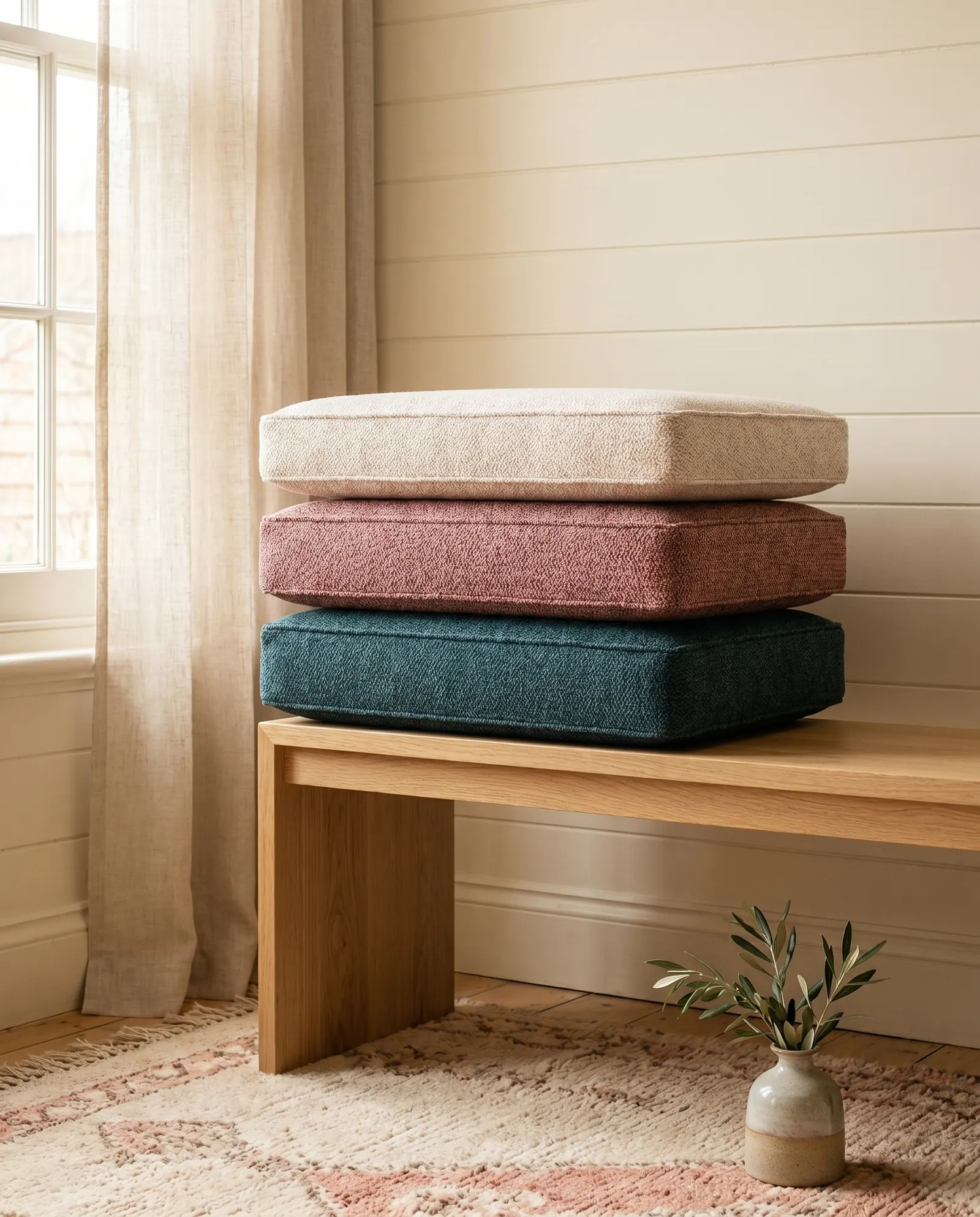
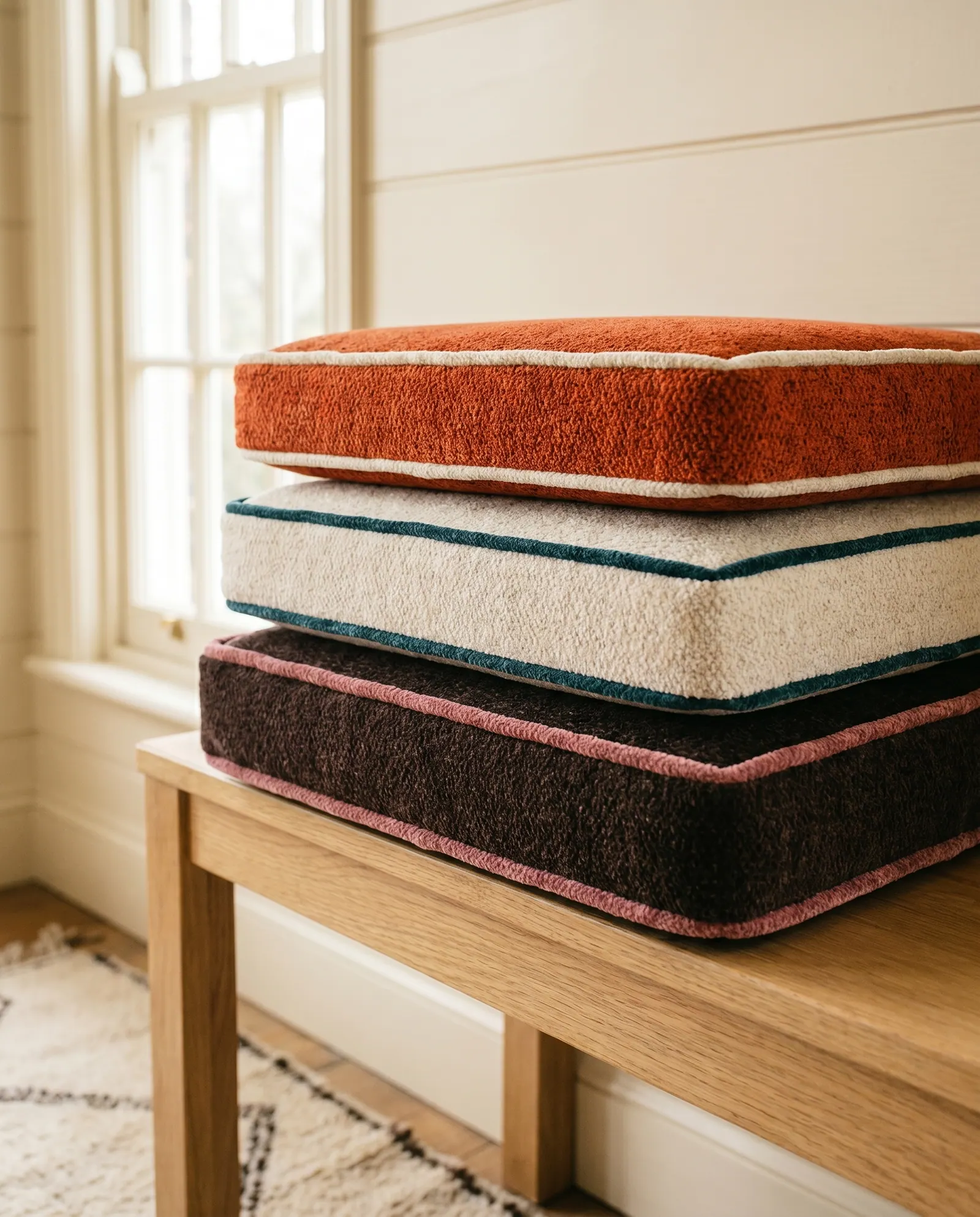
Look along the sides of the stack. Four box cushions, no piping, and every edge holds a clean square line. Without a welt to stiffen the seam, the foam does that job alone. The workshop's seat standard is high-density polyurethane, not memory foam, wrapped in polyester batting and cut a touch larger than its cover. The top crowns slightly, the corners fill out, and an unpiped box edge stays square instead of caving in. It is also why a firm insert takes two people to zip in.
Firmness matters more by the front door than anywhere else in the house. Nobody lounges in a hallway; they drop down, pull on boots and stand up again. The standard seat sits around 6 to 7 on the workshop's 10-point scale, firm enough to push up from. New foam feels firmer in its first weeks, so give it a month before you judge it.
Then height. Work backward from a seat top of about 18 in (46 cm). A niche 15 in (38 cm) high takes a 3 in (8 cm) cushion to get there. Measure the bench, not the cushion you used to have.
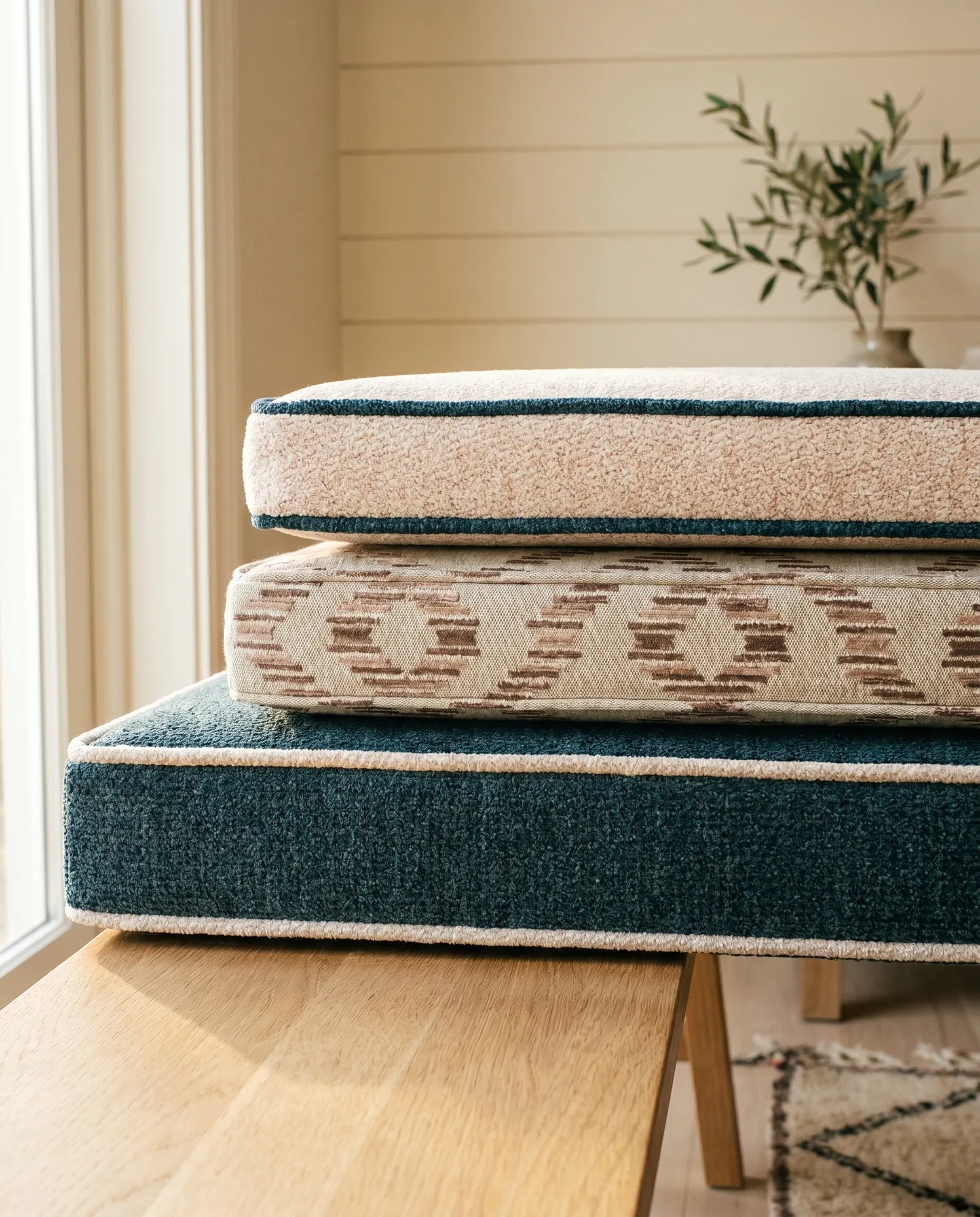
The crinkled weave is the pleasure on top of the engineering. In cool overcast light the texture throws soft shadows, deepest on the pale blue-gray. Against a limewashed gray wall and a Berber rug, the four shades look calm rather than cold, and a stoneware jug of eucalyptus adds the only leaf. Try the foam firmness finder and the seat height calculator, read why foam is wrapped and cut bigger, and see more mudroom and entryway bench cushions in bouclé and teddy.
A 111 in bench, a stripe and one honest seam
One buyer wrote in about a 111 in (282 cm) bench whose cushions had to match pillows she already owned. The first samples missed. The shop sent a second set free, and she chose an olive stripe with brown piping.
Then the arithmetic. That fabric is only about 54 in (138 cm) wide, and her two cushions were each about 55 in (140 to 141 cm) long, with the stripes running across. A cross-stripe on a piece longer than the roll is wide needs a seam. The shop showed her a finished example where the seam was barely visible, and she went ahead. She called the cushions perfect.
Check the roll width before you choose a stripe direction. Better to learn it from a sample than from a seam.
Buyer questions: exact sizes, piping, real linen
- A common question
Should I give you the exact size of my window seat, or take a little off to allow for variation?
The workshop's answerGive the exact measurements of the space and don't reduce them. The shop reviews your diagram and decides any allowance or adjustment with its production team.
- A common question
Does piping cost extra?
The workshop's answerNo. The price is the same with or without piping. Just write the piping color code in the personalization section.
- A common question
Is your linen real linen, or at least a natural fiber?
The workshop's answerThe standard linen fabrics are blends, not 100% linen. For a natural fiber there is a 100% cotton linen-look fabric. There is also a sturdy, high-quality acrylic linen, which the shop recommends for hard-working projects.
On the cutting table: the cool stack
| Product | Box bench cushions, stacked to compare colors |
|---|---|
| Fabric | Crinkle-textured bouclé-look weave |
| Colors | Aubergine brown, slate blue, pale blue-gray, mauve taupe |
| Piping | None; unpiped box edges |
| Workshop seat foam | High-density polyurethane wrapped in polyester batting, cut a touch larger than the cover |
| Firmness | Seat standard around 6 to 7 of 10 |
| Seat height | About 18 in (46 cm) to the top of the cushion |
| Setting | Slatted oak bench, limewashed gray wall, Berber rug |
| Best for | Hallways and entries with cool light |

Have it made
Have this made — ask Maggie’s workshop
I once cut a lovely cushion two inches short, and I have not forgotten it. That is why the workshop goes over your measurements with you on the phone. — Maggie
Leave your details and the workshop will call you to confirm measurements, fabric, foam and piping. No prices, dates or payment on this page: it is a request, not an order.
An unpiped bench cushion keeps a square box edge only when the foam is cut a touch larger than the cover, so the corners fill out.
Maggie
Questions buyers ask next
What foam is best for an entryway bench cushion?
Firm high-density polyurethane, the workshop's seat standard. It keeps a crisp shape under daily sit-and-stand use and, wrapped in batting, fills square box corners. Memory foam needs 3 in or more and stiffens in a cold room, a poor match for a drafty entry.
Why does a new bench cushion feel harder than expected?
New foam feels firmer in its first weeks and eases as it settles. Thickness also changes how firm a cushion feels. Give a new seat a few weeks of daily use before deciding it is too hard for your bench.
Which cool color works best on an oak bench against a gray wall?
Start with pale blue-gray or slate blue; both look calm rather than cold with oak. A warm gray like mauve taupe links cool tones to the wood, and a dark aubergine adds depth where the hall gets plenty of light.
Do unpiped cushions hold their shape as well as piped ones?
They can, if the foam fills the cover. A welt stiffens the seam, but without one the box edge relies on foam cut a touch larger than the cover and wrapped in batting, which fills out the corners and keeps the sides straight.
Stitch straight — Maggie
More photographs to read
 Save
 Save
 Save
 Save
 Save
 Save