 Save
- Charcoal cushion
The darkest shade sits on top so the stack reads light to dark from the floor up.
- Mauve gray
A dusty mauve bridges the charcoal and the warm tones below.
- Rust cushion
Rust is the strongest color and sits in the middle of the stack.
- Caramel cushion
Caramel links the rust to the oak bench beneath.
- Cream base cushion
No piping on any piece, so the crinkled texture meets the edge unbroken.
Plate Bench cushions · crinkle bouclé-look · no piping
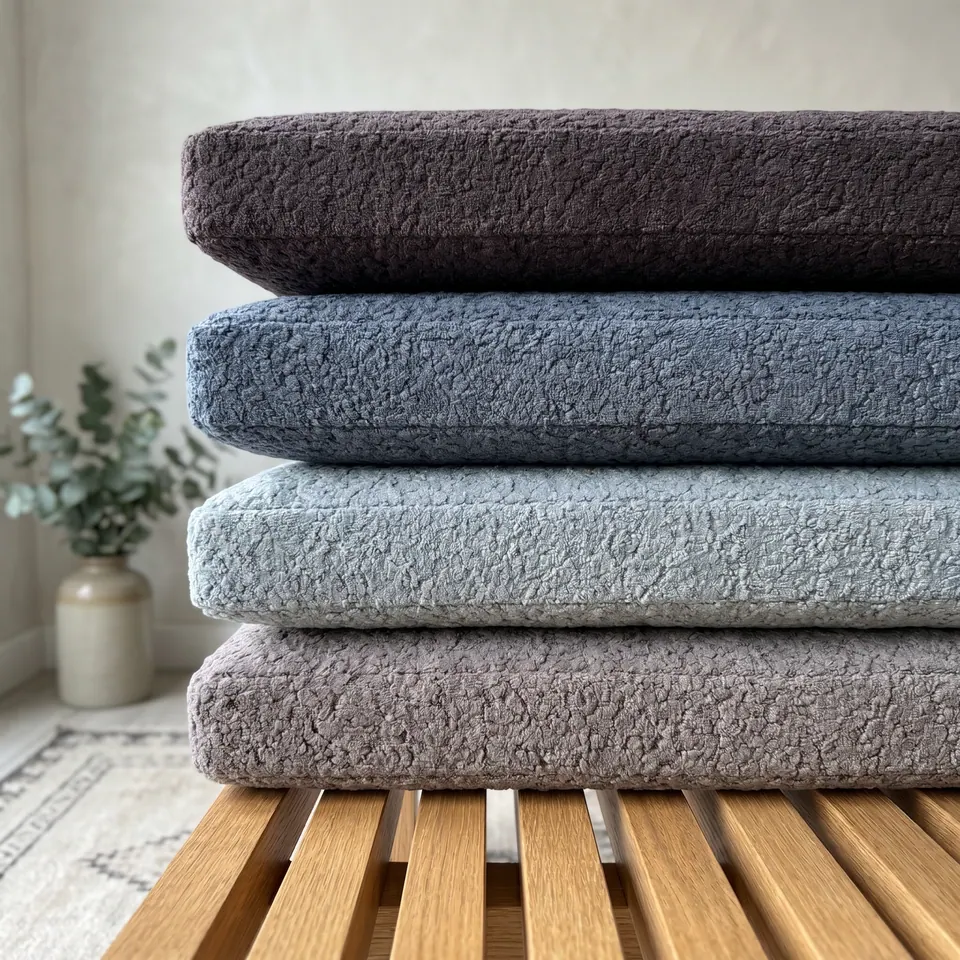
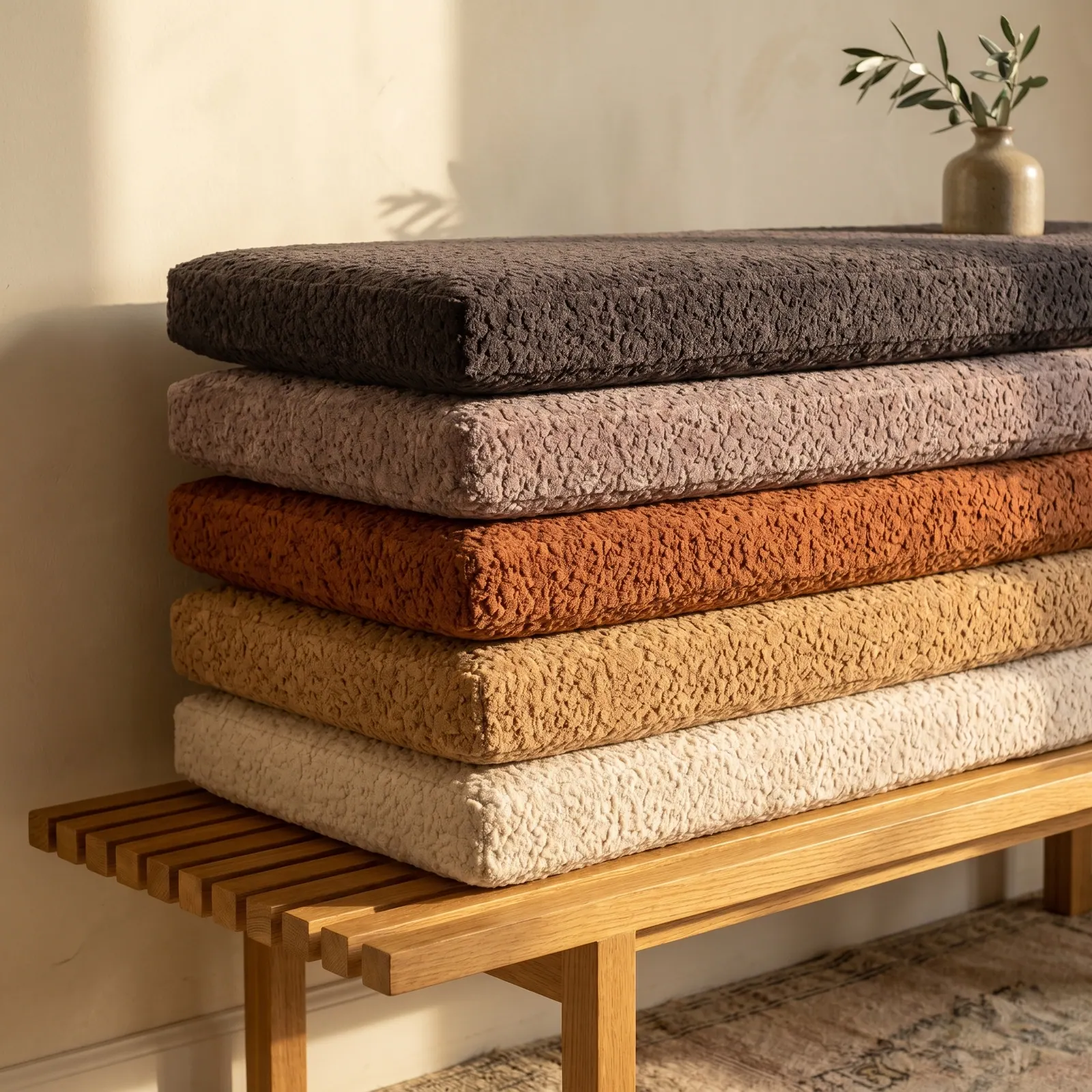
Five warm earth shades in a crinkled bouclé-look texture, stacked to compare side by side.
A Reading by MaggieBench Cushions
Five earth-tone bench cushions on oak, and one buyer's road to a shortlist
A whole swatch book is a fine way never to decide. One buyer found a better route, and this stack of five shows why it works.

The quick answer
The surest way to choose a bench cushion color is to hold two or three shortlisted swatches against your own bench wood in daylight, after you have a quote for your size. One buyer measured an 85 7/8 × 25 1/4 in (218 × 64 cm) seat, asked for the quote first, then requested only a few warm shades instead of the whole book.
Five shades, stacked where the light is honest
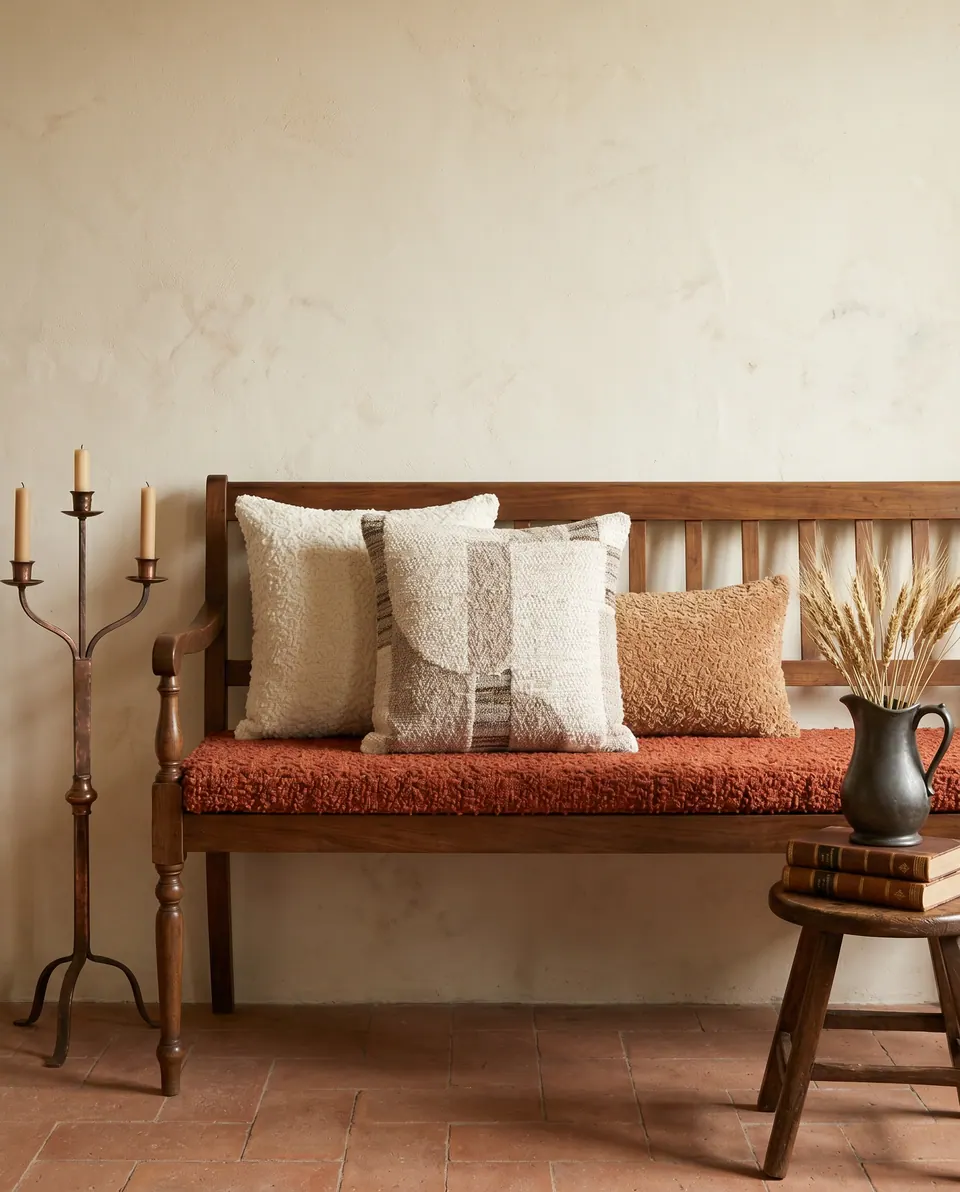
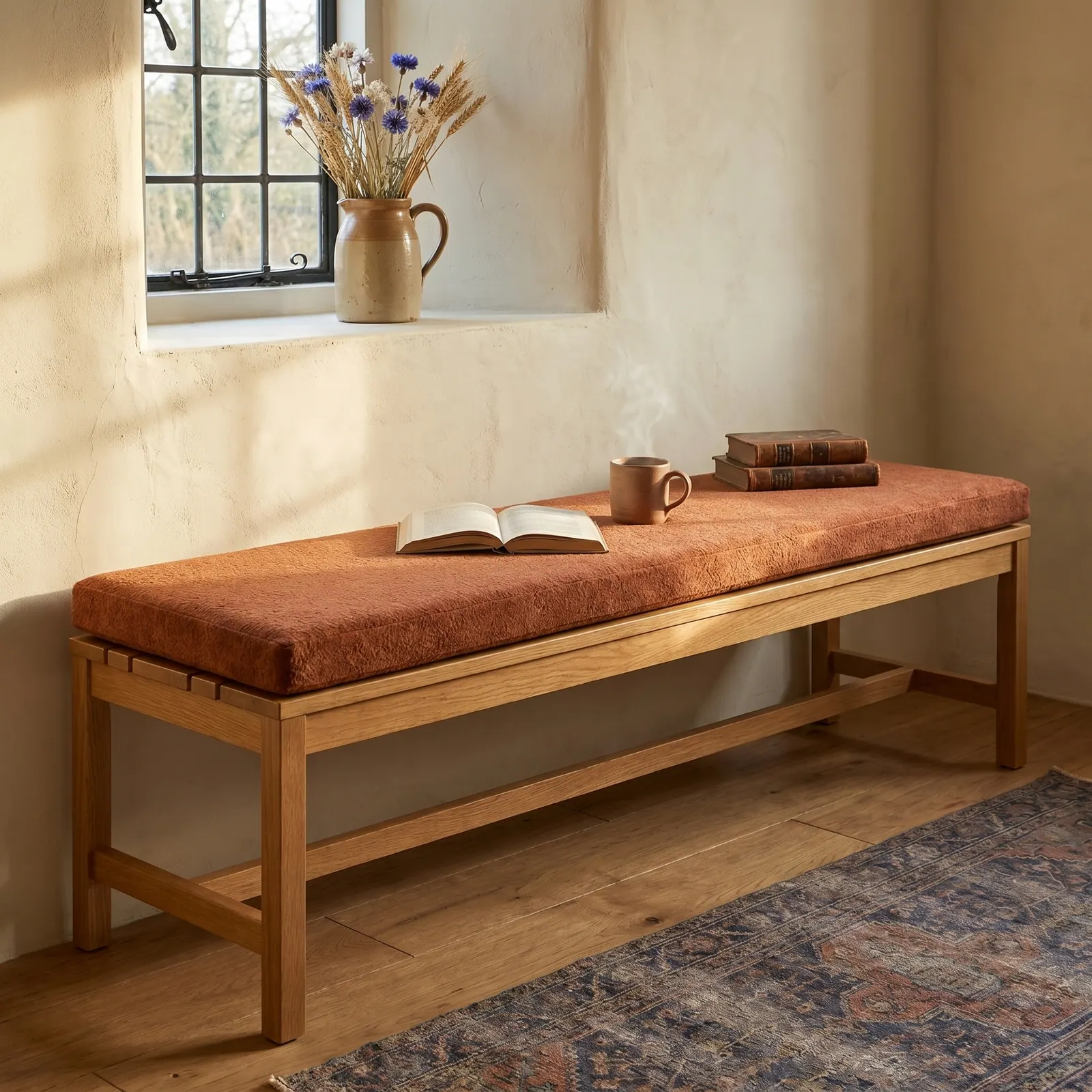
Five bench cushions in a crinkled, bouclé-look texture sit stacked on a slatted oak bench against a sunlit plaster wall: cream at the bottom, then caramel, rust, mauve gray and charcoal on top. Each shade sits next to its closest neighbor. Rust, the strongest, takes the middle, and caramel ties it to the oak below.
Stacking is the honest way to compare colors. You see them against real wood and real daylight, not a white wall or a phone. The olive sprig in a stoneware bud vase and the faded vintage rug stay quiet on purpose.
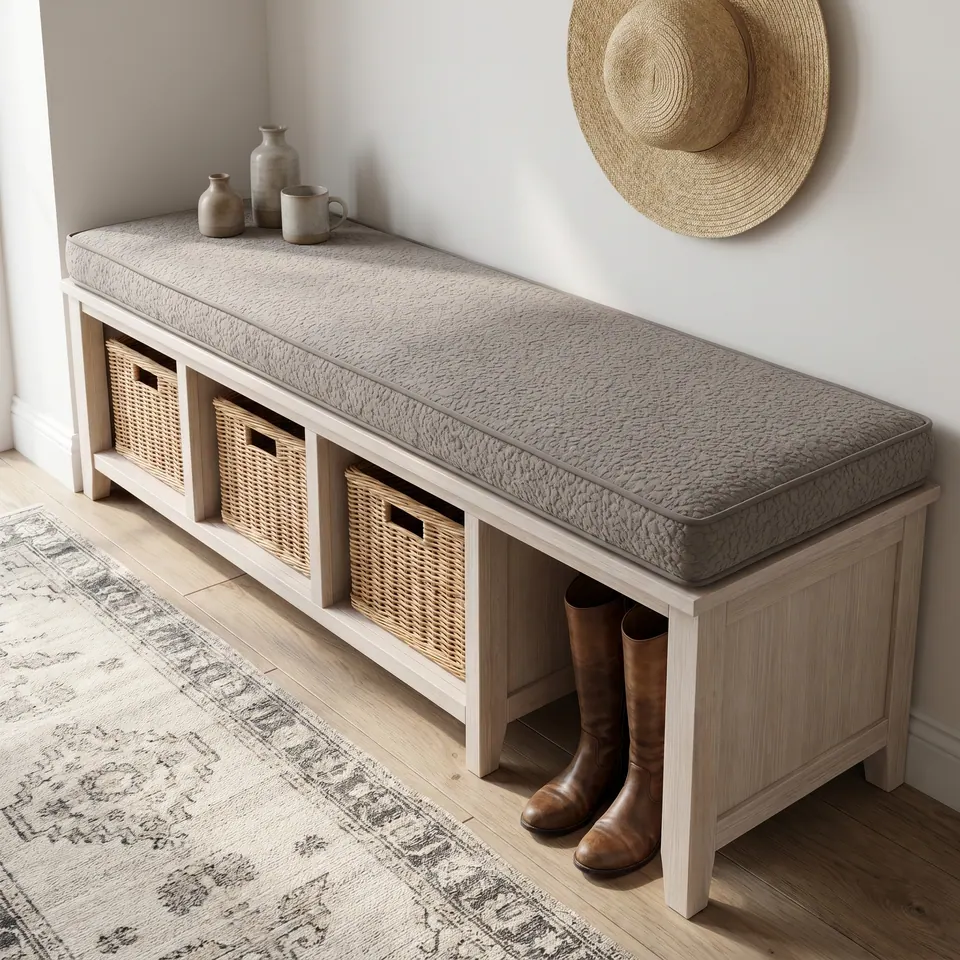
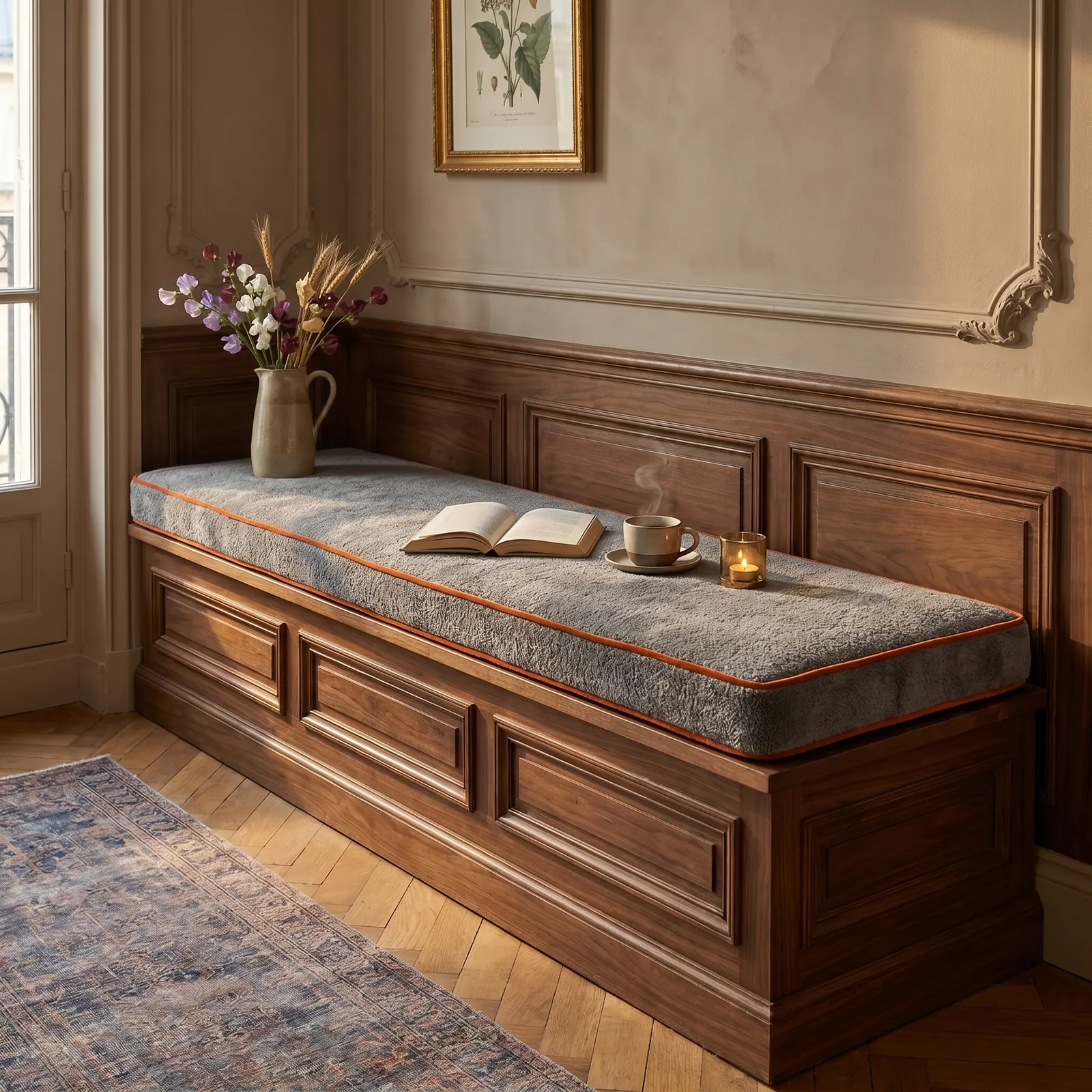
None of the five has piping. The fabric comes from the bouclé and teddy family, and a welt would look stiff against a crinkled surface, so the texture meets the edge unbroken. The Pattern on piping choices covers when to leave it off.
Which two shades would make your shortlist?
One pin per shade
Five pins, one per shade, from the charcoal top to the cream base.
The numbers match the pins on the plate.
- Charcoal cushionThe darkest shade sits on top so the stack reads light to dark from the floor up.
- Mauve grayA dusty mauve bridges the charcoal and the warm tones below.
- Rust cushionRust is the strongest color and sits in the middle of the stack.
- Caramel cushionCaramel links the rust to the oak bench beneath.
- Cream base cushionNo piping on any piece, so the crinkled texture meets the edge unbroken.
A long bench, a short list
The request came with a long built-in bench and a wall behind it. The seat measured 85 7/8 × 25 1/4 in (218 × 64 cm); the back cushion 85 7/8 × 19 5/8 in (218 × 50 cm), though 17 3/4 in (45 cm) tall would also do. They wanted velvet or linen in orange, tobacco or mustard.
Right, then: they did two sensible things. They sent measurements first and asked for a quote before paying for samples. Then they asked for small swatches of just a few shades, not the whole book, and the workshop agreed, charging only shipping.
With the quote in hand, they took time to think. Good. That's what a shortlist is for, dear.
- Sizes
- seat 85 7/8 × 25 1/4 in (218 × 64 cm); back 85 7/8 × 19 5/8 in (218 × 50 cm)
- Fabric
- Velvet or linen in orange, tobacco or mustard shades
The lesson: Quote first, then send only the two or three swatches the buyer shortlisted.
The fabric shortlist method, step by step
Measure seat and back
Length and depth of the seat, length and height of the back, in the unit you measured in. Note any size you could live with, like 17 3/4 in instead of 19 5/8 in.
Name the family and three colors
Velvet or linen; orange, tobacco or mustard. Three words narrow a whole swatch book.
Ask for the quote first
Price your exact size before you pay for samples.
Order two or three swatches
Only the shades you would actually buy. More just muddies the choice.
Hold them against your bench
Daylight, your own wood, your own wall. Then decide, and take your time.
Buyer questions: stripes, ties and a covered porch
- A common question
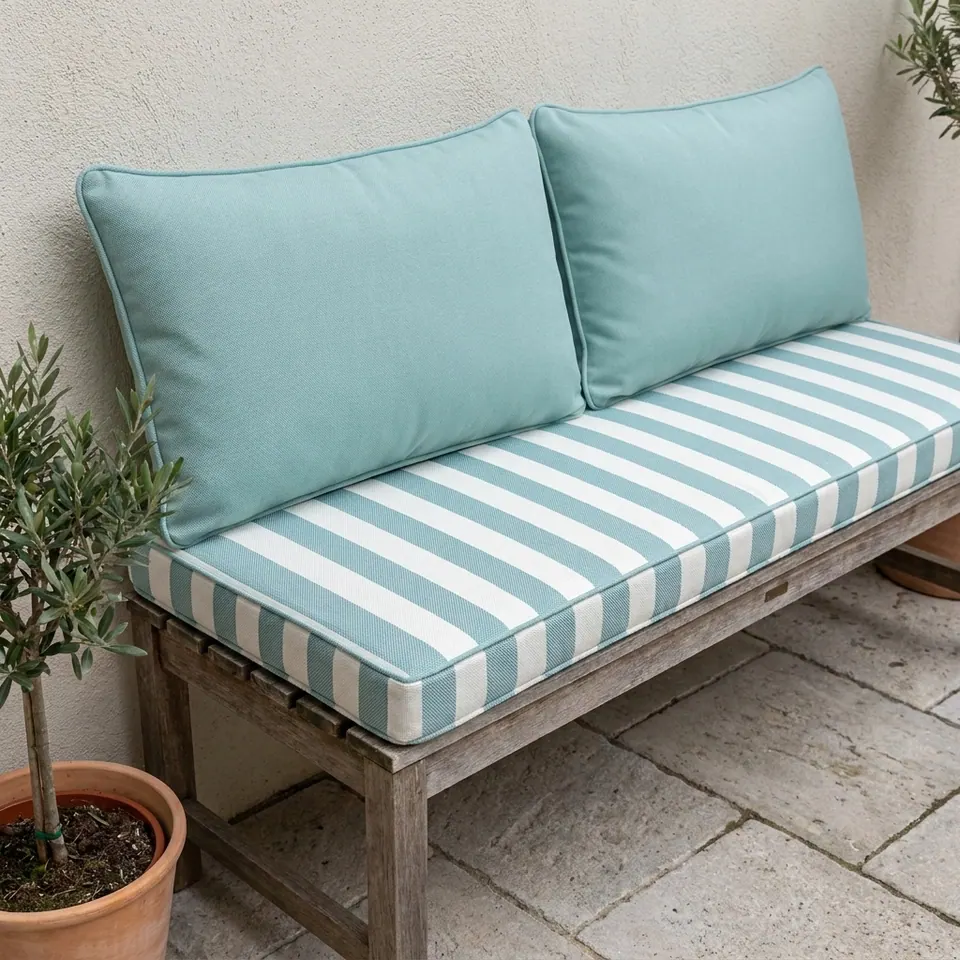
The striped fabric I picked doesn't come in a plain version. What can I use for the piping?
The workshop's answerThe stripe collections come only in stripes, with no solid in the same tone. Use the same striped fabric for the piping, or choose a solid from another color chart.
- A common question
Can you put ties on two bench cushions so they stay together and don't slide?
The workshop's answerYes. Ties can go on the ends where the two cushions meet, and on a side so the cushions can be tied to the bench.
- A common question
Will an indoor linen cushion hold up on a covered balcony or porch?
The workshop's answerOn a covered balcony that rain barely reaches, the linen cushion will do. For a screened porch that sees pollen, dust and humidity, the workshop recommends its outdoor fabric and can send samples first.
On the cutting table: five crinkle bench cushions
| Cushions | Five box-edge bench cushions, stacked to compare |
|---|---|
| Texture | Crinkled, bouclé-look |
| Colors | Charcoal, mauve gray, rust, caramel, cream |
| Piping | None; the texture meets the edge |
| Bench | Slatted oak |
| A real project | Seat 85 7/8 × 25 1/4 in (218 × 64 cm), back 85 7/8 × 19 5/8 in (218 × 50 cm) |
| Swatches | Two or three shortlisted shades, after the quote |
| Best for | Entry and hallway benches in warm, sunlit rooms |

Have it made
Have this made — ask Maggie’s workshop
Numbers first, fabric second, piping last. Jot down what you have, and the workshop will go down the list with you, item by item. — Maggie
Leave your details and the workshop will call you to confirm measurements, fabric, foam and piping. No prices, dates or payment on this page: it is a request, not an order.
Shortlist two or three bench cushion swatches and hold them against your own bench wood in daylight; a white wall flatters every color.
Maggie, swatches in hand
Questions buyers ask next
Why do some bench cushions have no piping?
On soft, textured fabrics such as a crinkled bouclé-look weave, a welt can look stiff. Without piping the texture runs right to the edge. Ask for plain edges in the order note if that is the look you want.
Can I order fabric swatches before a custom bench cushion?
Yes. You can ask for a few shortlisted shades rather than the whole book; in one case the workshop sent them for the cost of shipping only. Ask for a quote on your size at the same time.
How do I compare cushion colors at home?
Stack or line up the samples in daylight on the furniture they are meant for, each shade beside its closest neighbor. Your own wood and wall show what a screen or a white background hides.
Stitch straight — Maggie
Bouclé bench cushions, piped and unpiped
 Save
 Save
 Save
 Save
 Save
 Save