 Save
A Reading by CallumChaise Lounge & Sunbed Cushions
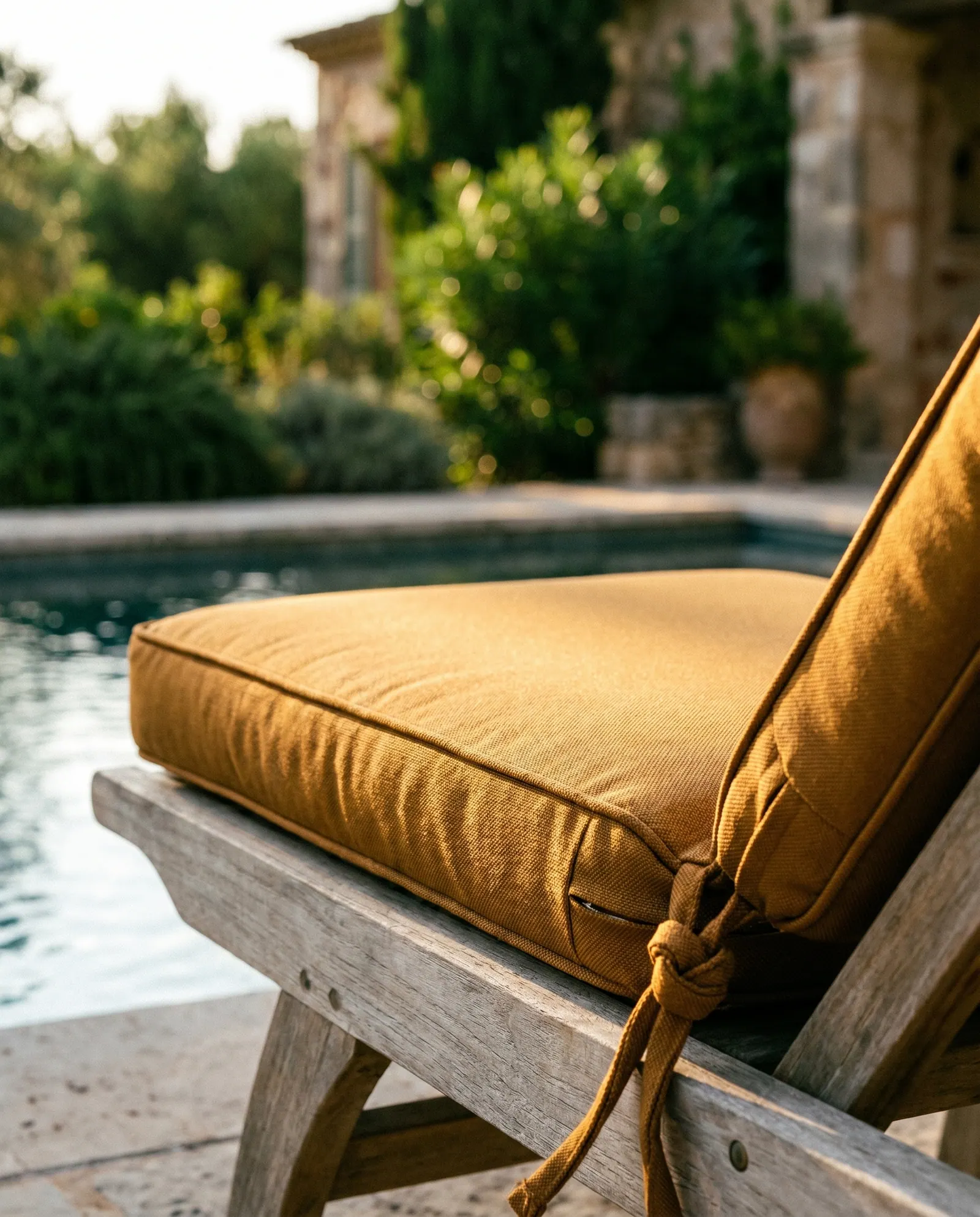
An amber sunbed cushion with self piping, tied at the hinge by a stone pool
Two pieces, one color, one quiet welt. On a lounger, the piping decision is really a decision about where the eye stops.
An amber lounger cushion is tied to the frame at the hinge, where the seat and back sections meet.
The quick answer
On a two-piece sunbed cushion, self piping is the safe choice: it firms the box edge without drawing a hard line across the hinge where seat and backrest meet. Contrast piping outlines each section and makes that gap the loudest thing on the lounger. Tie the cushion at the hinge so neither piece creeps when the back goes up.
A welt you barely notice, on purpose
The best piping on this lounger is the piping you almost miss. Amber cloth, amber welt, and the eye runs from the foot of the seat to the top of the back without stopping.
This sunbed cushion comes in two sections. The seat lies flat. The backrest reclines on its own. Where they meet, at the hinge of the silvered teak frame, a pair of fabric ties is knotted around the rail. That is the spot that creeps when you crank the back up. Corner ties alone won't hold it.
Then the light. Low evening sun, warm and hazy. Amber against blue-green pool water glows by contrast, the way a buoy does on a gray sea. The weathered teak is gray too, and it keeps a warm color from turning brash. The stone urn and the old farmhouse behind are weather-beaten company. Nothing on this terrace is new, so the cushion doesn't shout either.
Pinned by Callum: five spots on a poolside lounger
Five spots on the lounger, from the pool edge to the knot at the hinge.
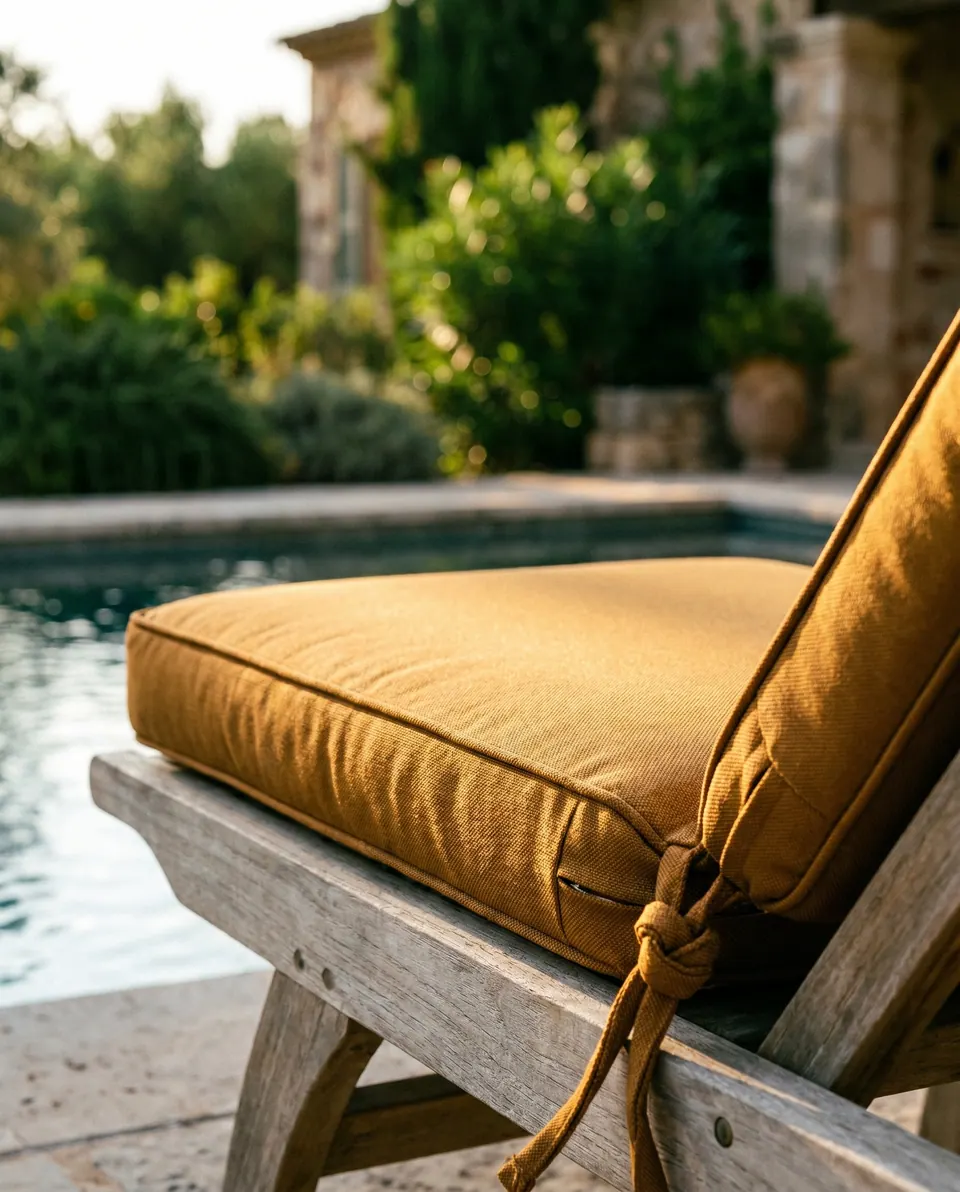
- Seat section
The seat lies flat while the back section reclines separately.
- Backrest section
A separate back piece lets the lounger adjust without bunching.
- Knotted tie
Ties sit at the hinge point so neither part creeps down.
- Pool water
Blue-green water makes the amber glow by contrast.
- Silvered teak
Gray weathered wood keeps the warm color from looking brash.
- Seat sectionThe seat lies flat while the back section reclines separately.
- Backrest sectionA separate back piece lets the lounger adjust without bunching.
- Knotted tieTies sit at the hinge point so neither part creeps down.
- Pool waterBlue-green water makes the amber glow by contrast.
- Silvered teakGray weathered wood keeps the warm color from looking brash.
Self, contrast or none: piping on a two-piece lounger
I cut sails before I cut cushions, and the rule is the same on a deck as on a patio, friend: decide where you want the eye to stop.
A lounger has two edges that matter. The long front of the seat, and the hinge. Contrast piping traces both. On amber this strong, a cream or navy welt would chop the cushion into two boxes and draw a line right across the fold.
Self piping still does the job piping is for. It stiffens the seam along the box edge, so the front stays square after a season of people sitting on the lip to get up. It just does it quietly. Cut from the same outdoor acrylic, the welt weathers at the same pace as the body.
No piping is softer and rounder, a looser look. It suits a thick, casual pad more than a tailored box.
If you want contrast, put it where there's no join: a one-piece chaise pad, a chair seat. The full comparison is in matching, contrast or no piping.
A school bus loveseat with a narrower back cushion
A buyer in the US was fitting out a converted school bus and sent the workshop the loveseat. Back: 46.5 in (118 cm) wide, 17.5 in (44 cm) tall. Seat base: 48 in (122 cm) wide, 16.5 in (42 cm) deep. Not the same width. In vans and buses they rarely are.
The workshop subtracted the backrest thickness from that 17.5 in height and cut the back cushion narrower than the seat. Both pieces in linen, color 8.
A lounger is the same puzzle in a different coat. Two parts, one joint. Measure each part on its own before you decide how they meet. How much narrower is your back than your seat?
Buyer questions: outdoor cloth, a U-shaped van, matching backs
- A common question
Are your fabrics indoor-only, or can my cushion be made in something that holds up outside?
The workshop's answerMost cushions can be made in outdoor-rated, water-resistant fabric. All the outdoor palettes are on the outdoor bench cushion listing: order from there, or take an outdoor fabric code and use it on another cushion's listing.
- A common question
Could you make a U-shaped set of seat cushions for our campervan?
The workshop's answerYes, U-shaped seating is made regularly. Send a drawing with the length of every run of the U, the depth and the thickness you want, plus a photo of the space.
- A common question
I already have your outdoor bench cushion. How do I order backrests that match it?
The workshop's answerOrder from the same listing. Add the backrest pieces at their own size, for example two cushions at about 16 x 20 in (40 x 50 cm) in the same fabric code, and write in the personalization note that they are backrests.
On a two-piece sunbed cushion, self piping firms the edge without drawing a line across the hinge. Contrast piping would point straight at the gap.
Callum
On the cutting table: the poolside lounger
| Cushion | Sunbed cushion in two sections, seat and backrest |
|---|---|
| Edge | Box edge |
| Piping | Self piping, amber on amber |
| Fabric | Outdoor acrylic in amber |
| Fastening | Fabric ties knotted at the hinge point |
| Frame | Weathered teak lounger with a reclining back |
| Light | Low evening sun beside blue-green water |
| Best for | A patio or poolside lounger that reclines |
Have it made
Have this made — ask Callum’s workshop
Tell them where it lives. Porch, deck or boat: the weather picks the fabric and the foam before anyone else does. — Callum
Leave your details and the workshop will call you to confirm measurements, fabric, foam and piping. No prices, dates or payment on this page: it is a request, not an order.
Questions buyers ask next
Should the piping on a sunbed cushion match the fabric?
On a cushion made in two or more sections, matching (self) piping is the calmer choice, because it firms each box edge without outlining the joins. Save contrast piping for a one-piece chaise pad, where there is no hinge line to draw attention to.
Where should the ties go on a reclining lounger cushion?
At the hinge, where the seat section meets the backrest. That is the point that shifts when the back is raised. Corner ties can be added at the foot, but the hinge ties are the ones that stop both pieces creeping.
Do I measure a two-piece lounger cushion as one piece or two?
Two. Measure the seat and the backrest separately, width included, because they are not always the same width. Note where the frame folds, measured from the foot, so the break between cushions lands on the hinge.
Fair winds — Callum
More photographs to read
 Save
 Save
 Save
 Save
 Save
 Save