The Cutting Table · a common question
How can I attach a back cushion to the wall?
Also asked as:How do I mount a back cushion?Attach these to the wall as a back cushion
A back cushion that slides down the wall every evening is a small daily sorrow. There are two honest ways to keep it up where your shoulders need it.
The quick answer
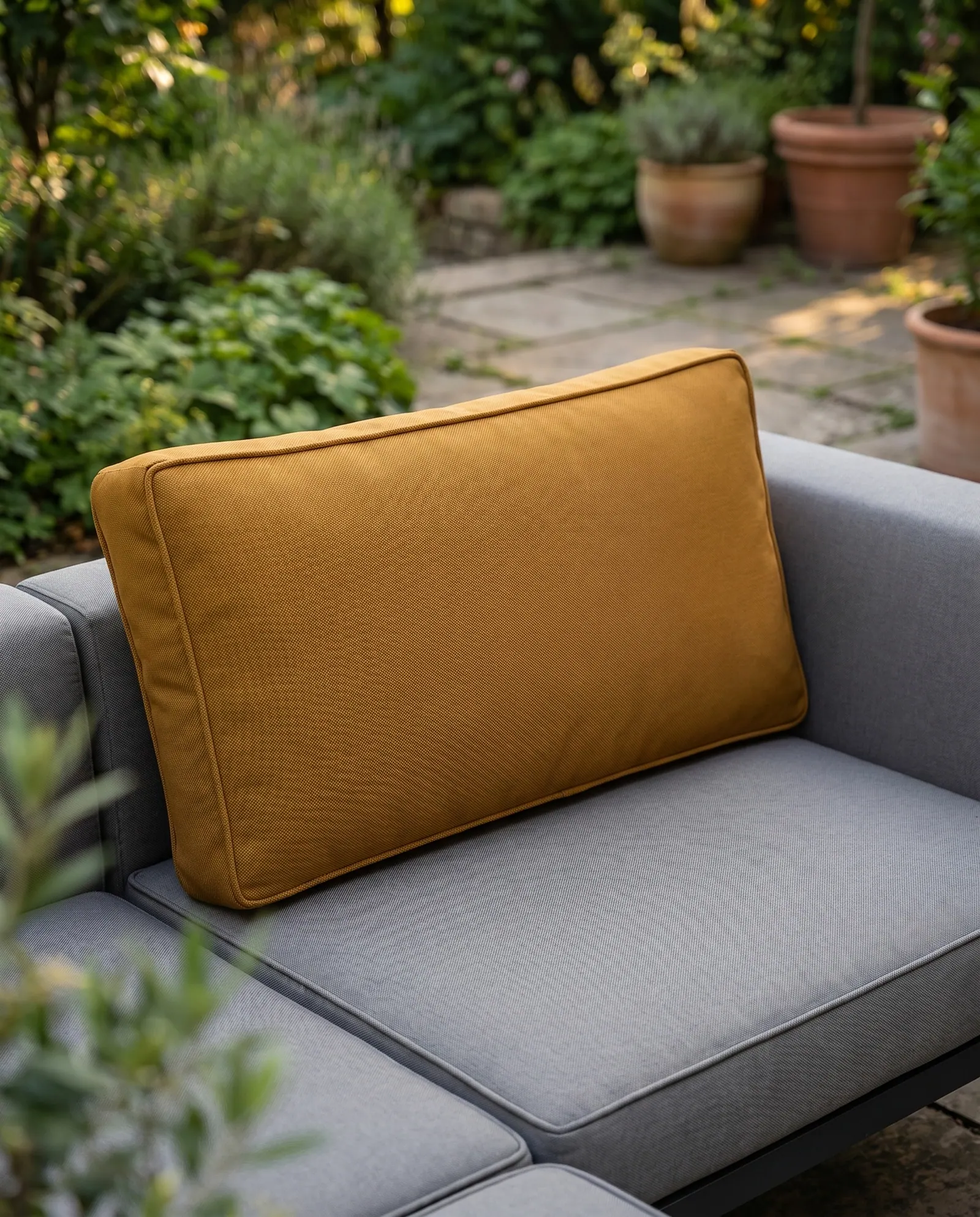
Attach a back cushion to the wall with hook-and-loop fastener: the workshop sews one side onto the back of the cushion, and you fix the matching strip to the wall with strong adhesive, or screws for a firmer hold. The cushion presses on and peels off for cleaning. The other way is a rod, with two fabric loops sewn onto each cushion.
 Save
Key facts
- Wall-mounted back cushions use hook-and-loop fastener.
- The workshop sews the cushion side; the wall side goes on with adhesive or screws.
- Back cushions can hang from a rod on 2 sewn-on fabric loops each.
- Loop cushions are quoted as a custom set.
- Thin wall backs can be 1-2 in (2.5-5 cm) thick.
- Matching fabric can be sold by length.
Have it made
Have Harlan’s workshop cut this for you
Old upholsterers will tell you the real cutting happens in the conversation, long before the shears come out. Tell the workshop what you sit on, and they will talk it through with you. — Harlan
Leave your details and the workshop will call you to confirm measurements, fabric, foam and piping. No prices, dates or payment on this page: it is a request, not an order.
Two ways up the wall
| Hook-and-loop | Rod and fabric loops | |
|---|---|---|
| What the workshop does | Sews one side to the back of the cushion | Sews 2 fabric loops onto each cushion |
| What you do | Fix the matching strip with adhesive, or screws for a firmer hold | Mount a rod and slide the loops on |
| Taking it down to clean | Peel off, press back on | Lift the loops off the rod |
| Loop fabric | Not needed | Seat fabric or a matching neutral |
| What to send | Cushion sizes | Cushion sizes, rough loop size, how many cushions |
Whose half of the fastener is whose
A seam is a promise. The half of the fastener that lives on the cushion is stitched on at the workshop, so you never glue anything to the cover. The wall half is yours to fix, with strong adhesive or with screws when you want the firmer hold.
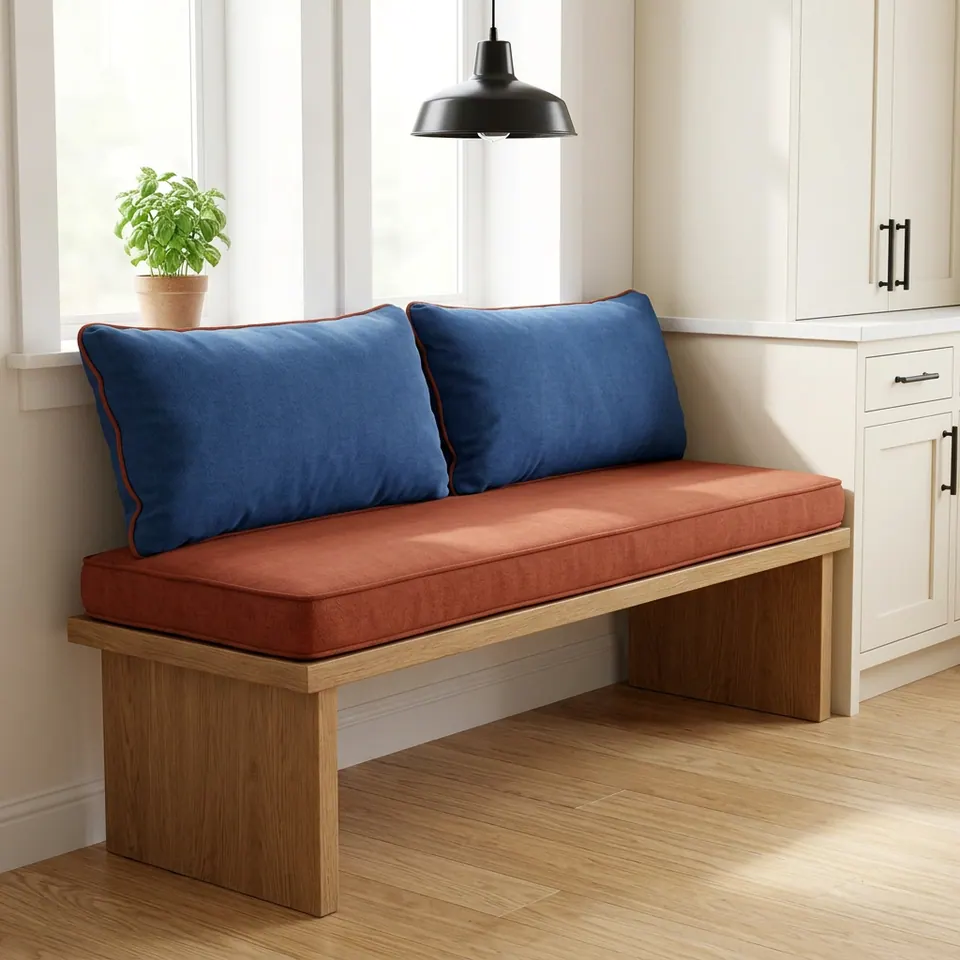
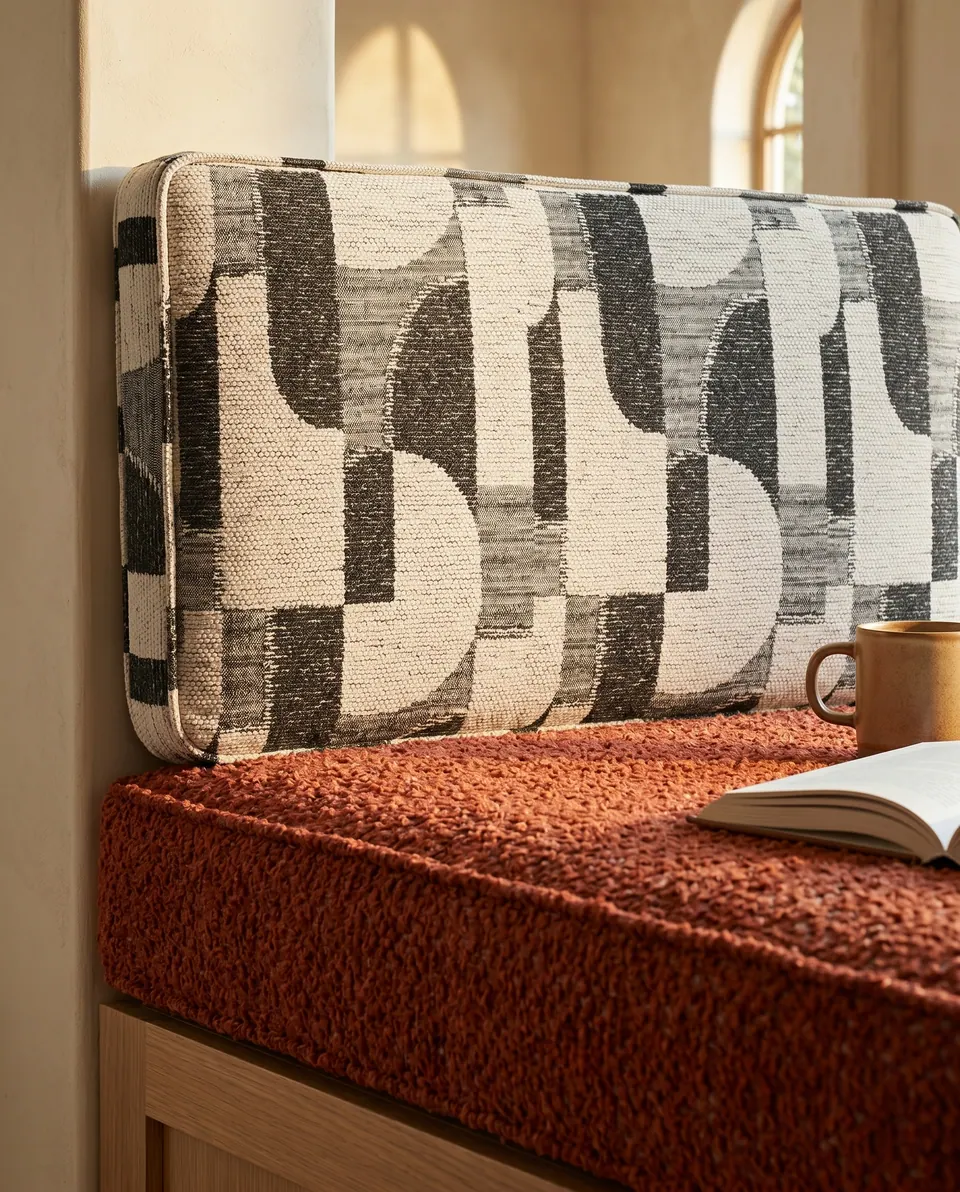
A wall back doesn't have to be thick, either. One buyer ordered a matching corduroy back 59 x 15 3/8 in (150 x 39 cm) and only 2 in (5 cm) thick, and another went to 1 in (2.5 cm) at about 11 3/4 x 59 in (30 x 150 cm) without piping. Extra corduroy can be sold by the length if you want to cover something else to match.
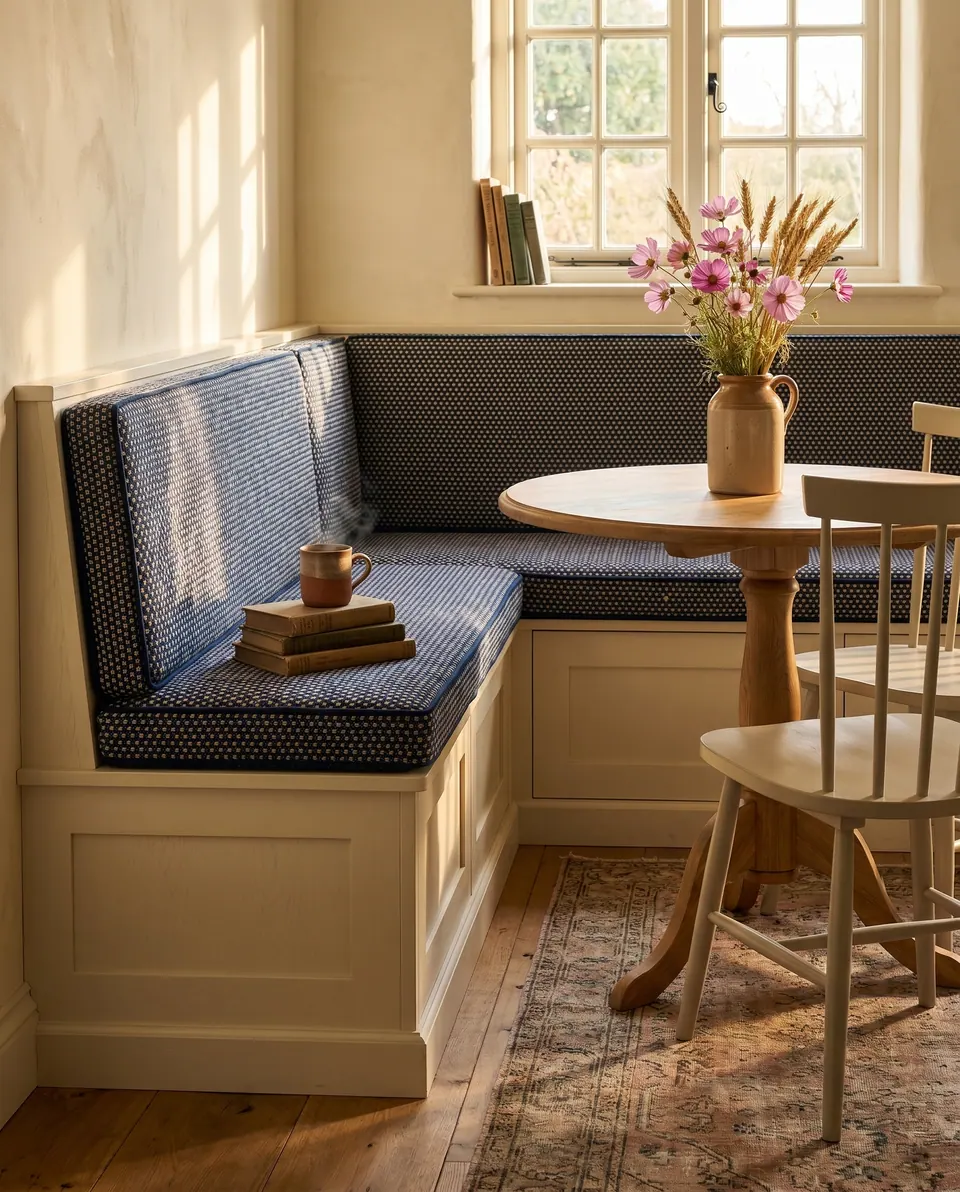
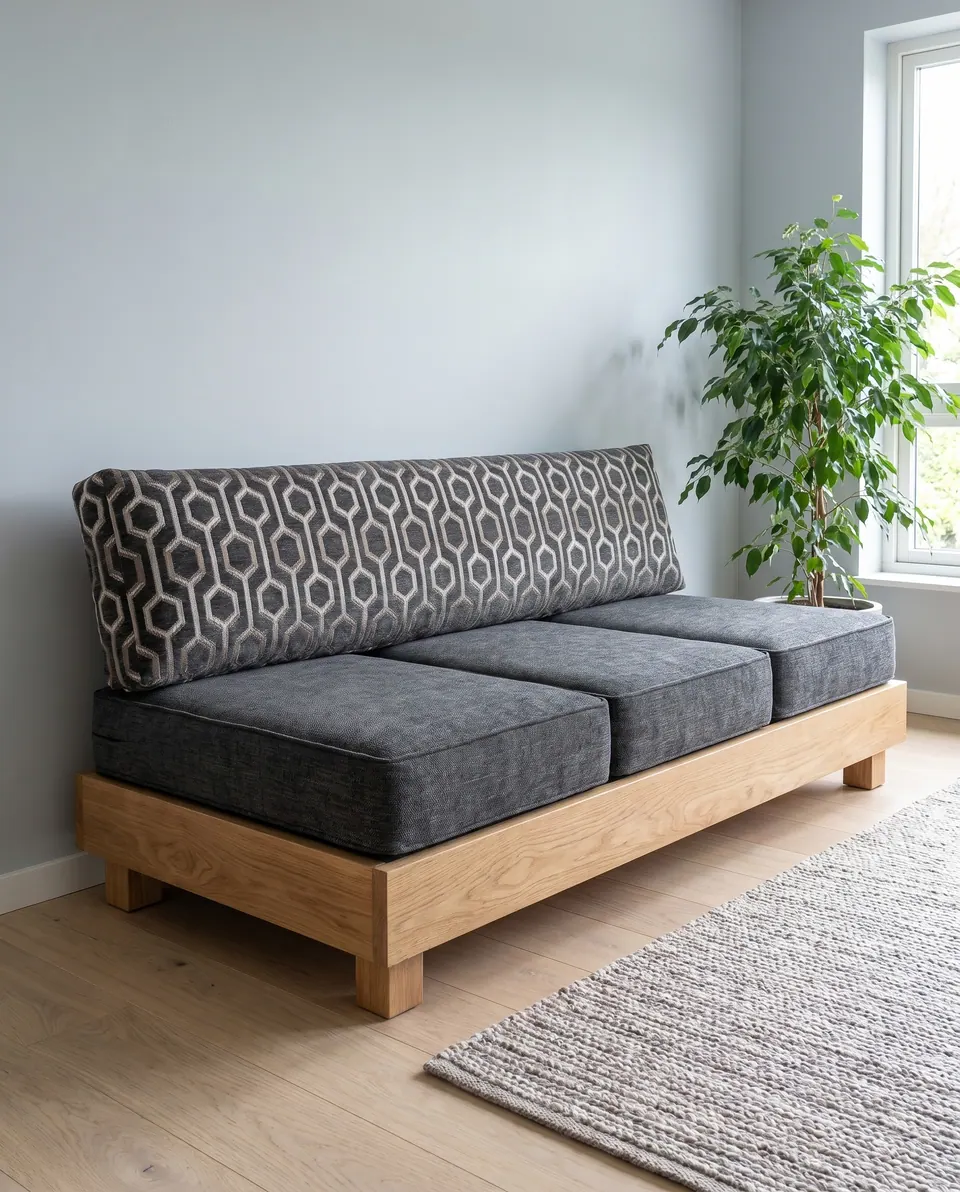
The backrest cushions atlas shows the shapes, and back cushion height sets where the strip goes. What's behind your bench, my friend: drywall, plaster or tile?
Putting it up with hook-and-loop
Mark the height
Sit on the bench, hold the cushion where your back meets it, and pencil the top edge on the wall.
Order with the fastener sewn on
Ask for hook-and-loop tape on the back of each cushion.
Fix the wall strip
Strong adhesive for a clean install, screws for a firmer hold.
Press it on
Line the cushion up with your mark and press. It peels off when the cover needs cleaning.
Hook-and-loop is the usual way to mount a back cushion: one side sewn to the cushion, the other fixed to the wall with adhesive or screws.
Harlan Pruitt
Buyer questions
- A common question
What's a good way to fix a cushion to the wall as a backrest?
The workshop's answerHook-and-loop fastener. One side is sewn onto the back of the cushion; you fix the matching side to the wall with strong adhesive, or screws for a firmer hold. It presses on and peels off for cleaning.
- A common question
Can you sew loops on back cushions so they hang from a rod?
The workshop's answerYes: two sewn-on fabric loops per cushion, in the seat fabric or a matching neutral. Being a non-standard make, it's quoted as a custom set, so send the cushion sizes, rough loop size and how many.
- A common question
Can you make a thinner matching cushion for the wall, or sell me the fabric?
The workshop's answerBoth. A 59 x 15 3/8 in (150 x 39 cm) back, 2 in thick, was made in the same corduroy, and a 1 in thick 11¾ x 59 in (30 x 150 cm) version without piping. Extra matching fabric can be sold by length.
- A common question
How do I order back cushions to go with my bench cushion?
The workshop's answerAdd each backrest as its own cart item from the same listing, at its own size, and write the size, fabric code and 'backrest' in the personalization box. Backrests can be shorter than the seat.
Questions buyers ask next
Screws or adhesive for the wall half of the fastener?
Strong adhesive works; screws give the firmer hold. For a back cushion people lean into every day, screws are the sturdier choice wherever the wall allows them.
Can a wall-mounted back cushion double as a soft headboard?
Yes. Soft foam-filled backrests about 4 in (10 cm) thick, attached with hook-and-loop, adhesive, rod loops or corner ties, also work as soft headboards behind a daybed or bed.
Can the workshop build a wall panel on a French cleat instead?
Usually not. The workshop makes soft, foam-filled backrests rather than panels with a rigid board or French cleat, and mounts them with hook-and-loop, adhesive, rod loops or corner ties.