The Cutting Table · a common question
Can you make a wall-mounted headboard cushion or backrest?
Also asked as:Attach it to our wall with a French cleat?How do you create the headboard?
I've seen many a backrest lean on a wall without a single screw in it. Here's how the soft ones are built, and when wood has to go inside.
The quick answer
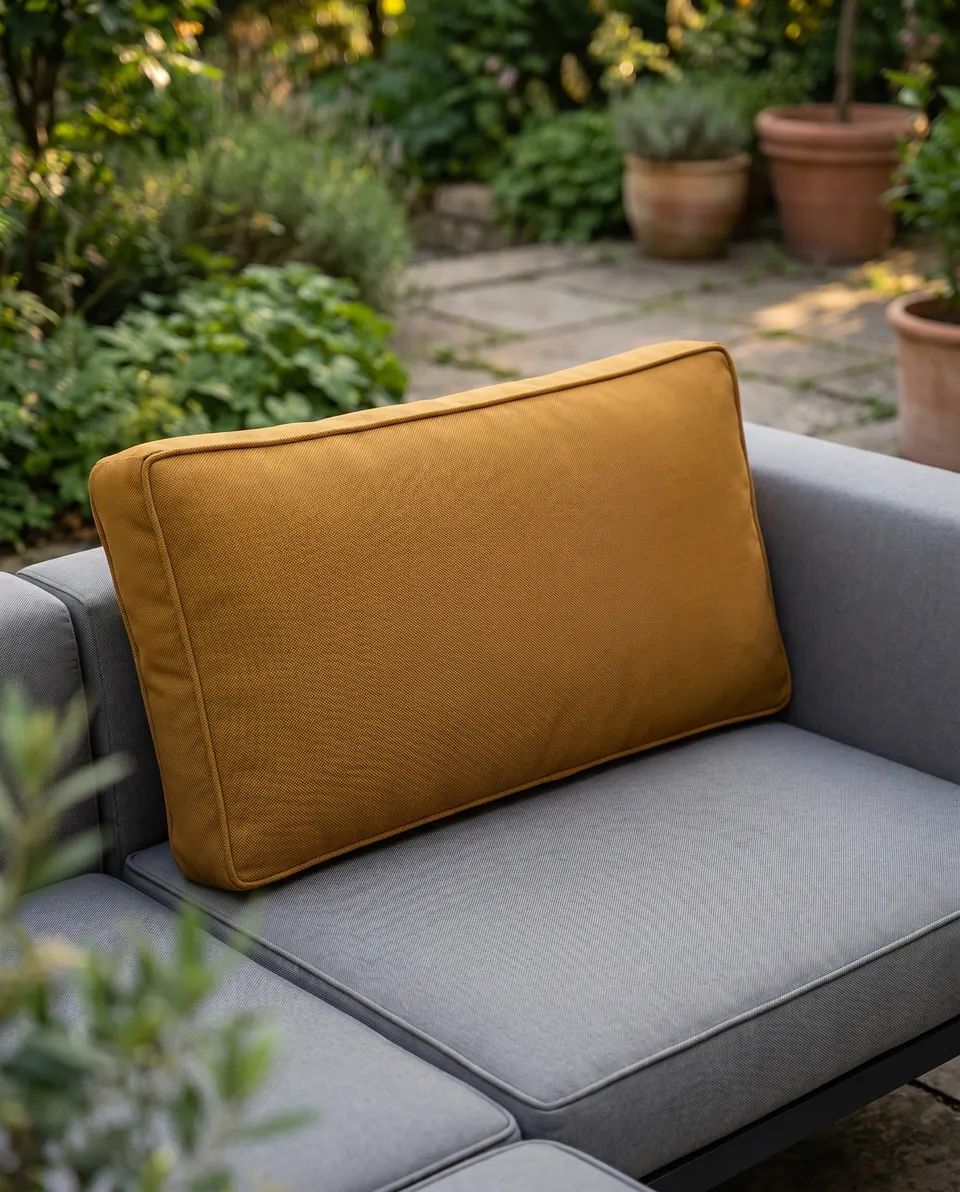
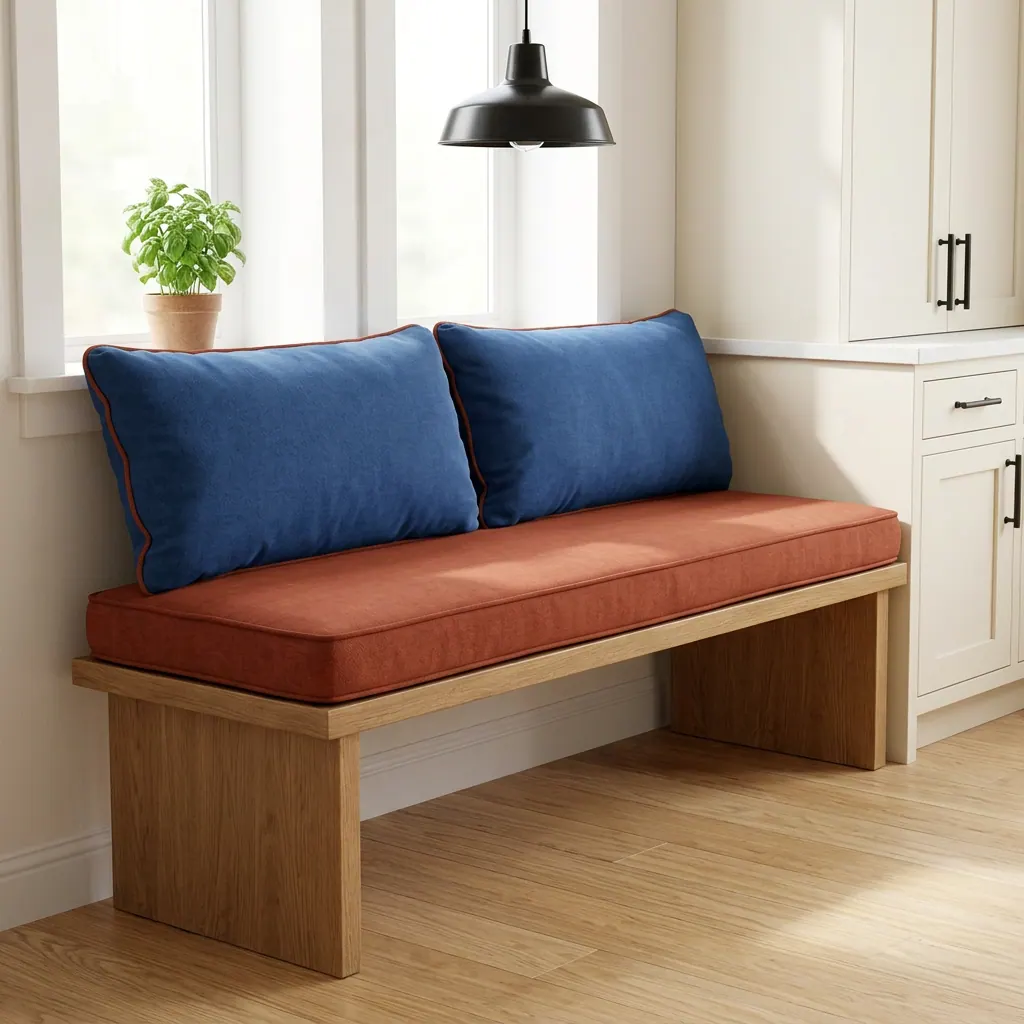
Usually not with a rigid board inside: standard backrests are soft, so they can't be screwed to a wall or hung on a French cleat. The workshop makes them like back pillows, a removable piped cover over about 4 in (10 cm) of shredded foam, or a firmer solid foam core wrapped in fiber, attached with Velcro, adhesive, rod loops or top-corner ties.
 Save
Key facts
- Standard backrests have no rigid board, so they can't mount on a French cleat.
- Wall-fixed back panels are not the standard make; board-backed panels are a special request.
- The standard backrest is a removable piped cover filled with shredded foam about 4 in (10 cm) thick.
- A solid foam core wrapped in fiber makes a firmer, flatter panel.
- Ties sewn on the top corners let a backrest hang from hooks or a rail.
- A channel backrest of vertical rolls needs upholstering onto a thin wooden board fixed to the banquette.
- A tufted cushion can serve as a soft headboard, for example 30 in long, 24 in high and 4-5 in thick.
Have it made
Have Harlan’s workshop cut this for you
The best cushions I have known began with somebody asking one more question. Ask yours here. — Harlan
Leave your details and the workshop will call you to confirm measurements, fabric, foam and piping. No prices, dates or payment on this page: it is a request, not an order.
Why there's no board inside
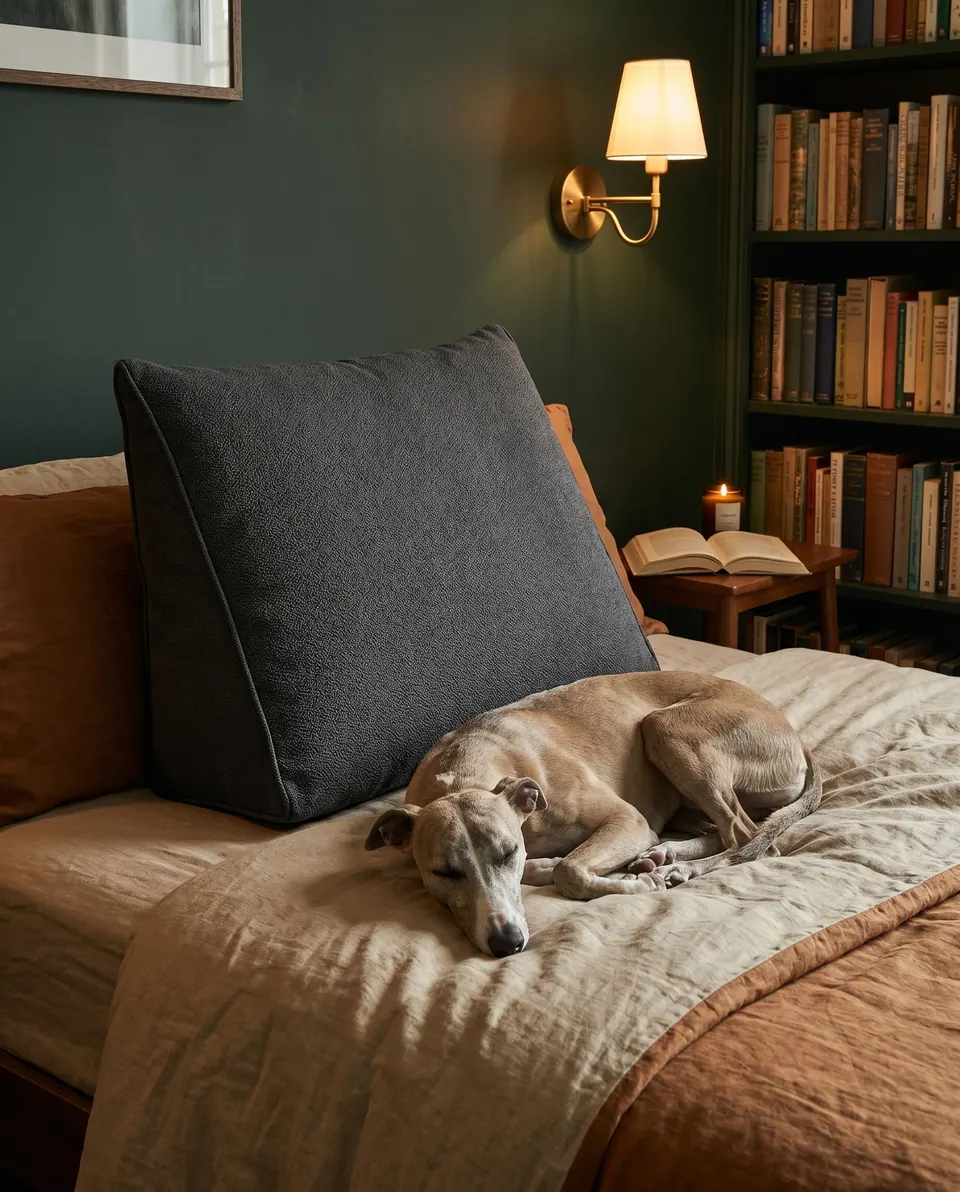
My friend, a backrest and a headboard are cousins, not twins. A headboard has a board. Our backrests don't. With no rigid panel inside, there's nothing for a screw or a French cleat to bite, and fixed wall panels aren't the standard make.
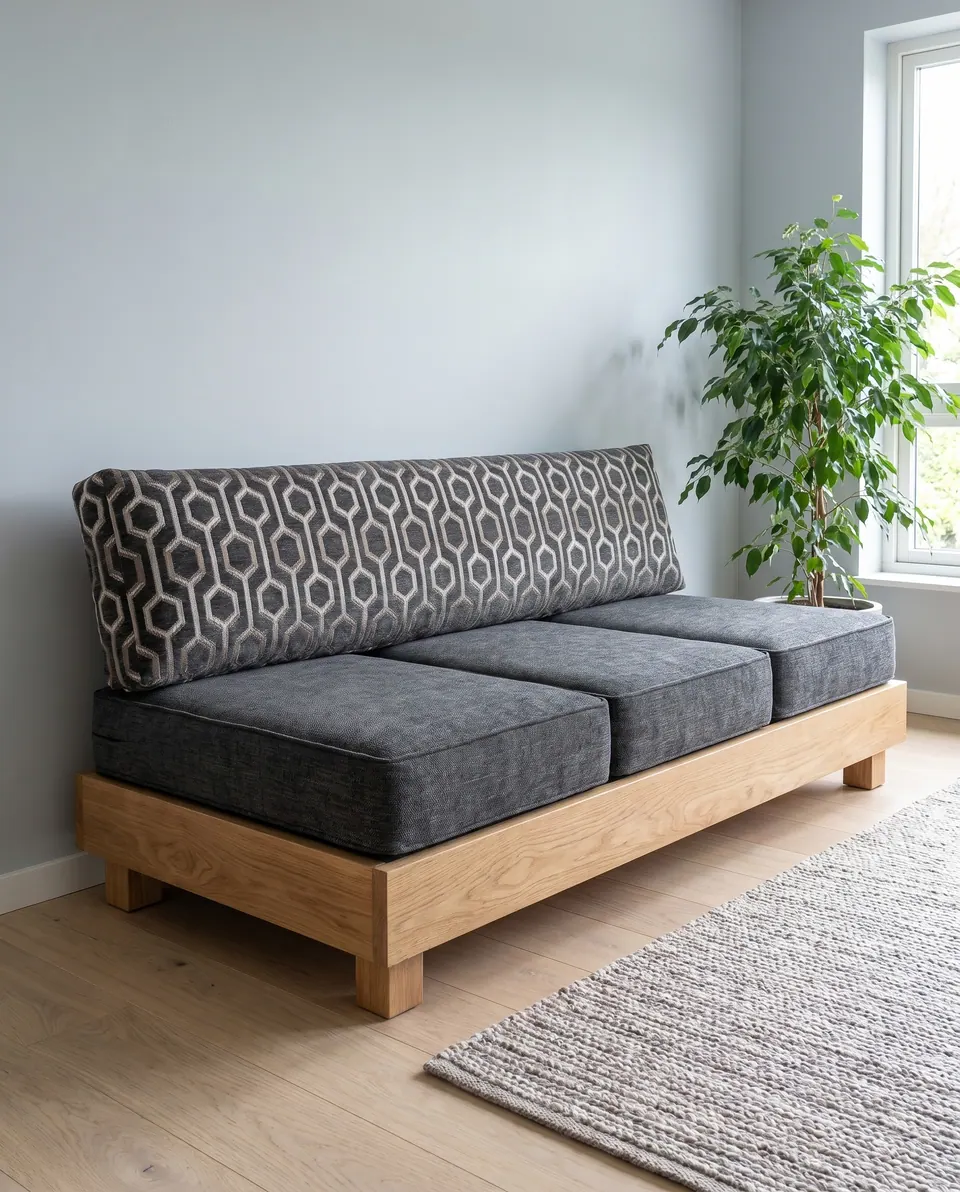
What we build instead is made like the back pillows: a removable piped cover over shredded foam about 4 in (10 cm) thick. Want it firmer and flatter? Ask for a solid foam core wrapped in fiber. A foam-filled back without wood will always look softer than an upholstered board. That's the honest trade. The backrest cushion hub has the sizes.
How a soft backrest meets the wall
| Attachment | How it's built | Worth knowing |
|---|---|---|
| Ties on the top corners | Filled fabric cushion | Hangs from hooks or a rail |
| Velcro or adhesive | Filled fabric cushion | A buyer in the US planned Velcro for a daybed wall panel |
| Loops on a rod | Filled fabric cushion | The rod runs through sewn loops |
| Screws or a French cleat | Needs a solid wood or MDF backing | A special request, not the standard make |
Channel backs need a thin board
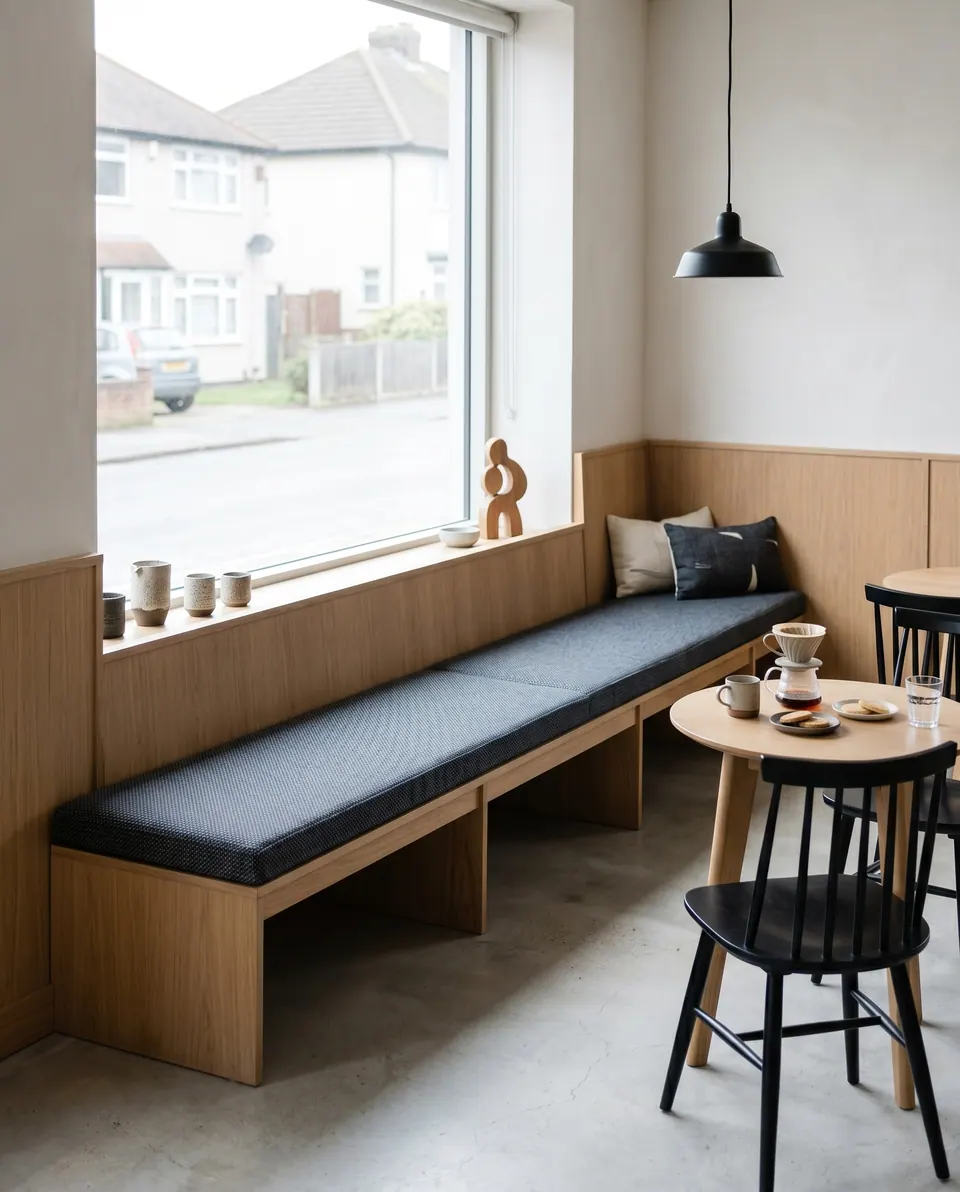
Vertical rolls are the exception. A buyer got in touch wanting a channel backrest for a corner banquette, held on with Velcro. Foam alone won't hold as a fixed channel backrest. It has to be upholstered onto a thin wooden board, which is then fixed to the banquette. The seat can come in several pieces, in firm foam at least 2 in (5 cm) thick. See channel tufting and the banquette cushion hub.
A soft headboard for a dorm bed
A buyer in the US asked whether a tufted cushion could stand in for a headboard. It could. The workshop made one in linen, 30 in (76 cm) long, 24 in (61 cm) high and 4-5 in (10-13 cm) thick, and shipped it straight to a college dorm. A seam is a promise, and that one had a whole school year to keep it. What will your backrest lean against?
A foam-filled backrest without wood looks softer than an upholstered board; for a flatter panel, ask for a solid foam core wrapped in fiber.
Harlan
Buyer questions
- A common question
Could you build a headboard-style backrest that hangs on a French cleat?
The workshop's answerNo. The cushions have no rigid board inside, so they can't mount on a cleat. Ties can be sewn onto the top corners so the backrest hangs from hooks or a rail. It's made like the back pillows: a removable piped cover with shredded foam about 4 in (10 cm) thick, or a solid foam core wrapped in fiber for a firmer, flatter panel.
- A common question
Can the back of my banquette be a fixed section attached to the wall?
The workshop's answerA back cushion fixed to the wall isn't made, but the back cushion itself is. Pillow-style backs are usually the more practical choice. Send final measurements once the bench is built.
- A common question
Could you make an upholstered wall board in the same fabric as my daybed cushion?
The workshop's answerThe style pictured has a wooden board inside. The workshop can make a foam-filled backrest without wood instead, and it will look softer than an upholstered board. That buyer planned to fix it to the wall with Velcro.
- A common question
Is one long back cushion better than a few shorter ones?
The workshop's answerUsually a few. Two or three back cushions per wall sit better and stay in place, and one long backrest costs no less than several shorter ones. Long spans such as 79 in (2 m) are split into two 39 in (100 cm) pieces.
Questions buyers ask next
How thick is a standard soft backrest?
About 4 in (10 cm), filled with shredded foam inside a removable piped cover. For a firmer, flatter look, the core can be solid foam wrapped in fiber instead. Both hang or attach the same ways: corner ties, Velcro, adhesive or rod loops.
Can I order the back cushion without the seat?
Yes. Back cushions are sold on their own in any size and color, with or without armrests or bolsters. Only non-tufted backrests can have a zippered cover, so keep that in mind if you want to wash it.
Will a soft backrest look like an upholstered headboard?
Not exactly. Without a wooden board, a foam-filled back reads softer than a board-backed panel. A solid foam core wrapped in fiber gets you a firmer, flatter face, which is the closest the standard make comes to a headboard.