A Reading by ÉlodieBench Cushions
Teal and olive stripes turning a corner: a custom bench cushion project from question to finished piece
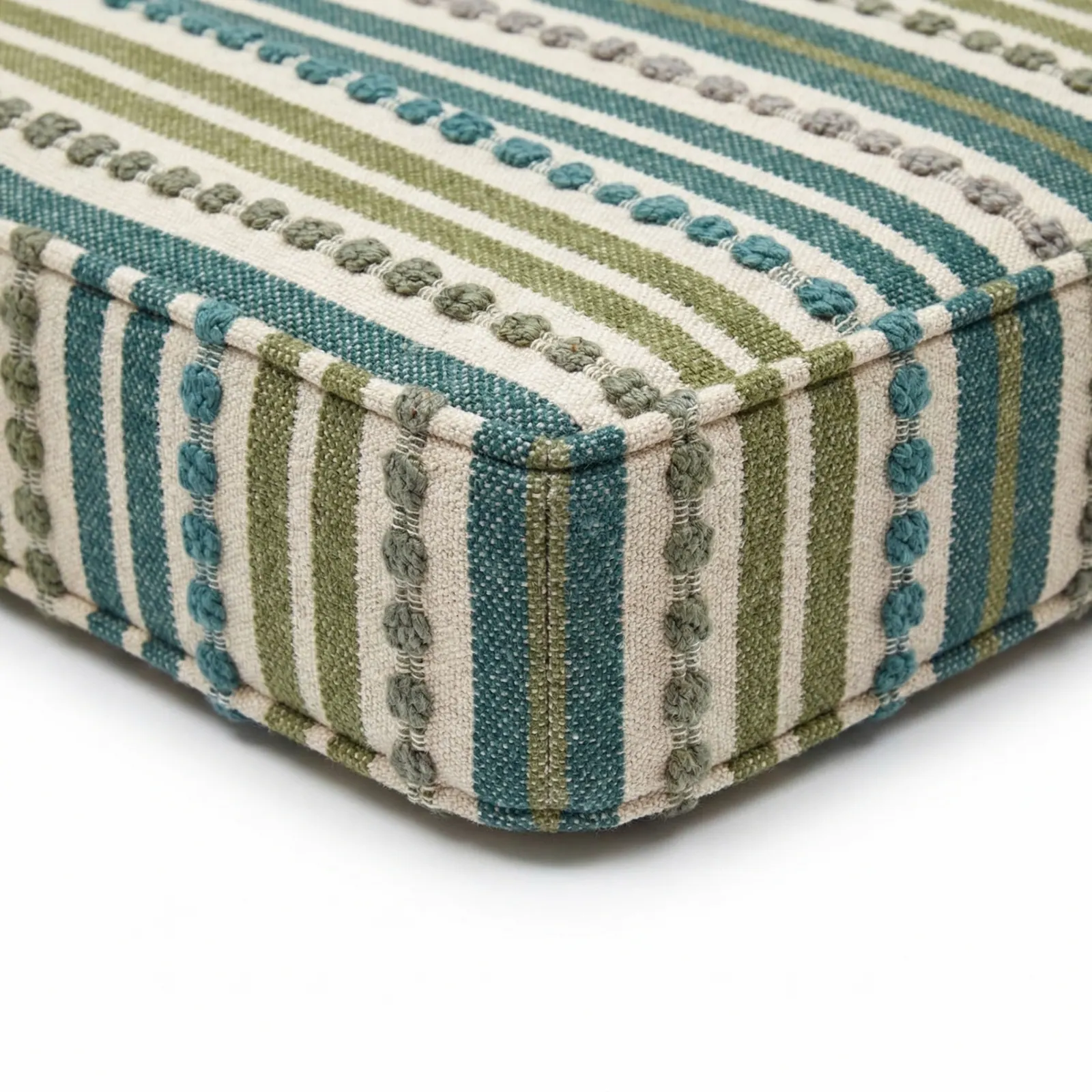
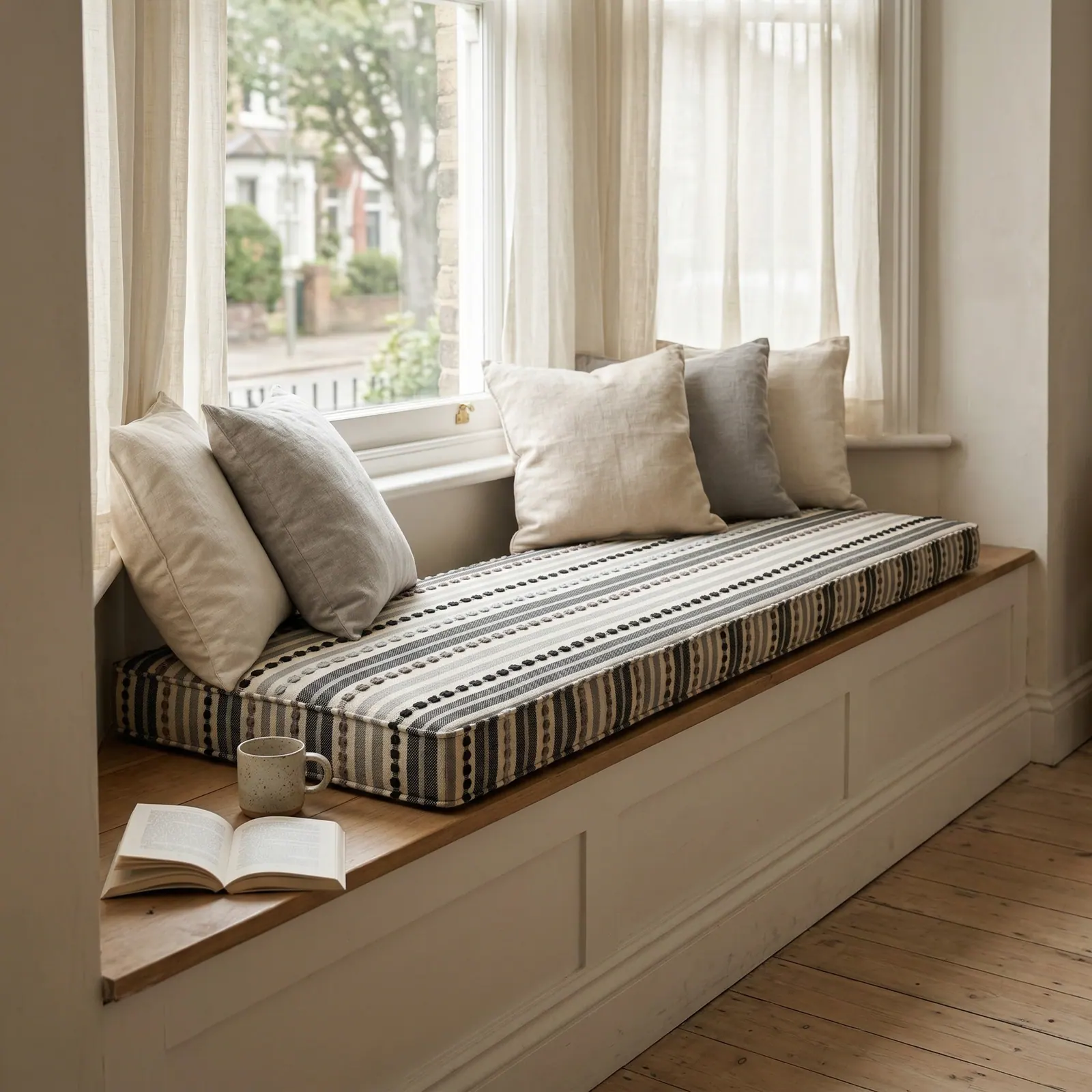
Seen from above, one corner tells the whole story of a striped cushion. Beside it, a buyer's bench, told the way these projects really unfold: a question, a few choices, a photograph of the result.

 Save
The quick answer
On a striped custom bench cushion, the stripes on top should meet the stripes on the side band at the front corners, and the boxing depth shows how much foam sits under you. Stripes are matched on the front face, so a small shift at a back corner is normal and ends up hidden against the wall.
The cushion, cut open
Cover fabric. A removable, zippered cover. Machine wash at 86°F (30°C) on a gentle cycle and air dry.
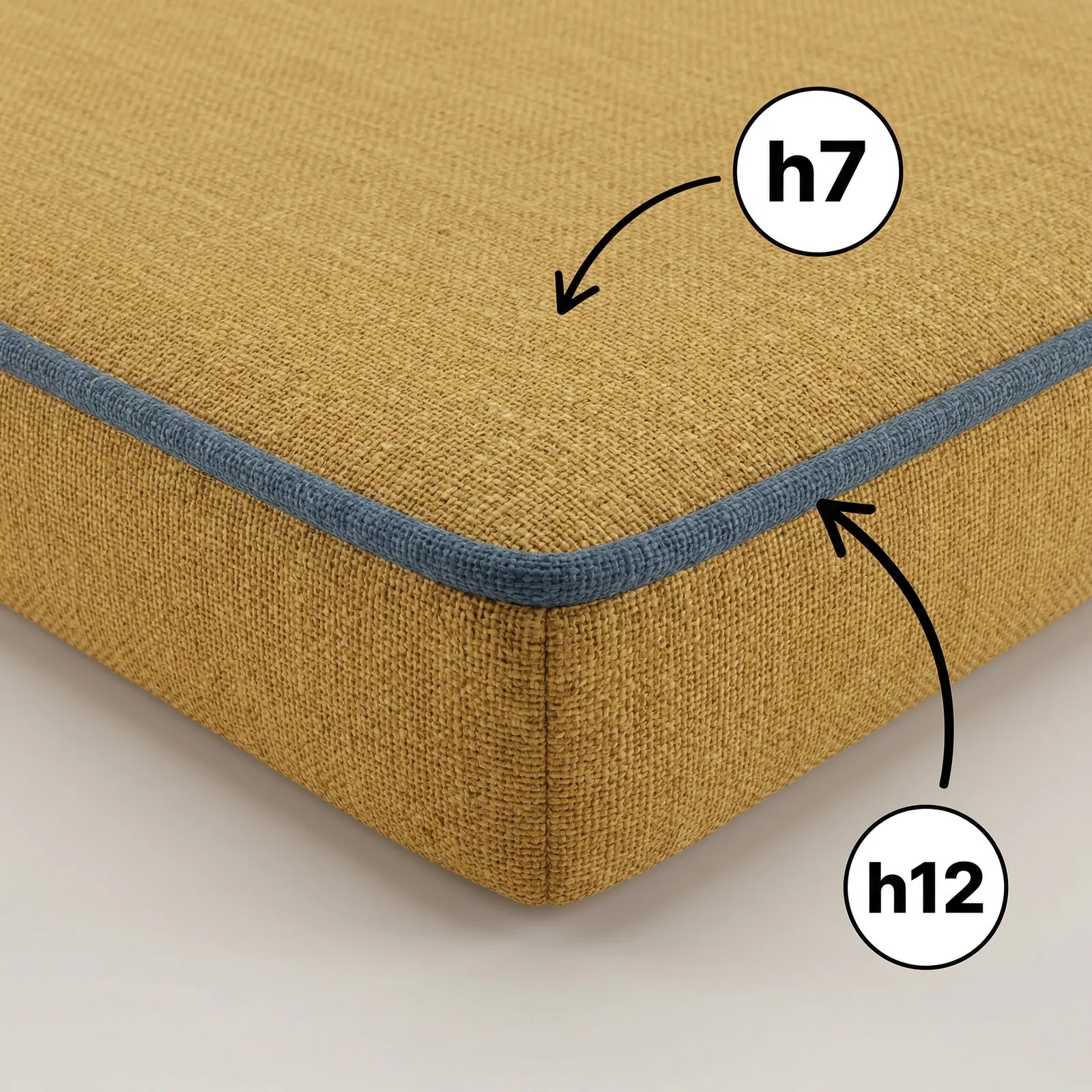
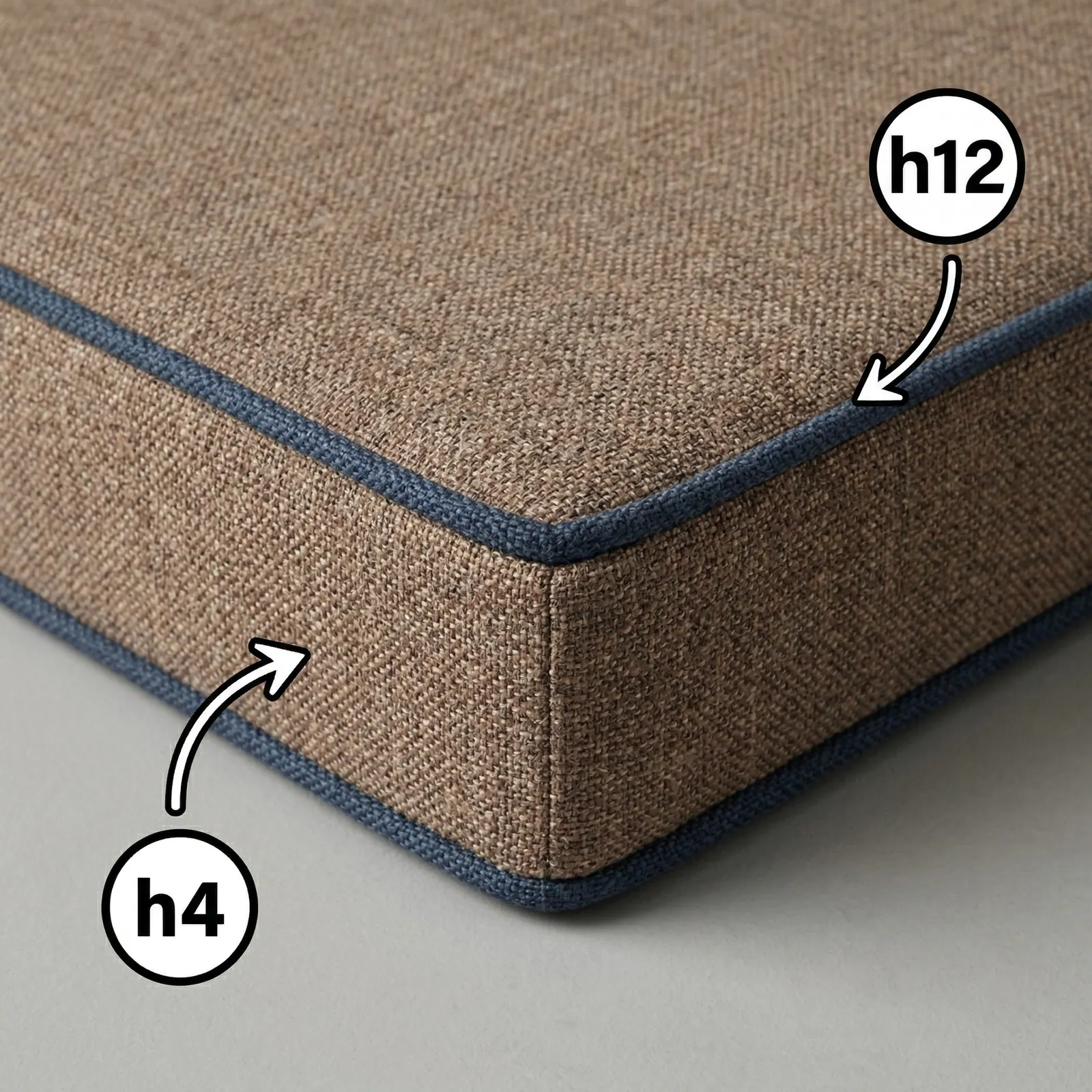
Piping. A fabric-covered cord sewn into the seams. It sits on the seam line, so it does not change the size.
Fiber wrap. Polyester fiber (Dacron) batting around the foam: it fills the cover out and softens the edges.
Foam core. About 2.0 lb/ft³ (32 kg/m³) high-resilience foam, firm to medium-firm, cut to the ordered size.
Zipper. Along the back band, as hidden as possible. The zipper side faces down or toward the wall.
Base panel. The underside of the cover. A non-slip fabric backing can cover the whole of it instead.
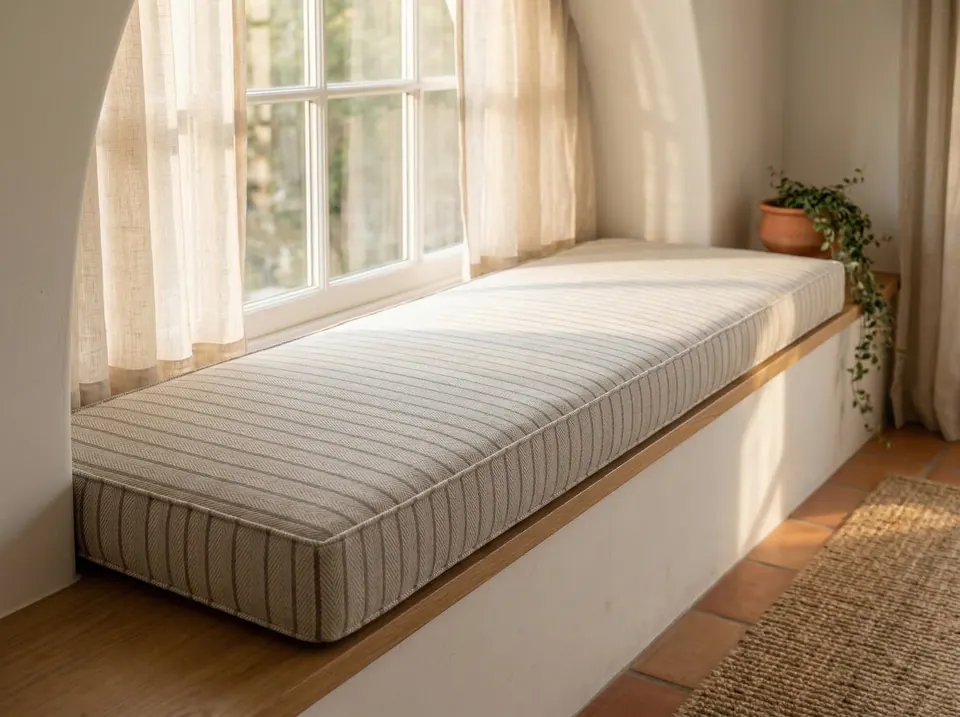
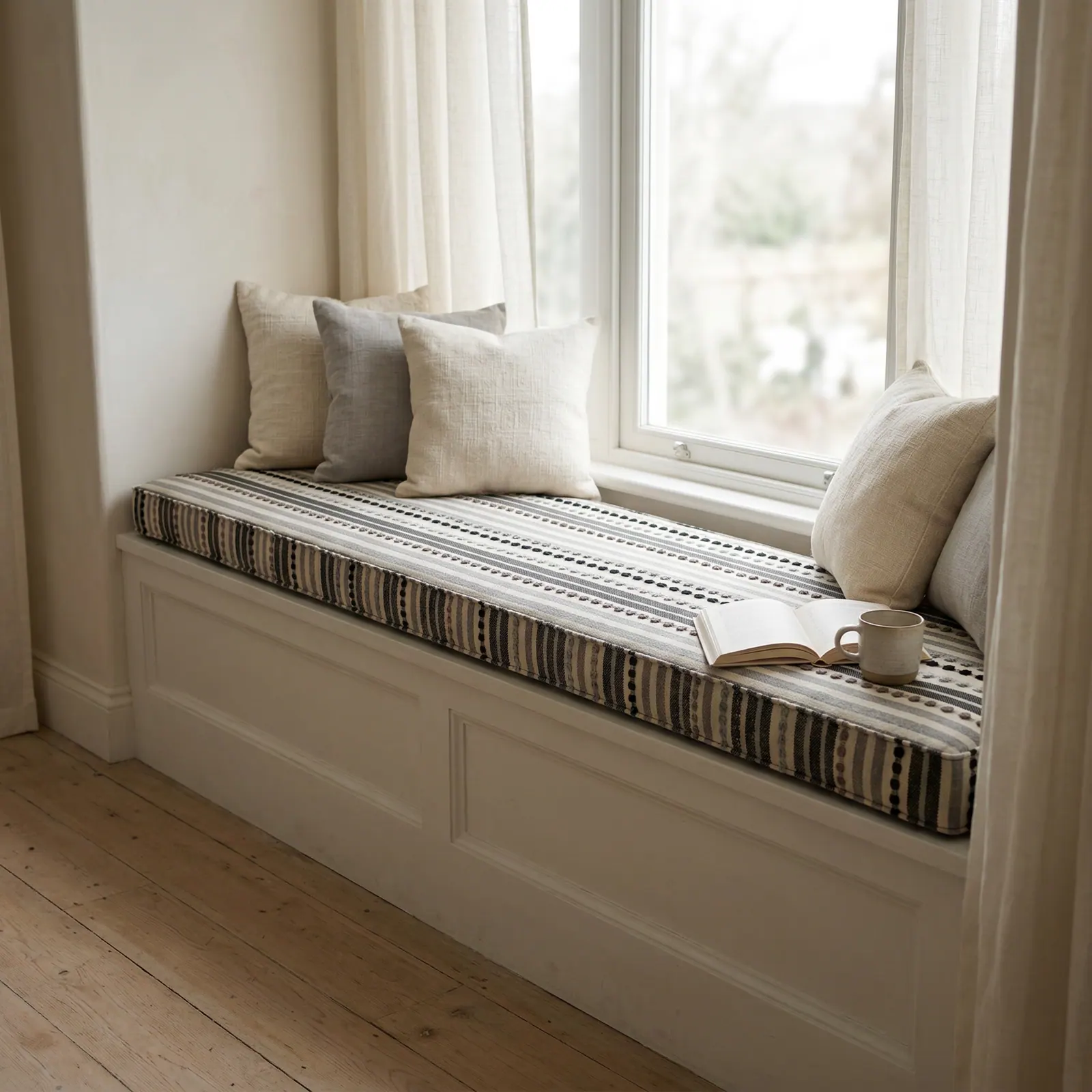
A 74-inch bench with a line of burgundy
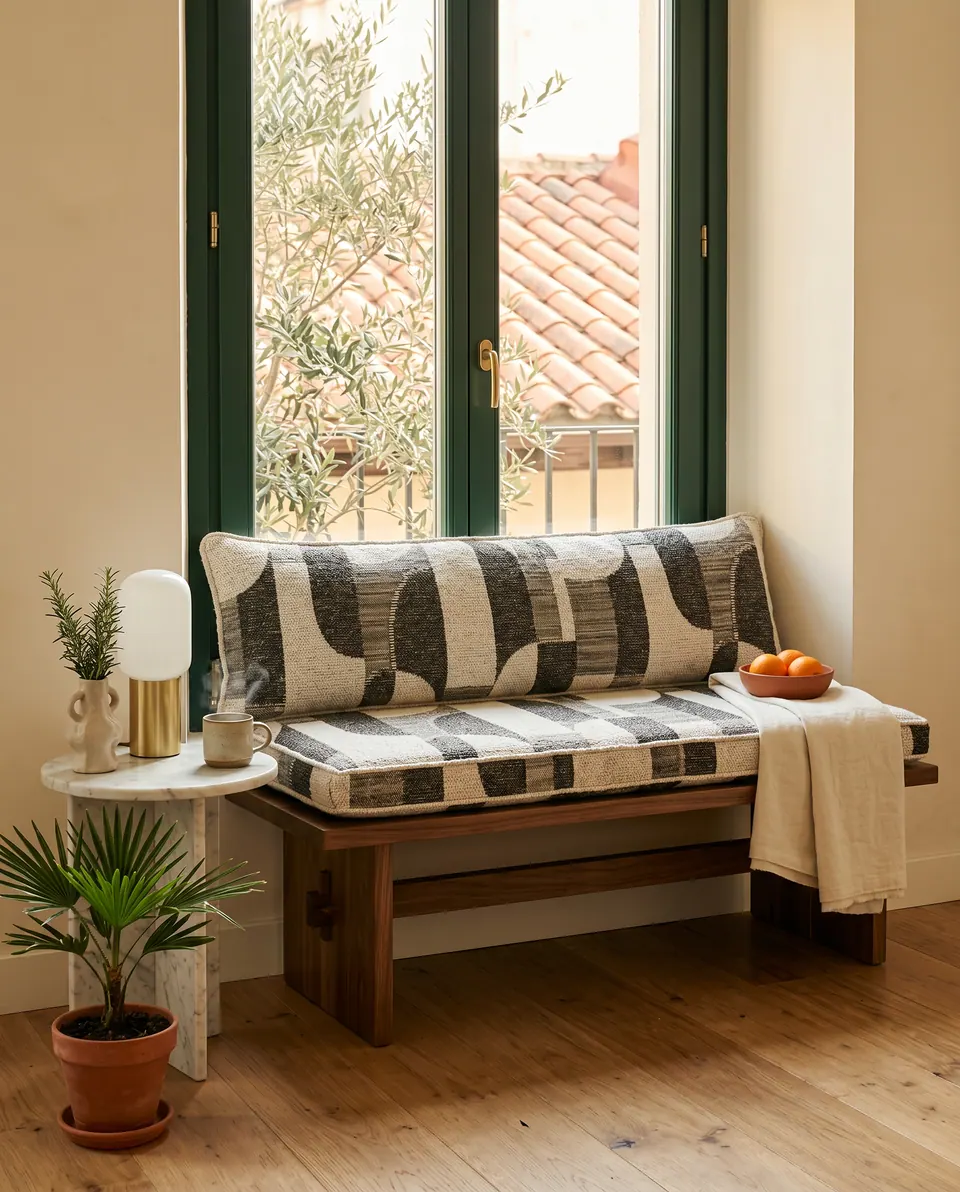
The question. A buyer wrote in with a bench 74 in (188 cm) long and a clear picture in mind: a cushion with a burgundy line along it, and a backrest to go with it.
The choices. The workshop proposed a seat of 23 5/8 x 74 x 3 7/8 in (60 x 188 x 10 cm) and a back of 15 3/4 x 74 x 3 7/8 in (40 x 188 x 10 cm): the same length and the same thickness, so the two pieces read as one set. Then the order arrived without a fabric code. Rather than guess, the workshop wrote back and confirmed the ground, a light beige-cream, with a dark burgundy-brown contrast line for the piping.
The result. A photograph of the finished pieces went to the buyer. Cream and burgundy are old friends: the dark line gives a pale seat an edge you can read from across the room. The practical lesson is small and worth keeping. When you order, check that your fabric code actually made it into the order, and if one goes missing, a message on day one is what catches it.
- Sizes
- Seat 23 5/8 x 74 x 3 7/8 in (60 x 188 x 10 cm); back 15 3/4 x 74 x 3 7/8 in (40 x 188 x 10 cm)
- Fabric
- Light beige-cream with a dark burgundy-brown contrast line
The lesson: Check for a missing fabric code as soon as an order comes in.
Pinned by Élodie
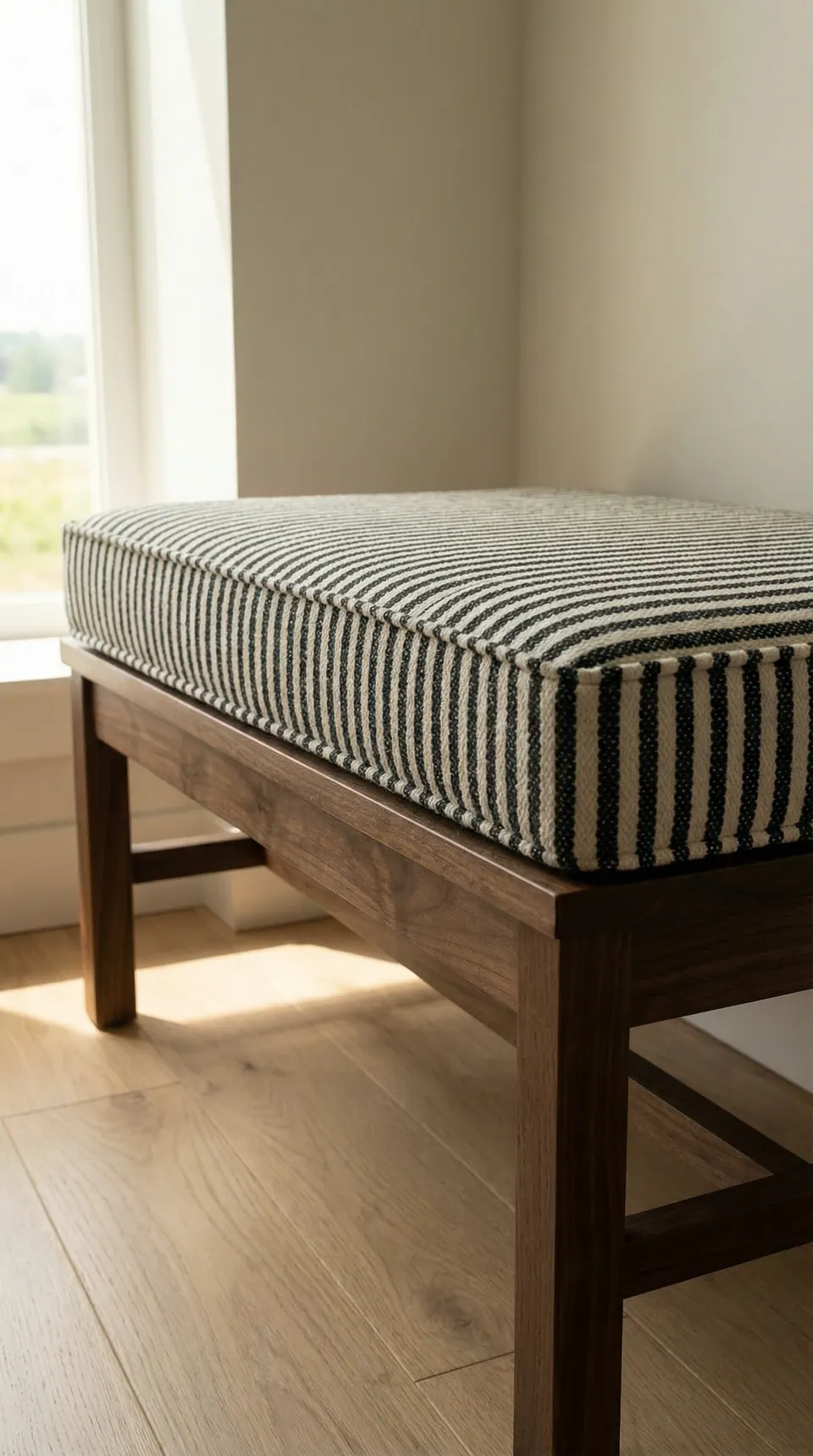
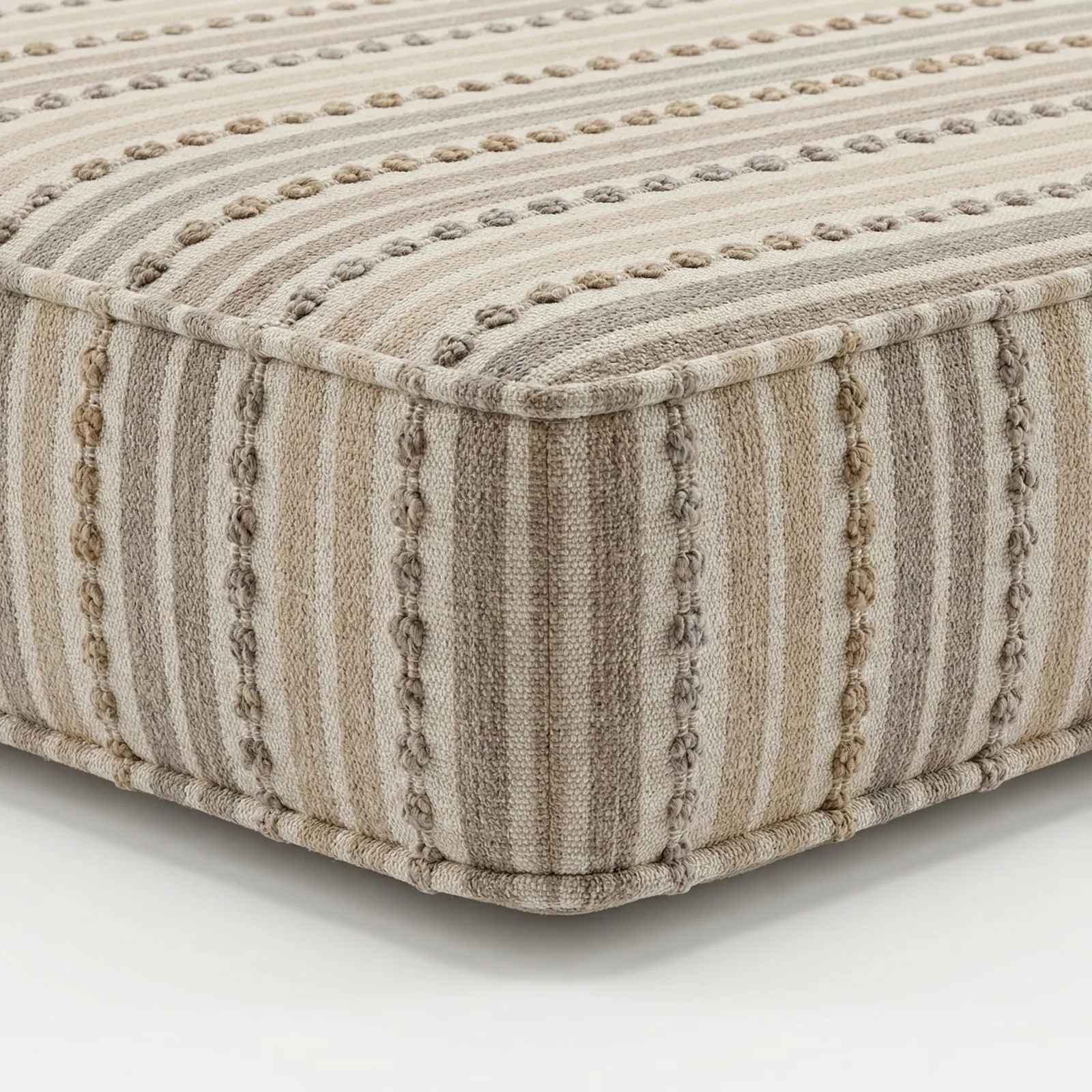
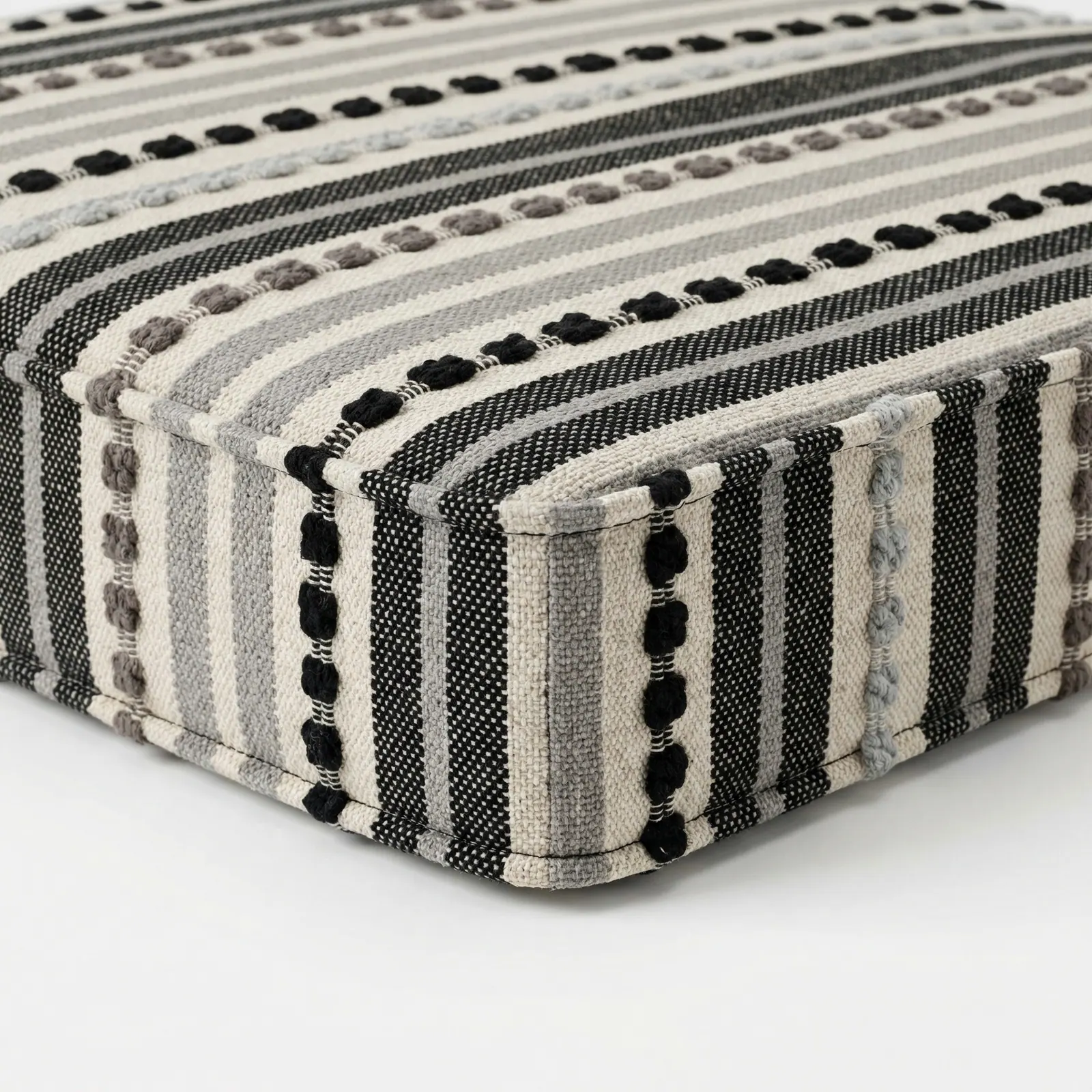
Four places on one corner where a striped cushion shows how it was made.
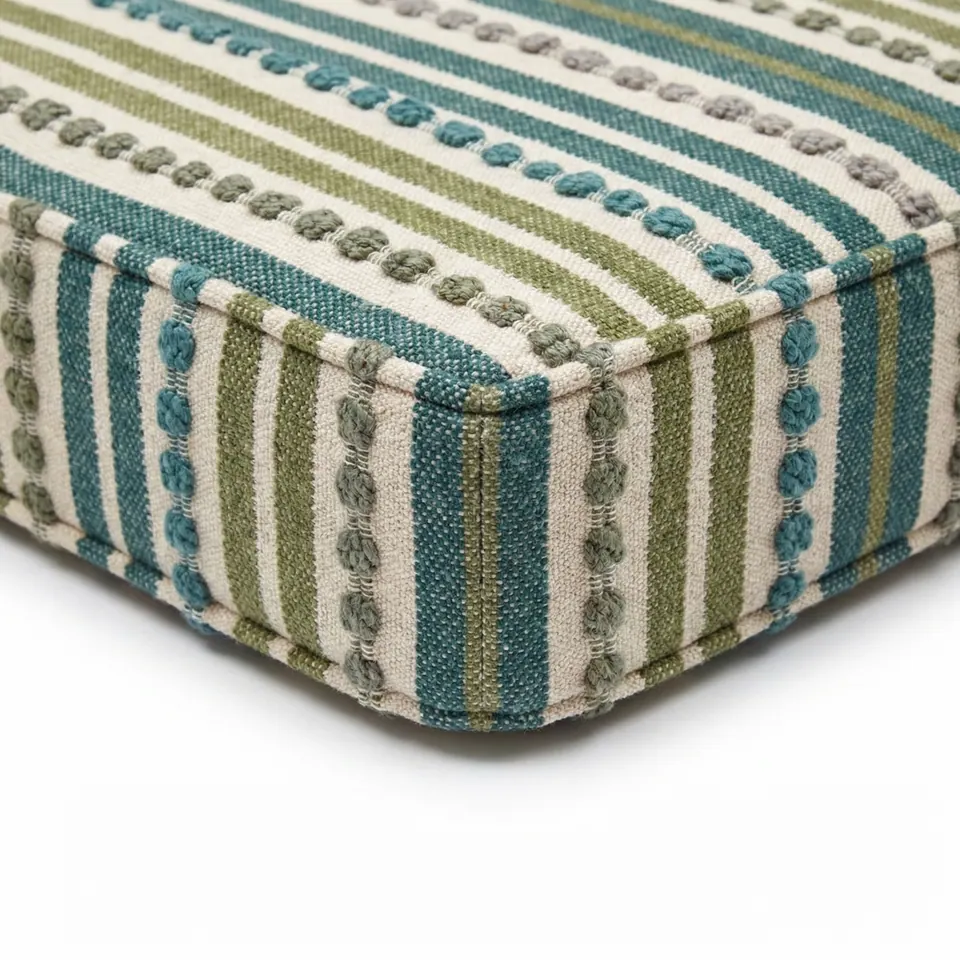
- Matched stripe corner
Top stripes meet the side stripes at the corner, the detail customers check first on any striped cushion.
- Teal knot column
Teal knots on the boxing strip bring the strongest color to the face people see.
- Gray knot column
Gray columns between the teal keep the palette calm on a white-painted bench.
- Boxing depth
From this angle the full height of the side panel shows how much foam sits under the seat.
- Matched stripe cornerTop stripes meet the side stripes at the corner, the detail customers check first on any striped cushion.
- Teal knot columnTeal knots on the boxing strip bring the strongest color to the face people see.
- Gray knot columnGray columns between the teal keep the palette calm on a white-painted bench.
- Boxing depthFrom this angle the full height of the side panel shows how much foam sits under the seat.
Reading the corner from above
This photograph is a different cushion, but it answers the same kind of question. It is shot from above one corner in bright studio light, and that angle is honest: you see the top, the side band (the gusset) and the seam between them all at once.
First, the stripes. On top they run toward the corner, then drop down the boxing and meet their partners on the side band. That is the detail buyers check first on any striped bench cushion, and rightly. Stripes are matched on the front face, which is why a little drift at a back corner is normal; it lives against the wall, where nobody looks.
Second, the depth. From above you see the full height of the side panel, and that tells you how much foam sits under the seat. Deep boxing reads generous from across a garden room; a shallow one reads like a pad.
Third, the palette, my friends. Teal knot columns sit on the boxing, the face people see, so the strongest color lands where the eye does. Gray knot columns between them keep teal and olive grown-up, and the cream ground lets every stripe read clearly. These colors look fresher on a white-painted bench than on a gray one. The design belongs with striped cotton and ticking, and the workshop's striped fabrics are 100% cotton. Put it on a garden-room bench among plenty of plants and the greens will have company.
Which way do you want your stripes to run: across the seat, or front to back? The stripe direction notes weigh both.
Four colors in one stripe
Named by eye from the photograph, in the order the eye meets them.
- Teal#2f7f7eThe strongest color, set on the boxing where the eye lands first.
- Olive green#7c7f45An earthy green that ties the stripe to plants and garden light.
- Knot gray#8c8f8cThe calm between the teal columns; it keeps the palette grown-up.
- Cream ground#ece6d6The quiet base that lets every other stripe read clearly.
Buyer questions: backrests, fabric by the meter and one piece or three
- A common question
Does the backrest have to be as thick as the seat cushion?
The workshop's answerNo. Backrests can be thinner than the seat, for example 4 in (10 cm) backs with an 8 in (20 cm) seat, or 5 7/8 in (15 cm) instead of 7 7/8 in (20 cm) to bring the cost down. Backrests can also run along both the long and the short sides.
- A common question
Can I buy your fabric by the meter to upholster chairs that match the banquette?
The workshop's answerYes. Fabric such as linen L-07 can be supplied by the meter; just say how many meters you need. A meter is about 39 3/8 in, a little more than a yard.
- A common question
For my bench, is it cheaper to make one cushion in the full shape or three separate ones?
The workshop's answerOne piece. Three separate cushions cost more because of the extra cutting, sewing and zippers. For one storage bench of about 120 x 21 1/2 in (305 x 55 cm), the three pieces were offered as a set for less than their separate total, and choosing 4 in instead of 3 in (10 instead of 7.5 cm) didn't change the price.
On a striped bench cushion, stripes are matched on the front face. A small shift at a back corner is normal and hides against the wall.
Élodie
The corner, itemized
| Cushion | Box bench cushion, seen from above one corner |
|---|---|
| Fabric | Woven stripe: teal and gray knot columns with olive, on cream |
| Fiber | The workshop's striped fabrics are 100% cotton |
| Piping | Self piping in the stripe |
| Stripe match | Front face matched; back corners may drift slightly |
| Boxing | Full-depth side band, visible from above |
| The buyer's set | Seat and back both 74 in (188 cm) long, 3 7/8 in (10 cm) thick |
| Best for | Garden-room and sunroom benches |

Have it made
Have this made — ask Élodie’s workshop
Describe the room at four in the afternoon: the floor, the wall, the one color you love. That is where a good fabric choice begins. — Élodie
Leave your details and the workshop will call you to confirm measurements, fabric, foam and piping. No prices, dates or payment on this page: it is a request, not an order.
Questions buyers ask next
Which way should stripes run on a bench cushion?
On most benches the stripes run front to back across the top and continue down the front side band, so they meet at the corner. Running them along the length makes a long bench look longer. Say which you want in your order note.
Why photograph a cushion from above the corner?
From above one corner you see the top, the side band and the seam between them together. That shows whether the stripes meet, how straight the piping runs and how deep the boxing is, three things a flat front photo hides.
Can a dark contrast line be added to a cream cushion?
Yes. A dark contrast piping, such as burgundy-brown on a light beige-cream ground, outlines a pale seat so it reads from across the room. Give both fabric codes in your order, one for the cushion and one for the piping.
With color and care — Élodie
More photographs to read
 Save
 Save
 Save
 Save
 Save
 Save