 Save
A Reading by MaggieBanquette & Kitchen Nook Cushions
A taupe-striped banquette cushion, read from breakfast to supper
Right, then. Ivory and taupe linen on a sage kitchen nook, piped in its own cloth. The stripe is one color at 7 a.m. and another at 7 p.m., and that is the whole lesson.
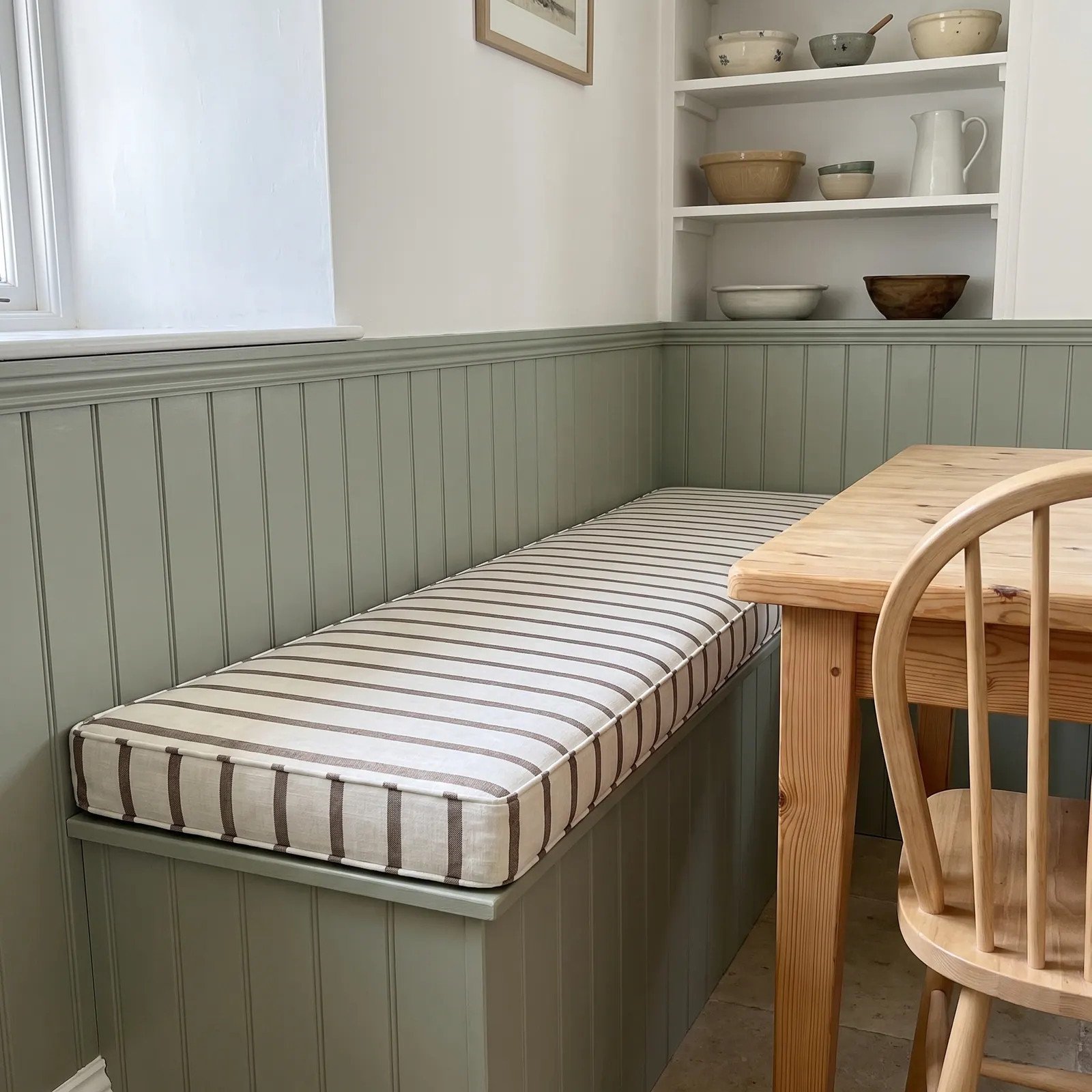
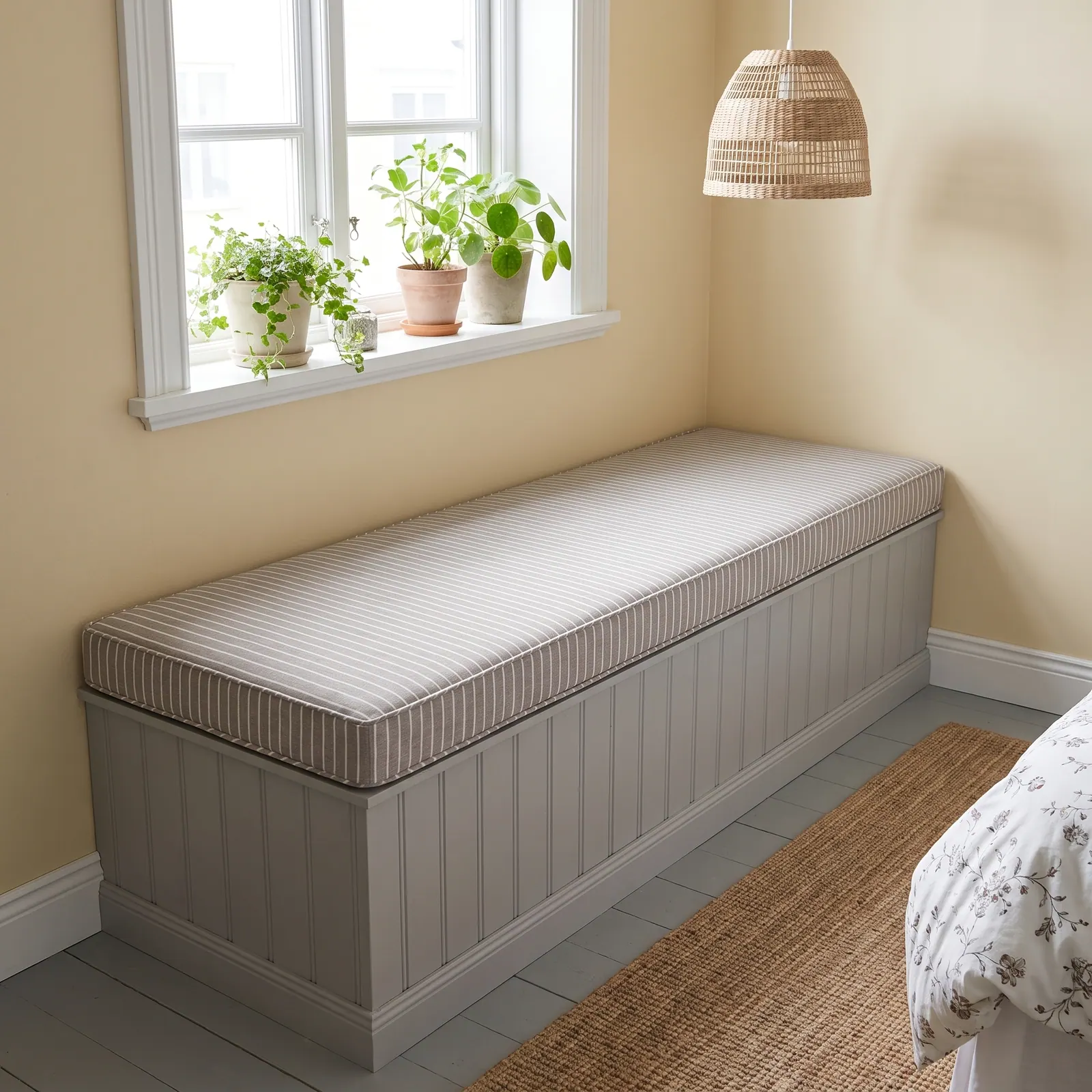
Wide taupe stripes and sage paneling give a cottage kitchen nook an easy farmhouse feel.

The quick answer
A striped banquette cushion should be judged in the kitchen's own light, morning and evening, never on a screen alone. Ask for the fabric and piping photographed side by side in more than one light, then hold a physical sample against the paneling. Measure each run of the nook separately, to the eighth of an inch; 4 in is the standard thickness.
Three colors in one kitchen
A taupe stripe is three different colors in one kitchen, depending on the hour. I learned that years ago on a window seat I swore was mushroom and the client swore was gray. We were both right. It was ten o'clock.
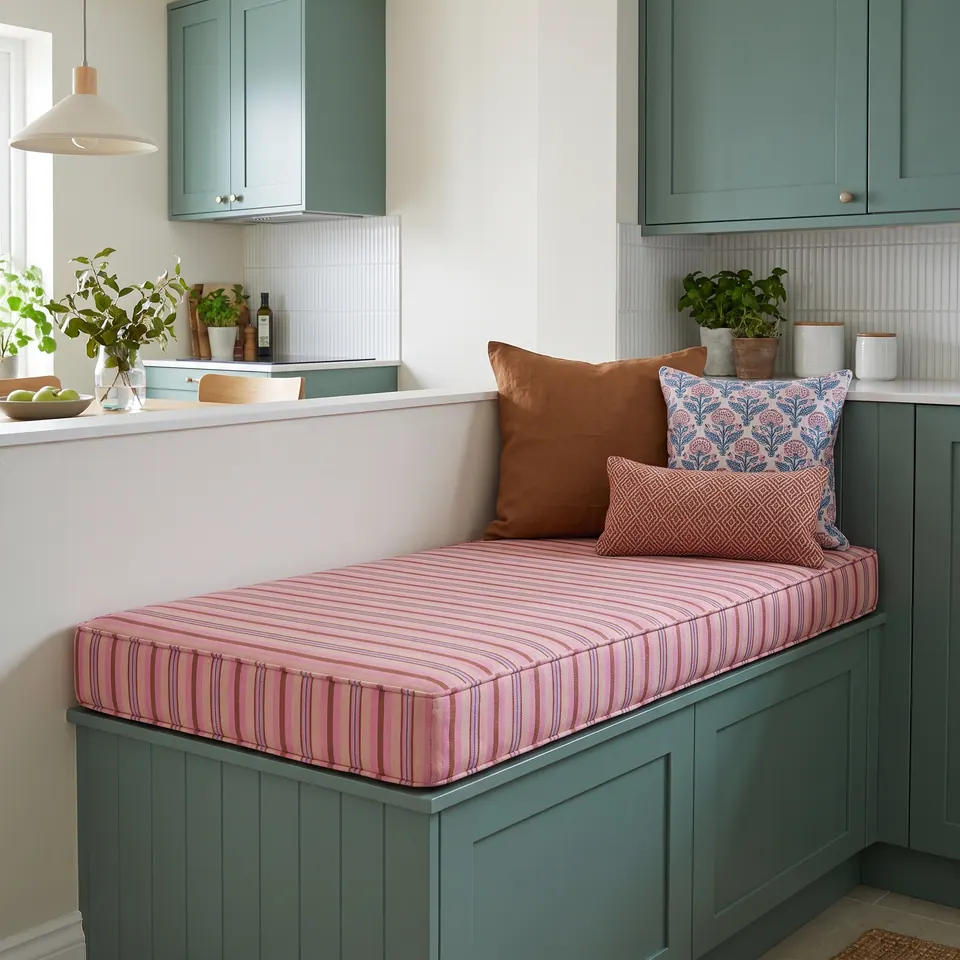
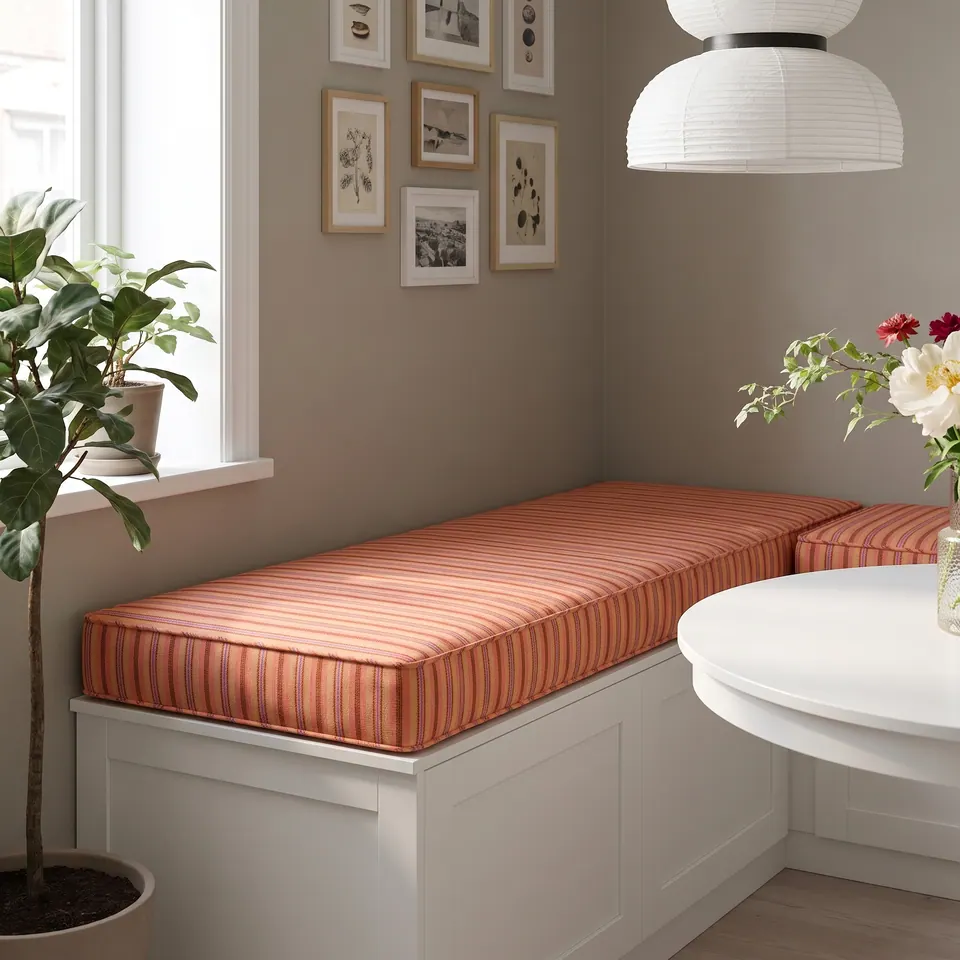
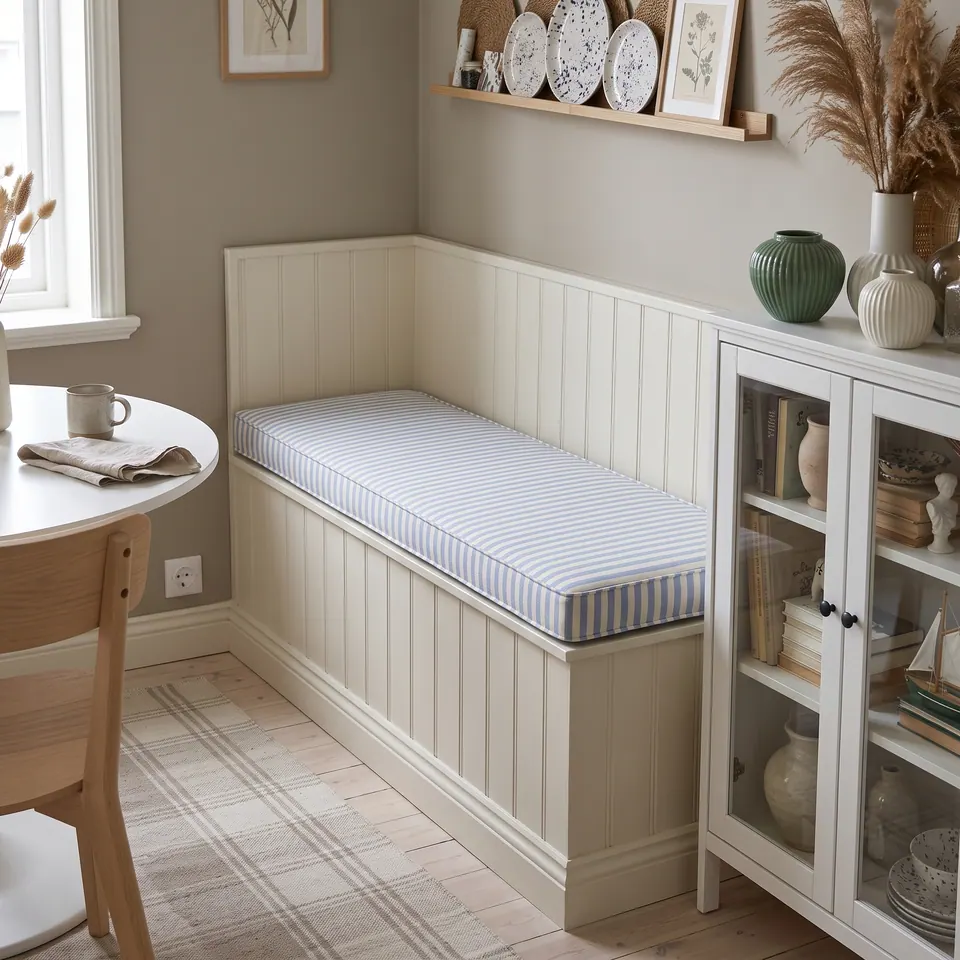
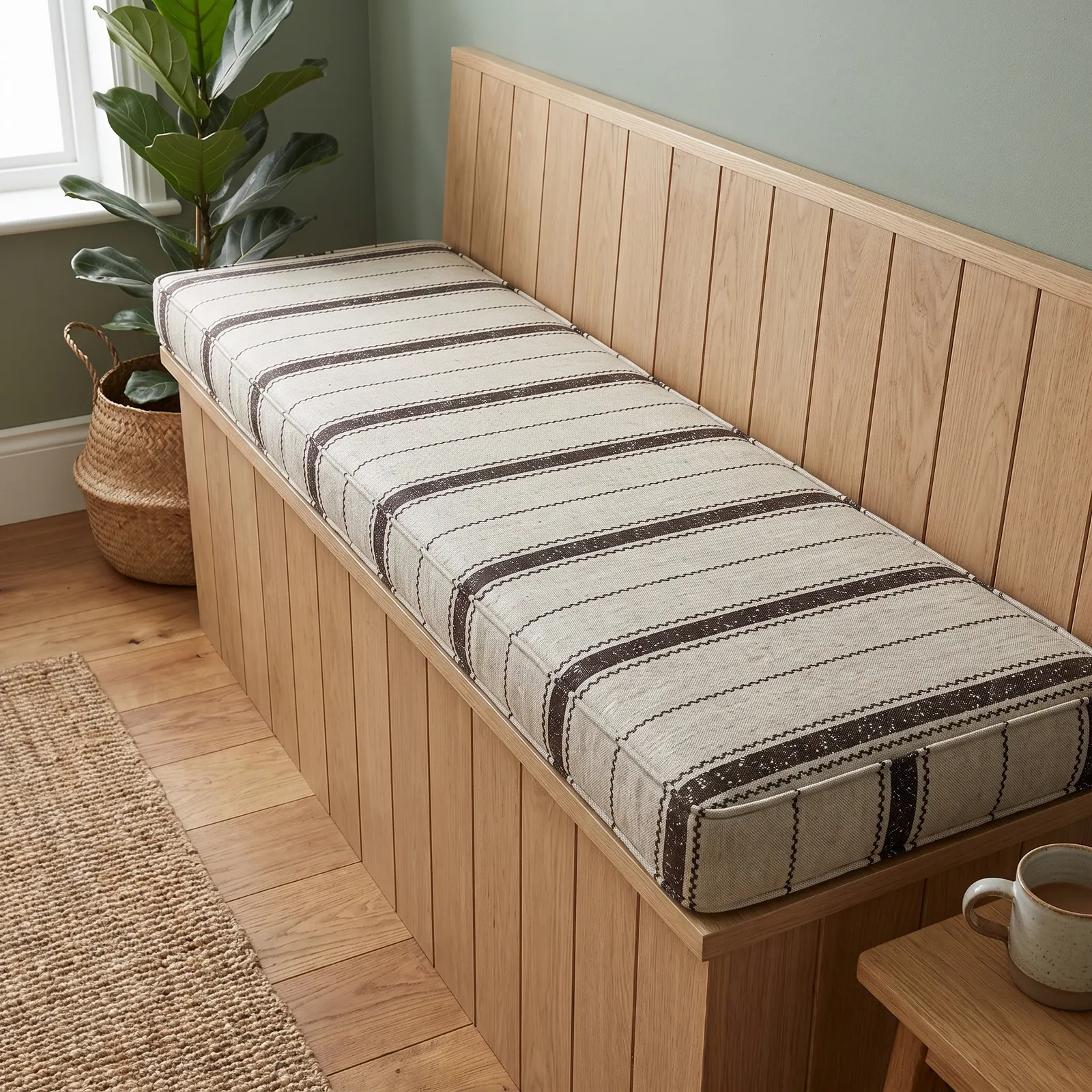
Look at this banquette cushion. Ivory linen with wide taupe bands, a box edge, piping cut from the same cloth. It sits on sage tongue-and-groove paneling under a deep window reveal, with a pine table and a spindle-back chair drawn up on a flagstone floor. The light comes in low and soft from the side, so the ivory reads warm and the taupe reads almost cocoa.
The stripes run front to back, the same direction as the boards below, which is why the kitchen nook cushion looks built in rather than dropped on. The self piping helps. A contrast welt would draw a hard line straight across the joinery, and on a seat this plain every wobble in it would show. The paneling wraps the corner too, leaving room for a second cushion on the back wall one day.
What my pencil circled
Five places where the light, the wood and the linen are doing the work together.
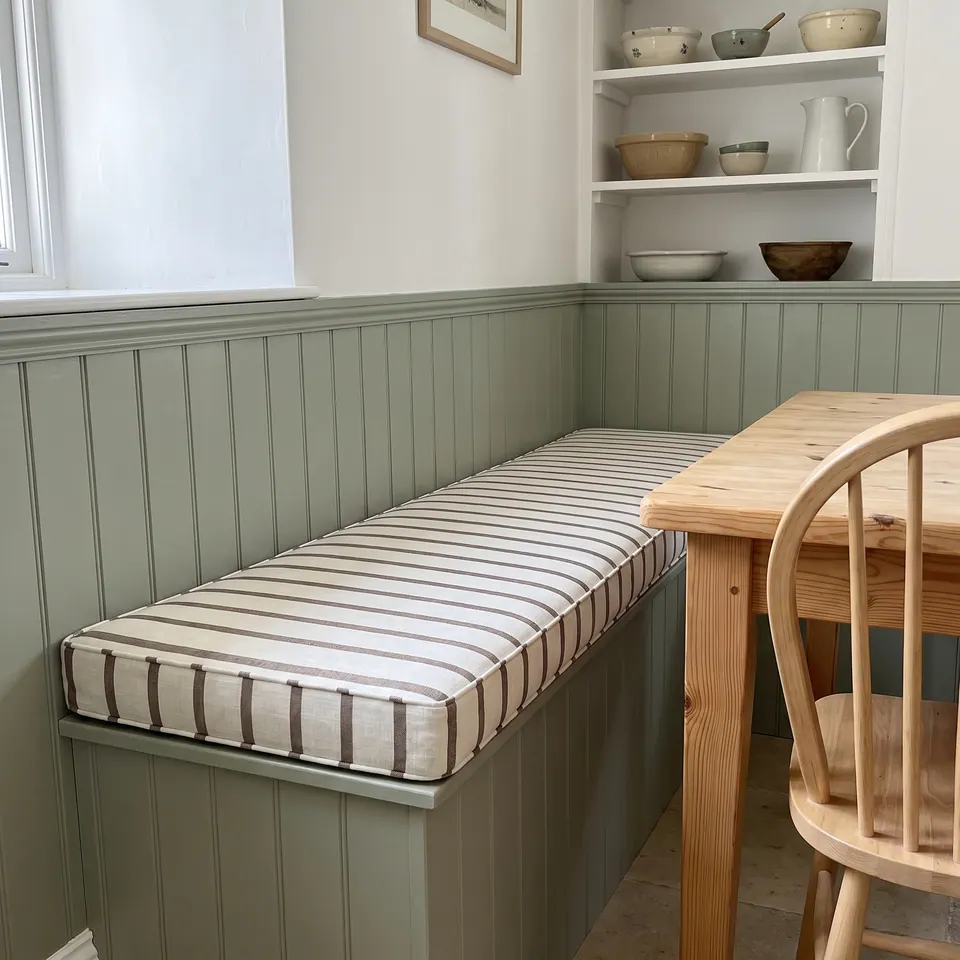
- Wide taupe stripes
Bands running front to back line up with the vertical boards below.
- Self-piped top edge
A matching welt keeps the cushion reading as part of the joinery.
- Paneling wraps the corner
The boards continue on the back wall, leaving room for a second cushion later.
- Pine table
Honey pine warms the cool sage and repeats the taupe of the stripe.
- Stoneware on shelves
Cream and brown bowls echo the cushion colors at eye level.
- Wide taupe stripesBands running front to back line up with the vertical boards below.
- Self-piped top edgeA matching welt keeps the cushion reading as part of the joinery.
- Paneling wraps the cornerThe boards continue on the back wall, leaving room for a second cushion later.
- Pine tableHoney pine warms the cool sage and repeats the taupe of the stripe.
- Stoneware on shelvesCream and brown bowls echo the cushion colors at eye level.
Breakfast light, supper light, and the screen in your hand
Morning light in a nook like this arrives through a deep reveal, soft and slightly cool. It lifts the sage and keeps the ivory clean. By supper the sun is lower and warmer, the pine table turns honey, and the taupe drifts toward brown. Under a ceiling fixture after dark, both stripes flatten and the cream looks yellower than it is.
Your phone shows none of that. A screen picks one moment and one white balance and calls it the truth. The stoneware on the open shelves is the clever bit: cream and brown bowls at eye level repeat the cushion colors, so whatever the light does to the linen, it does to the bowls. The room stays in tune with itself.
My light test, before anyone cuts linen:
- Fabric and piping photographed side by side, never separately
- A second photo in different light, window and lamp
- The sample held to the paneling at breakfast, then at supper
- One look from the doorway, not just from six inches away
More on weaves in linen and cotton-linen, the screen problem in full in screen vs swatch color, and more nooks like this one among the banquette cushions.
Three banquette runs, three separate measurements
A buyer in the US wrote to the workshop about a three-sided breakfast nook. They wanted tufted linen seat cushions and sent a photo of the space. Three runs: 65 1/8 in, 56 1/4 in and 91 in, every one of them 17 in (43 cm) deep.
Notice the eighths. That buyer measured each side of the nook as its own job instead of assuming the two shorter runs matched. They didn't, by almost 9 in. Each cushion was priced on its own and made to its own number in a soft dried-rose linen, with matching back cushions under consideration for later. Years ago I cut a U-shaped nook as "three of the same" myself. Once.
- Sizes
- 65 1/8 × 17 in, 56 1/4 × 17 in, 91 × 17 in
- Fabric
- Tufted linen, dried rose
The lesson: Measure every run of an L or U nook on its own, to the eighth of an inch, and price each cushion separately.
If a striped banquette cushion has to sit with sage paneling, check the swatch at breakfast and again at supper, never on a screen alone.
Maggie
Three kitchen-nook cushion questions: thickness, foam, angled ends
- A common question
Your bench cushions are 4 inches thick. Could mine be 2 inches instead?
The workshop's answerYes. Place the order as usual and write that you want 2-inch thickness in the Personalization section. The standard on the linen and corduroy bench cushions is 4 in (10 cm), and it can be changed to suit you, for example to 2 or 3 in, or up to 8 in.
- A common question
What density is the foam, and will it go lumpy after a year of daily meals?
The workshop's answerEvery cushion uses 32-density high-density foam, typically a cold foam. It is chosen to hold its shape over time without lumps while staying comfortable for everyday sitting.
- A common question
My window seat is angled at the ends. How do I measure it so the numbers actually work?
The workshop's answerMeasure the depth straight from front to back at 90 degrees, never on the diagonal, and measure each angled side as a straight line from corner to corner. The workshop checks the geometry: a 40 in front, 30 in back and 17 in depth gives angled sides a little under 18 in, not 22 in. Sketch the shape with each number on its edge, or send a wide photo from corner to corner.
On the cutting table: the taupe stripe banquette
| Cushion | Banquette seat cushion, one run of a kitchen nook |
|---|---|
| Edge | Box edge, square to the paneling |
| Fabric | Ivory linen with wide taupe stripes, run front to back |
| Piping | Self piping cut from the same stripe |
| Thickness | 4 in (10 cm) standard; 2 in or 3 in on request |
| Foam | 32-density high-density cold foam |
| Care | Removable zippered cover, gentle wash at 86°F (30°C) |
| Best for | Breakfast nooks, dining banquettes, farmhouse kitchens |

Have it made
Have this made — ask Maggie’s workshop
Numbers first, fabric second, piping last. Jot down what you have, and the workshop will go down the list with you, item by item. — Maggie
Leave your details and the workshop will call you to confirm measurements, fabric, foam and piping. No prices, dates or payment on this page: it is a request, not an order.
Questions buyers ask next
Why do the stripes on this banquette run front to back?
Front-to-back stripes line up with vertical tongue-and-groove boards, so the cushion reads as part of the bench instead of something laid on top. On a paneled nook, stripes running along the seat tend to fight the lines of the joinery.
Is a striped linen bench cushion practical for a table used three times a day?
A stripe with a darker accent, like taupe on ivory, forgives crumbs and marks far better than plain cream. The cover zips off for a gentle wash at 86°F (30°C), so everyday spills are a laundry job, not a crisis.
Can back cushions be added to a banquette after the seats arrive?
Yes. The buyer with the three-sided nook was considering matching back cushions after ordering the seats. Order them in the same fabric code, and if months pass between orders, ask about matching the dye lot.
Does a corner banquette get one L-shaped cushion?
No. Corner seats are made as separate cushions that meet flush at the corner, which makes the covers easier to take off and gives a cleaner fit. Measure each run on its own before you order.
Stitch straight — Maggie
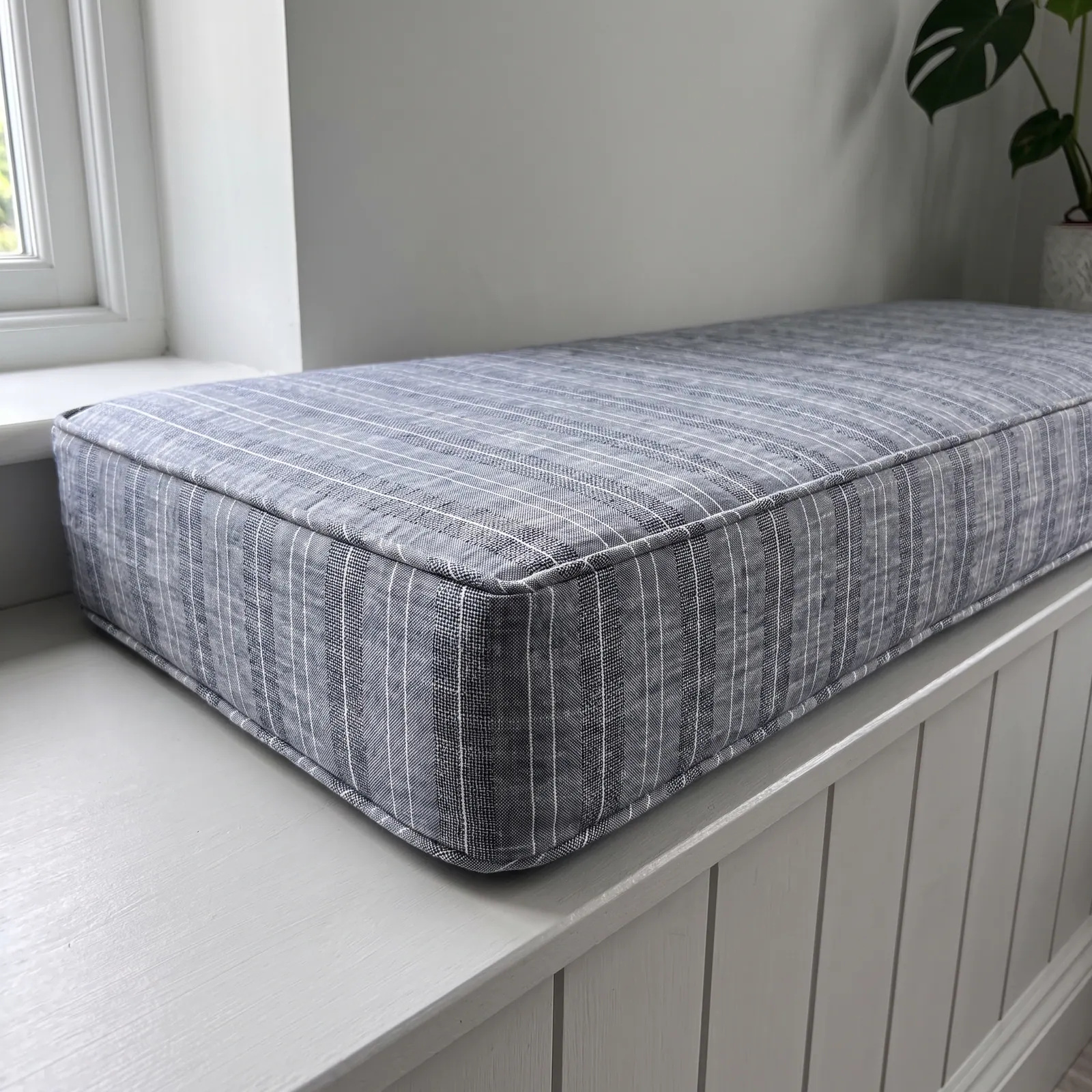
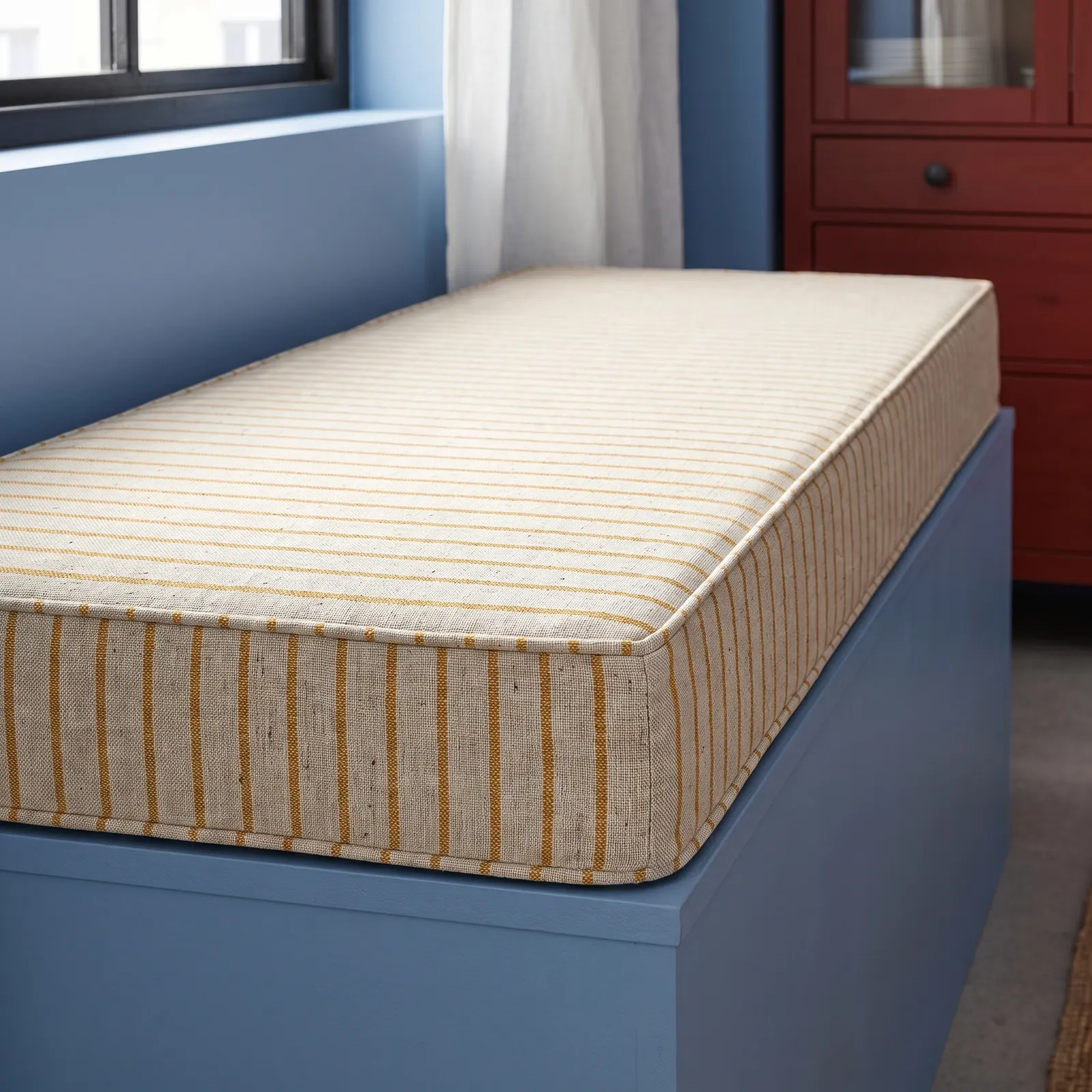
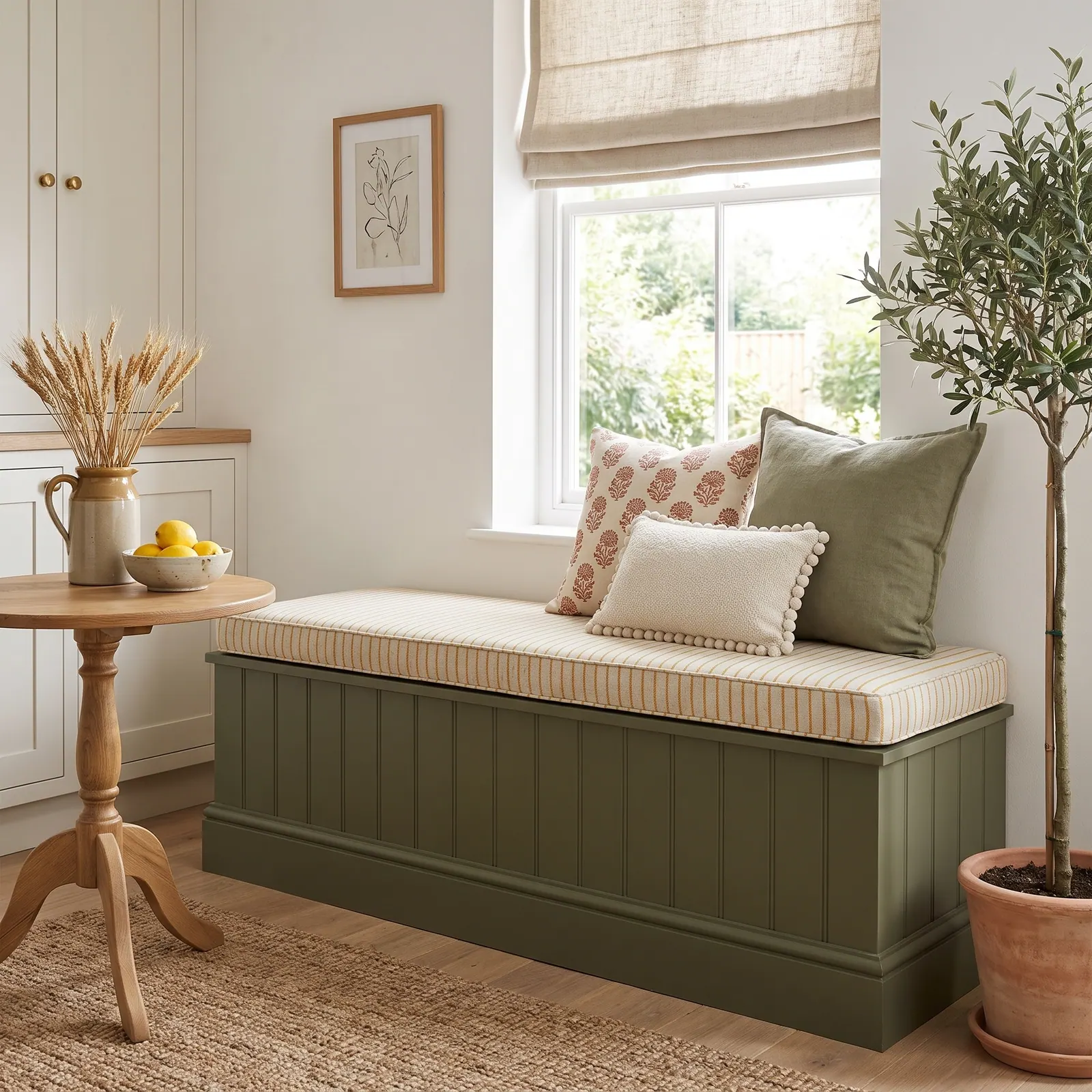
Stripes on painted boards, in every kind of light
 Save
 Save
 Save
 Save
 Save
 Save