A Reading by ÉlodieBench Cushions
Choosing piping for a custom bench cushion: three stacked pairings and a designer's bench
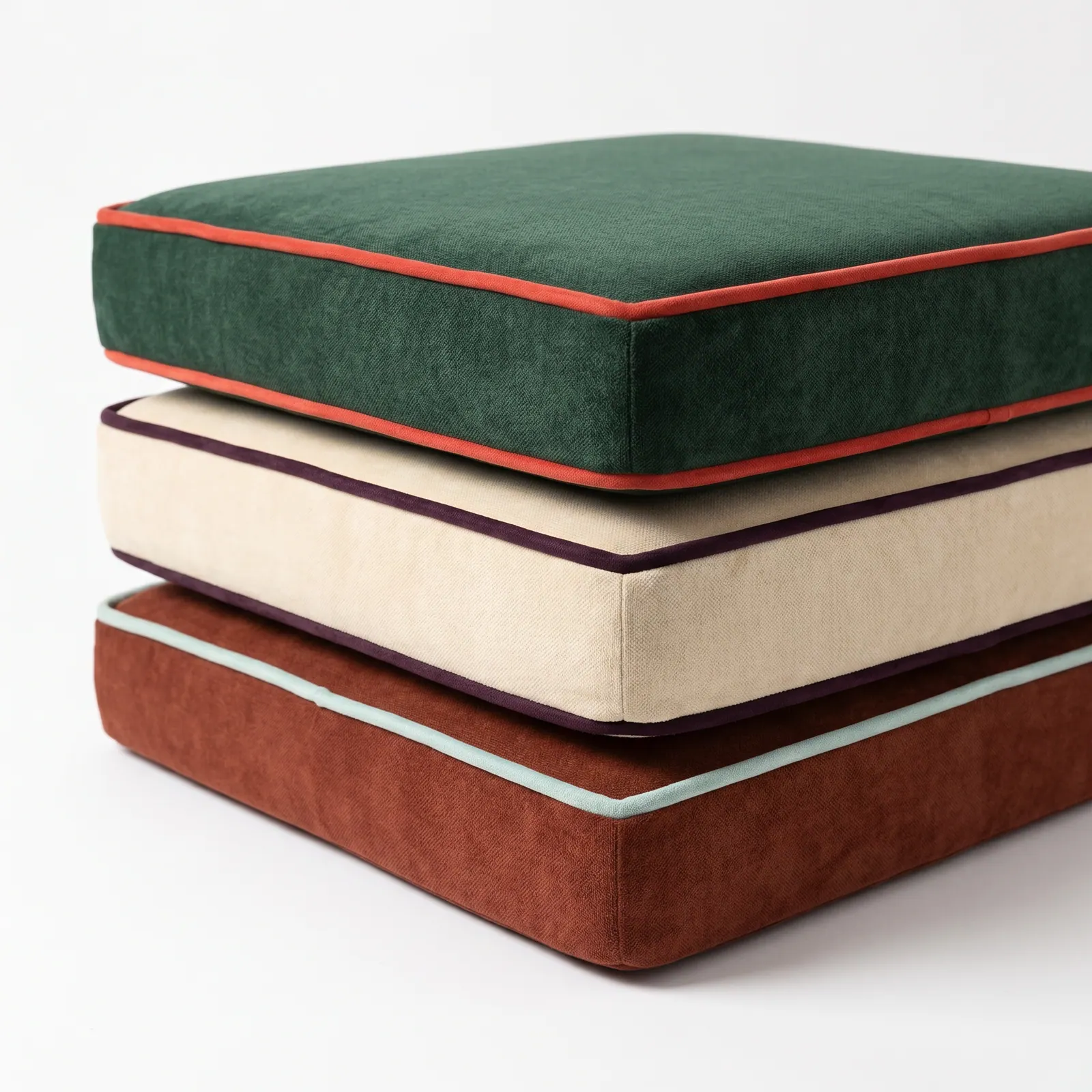
Forest green with red, ivory with aubergine, rust with mint. A stack like this is how a designer and I talk before a single yard is cut.
 Save
The quick answer
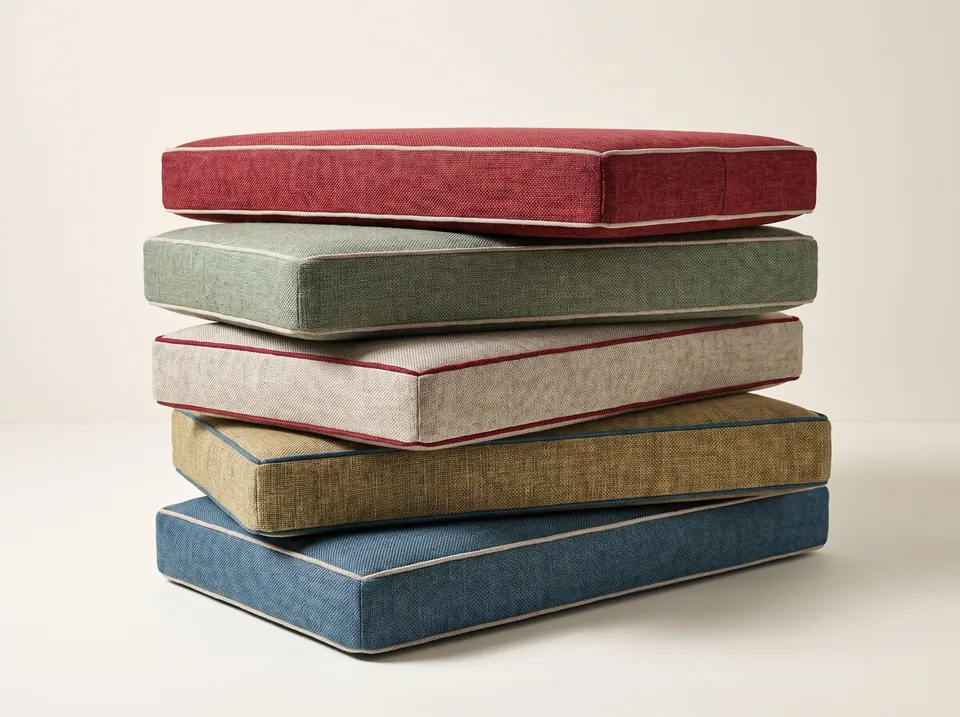
To choose contrast piping for a custom bench cushion, hold your fabric next to two or three cord colors and compare the pairings side by side. This stack shows three: warm red on forest green, deep aubergine on ivory and pale mint on rust, all on linen-look box cushions. A contrasting cord outlines the box edge and still reads from across a room.
Questions first: a wrong size, a curved end, a rental
- A common question
I re-measured after ordering and the size is wrong. Can you change it instead of cancelling?
The workshop's answerYes. The order can be remade to any size. When one buyer switched to a 39 3/8 x 39 3/8 in (1 x 1 m) cushion that cost a little more than the original, the workshop covered the difference.
- A common question
My bench is long with one curved end. How do I measure the curve?
The workshop's answerMeasure from the top of the curve to the bottom, then the distance between where the curve starts and where it ends. Put both on your drawing with every other measurement and upload it with the custom-shape order; if anything is missing, the workshop asks before cutting.
- A common question
Which beige fabric holds up best in a rental property?
The workshop's answerThe workshop recommends linen, velvet or its soft fabric, which it counts as its performance fabrics. One buyer furnishing a rental chose linen, because durability mattered more to them than the velvet look.
Now, the reading
The designer, the window lever and the back cushion
An interior designer wrote to the workshop about a bench under a run of windows in a wellness studio. The question: a 75 x 20 x 3 in (191 x 51 x 7.5 cm) linen seat cushion with contrast piping, and a matching back cushion leaning against the windowsill.
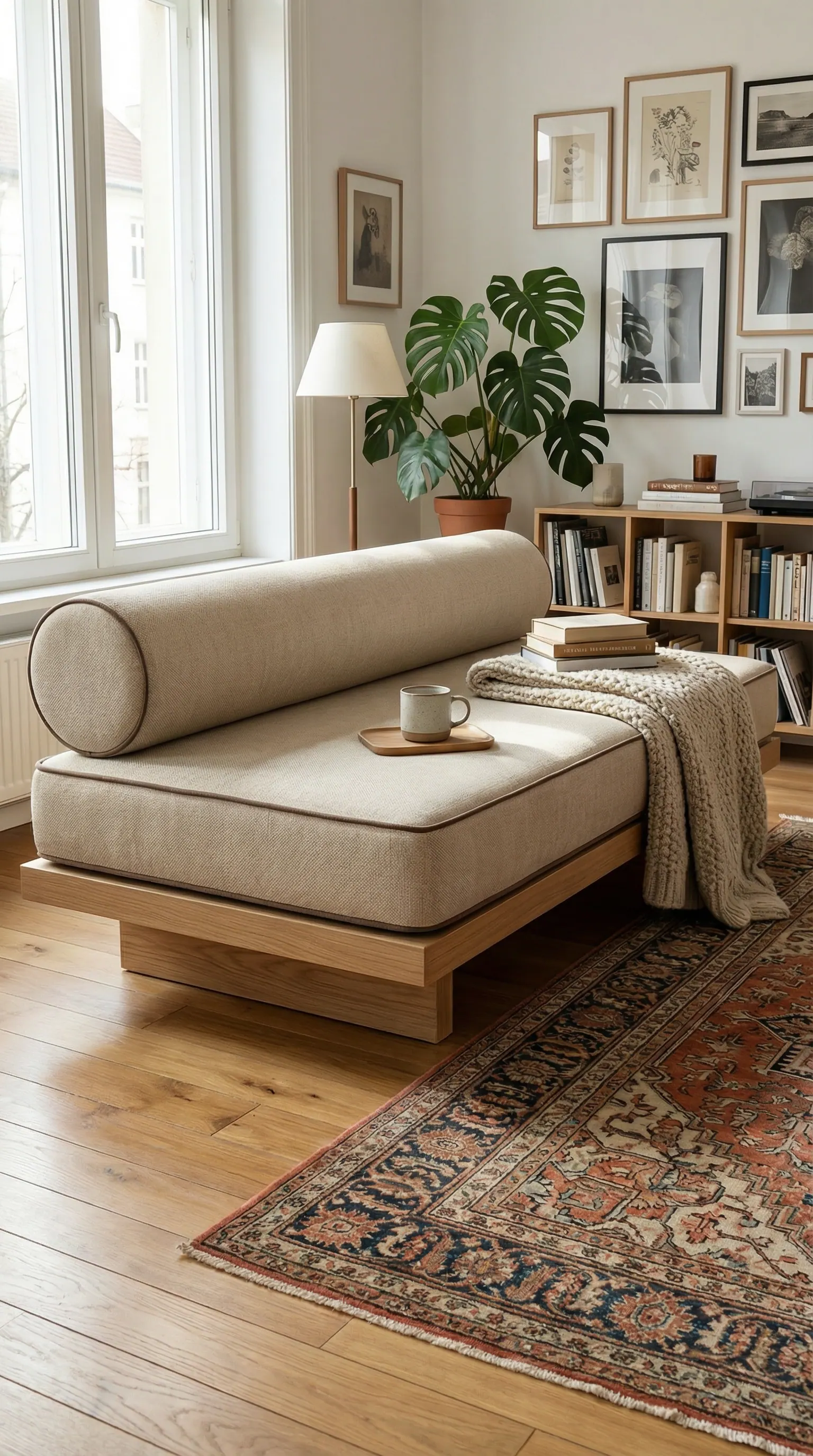
The choices were all about what sat on the wall. The window trim started 4 in (10 cm) above the seat cushion, and a window lever sat 11 in (28 cm) above it. A back cushion sized to the trim would have left the lever poking out at shoulder height. So the advice was a back cushion 14 to 16 in (36 to 41 cm) tall and 3 to 4 in (7.5 to 10 cm) thick, tall enough to hide the lever, and kept loose so the window could still be opened.
The result, my friends, was a lesson in how projects move. The client chose freestanding benches in the end. The designer came back with a banquette that turned a 45-degree corner, and that went through the trapezoid option, where every side is measured. Size back cushions around the hardware, not just the wall. The angled shape is explained in trapezoid cushion measurements, and back sizing in back cushion height.
Pinned by Élodie: four edges worth comparing
Four pins sit on the edges, where cord meets cloth and each pairing shows its temper.
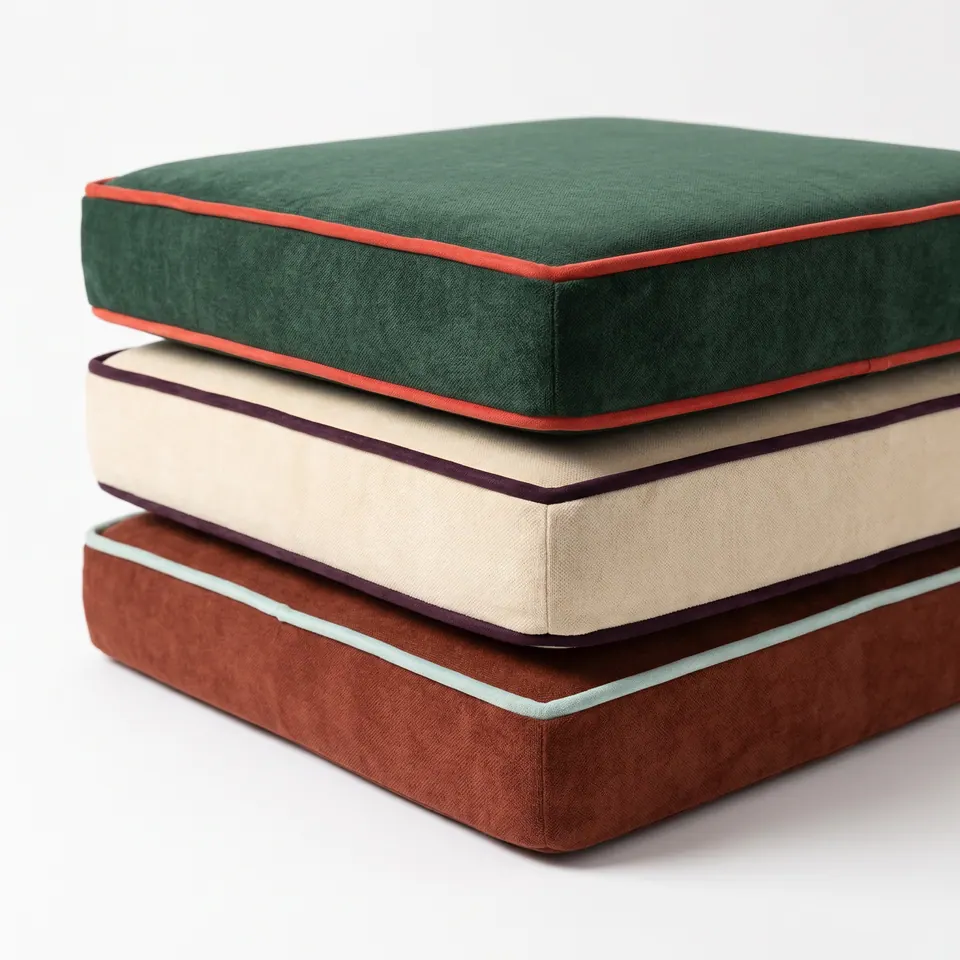
- Green with red cord
Warm red piping on cool forest green is the boldest of the three pairings.
- Aubergine piping line
A deep aubergine cord outlines the ivory cushion without breaking its calm.
- Ivory box wall
The side wall shows a fine woven texture and an even, straight box height.
- Mint cord on rust
Pale mint against rust is a soft contrast that still reads from across a room.
- Green with red cordWarm red piping on cool forest green is the boldest of the three pairings.
- Aubergine piping lineA deep aubergine cord outlines the ivory cushion without breaking its calm.
- Ivory box wallThe side wall shows a fine woven texture and an even, straight box height.
- Mint cord on rustPale mint against rust is a soft contrast that still reads from across a room.
Reading the stack: three conversations between cloth and cord
A stack on a white sweep is the most honest photograph a cushion can sit for. No room, no styling, no lamp to flatter it. Flat, even studio light shows only what matters here: thickness, corner shape and the width of the cord.
Read it from the top. Forest green with a warm red cord is the boldest pairing, warm against cool, the one you notice from the door. Ivory with a deep aubergine cord is the calmest: the outline is drawn, but it never breaks the ivory's quiet. Rust with a pale mint cord is a soft contrast, yet it still carries across a room, because the two sit on opposite sides of the color wheel.
Look at the ivory box wall in the middle. You can see the fine woven texture of the linen-look cloth and an even, straight box height all the way along. That straight wall is what lets a contrasting cord look deliberate. On a wavering edge, a colored cord only advertises the wave.
Let one color speak and the others listen. In each pair the body speaks and the cord answers. Which pairing would your room choose? Hold your own sample against two or three cords, in daylight, before you decide. The cloth family is linen-look fabrics, and the finished shapes sit among our bench cushions.
Swatch strip: three bodies, three cords
- Forest green#2F4A3ACool body; the boldest partner for a warm cord
- Signal red#B3362DCord on the green, warm against cool
- Ivory#EEE8DACalm body with a visible fine weave
- Aubergine#4A2740Deep cord that outlines without breaking the calm
- Rust#A5512DWarm body, earthy and matte
- Mint#BFDCC8Pale cord, a soft contrast that still reads
On the cutting table: three pairings and one project
| Pieces | Three box cushions, stacked on a white sweep |
|---|---|
| Fabrics | Linen-look solids in forest green, ivory and rust |
| Piping | Contrast cords in red, aubergine and mint |
| Edge | Box edge with an even, straight wall |
| Light | Flat, even studio light |
| Project seat | 75 x 20 x 3 in (191 x 51 x 7.5 cm), linen with contrast piping |
| Project back | 14 to 16 in (36 to 41 cm) tall, 3 to 4 in (7.5 to 10 cm) thick, loose |
| Best for | Comparing piping pairs before you order |
Have it made
Have this made — ask Élodie’s workshop
Describe the room at four in the afternoon: the floor, the wall, the one color you love. That is where a good fabric choice begins. — Élodie
Leave your details and the workshop will call you to confirm measurements, fabric, foam and piping. No prices, dates or payment on this page: it is a request, not an order.
Warm cord on cool cloth is the boldest piping pairing: red on forest green reads from the door, while mint on rust whispers but still carries.
Élodie
Questions buyers ask next
Should bench cushion piping match the fabric or contrast with it?
Contrast gives the box edge a drawn outline that reads from across a room; matching piping lets the fabric speak alone. Compare two or three cords against your sample in daylight before choosing.
How thick should a back cushion on a window bench be?
For one studio bench with a window lever 11 in (28 cm) above the seat, the advice was 3 to 4 in (7.5 to 10 cm) thick and 14 to 16 in (36 to 41 cm) tall, so the lever stays hidden behind it.
Can a back cushion lean against a window without being attached?
Yes, and near a window that opens it should. Kept loose, the cushion lifts away when the window needs opening, and it can be sized to cover the trim or hardware behind it.
How is a banquette with a 45-degree corner ordered?
As a trapezoid. An angled corner turns the end of the run into a four-sided shape with one slanted side, so it goes through the trapezoid option with every side measured.
With color and care — Élodie
More photographs to read
 Save
 Save
 Save
 Save
 Save
 Save