A Reading by HarlanCorner Floor Cushions & Poufs
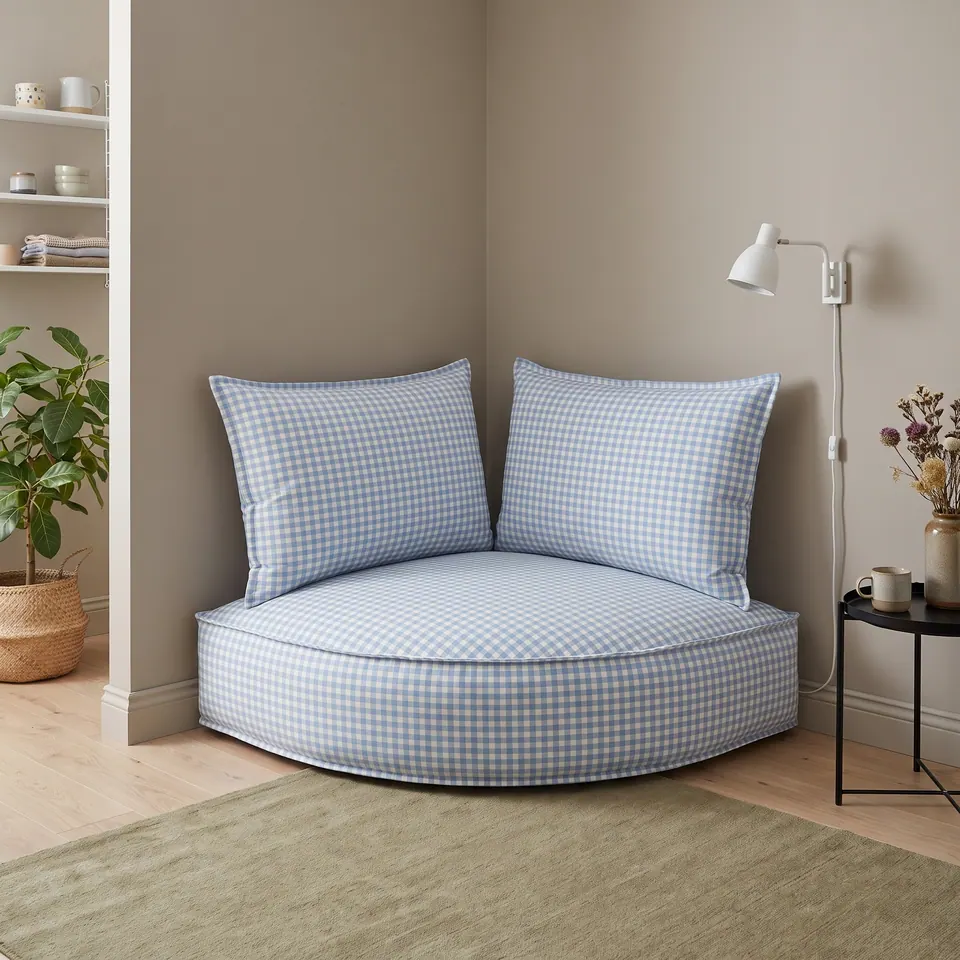
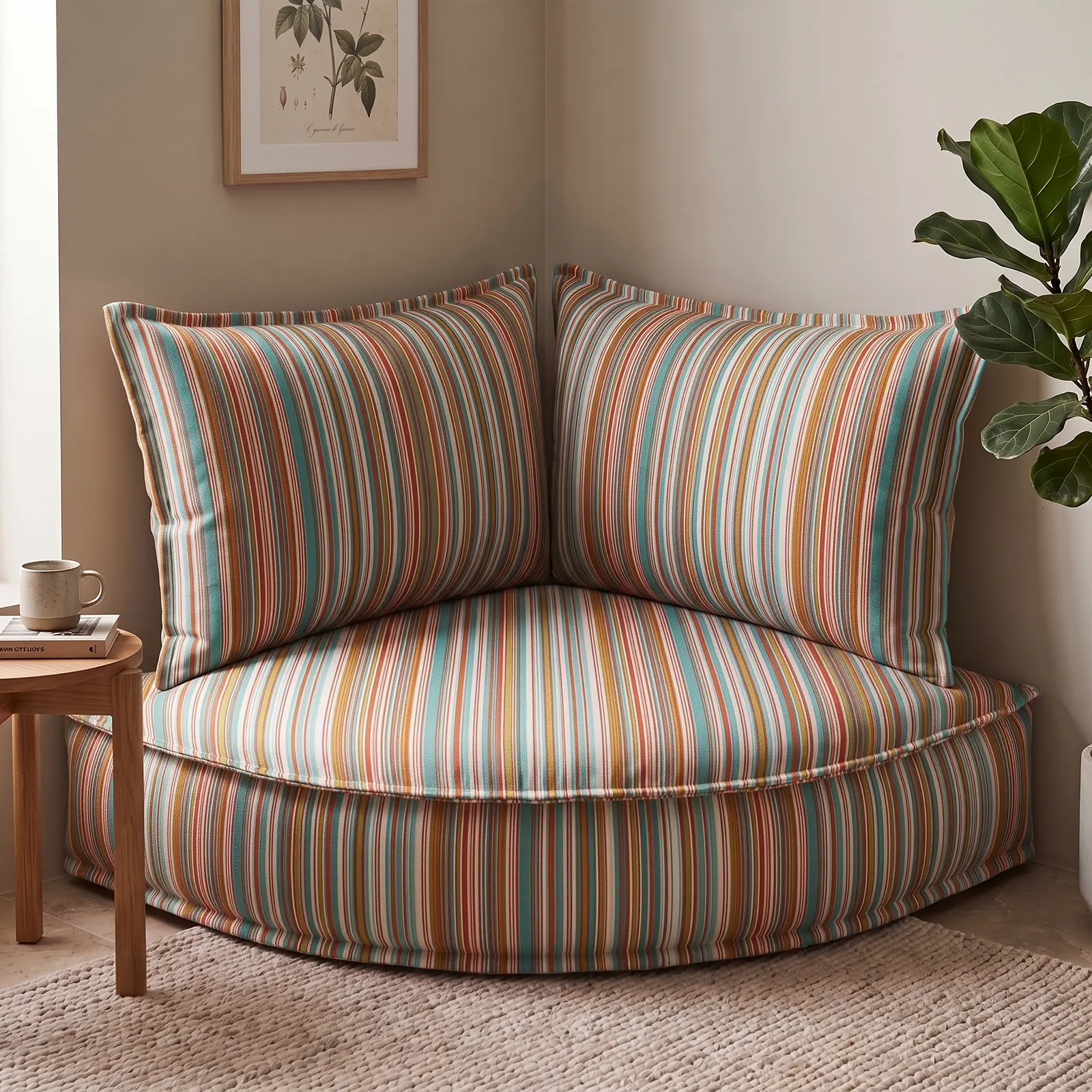
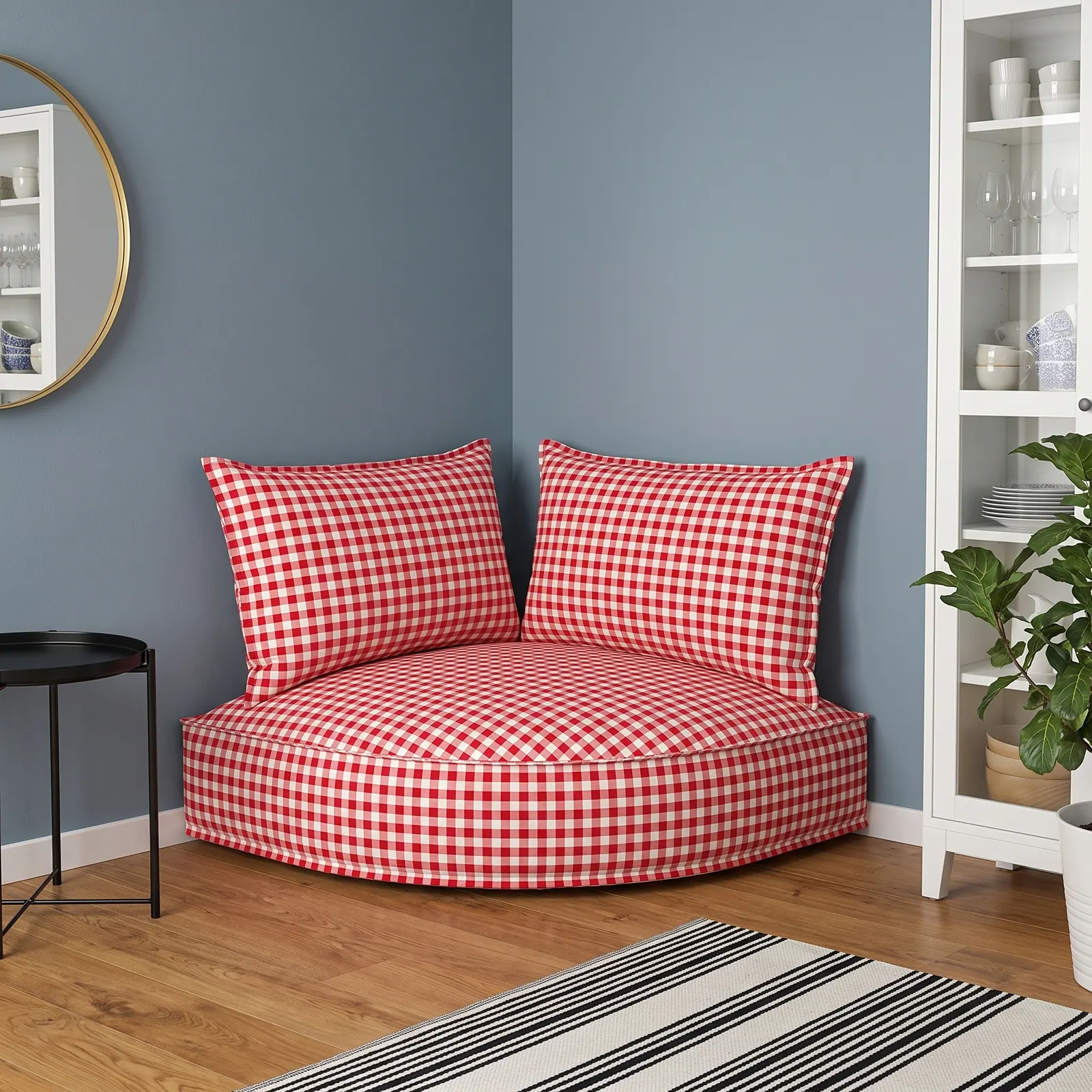
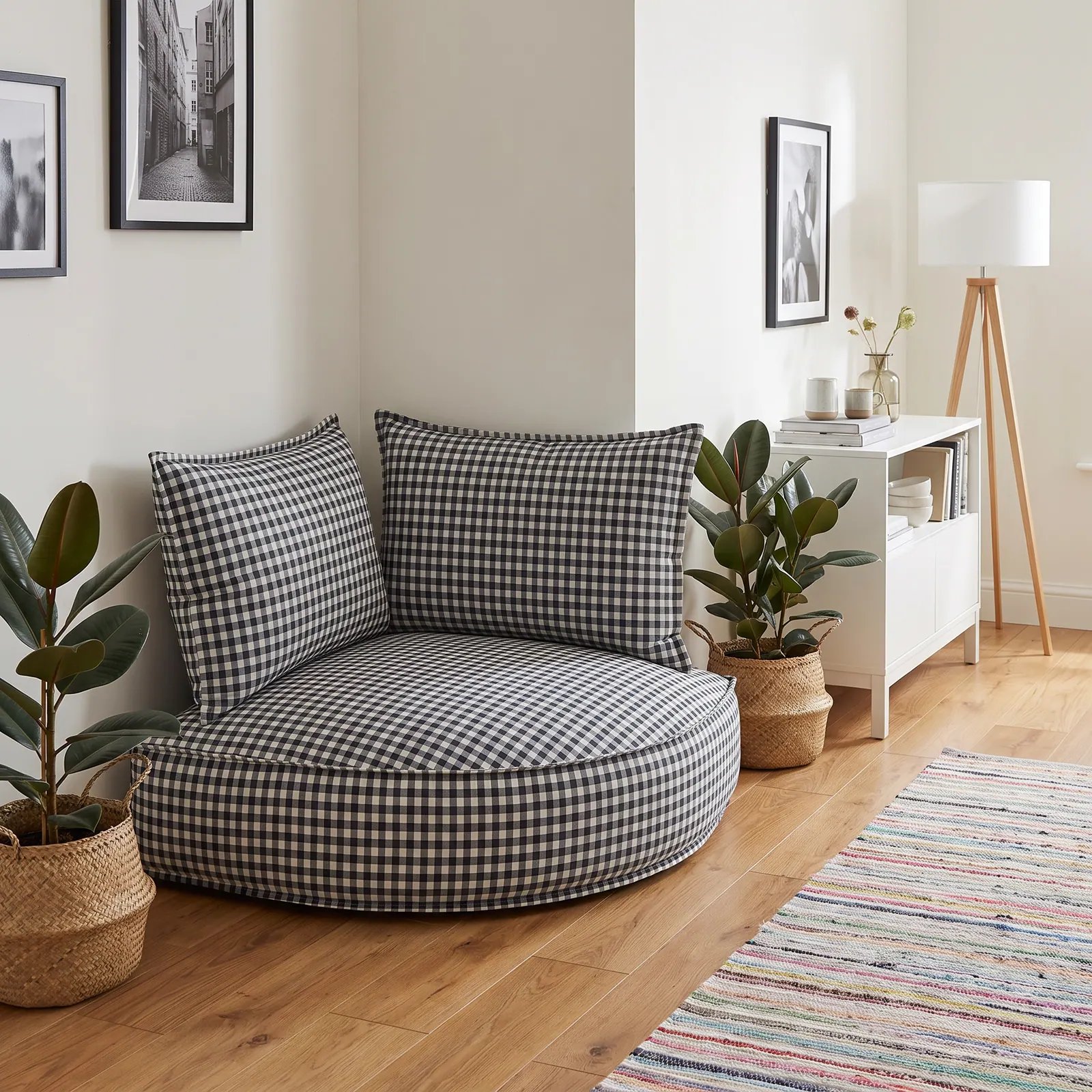
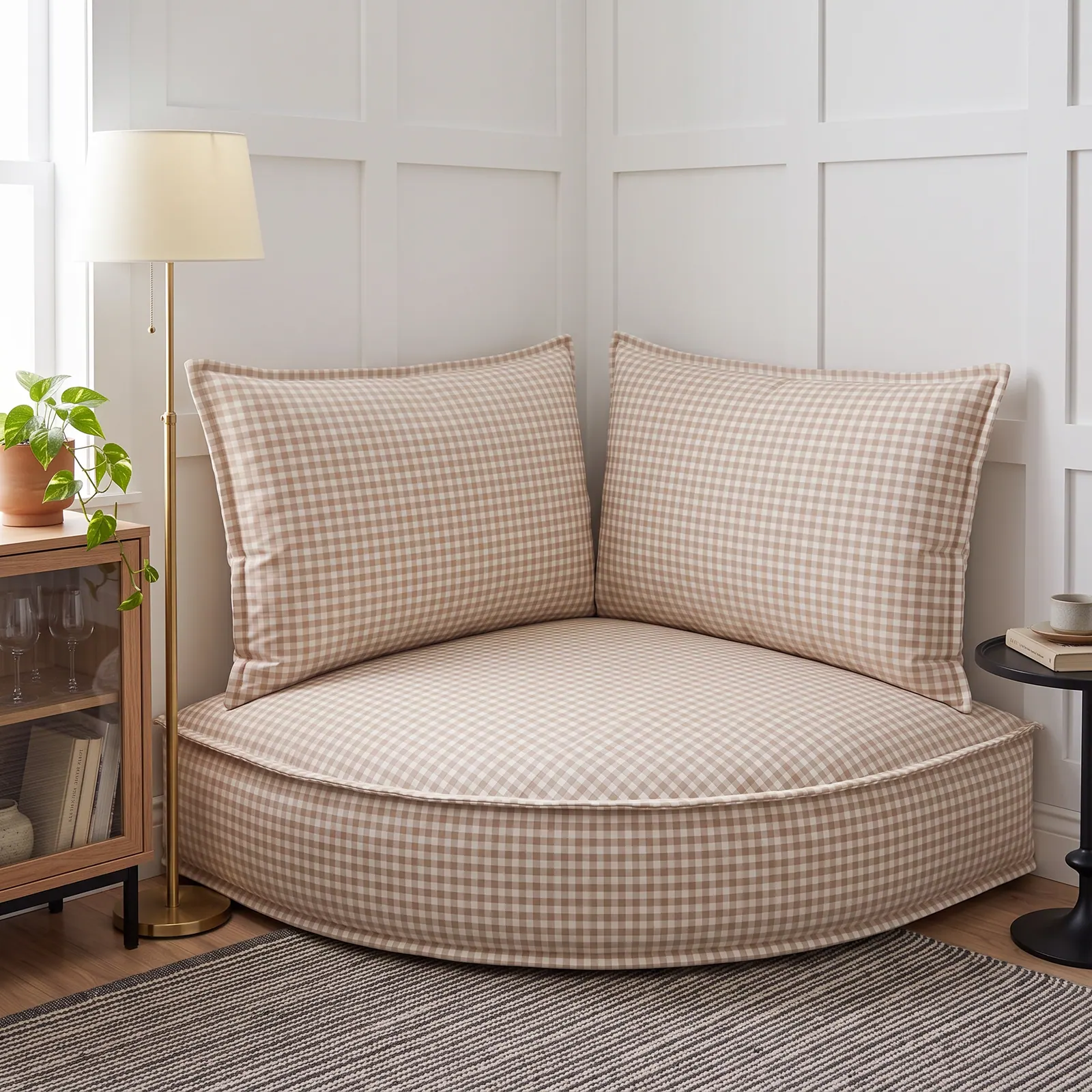
A seafoam gingham corner floor cushion, and how to mix checks, stripes and plains around it
Harlan reads a pale check floor seat in a blush-pink corner, counts the patterns in the room, and tells the story of a velvet cover that remembered its box.
The quick answer
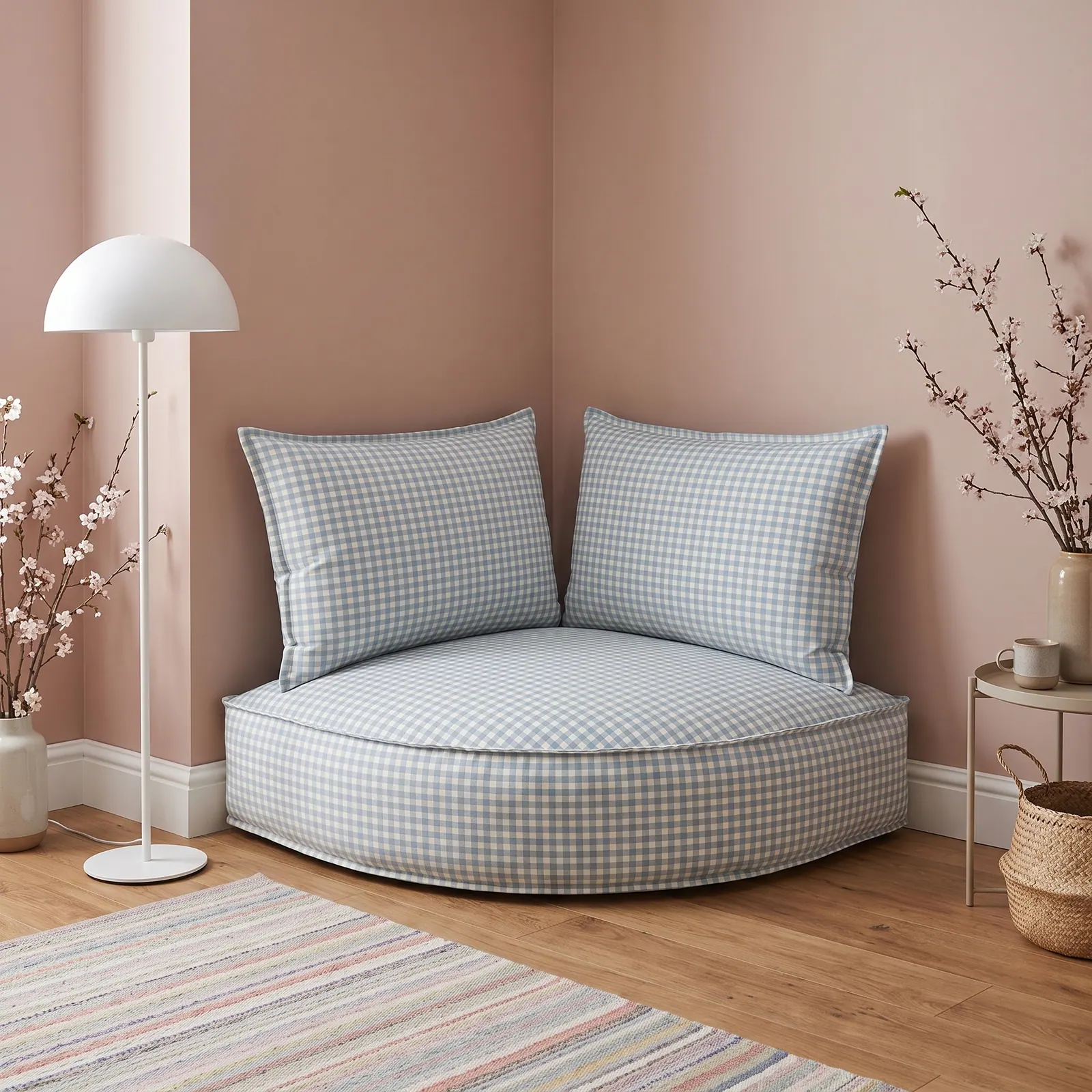
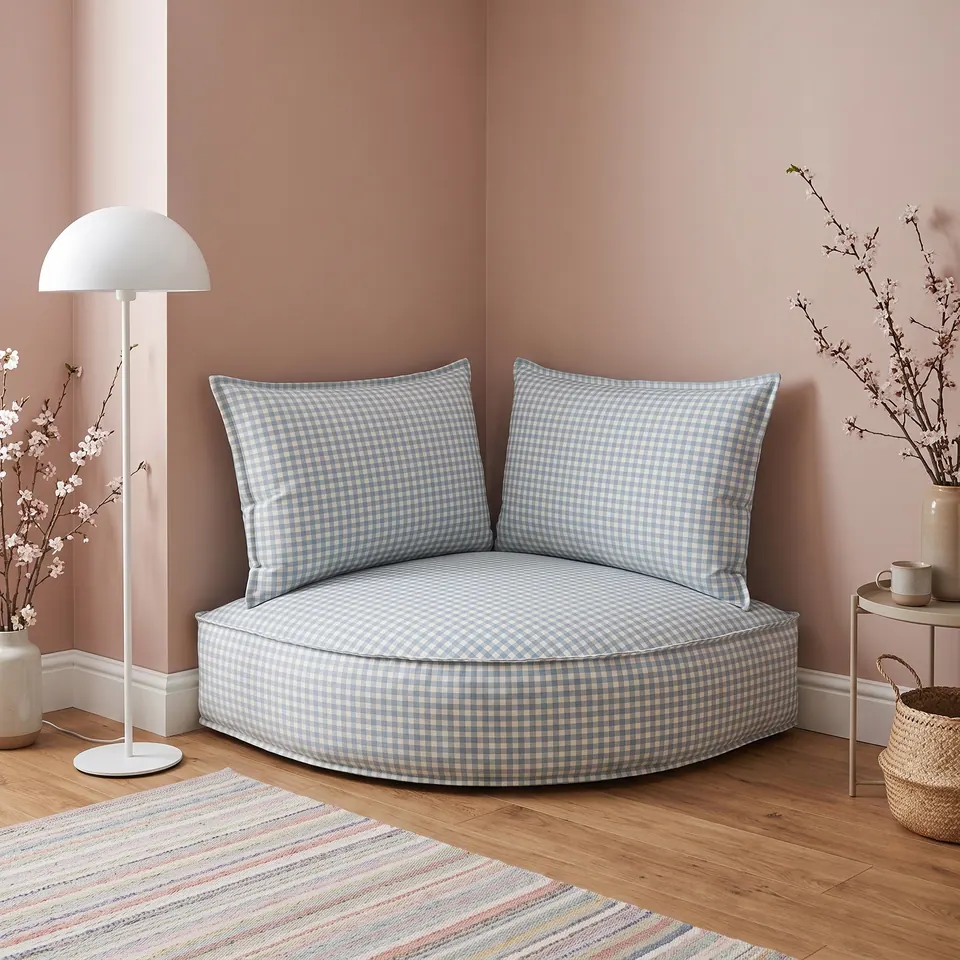
A corner floor cushion in gingham mixes well with other patterns when each one works at a different scale. Here a pale seafoam check covers the seat and backrests, thin pastel stripes run across the rag rug, and everything else is plain or texture: seagrass, ceramic, oak. Keep to one pattern per scale and one color family.
 Save
 Save
 Save
 Save
 Save
 Save
 Save
Pinned by Harlan
Five pins mark the dome floor lamp, the pale check seat, the blossom branches, the seagrass basket and the pastel rag rug.
- Dome floor lamp
A white mushroom shade adds a clean curve that echoes the rounded seat front.
- Pale check seat
A pastel gingham keeps a large floor piece from dominating a small pink room.
- Blossom branches
Tall stems on both sides frame the seat and bring height to a low piece.
- Seagrass basket
Natural fiber beside the seat stores throws and warms the pastel palette.
- Pastel rag rug
Thin pastel stripes repeat the blue and pink without copying the check.
- Dome floor lampA white mushroom shade adds a clean curve that echoes the rounded seat front.
- Pale check seatA pastel gingham keeps a large floor piece from dominating a small pink room.
- Blossom branchesTall stems on both sides frame the seat and bring height to a low piece.
- Seagrass basketNatural fiber beside the seat stores throws and warms the pastel palette.
- Pastel rag rugThin pastel stripes repeat the blue and pink without copying the check.
Counting the patterns in a pink corner
Count the patterns in this corner and you get two. That is the right number.
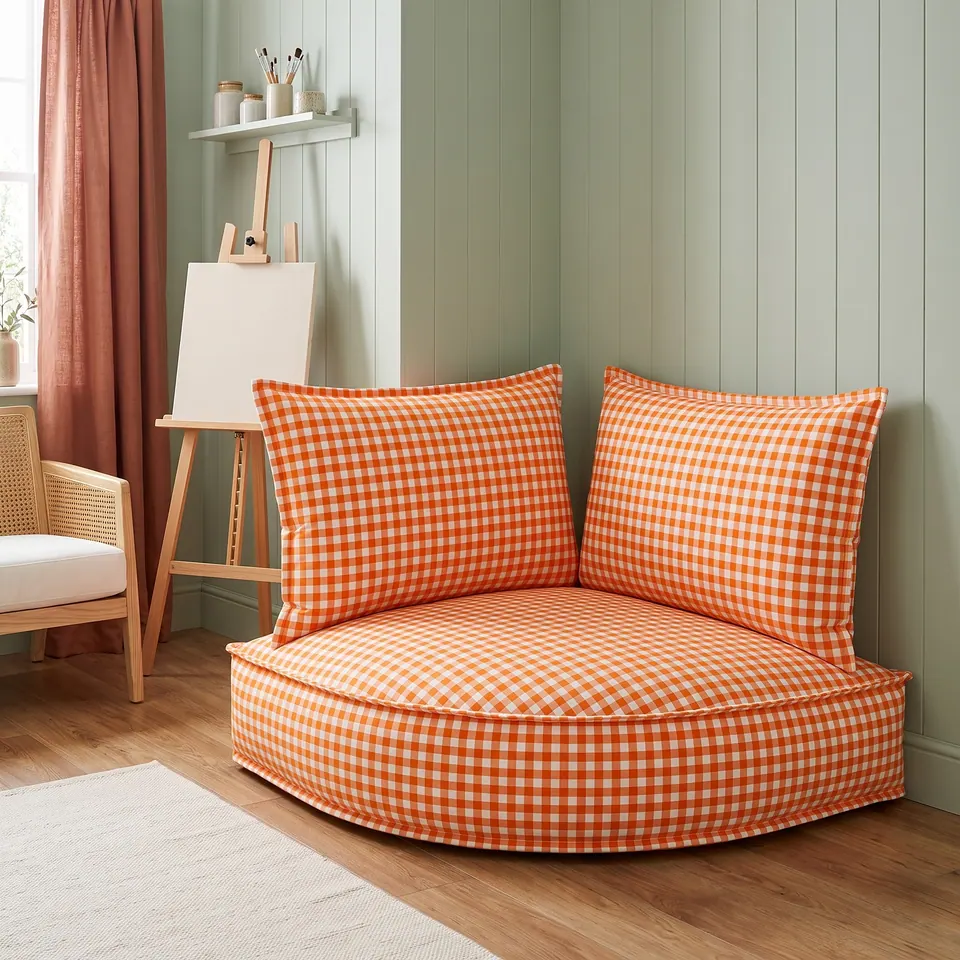
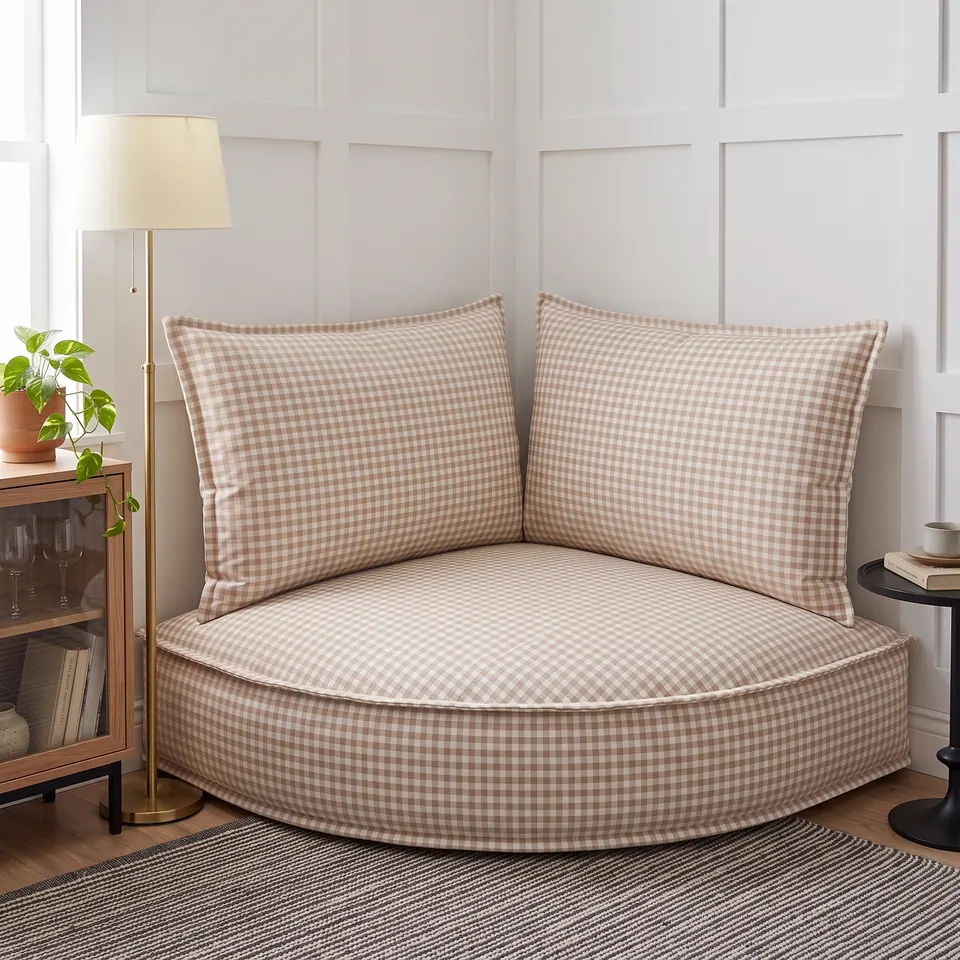
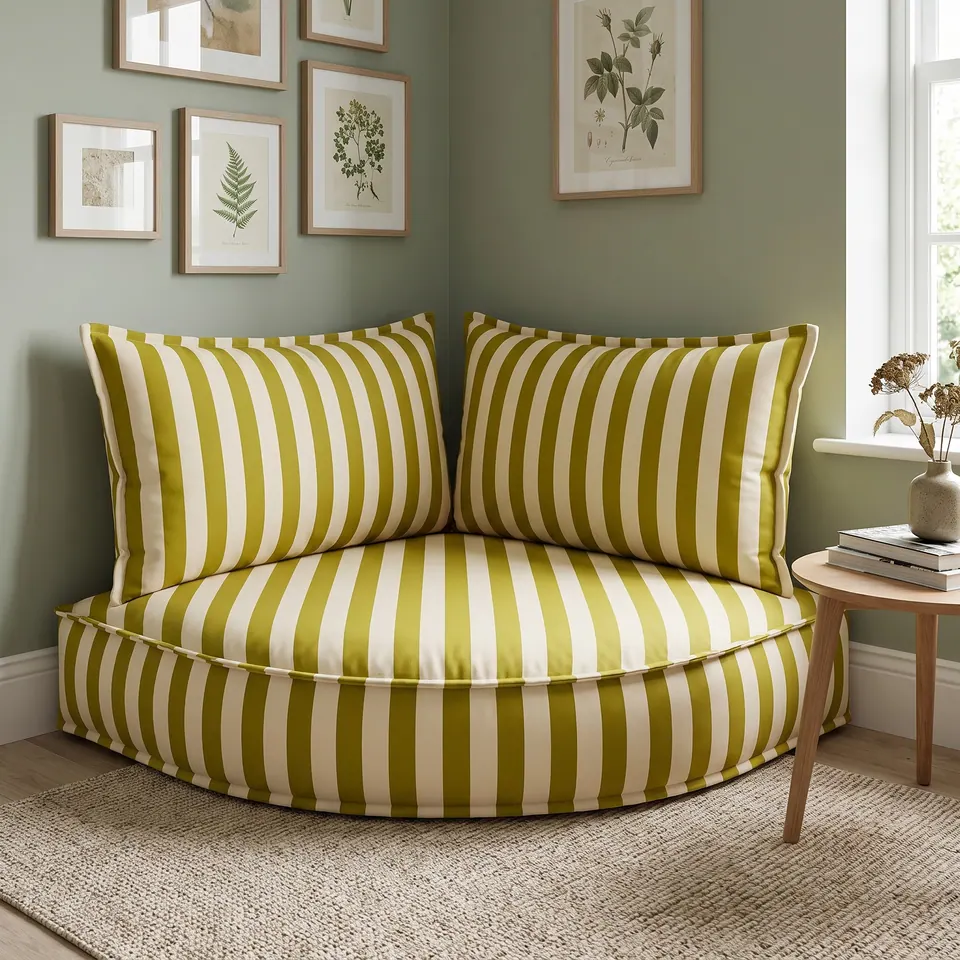
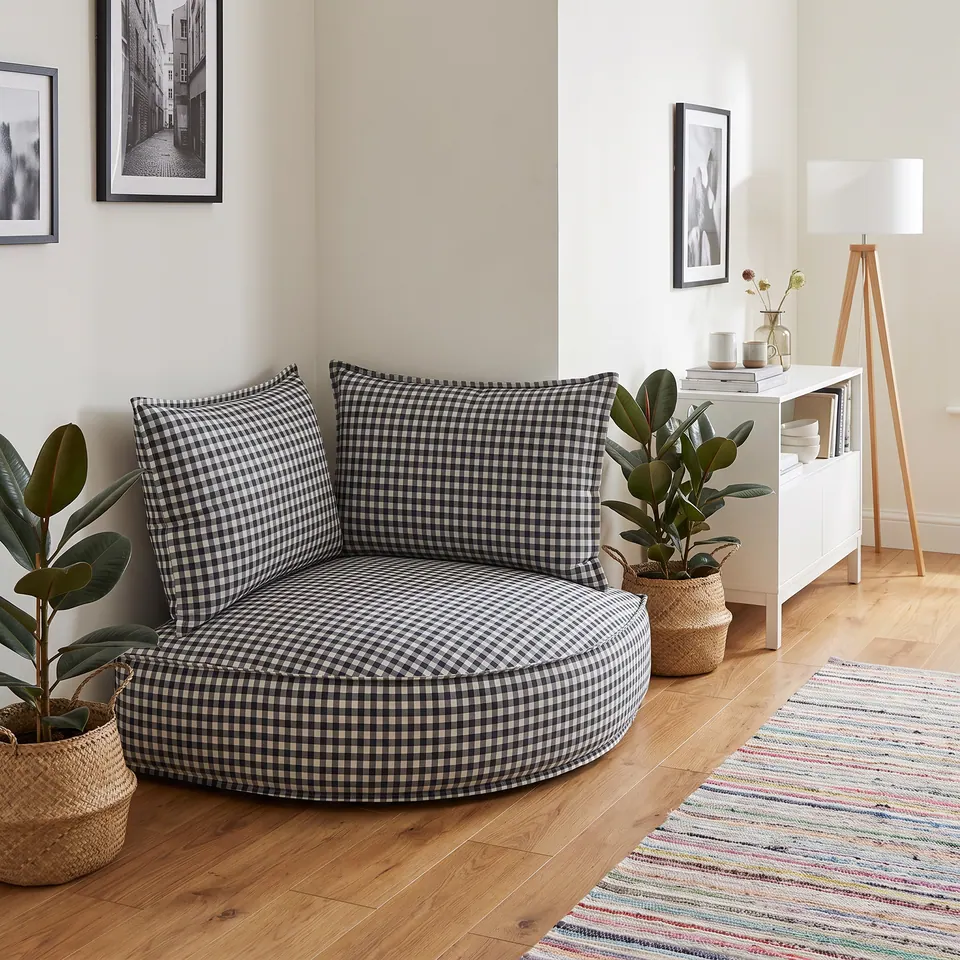
The first is the gingham: a pale seafoam blue and white check on the seat and on both flanged backrest pillows. It is small and soft, so a big floor piece does not take over a small pink room. The second is the rag rug, thin pastel stripes in blue and pink. The rug repeats the colors without copying the check, and that is the whole secret. Two patterns can share a room when they do not share a scale.
Everything else is plain or texture. The blush wall is plain. The white dome floor lamp is plain, and its mushroom curve answers the rounded front of the seat. The backrest pillows stop below the lamp shade, which keeps the whole silhouette low and tidy. Cherry blossom branches in white ceramic vases stand on both sides and frame the corner the way curtains frame a window. The woven seagrass basket brings texture and a little warmth to all that pastel. The light oak floor holds it together.
Cool check, warm wall, low contrast. It feels restful because nothing is shouting.
I have watched folks pile a third and a fourth pattern onto a corner like this, my friend, and it always ends the same: the eye cannot find a place to sit. Keep to two, and let texture do the rest. See more corner floor cushions, browse the checked linen and gingham library, and size your corner with the quarter-circle pattern.
Five rules for mixing around a check
- Give each pattern its own scale: a small check, a thin stripe, never two the same size.
- Keep every pattern in one color family; the rug here repeats blue and pink and adds nothing new.
- Let plains carry the wall and the lamp, and let texture carry the rest: seagrass, ceramic, oak.
- Put the check on the backrest pillows too, so the seat reads as one piece.
- In a small room, stop at two patterns.
Have it made
Have this made — ask Harlan’s workshop
Fabric has a temper and foam has a memory. Better to settle both in a conversation than to guess at them alone. — Harlan
Leave your details and the workshop will call you to confirm measurements, fabric, foam and piping. No prices, dates or payment on this page: it is a request, not an order.
Sit well. — Harlan