 Save
A Reading by MaggieBanquette & Kitchen Nook Cushions
Sage bouclé banquette cushions and backrests in a cream breakfast nook: a color story
Maggie reads one quiet green in a cream corner, and explains why the only pattern in the room is piled exactly where nobody wants to sit.
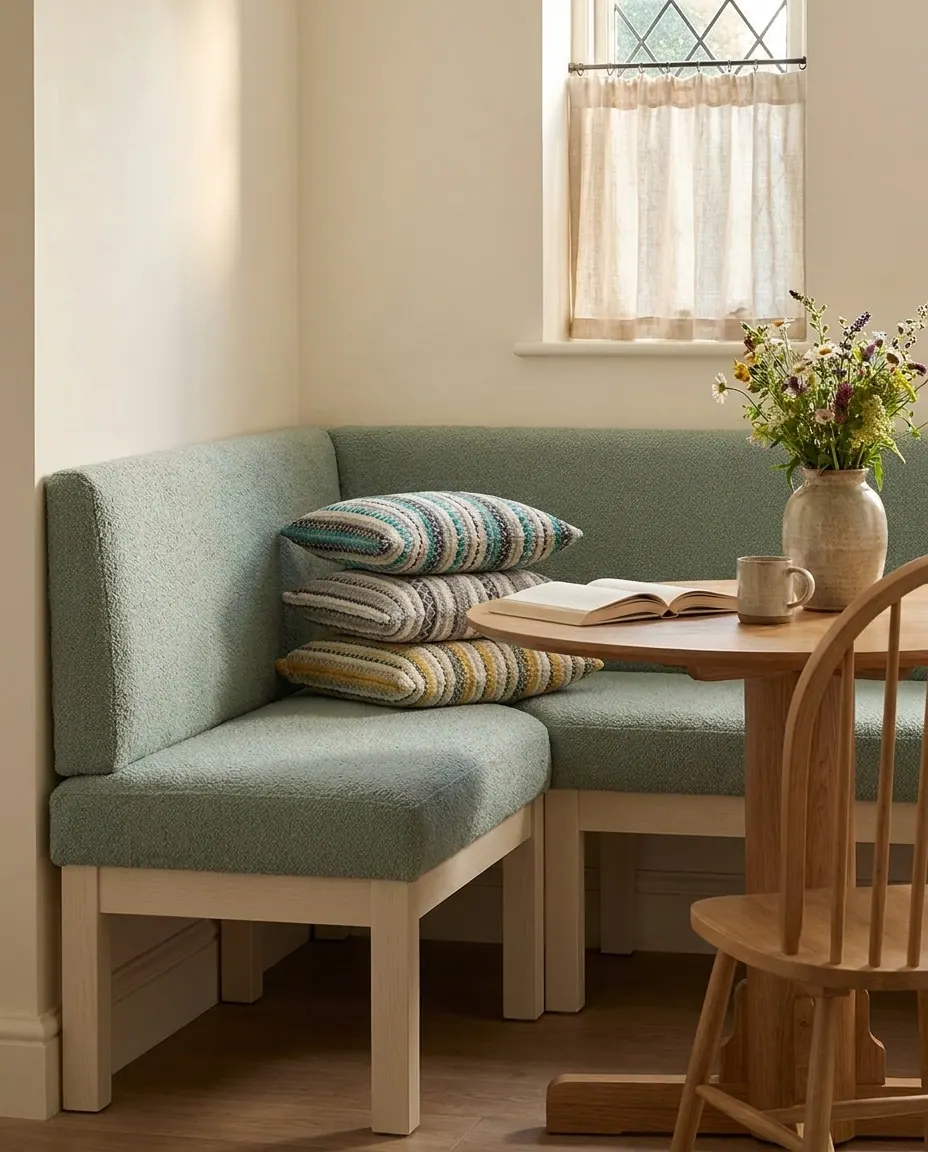
Sage bouclé seat and back cushions wrap a cream breakfast corner, with striped pillows parked where the two runs meet.

The quick answer
A sage bouclé banquette cushion works in a cream kitchen nook because one plain green on both seat and backrest reads as built-in, while oak furniture warms it and morning light keeps it fresh. Put any pattern in pillows rather than the cushion, and stack them in the corner of an L-shaped bench, where the two runs meet.
One green, two jobs
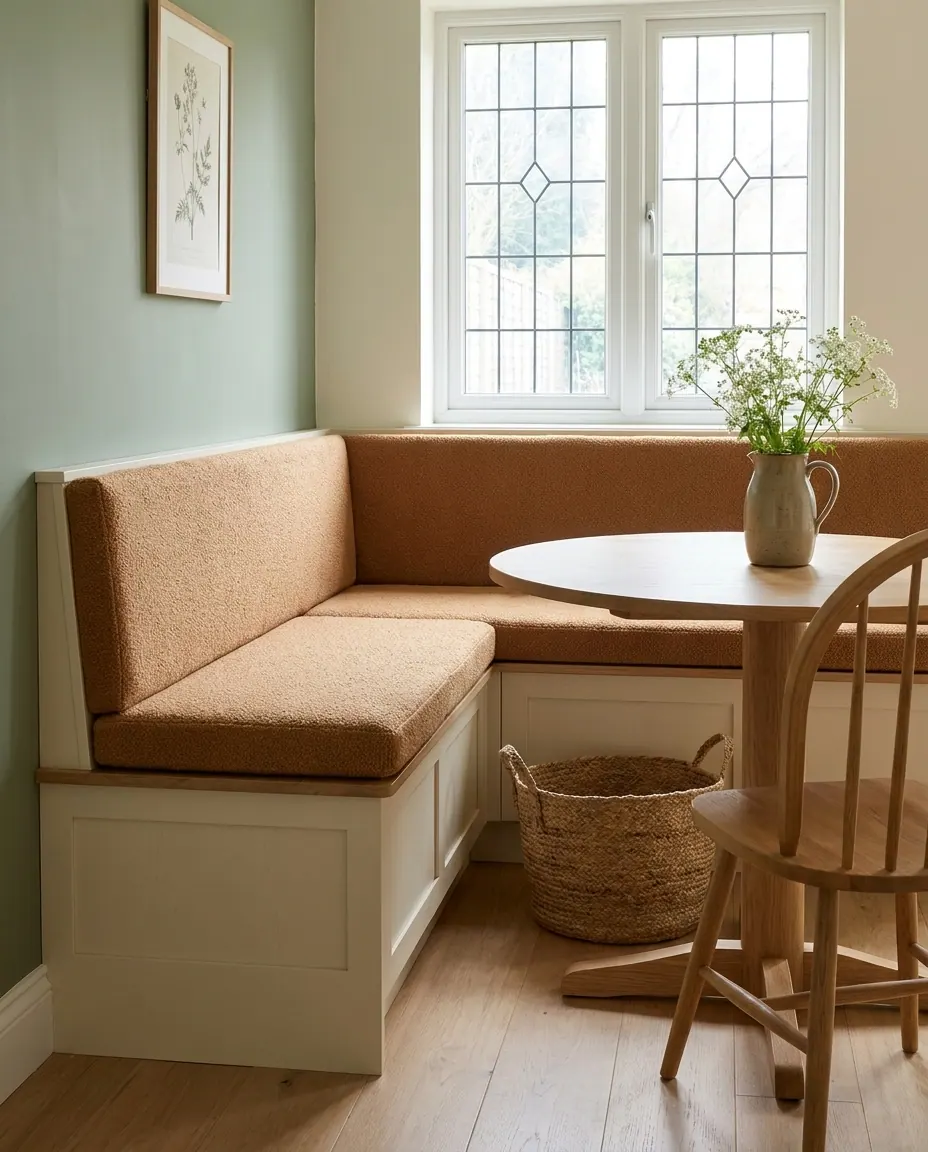
Here is a kitchen corner painted cream, with a leaded casement window, a linen café curtain and one color doing all the work: sage green bouclé, on the seat and on the back.
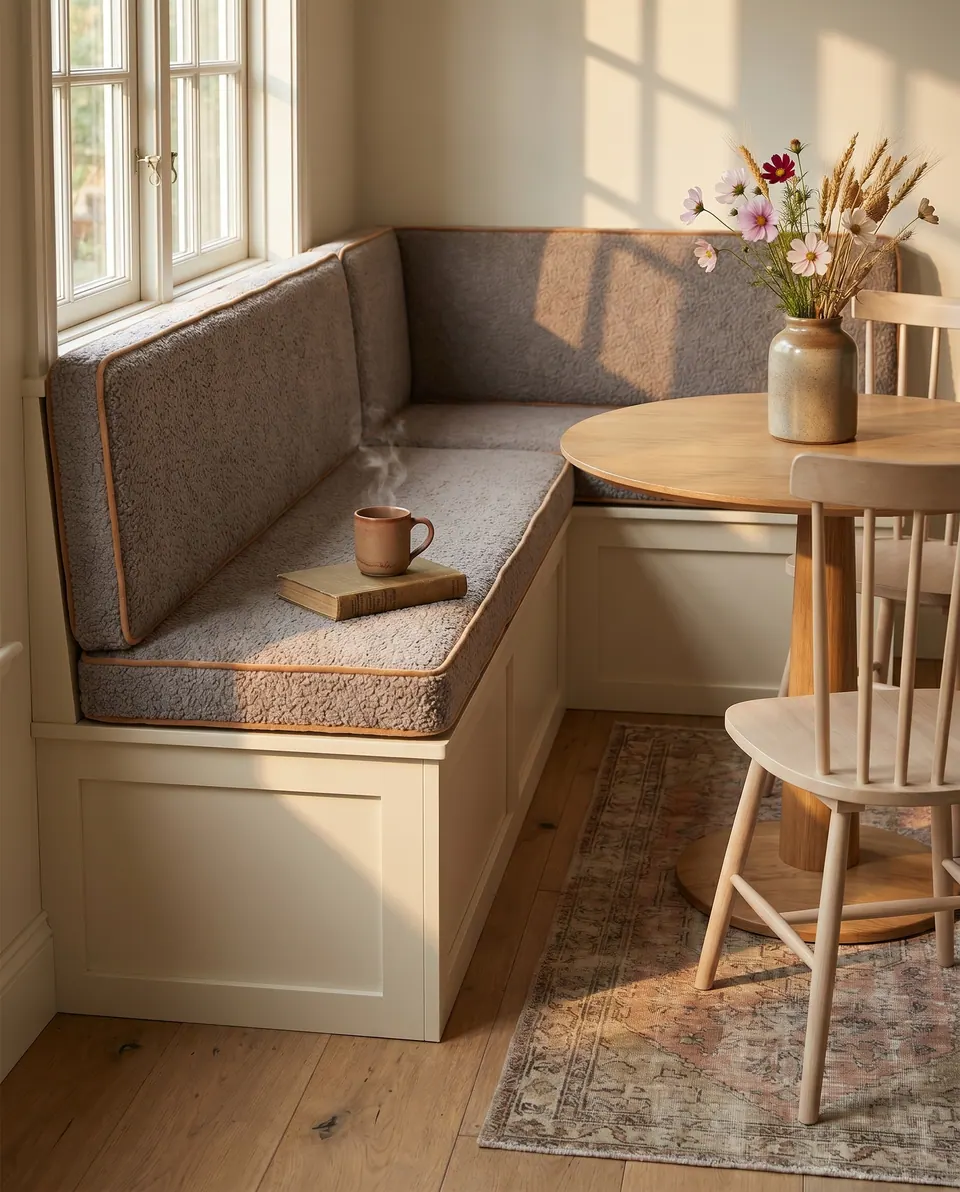
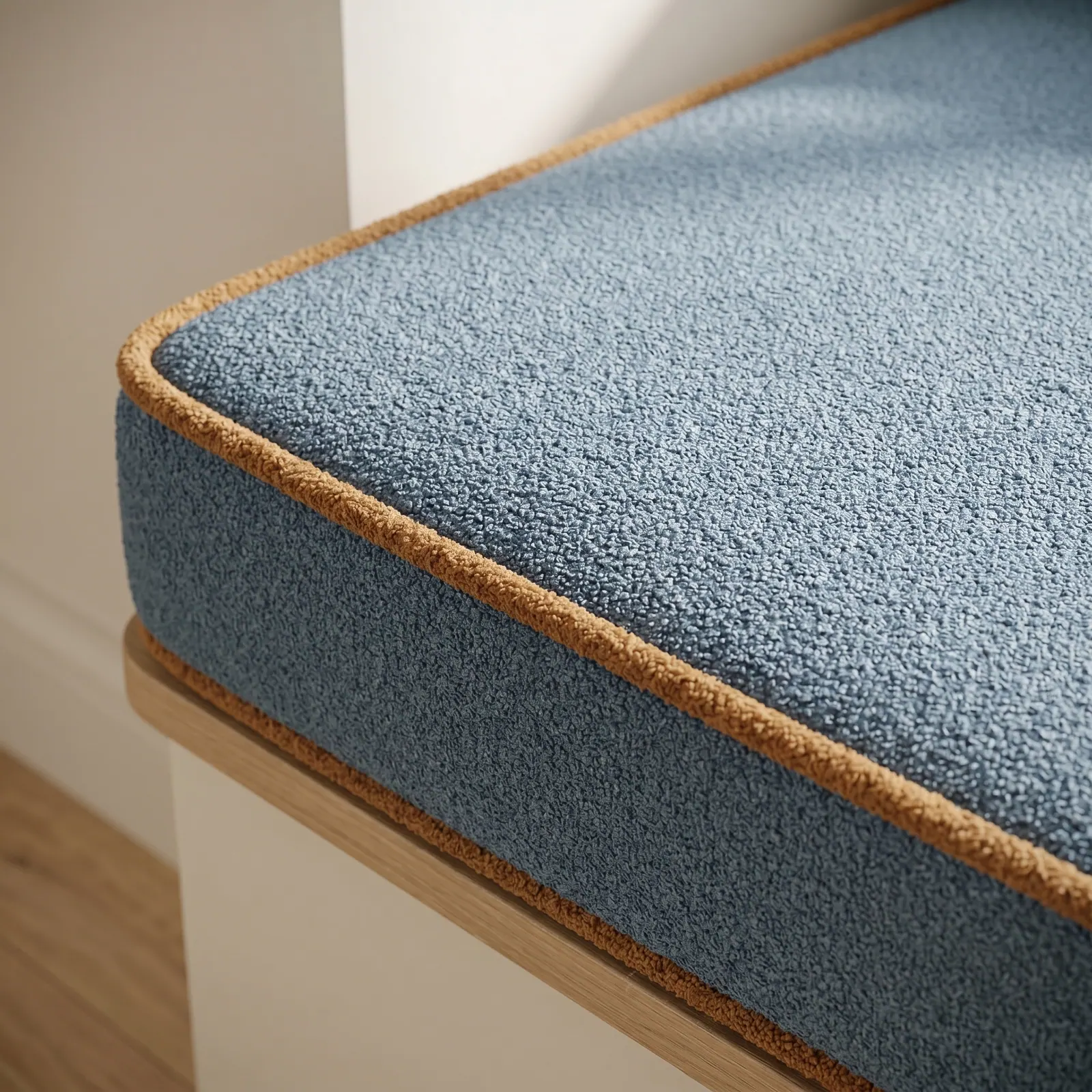
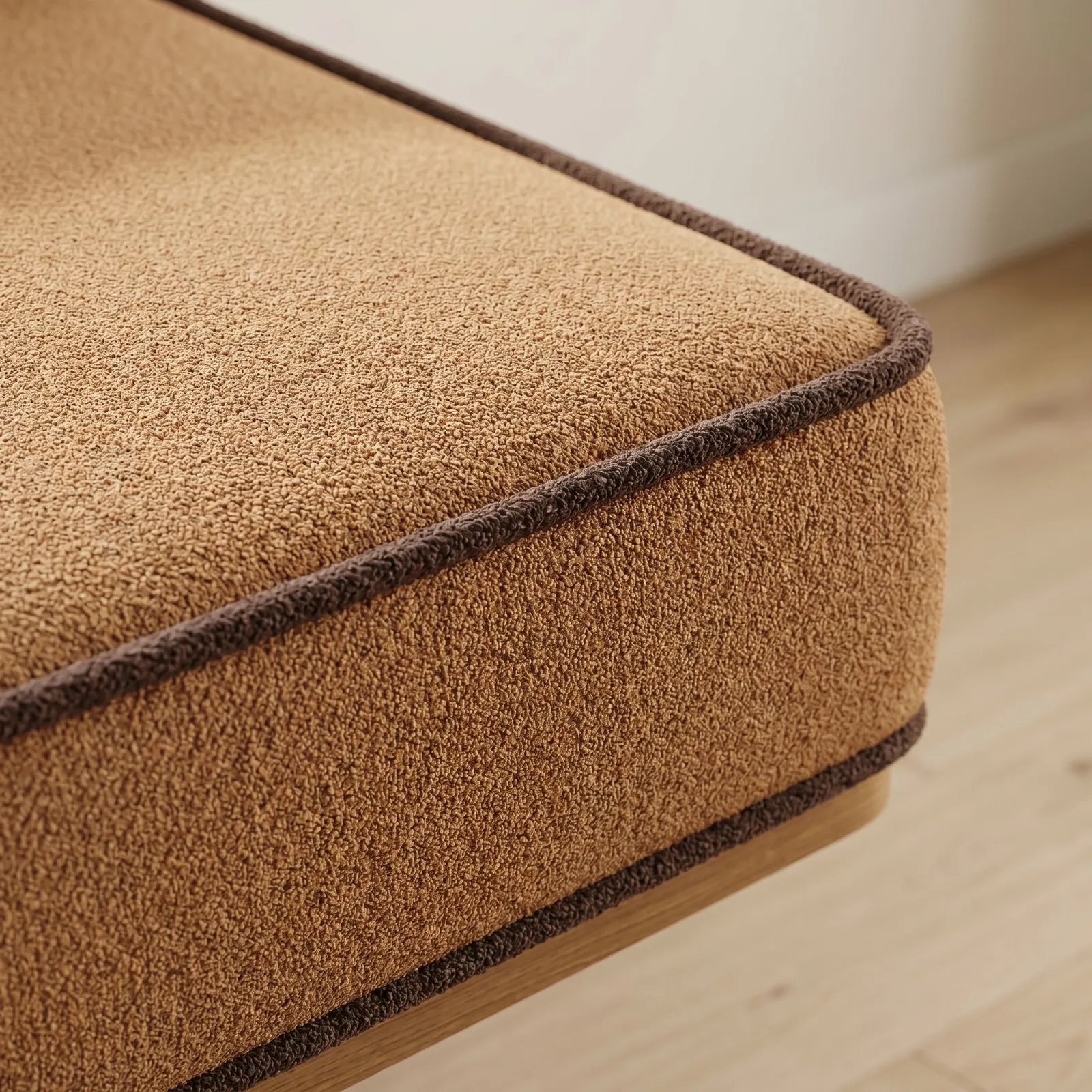
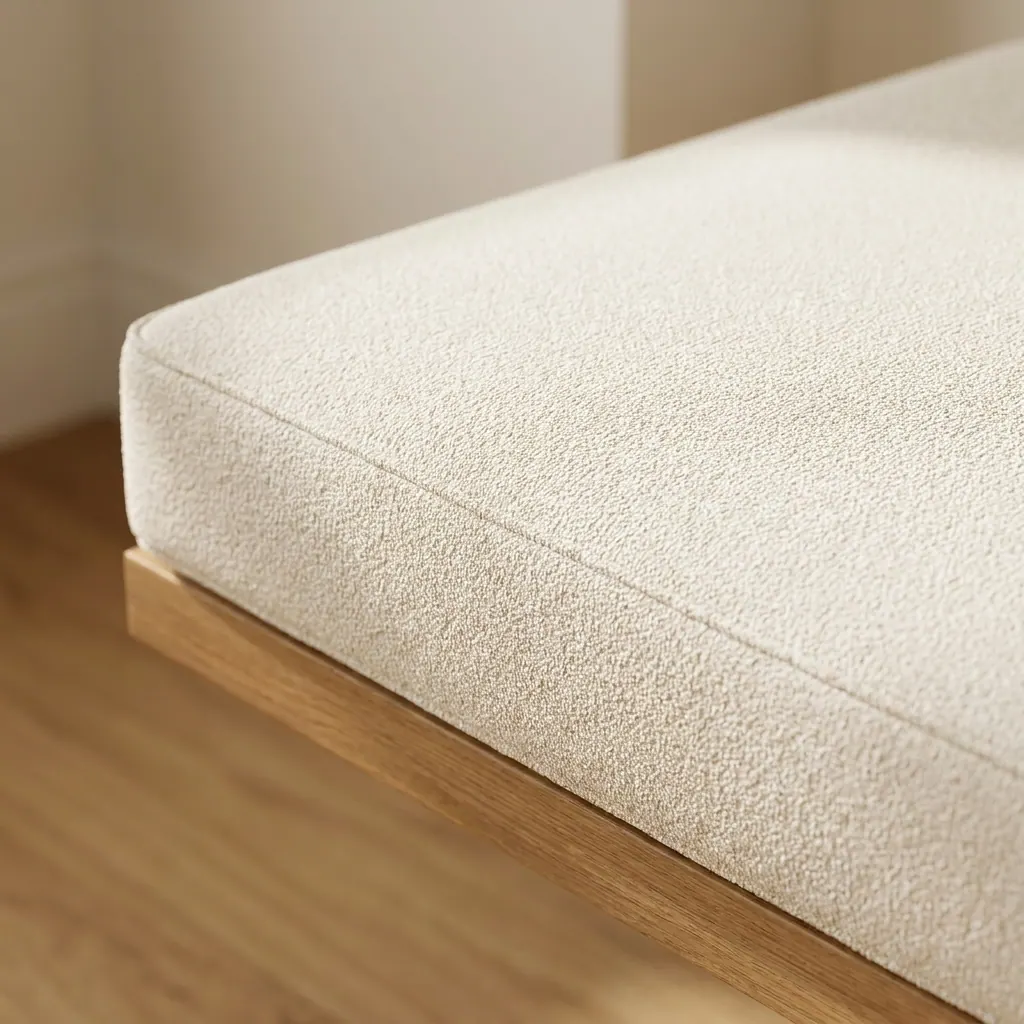
The same green on both pieces is the point. Two colors would make it furniture. One color makes it architecture, as if the banquette had been built with the house. There's no piping, either. A straight welt is a kind of honesty, and I do love one, but on a plain L of bouclé a quiet seam lets the loops carry the edge.
The backrest is its own cushion, so you sit upright against something soft instead of leaning on cold plaster. Open legs under the cream wooden base keep a small kitchen light and easy to sweep.
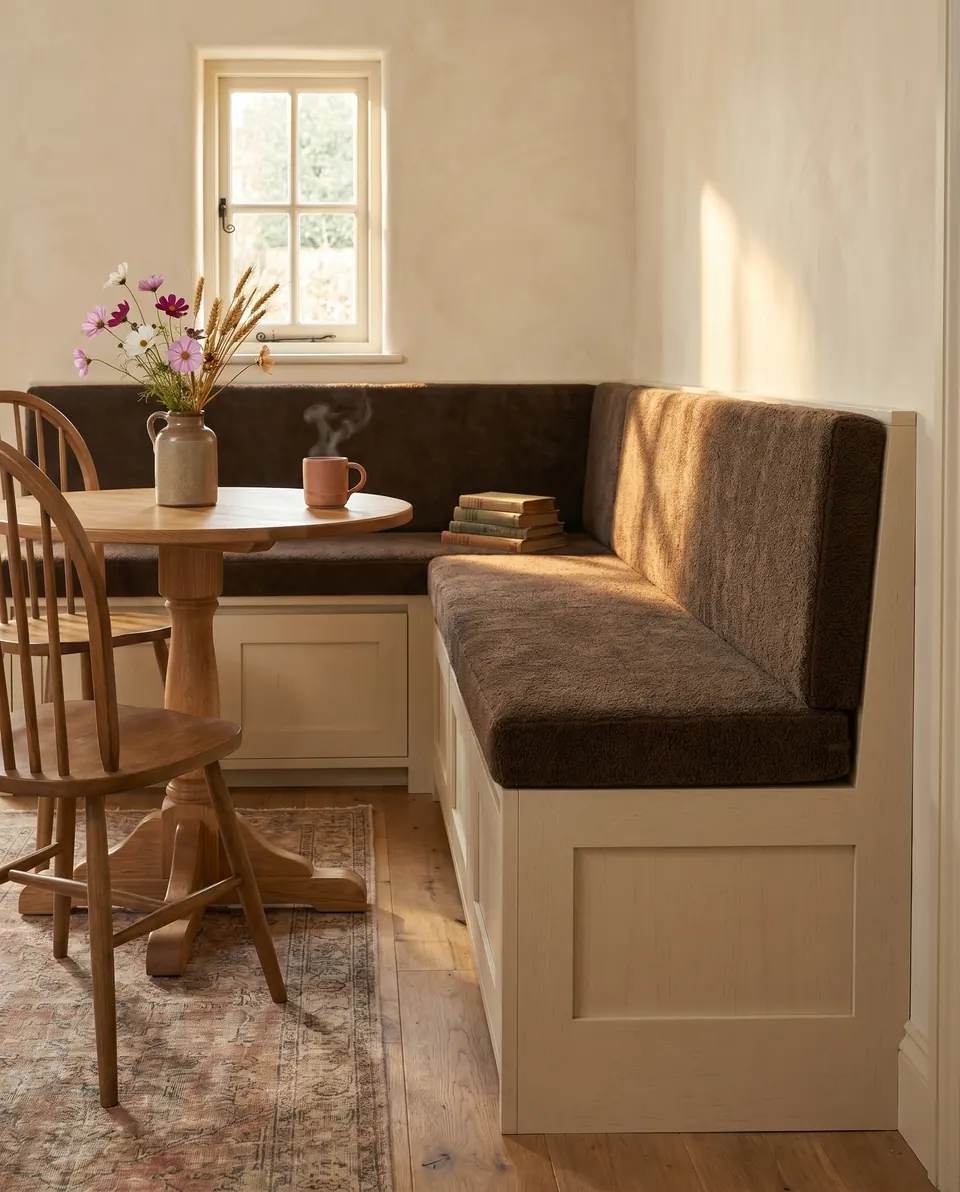
Now the color story, dear. Sage is a cool green, and a cream room can go chilly around it. The round oak pedestal table and the oak spindle-back chair fix that: warm wood right next to cool cloth. The light does the rest. Soft morning light comes in sideways through the casement and makes the bouclé look fresh rather than gray.
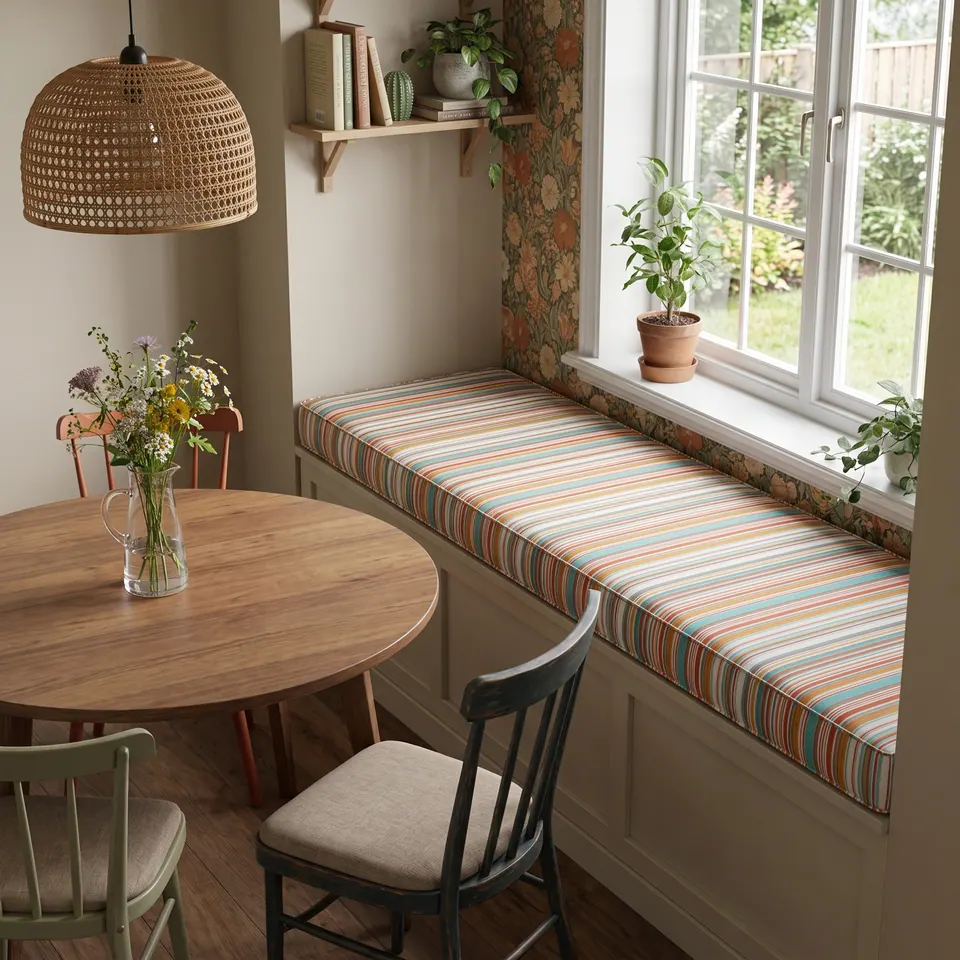
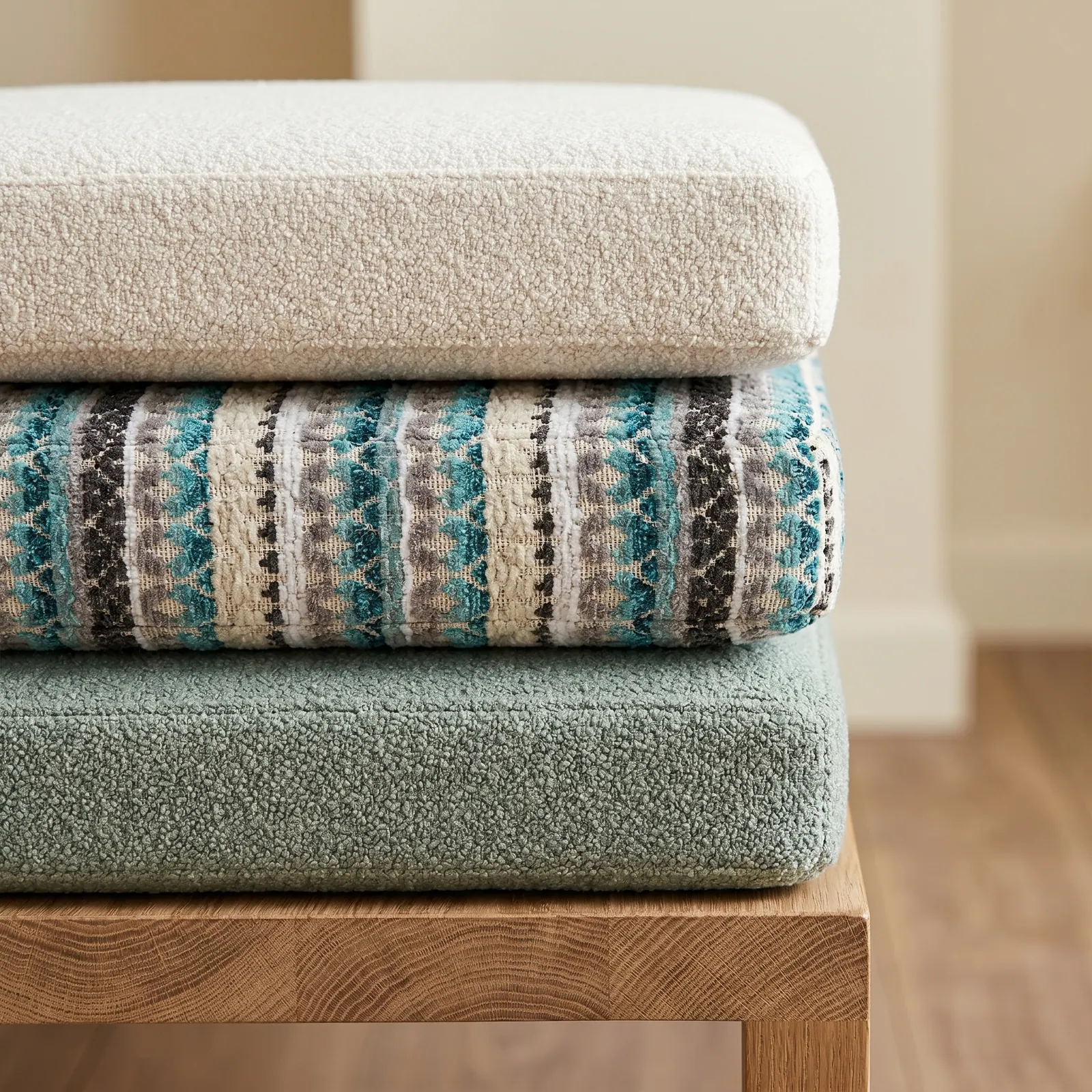
The only pattern in the room is three striped woven pillows in teal, mustard and cream, stacked in the corner. That's exactly where an L-shaped seat is least comfortable, so the pillows fill the dead spot and hide the join. A stoneware vase of meadow wildflowers, yellow and violet, repeats their yarns across the table. An open book and a speckled mug say somebody lingers after breakfast.
What color is the wood in your kitchen? More corners like this one wait under banquette cushions and kitchen nook cushions.
Five pins in the breakfast corner
Five pins follow the sage from backrest to seat front, then out to the pillows, the wildflowers and the open cream base.
- Sage bouclé backrest
A separate backrest cushion lets you sit upright against the wall instead of leaning on cold plaster.
- Seat cushion front
The seat is roughly as deep as the backrest is thick, which keeps knees at a comfortable dining height.
- Stacked striped pillows
Three striped pillows stacked in the corner hide the join where the two runs meet.
- Wildflower vase
Yellow and violet blooms repeat the mustard and teal yarns in the pillows.
- Cream wooden base
Open legs under the seat keep a small kitchen feeling light and easy to sweep.
- Sage bouclé backrestA separate backrest cushion lets you sit upright against the wall instead of leaning on cold plaster.
- Seat cushion frontThe seat is roughly as deep as the backrest is thick, which keeps knees at a comfortable dining height.
- Stacked striped pillowsThree striped pillows stacked in the corner hide the join where the two runs meet.
- Wildflower vaseYellow and violet blooms repeat the mustard and teal yarns in the pillows.
- Cream wooden baseOpen legs under the seat keep a small kitchen feeling light and easy to sweep.
How the sage gets along with everything else
| Surface | Color | Effect on the sage |
|---|---|---|
| Walls and base | Cream paint | A light field; sage becomes the only block of color |
| Table and chair | Oak | Warm wood beside cool green keeps the corner from going chilly |
| Pillows | Teal, mustard and cream stripes | The only pattern, kept off the cushions |
| Flowers | Yellow and violet wildflowers | Repeat the pillow yarns across the table |
| Light | Soft morning side light through a linen café curtain | Keeps the bouclé a fresh green rather than gray |
Three piped cushions for a family that spills
A family wrote to the workshop about their banquette and, frankly, about their children. They wanted three piped cushions: 50 x 18½ x 2 in (127 x 47 x 5 cm), 59 x 18½ x 2 in (150 x 47 x 5 cm) and 21 x 11½ x 2 in (53 x 29 x 5 cm), in a fabric that would forgive a great deal.
The workshop sent its premium fabric chart, which is water-resistant and wipes clean, and offered other charts if none of the colors suited.
Notice what they didn't ask for: more thickness. At 2 in (5 cm), these cushions were never meant to be plush. A kitchen banquette with kids needs a wipe-clean fabric far more than extra foam. If your breakfasts come with sticky fingers, compare bouclé with the wipe-clean options in the kitchen banquette fabric notes first.
Buyer questions: a thin bench pad, a color that won't shout, and one cart for three sizes
- A common question
Can you make a thin cushion for an IKEA bench?
The workshop's answerYes. A 48 x 14 in (122 x 36 cm) cushion about 3 in (8 cm) thick was quoted for exactly that kind of bench.
- A common question
What color should I choose so the cushion looks nice but doesn't stand out?
The workshop's answerThe choice is yours, but tones that pick up what's already in the room, like the sofa or the wood of the furniture, blend in most naturally. Shortlist one or two fabric codes and the workshop sends close-ups; for one buyer it mocked up L20 with L53 piping, and the reverse.
- A common question
I need three cushions in different sizes. How do I pay for them in one order?
The workshop's answerAdd each size to the cart as its own option, for example 18 x 18 in (46 x 46 cm) and 20 x 63 in (51 x 160 cm), and check out once, or ask for a single custom listing. If the payment covers only one cushion, the workshop gets in touch before starting the others.
On the cutting table: the sage breakfast nook
| Layout | L-shaped breakfast nook banquette |
|---|---|
| Pieces | Seat cushions and separate backrest cushions on both runs |
| Fabric | Sage green bouclé (code T69) |
| Edge | Box edge, no piping |
| Base | Cream-painted wood on open legs |
| Corner | Three striped pillows stacked over the join |
| Warm partners | Oak pedestal table and spindle-back chair |
| Best for | Kitchen corners, breakfast nooks and cottage kitchens |

Have it made
Have this made — ask Maggie’s workshop
Numbers first, fabric second, piping last. Jot down what you have, and the workshop will go down the list with you, item by item. — Maggie
Leave your details and the workshop will call you to confirm measurements, fabric, foam and piping. No prices, dates or payment on this page: it is a request, not an order.
An L-shaped banquette cushion looks built-in when seat and backrest share one plain color; put the pattern in pillows stacked over the corner join.
Maggie
Questions buyers ask next
Should banquette seat and back cushions be the same color?
For a built-in look, yes. One plain color on both makes the banquette read as part of the room. Use pillows for a second color or a pattern, so you can change them later without re-covering the cushions.
What wood tones go with sage green cushions?
Warm ones. Oak, like the pedestal table and spindle-back chair here, balances sage's coolness, and cream paint around it keeps the corner light.
Does an L-shaped banquette need piping?
Not necessarily. On plain bouclé a clean seam lets the texture define the edge. Piping helps more on smooth fabrics or when you want the outline to stand out; matching piping keeps it subtle.
Do kitchen banquette cushions for kids need to be thick?
Thickness matters less than fabric. The family in the story above ordered 2 in (5 cm) cushions and put their attention on a water-resistant, wipe-clean chart. Pick the thickness for the table height and the fabric for the children.
Stitch straight — Maggie
More breakfast nooks and kitchen banquettes
 Save
 Save
 Save
 Save
 Save
 Save