 Save
A Reading by MaggieBanquette & Kitchen Nook Cushions
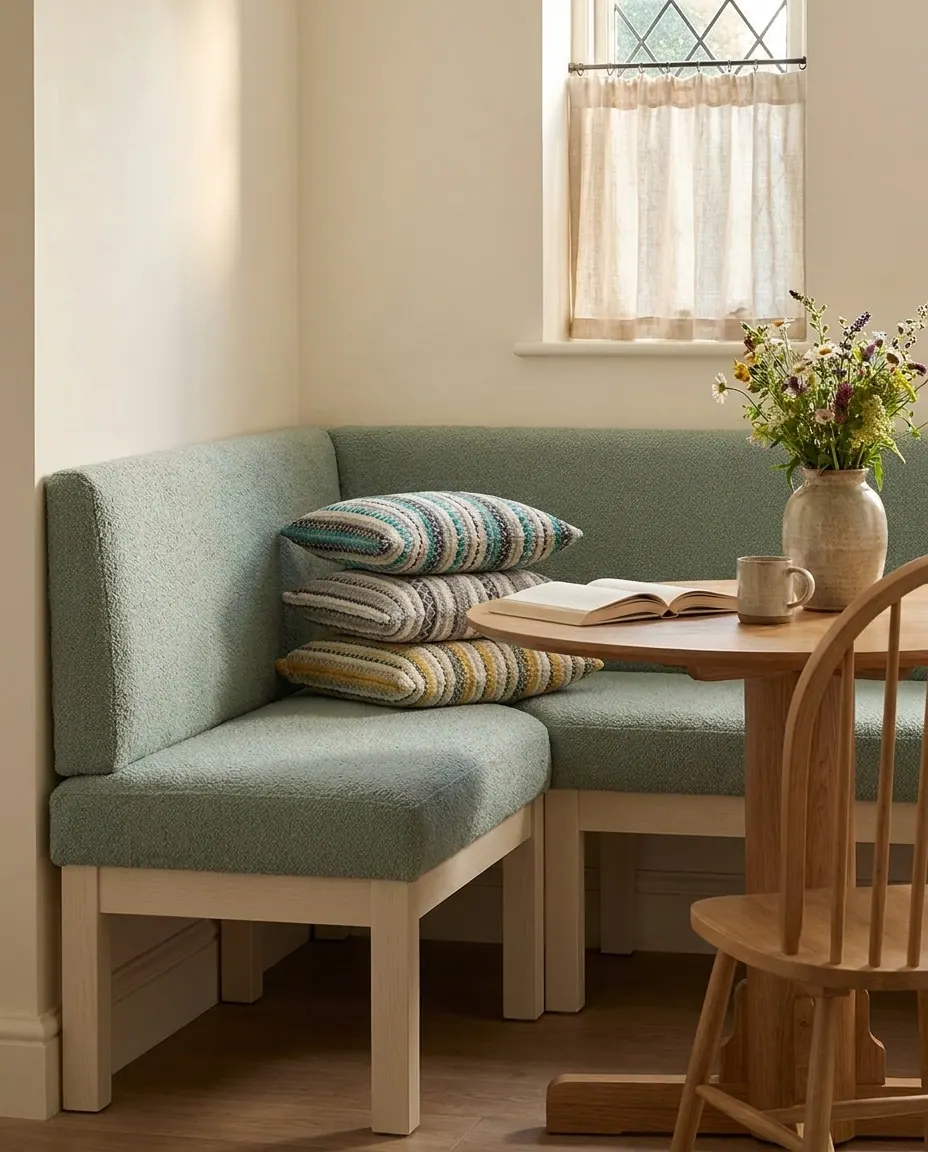
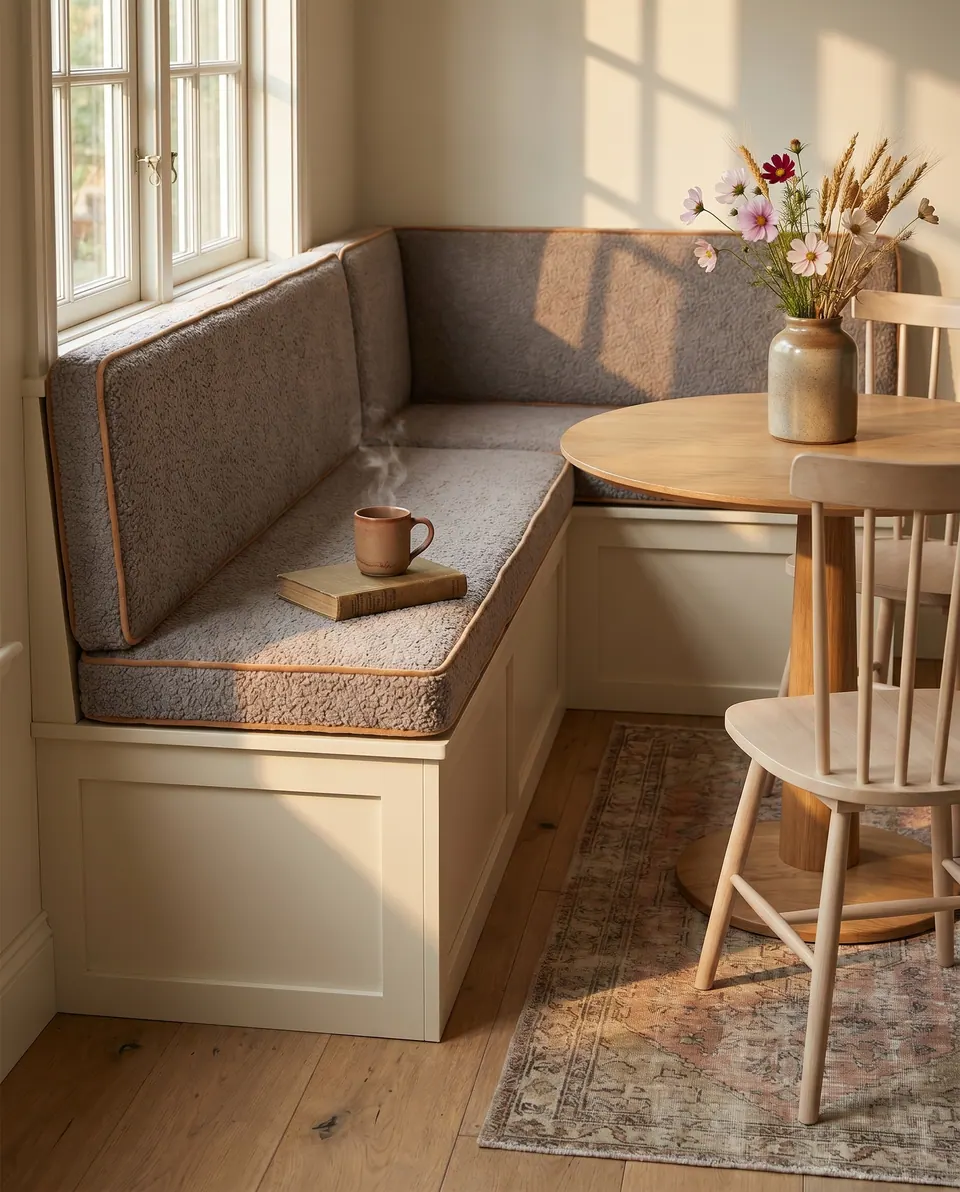
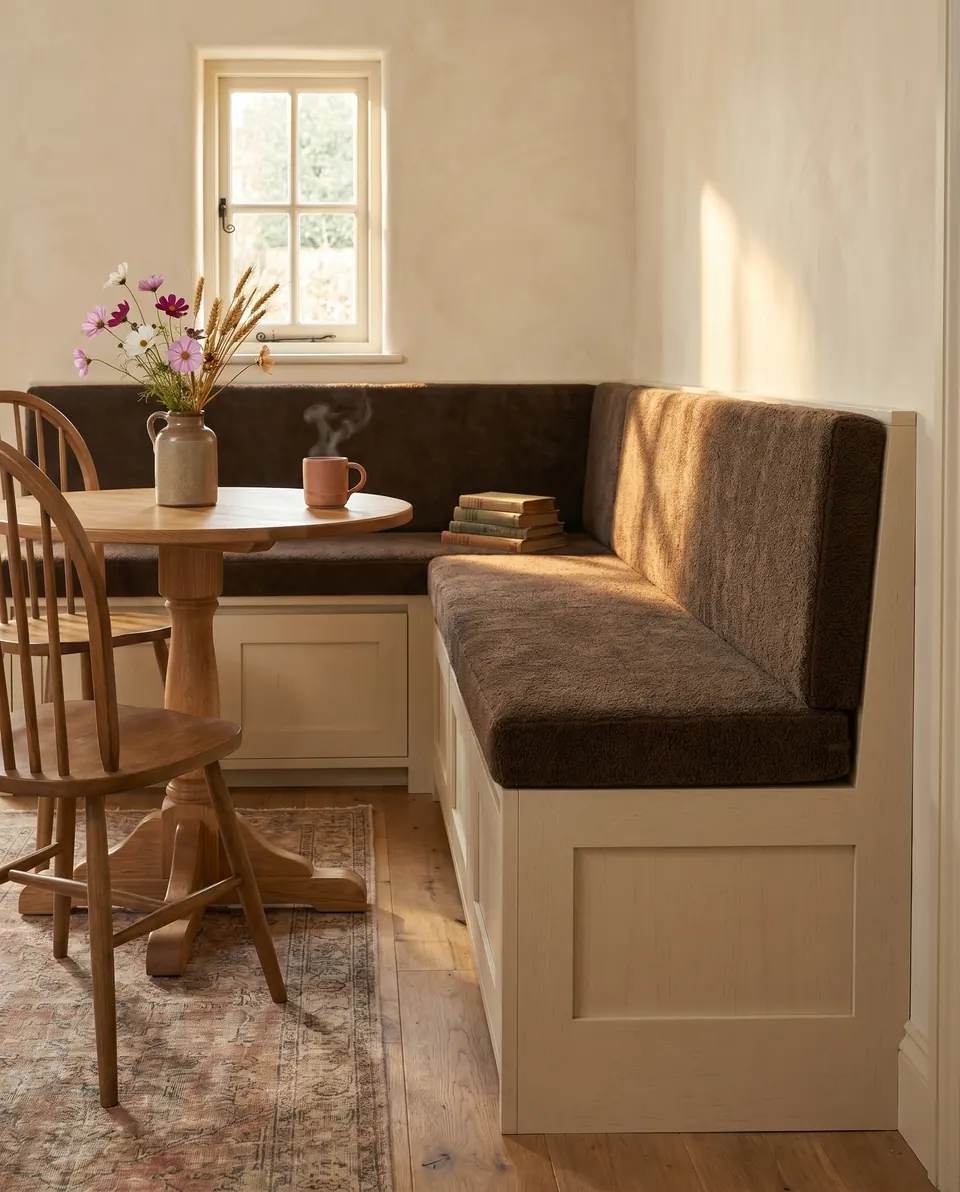
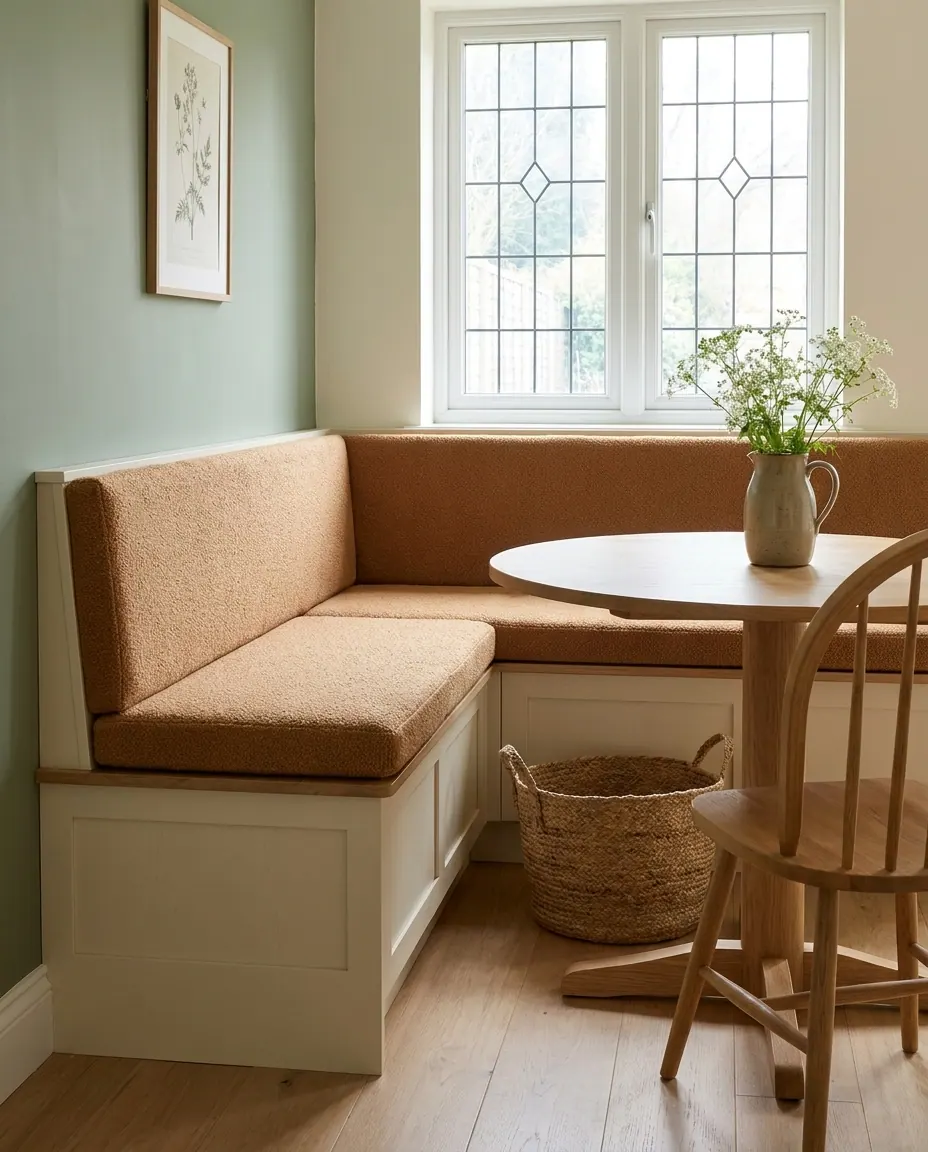
Caramel boucle banquette cushions, seat and back, in a sage corner
Maggie reads a painted corner banquette dressed in caramel boucle with no piping at all, and the finishing details that make separate seats and backs look built in.
Seat and backrest cushions in caramel bouclé turn a painted corner bench into a proper banquette.

The quick answer
A corner banquette with backrests needs its seat and back cushions measured as separate pieces, with the backrest depth taken off the seat depth, or the seat pushes you toward the table. Draw every notch and cutout on your sketch and list each backrest as its own line item. Caramel boucle without piping keeps the edges soft.
A banquette with no welt, and why I let it go
I have spent a career defending piping, so let me admit it plainly: this banquette cushion set is better without it.
The fabric is caramel boucle, a looped weave with a nubby face. On a surface that textured, a welt would only add a second bumpy line to an edge that already has character. So the box edges are sewn plain, and the finishing shows elsewhere. The seat front runs level along the whole bench. The corners are squared, not slumped. The side backrest leans on the angled end panel as if it were cut for it, because it was.
That last detail is the one people miss. A backrest has depth, and that depth comes off the seat depth when you measure. Order the seat to the full depth of the bench, dear, and the backrest pushes you forward, halfway to your cereal bowl. Measure the bench, not the cushion you used to have.
Then the room. Caramel against sage is a warm-cool pairing, and the props repeat both halves. A pale botanical print on the sage wall echoes the green without putting pattern on the seat. A seagrass basket under the bench carries the caramel down to the floor. On the round oak pedestal table, a cream jug of cow parsley keeps the tabletop light, and a Windsor chair closes the circle. The leaded window lets in soft, green-tinted daylight, which flatters boucle; the loops catch it.
Pinned by Maggie: the nook, point by point
Five pins run from the side backrest to the seagrass basket, and each marks a choice that makes separate cushions look like one built piece.
- Side backrest cushion
The side backrest leans on the angled end panel; its depth comes off the seat depth when measuring.
- Caramel seat cushion
Separate seat and back pieces can be turned and cleaned independently.
- Botanical print
A pale botanical print on sage repeats the green without adding pattern to the seat.
- Cow parsley jug
White cow parsley in a stoneware jug keeps the table light against the caramel.
- Seagrass basket
A woven basket under the seat echoes the caramel tone at floor level.
- Side backrest cushionThe side backrest leans on the angled end panel; its depth comes off the seat depth when measuring.
- Caramel seat cushionSeparate seat and back pieces can be turned and cleaned independently.
- Botanical printA pale botanical print on sage repeats the green without adding pattern to the seat.
- Cow parsley jugWhite cow parsley in a stoneware jug keeps the table light against the caramel.
- Seagrass basketA woven basket under the seat echoes the caramel tone at floor level.
Five backrests that missed the first box
One buyer wrote in while building a kitchen bench, with the wall about to be repainted dark blue. They needed one long seat, 85½ x 19¾ in (217 x 50 cm), and an L-shaped piece, 27½ x 19¾ in (70 x 50 cm), with a 4¼ x 20⅞ in (11 x 53 cm) notch cut from one corner to clear the frame. Then five back cushions to sit against the wall, each about 11¾ in high and 19¾ in wide (30 x 50 cm).
The shop asked for a photo of the space, quoted the whole set with the backrests, and set up the order in emerald through the custom-size listing. The seats arrived first and looked great. The backrests had been left out. They were made and shipped separately.
The lesson is written on paper, not in thread: draw every notch on the sketch, and give every backrest its own line. Our notch and cutout Pattern shows how to dimension one. What does your bench have that a sketch might miss?
What goes on a banquette sketch
- The bench length along each wall, measured where the cushion will sit.
- The seat depth, minus the backrest depth.
- Every notch and cutout, drawn and dimensioned.
- Each backrest as its own line: height, width, thickness.
- Which backrest overlaps the other at the corner.
- The fabric code for the body, and for piping if you want any.
On the cutting table: the sage corner
| Product | Corner banquette seat and backrest cushions |
|---|---|
| Fabric | Caramel boucle |
| Edge | Box edge |
| Piping | None; the looped texture carries the edge |
| Backrests | Separate pieces; the side back leans on the angled end panel |
| Seat depth | Bench depth minus backrest depth |
| Care | Seat and back can be turned and cleaned independently |
| Tolerance | Handmade pieces can vary about ½ to 1 in |
| Best for | Kitchen nooks with a round pedestal table |

Have it made
Have this made — ask Maggie’s workshop
Numbers first, fabric second, piping last. Jot down what you have, and the workshop will go down the list with you, item by item. — Maggie
Leave your details and the workshop will call you to confirm measurements, fabric, foam and piping. No prices, dates or payment on this page: it is a request, not an order.
Buyer questions: finished photos, tolerance, ledges
- A common question
Can I see a finished cushion made in this fabric, not just the swatch?
The workshop's answerYes. The shop sends photos of recent customer orders made in the fabric you're considering, so you can judge the color on a finished piece from across a room. One example had matching piping, which means the piping is the same fabric and color as the cover.
- A common question
My cushion came out a little wider than I ordered. What tolerance is normal, and does the piping count?
The workshop's answerHandmade cushions and covers can vary by about ½ to 1 in (1 to 2.5 cm). Measure the cushion body, not the outer edge of the piping, because piping adds a little to the outside size. If a finished size must be exact, say so and state that it includes the piping.
- A common question
My window ledge measures 38¾ x 25¾ in. What size cushion should I order?
The workshop's answerThe shop added a 38 x 25 in (97 x 64 cm) option to the listing, rounding down to whole inches so the cushion sits inside the ledge. Write the color you want in the order note. The cushion is 4 in (10 cm) thick.
On a banquette with backrests, the back cushion's depth comes off the seat depth. Skip that subtraction and the seat pushes everyone toward the table.
Maggie
Questions buyers ask next
Does a looped boucle banquette cushion need piping to look finished?
Not necessarily. On a nubby boucle the texture already defines the edge, so a plain box seam with squared corners and a level front reads clean. If you want an outline, matching piping in the same boucle keeps it subtle.
How do I measure the seat when a side backrest leans on an angled end panel?
Measure the bench depth, then subtract the thickness of the backrest that will lean there. Do the same along the long wall. Decide which backrest overlaps the other at the corner before you order, and mark it on your sketch.
Why does caramel look so good against a sage green kitchen wall?
Caramel is warm and sage is cool, so each makes the other look richer. Repeat both once more in the room, such as a botanical print for the green and a seagrass basket for the caramel, and the pairing looks planned.
Are separate seat and backrest cushions easier to live with in a breakfast nook?
Yes. Separate pieces can be turned, lifted and cleaned independently, which suits a nook where meals happen every day. Each is ordered at its own size, so list them as separate items on the order.
Stitch straight — Maggie