A Reading by RosaWindow Seat Cushions
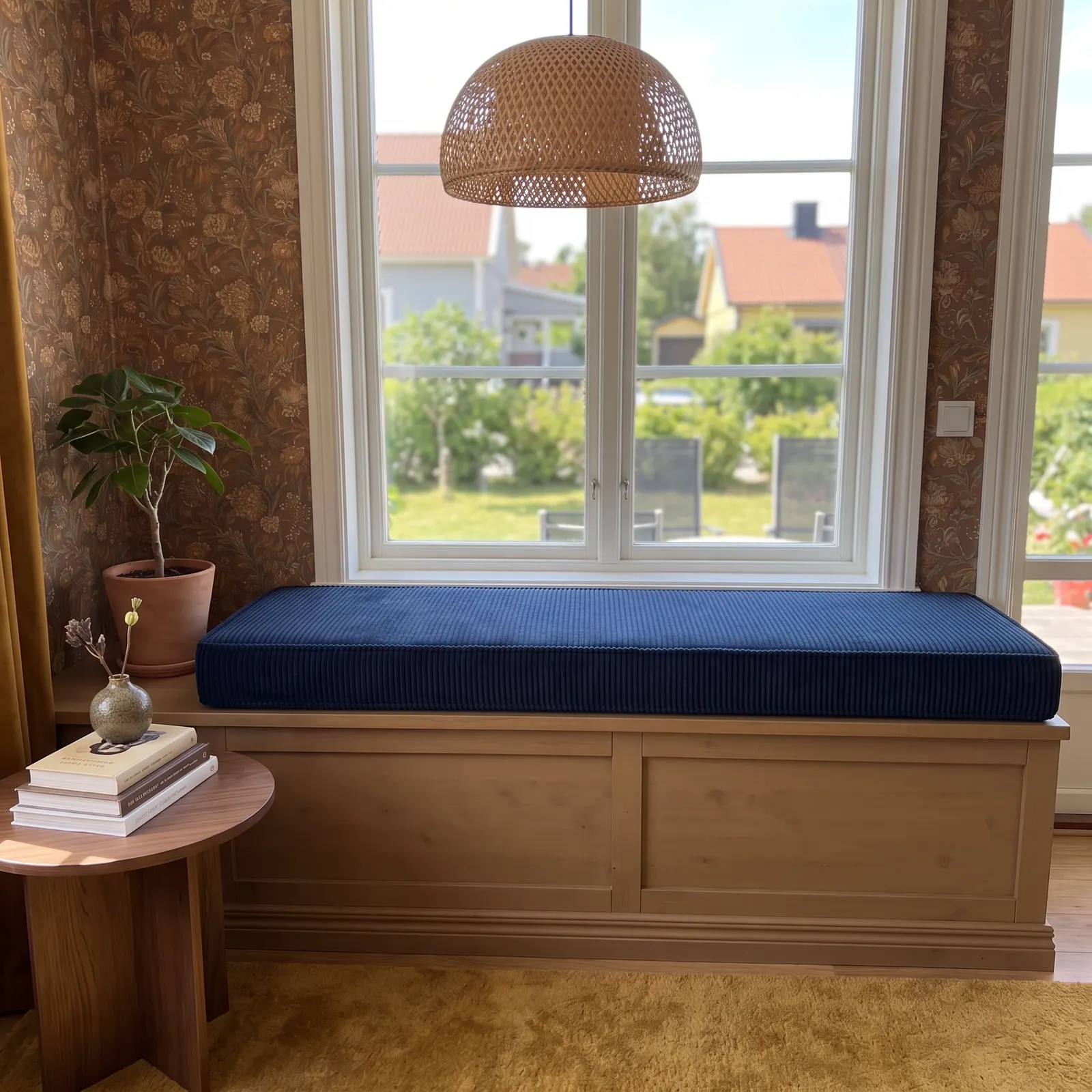
Measuring a navy corduroy window seat cushion square-on, from the pine base up
Stand in front of the seat the way a carpenter draws it. Rosa reads a navy corduroy cushion from the front and shows where tape measures usually slip.

 Save
The quick answer
To measure a window seat cushion, take the length along the front edge and again at the wall, the depth at both ends, and the width and position of every post or column, then write the exact numbers in the order note. If the seat is not a simple rectangle, split it into rectangles and trapezoids that butt together.
Stand where the carpenter stands
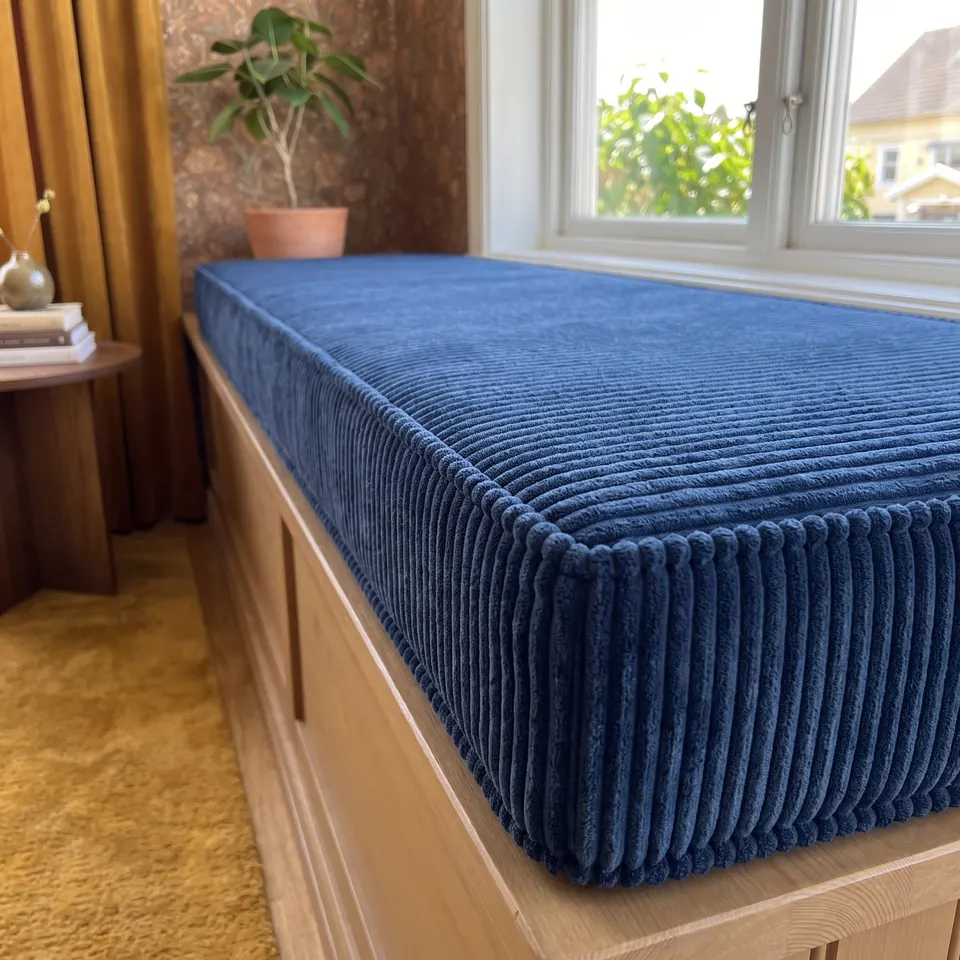
Stand square in front of the seat and look at it flat, the way a carpenter draws a window seat on paper. This photograph does exactly that, and it is the best way I know to check a cushion before ordering one.
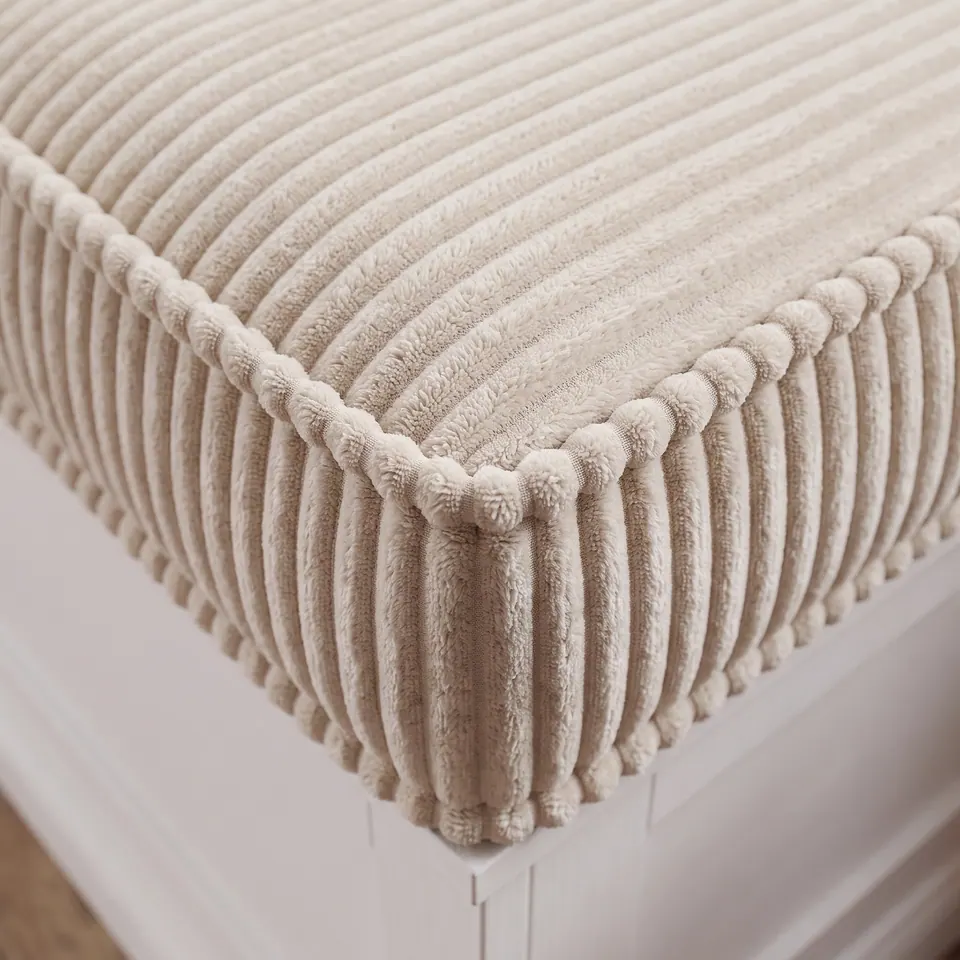
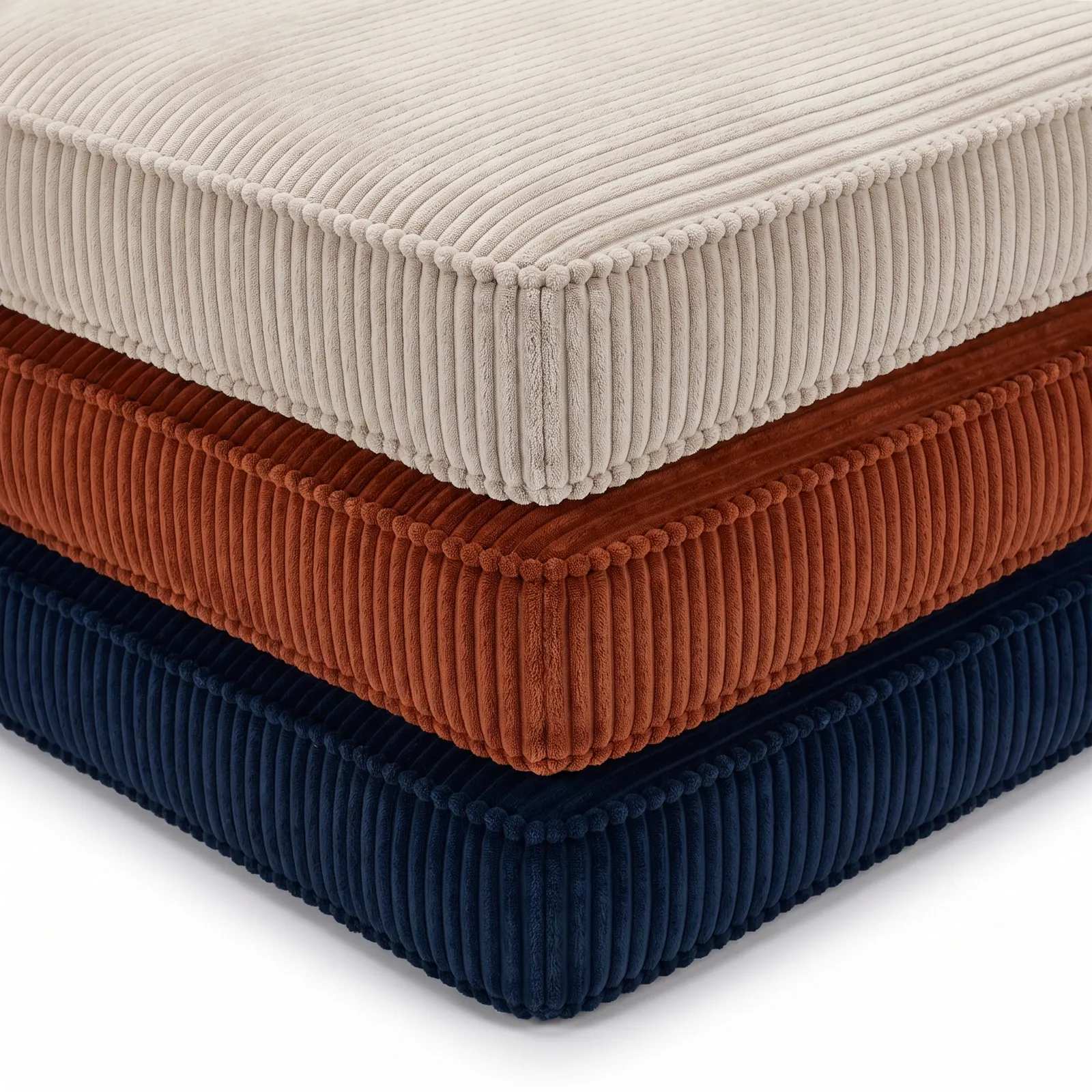
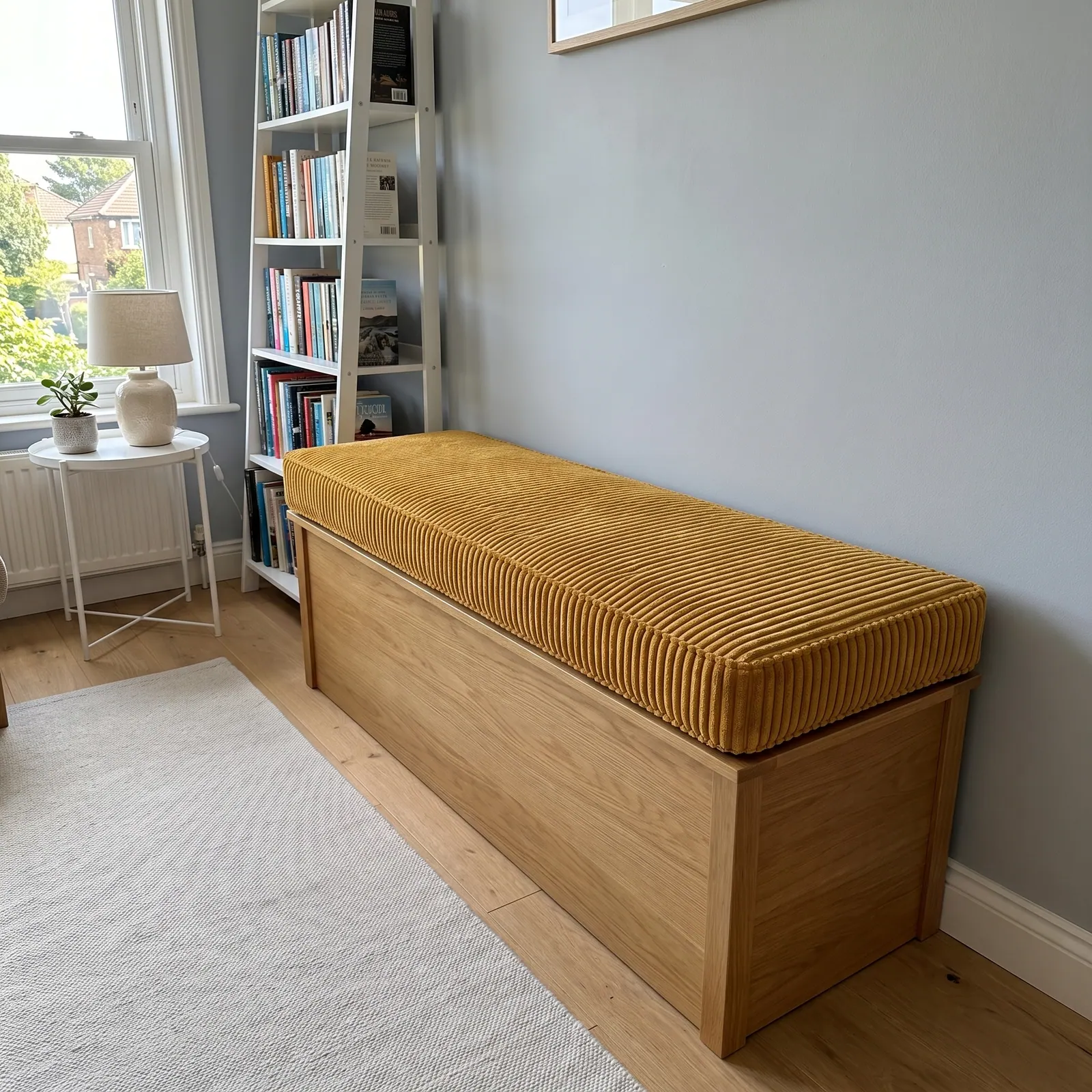
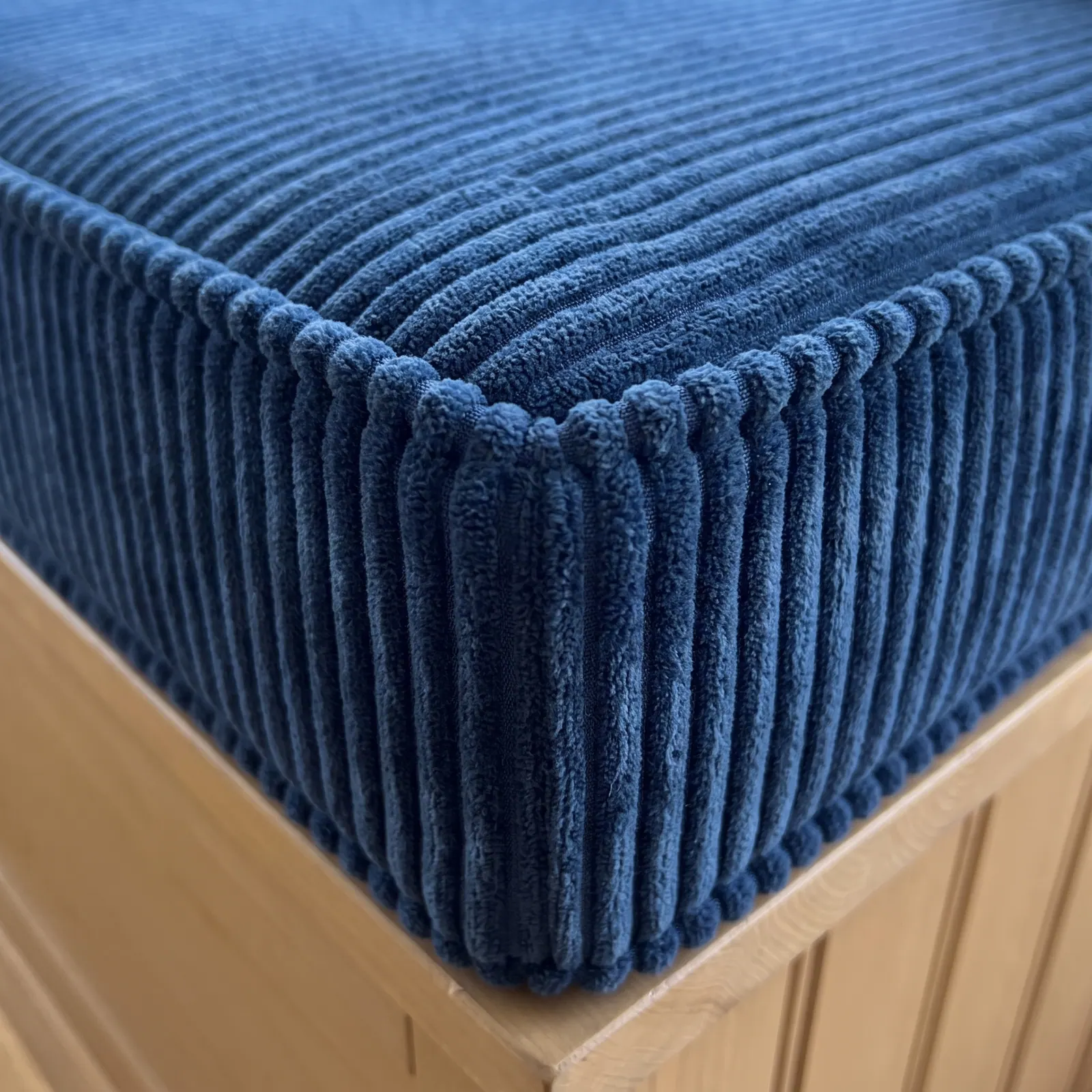
The first thing you see is the front edge: long, straight and true from one end to the other. A line like that only happens when the foam is cut to the exact length and the navy corduroy cover is tailored around it. Self piping in the same navy keeps the edge crisp without calling attention to itself.
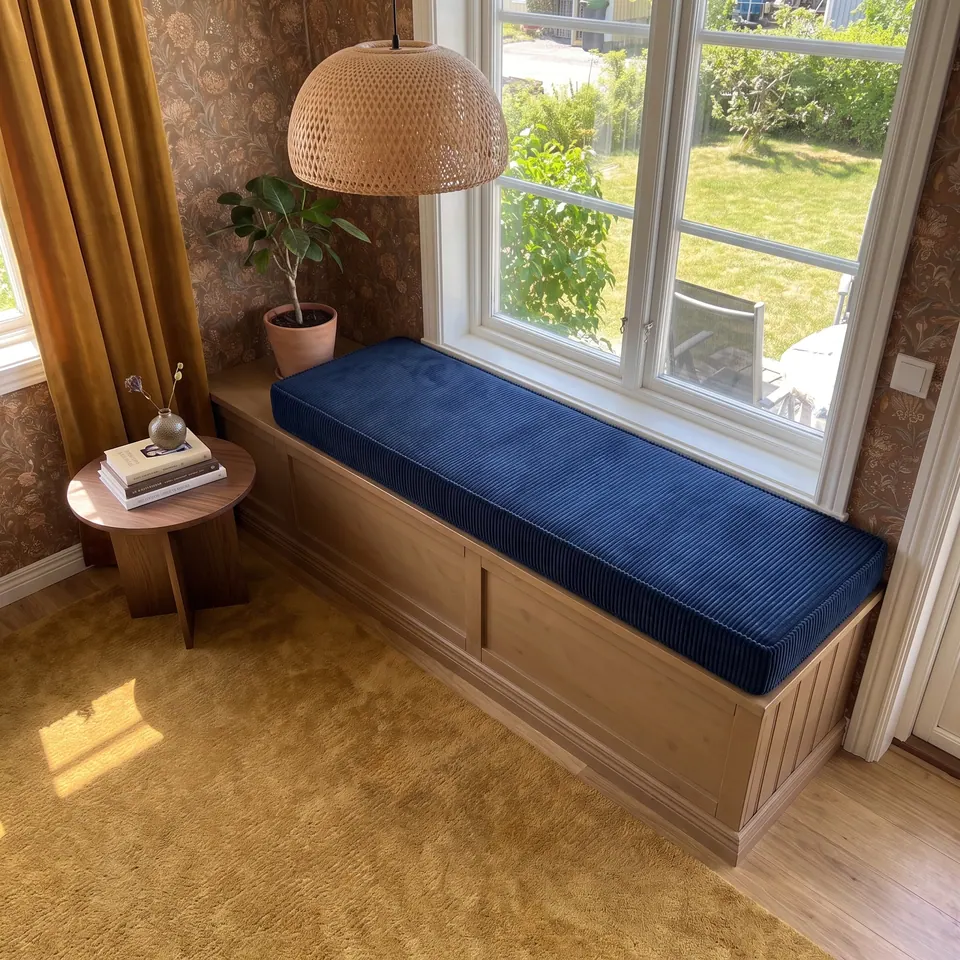
Now the proportion. The cushion is roughly one part to two parts paneled pine base. Keep that ratio and a window seat looks built in rather than set on top. A rattan dome pendant hangs on the window's center line, so the whole nook balances.
Then the one thing that breaks the symmetry: a rubber plant in terracotta and a small round table with books and a bud vase, all on the left. Styling one side only keeps a seat from looking like a showroom. Low objects keep the view through the double casement clear, all the way to the red roofs across the street.
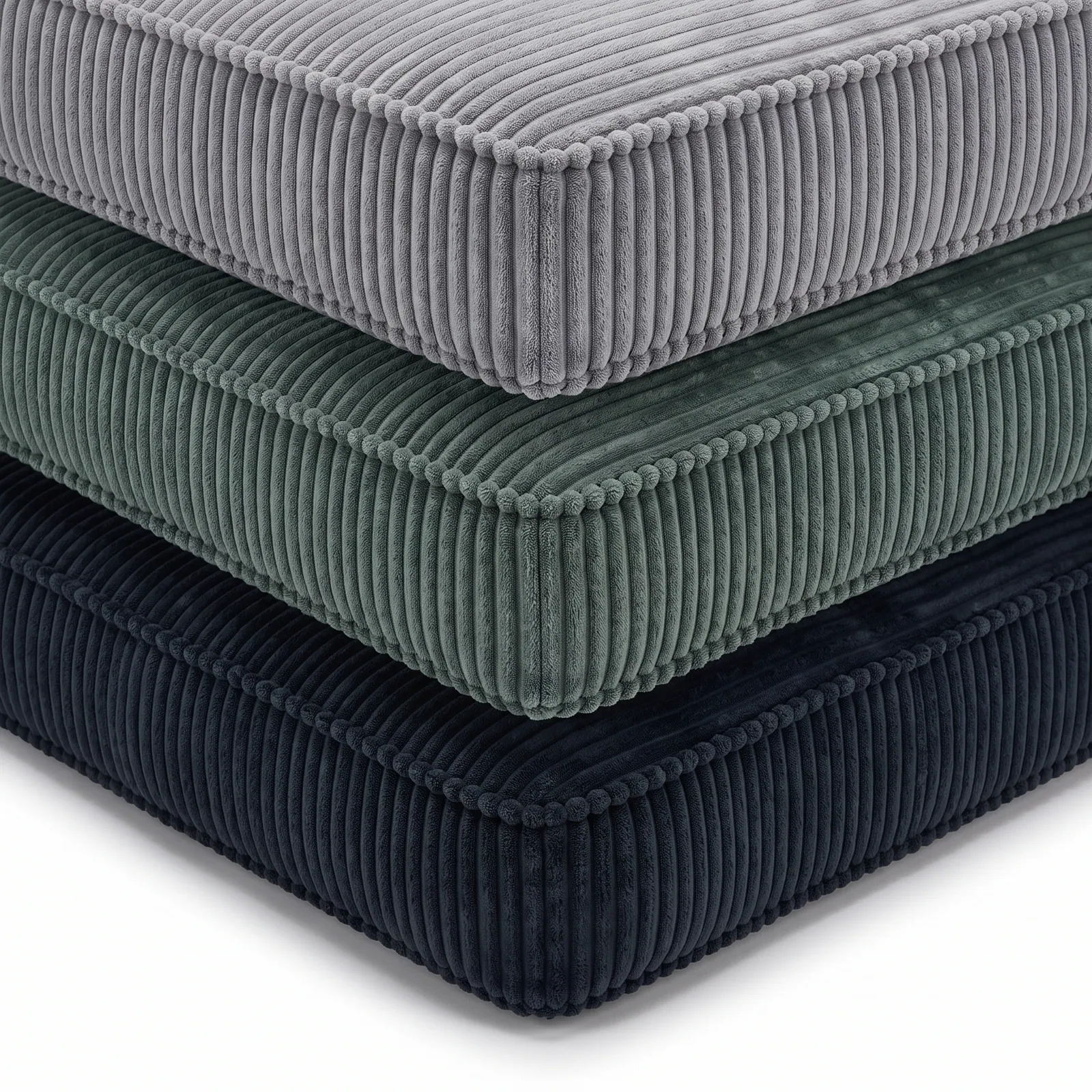
Corduroy asks one more thing of the tape measure. The wale runs one way, so every panel of the cover must be cut with the nap in the same direction, or the navy shifts from face to face. The wale and nap Pattern explains why.
Six readings for a straight-on window seat
Front edge, end to end
Measure the length along the front edge of the seat, to the nearest 1/4 in (6 mm).
Back edge, at the wall
Measure again where the seat meets the wall or window. If the two lengths differ, the seat is a trapezoid, not a rectangle.
Depth at both ends
Front edge to wall at the left end and the right end. Old houses lean.
Every post and casing
Note the width of each column, post or casing and how far it sits from the left end.
Floor to seat top
Add the cushion thickness you want, so you know where knees and feet will land.
Write it all down
Choose the nearest size in the menu and put the exact numbers in the personalization box. Between two ranges, pick the larger one.
Pinned by Rosa: edge, base, pendant, plant, books
Five pins read the seat like a drawing: the straight front edge, the paneled base, the centered pendant, the plant on one side and the low books.
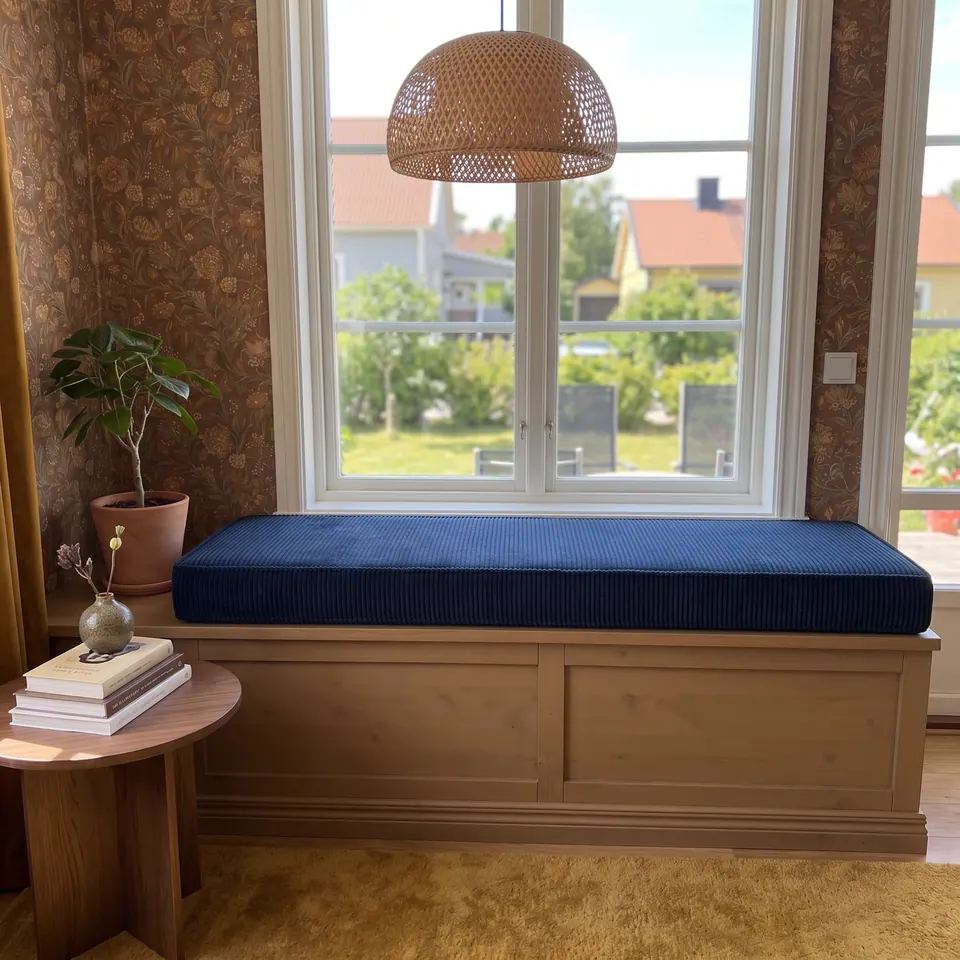
- Straight front edge
A true line end to end means foam cut to exact length.
- Paneled base
Roughly one part cushion to two parts base keeps the seat looking built in.
- Centered pendant
Hanging the shade on the window's center line makes the whole nook symmetrical.
- Plant to one side
Styling on one side only stops it looking like a showroom.
- Books and bud vase
Small, low objects beside the seat keep the view clear.
- Straight front edgeA true line end to end means foam cut to exact length.
- Paneled baseRoughly one part cushion to two parts base keeps the seat looking built in.
- Centered pendantHanging the shade on the window's center line makes the whole nook symmetrical.
- Plant to one sideStyling on one side only stops it looking like a showroom.
- Books and bud vaseSmall, low objects beside the seat keep the view clear.
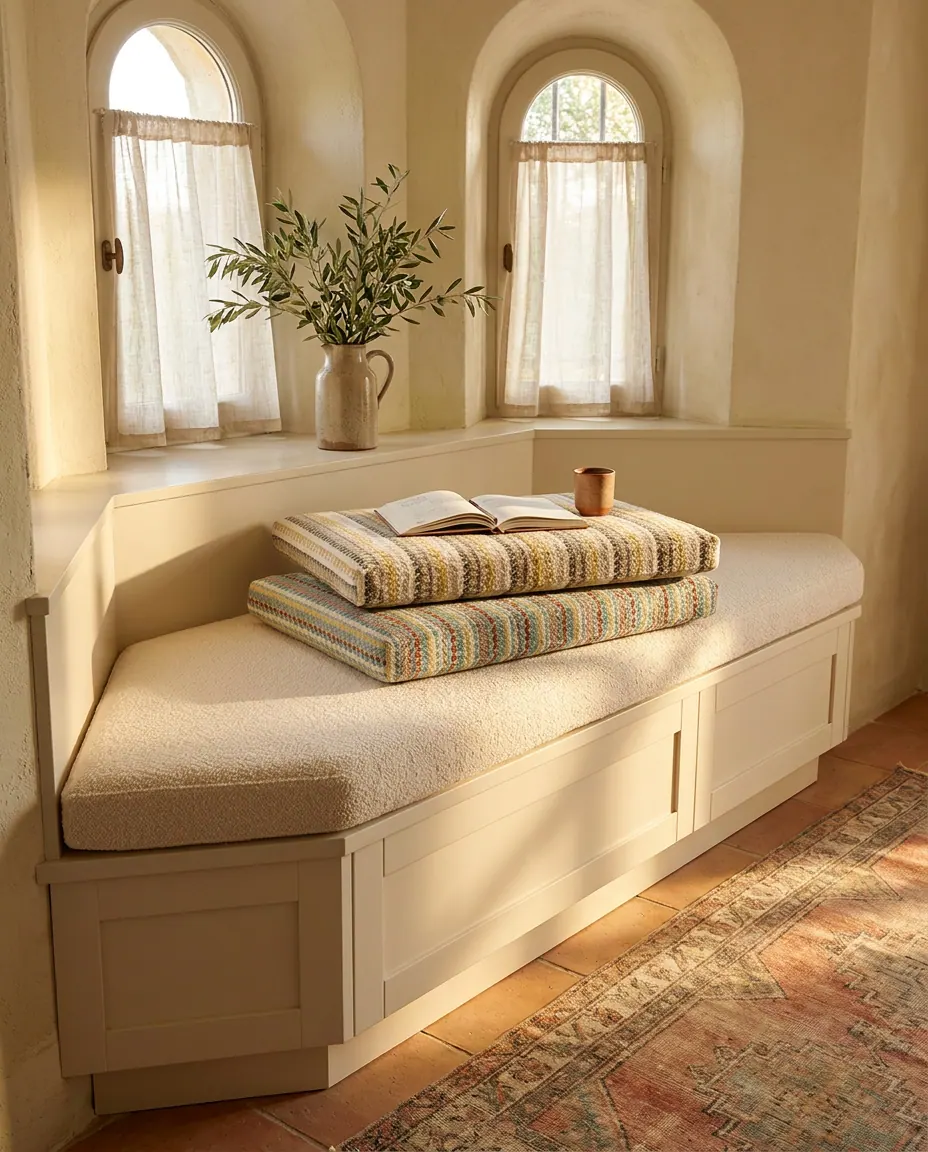
Two columns, and a T-shaped seat that became six pieces
A buyer in the US had a long window seat split by two columns, each 7.75 in (20 cm) wide, and planned three T-shaped French-style cushions in a vintage patchwork to fit around them.
The numbers were not simple. Two sections measured 72.25 in (184 cm) across the top and 63.75 in (162 cm) across the bottom; the third, 77.75 in (198 cm) and 70 in (178 cm). The depth came in two parts with a taper: 53-3/8 in (136 cm) plus 20.5 in (52 cm).
The workshop would not sew T shapes. Instead it drew a six-piece layout of rectangles and trapezoids that butt together around the columns. She asked for a contrasting fabric on the front edges, and that came at no extra charge.
What I keep from her seat, neighbor, is this: when a shape gets complicated, break it into pieces a tape measure can describe. The custom shape drawing Pattern shows how to sketch them.
On the cutting table: the pine-paneled seat
| Piece | Window seat cushion, box edge |
|---|---|
| Fabric | Navy corduroy, nap running one way |
| Piping | Self piping in the same navy |
| Proportion | About one part cushion to two parts paneled base |
| Front edge | Straight end to end; foam cut to exact length |
| Measure | Front and back length, depth at both ends, every post |
| Odd shapes | Rectangles and trapezoids that butt together |
| Best for | Living room window seats and built-in benches |

Have it made
Have this made — ask Rosa’s workshop
Every good cushion I know started with a long porch chat. This is the short version: leave your number and the workshop will call. — Rosa
Leave your details and the workshop will call you to confirm measurements, fabric, foam and piping. No prices, dates or payment on this page: it is a request, not an order.
Buyer questions: in-between sizes, big dogs and gold piping
- A common question
My width is 23.5 inches, but the menu jumps from 21-23 to 24-26. Which do I pick?
The workshop's answerPick the next larger range, 24 to 26 in, and write your exact 23.5 in (60 cm) in the personalization box. The cushion is cut to the number you write.
- A common question
My entry bench is right by the door where my two big dogs come and go. What fabric should I choose?
The workshop's answerFor a busy spot with dogs, the workshop recommended outdoor fabric as a rugged choice, even indoors. The outdoor listing shows every color it comes in.
- A common question
Why does the same piping look gold in one photo and yellow in another?
The workshop's answerLight and camera change how piping photographs; in the workshop's own two photos, identical piping read gold in one and not in the other. No cushion can be promised to match a photo, because your room's light decides. This piping is closer to gold than yellow. Order swatches when the exact tone matters.
Measure a window seat cushion at the front edge and again at the wall; if the two lengths differ, the seat is a trapezoid.
Rosa
Questions buyers ask next
How can I tell if my window seat is really a trapezoid?
Measure the length at the front edge and again at the back against the wall. If the two numbers differ, the seat is a trapezoid. Do not rely on a photo, since a tilted camera makes rectangles lean. Write both lengths on a sketch.
What if a column sits in the middle of my window seat?
Measure the column's width and its distance from one end. The seat can then be split into separate cushions that meet at the column, as the workshop did for one buyer with two columns. Simple pieces that butt together sit flatter than one complicated shape.
What cushion-to-base ratio makes a window seat look built in?
Keep the cushion visually lighter than the base. Here the cushion is roughly one part to two parts paneled pine, which makes the seat look built in. Check the final seat height with the cushion added before settling on thickness.
Porch light's on — Rosa
More photographs to read
 Save
 Save
 Save
 Save
 Save
 Save