A Reading by MaggieDining Chair Cushions & Pads
Reading a chair cushion with ties: six multi-stripe pads on teak, edge by edge
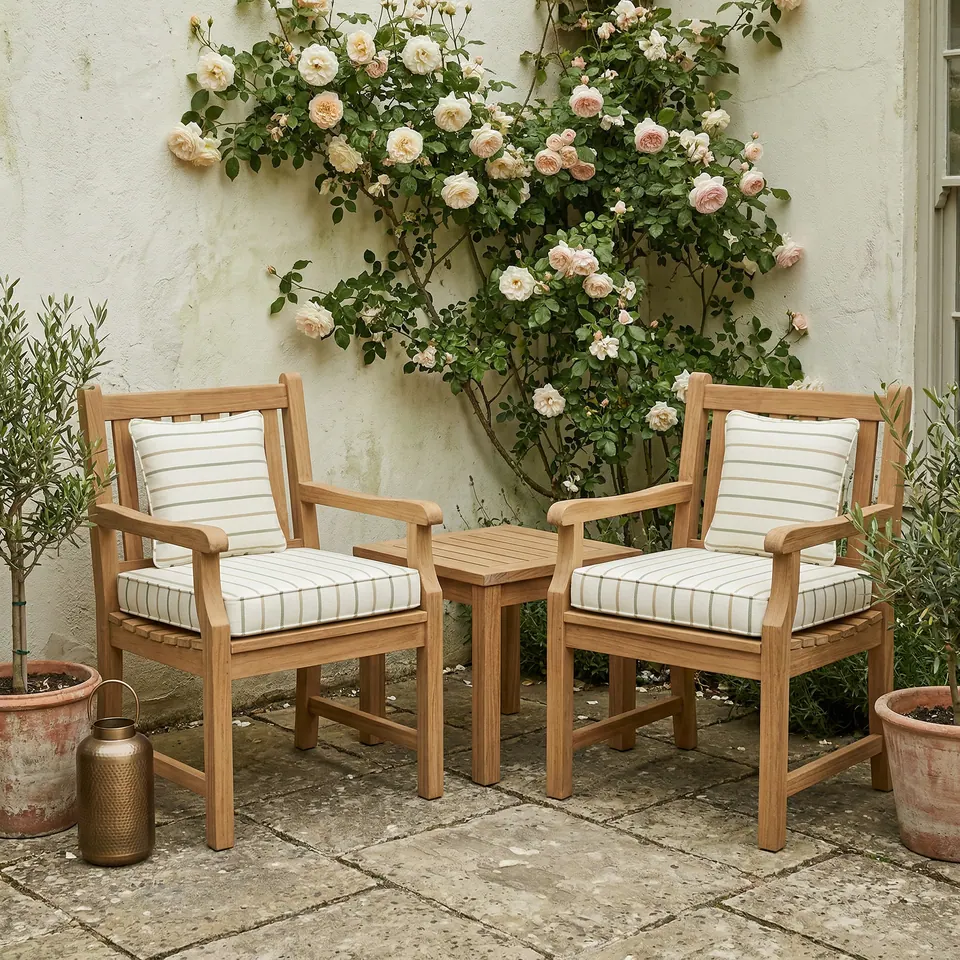
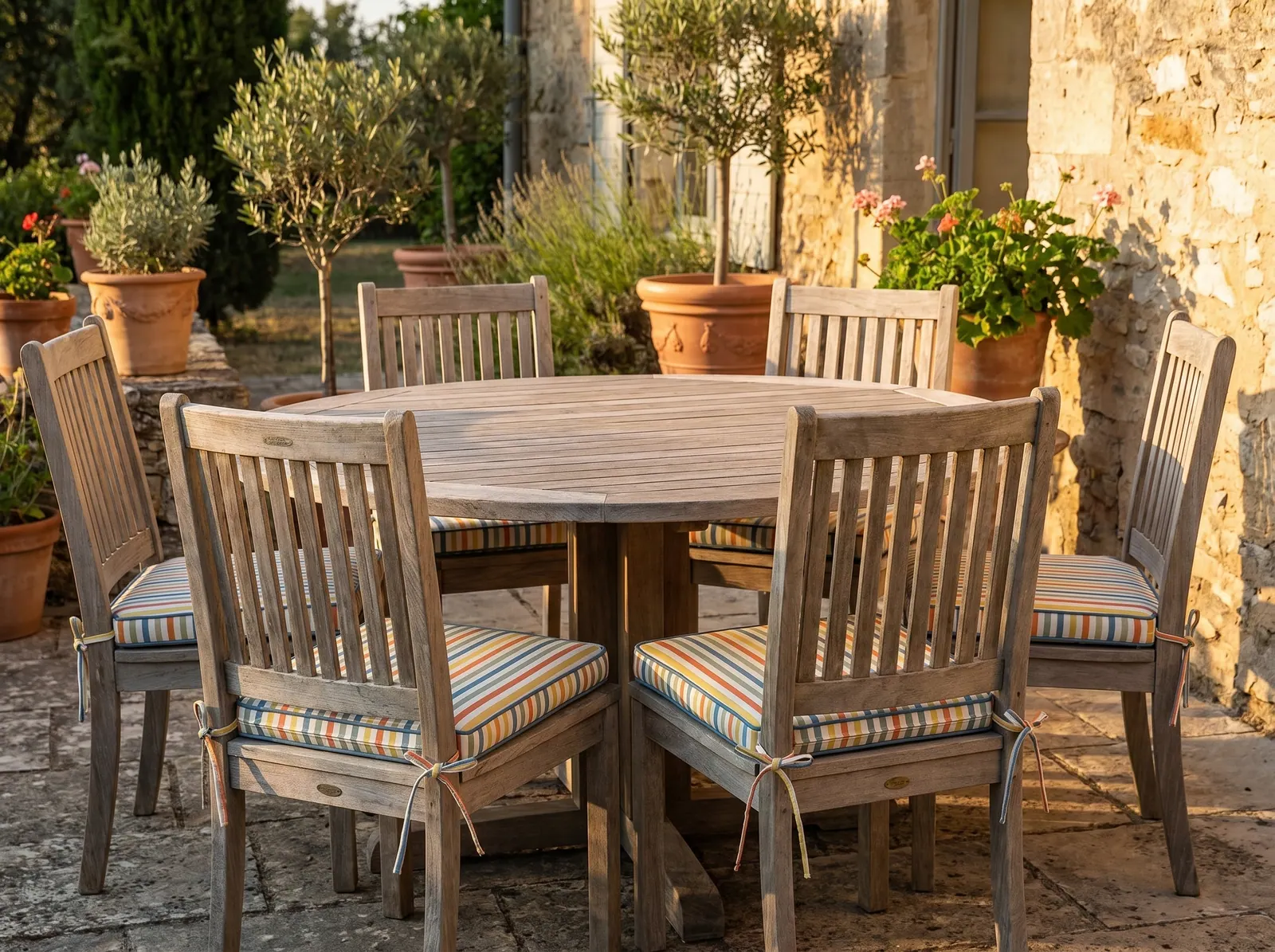
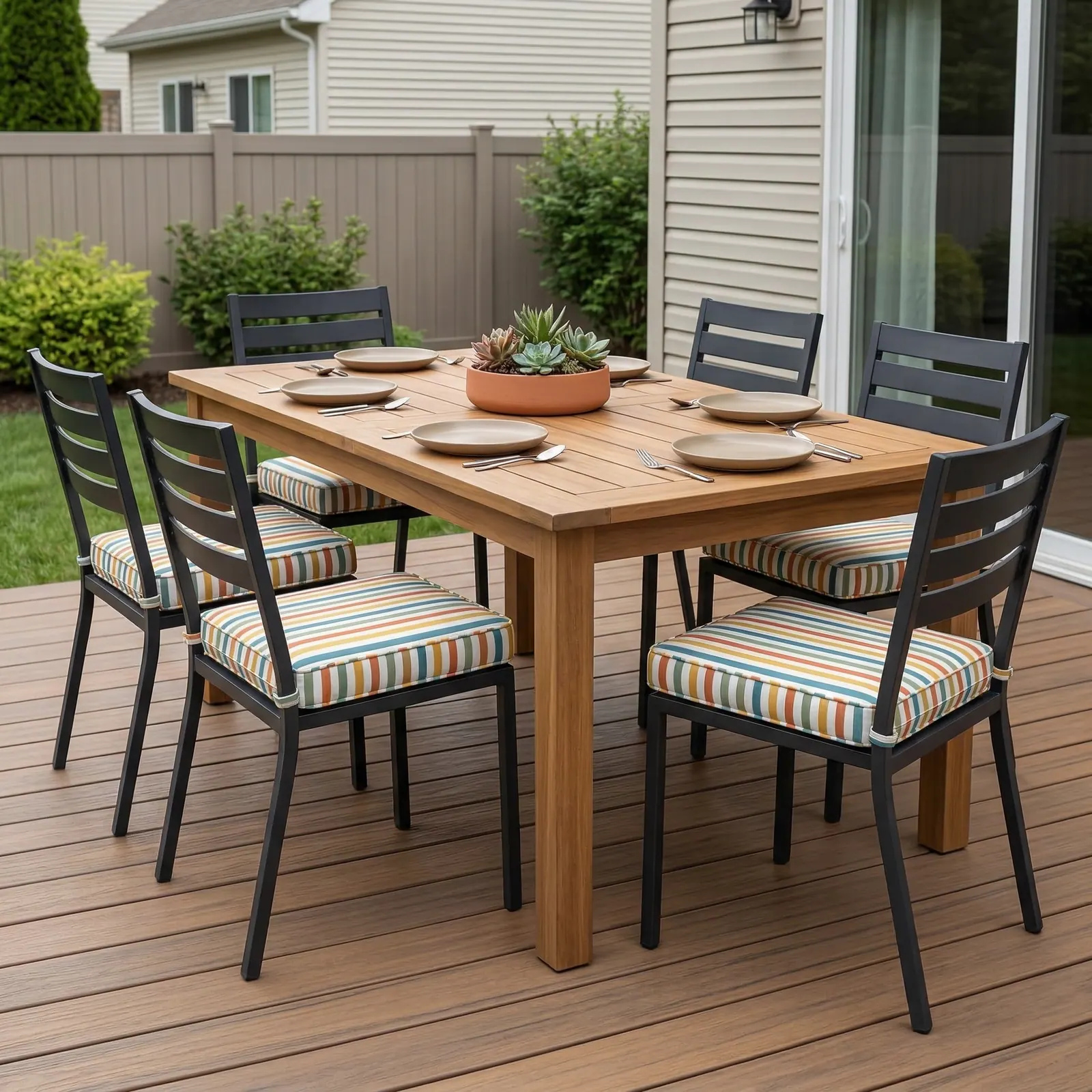
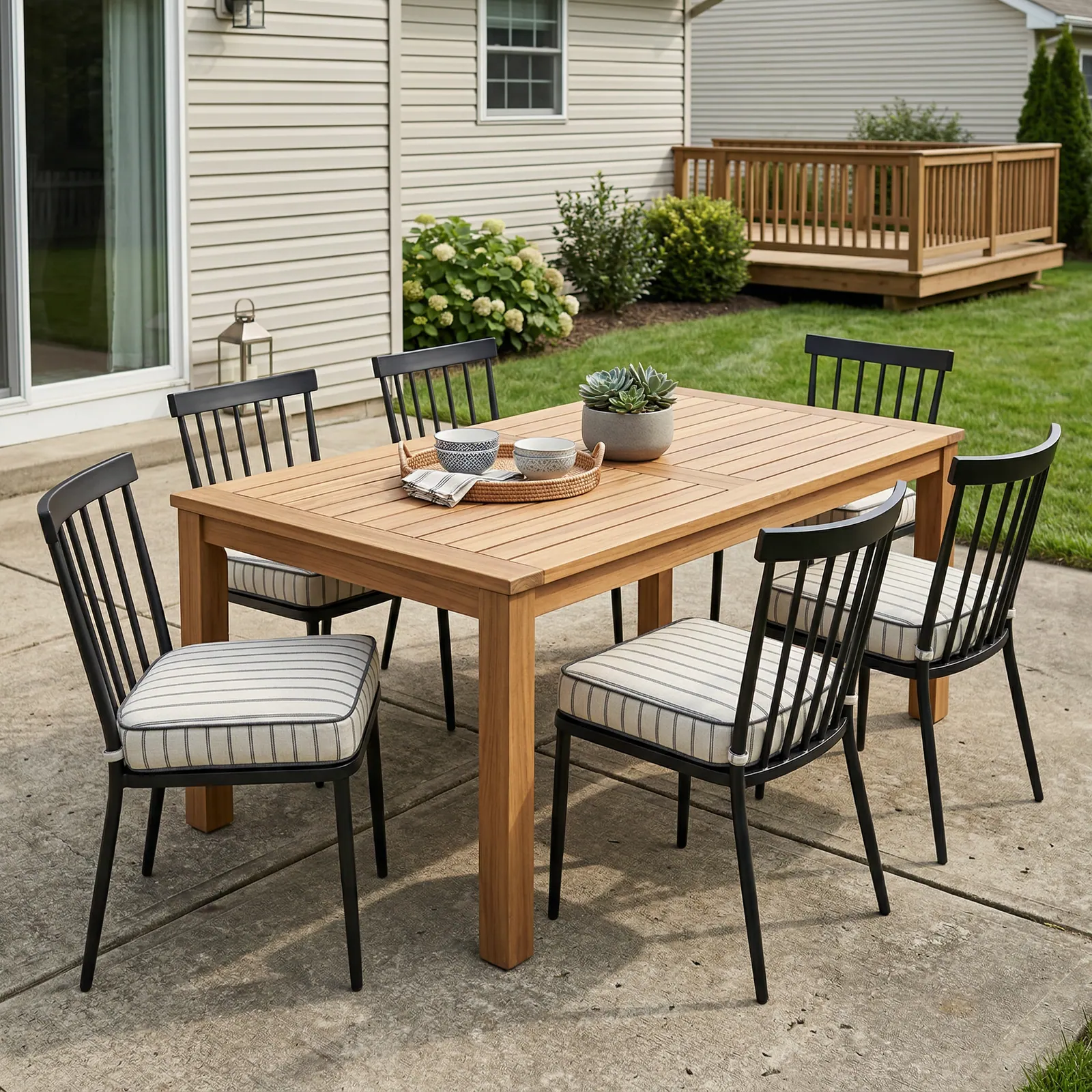
Six teak chairs, one stripe, a row of cream bows. Most people look at the color first. I look at the edge, and at where the corners stop.

 Save
The quick answer
A chair cushion with ties fits best as a box-edge pad cut to the seat's real shape, with its back corners stopping just short of the uprights so the ties wrap cleanly. Measure one chair carefully, check the others against it, and give tapered or rounded seats as numbers: front width, back width, and where each curve starts.
The cushion, cut open
Cover fabric. A removable, zippered cover. Machine wash at 86°F (30°C) on a gentle cycle and air dry.
Piping. A fabric-covered cord sewn into the seams. It sits on the seam line, so it does not change the size.
Fiber wrap. Polyester fiber (Dacron) batting around the foam: it fills the cover out and softens the edges.
Foam core. About 2.0 lb/ft³ (32 kg/m³) high-resilience foam, firm to medium-firm, cut to the ordered size.
Zipper. Along the back band, as hidden as possible. The zipper side faces down or toward the wall.
Base panel. The underside of the cover. A non-slip fabric backing can cover the whole of it instead.
Five pins around a round teak table
Five pins, from the stripe on the seat to the bows at the back posts.
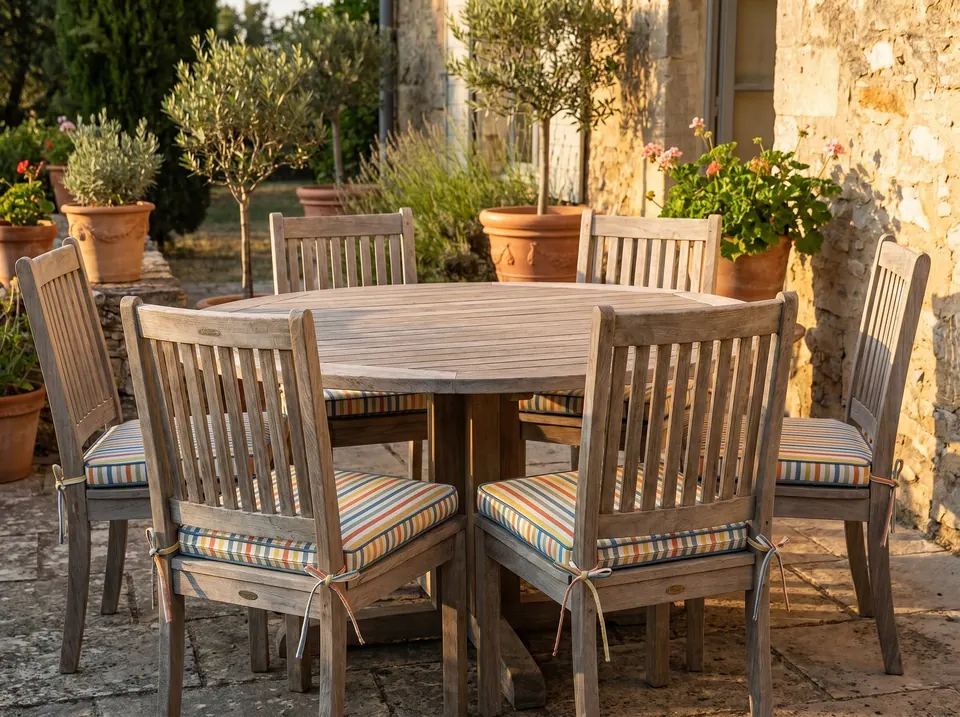
- Multi-stripe seat pad
Thin stripes in several colors hide crumbs and spills at a busy table.
- Cream bow ties
Cream ties are neutral against every stripe, so they never clash.
- Round teak table
Around a round table every pad is on show, so all six are cut alike.
- Olive tree pot
Olive leaves and terracotta pick out the green and red threads in the stripe.
- Side chair pad
Pads stop short of the back uprights so the ties wrap cleanly.
- Multi-stripe seat padThin stripes in several colors hide crumbs and spills at a busy table.
- Cream bow tiesCream ties are neutral against every stripe, so they never clash.
- Round teak tableAround a round table every pad is on show, so all six are cut alike.
- Olive tree potOlive leaves and terracotta pick out the green and red threads in the stripe.
- Side chair padPads stop short of the back uprights so the ties wrap cleanly.
Box edge or knife edge: what the side band does on a chair
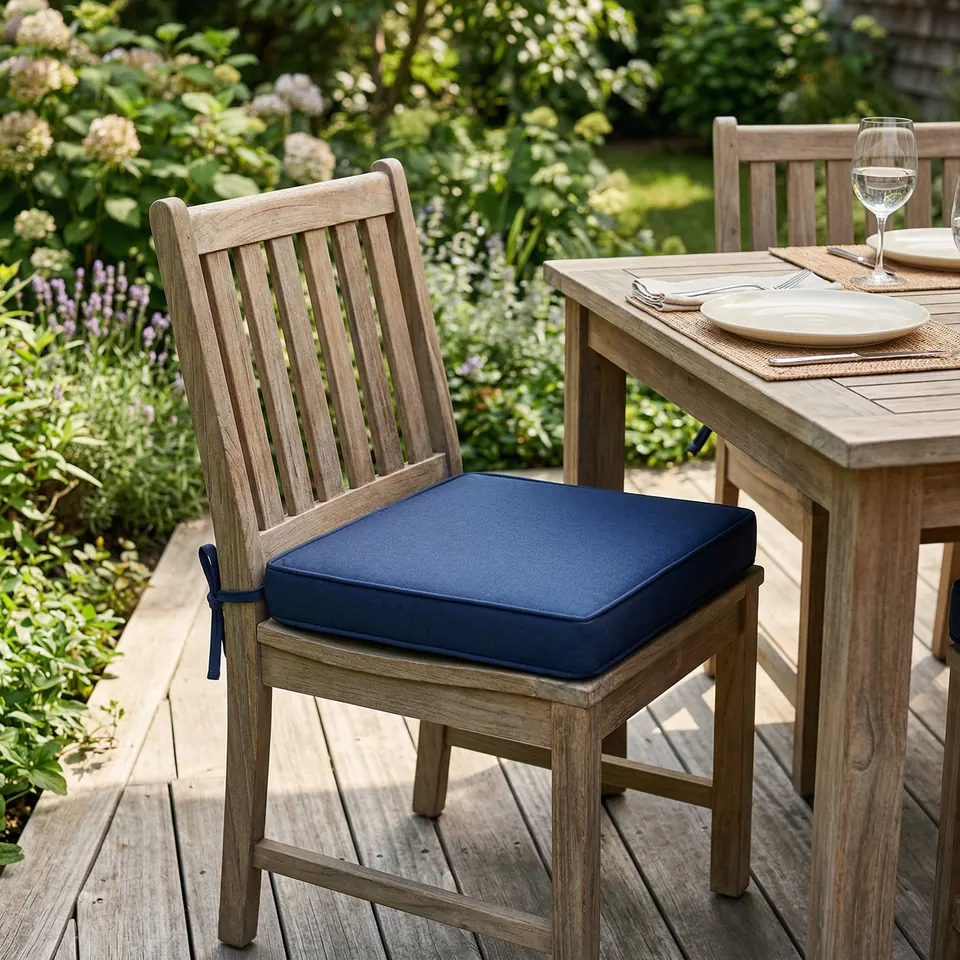
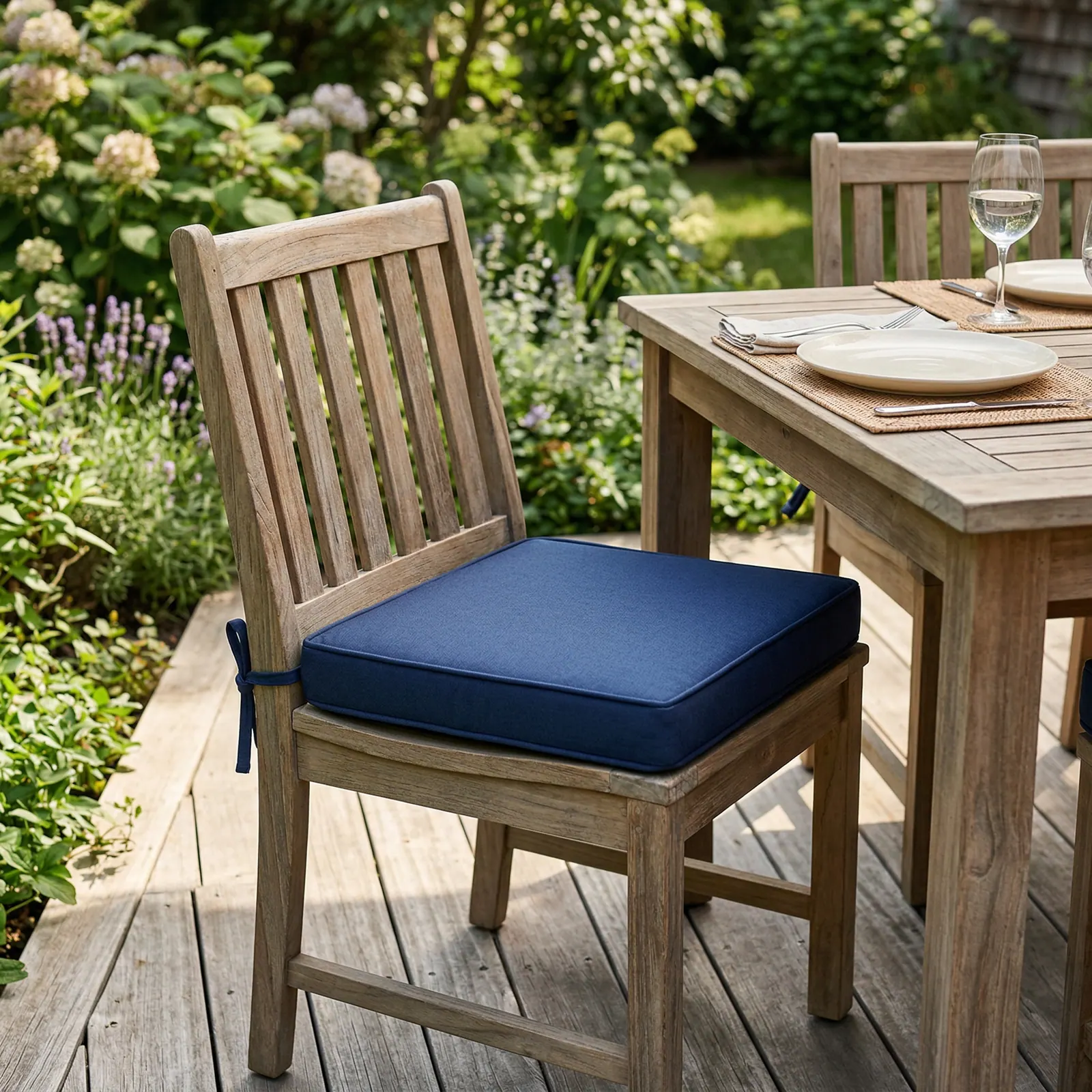
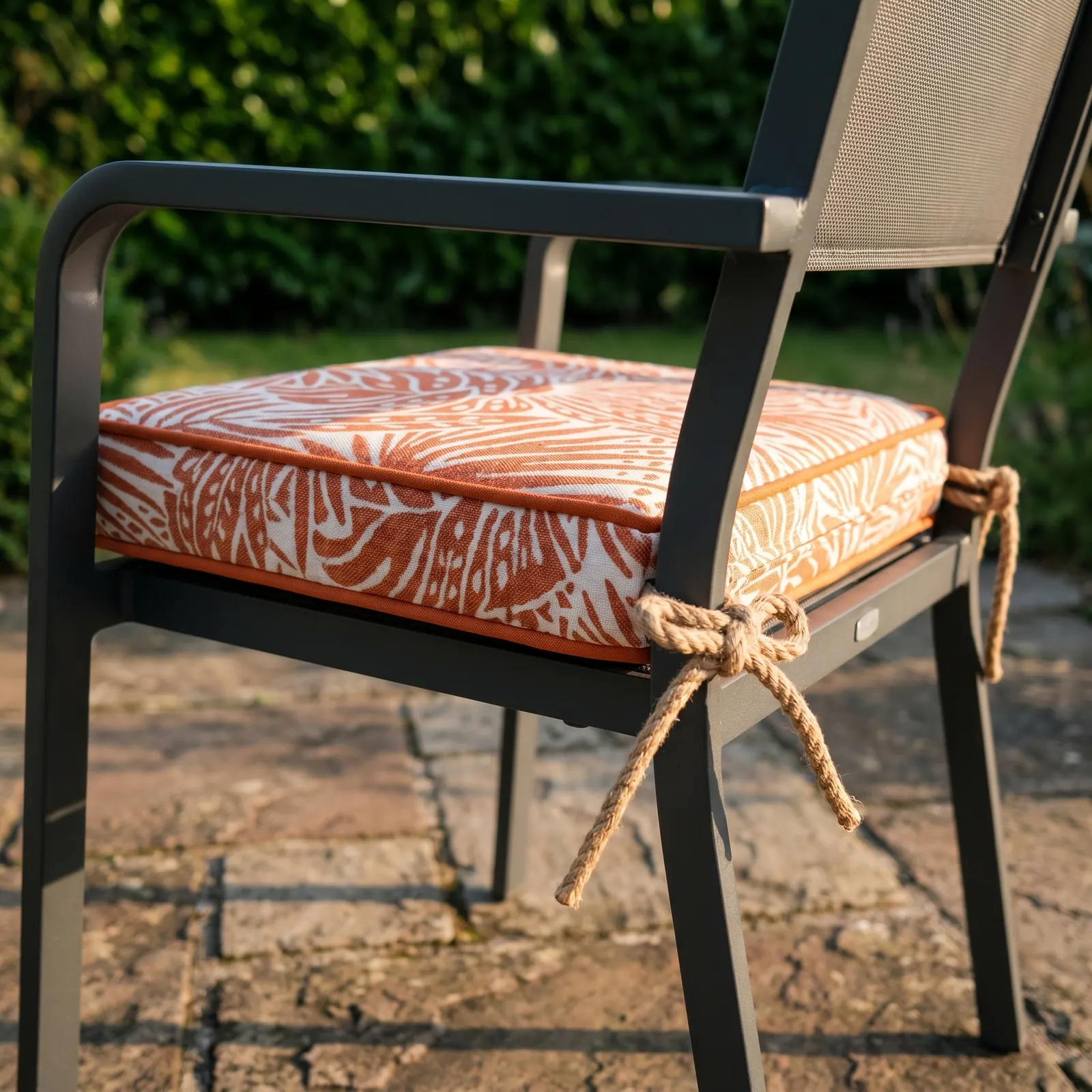
Start at the edge, because that is where a chair pad shows its quality. These pads are box-edged: top panel, bottom panel and an upright side band (the gusset), with self piping in both seams. The box edge keeps the front face square, so the pad reads as upholstery rather than a folded towel.
A knife edge is two panels sewn straight together: fuller in the middle, thin at the rim, softer in outline. It suits slim chairs and a relaxed look. Around a round table, where every pad is on show, the box edge and its piping draw six matching outlines. A straight welt is a kind of honesty. More in the Pattern on box edge vs knife edge.
Corners, ties and a stripe that forgives
Now the corners. Each pad stops just short of the back uprights, so the cream ties wrap the posts cleanly instead of bunching the piping. On older chairs the uprights set the shape of the back edge, which is why tapered seats turn up at the cutting table; see tapered dining chair pads.
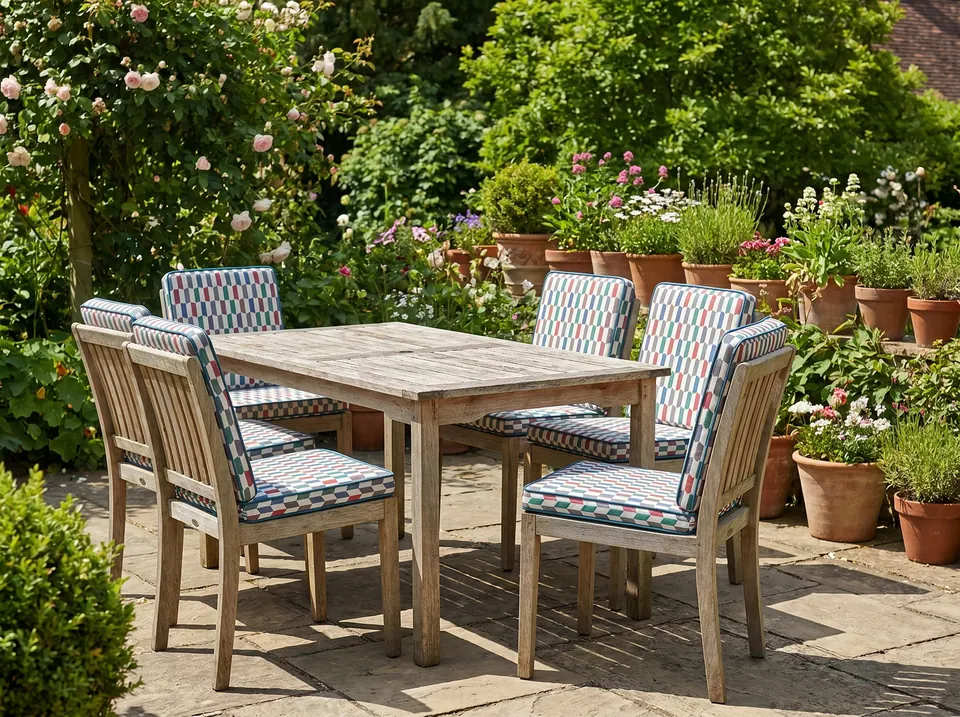
The stripe runs front to back on every chair, and all six pads are cut to one pattern so they read as a set. Measure one chair carefully, then check the others: old teak chairs can differ by 3/8 to 3/4 in (1 to 2 cm). Have you ever run a tape across every chair, or only the first?
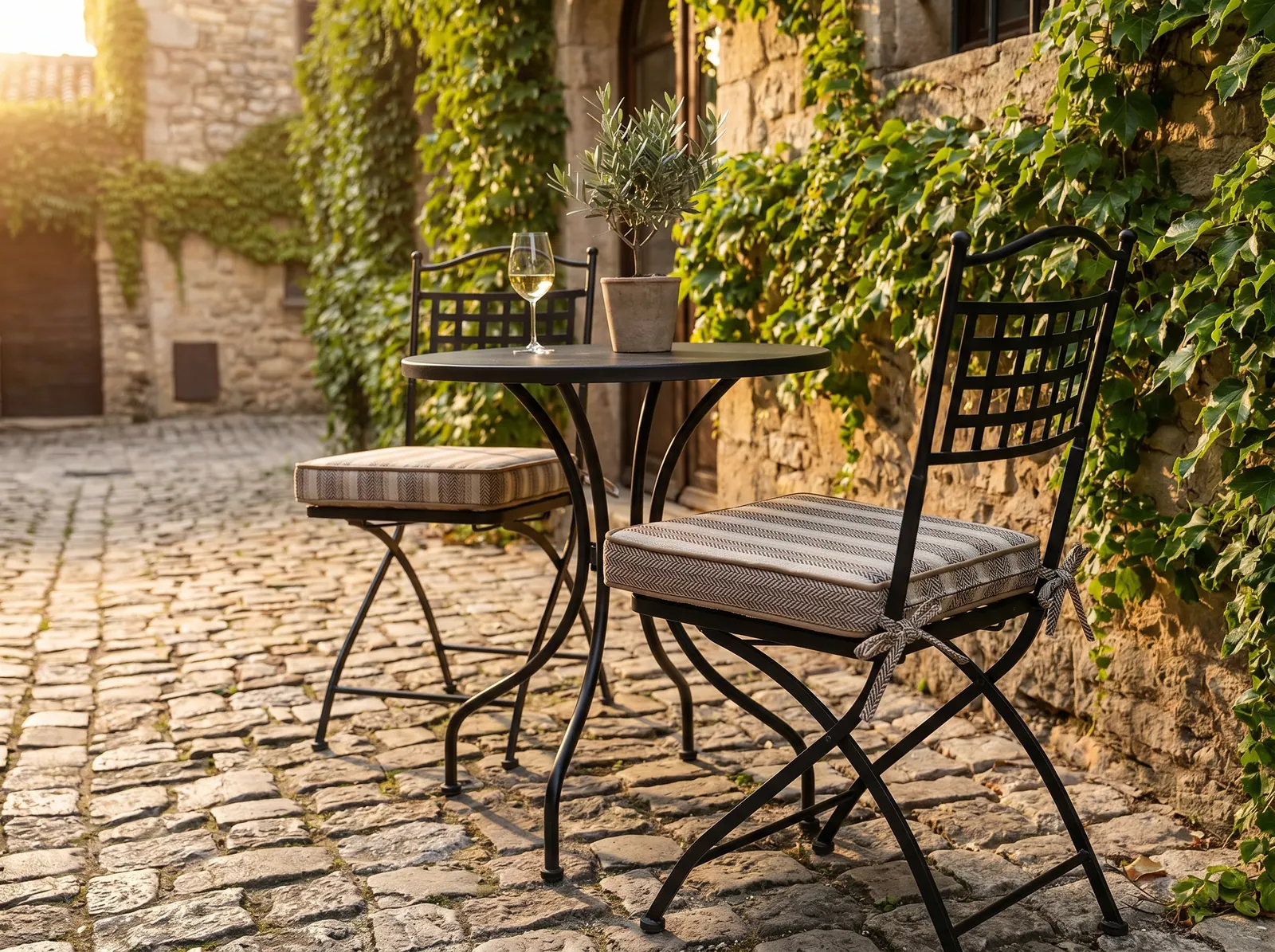
The setting explains the fabric. A narrow multicolor stripe in outdoor acrylic hides crumbs, wine and pollen at a busy table. Olive trees and geraniums in terracotta pick out the green and red threads, the honey limestone warms the cream, and the cream bows sit neutral with every color. Try the shape in the chair cushion builder or browse dining chair cushions.
Four piped pads that arrived without ties
A buyer in the US wanted four thick, 2 in (5 cm) piped cushions in a printed chenille to update their parents' golden oak dining chairs against a new gray terrazzo floor. The craftsmen confirmed the pattern before cutting. A matching entry bench, about 38 x 14.5 in (97 x 37 cm), went to a rugged outdoor fabric because of two boxer dogs.
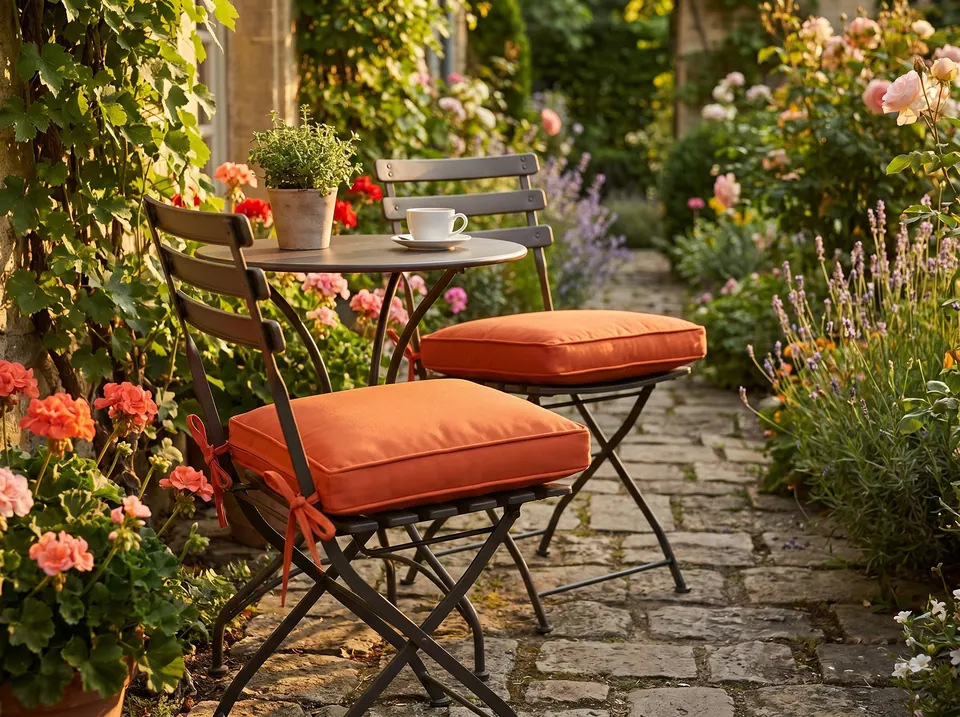
The chair cushions arrived without ties, which had never been requested, and the workshop offered to pay half of a local tailor's fee to add them. Ties are an add-on: ask for them in writing, and say where they go.
Three shape questions
- A common question
Can I buy only the ottoman from the corner sofa set?
The workshop's answerYes. The ottoman is sold on its own and measures 39 x 39 in (99 x 99 cm); it can also come with a straight backrest and a metal bar.
- A common question
My chair seat is wider at the front than the back, 21 in (53 cm) at the front and 19 in (48 cm) at the back. Can you make a trapezoid cushion for it?
The workshop's answerYes, tapered cushions are routine. Send photos with a tape measure in them. In one case the workshop saw that the depth given would leave empty space at the front and made the pad flush once the buyer agreed. Order through the listing: pick the size range, then write the exact measurements, fabric code and thickness in the personalization.
- A common question
How do I measure a cushion with a curved top or one rounded corner?
The workshop's answerFor a curved top, give three numbers: how far each side edge runs straight before the curve begins, the width where the curve starts, and the total height from the bottom edge to the top of the curve. For rounded corners, measure how far from the corner the curve begins along both edges, say 8 in (20 cm) each way, and send photos.
On the cutting table: the courtyard chair pads
| Cushion | Dining chair pad, box edge, set of six |
|---|---|
| Fabric | Outdoor acrylic multi-stripe: cream, red, cornflower, mustard and sage |
| Piping | Self piping at the top and bottom seams |
| Stripe direction | Front to back on every chair |
| Back corners | Stop short of the uprights so the ties wrap |
| Ties | Cream bows at the back posts, an add-on to request by name |
| Pattern | One pattern for all six; check each chair against it |
| Best for | Outdoor family tables where crumbs and spills happen |

Have it made
Have this made — ask Maggie’s workshop
Have the tape measure handy when they call. Old cushions shrink and sag; the seat underneath does not. — Maggie
Leave your details and the workshop will call you to confirm measurements, fabric, foam and piping. No prices, dates or payment on this page: it is a request, not an order.
Chair pads with ties sit neatest when the back corners stop just short of the uprights, so each tie wraps the post without bunching the edge.
Maggie
Questions buyers ask next
Can one pattern fit six older teak dining chairs?
Often, but check first. Older teak chairs can differ by 3/8 to 3/4 in (1 to 2 cm), so measure one chair carefully, then hold that measurement against the others before ordering six alike.
Why pick a narrow multi-stripe for outdoor dining chair pads?
A narrow stripe in several colors hides crumbs, wine and pollen at a busy table, and neutral cream ties sit with every thread. A pale solid shows each drop.
Does a knife-edge pad suit a slat-back teak chair?
It can, for a softer, slimmer look. A knife edge is two panels sewn together, full in the middle and thin at the rim. Around a round table, a box edge gives six crisp, matching outlines instead.
Stitch straight — Maggie
More photographs to read
 Save
 Save
 Save
 Save
 Save
 Save