A Reading by Harlan
The hand-press test on a mustard pebble-weave pet friendly cushion
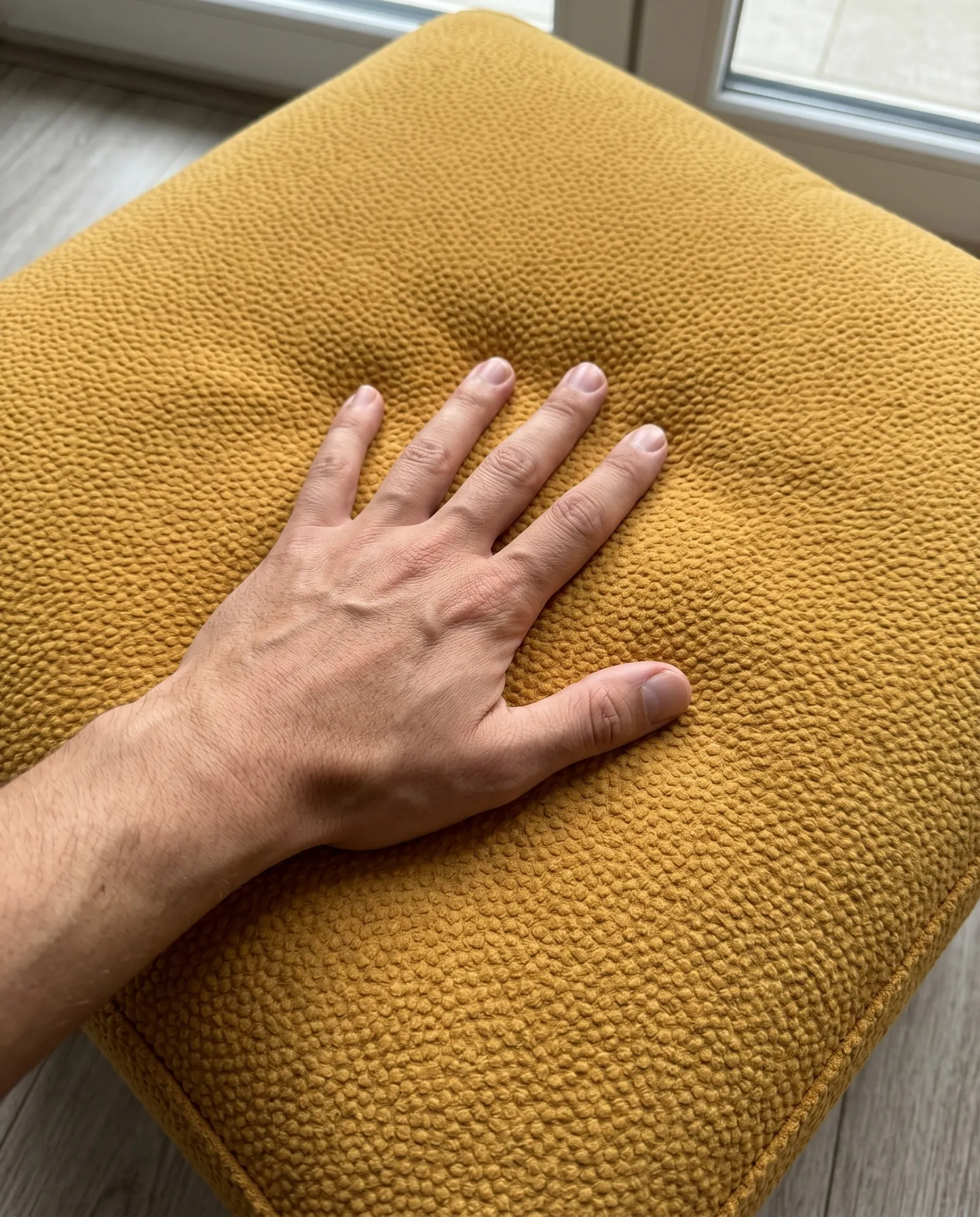
No styled room here, only a hand on a cushion by a window. I trust that kind of photograph more than any showroom.
 Save
The quick answer
Press a pet friendly cushion with an open hand before you trust its photo: a gentle dip that springs back means medium-firm foam, and a dip shallower than your fingers means firm. This mustard pebble weave keeps its texture under the palm, and for a plush sofa seat the workshop offers softer 28 DNS foam in the same Dacron wrap.
The 41 x 26 in sofa seat, cut open
Pebble-weave cover. A performance weave with tiny raised pebbles that give grip and keep their shape where a hand presses.
Self piping. A welt in the same mustard cloth, stitched straight along the seams to hold the box line.
Dacron wrap. The same fiber wrap goes around the standard foam and the softer one, filling the cover out at the corners.
Seat foam. Standard is 32 DNS, medium-firm. For a sink-in sofa seat, ask for 28 DNS, which is softer.
Zipper. Belongs on the underside. If a cushion only fits with it on top, check the shape before blaming the zipper.
Base panel. The side that rests on the frame or the floor, carrying the weight the hand test imitates.
What ten feet can't tell you
There is no room in this photograph. No lamp, no rug, no pretty window seat. Just a mustard cushion on a gray floor, and a hand pressing into it. It may be the most useful picture of a pet friendly cushion I have seen all year.
From across a room you can judge two things only: color and shape. The color is a warm mustard, and it glows against the gray wood-look floor the way a lit window glows on a dark street. The shape is a square box with a straight side wall that keeps its corners when somebody sits. The white vinyl window frame lets in flat, honest daylight, with no golden-hour flattery.
Close up, the hand tells the rest. The dip around the palm is gentle and rounded, the kind that springs back. That is medium-firm foam, not a hard pad. The pebble weave keeps its tiny raised bumps even where the palm presses, and those bumps give paws some grip and help hide claw marks. That is why cloth like this lives with our performance and pet-friendly fabrics.
Look along the bottom edge. The self piping runs straight on a real, finished cushion, not a studio sample. A seam is a promise, and this one kept it.
So here is what I tell anybody who asks, my friend: before you order, press a cushion like this with an open hand. If the dip is shallower than your fingers, the foam is on the firm side. How deep does your hand sink into the seat you use most?
Pinned by Harlan, palm down
Four pins on a plain cushion, from the hand's dip to the straight side wall.
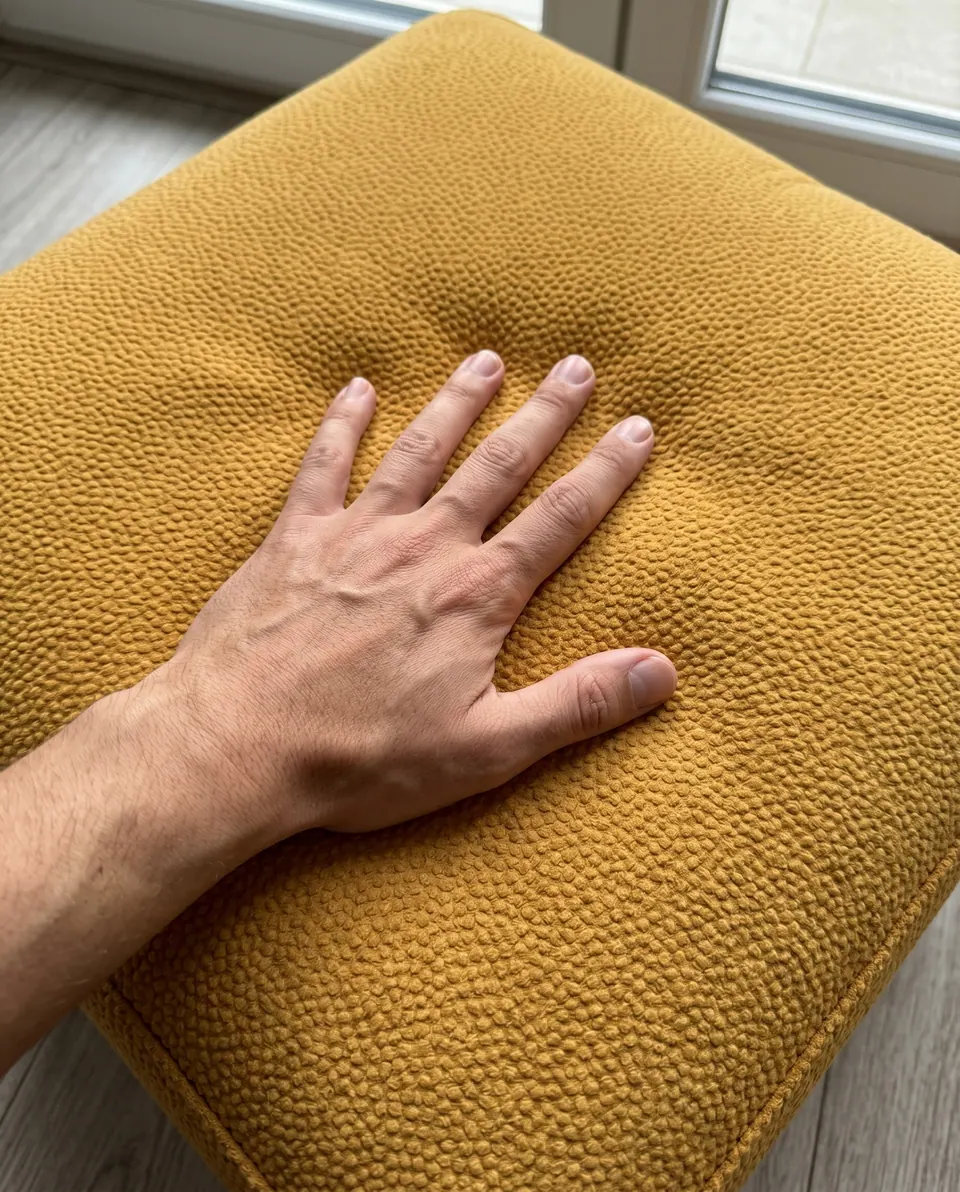
- Hand press test
The dip around the palm shows how much the foam gives under light pressure.
- Pebble texture
Tiny raised pebbles give grip and hide scratches from claws.
- Self piping seam
Matching welt along the bottom edge, stitched straight on a real finished cushion.
- Box side wall
A straight side gusset keeps the square shape when sat on.
- Hand press testThe dip around the palm shows how much the foam gives under light pressure.
- Pebble textureTiny raised pebbles give grip and hide scratches from claws.
- Self piping seamMatching welt along the bottom edge, stitched straight on a real finished cushion.
- Box side wallA straight side gusset keeps the square shape when sat on.
Reading a cushion with your hand
Open your hand flat
Fingers together, palm down, in the middle of the seat. A fist or a fingertip measures the wrong thing.
Press lightly and watch the dip
A soft, rounded dip that climbs back up means medium-firm foam. A dip shallower than your fingers means firm.
Let go and watch it recover
Good seat foam comes back level on its own. A dent that lingers is worth a question before you order more.
Run your fingertips over the face
On a pebble weave the texture should stay defined where you pressed. That is what keeps grip under paws.
Check the side wall
A straight gusset that stays upright under the hand is what keeps a box cushion square when it is sat on.
Two sofa seats that wanted to sink, not perch
A buyer got in touch about a new sofa frame. They planned two seat cushions, each 41 x 26 in (104 x 66 cm) and 5 in (13 cm) thick, but they wanted a soft sofa feel, not a firm bench. Should they ask for softer foam, a thicker Dacron wrap, or extra layers of fiber?
The workshop's answer was the foam. Its standard is 32 DNS, a medium-firm high-density foam, about 2.0 lb/ft³ (32 kg/m³). It also makes 28 DNS, about 1.75 lb/ft³ (28 kg/m³), which is softer and goes into the same Dacron wrap. To get it, you write '28 DNS foam' in the personalization note.
The lesson is an old one. For a seat you lounge on, ask for lower-density foam rather than more thickness. The foam firmness finder will put a number to what your hand already knows.
Asked before anyone pressed a thing
- A common question
Before I decide, could you send close-up photos of two fabric codes side by side?
The workshop's answerYes. Name the codes and the workshop sends close-ups, side by side if you are comparing, with the piping too. They are phone photos, so tones can shift a little from daylight. Color names mean different things to different people: in the soft range, 909 is a pure white and 910 is a cream.
- A common question
Can I order fabric samples before choosing?
The workshop's answerYes, through the fabric-samples option; you cover the postage. Pick any one color and write every code you want in the personalization box, and they all come together. Samples are small pieces, enough to judge color, pattern and feel, and more can follow later.
- A common question
I want my sofa seats plush, not bench-firm. Is the answer softer foam, a thicker Dacron wrap or extra fiber?
The workshop's answerSofter foam. Ask for the workshop's 28 DNS, which is softer than the standard 32 DNS medium-firm and keeps the same Dacron wrap. Write '28 DNS foam' in the personalization note when you order.
On the cutting table
| Cushion | Square box cushion, photographed on the floor |
|---|---|
| Fabric | Performance pebble weave, mustard yellow |
| Surface | Tiny raised pebbles for grip; they help hide claw marks |
| Piping | Self piping, stitched straight |
| Edge | Box, with a straight side wall |
| Standard foam | 32 DNS medium-firm, about 2.0 lb/ft³ (32 kg/m³), Dacron-wrapped |
| Softer option | 28 DNS, about 1.75 lb/ft³ (28 kg/m³), same wrap |
| Hand test | A dip shallower than your fingers means firm |
| Best for | Homes with pets, sofa seats, floor seating |

Have it made
Have this made — ask Harlan’s workshop
Old upholsterers will tell you the real cutting happens in the conversation, long before the shears come out. Tell the workshop what you sit on, and they will talk it through with you. — Harlan
Leave your details and the workshop will call you to confirm measurements, fabric, foam and piping. No prices, dates or payment on this page: it is a request, not an order.
Press a cushion with an open hand before you order: if the dip is shallower than your fingers, the foam is on the firm side.
Harlan
Questions buyers ask next
Is a thicker cushion always a softer cushion?
No. Thickness changes the height and how far you can sink, but density sets how the foam feels. For a lounging seat, a lower-density foam such as 28 DNS feels softer than adding thickness to the standard 32 DNS.
Why does a pebble texture suit a home with a dog or cat?
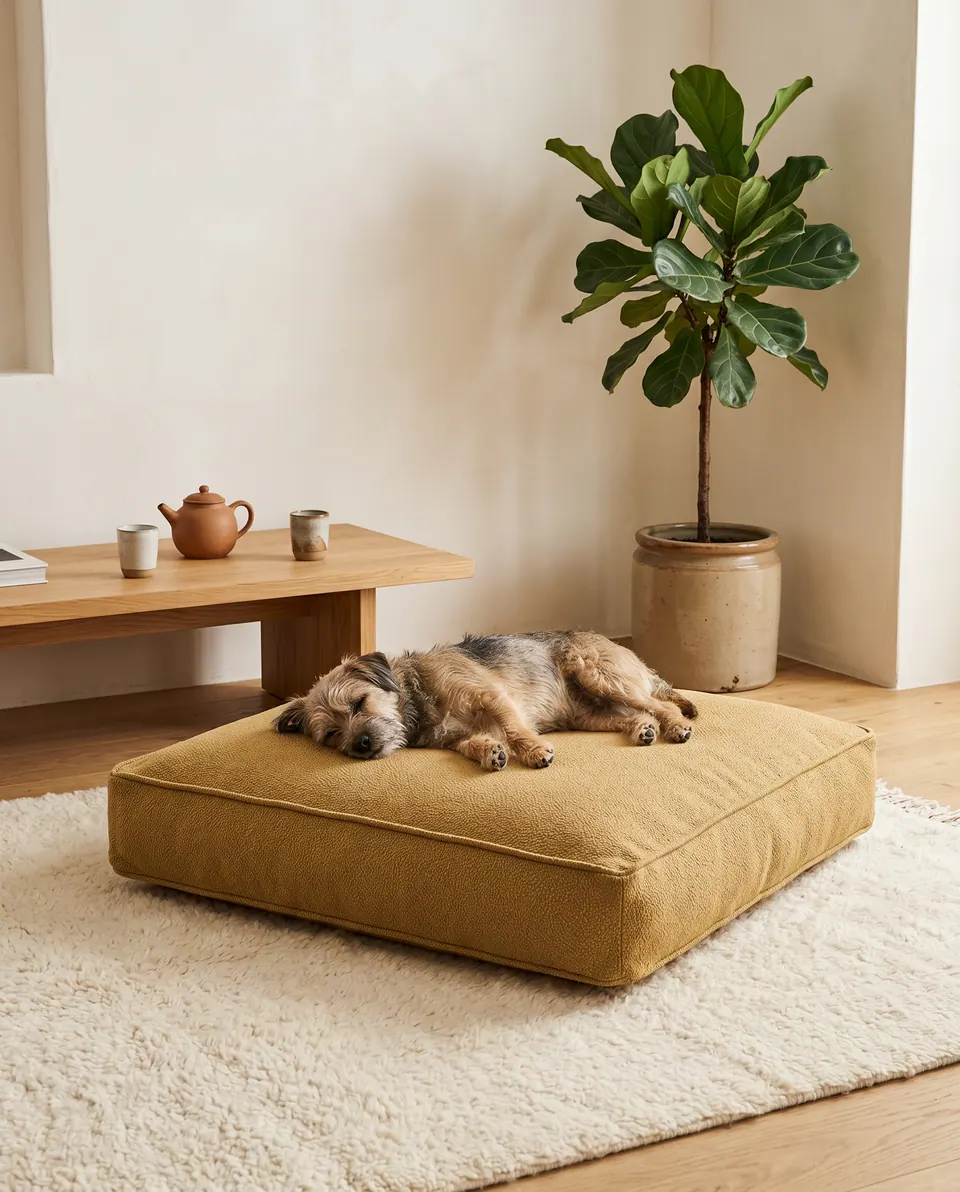
The tiny raised pebbles give paws some grip and help hide light claw marks, and the weave keeps its texture even where it is pressed. Pet-friendly means sturdy for daily life, not indestructible, so treat it as a hard-working cloth.
What does a Dacron wrap do around seat foam?
It is a fiber layer around the foam that fills the cover out at the corners and rounds the first touch. The workshop uses the same Dacron wrap on its standard 32 DNS foam and on the softer 28 DNS option.
How can I judge firmness when I can't touch the cushion first?
Ask for the foam density in writing and translate it with a firmness guide. On the workshop's scale, 32 DNS is the standard medium-firm and 28 DNS is the softer choice, so you can compare either with a seat you already know.
Sit well. — Harlan
Other cushions worth a closer look
 Save
 Save
 Save
 Save
 Save
 Save