A Reading by HarlanOttoman & Footstool Cushions
A chocolate pebble-weave ottoman cushion, a tabby's paw, and the long evening
A letter from Harlan about a footstool a cat has already claimed, and what keeps a seat kind through three hours with a book.
 Save
The quick answer
An ottoman cushion built for long sitting needs a tight, textured weave, a welted edge that holds its line, and firm foam that keeps the top flat under your heels. This chocolate pebble weave with self piping shows the first two, and the color hides tabby fur. For seat cushions, the workshop recommends 3 to 4 in (8 to 10 cm) of 32-density HR foam wrapped in polyester wadding.
High Point ·
My friend,
A letter about one paw
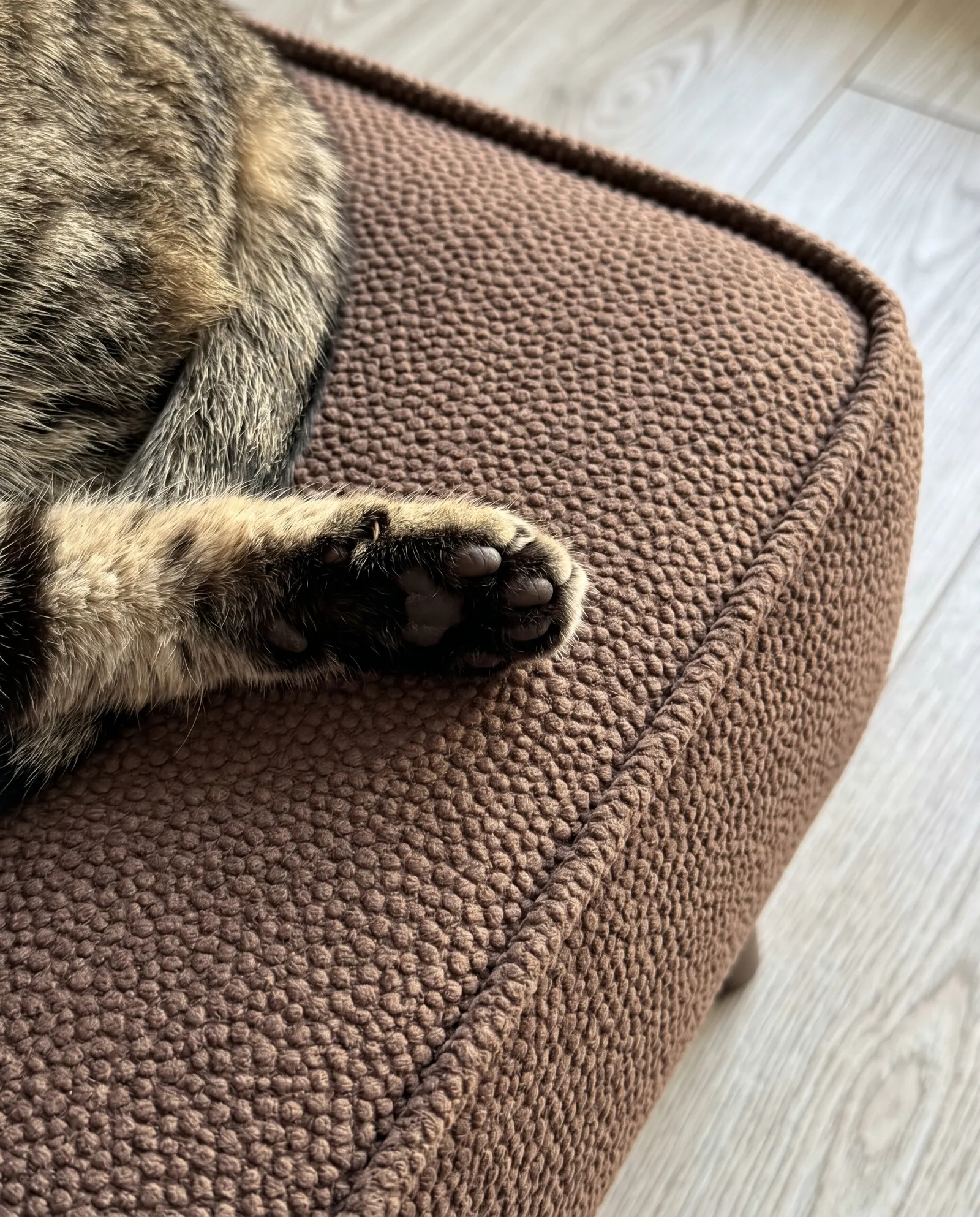
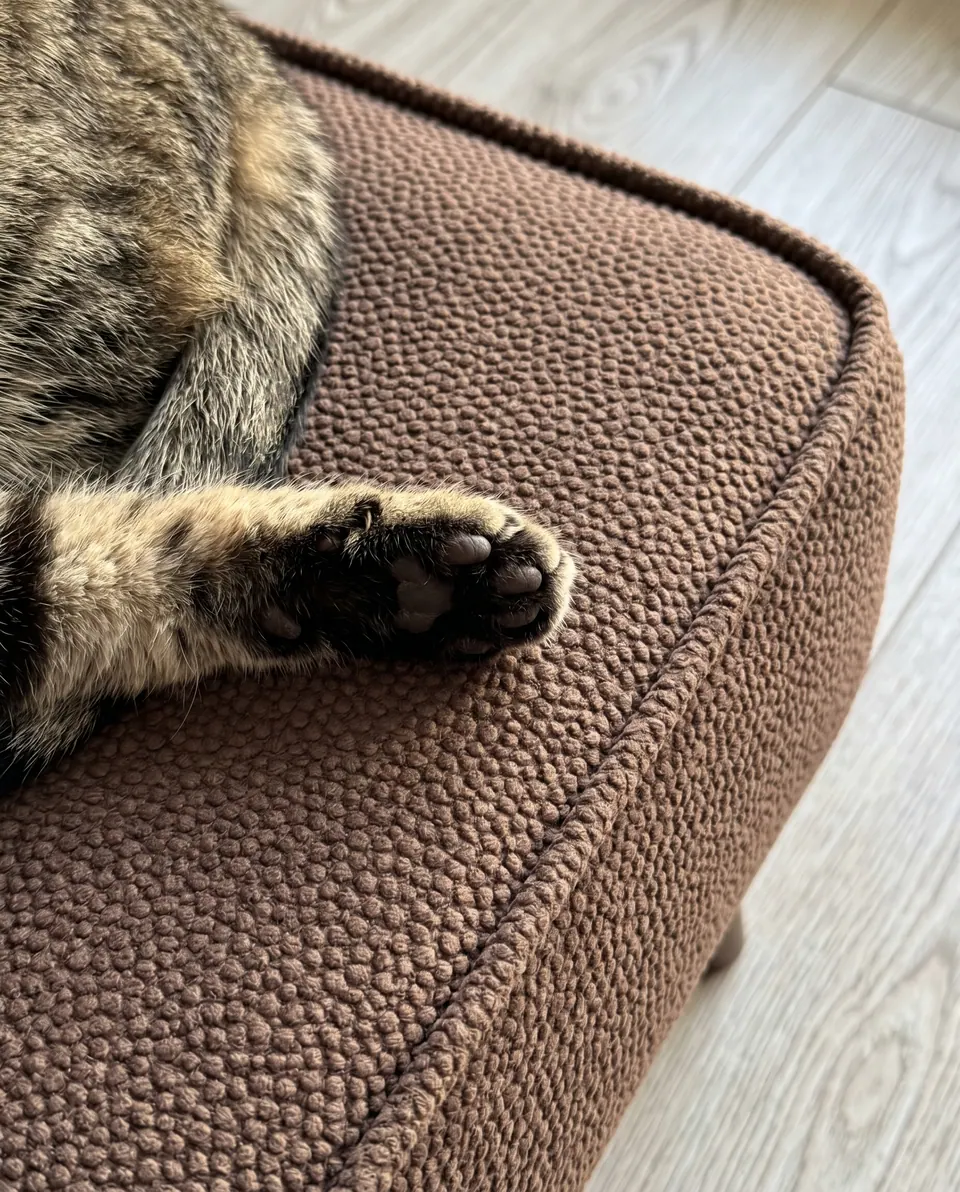
The best test of an ottoman cushion I ever saw wasn't done in a lab. It was a tabby stretching one front paw across a footstool, claws resting right on the edge.
That edge is where the damage starts, along the welt at the top. Look close. The self piping still runs straight, and the chocolate pebble weave hasn't pulled a single loop. It's a candid snapshot in flat daylight: a gray wood-look floor, one dark wooden leg, nobody styling anything. That's why I trust it.
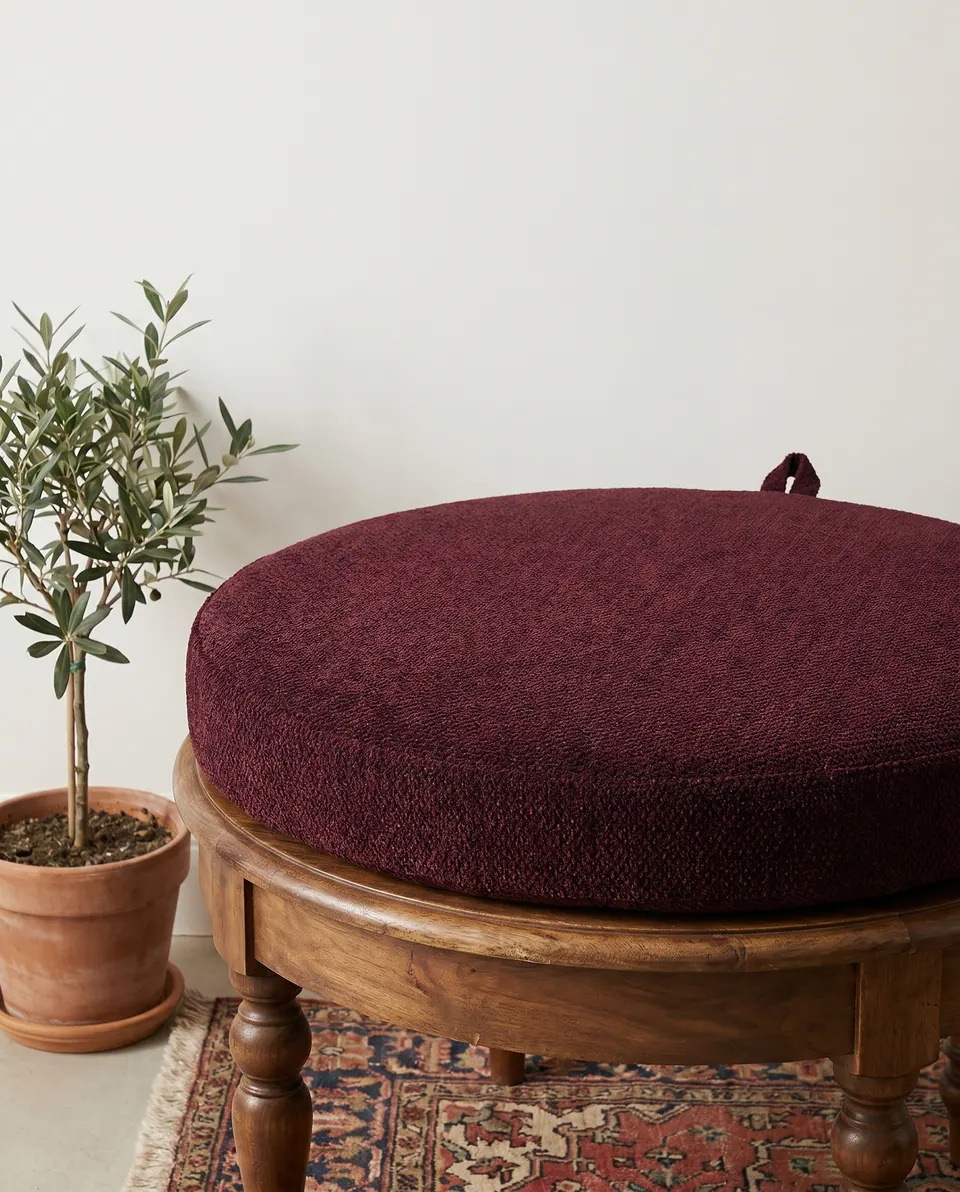
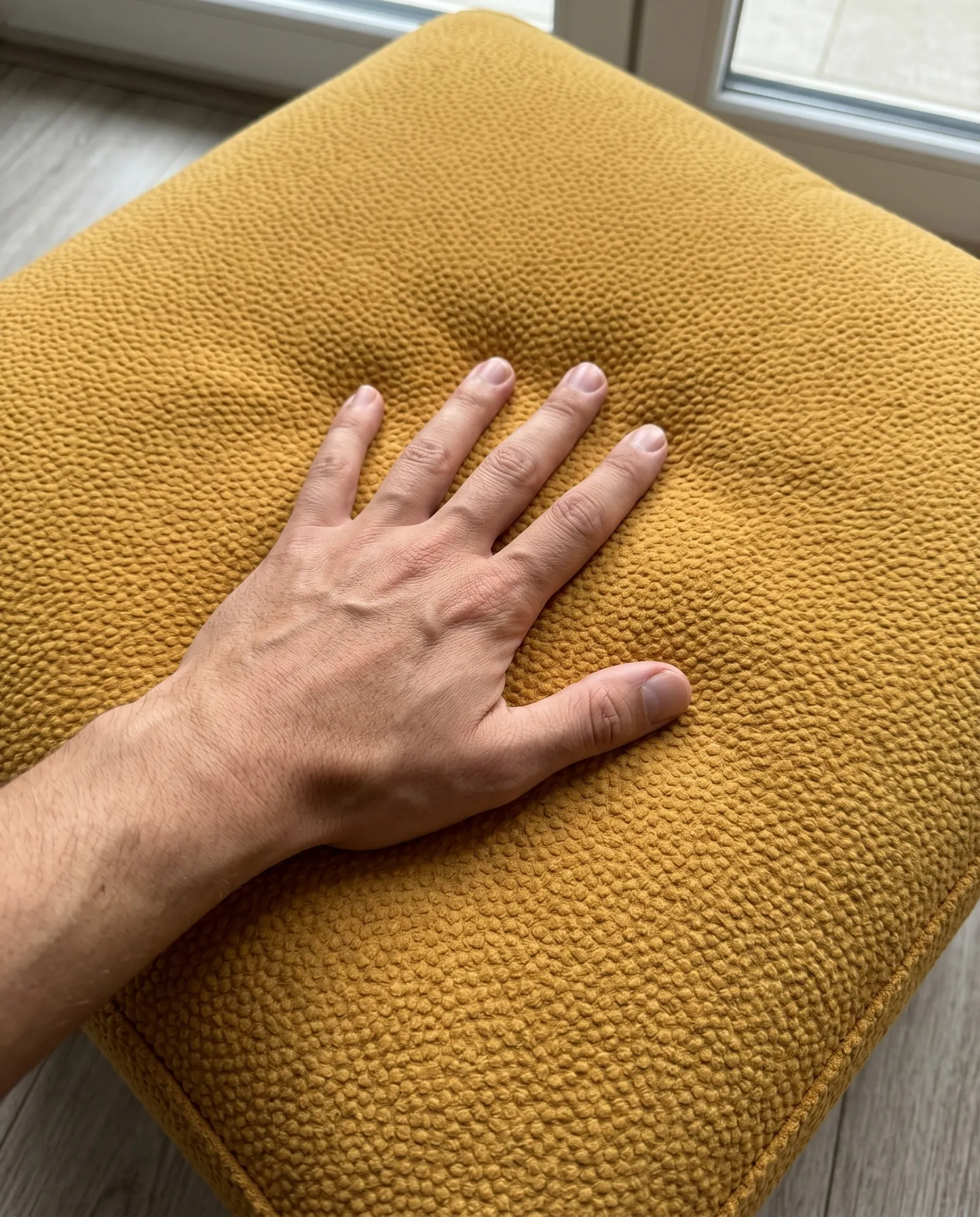
Chocolate was the practical choice. Tabby fur settles into brown and disappears. The raised dots of a pebble weave hide scuffs the way a gravel drive hides footprints. And because the piping is cut from the same cloth, the outline stays neat after a year of feet and paws.
That dark leg matters too. It tells you this is upholstered furniture, a stool with a fixed top, not a loose pad that slides when you shift.
Pinned by Harlan
Four pins, from the paw on the weave to the stool leg that shows this is real furniture.
- Cat paw pads
Claws resting on the weave without pulling a loop, the fabric's real test.
- Self piping edge
The welt holds a straight line along the top edge of the stool.
- Pebble weave
Tight raised dots in chocolate brown hide scuffs well.
- Stool leg
A dark wooden leg shows this is upholstered furniture, not just a loose pad.
- Cat paw padsClaws resting on the weave without pulling a loop, the fabric's real test.
- Self piping edgeThe welt holds a straight line along the top edge of the stool.
- Pebble weaveTight raised dots in chocolate brown hide scuffs well.
- Stool legA dark wooden leg shows this is upholstered furniture, not just a loose pad.
What three hours with a book asks of a footstool
Now to comfort, because a footstool earns its keep over a long evening, not in a photograph.
Put your feet up for three hours and you learn three things. The top must stay flat, or your heels sink and your knees complain. The front edge must stay firm, because your calves rest on it. And the cloth should feel dry and a little grippy, never slick. A tight pebble weave gives grip without scratch.
When the workshop builds seat cushions for long use, it recommends 3 to 4 in (8 to 10 cm) of 32-density HR foam, about 2 lb/ft³, wrapped in polyester wadding. The wrap softens the first touch; the foam carries the hours. There's more on that in foam density and firmness.
If a cat already owns your footstool, re-cover it in a weave close to the cat's coat. It's the kindest disguise I know. You'll find this kind of cloth among performance and pet-friendly fabrics, and more stools like this one in ottoman cushions.
Where do you do your longest sitting, and what do your feet rest on while you do it? Buy the cushion once, cry once.
A floor sofa that wanted to be a chair
A buyer in the US asked whether our modular floor sofa came as a single chair. It didn't, not as a listing. So the workshop offered an ottoman with a backrest, its layers joined so the piece lies flat as a footstool or folds back into a lounge chair.
The listing had no color selector. The buyer simply named brick corduroy in a message and again in the order note, and brick is what was cut.
Two lessons for long sitting. A piece that changes shape through the evening suits the way folks really read: upright first, then sliding lower by the hour. And if a listing doesn't ask for your color, tell the shop anyway, twice. More pieces like it live among our modular floor sofas.
Buyer questions: overall sizes, one small seat, curved backs
- A common question
All I have are the overall measurements of my patio armchairs. Is that enough to make seat and back cushions?
The workshop's answerNot for a proper fit. When the chairs arrive, measure the width between the armrests, the seat depth and the back-cushion height you want. The workshop suggests a 3 to 4 in (8 to 10 cm) seat of 32-density HR foam wrapped in polyester wadding, with ties at the back corners. Boxed cushions with piping are no trouble.
- A common question
Could you make just one small cushion, around 15 x 15 in?
The workshop's answerYes. Choose the smallest size on the listing and write your exact size and colors in the note. Because shipping is a large share of the cost on small items, the price can't drop below the listing's minimum; a single 14 x 14 in (35 x 35 cm) stool cushion, 2 to 3 in (5 to 8 cm) thick, was ordered this way. Several small cushions together earn a discount.
- A common question
Can a seat cushion be rounded at the back or curved at the front?
The workshop's answerYes. The shop needs the straight length of each side before the curve begins, and the depth or radius of the curve, ideally on a sketch. If the old cushions are gone, the production team and craftsmen work out the sizes from the seat itself.
On the cutting table
| Piece | Upholstered footstool with a box-edge top |
|---|---|
| Fabric | Chocolate brown pebble weave |
| Piping | Self piping along the top edge |
| Edge | Box edge |
| Seat foam, workshop advice | 3 to 4 in (8 to 10 cm) of 32-density HR foam in polyester wadding |
| Color logic | Close to the pet's coat, so fur blends in |
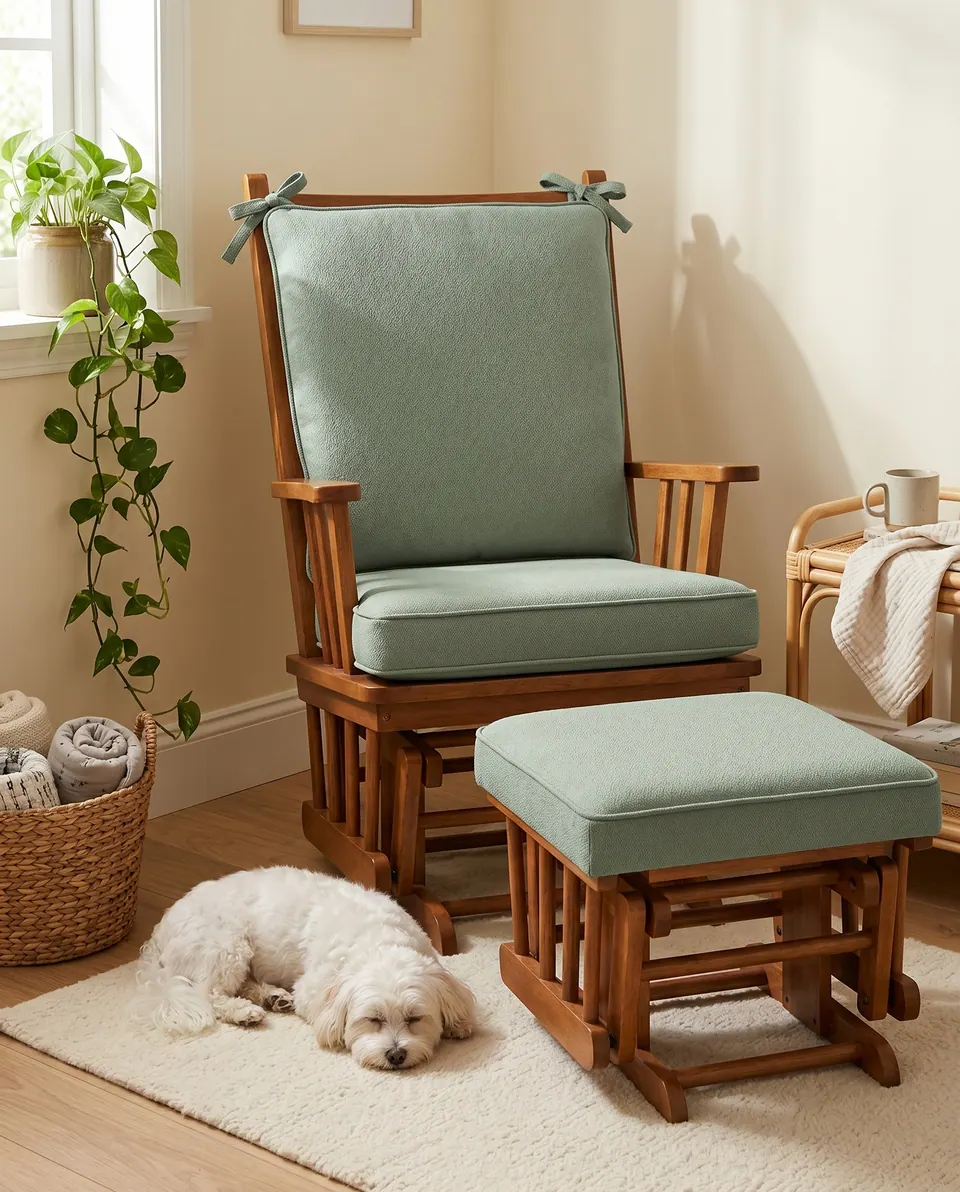
| Chair pads | Ties at the back corners keep them in place |
| Best for | Reading chairs, TV footstools, homes with cats |
Have it made
Have this made — ask Harlan’s workshop
The best cushions I have known began with somebody asking one more question. Ask yours here. — Harlan
Leave your details and the workshop will call you to confirm measurements, fabric, foam and piping. No prices, dates or payment on this page: it is a request, not an order.
Pick an ottoman cushion close to your cat's coat color: a chocolate pebble weave swallows tabby fur, and self piping keeps the edge straight under paws.
Harlan
Questions buyers ask next
What fabric works for an ottoman cushion in a home with cats?
A tight, textured weave in a color near your cat's coat. A pebble weave's raised dots hide scuffs, and chocolate brown hides tabby fur. No fabric stops claws for good, so keep nails trimmed and choose a welt cut from the same cloth.
How firm should a footstool cushion be for long reading?
Firm enough that the top stays flat under your heels for hours. For seat cushions the workshop recommends 3 to 4 in (8 to 10 cm) of 32-density HR foam with a wadding wrap; on a footstool, firm foam and a box edge beat soft loose fill.
Why choose self piping over contrast piping on an ottoman?
Self piping is cut from the same cloth, so it sharpens the outline without calling attention to wear. On a footstool that takes feet and paws every day, scuffs along a matching welt show far less than on a bright contrast line.
Can a modular floor sofa be made as a chair?
Yes. The workshop has made an ottoman with a backrest whose layers are joined, so it lies flat as a footstool or folds back into a lounge chair. If the listing has no color selector, name your fabric in a message and in the order note.
Sit well. — Harlan
More photographs to read
 Save
 Save
 Save
 Save
 Save
 Save