A Reading by CallumBench Cushions
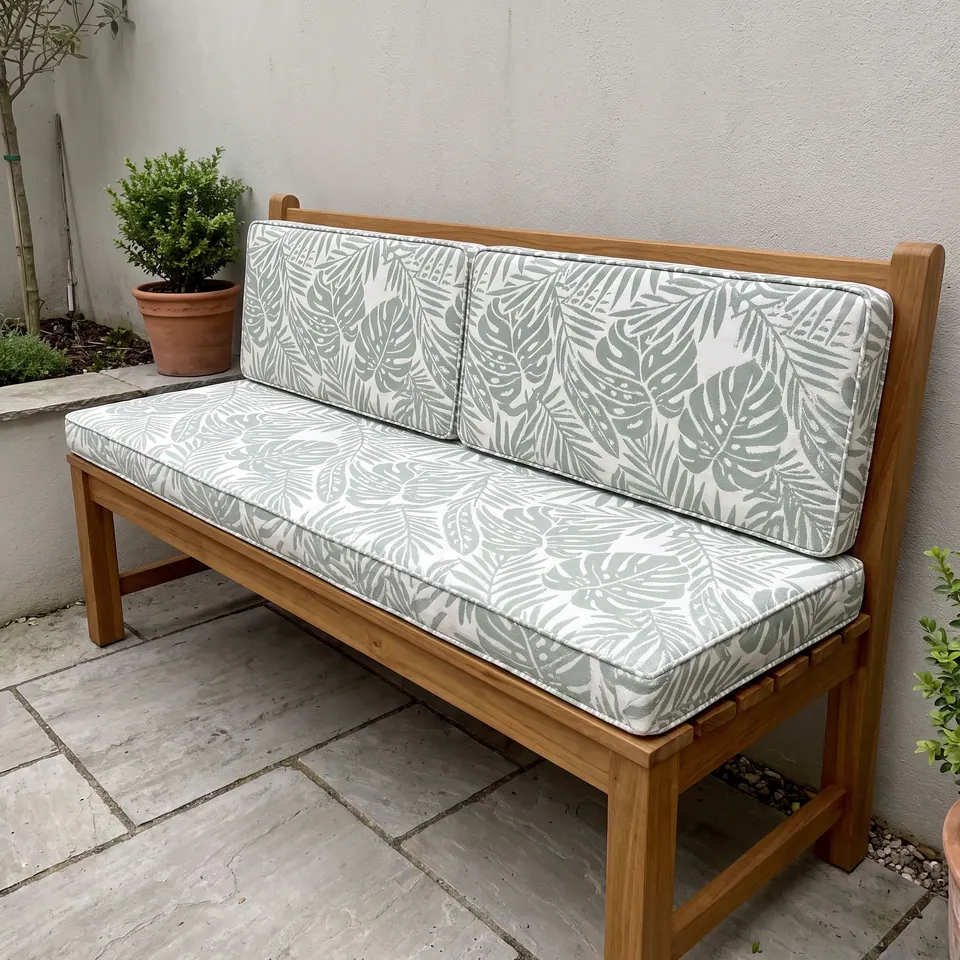
A leaf-line dining bench cushion that seats the whole table
A dining bench is the hardest-working seat on a patio. Everybody slides along it and nobody thanks it. Here's how this one earns its keep.
The quick answer
A custom bench cushion for an outdoor dining bench should run the full length of the bench in one piece and stay moderately thick, so diners still sit at a sensible height for the table. Measure from the floor to the underside of the tabletop before choosing thickness, and leave thigh room once the cushion is on.
 Save
 Save
 Save
 Save
 Save
 Save
 Save
Pinned by Callum: five points on a covered patio
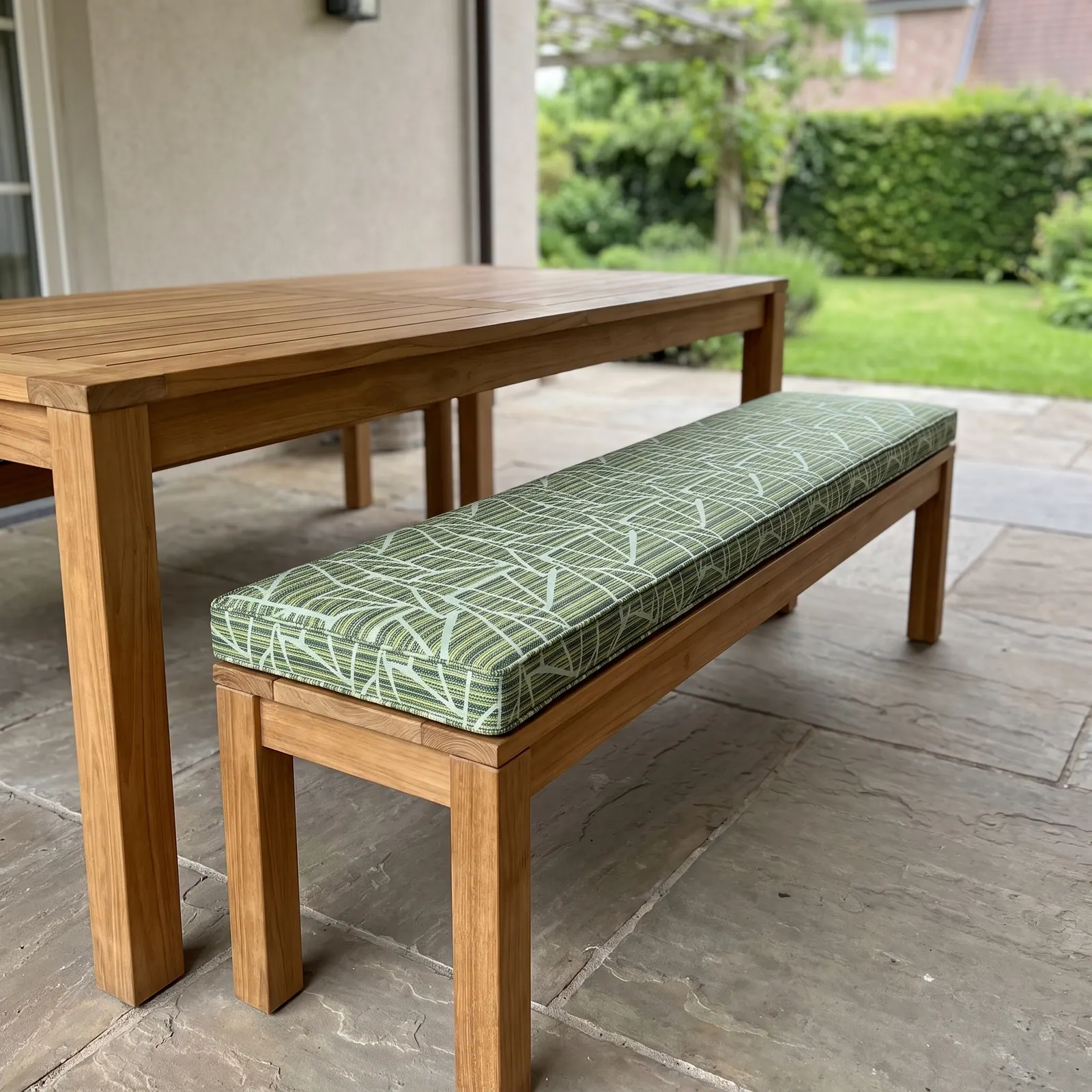
Five pins, from the leaf-line print along the bench to the lawn and hedge it borrows its green from.
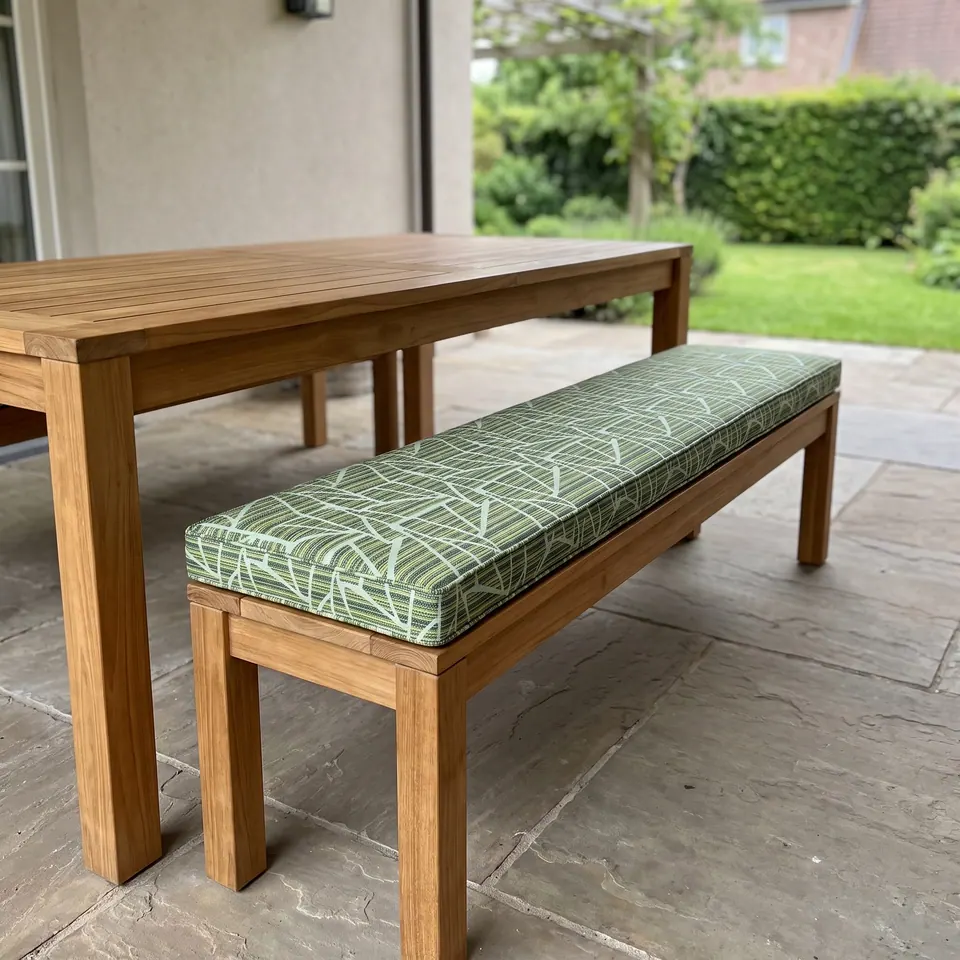
- Leaf-line print cushion
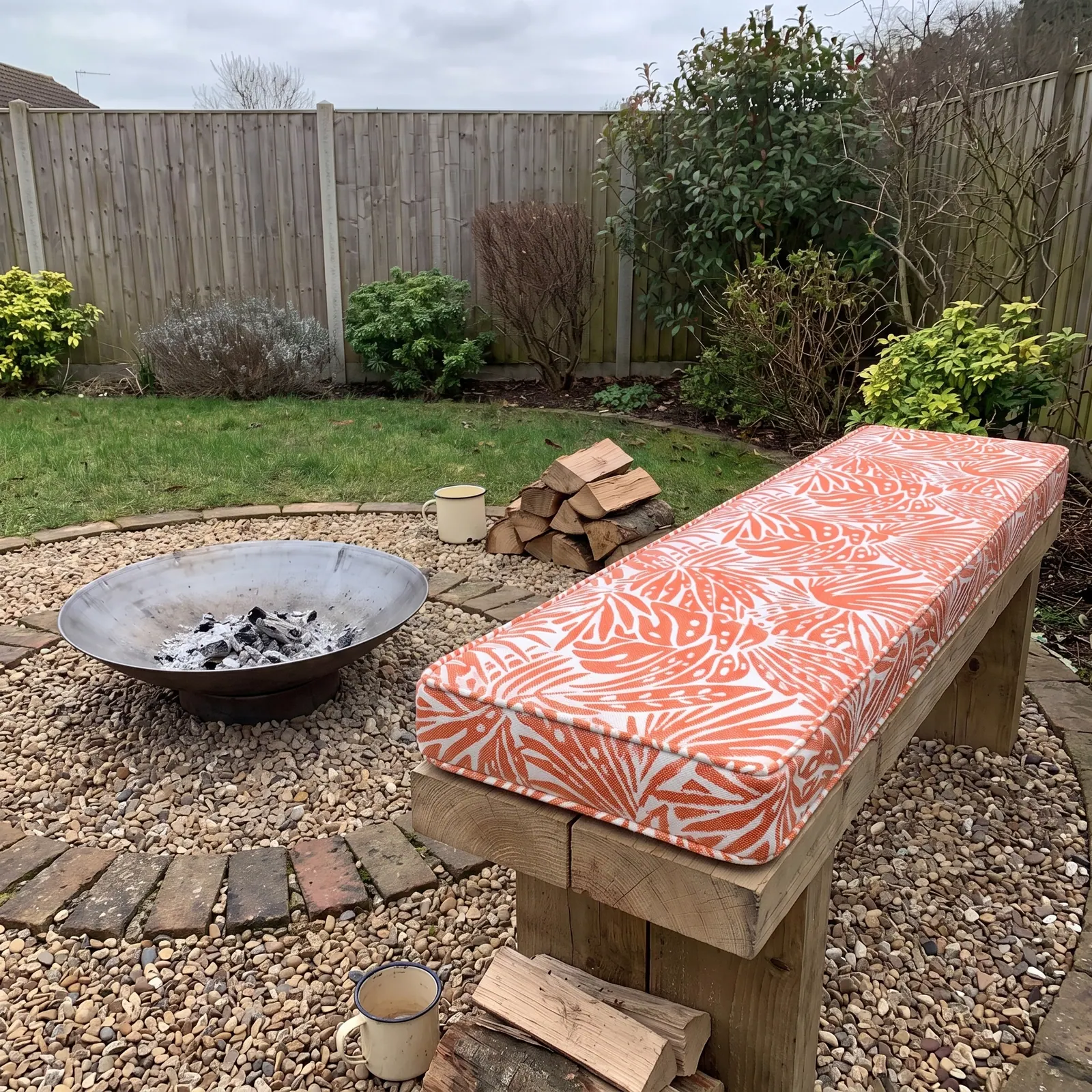
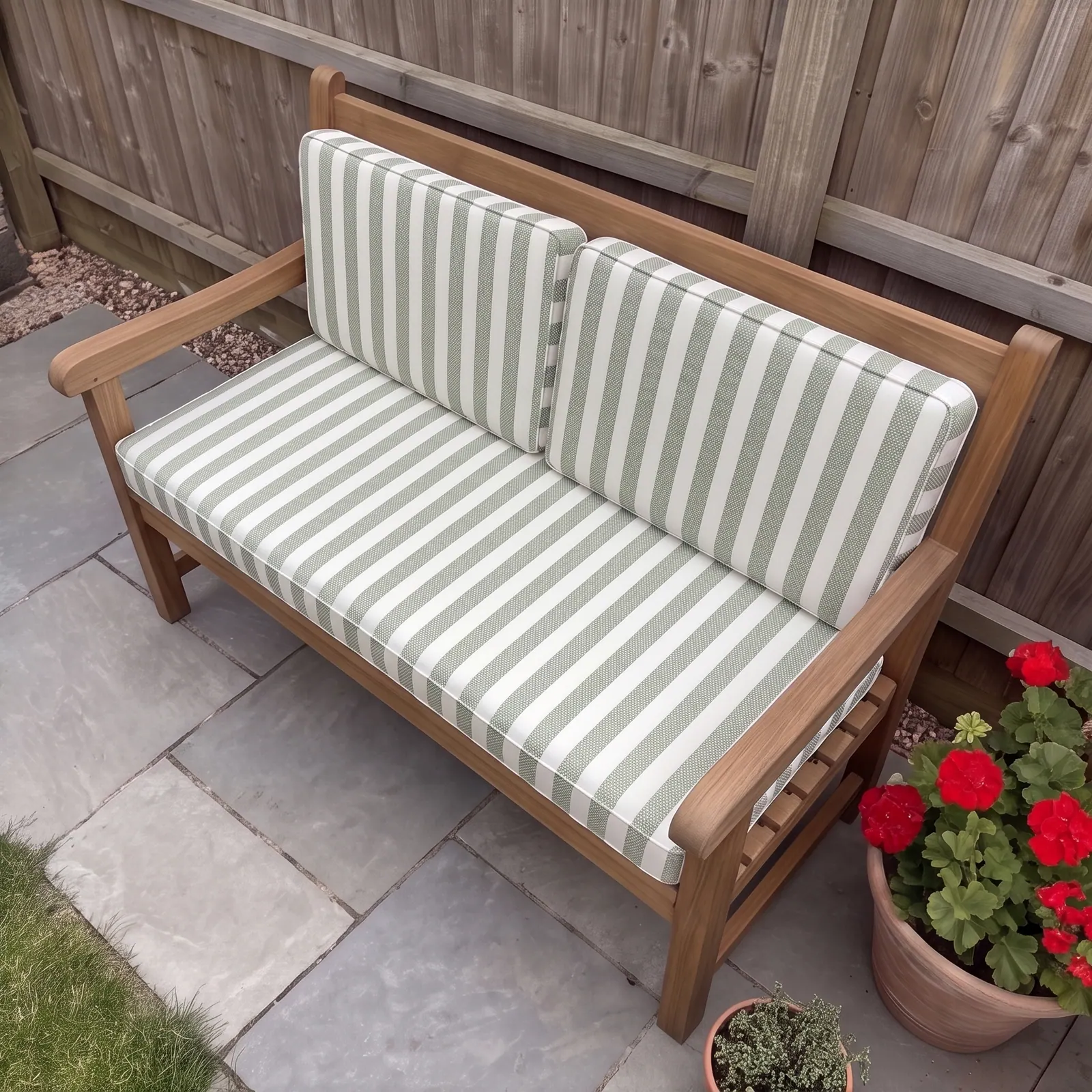
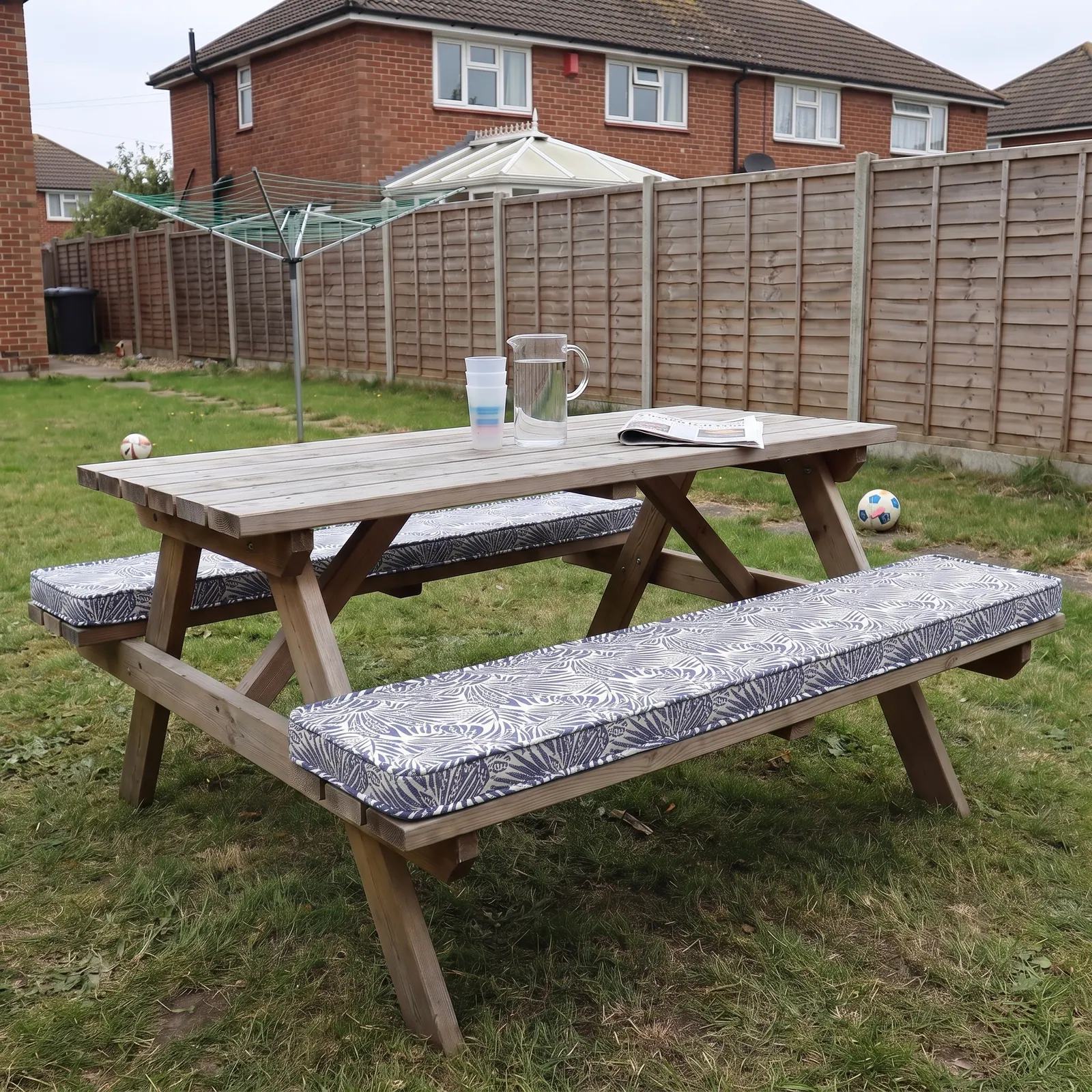
The cushion follows the full length of the bench at a moderate thickness.
- Boxed cushion end
A squared end with self piping keeps the bench outline neat.
- Teak dining table
Keep the seat height right so diners still sit comfortably at the table.
- Teak bench leg
Warm teak and riven stone keep the palette natural around the green.
- Lawn and hedge
The green print picks up the garden beyond the terrace.
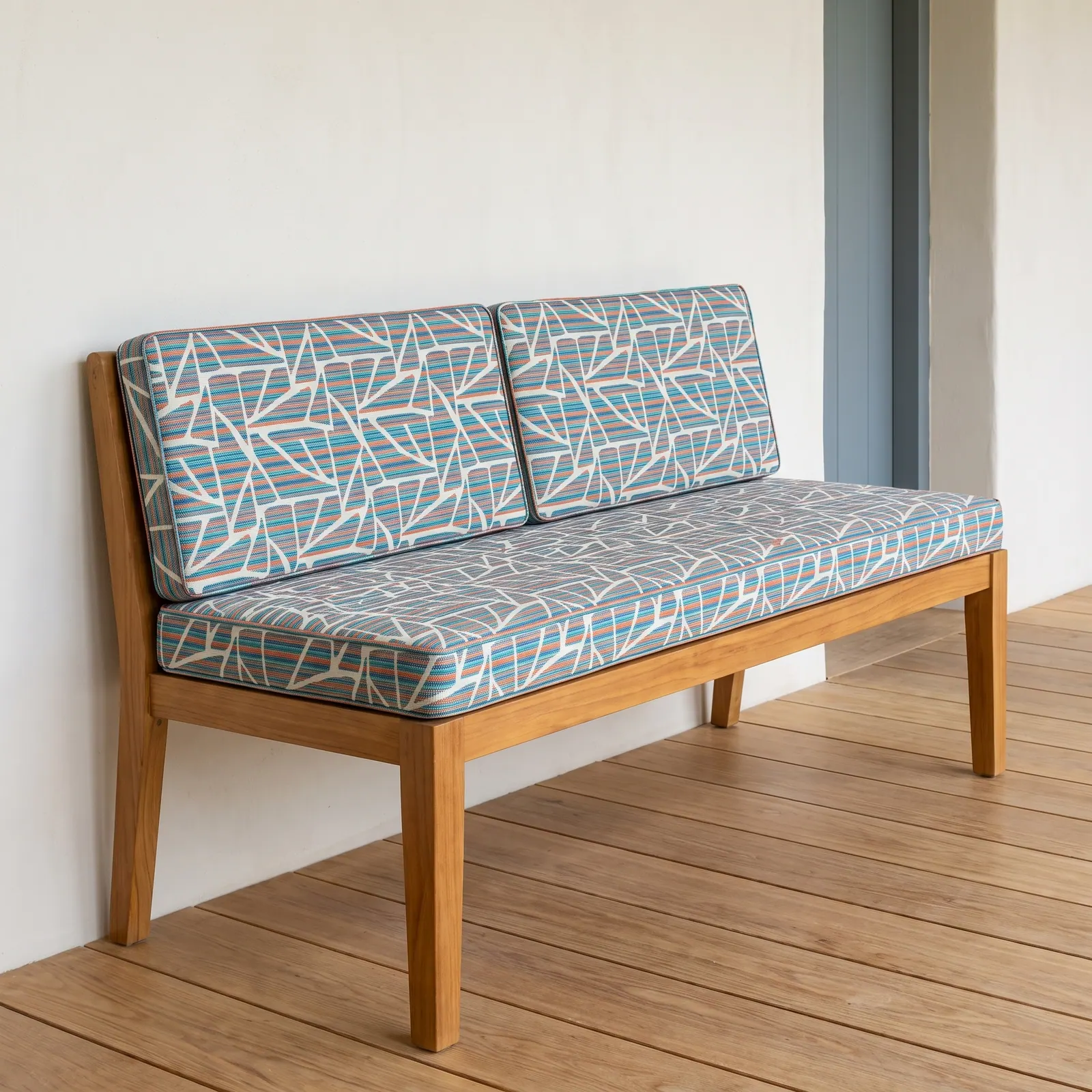
- Leaf-line print cushionThe cushion follows the full length of the bench at a moderate thickness.
- Boxed cushion endA squared end with self piping keeps the bench outline neat.
- Teak dining tableKeep the seat height right so diners still sit comfortably at the table.
- Teak bench legWarm teak and riven stone keep the palette natural around the green.
- Lawn and hedgeThe green print picks up the garden beyond the terrace.
Card one: one long cushion, more people seated
A bench seats more people than chairs do because nobody owns a slot. Guests shuffle down. The cushion has to let them.
This one runs the full length of the teak bench as a single piece. No gap in the middle, no seam that somebody ends up sitting on at the busiest dinner of the summer. The squared, boxed end with self piping keeps the outline tidy where the bench stops, which matters outside, because you see the end of a bench from the lawn.
Thickness is kept moderate. That's the hosting detail most people miss. Put a thick pad on a bench built for a dining table and your guests eat with their elbows up near their chins. Measure from the floor to the underside of the tabletop. Subtract the bench height plus the cushion. What's left is thigh room. The seat height calculator does the arithmetic, and cushion thickness and table height explains the trade.
How many people do you actually squeeze onto your bench on a holiday weekend?
Card two: green and white against teak and stone
The print is a fine green-and-white leaf line, and it picks up the lawn and the beech hedge beyond the patio roof. Outdoors, that's the right move. You don't compete with the view. You repeat it.
Teak and riven stone keep the rest of the palette warm and plain. No pillows, no throws, nothing on the table. The wall lantern is the only prop, and it's up out of the way. When the only pattern is on the cushion and the only grain is in the wood, the picture holds together with nothing else.
The cloth is from the workshop's outdoor acrylic fabrics, and this bench sits with the other bench cushions and patio and porch cushions. Even under a patio roof, rain blows in sideways. Rain doesn't negotiate.

Have it made
Have this made — ask Callum’s workshop
Tell them where it lives. Porch, deck or boat: the weather picks the fabric and the foam before anyone else does. — Callum
Leave your details and the workshop will call you to confirm measurements, fabric, foam and piping. No prices, dates or payment on this page: it is a request, not an order.
Fair winds — Callum