A Reading by CallumChaise Lounge & Sunbed Cushions
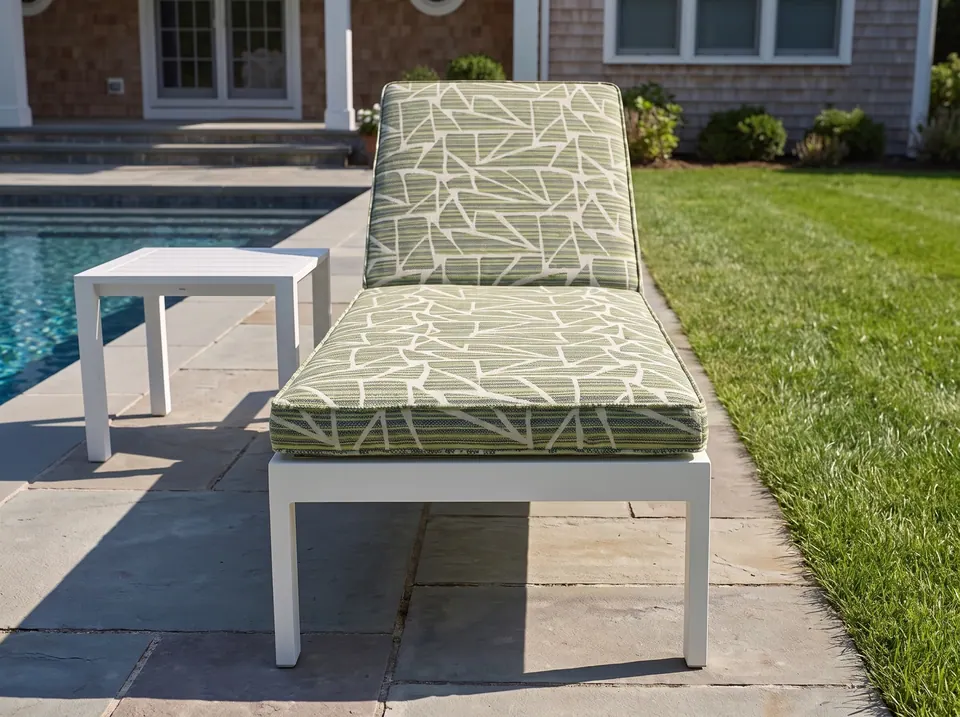
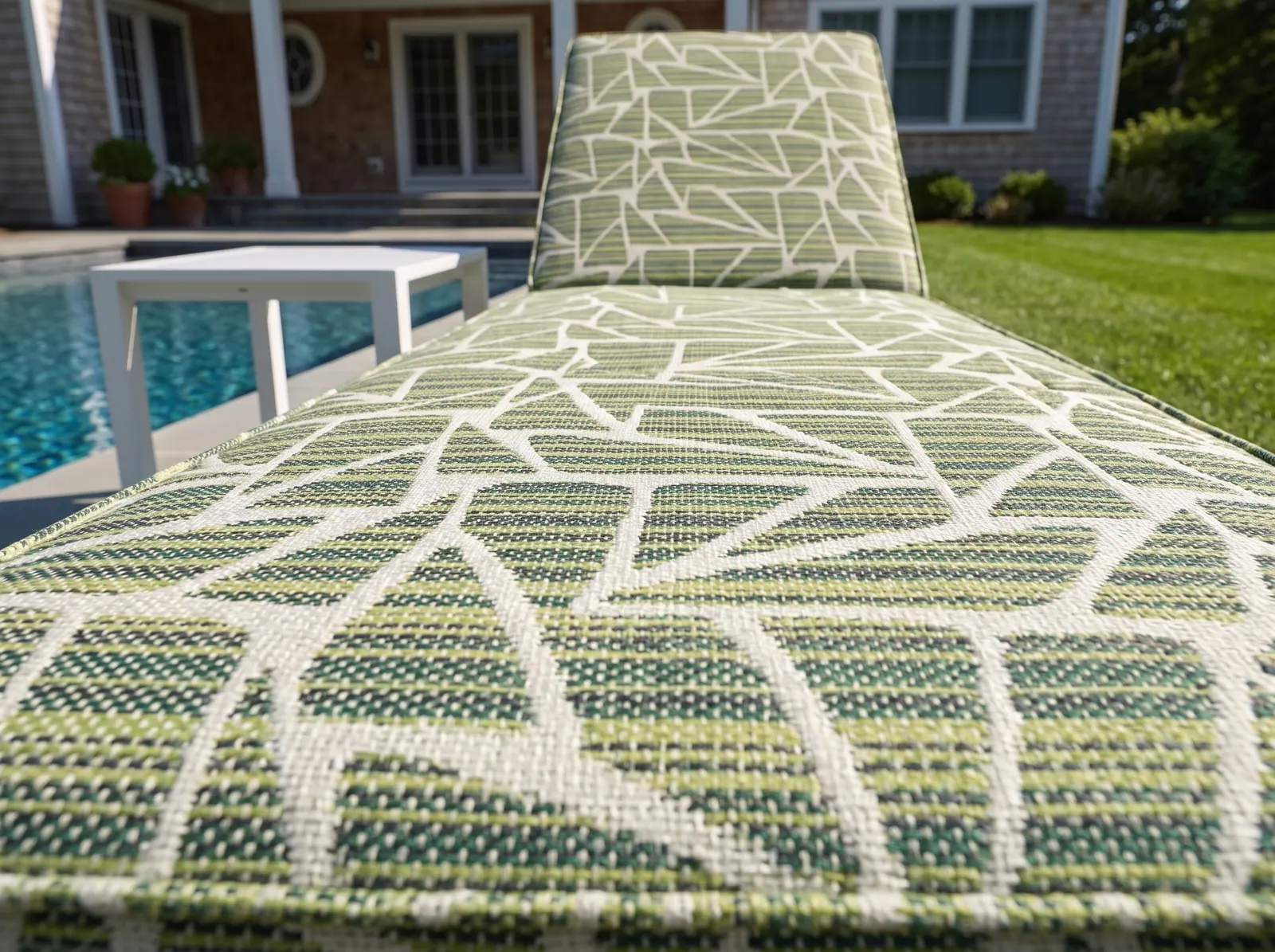
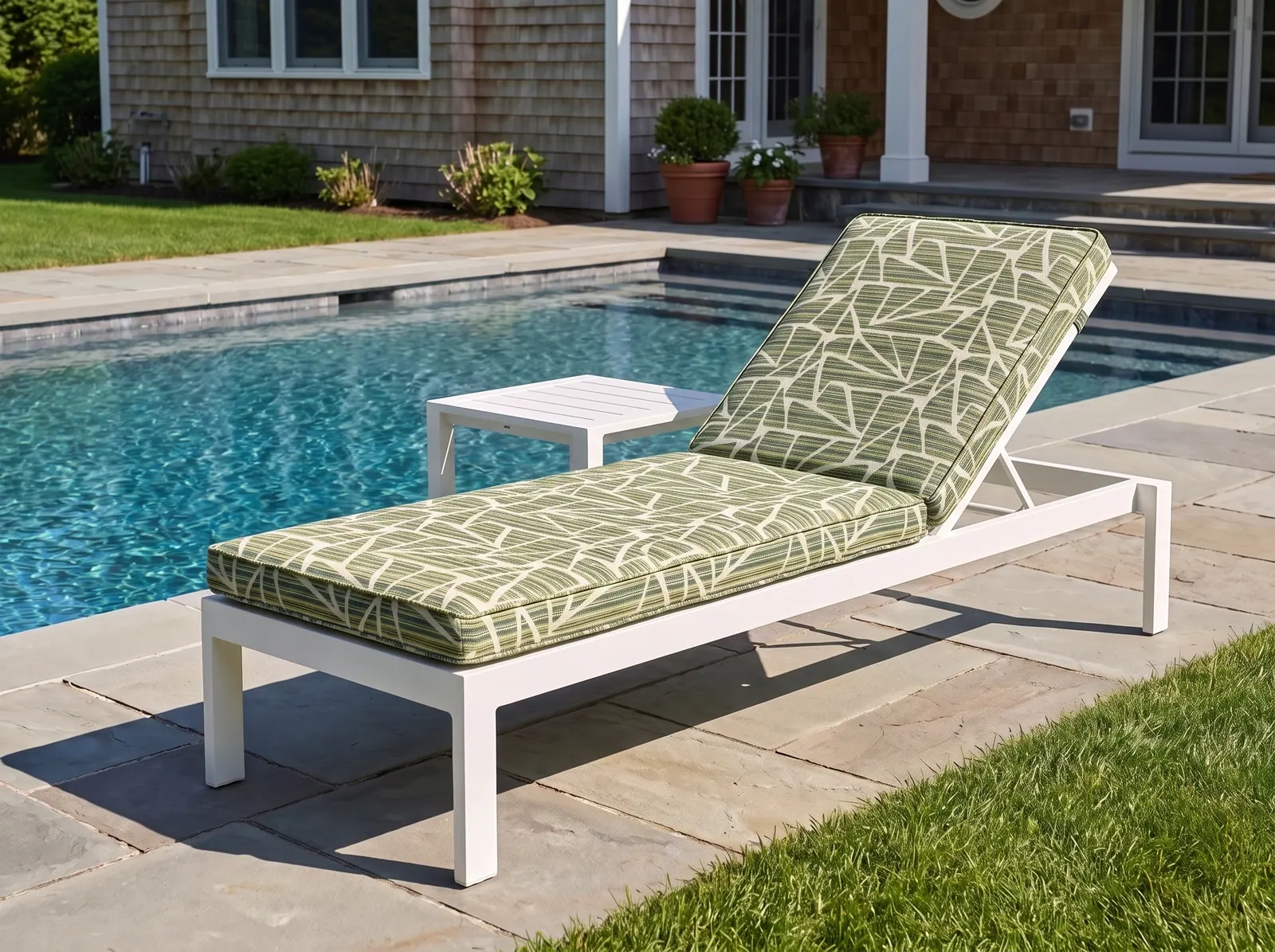
A green geometric sunbed cushion, read at eye level
Get down to cushion height. The fabric tells you more from there than any code number will.
 Save
The quick answer
To order a sunbed cushion right the first time, send the fabric code, ask for a close-up of the weave in daylight, and give each piece's size along with the side the backrest attaches to. Order seat and back together through a listing built for both, and write any size that is not on the menu in the note.
The lounger seat, cut open
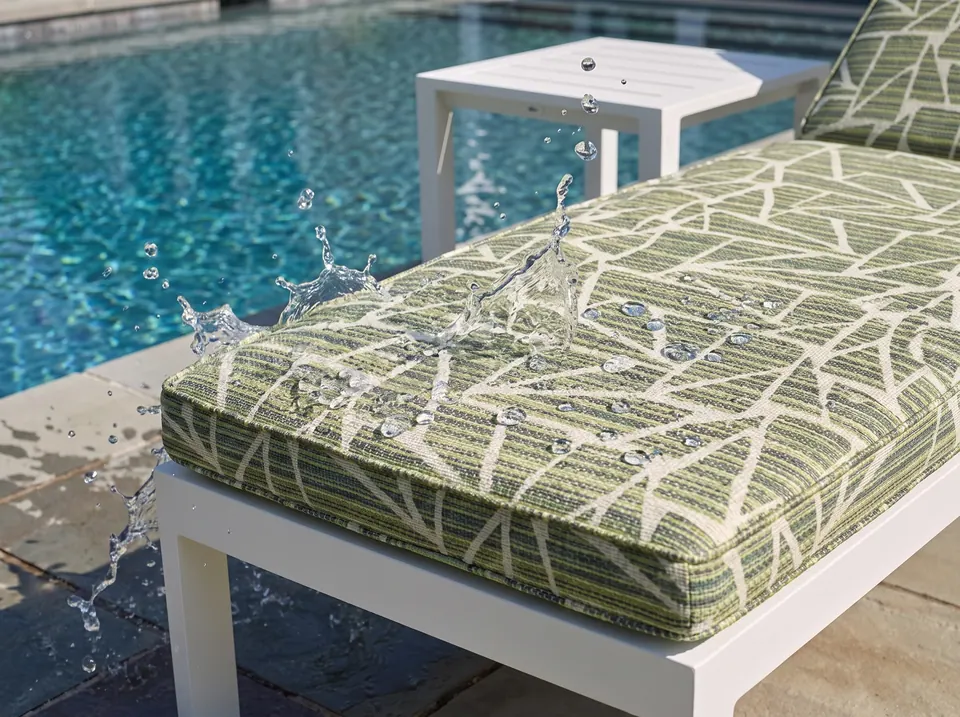
Woven outdoor cover. Sage, olive, lime and white yarns woven into the pattern, not printed on top. Weather-resistant, zippered and removable.
Self piping. Cut from the same weave and run along the long edge, so the pattern carries on past the seam.
Fiber wrap. Polyester fiber (Dacron) batting around the foam: it fills the cover out and softens the edges.
Foam core. About 2.0 lb/ft³ (32 kg/m³) high-resilience foam, firm to medium-firm, cut to the ordered size.
Zipper. Along the back band, as hidden as possible. The zipper side faces down or toward the wall.
Base panel. The underside of the cover. A non-slip fabric backing can cover the whole of it instead.
What a low camera shows that a catalog shot hides
Get your eye down level with the seat and a sunbed cushion starts telling the truth. Standing up, the pattern is sage shapes on white. From down here it is woven: bands of green and lime yarn inside each white-lined shape. Not a print. A weave.
The self piping follows the long edge in the same fabric, so the pattern does not stop at the seam. The backrest is cut from the same weave, so the geometry carries on up the lounger.
Everything else is blurred on purpose. The white aluminum frame, the white side table, the pool and the shingled house with its white columns are shapes, not subjects. They keep your eye on the outdoor acrylic.
Warm, low sun rakes across the top. Judge an outdoor weave in that light, friend, because it is the light the cushion will live in. What light does your patio get at six in the evening?
Pinned by Callum: four points along the lounger
Four points, from the foot of the lounger to the piped long edge.
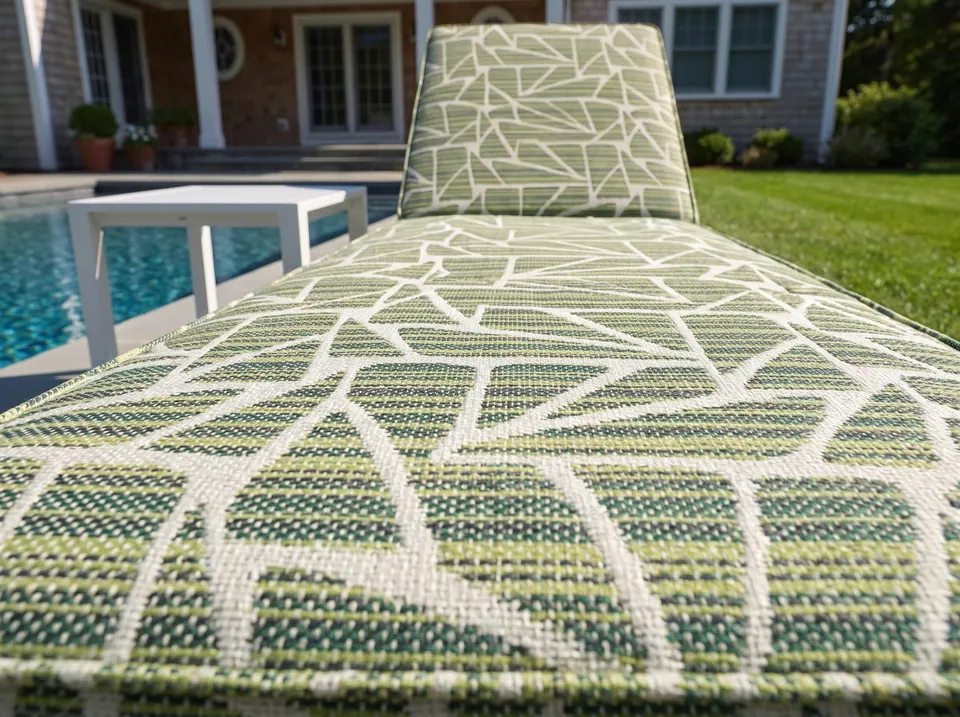
- Woven stripe fill
Each shape is filled with woven stripes of green and lime yarn, not a print.
- Matching backrest
The backrest is cut from the same fabric so the pattern continues.
- White side table
Blurred props keep the fabric the subject.
- Piped long edge
Self piping follows the edge without breaking the pattern.
- Woven stripe fillEach shape is filled with woven stripes of green and lime yarn, not a print.
- Matching backrestThe backrest is cut from the same fabric so the pattern continues.
- White side tableBlurred props keep the fabric the subject.
- Piped long edgeSelf piping follows the edge without breaking the pattern.
Five lines that get an outdoor order right the first time
Name the code
Write the chart code, such as S-18 or M-14, not just the green one. A fabric code matches exactly one cloth.
Ask for the close-up
Request a daylight close-up of that code. A low view like this one shows whether a pattern is woven.
Give every piece its size
Seat and back separately, length x depth x thickness, all in inches or all in centimeters.
Say where the back goes
Name the side the backrest sits on. That line is what a cutter needs most.
Put odd sizes in the note
Pick the closest listed size, then type the exact numbers in the note.
An indigo floor chaise, and the side the back went on
A buyer got in touch with the kind of order I would pin to the wall. A linen floor cushion, 43 x 35 x 12 in (109 x 89 x 30 cm), chaise-longue style, in indigo, with the backrest on the 35 in side. Every number labeled, the backrest's side named, nothing to guess.
It shipped vacuum-packed and arrived flat, and the buyer asked how to bring it back. The answer: unwrap it and give it time, tugging and shaking the pieces to speed the recovery. Twelve inches of foam does not hurry, any more than a tide does.
- Sizes
- 43 x 35 x 12 in (109 x 89 x 30 cm), backrest on the 35 in side
- Fabric
- Linen, indigo
The lesson: Label every dimension and name the backrest side; after delivery, a vacuum-packed cushion needs time and a shake to recover.
Three orders, asked the smart way
- A common question
Can you make custom cushions for a double chaise lounge, seat and back?
The workshop's answerYes. Both pieces are made to your sizes, for example a 51.5 x 35 in (131 x 89 cm) back and a 51.5 x 49 in (131 x 124 cm) seat, in the workshop's weather-resistant outdoor fabrics, ordered through the outdoor listing and its fabric charts.
- A common question
What would an outdoor bench cushion and a matching back cushion cost, separately or as a pair?
The workshop's answerEach piece is priced by its own size and fabric. In outdoor code M-14, one bench cushion was 32 x 84 x 5 in (81 x 213 x 13 cm) and its back cushion 8 x 84 x 4 in (20 x 213 x 10 cm). You can check prices by picking the closest sizes on the listing.
- A common question
Do you make the back cushions too, for an outdoor sofa and two chairs?
The workshop's answerYes. There is a ready listing for bench cushions with backrests, so the seat and back cushions are ordered together in one go.
Before ordering an outdoor cushion, ask for a close-up of the fabric code in daylight. A low, side-lit view shows whether the pattern is woven or printed.
Callum
On the cutting table
| Cushion | Sunbed seat with matching backrest |
|---|---|
| Fabric | Woven outdoor acrylic in sage, olive, lime and white |
| Chart code | S-18 |
| Piping | Self piping on the long edge |
| Edge | Box edge |
| To send | The fabric code, each piece's size, the backrest side |
| Best for | Patio and poolside loungers |
Have it made
Have this made — ask Callum’s workshop
Tell them where it lives. Porch, deck or boat: the weather picks the fabric and the foam before anyone else does. — Callum
Leave your details and the workshop will call you to confirm measurements, fabric, foam and piping. No prices, dates or payment on this page: it is a request, not an order.
Questions buyers ask next
What is a fabric code, and why quote it in every message?
It is the chart number for one exact fabric and color, such as S-18. Names like sage or the green one can match several cloths; a code matches one, so quote it in every message and order note.
How can I tell whether an outdoor pattern is woven or printed?
Ask for a close-up in low side light. A woven pattern shows separate colored yarns inside each shape, the way the green and lime bands show on this lounger cushion from seat height.
Should a sunbed seat and its backrest be ordered together?
Yes, when you can. Ordering both through one listing keeps the fabric code and piping matched, and lets you give each piece its own size and thickness in the same note.
Fair winds — Callum
More photographs to read
 Save
 Save
 Save
 Save
 Save
 Save