A Reading by NateBench Cushions
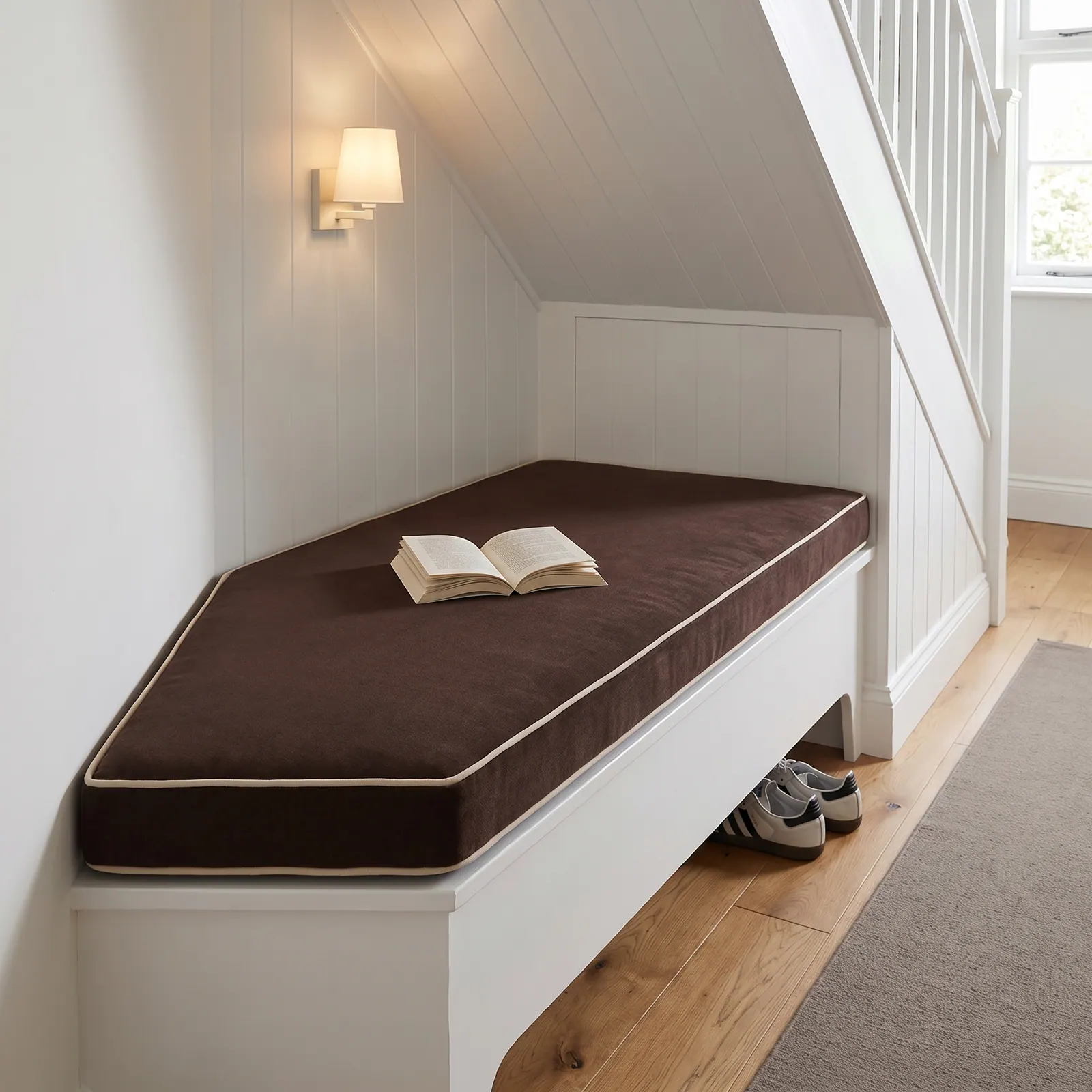
A chocolate linen-look cushion with one angled end, on an understairs reading bench
Nate writes a letter about the ten-foot view: what reads from the hallway, what only shows up close, and how an angled end gets measured so both look right.

 Save
The quick answer
For an understairs bench, order a box cushion with one angled end that follows the joinery, and send a drawing marking which end is angled and by how much. From ten feet away you read the color block and the piping line; up close you read whether the angle matches the wood. A dark linen-look hides hallway scuffs.
Detroit ·
Partner,
A letter from the hallway: the cushion at 10 feet and at 2
From the front door, this cushion is a chocolate rectangle with a white line around it. Walk closer and it becomes a trapezoid, one slanted end tucked under the stair. The job is to get both views right.
At ten feet you read two things: the color block and the piping line. Chocolate brown on white tongue-and-groove is a strong silhouette, and the ivory welt traces the shape so the eye understands it before you do. That is why the piping echoes the paneling and the warm lampshade. It ties cushion to wall.
At two feet you read the joinery. The angled end must follow the bench, not stop square and leave a triangle of bare wood. Nobody notices a good angle. Everyone notices a bad one, usually from the doormat.
The rest of the scene is function. One wall sconce turns a dead corner into a reading nook. The open paperback says the seat is for sitting. The sneakers underneath say it is also for shoes, which is why a dark linen-look fabric is the right call in a hallway. The gray runner and oak floor keep the palette quiet so the brown can carry it.
Pinned by Nate: 5 details from the doormat to the sconce
Five pins, top to bottom: the sconce, the open book, the angled end, the ivory piping and the sneakers underneath.
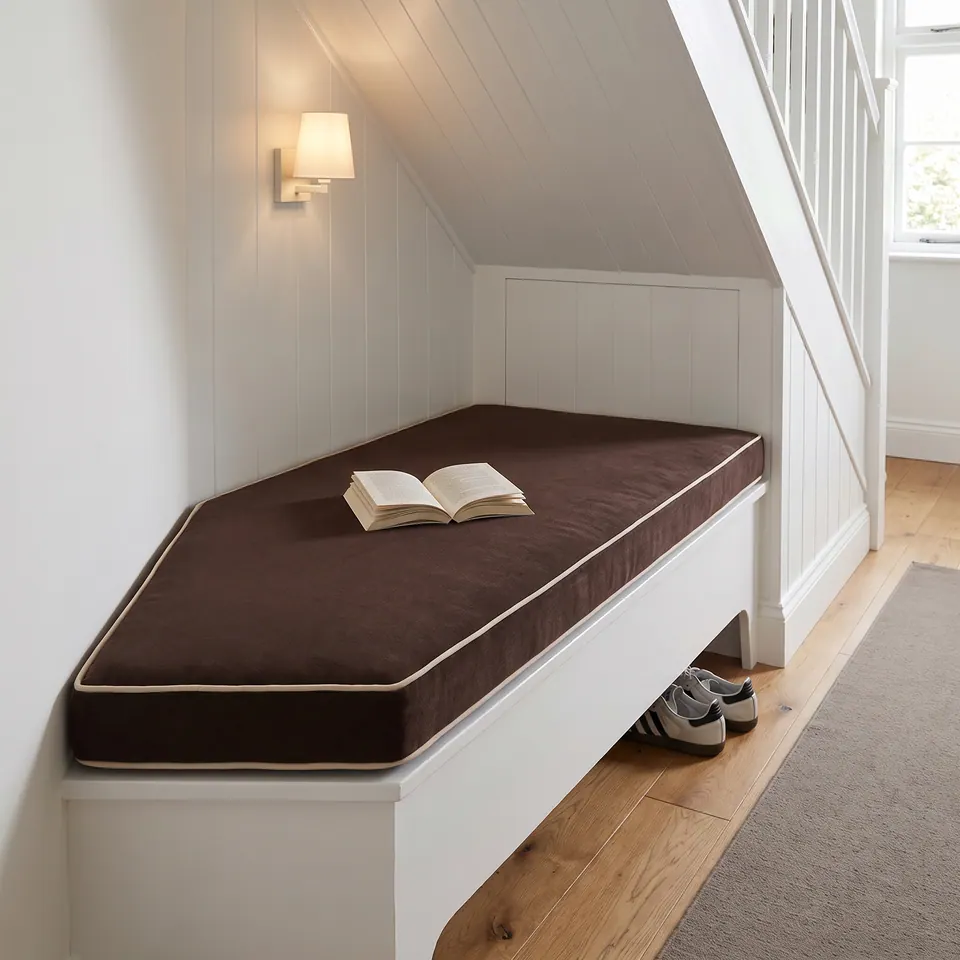
- Wall sconce
One lamp turns a dead corner into a reading spot.
- Open book
Shows the bench is for sitting, not just for shoes.
- Angled end
The cushion's slanted end follows the bench instead of stopping square.
- Ivory piping
Echoes the white paneling and the warm lampshade.
- Trainers below
A hallway seat also gets used for putting shoes on, so a dark color helps.
- Wall sconceOne lamp turns a dead corner into a reading spot.
- Open bookShows the bench is for sitting, not just for shoes.
- Angled endThe cushion's slanted end follows the bench instead of stopping square.
- Ivory pipingEchoes the white paneling and the warm lampshade.
- Trainers belowA hallway seat also gets used for putting shoes on, so a dark color helps.
Measuring the slanted end, close up
Angles are just lengths in disguise. You do not need a protractor for this bench; you need four numbers and a sketch.
- Back length, along the wall.
- Front length, along the seat edge.
- Depth, front to back, at the square end.
- The slanted edge itself, corner to corner.
Draw the bench from above, mark which end is angled, and write each number on its edge in inches. The difference between back and front length is your angle, already measured. The trapezoid cushion measurements pattern and the trapezoid cushion calculator turn those four into a cut list. More stair-side builds live in understairs bench cushions and the bench cushion atlas.
What does your bench measure along its back edge?
Four matching seats, one mock-up photo
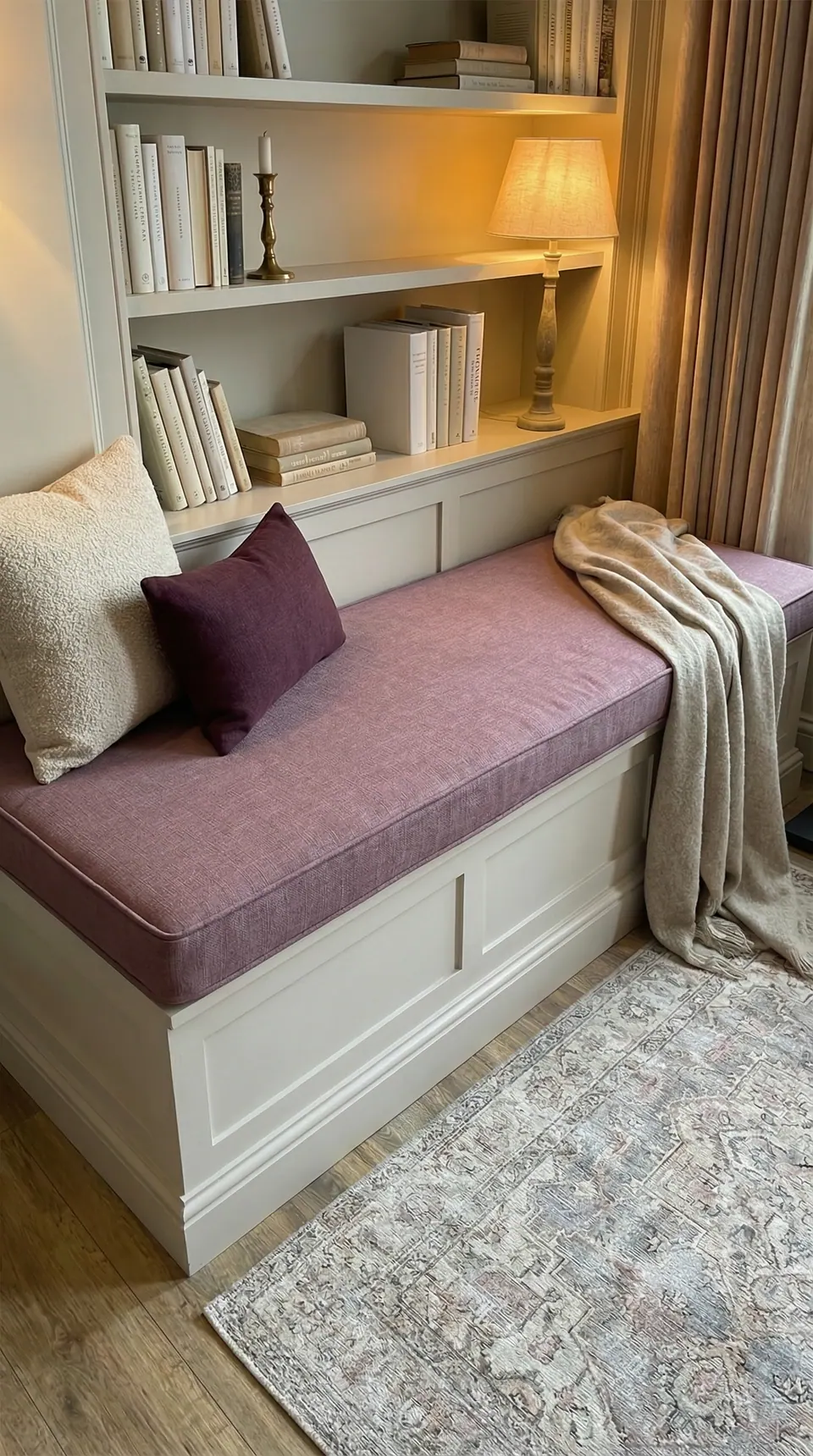
One buyer wrote in wanting four matching bench cushions, each 47 1/4 x 15 3/4 in (120 x 40 cm), in beige linen with bordeaux piping. Four pieces in a row is a ten-foot problem: at that distance you see the repeat of the piping lines before anything else.
So before anyone cut, the workshop sent a sample picture of that exact fabric-and-piping combination. The buyer saw the beige and the bordeaux together and said yes. When the checkout would not accept a quantity of four, the workshop fixed the listing's stock so the set could go through as one order.
One mock-up costs less than four remakes.
- Sizes
- Four cushions, 47 1/4 x 15 3/4 in (120 x 40 cm) each
The lesson: Send a mock-up photo of the fabric and piping combination before a multi-piece order.
Buyer questions: end backrests, firm tufting and the name of that edge strip
- A common question
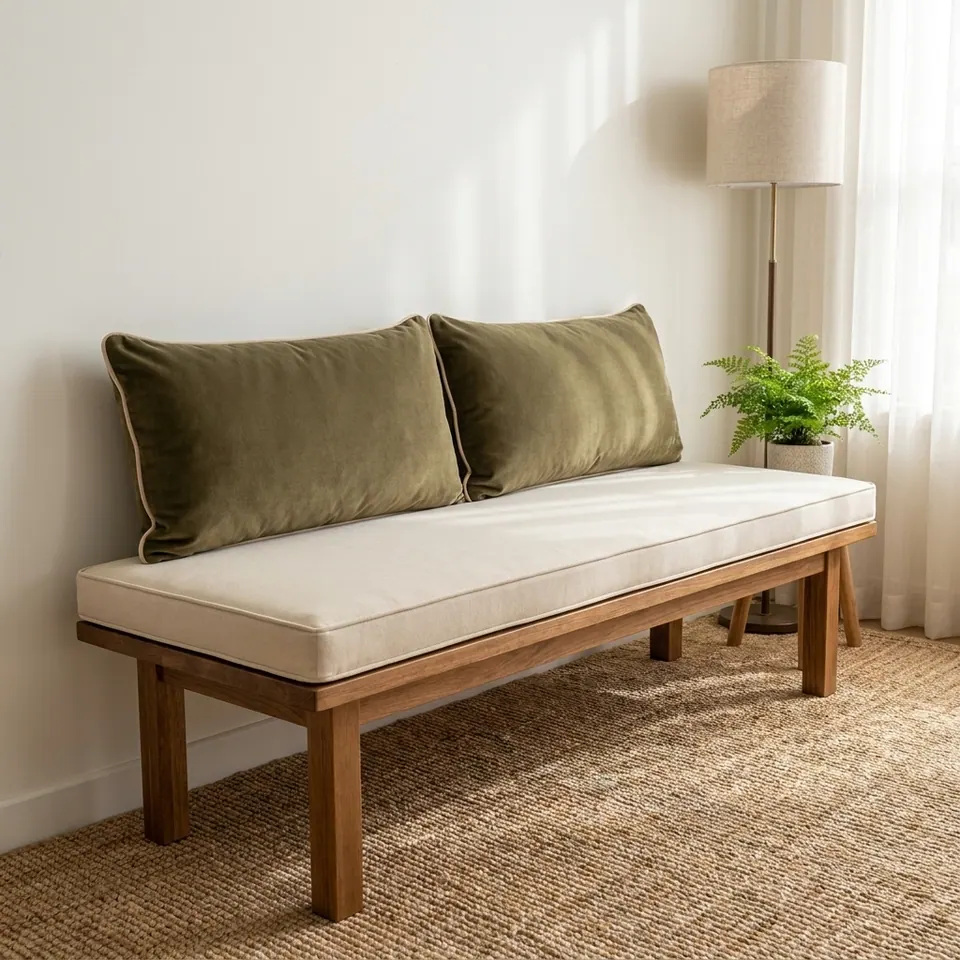
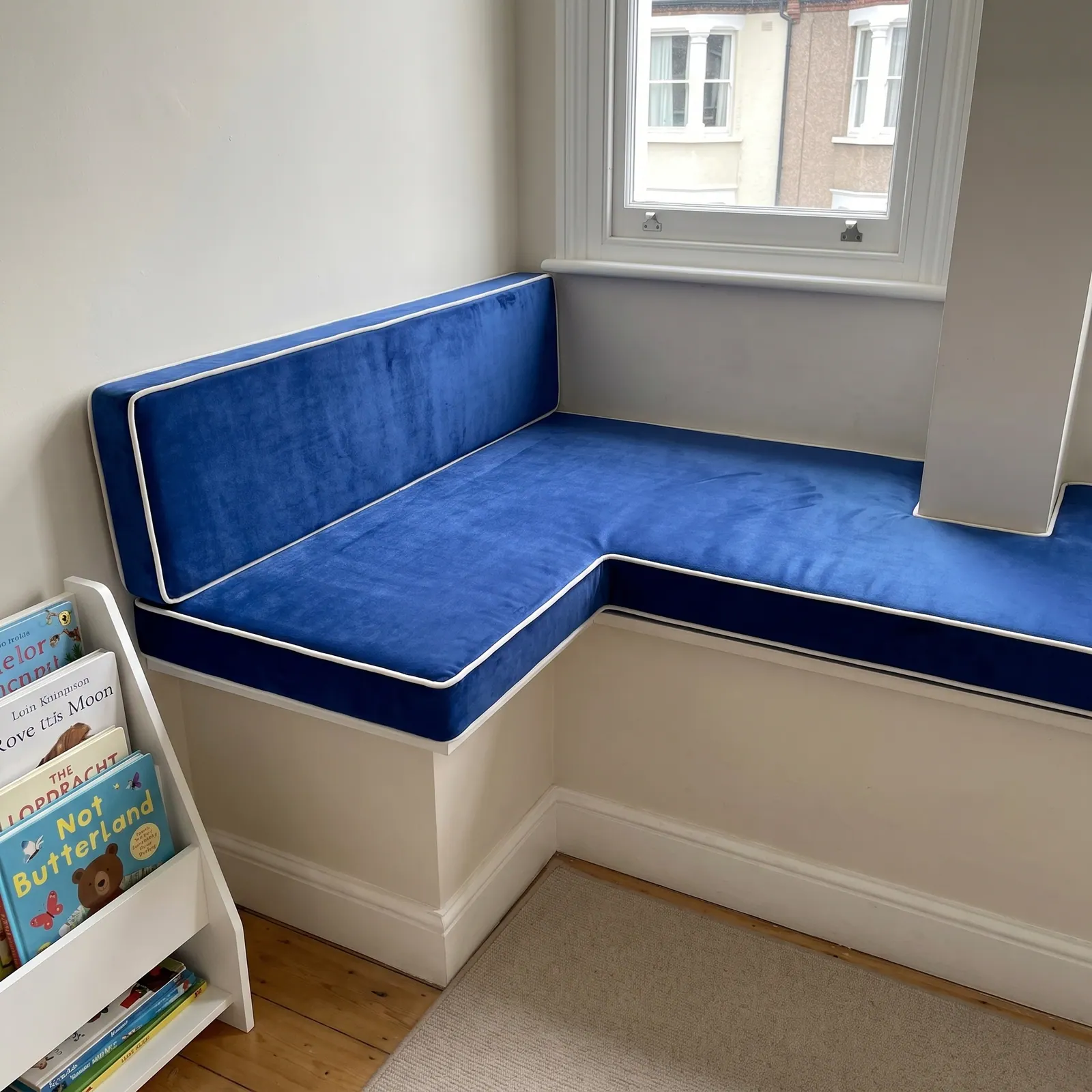
My bench sits between two walls. Could I get two short backrest pillows for the ends instead of one full-length backrest?
The workshop's answerYes. Write it in the personalization note: two backrest pillows, each 25 in wide (or your width), placed against the walls at both ends. Standard backrest pillows are about 15.75 in (40 cm) tall.
- A common question
How firm are the tufted cushions, and could one be 6 in thick to use as a headboard?
The workshop's answerThey are densely filled, so they feel firm but comfortable. Standard thickness is about 4 in (10 cm), and 6 in (15 cm) is possible; one buyer asked for a 52 3/4 x 20 in (134 x 51 cm) headboard cushion at that depth.
- A common question
What's the little strip that runs around the edge of the cushion called?
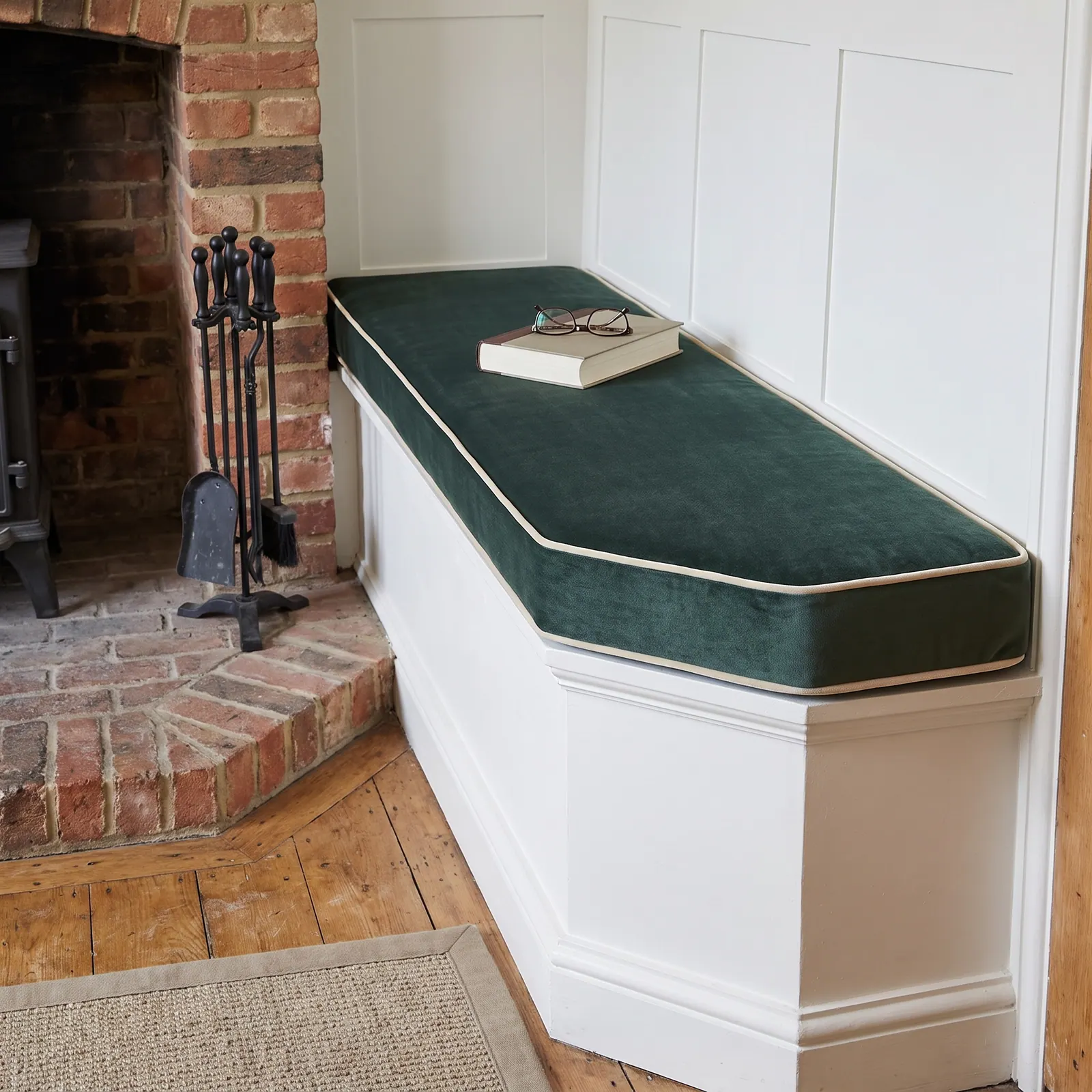
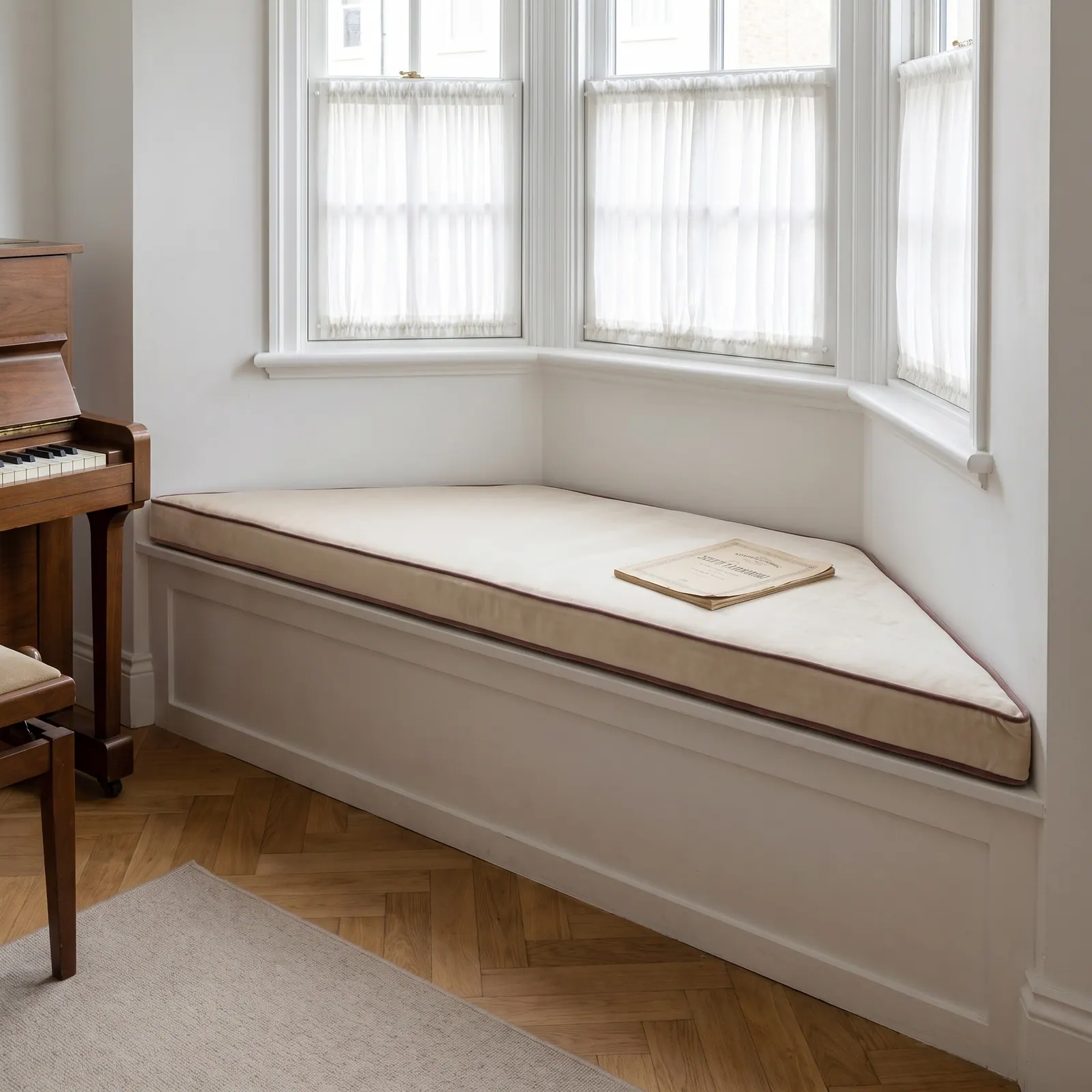
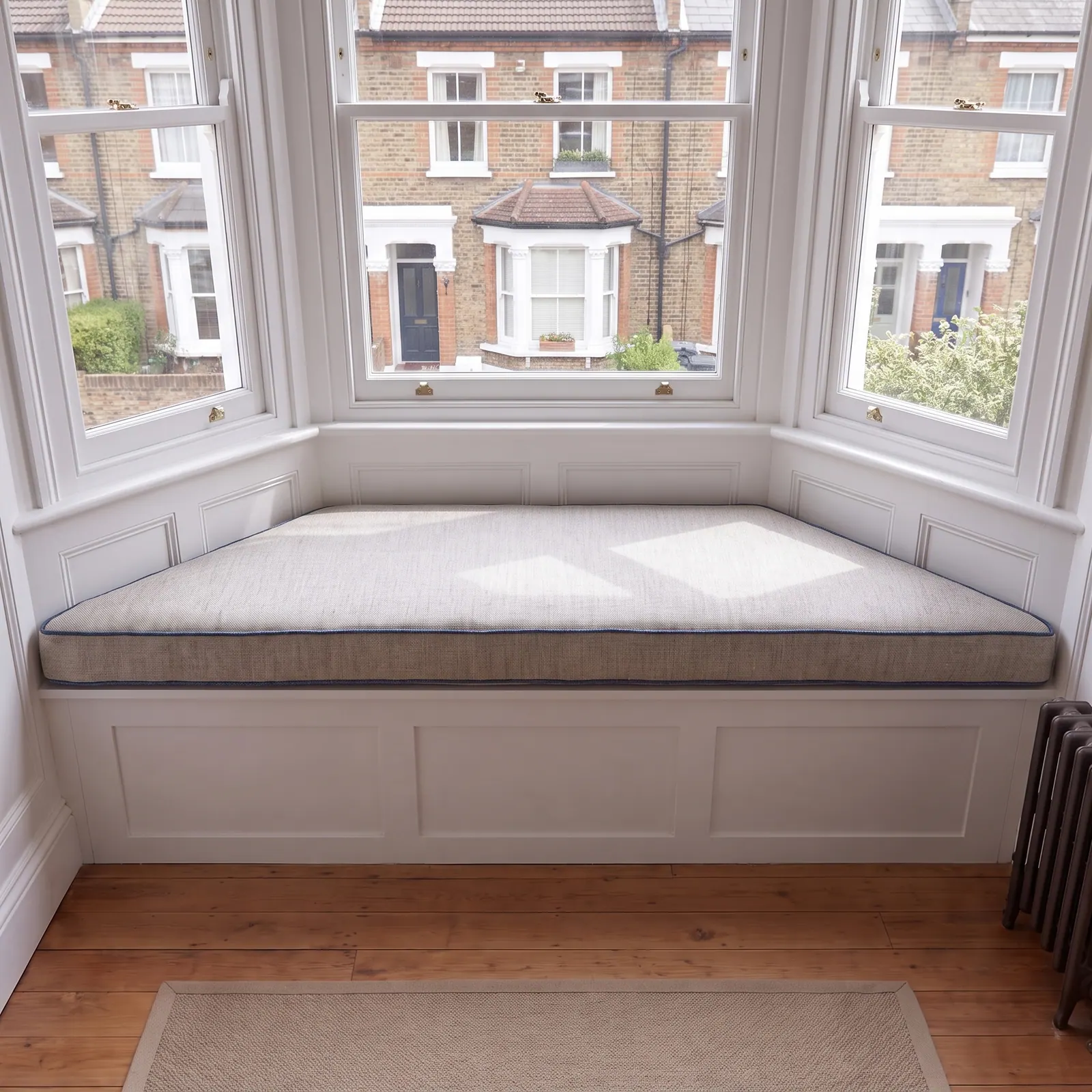
The workshop's answerThat is piping: a cord covered in fabric that runs along the seams. It can match the cushion or contrast with it, for example black piping on a light linen trapezoid cushion.
On the cutting table: the understairs reading bench
| Cushion | Box cushion with one angled end, following the bench joinery |
|---|---|
| Shape | Trapezoid: front and back lengths differ |
| Fabric | Chocolate brown linen-look |
| Piping | Contrast ivory, matching the paneling and lampshade |
| Edge | Box edge |
| Setting | White tongue-and-groove bench under the stairs, oak floor |
| Lighting | One wall sconce with a white shade |
| Numbers to send | Back length, front length, depth, slanted edge, plus a sketch |
| Best for | Hallway reading spots that double as a place to put on shoes |

Have it made
Have this made — ask Nate’s workshop
Precision starts on the phone. Give the workshop your measurements and they will read them back to you, edge by edge. — Nate
Leave your details and the workshop will call you to confirm measurements, fabric, foam and piping. No prices, dates or payment on this page: it is a request, not an order.
An understairs bench cushion is judged twice: from ten feet by its color and piping line, from two feet by whether the angled end matches the wood.
Nate
Questions buyers ask next
What is a trapezoid bench cushion?
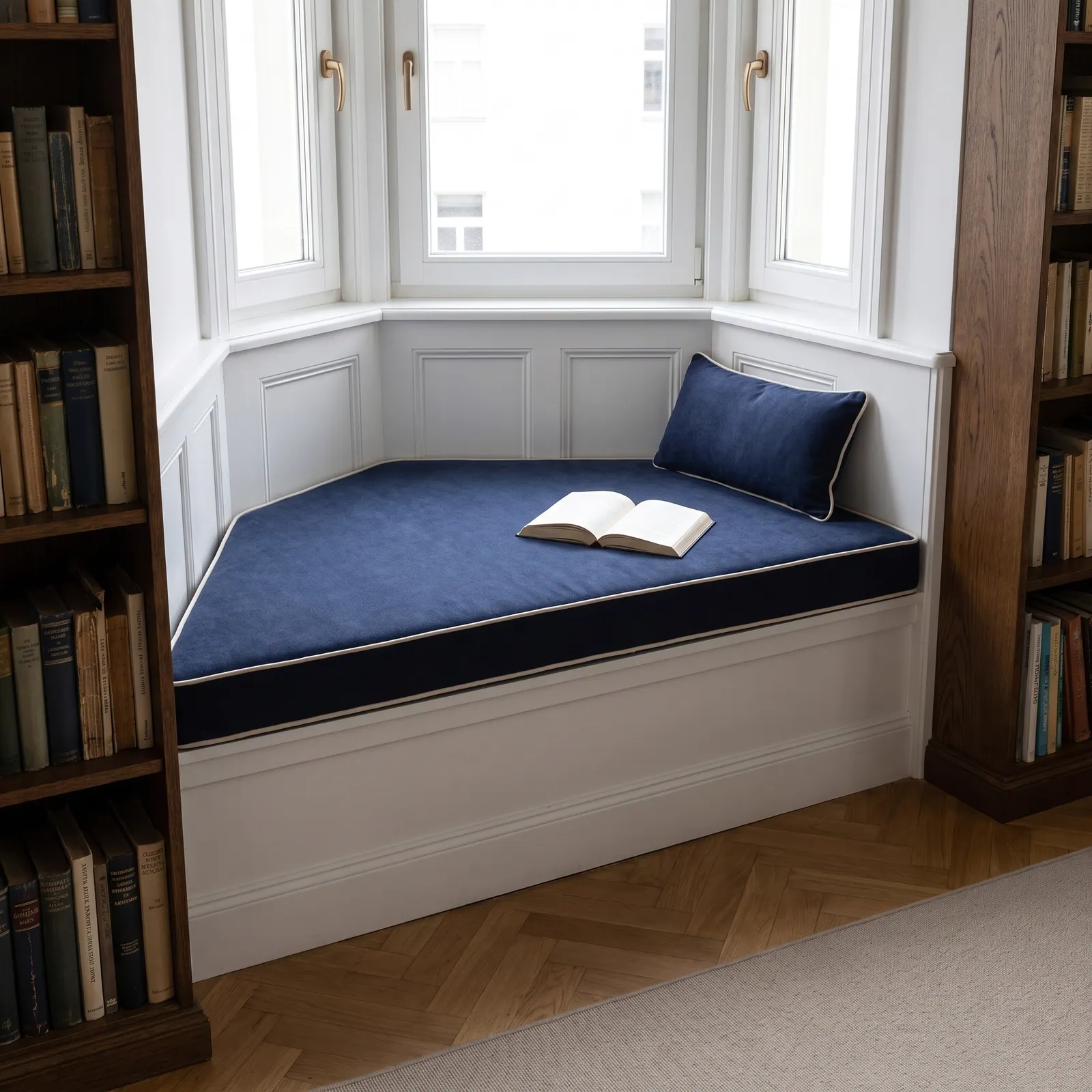
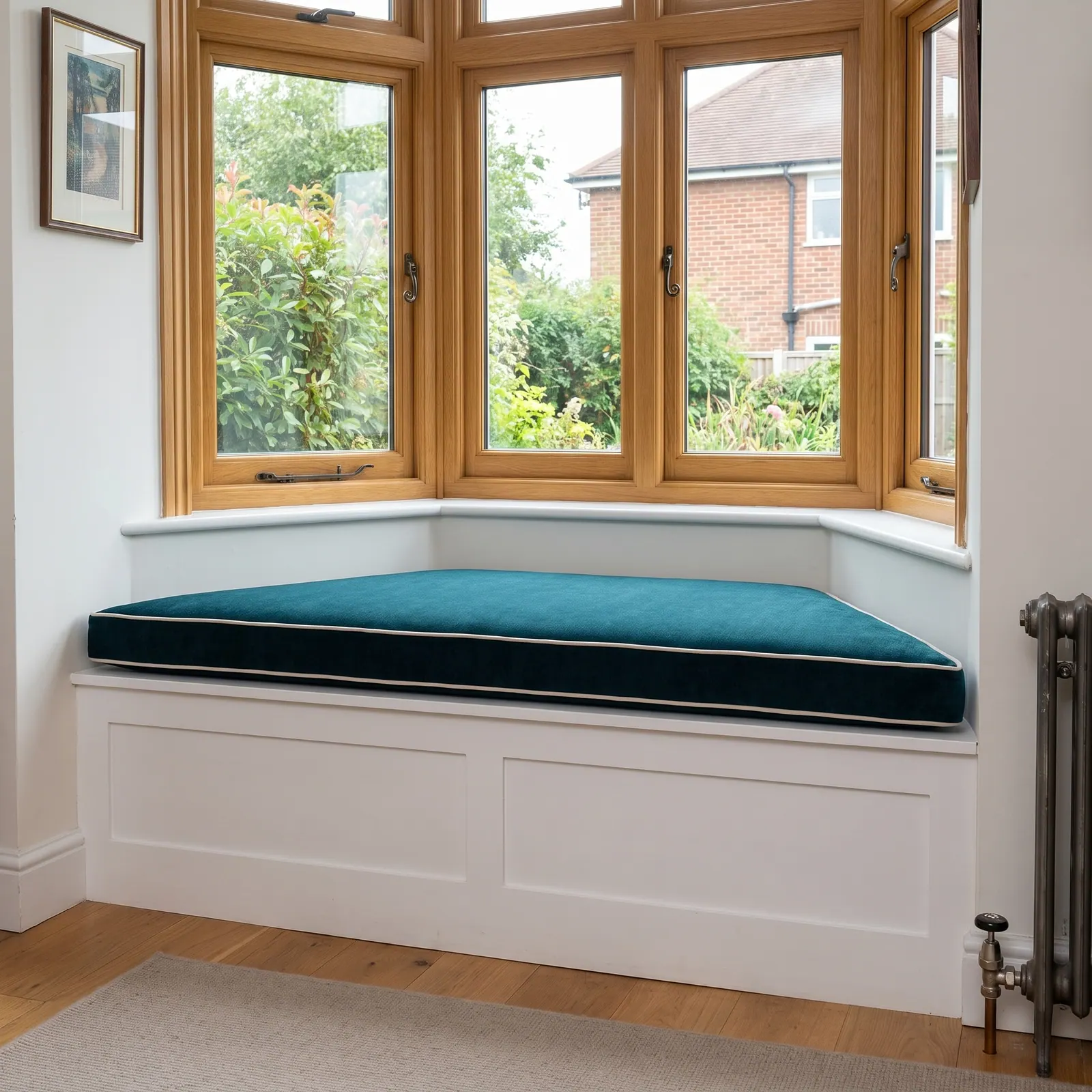
A cushion whose front and back edges are different lengths because one or both ends are angled. It suits benches that meet a stair, a bay wall or a slanted cabinet, and it is ordered from a drawing, edge by edge.
What bench cushion color hides hallway scuffs?
A deep shade such as chocolate brown. A hallway seat gets sat on to lace sneakers, so a darker linen-look forgives marks, while light piping keeps the outline readable from the front door.
Should cushion piping match the cushion or the room?
Either can work; decide what you want to read from across the room. Here ivory piping matches the white paneling and the lampshade, which ties a dark cushion to a pale wall.
± 1/4 in — Nate
More photographs to read
 Save
 Save
 Save
 Save
 Save
 Save