A Reading by MaggieBench Cushions
A burgundy bouclé custom bench cushion with forest green piping, and how to style around it
Maggie's notebook on a wine-colored hallway bench: why the photo has almost nothing on it, what to add if your hall needs more, and where the piping color should come from.

 Save
The quick answer
Forest green piping suits a burgundy bouclé bench cushion because the two colors are near-complements of equal depth: the welt outlines the box without the jolt a cream cord would give. Take the piping color from a rug or wallpaper already in the hall, and keep any props few, low and in the same dark, warm value.
Notebook: a bench with nothing on it
The best-styled bench in this batch of photos has no pillows at all. Right, then, let us see why.
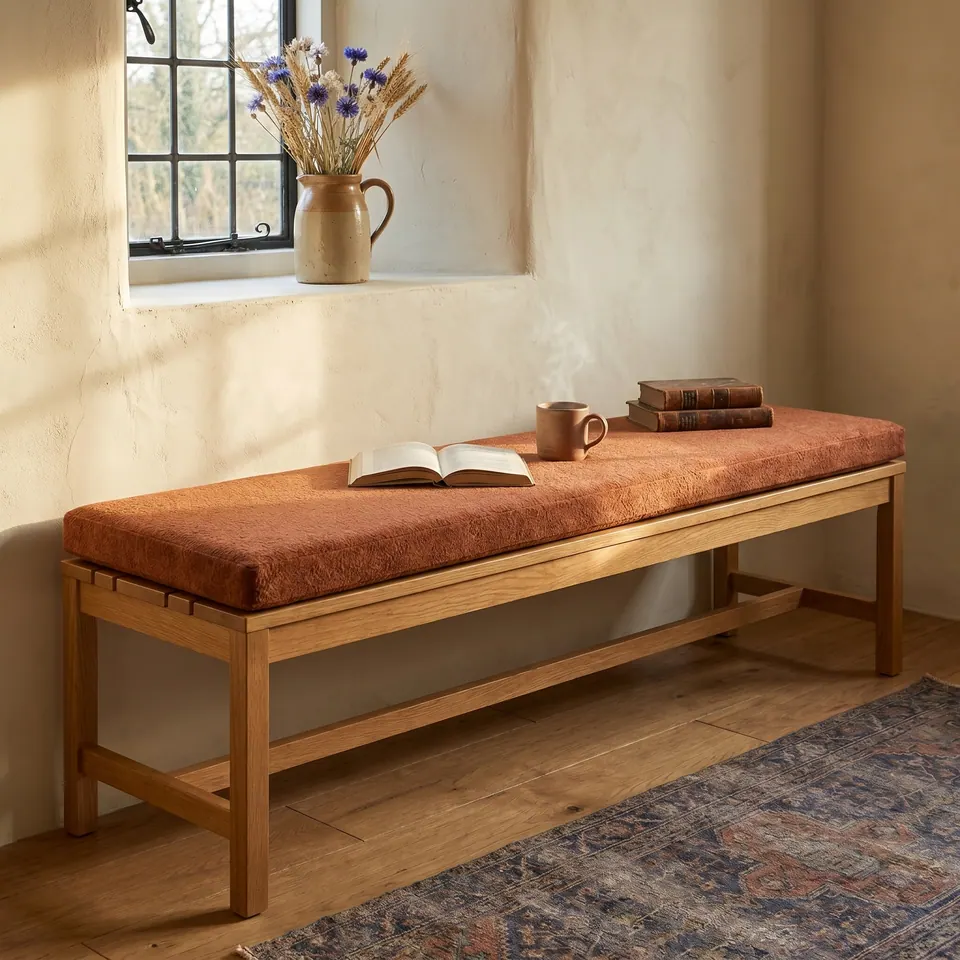
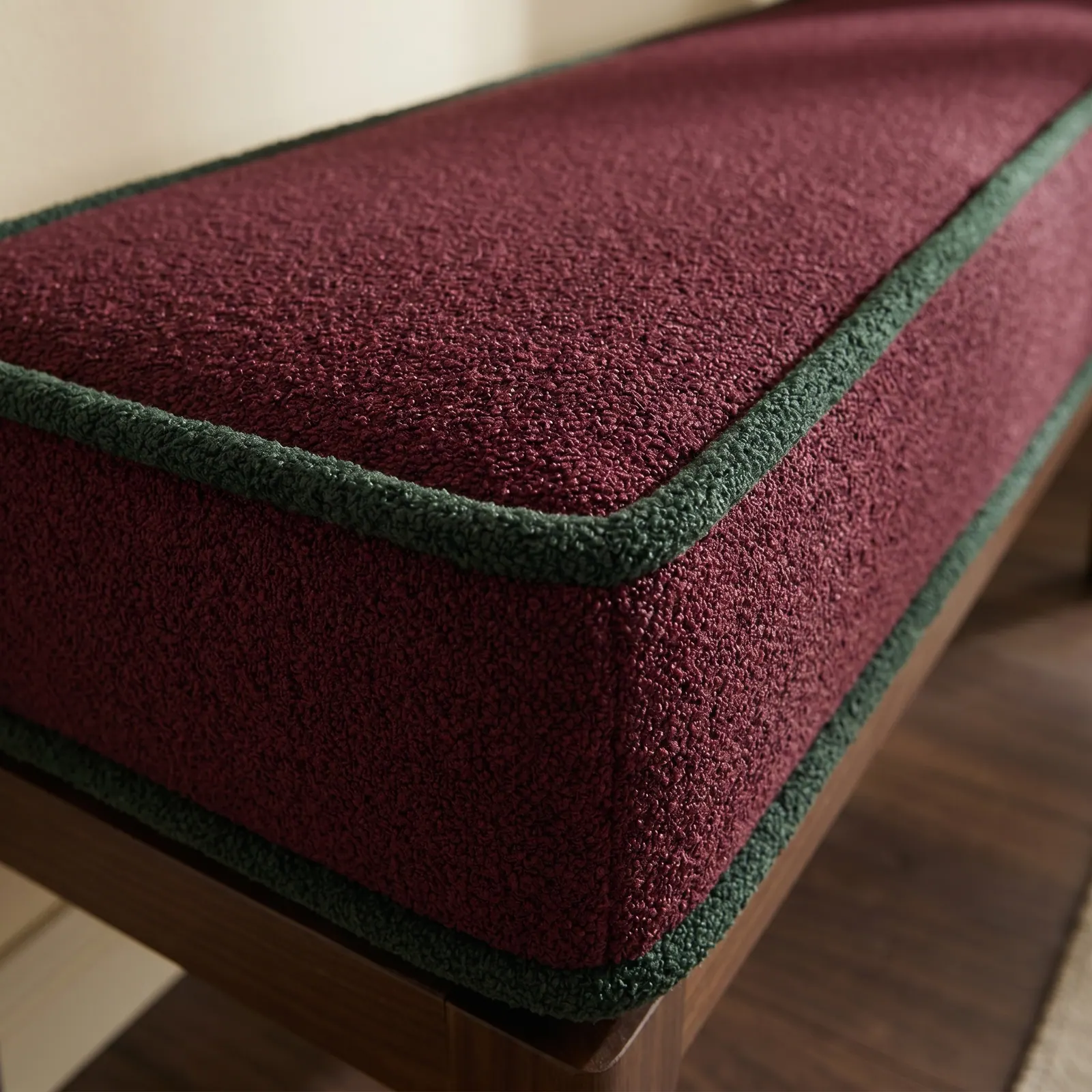
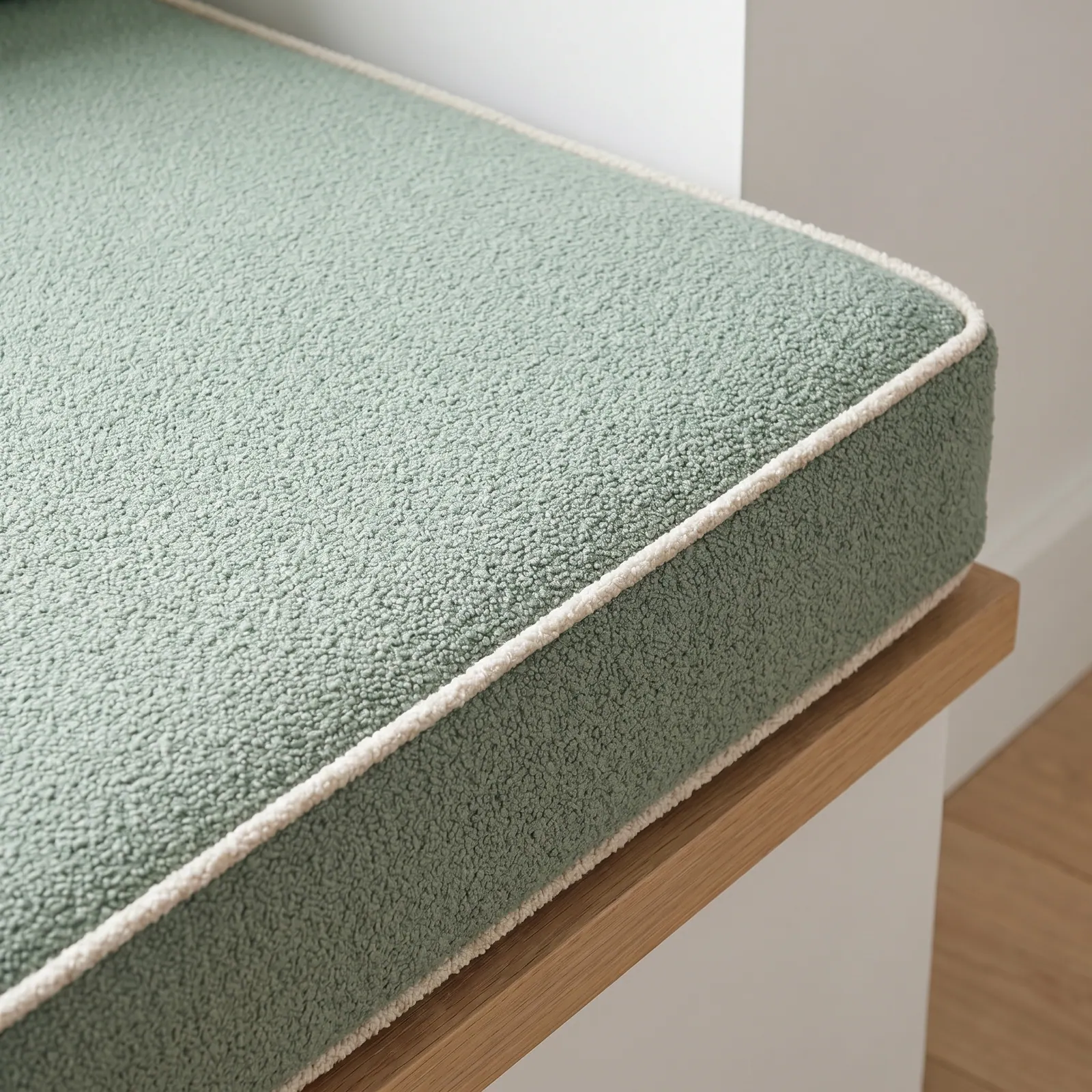
The custom bench cushion is a flecked wine bouclé, boxed, with a forest green welt on both the top and bottom edges. At the front corner the welt turns a crisp square, which tells you the cover was cut and sewn to the foam, not wrapped around it. The lower welt lands right on the walnut rail and draws a clean line between cloth and wood.
The props, such as they are: a walnut frame, dark oak boards, and warm low lamp light. That is the styling. Wine, green, walnut and oak all sit at the same low value, so the bench reads as one piece of furniture instead of a cushion perched on a stand. The flecks in the bouclé catch the lamp and hide the scuffs a daily hall bench collects.
Why green and not cream? Burgundy and forest green are near-complements of equal depth. The welt outlines the box without shouting. A cream cord would draw a chalk line around it, and I have made that cushion, and I have regretted it.
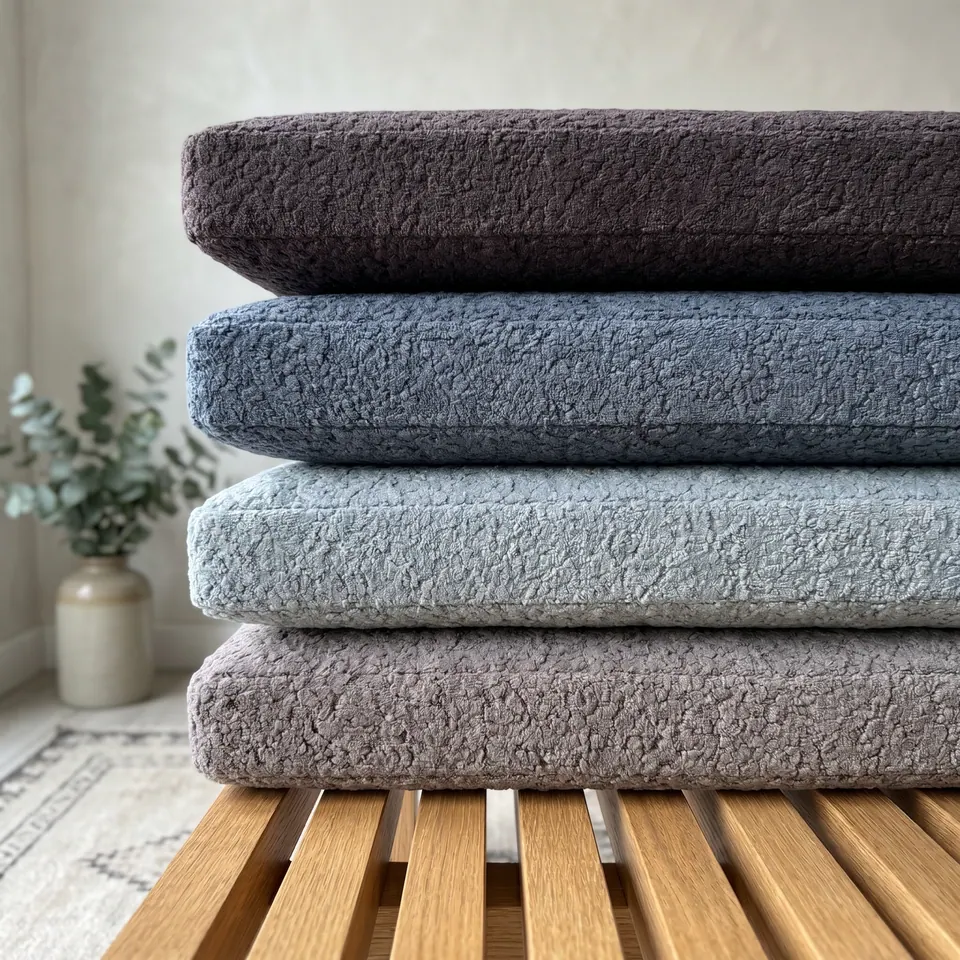
Both colors are the same bouclé, codes T80 and T70, so the texture runs unbroken and only the color changes at the seam. Browse the bouclé and teddy shelf with that in mind, and see more hall seats under mudroom and entryway bench cushions. Where does the green in your hall already live: rug, wallpaper or front door?
If your hall needs props: five picks for a bouclé bench
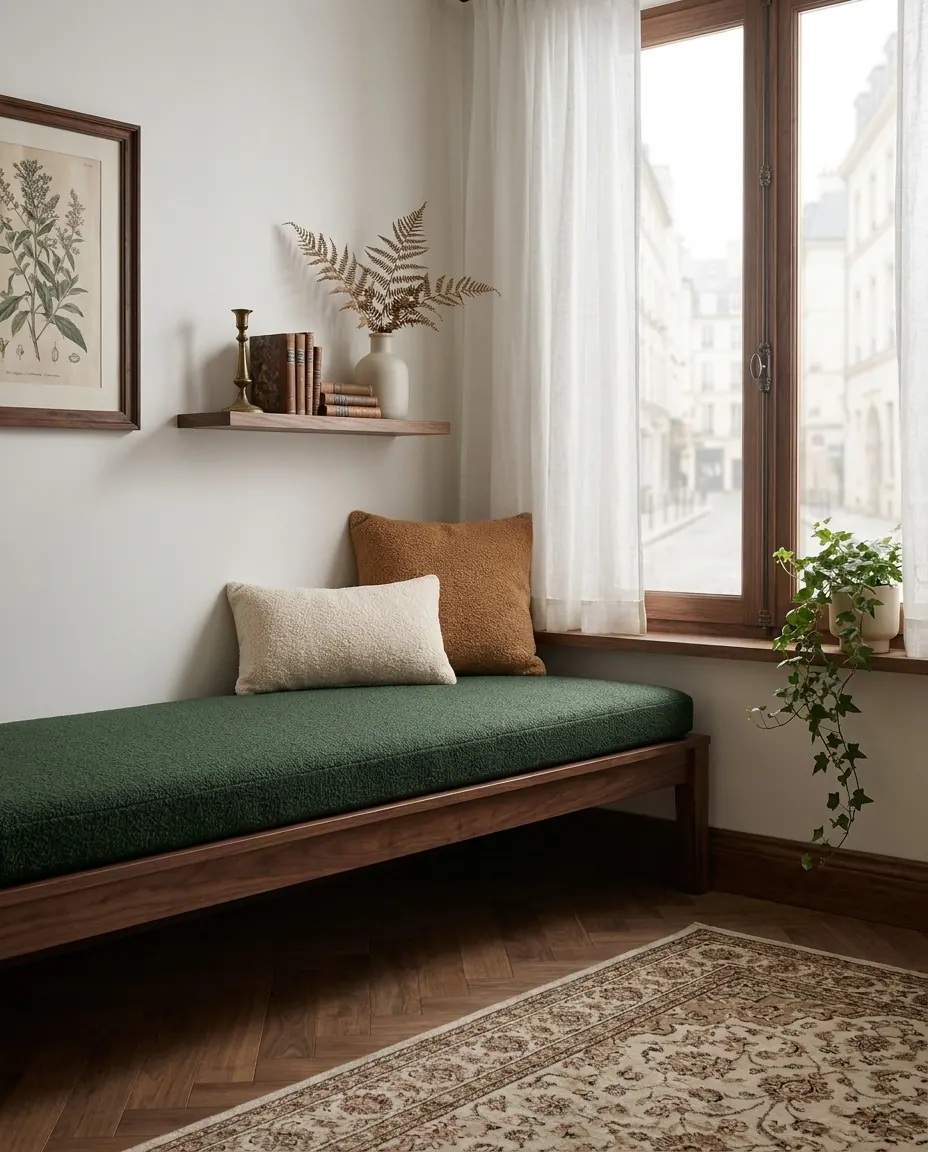
Copy the restraint first. Then, if the bench looks lonely, add from this list and stop at two.
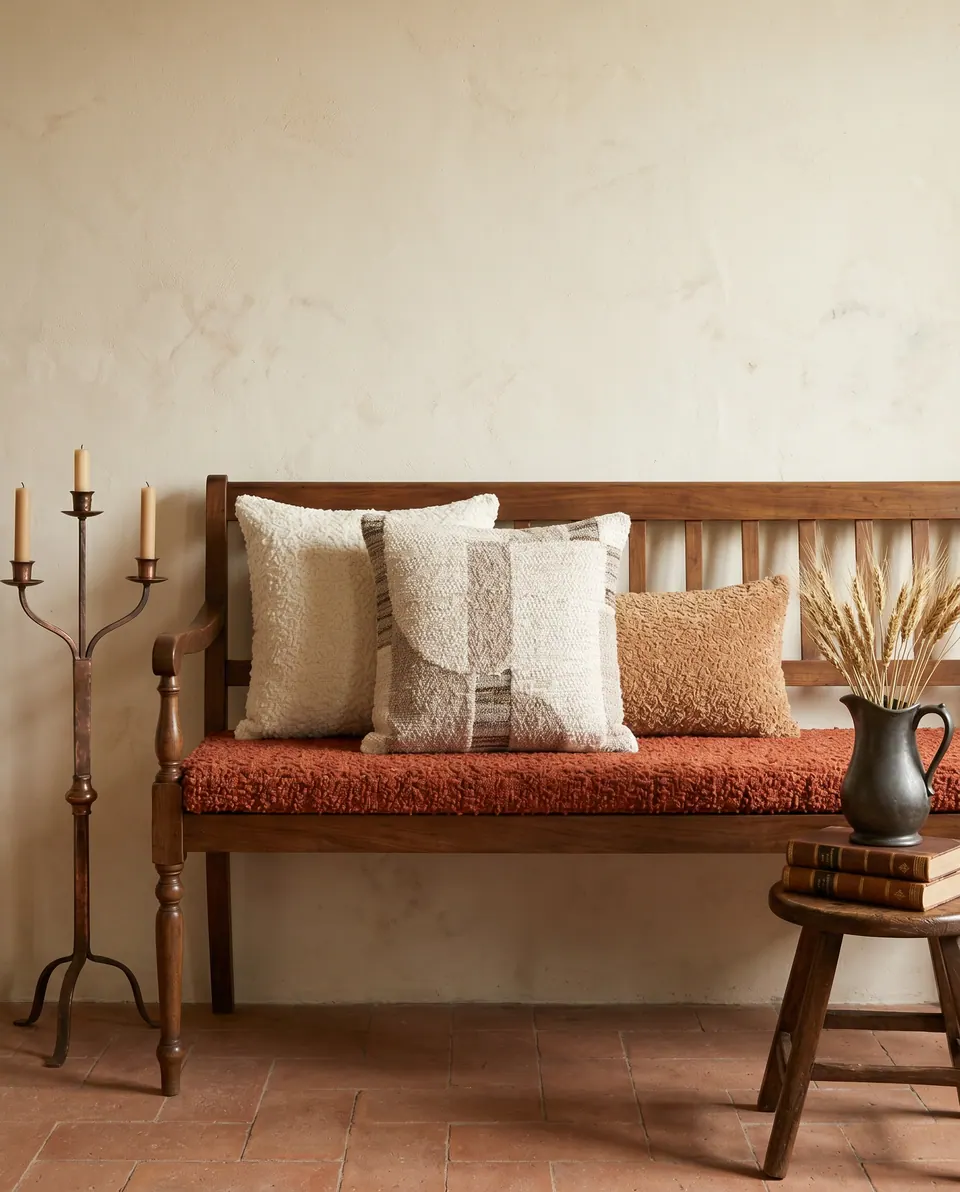
- One lumbar pillow in the piping color, so the welt has an echo.
- A rug carrying both wine and green; take the piping from the rug, never from the chart.
- A low lamp instead of an overhead light; warm, low light gives bouclé its depth.
- A basket under the bench for shoes and bags, so nothing is dumped on the seat.
- Nothing cream on the cushion. A pale pillow would do exactly what a cream welt would: jolt.
Pinned by Maggie: four notes on one corner
The pins run from the crisp piped corner across the wine top to the side welt and the lower welt resting on walnut.
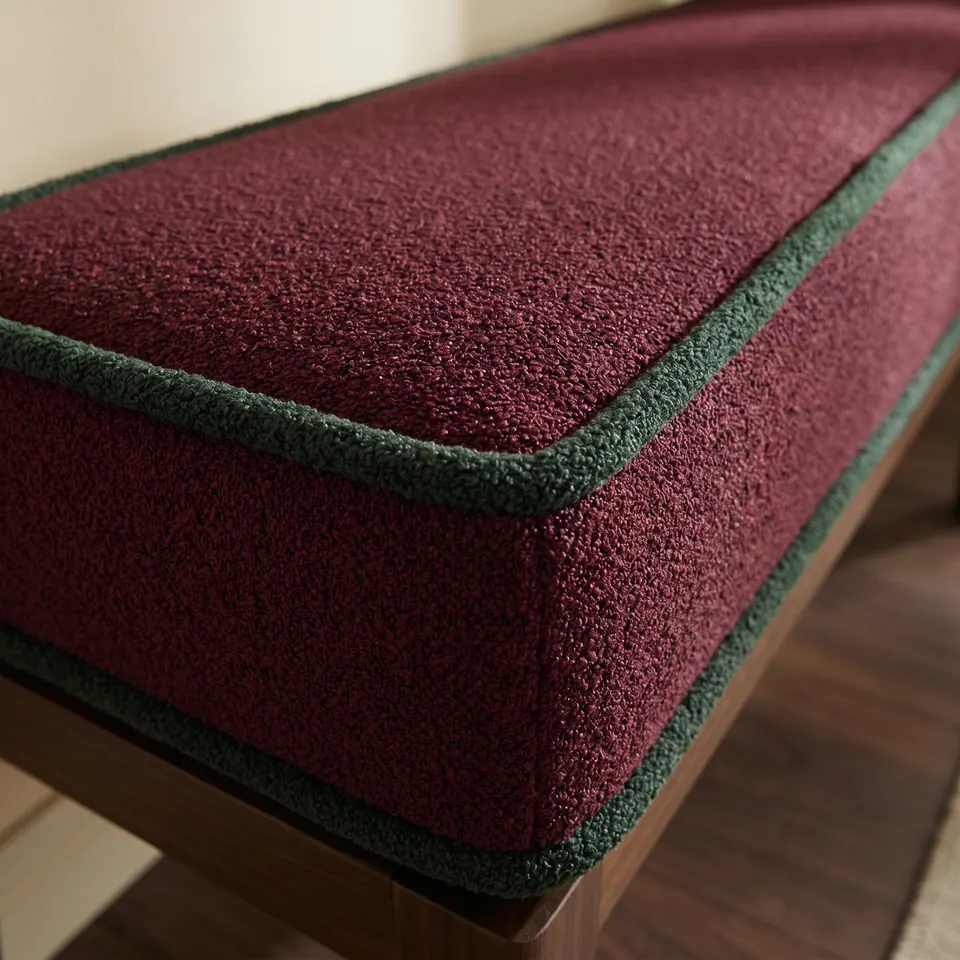
- Crisp piped corner
The green welt turning a square corner shows the cover is cut and sewn to the foam, not wrapped around it.
- Burgundy bouclé top
A flecked wine bouclé hides everyday wear on a bench that is sat on daily.
- Green welt on the side
The same contrast welt on top and bottom edges frames the cushion evenly.
- Lower welt on walnut
The lower welt sits right on the walnut rail, drawing a line between fabric and wood.
- Crisp piped cornerThe green welt turning a square corner shows the cover is cut and sewn to the foam, not wrapped around it.
- Burgundy bouclé topA flecked wine bouclé hides everyday wear on a bench that is sat on daily.
- Green welt on the sideThe same contrast welt on top and bottom edges frames the cushion evenly.
- Lower welt on walnutThe lower welt sits right on the walnut rail, drawing a line between fabric and wood.
Sixty-two inches or eighty-two
A buyer in the US ordered a window bench cushion and paid for it. Then they went back to their own handwritten notes and found the problem: the bench needed 18 x 82 in (46 x 208 cm), not 62 in (157 cm). Handwritten sixes and eights are old enemies.
They told the workshop at once, and there was still time to put it right. The cushion was made at 82 in, and the workshop sent a second link to cover the longer size.
Measure the bench itself, and read your own notes twice. The bench measuring pattern has a form worth printing.
- Sizes
- 18 x 82 in (46 x 208 cm), first written as 62 in
The lesson: Double-check handwritten measurements before paying, and report a mistake at once while it can still be fixed.
On the cutting table: wine and forest
| Piece | Box-edge bench cushion |
|---|---|
| Fabric | Bouclé in burgundy and forest green, codes T80 and T70 |
| Piping | Forest green welt, top and bottom edges |
| Corners | Square, piped, cut and sewn to the foam |
| Bench | Walnut frame on dark oak boards |
| Light | Warm, low lamp light |
| Piping rule | Take the color from the rug or wallpaper |
| Best for | Hallways, entry benches and library corners |

Have it made
Have this made — ask Maggie’s workshop
I once cut a lovely cushion two inches short, and I have not forgotten it. That is why the workshop goes over your measurements with you on the phone. — Maggie
Leave your details and the workshop will call you to confirm measurements, fabric, foam and piping. No prices, dates or payment on this page: it is a request, not an order.
Buyer questions: backs, L-shapes and olive gone brown
- A common question
Can the same cushion work for the seat and the back, and how should I size the back one?
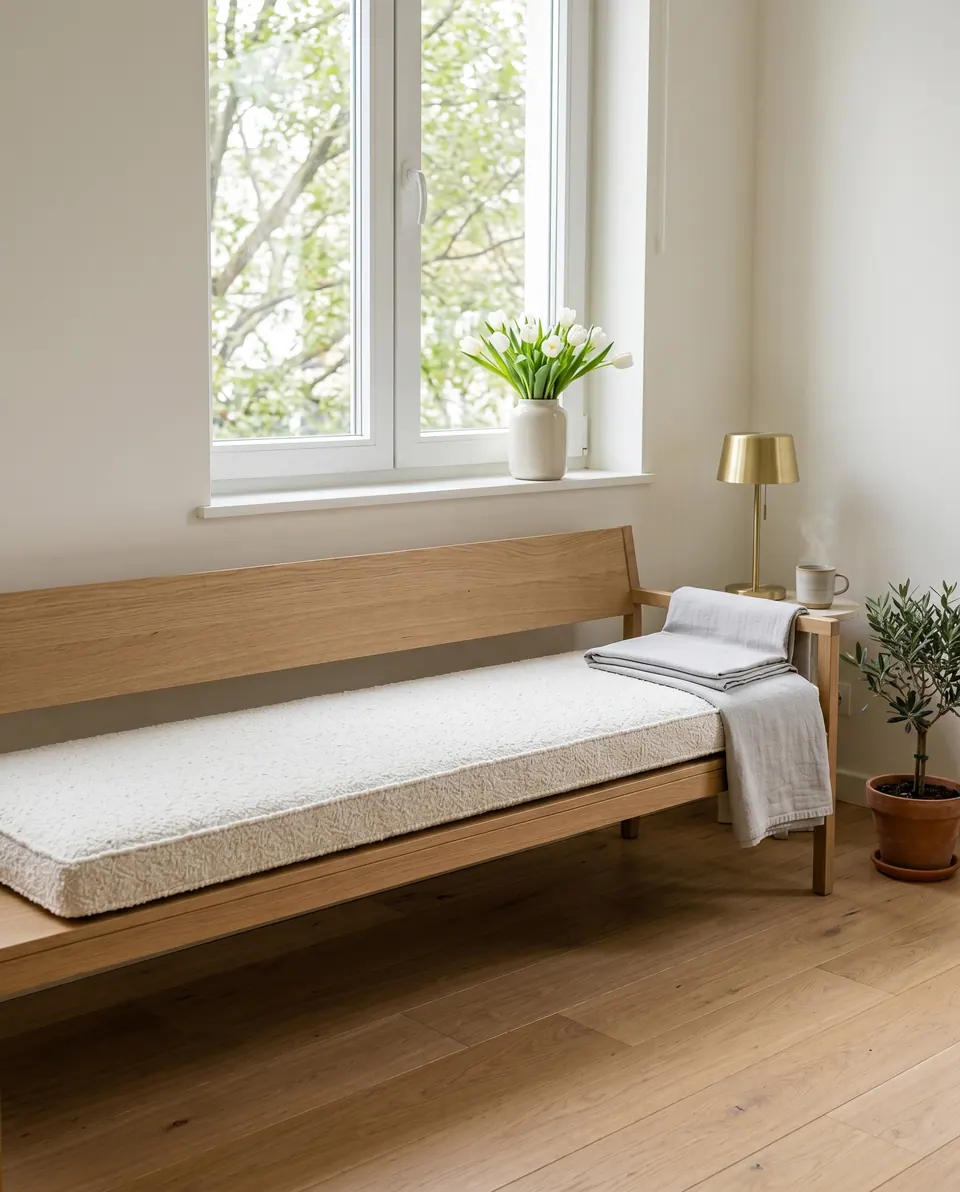
The workshop's answerYes, many buyers order both. Back cushions are usually a little thinner and narrower than the seat, so they stand upright without eating seat depth. If the back rests on the seat cushion, subtract the seat's thickness: a 21 in (53 cm) frame with a 4 in (10 cm) seat takes a 17 in (43 cm) back. Seat and back can be separate or joined to fold.
- A common question
Is an L-shaped bench cushion made as one piece or two?
The workshop's answerTwo, meeting at the corner for a clean fit. Send the outside and inside dimensions, for example an outside L of 90 x 55 in (229 x 140 cm) with an inside L of 72.75 x 39 in (185 x 99 cm), or each piece's length and depth, and the split is confirmed. An L-shaped banquette might be quoted as 82 x 18 in (208 x 46 cm) and 29.25 x 18 in (74 x 46 cm).
- A common question
The cushion I got doesn't match the chart; the olive brown looks plain brown. What now?
The workshop's answerThe workshop first checks that the exact fabric code was used, explains how indoor light and screens shift color, and asks for daylight photos. For a reorder it sends free physical samples and real photos of the cloth, with a discount on the new order. It advised against sending the cushions back, since return shipping would cost more than the cushions.
Take bench cushion piping from the rug or wallpaper in the room; a forest green welt on burgundy bouclé frames the box without the jolt of cream.
Maggie
Questions buyers ask next
Why does a cream welt look wrong on a burgundy bench cushion?
Cream is far lighter than wine, so it draws a bright line around the box and pulls the eye to the edge. A forest green welt of the same depth outlines the shape without that jolt, which suits a traditional hall.
Is bouclé sensible for an entry bench that gets sat on every day?
A flecked bouclé in a deep color hides everyday wear well, which is why wine works here. Mind bag buckles, keys and claws, since loops can catch; hang the bags on hooks rather than dropping them on the seat.
How can I tell whether a cushion cover is sewn to the foam or just wrapped?
Look at the corner. A welt that turns a crisp square corner and runs straight along the top and bottom edges means the cover was cut and sewn to the foam's shape. A wrapped cover bunches and rounds off at the corners.
Should bench cushion piping match the wood of the bench?
Match the value, not the hue. Here the lower welt sits on the walnut rail at the same depth of color, so cloth and wood read as one piece, while the green itself comes from the room's palette rather than the timber.
Stitch straight — Maggie
More photographs to read
 Save
 Save
 Save
 Save
 Save
 Save