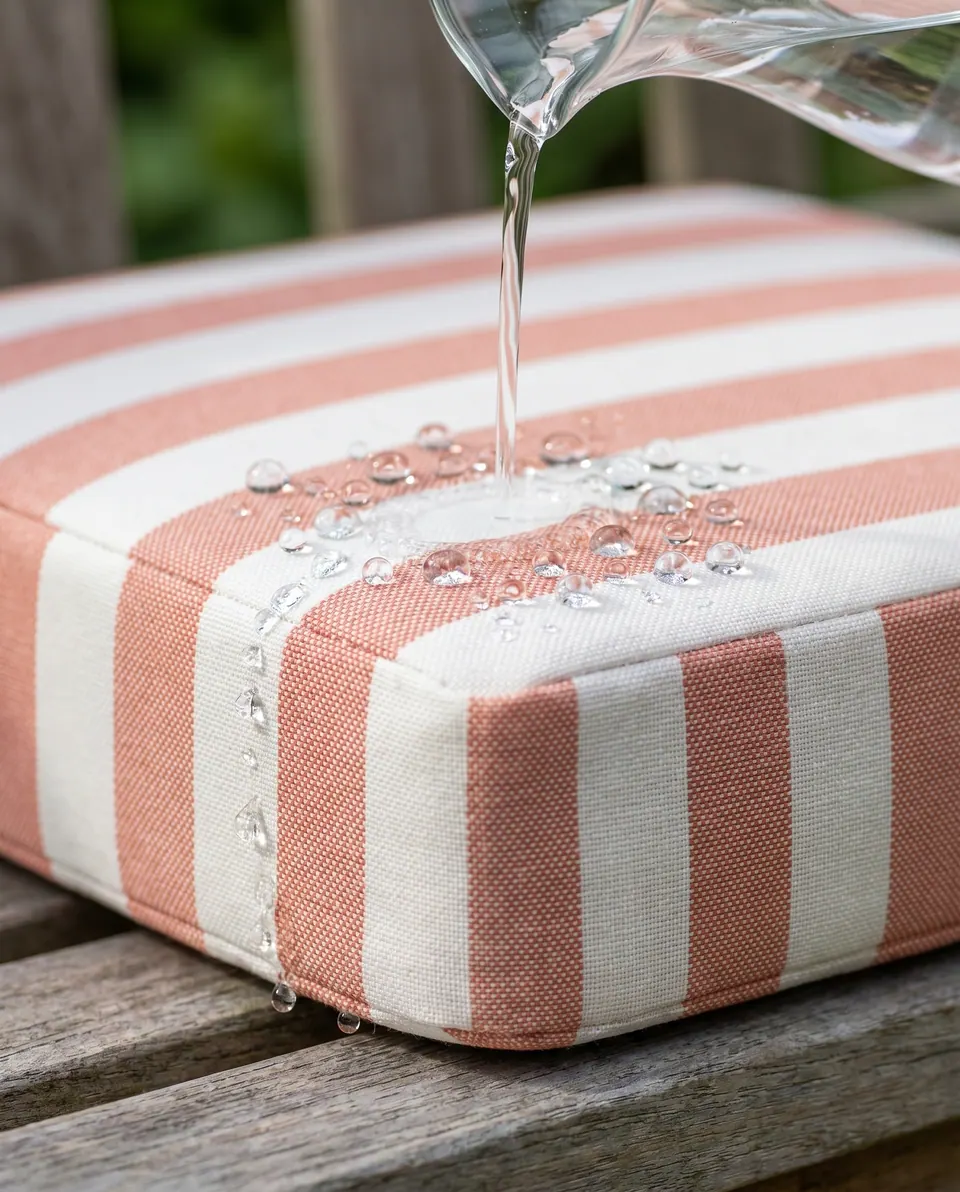
A Reading by CallumOutdoor & Water-Repellent Cushions
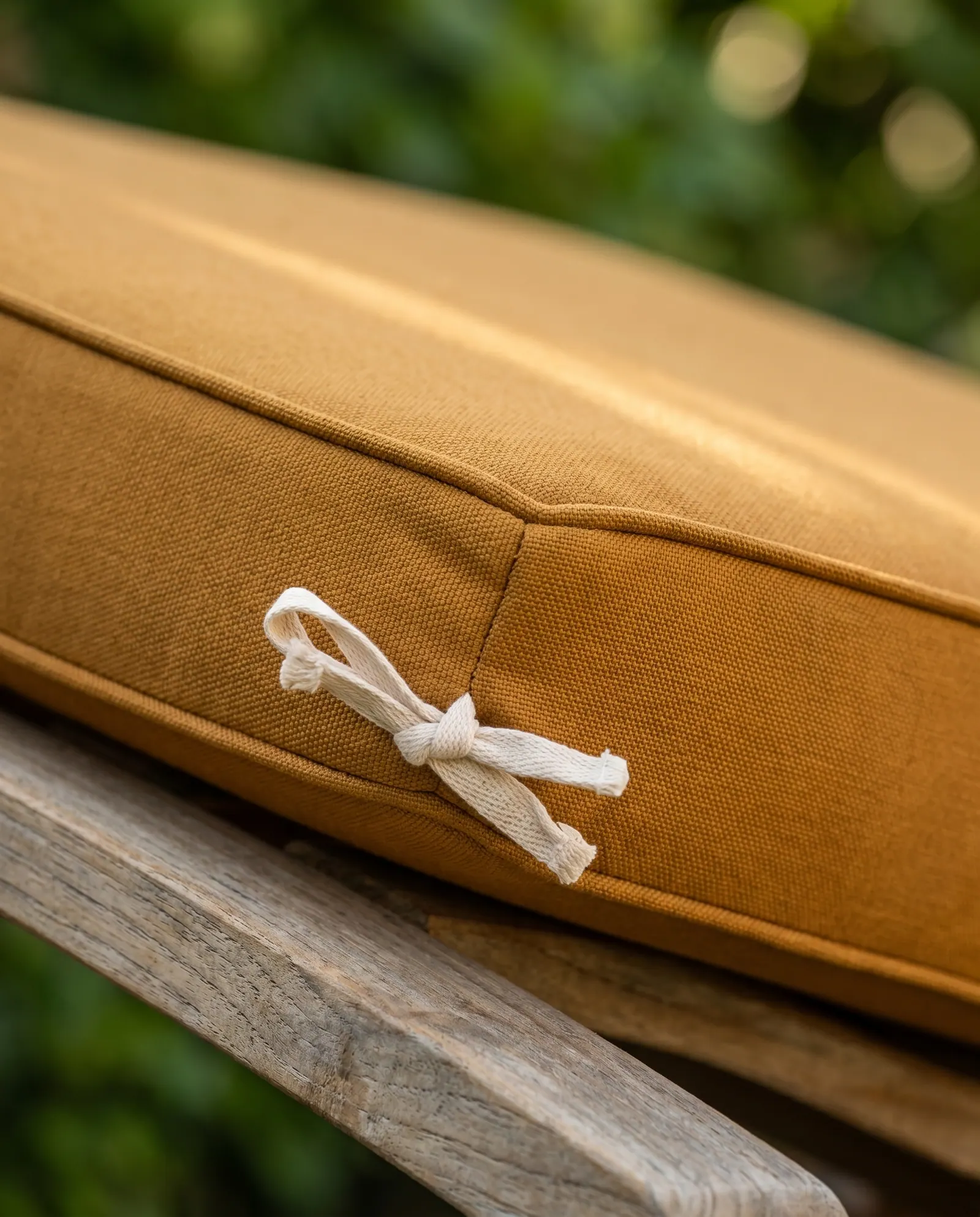
Reading one corner of an amber outdoor bench cushion: the weave, the piping and a cotton tie
Callum answers three buyer questions first, then puts a single cushion corner under the evening sun to show how outdoor acrylic feels, wears and cleans.
 Save
The quick answer
An outdoor bench cushion holds its shape best when the cover is outdoor acrylic, the corners are box-sewn with piping on both seams, and the ties are stitched into the vertical corner seam rather than the flat panel. Covers zip off and wash on a gentle cycle at 86°F (30°C); ask for ties in your order notes.
Buyer questions first: price, wind and a stripe that looks black
- A common question
Why do outdoor cushions cost more than indoor ones? Aren't all your fabrics the same price?
The workshop's answerNo. The outdoor fabrics are the premium end of the range: made to stand up to rain and highly resistant to UV and sun. Cheaper fabrics exist, but they are not suitable outside. If your seating is fully covered, the workshop can re-quote the same cushions in an indoor fabric.
- A common question
It gets windy where we live. Can you add ties so the cushions don't blow off the bench?
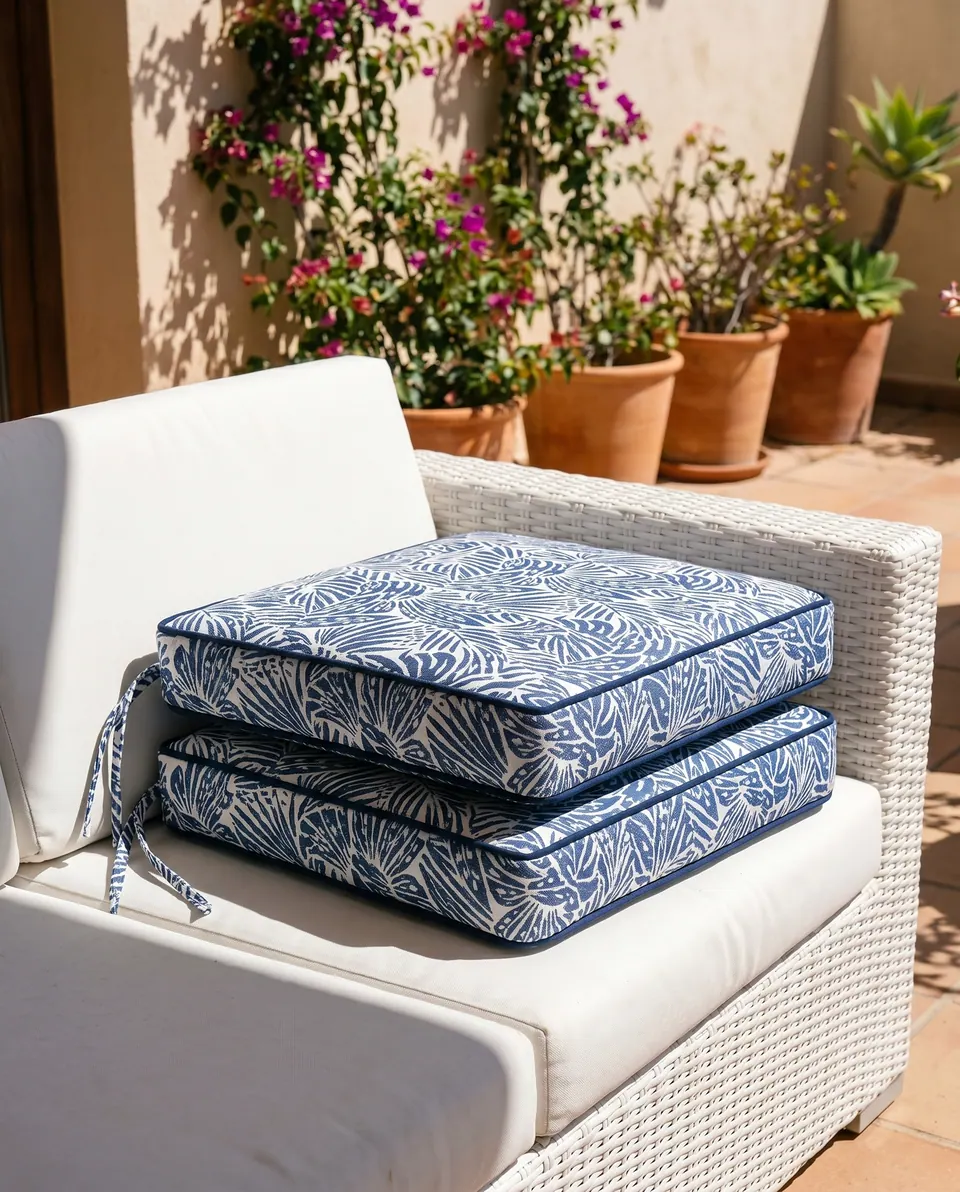
The workshop's answerYes. Ties can go on the sides, including extra-long ties for beach or windy spots. Write the request in the order notes, and include a sketch if they need to sit on a particular side.
- A common question
Is the dark stripe in that striped fabric black, charcoal or blue?
The workshop's answerIn the striped lines, such as N28 and HM-23, the darker stripes are a dark blue, though from across a yard they can read as black. The workshop sends close-ups and photos of finished pieces, but if the tone must be certain, order a sample first.
Now, the reading
Pinned by Callum: one corner, five details
Start at the cotton bow and work outward: the corner seam, the top piping, the weave in low sun, then the old teak underneath.
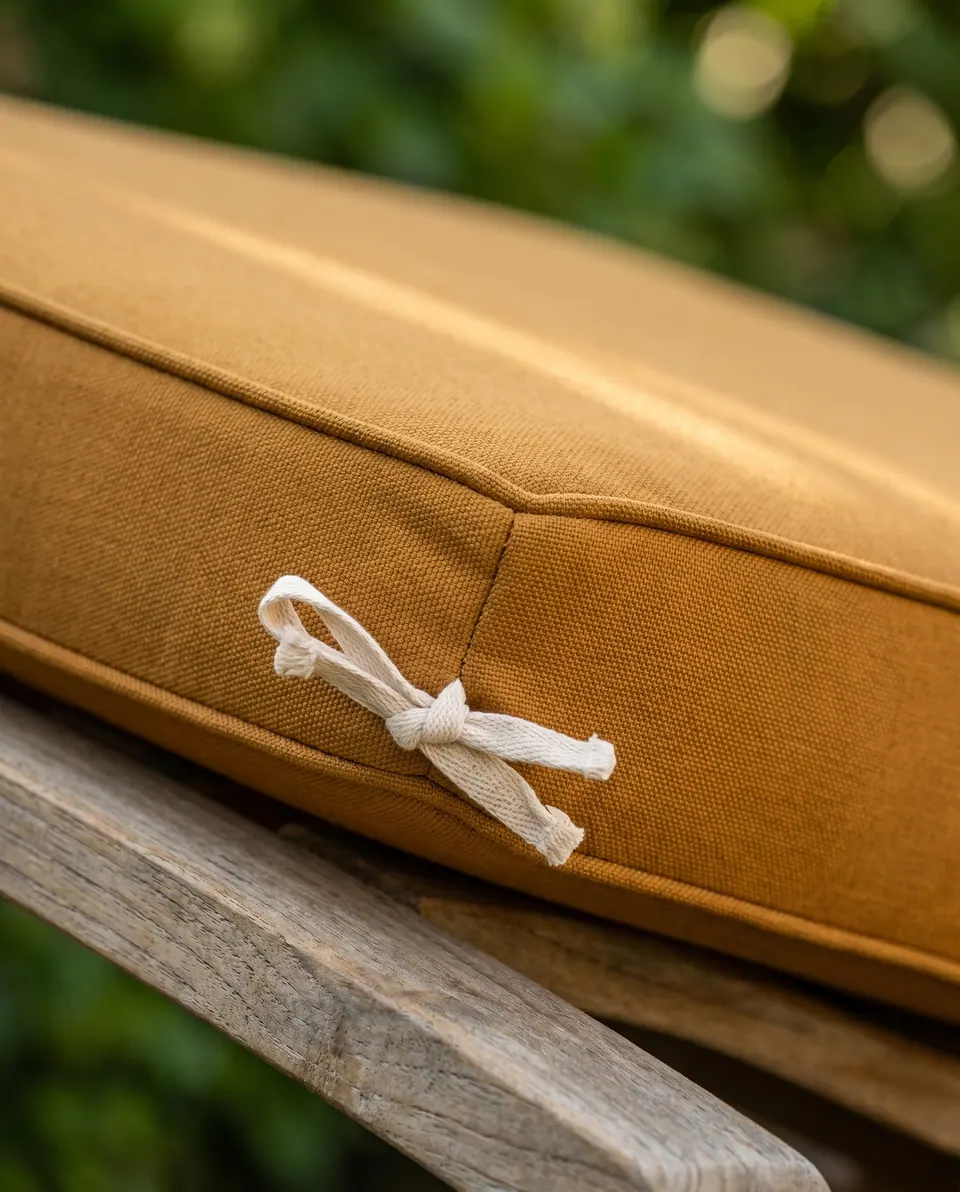
- Cotton tape bow
The tie is sewn into the corner seam, the strongest point of the cover.
- Square corner seam
Side panels meet at the corner without puckering, which keeps the box shape.
- Self piping top edge
Matching piping on top and bottom seams holds the edges straight.
- Woven top surface
Low sun shows the fine basket texture of the outdoor weave.
- Weathered teak slat
Gray teak makes the amber look richer by contrast.
- Cotton tape bowThe tie is sewn into the corner seam, the strongest point of the cover.
- Square corner seamSide panels meet at the corner without puckering, which keeps the box shape.
- Self piping top edgeMatching piping on top and bottom seams holds the edges straight.
- Woven top surfaceLow sun shows the fine basket texture of the outdoor weave.
- Weathered teak slatGray teak makes the amber look richer by contrast.
How outdoor acrylic feels in the hand
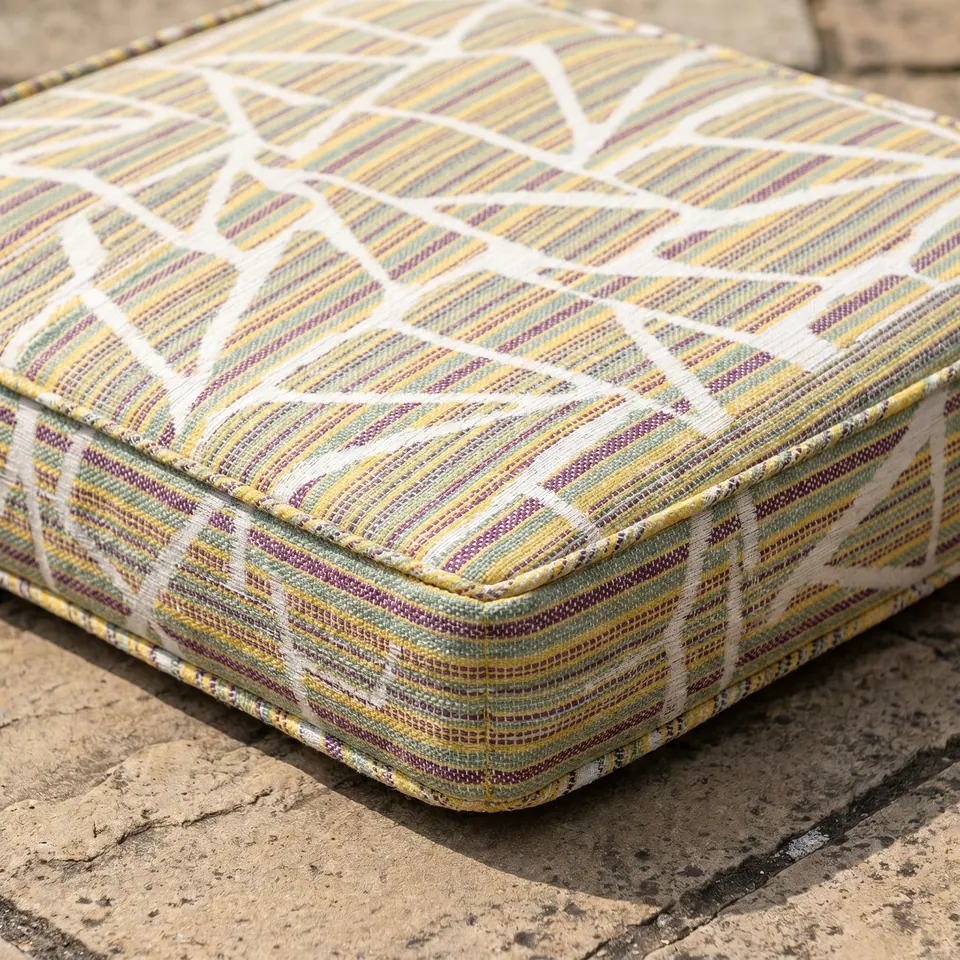
Look close, friend. The low evening sun rakes across the top panel and shows a fine basket weave, the kind of texture your thumb finds before your eye does. Outdoor acrylic is dry to the touch and a little crisp, closer to a good sail than to a sofa. It relaxes with use but never goes limp.
That crispness keeps this corner square. The side panel meets the top without a pucker, and self piping runs along both the top and the bottom seams. Piping in the same amber holds each edge straight, so the cushion stays a box instead of rounding into a pillow after a season.
The cream cotton tape is the detail I would copy. It is sewn into the vertical corner seam, the strongest point on the cover. A tie tacked onto a flat panel pulls on one layer of cloth; a tie set in a seam pulls on the whole structure. Wind will test that difference for you. Rain doesn't negotiate.
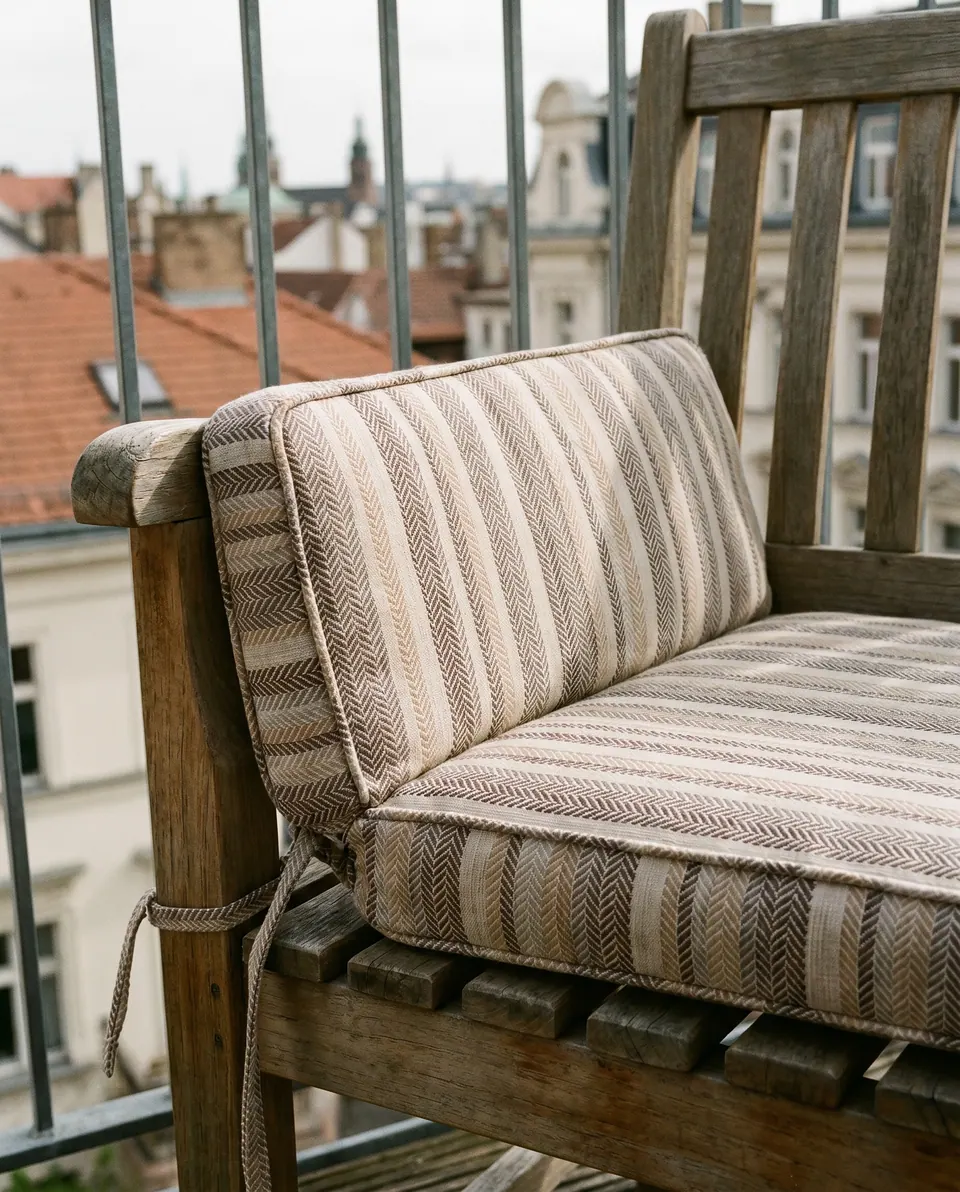
Gray, weathered teak underneath makes the amber look richer than it would on new wood. Warm color on silvered wood is an old boatyard habit. More weaves sit on the outdoor acrylic shelf, and the ties and non-slip Pattern covers the fixings.
Wear and wash: what this cloth asks of you
- Unzip the cover and wash it on a gentle cycle at 86°F (30°C).
- Ask for ties sewn into the corner seams if the cushion gets moved often.
- Add long ties for windy decks or beach spots, noted in the order with a sketch.
- Order a sample when a color must be exact; dark stripes can read black across a yard.
- Store the cushions indoors in the off-season.
Stone seats by a fire pit, and a photo before a price
A buyer wrote to the workshop about a terrace with stone seats around a fire pit. The plan: six square outdoor cushions at 17¾ or 19¾ in (45 or 50 cm) in beige, plus two wider ones at 31½ x 17¾ to 19¾ in (80 x 45 to 50 cm) in olive or eucalyptus green.
Before quoting a single number, the workshop asked for a photo of the seats. Stone and masonry seats are rarely as square as they look in memory. One ledge runs a finger wider, one corner is rounded. A photo shows that; a tape alone does not.
The quote for the full set came back higher than the buyer wanted to spend, and that is an honest ending too. Outdoor cloth costs more than indoor cloth because it has to take the weather. If those seats had stood under a roof, an indoor fabric quote would have been the fair alternative.
The lesson holds either way. For stone, brick or built-in seats, send the photo with the measurements. The fire pit bench cushions sketch has more on sizing around a fire.
On the cutting table: the amber corner
| Piece | Box-edge outdoor bench cushion |
|---|---|
| Fabric | Amber outdoor acrylic with a fine basket weave |
| Piping | Self piping on the top and bottom seams |
| Corner | Square, side panel set without puckering |
| Ties | Cream cotton tape sewn into the vertical corner seam |
| Care | Removable cover, gentle cycle at 86°F (30°C) |
| Off-season | Stored indoors |
| Best for | Teak and slatted benches that get moved often |

Have it made
Have this made — ask Callum’s workshop
Tell them where it lives. Porch, deck or boat: the weather picks the fabric and the foam before anyone else does. — Callum
Leave your details and the workshop will call you to confirm measurements, fabric, foam and piping. No prices, dates or payment on this page: it is a request, not an order.
A cushion tie sewn into the corner seam pulls against the strongest point of the cover; a tie tacked onto the flat panel pulls the cloth out of shape.
Callum
Questions buyers ask next
Where should ties be sewn on an outdoor box cushion?
Into the seams, ideally the vertical corner seam, where the cover is strongest. A tie tacked onto the flat top or side panel pulls on a single layer of cloth and can distort it over a windy season. Write ties in the corner seams in your notes.
Why does an outdoor box cushion have piping on both the top and bottom seams?
Piping stiffens the seam line, so the top and bottom edges stay straight and the corners stay square. Without it, a box cushion tends to round off at the edges after a season of sitting, sun and rain.
Does amber outdoor fabric look different on weathered teak than on new wood?
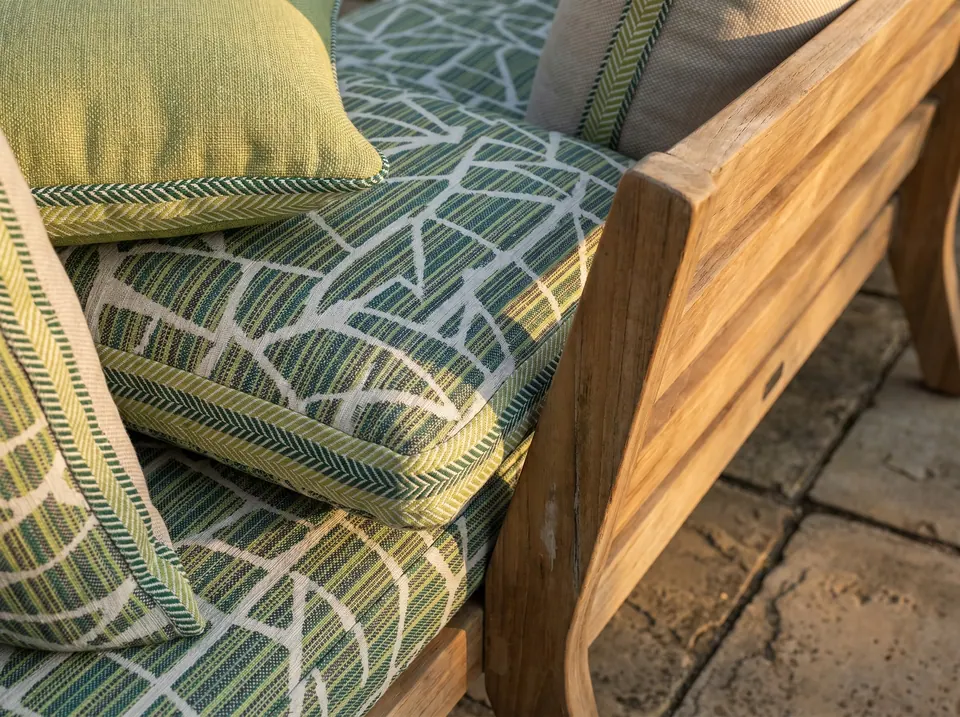
It does. Weathered teak turns silver-gray, and a warm amber reads richer and deeper against that cool gray. On new honey-colored teak, amber blends in more. Hold a sample against your own bench in evening light before choosing.
Fair winds — Callum
More photographs to read
 Save
 Save
 Save
 Save
 Save
 Save