The Cutting Table · a question, worked through
I don't like the color I received. What can you do?
A green that turned mossy under the lamp. A velvet that went dark in a north-facing room. Before anyone decides anything, the cushion has to be seen in daylight.

Pinned by Élodie
The quick answer
Start by sending a clear photo of the cushion taken near a window in natural daylight, because warm bulbs, dark walls and screens make colors read deeper. The workshop checks your order's fabric codes against its own pre-shipping photo. Depending on the case, it has remade covers, sent replacements, offered a partial refund or discount, or accepted a return at the buyer's shipping cost.
Key facts
- A daylight photo taken near a window is the first thing asked for.
- Listing photos are taken in natural daylight.
- Warm lighting, dark walls and screen settings make colors look deeper.
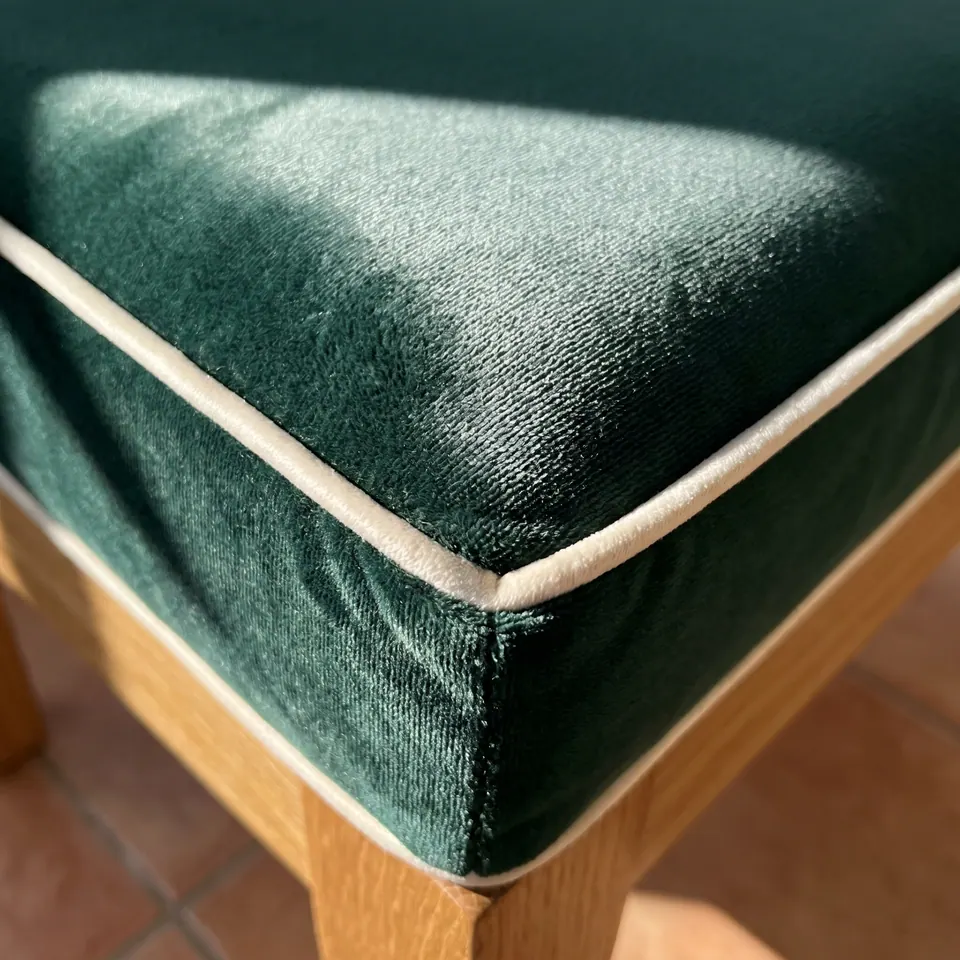
- Velvet changes tone with the direction of the pile.
- Color can vary about 5-10% with daylight and screen settings, and fabric rolls can differ slightly in tone.
- Every order is photographed before shipping.
- Outcomes have included a remade cover, a replacement cover, a partial refund to keep it, a discount on a new piece, or a buyer-paid return.

Have it made
Have Élodie’s workshop cut this for you
A fabric reads one way at noon and another at dusk. Mention your light, and the workshop will weigh it with you. — Élodie
Leave your details and the workshop will call you to confirm measurements, fabric, foam and piping. No prices, dates or payment on this page: it is a request, not an order.
What happens after you write
You: “The color is way off.”
Say what you expected and what you see: olive that reads brown, blue that reads teal.
Workshop: “A photo by the window, please.”
Daylight, no lamp, no filter. Listing photos are shot in daylight too, so this is the fair comparison.
The check
The fabric codes on your order are compared with the workshop's own photo; every order is photographed before it ships.
The decision
Past cases ended in different ways: a cover remade in a color the buyer chose, a replacement cover, part of the price back to keep it or a discount on a new one, a discounted cover in another fabric, or a return with the buyer paying the return shipping.
Why a color changes on the way home
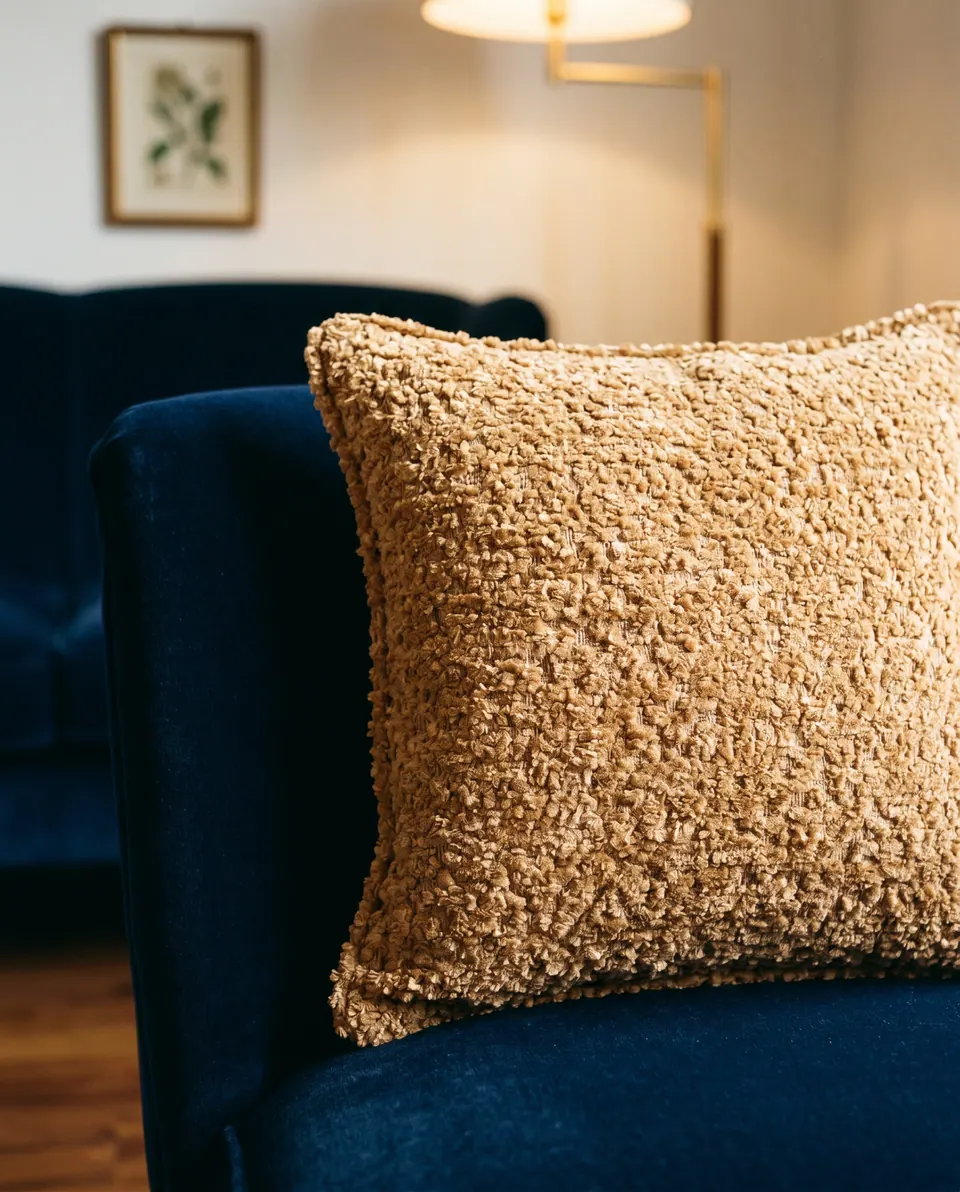
A warm bulb pours amber over everything, and a sage leans toward moss. A dark wall swallows light, so a velvet that looked like washed teal in the listing sinks toward bottle green by evening. Velvet has its own trick besides: brush the pile one way and it shines, the other way and it deepens.
Then there is the screen, which adds its own tint, and the fabric itself: colors can vary about 5-10% between daylight and a screen, and rolls can differ slightly in tone. Daylight never lies; your screen sometimes does.
The screen vs daylight pattern shows how to choose next time, and velvet explains the sheen. If a remake is on the table, the remakes and fixes pattern walks through it. Which window in your home gets the steadiest light, my friends?
Olive that arrived looking brown
One buyer wrote in that the new cover looked brown, not the olive they had chosen. The workshop asked for a clear daylight photo, checked the fabric codes on the order, and remade the cover in a new color of the buyer's choosing. No argument about whose screen was right; the window settled it.
Cushion fabric color can read about 5-10% different between daylight and a screen, which is why the first request is a photo taken by a window.
Élodie Marchand
Buyer questions
- A common question
It looks brown, not the olive I expected. What can I do?
The workshop's answerSend a clear photo in natural daylight; lighting, camera and screen shift color, and velvet shows different tones with the pile direction. The codes on the order were checked, and the cover was remade in a new color of the buyer's choice.
- A common question
Why does the fabric look different in my room than in the listing?
The workshop's answerListing photos are taken in natural daylight. Warm bulbs, dark walls, shadows and screens make a color look deeper, so a green can look mossy. A daylight photo near a window comes first; outcomes have included a discount or a cheaper cover in another color.
- A common question
The sofa looks much darker than the photos. What now?
The workshop's answerA room with little daylight makes velvet look darker, and the listing warns that screens and lighting change color. The offer was a replacement cover in another fabric at a discount, or a return at the buyer's cost.
- A common question
Can I see close-ups of the real fabric before I order?
The workshop's answerYes. Name the codes and free close-up photos of the actual fabric are sent, side by side or with your piping. They're phone photos, so tones can shift slightly; a physical swatch is the surest check.
Questions buyers ask next
How much color variation is normal on a custom cushion?
A small shift isn't unusual: color can vary about 5-10% with daylight and screen settings, and fabric rolls can differ slightly in tone. The daylight photo and your order's codes show whether the right fabric was used.
Who pays return shipping when a cushion goes back over color?
When a return was accepted over color, the buyer paid the return shipping. Other outcomes, such as a remade or replacement cover or a partial refund, avoided a return altogether.
How can I avoid a color surprise on my next cushion order?
Ask for close-up photos of the codes you're weighing, or order a swatch and look at it in daylight in the room where the cushion will live. Confirm the code in writing before production.