The Cutting Table · a checklist answer
Do I need to make a paper template for a custom cushion, and should I mail it?
Also asked as:Do you require a paper template?Do I need a template to measure properly?
Short version: no stamp required. A pencil, a tape measure and a phone camera cover almost every odd shape that crosses the cutting table.

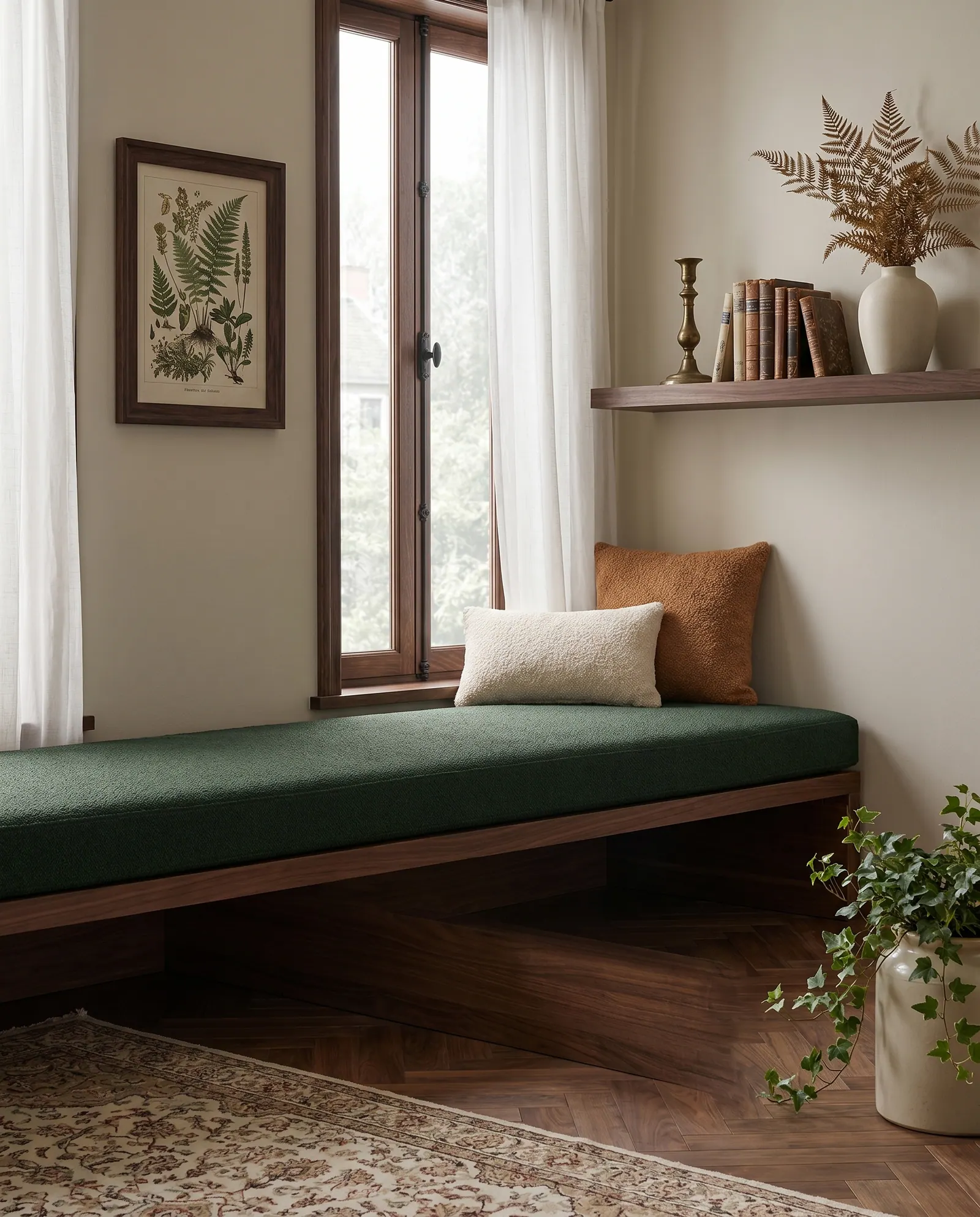 Save
The quick answer
No, a paper template isn't required: a simple drawing with every edge measured, or photos plus measurements, is enough for an angled cushion. If you've made a full-size template or have old covers to copy, photograph them with the measurements marked and send the photos in the chat or with the order instead of mailing them.
Get a quote for a banquette cushion
Key facts
- No paper template is required for angled shapes.
- A hand drawing with every edge measured is enough.
- Templates and old covers are sent as photos or digital files, not by mail.
- A full-size template is the best starting point for a curve.
- The workshop redraws a CAD plan as its own diagram and asks you to confirm.
- The workshop checks that your numbers reconcile before quoting.
- The price covers the foam insert, the removable zippered cover and the angled cutting.

Have it made
Have Nate’s workshop cut this for you
Every edge and both diagonals, to the nearest 1/4 in. If the numbers do not close, the workshop will say so on the call. — Nate
Leave your details and the workshop will call you to confirm measurements, fabric, foam and piping. No prices, dates or payment on this page: it is a request, not an order.
What to send instead of a paper template
- A drawing of the shape with a length on every edge: front, back and both sides.
- A photo of the actual seat or window seat area.
- For a curve: photos of a full-size template with measurements marked, especially where each curve begins.
- For replacement covers: photos or drawings of the old covers with their measurements.
- A CAD file, if you have one; the workshop redraws it as its own diagram for you to confirm.
- All of it attached in the chat or to the order, as photos or a digital file.
What to skip
- Mailing a paper template: photograph it instead.
- Mailing your old cushion covers to be copied.
- Leaving the start of a curve unmarked on the template photo.
- Budgeting for a template or shape surcharge; there isn't one.
How the numbers get checked
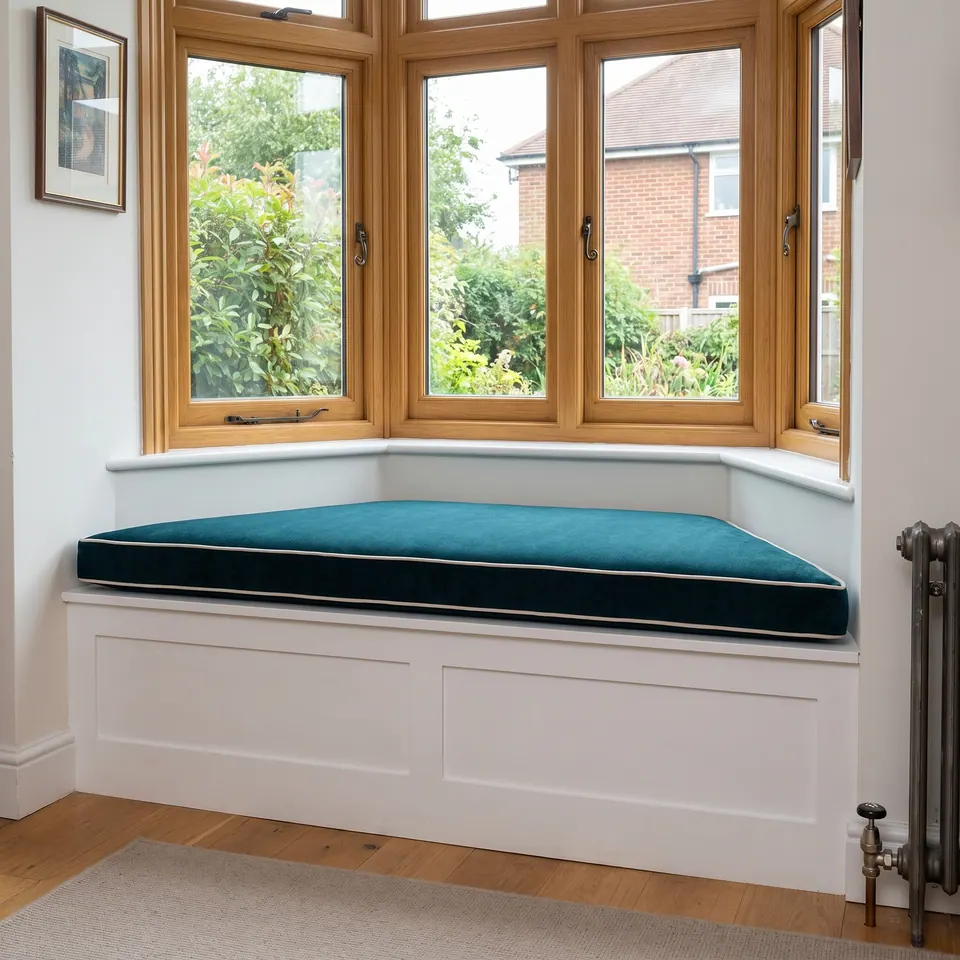
Every drawing gets the same test, partner: do the numbers close? One irregular bay came in at 106 in (269 cm) across the front, 56 in (142 cm) across the back and two 35 in (89 cm) diagonals. Half the difference between front and back is 25 in, and the square root of 35² minus 25² gives about 24.5 in (62 cm) of depth. The numbers reconciled, so the drawing could be quoted.
When a set doesn't close, the workshop asks before it cuts. The trapezoid cushion calculator runs the same arithmetic on your numbers, the custom shape drawing Pattern shows how to lay out the sketch, and the paper template Pattern covers tracing a curve. Which edge of yours is the hard one to measure?
Ordering an angled cushion without a template
Pick ranges for pricing
On the listing, choose the depth and length ranges that hold your shape, for example 28 in (71 cm) deep and 88 in (224 cm) long. They set the price, not the cut.
Upload the drawing
Add your measured drawing in Add Personalization; the trapezoid listing asks for the image at checkout.
Add a photo of the space
A picture of the actual seat area helps the workshop read your numbers.
Confirm the redraw
The workshop checks the geometry, sends its own diagram when needed and waits for your yes before cutting.
No paper template is required for an angled cushion: a hand drawing with every edge measured, plus a photo of the seat, is enough to quote.
Nate
Buyer questions
- A common question
My window seat is three irregular trapezoids with no parallel sides. Can I mail you a paper template?
The workshop's answerInstead of mailing it, send a digital file or clear photos of the template in the chat, or attach them when you place the order.
- A common question
Can I send my existing cushion covers for you to use as a template?
The workshop's answerRather than mailing the covers, send photos or drawings of them with the measurements. The workshop says that's a good way to guarantee a perfect fit.
- A common question
How do I measure a trapezoid window seat, and do I need a template?
The workshop's answerA simple drawing with every edge measured is enough, and the workshop can send example templates plus another buyer's order drawing to copy. A photo of the window seat helps. Pick depth and length ranges for pricing, then upload the drawing in Add Personalization.
- A common question
I have a CAD drawing or a full-size template. Can you work from that?
The workshop's answerYes. A full-size template is the best starting point for a curve: send photos with measurements marked, especially where curves begin. From a CAD drawing, the workshop redraws its own diagram and asks you to confirm before quoting.
- A common question
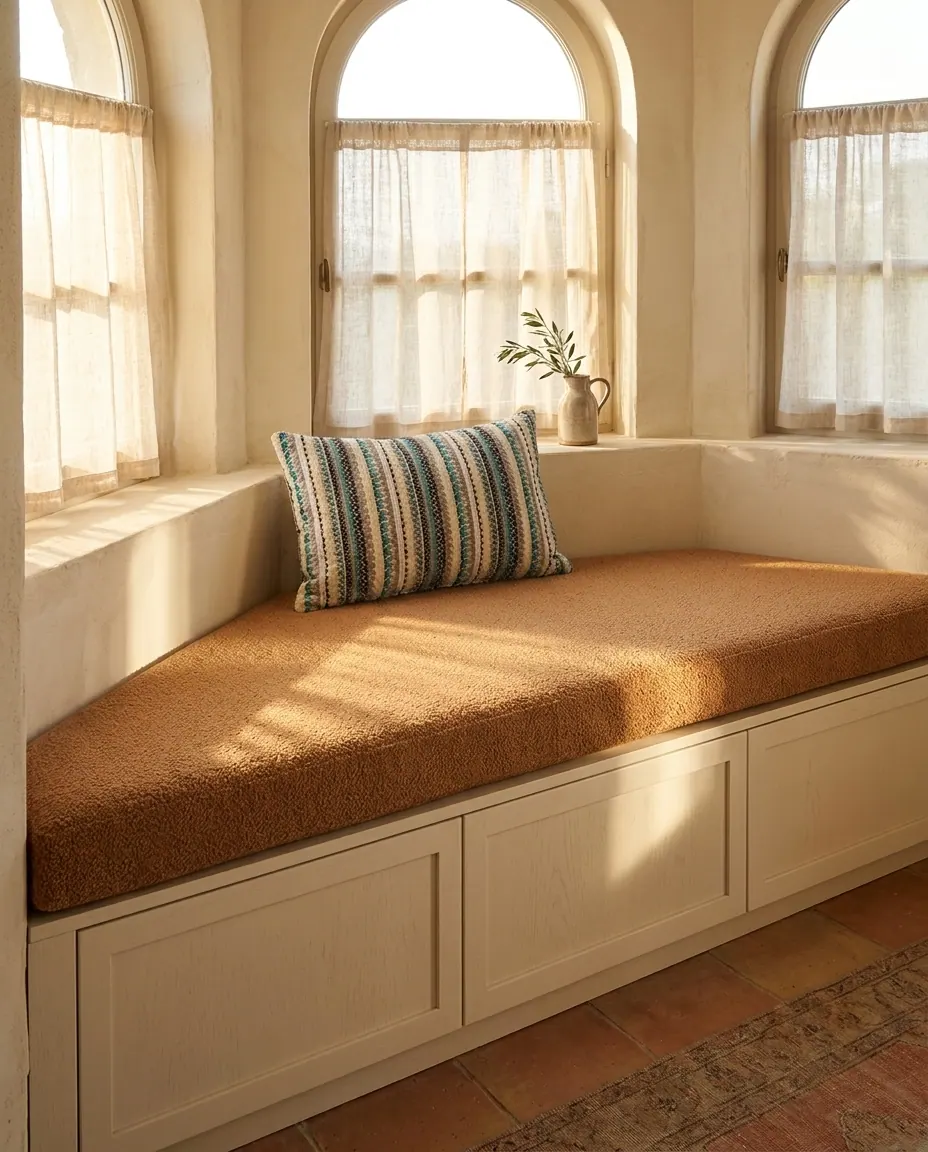
Can an irregular bay window cushion be made from photos and measurements alone?
The workshop's answerYes. No paper template is required, though one is welcome. The workshop checks that the numbers reconcile, and the quote for that bay cushion covered the foam insert, the removable zippered cover and the angled cutting in one price.
Questions buyers ask next
Can a cushion have a round hole cut for a floor vent?
No. Very narrow notches and small round holes, such as for floor vents, can't be sewn to hold their shape. The workshop runs the edge straight past a narrow recess or splits the cushion into pieces around the obstacle.
Is every curved shape possible?
Mild curves are fine. Strongly curved or exact-fit shapes, such as round bays or shaped rocking-chair seats, may be declined after a craftsman reviews them. A full-size template can make a borderline shape possible.
My window seat has lift-up lids. Should the cushion be split?
Yes. Split it at the lid lines so each cushion lifts with its lid, or into two over a radiator. Send photos and a drawing of every section; asymmetric sections each need their own drawing.