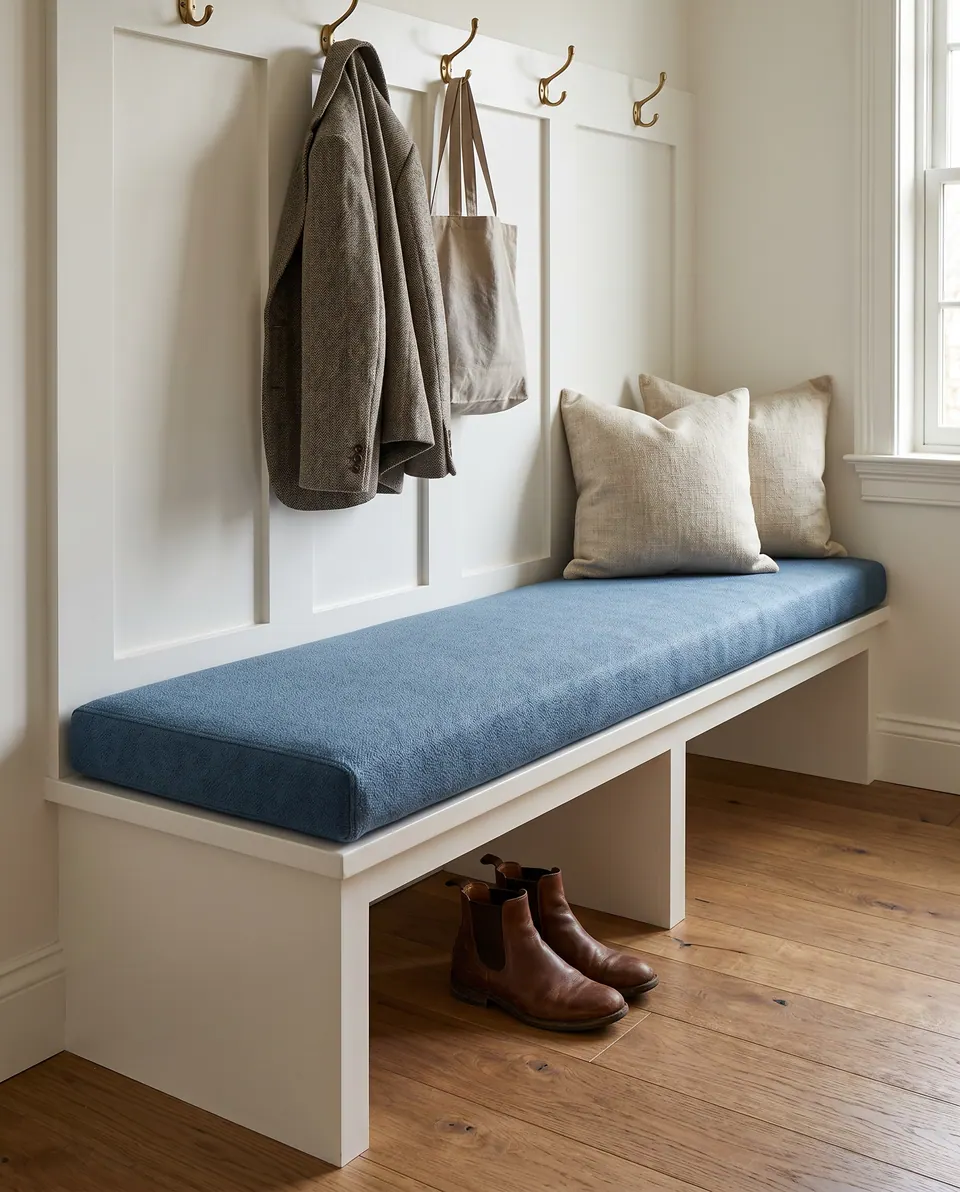
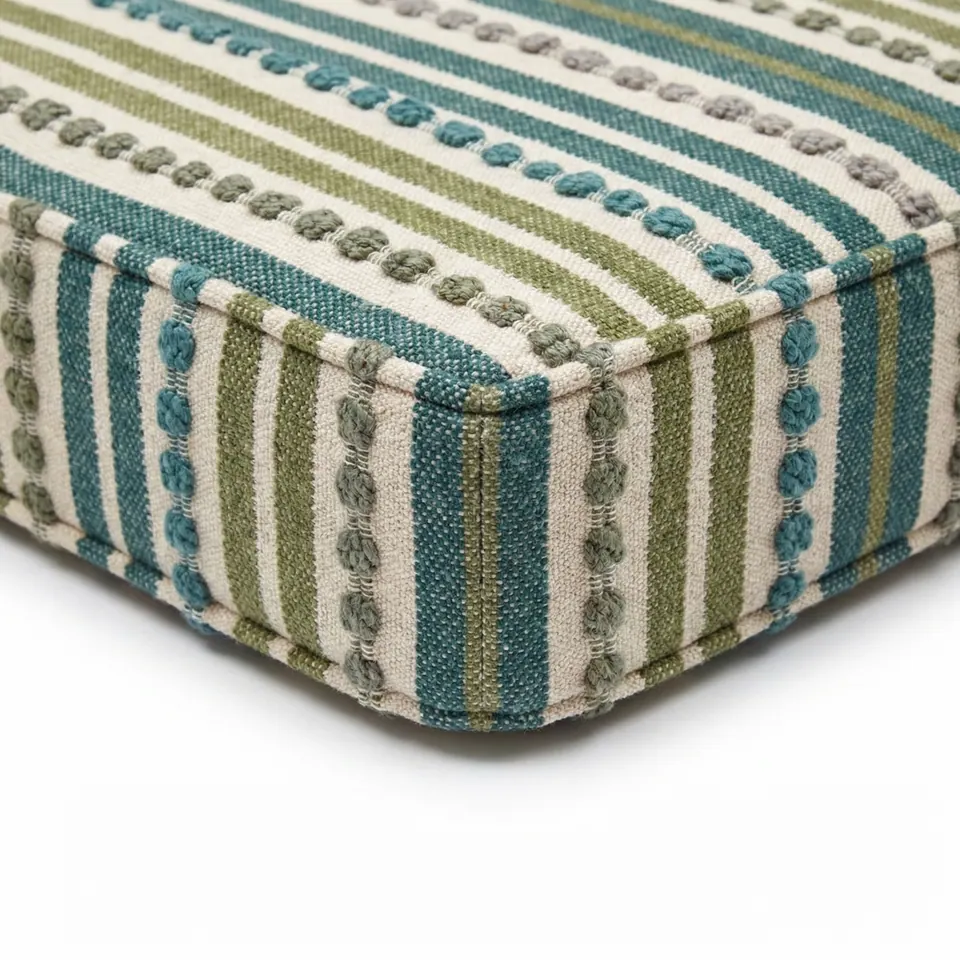
The Cutting Table · a checklist answer
My cushion color looks different from the swatch. Was it the wrong fabric?
Also asked as:Not the color I orderedLooks warmer and more tan in person
A buyer once told the workshop her sage cushion felt more like olive. Before anybody calls it the wrong fabric, neighbor, we check the records and carry it to a window.

 Save
The quick answer
Not necessarily: the workshop first checks its production records to confirm your exact fabric code, because screens, chart scans and indoor light shift how fabric looks. Next it asks for daylight photos near a window. When a listing photo misrepresented the tone, it has remade the cover in a fabric the buyer chose; when the right code was used, a cover in another shade has been offered at production cost.
Get a quote for a bench cushion
Key facts
- Production records are checked first to confirm the fabric code used.
- Daylight photos taken near a window are requested.
- Chart scans can make warm neutrals look cooler; warm indoor light brings out warmth.
- Sunlight can make the top of a cushion look lighter than its shaded sides.
- Small batch-to-batch tone variation is normal.
- When a listing photo misled, the workshop has treated it as its own fault and remade the cover in a fabric the buyer chose.
- If the right code was used, a replacement cover has been offered at production cost, with the foam kept and the first set staying with the buyer.
- Physical swatches are roughly palm-sized, about 4 x 4 to 6 x 6 in (10 x 10 to 15 x 15 cm).
- A handmade cushion can differ from the ordered size by about 0.5 to 1 in (1 to 2 cm).

Have it made
Have Rosa’s workshop cut this for you
Tell the workshop who sits there: grandkids, the dog, a cup of coffee at six. The right fabric and foam follow from the people. — Rosa
Leave your details and the workshop will call you to confirm measurements, fabric, foam and piping. No prices, dates or payment on this page: it is a request, not an order.
Before you call it the wrong fabric: five checks
- Carry the cushion to a window and judge it in daylight, not lamplight.
- Compare the top face with the sides: sun on the top can make it read lighter than the shaded sides.
- Remember the chart was a scan: scans can push warm neutrals cooler than the cloth really is.
- Check the bulbs: warm indoor light brings out the warmth in tan, olive and brown.
- Send the workshop daylight photos taken near a window, with the code you ordered.
What past orders show, and what the workshop has offered
| What the check finds | What's offered |
|---|---|
| A listing photo misrepresented the tone | Treated as the workshop's fault in past cases: cover remade in a fabric the buyer chose |
| The right code was used | A new cover in another shade has been offered at production cost; the foam stays |
| The right code was used, goodwill case | Cover remade for just the cost of shipping |
| You want to be sure of the reorder | Free physical samples or close-ups of neighboring shades, such as 944 beside 945 |
The olive brown that came out plain brown
A buyer in the US wrote that the olive brown she'd picked from the chart looked plain brown on the bench. The workshop checked that the exact code had gone into production, explained how lighting and screens change a color, and asked for photos in daylight.
To get the reorder right, it mailed physical samples free of charge along with real photos of the fabric, and offered a discount on the new order. It also advised against sending the first cushions back: the shipping would have cost more than the cushions.
Why the cushion and the chart can both be telling the truth
A fabric chart is a scan of a photograph, your screen adds its own opinion, and a warm bulb adds another. That's why the workshop asks for window light before it judges anything, and why the screen vs daylight Pattern is worth ten minutes before you order.
If you're choosing between two neighbors on the chart, ask for physical swatches first. Small tone shifts between dye lots are normal, too, and so is the way one fabric can change character under different light, what the trade calls metamerism.
Which way do the windows face in the room where your bench cushion lives?
Daylight near a window can make a cushion's top face read lighter than its shaded sides, so judge fabric color by the window, never by lamplight.
Rosa
Buyer questions
- A common question
The colors I got aren't what I expected. Will you replace them?
The workshop's answerIt depends on the cause. When a listing photo misrepresented the tone, the workshop admitted the fault and remade the cover free in any fabric the buyer chose. When the covers matched the codes on the order, a new set in the intended codes was made at cost, with no need to return the first set.
- A common question
The fabric looks different from the chart. What can you do?
The workshop's answerThe workshop checked its production records to confirm the code, explained that chart scans shift warm neutrals cooler while warm indoor light brings out warmth, and suggested comparing by a window in daylight. It offered a physical swatch, then a replacement cover in any other fabric at production cost, keeping the buyer's foam.
- A common question
It's much lighter than the swatch I chose. Is that a mistake?
The workshop's answerPhotos came first: daylight can make the top of a cushion look lighter than the shaded sides. The code was right, but the workshop offered to remake the cover as goodwill for just the shipping, and sent close-ups of the neighboring shades, 944 and 945, so the buyer could choose.
- A common question
The size looks off too. What photos do you need?
The workshop's answerWait 3-4 days for the foam to recover, then send tape-measure photos of length, width and thickness. The workshop checks its production records. In past cases its own errors were remade and ordering errors were remade at cost; ask the workshop to confirm in writing.
Questions buyers ask next
Should I mail the cushions back while the color is sorted out?
No need. When the right code was used, the first set doesn't have to be returned, and the workshop discourages it, because return shipping can cost more than the cushions themselves. Keep them while the new cover or samples are on the way.
Is some color variation between production batches normal?
Yes. Small tone differences from one batch of fabric to the next are normal. They're one reason daylight photos are requested before anyone decides a cushion is wrong, and why samples of neighboring shades are offered before a reorder.
Can I see the real fabric before I reorder in a new shade?
Yes. Before a reorder the workshop sends free physical samples, or real close-up photos of the shades next to yours on the chart, such as 944 beside 945, so the second cover lands on the tone you meant.