A Reading by CallumBench Cushions
A sage striped garden bench cushion set, and what indoor benches can borrow from it
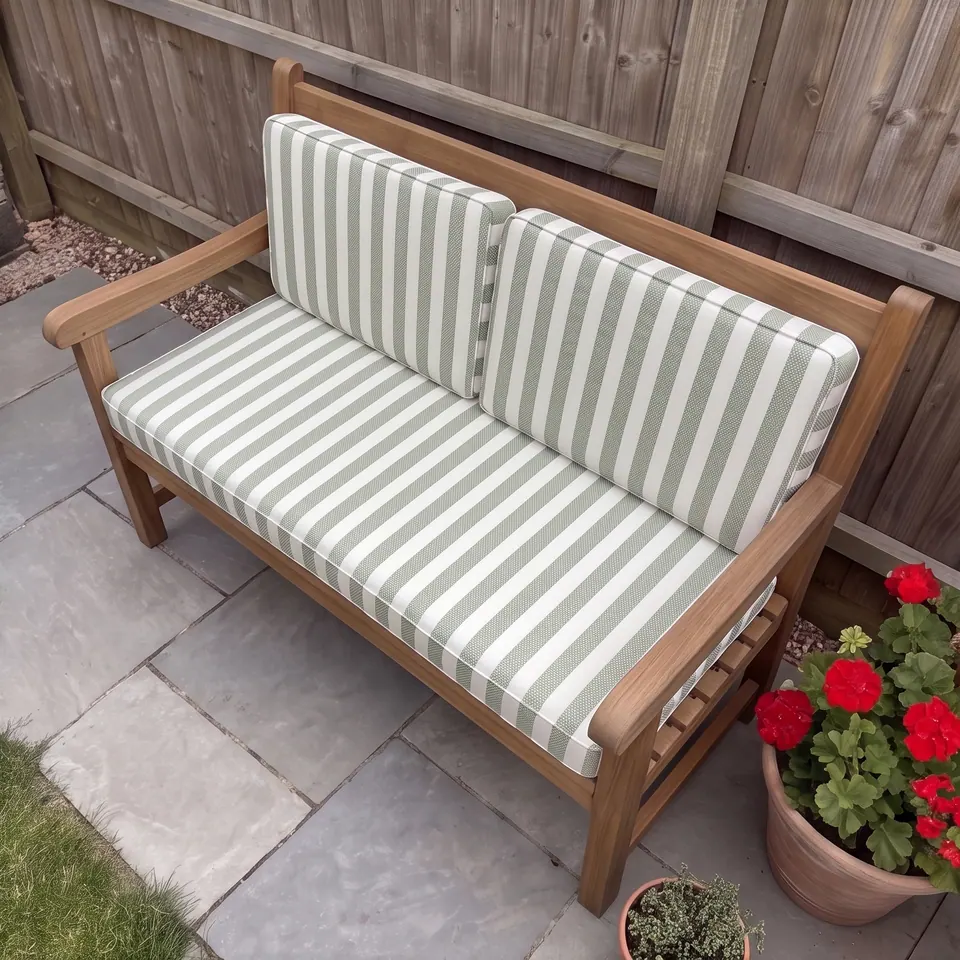
Callum reads a teak two-seater from straight overhead, like a plan on a chart table, and trades rules between the patio and the house.
The quick answer
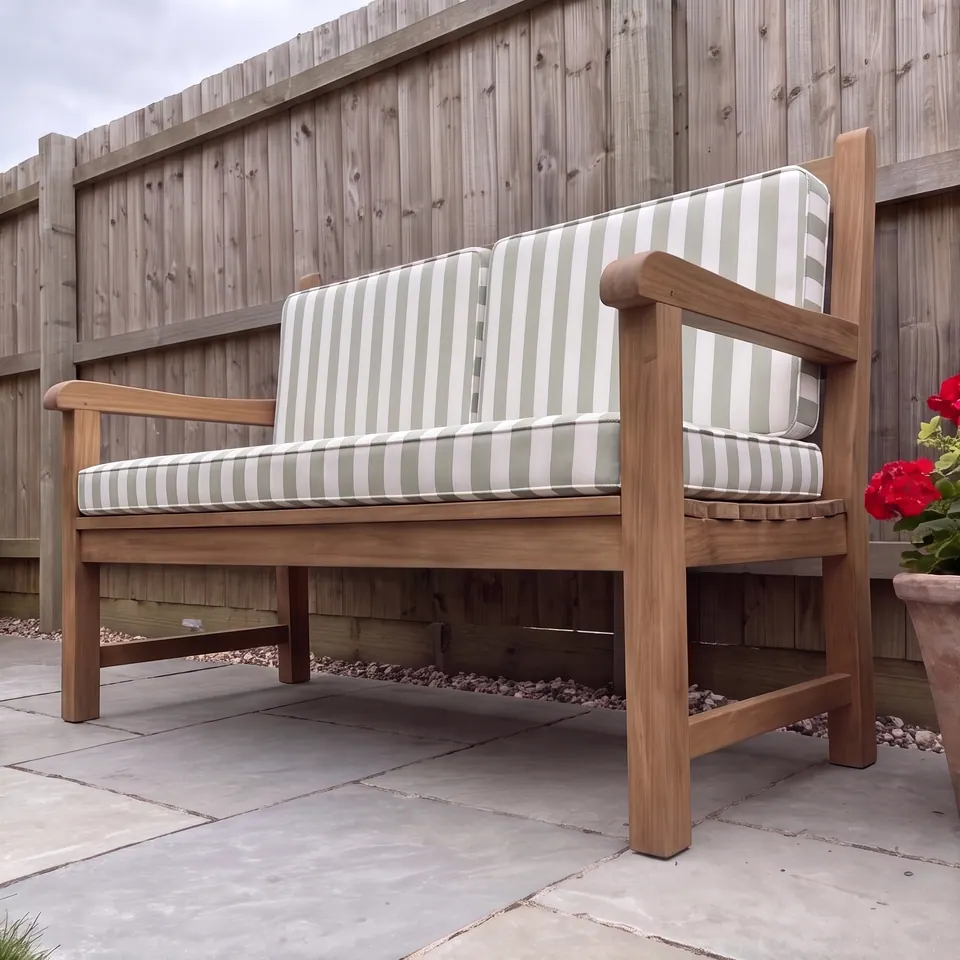
A two-seater garden bench works best with one full-width seat cushion and two back cushions split at the center, stripes lined up across the join. Indoor benches can borrow that split, plus water-repellent fabric by the back door; outdoor benches can borrow indoor habits like a flat top without tufts and a handle where you lift.

 Save
 Save
 Save
 Save
 Save
 Save
 Save
Pinned by Callum from above the bench
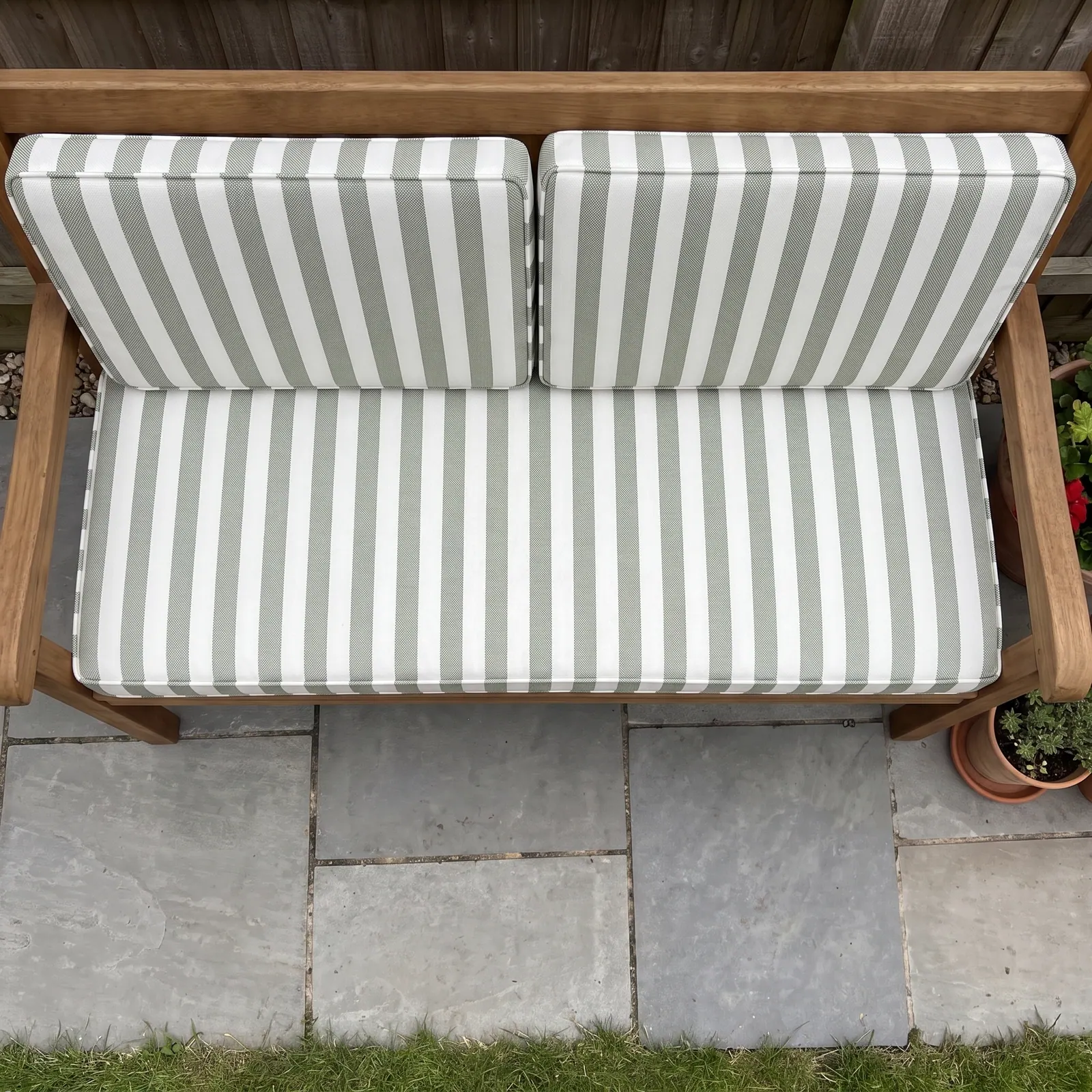
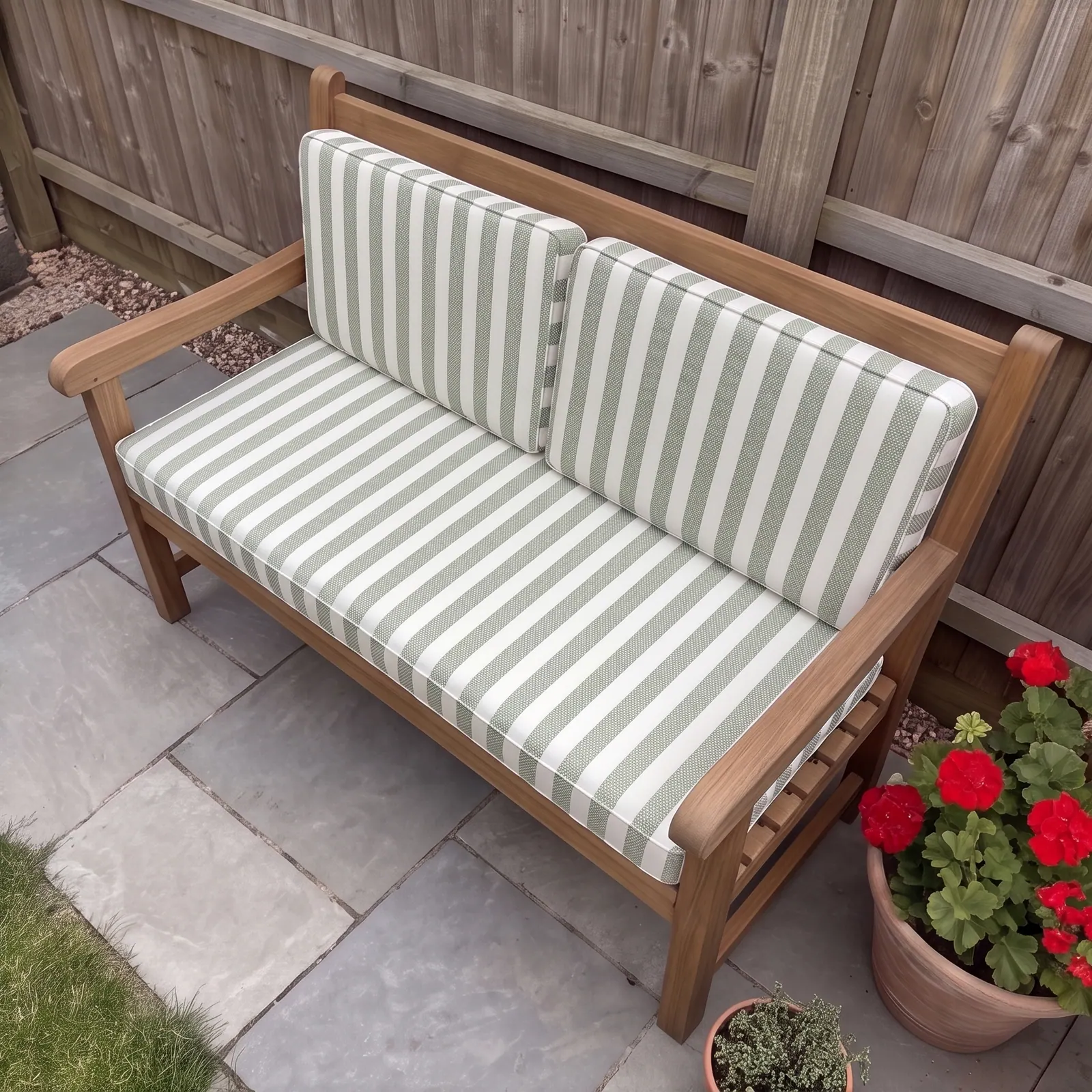
Five pins on the plan view: two back cushions, the full-width seat, the piped front edge and one terracotta pot.
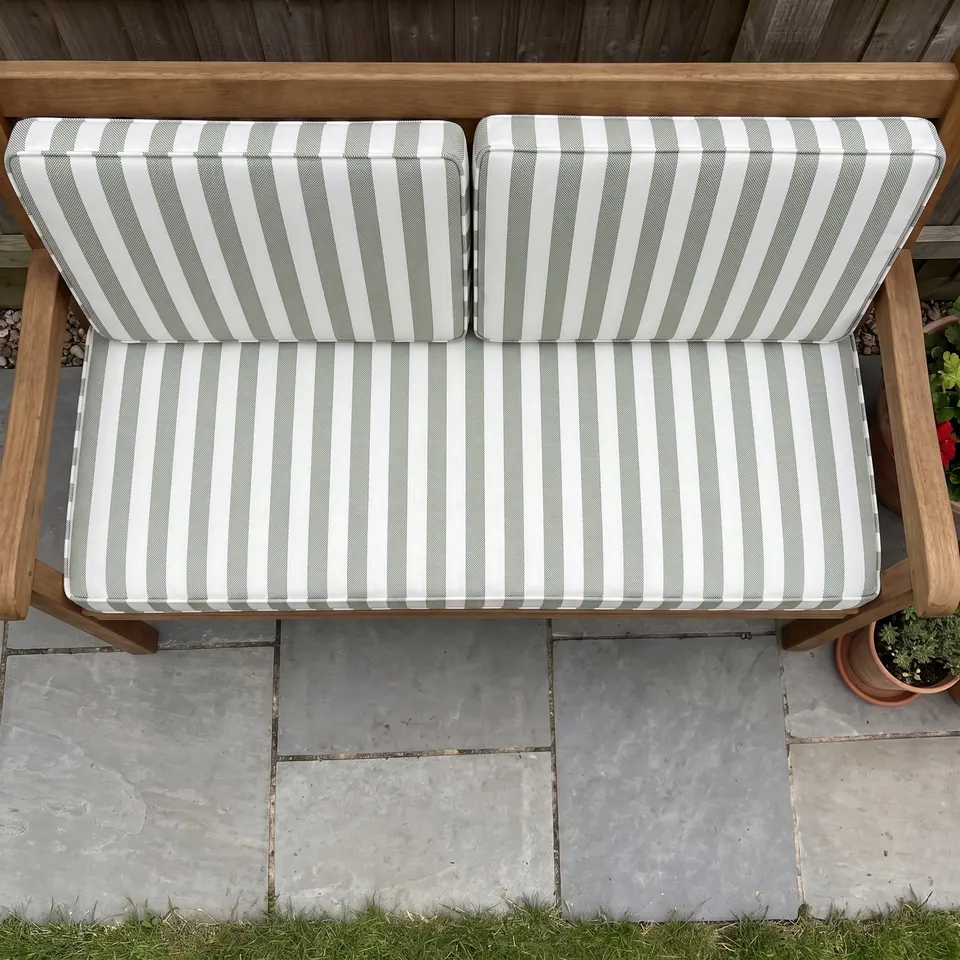
- Left back cushion
Two back cushions split at the center are easier to handle than one long one.
- Right back cushion
Vertical stripes on the backs line up with the stripes on the seat below.
- Full-width seat
One seat cushion spans the bench from arm to arm.
- Front piped edge
The self-piped front edge sits exactly on the front rail of the bench.
- Terracotta pot
A single terracotta pot adds warmth to the gray paving.
- Left back cushionTwo back cushions split at the center are easier to handle than one long one.
- Right back cushionVertical stripes on the backs line up with the stripes on the seat below.
- Full-width seatOne seat cushion spans the bench from arm to arm.
- Front piped edgeThe self-piped front edge sits exactly on the front rail of the bench.
- Terracotta potA single terracotta pot adds warmth to the gray paving.
The bench as a plan: one seat, two backs, one stripe
From straight overhead, a bench stops being furniture and becomes a drawing. This one is teak, a two-seater on gray sandstone flags, with a gravel strip and a lawn edge beyond.
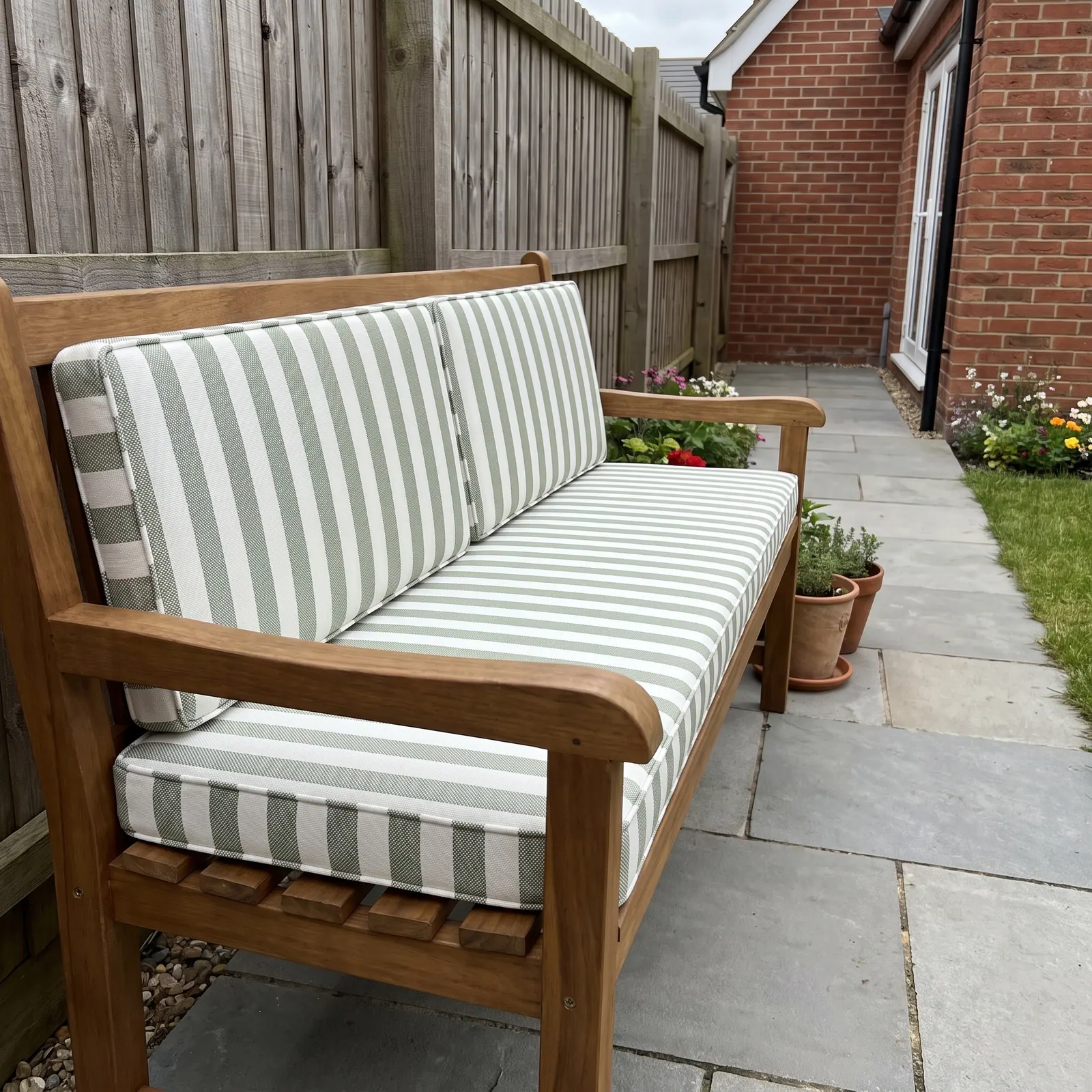
One seat cushion runs arm to arm. Two back cushions split at the center. The stripes run front to back on the seat and top to bottom on the backs, so they meet at the join and read as one line. Every piece has a self-piped box edge, and the piped front edge sits exactly on the bench's front rail. No droop, no overhang.
The light is flat and overcast. That's honest light for judging a sage and white stripe. The only warm note is a terracotta pot of geraniums and thyme at the side; everything else stays gray and green, so the stripe does the talking. Stripe direction covers lining them up.
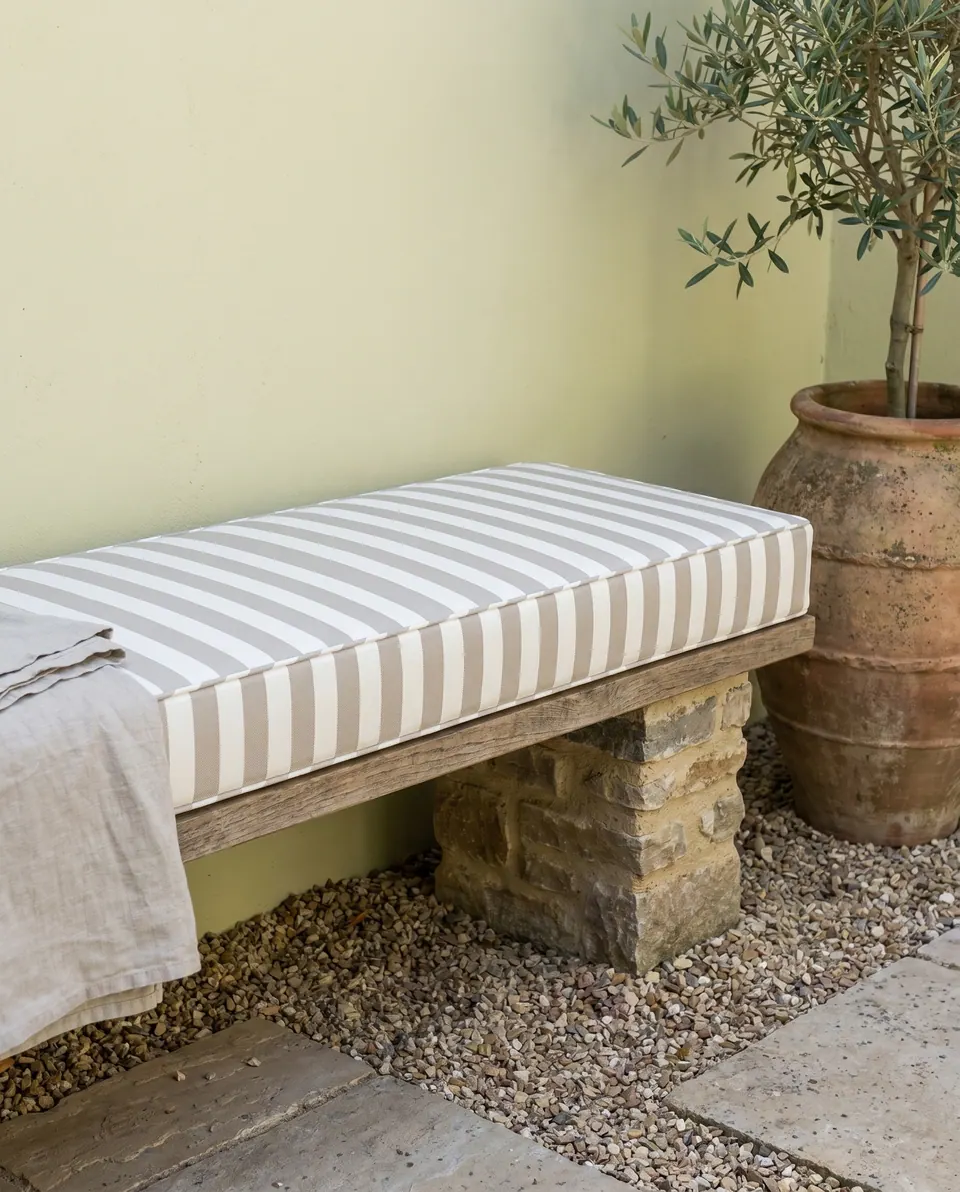
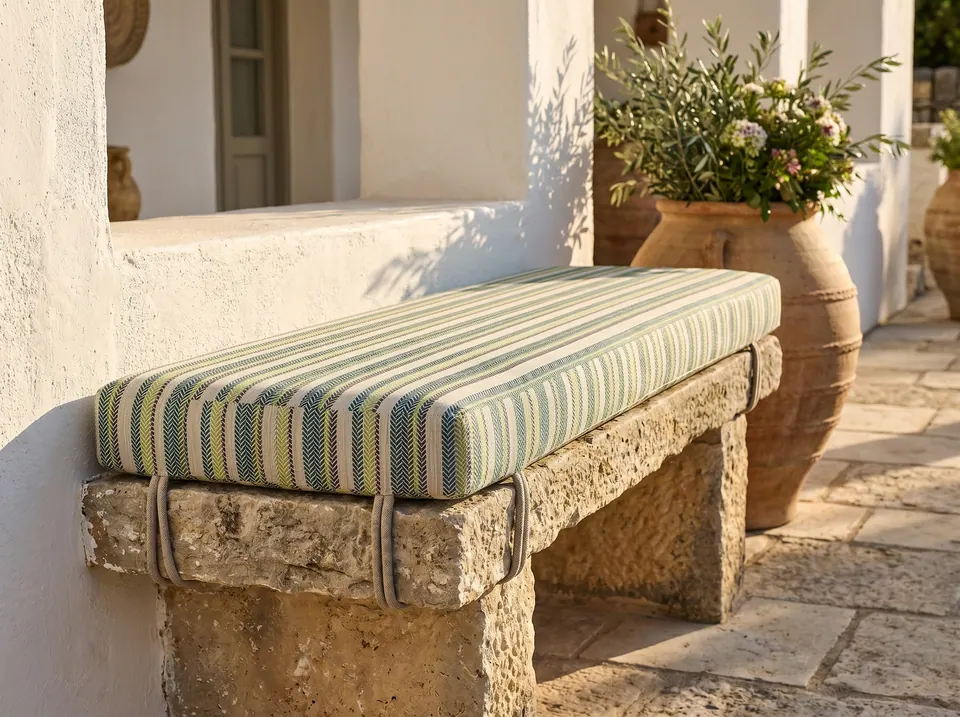
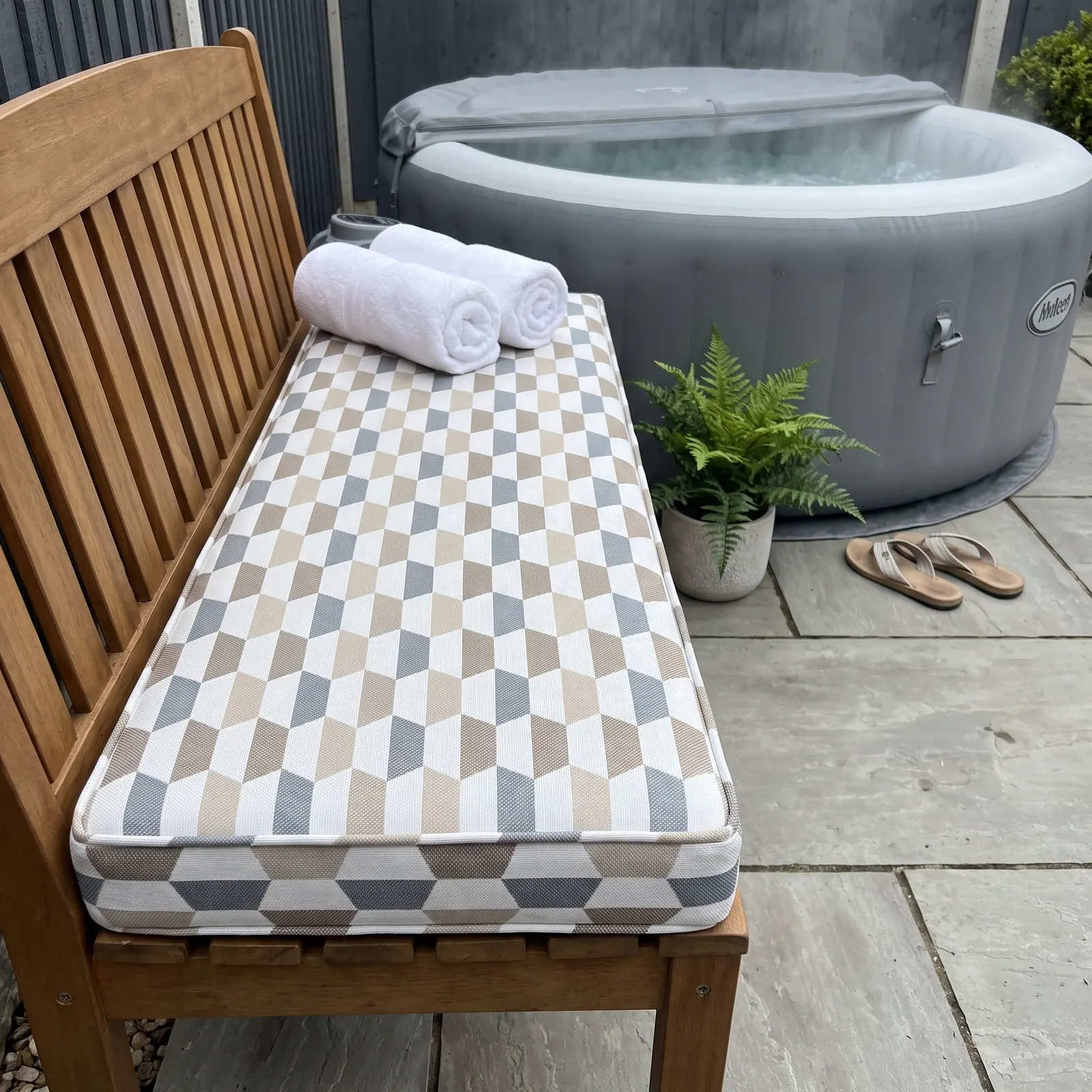
The gallery around this plan runs the same thinking through other seats: salmon striped tie-on pads on black iron balcony chairs, powder blue stripes on white Adirondack chairs, a taupe stripe on a camper deck, a tile print on a teak bench by a hot tub. Stripes forgive weather better than you'd think, as long as they line up.
Water-repellent is a promise; waterproof is a contract. Know which one you're buying: water-repellent vs waterproof cushions and the water-repellent membrane fabrics explain the difference. More sets live in bench cushions and patio and porch cushions. Which bench at your place takes the most weather, the one on the patio or the one by the back door?

Have it made
Have this made — ask Callum’s workshop
Short list: size, sun hours, how fast it has to dry. The workshop goes through it with you. — Callum
Leave your details and the workshop will call you to confirm measurements, fabric, foam and piping. No prices, dates or payment on this page: it is a request, not an order.
Fair winds — Callum