 Save
A Reading by ÉlodieCustom Throw Pillows
Sage piping on leaf jacquard throw pillows, and why the outline matters on a pale lounger
Two pillows, one thin green line, and a cream lounger that would have swallowed them whole without it.
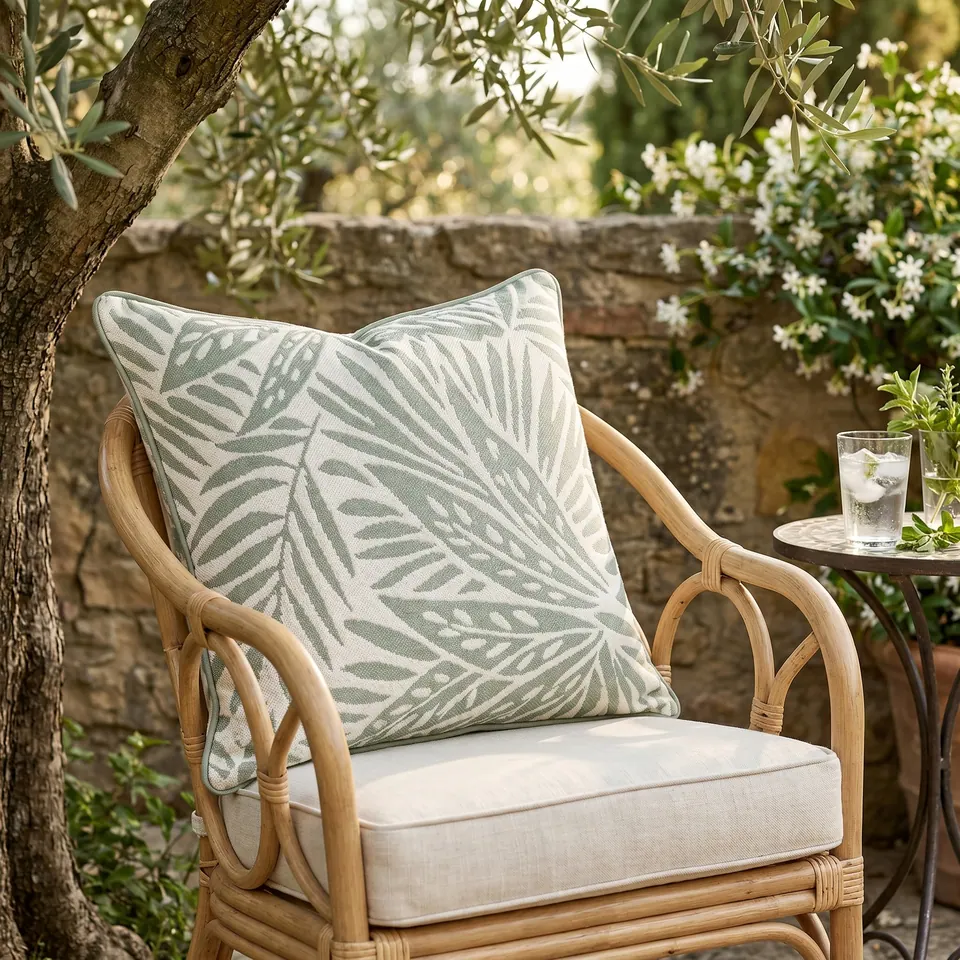
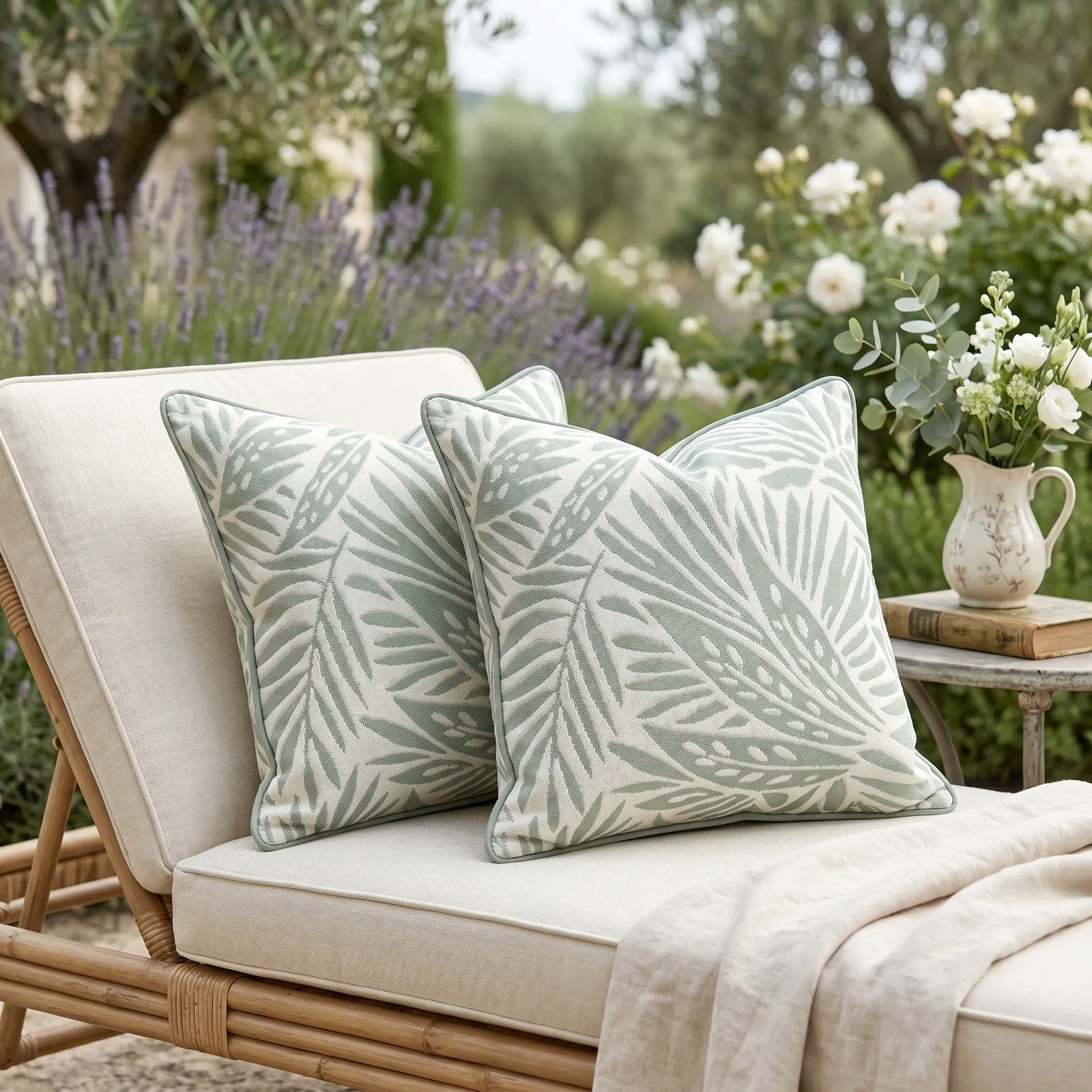
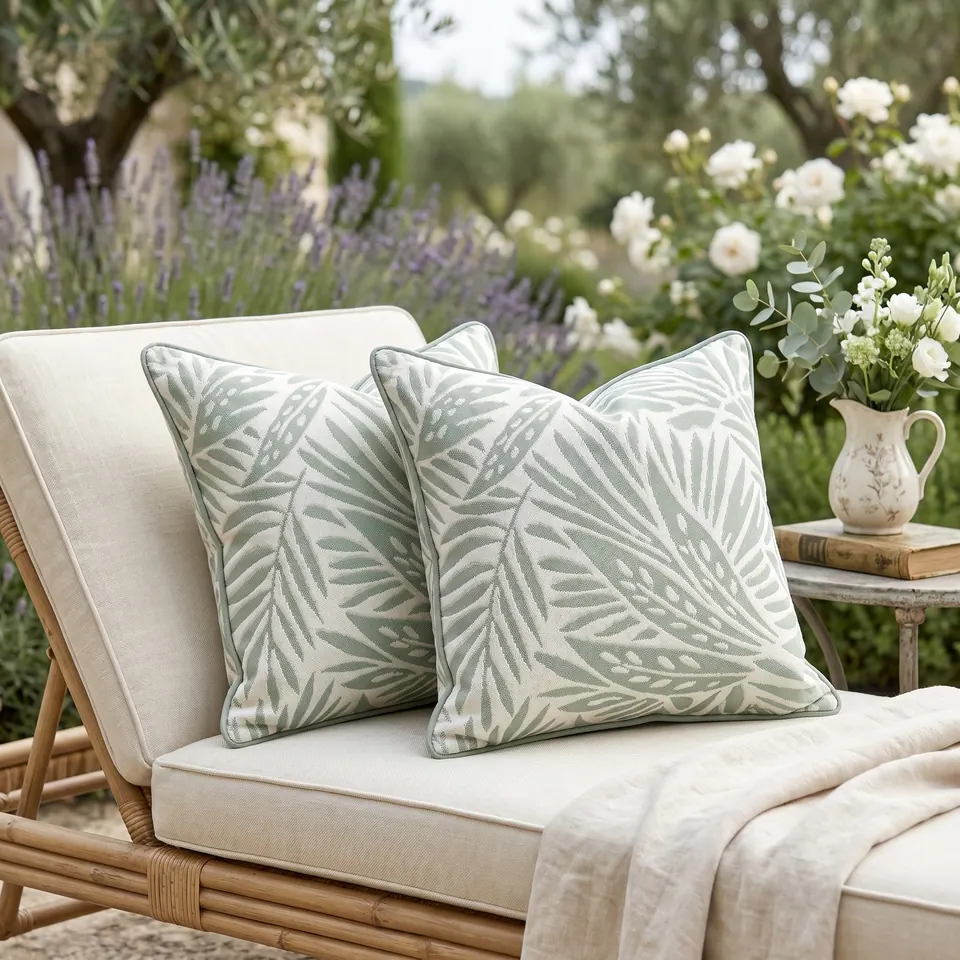
Two piped sage pillows link a neutral bamboo lounger to the lavender and olive leaves around it.
The quick answer
Custom throw pillows in a pale jacquard need contrast piping when they sit on an equally pale cushion; here a thin sage cord keeps the leaf pattern from dissolving into the cream lounger. Choose self piping when the pillow already contrasts with its seat, and skip piping entirely when you want the softest, most relaxed edge.
A thin green line in a pale garden
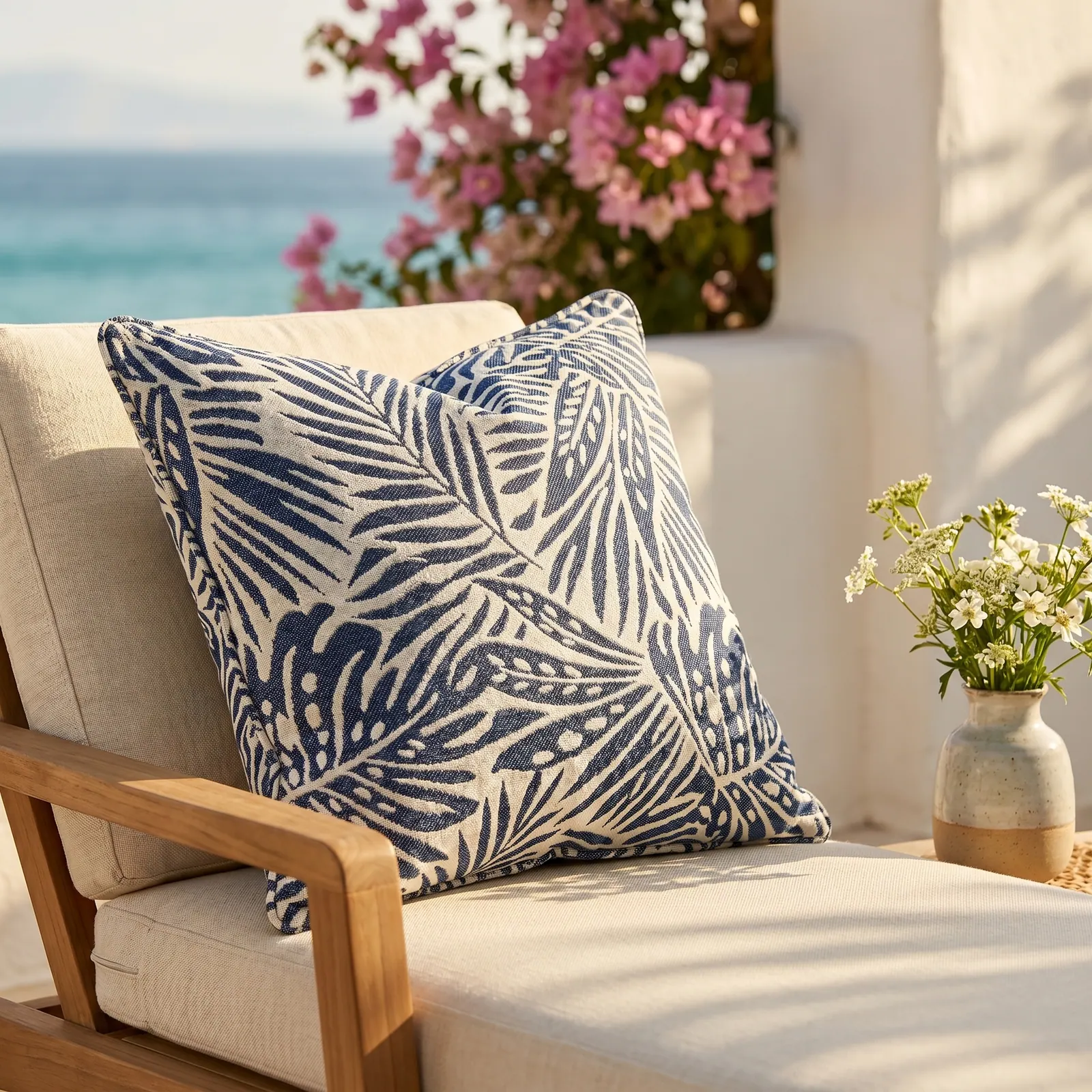
Two pillows sit on a bamboo lounger, and without one thin green line you would barely see them. That line is the whole story here.
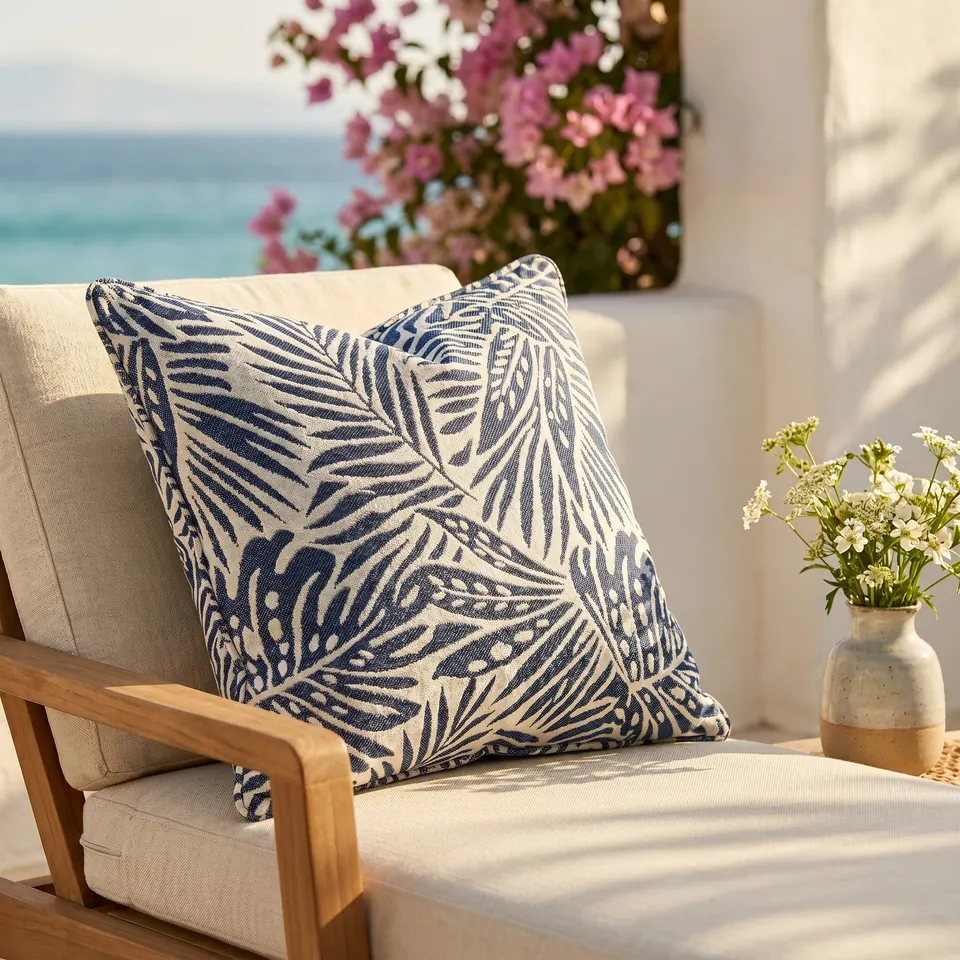
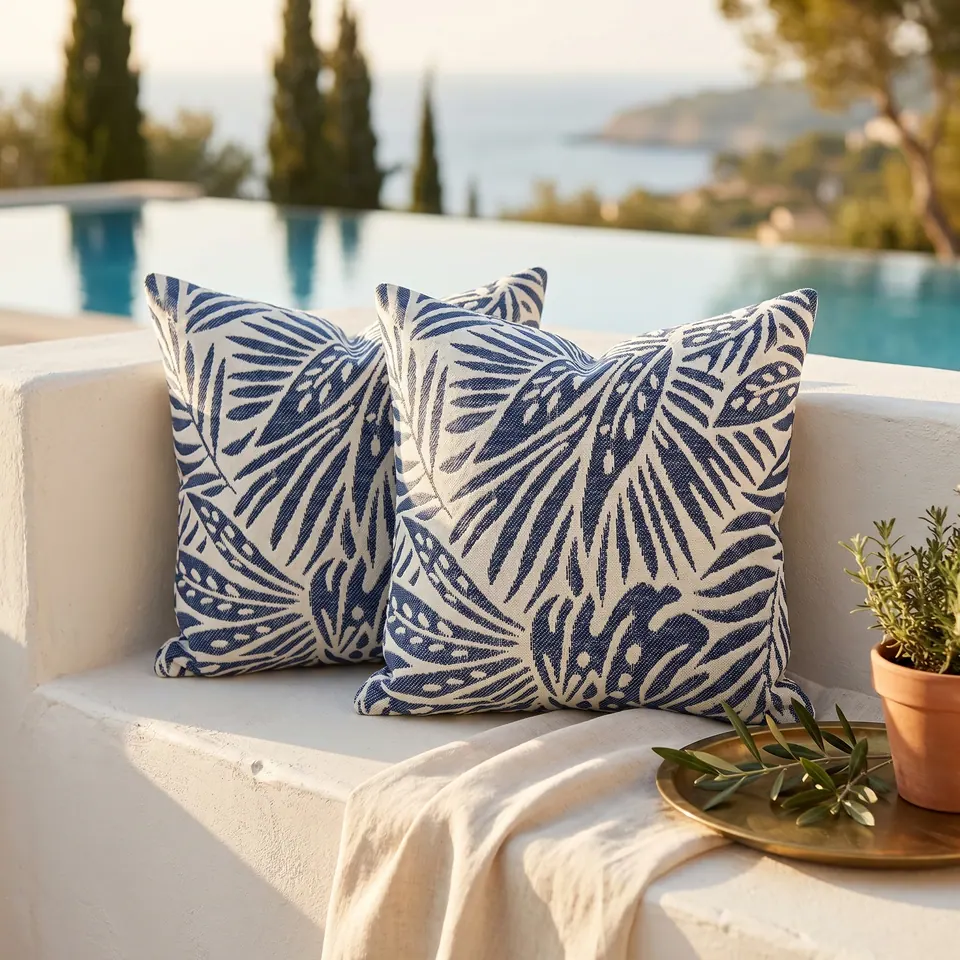
The lounger wears a cream linen cushion. The pillows are a sage-and-cream leaf jacquard, pale enough to belong to the same family as the seat. Put pale on pale in soft, hazy daylight and the edge melts away; the leaves blur into a watercolor. So each knife-edge pillow is piped in sage, and suddenly the shape holds.
That cord color was not guessed. It is the sage of the olive leaves overhead and the gray-green of the lavender at the lounger's feet, so the pillows seem to have grown out of the planting. Let one color speak and the others listen: sage speaks, and cream, oatmeal and the white roses listen.
The arrangement matters too. The larger pillow sits in front and shows the full leaf repeat. The second hides behind it, adding depth without a second fabric. An oatmeal linen throw falls over the end for texture, and a stack of vintage books beside a floral jug of white roses makes the corner feel lived in, as if someone just stood up.
My rule, my friends, is simple. Hold the pillow against the seat it will live on, in daylight. Close in tone? Pipe it in the darkest color of its own pattern. Already contrasting? Self piping keeps things calm. Our custom throw pillows and the jacquard and damask swatches are where to try it. What does your pillow sit against?
Self, contrast or none: the same pillow three ways
| Piping | What it does to the line | On this cream lounger |
|---|---|---|
| Self (the jacquard itself) | Crisp edge, no outline of its own | The edge would still melt into the cream seat |
| Contrast (sage) | Draws a thin outline around the shape | Chosen: the leaf pattern holds its edge |
| None | Soft, relaxed knife edge | Pretty up close, lost from across the garden |
Pinned by Élodie: five places the eye lands
Five pins, from the full leaf repeat on the front pillow to the linen throw at the foot of the lounger.
- Front pillow
The larger pillow in front shows the full leaf repeat.
- Back pillow
A second pillow behind adds depth without a second fabric.
- Sage piping
A thin sage outline stops the pale pattern from disappearing into the cream cushion.
- Jug and books
Old books and a floral jug make the garden corner feel lived in.
- Linen throw
A plain linen throw over the end adds soft texture.
- Front pillowThe larger pillow in front shows the full leaf repeat.
- Back pillowA second pillow behind adds depth without a second fabric.
- Sage pipingA thin sage outline stops the pale pattern from disappearing into the cream cushion.
- Jug and booksOld books and a floral jug make the garden corner feel lived in.
- Linen throwA plain linen throw over the end adds soft texture.
The cord follows the gusset, so the gusset must be right
A buyer got in touch who already owned two daybed mattresses, 9 7/8 x 35 3/8 x 74 3/4 in (25 x 90 x 190 cm). They ordered two empty covers to fit them, plus filled teddy backrests.
The covers arrived only about 6 in (15 cm) deep instead of 9 7/8 in (25 cm). The shop remade them: one replacement cover first, then the second when the buyer asked for both, each one checked against the measurements.
Why tell this on a page about piping? Because on a boxed cover the cord runs along the top and bottom edges of the gusset, the side wall. Get that depth wrong and the line sits in the wrong place, however lovely the cord. The depth is the measurement most often wrong on a mattress cover, so check it against your order before anything is sewn. The daybed mattress cover guide shows where to hold the tape.
Buyer questions: spare covers, single bolsters and a very long back
- A common question
Can I order an extra set of covers only, in a different color?
The workshop's answerYes, anytime. Extra covers are quoted per set, whether that's covers for two seat cushions and five back pillows, a custom sofa-and-ottoman set, or a single ottoman cover.
- A common question
Can I buy just one bolster, or a bolster cover on its own?
The workshop's answerBolsters normally come as part of a floor-sofa set rather than singly, but custom bolster covers have been made on their own, for example one for a 13 in (33 cm) diameter x 32 in (81 cm) bolster and a 9 x 22 in (23 x 56 cm) zippered cover.
- A common question
My sofa needs a backrest almost 79 in (2 m) long, made of round rolls about 9 7/8 in (25 cm) across. Can you do that?
The workshop's answerYes. The workshop proposed splitting it into two backrests of 39 3/8 x 9 7/8 x 9 7/8 in (100 x 25 x 25 cm) each.
On the cutting table: the garden pair
| Product | Throw pillows, a pair |
|---|---|
| Fabric | Sage and cream leaf jacquard |
| Piping | Contrast, sage green |
| Edge | Knife edge |
| Arrangement | Larger pillow in front, smaller one behind |
| Seat | Bamboo lounger with a cream linen cushion |
| Companions | Oatmeal linen throw, vintage books, jug of white roses |
| Best for | Pale outdoor loungers near green planting |
Have it made
Have this made — ask Élodie’s workshop
Describe the room at four in the afternoon: the floor, the wall, the one color you love. That is where a good fabric choice begins. — Élodie
Leave your details and the workshop will call you to confirm measurements, fabric, foam and piping. No prices, dates or payment on this page: it is a request, not an order.
Pale jacquard throw pillows on a cream lounger cushion need a darker cord at the seam; without contrast piping, the leaf pattern melts into the seat.
Élodie
Questions buyers ask next
When do throw pillows need contrast piping?
When the pillow fabric is close in tone to the seat behind it. A pale jacquard on a cream cushion needs a darker cord to hold its outline; a pillow that already contrasts with its seat looks calmer with self piping.
How do I choose the color of contrast piping?
Pull it from the pattern itself or from something growing nearby. Here the sage cord repeats the leaves in the jacquard and the olive and lavender foliage, so the pillows look as if they belong to the garden.
What is a knife-edge pillow?
A pillow sewn from two panels joined at a single seam, with no side wall. It tapers to a thin edge, which is why piping on that one seam draws the outline so clearly.
With color and care — Élodie
More photographs to read
 Save
 Save
 Save
 Save
 Save
 Save